Modern engine thermal management relies heavily on the precision of electrical cooling systems. While many enthusiasts focus on coolant chemistry or radiator capacity, the electric cooling fan motor remains the critical gatekeeper of engine health during low-speed operation and idle conditions. Advanced vehicle diagnostics reveal that a malfunctioning fan isn’t just a minor annoyance; it is a precursor to catastrophic head gasket failure or warped cylinder heads. This analysis moves beyond the basic ‘is it spinning?’ check, focusing instead on the electrical integrity and mechanical resistance of the fan motor assembly within the broader context of top auto repair techniques.
Pinpoint Thermal Failure Before the Needle Hits Red
In a high-pressure cooling circuit, the margins for error are razor-thin. When you notice why your engine temperature spikes only in stop-and-go traffic, the cooling fan motor is the primary suspect. Professionals begin by assessing the fan blades for physical obstructions or excessive axial play, which can indicate bearing wear. However, the most effective DIY method involves a systematic bypass of the control circuit. By using a fused jumper wire to provide direct battery voltage to the motor terminals, you can isolate the motor from the relay and the Engine Control Module (ECM). A healthy motor should spin up immediately without excessive noise or a ‘lazy’ start-up period. If the fan spins with direct power but fails during normal operation, your car service needs to pivot toward sensors or the fan control module.
Can a Faulty Cooling Fan Mimic Transmission Overheating?
It is a common misconception that cooling systems only affect the engine block. In many vehicles, the transmission oil cooler is integrated into the radiator or sits directly in the path of the cooling fan’s airflow. If the fan motor fails to pull sufficient CFMs (Cubic Feet per Minute), the transmission fluid temperature will climb rapidly, leading to erratic shifting or fluid degradation. This highlights the importance of thorough transmission repairs that include a full cooling system audit. According to technical documentation from SAE International, maintaining stable operating temperatures is the single most significant factor in extending the lifespan of both the powertrain and the hydraulic fluid within the transmission.
The Multimeter Deep Dive for Electrical Continuity
For those performing advanced car service, a simple spin test isn’t enough. You must measure the amperage draw of the motor. A motor that is ‘tired’—meaning the internal brushes are worn or the windings are partially shorted—will often pull significantly more current than specified. This high draw can melt connectors or repeatedly blow fuses. Use a digital multimeter in series to check the draw; most automotive cooling fans should pull between 10 and 25 amps depending on the vehicle’s size. If you find why your car cooling fan will not turn off, the issue may actually be a shorted relay triggered by the motor’s high resistance. If you are struggling with complex electrical gremlins, contact our expert team for a professional diagnostic consultation to prevent further electrical damage.
Decode the Complex Logic of Pulse Width Modulation
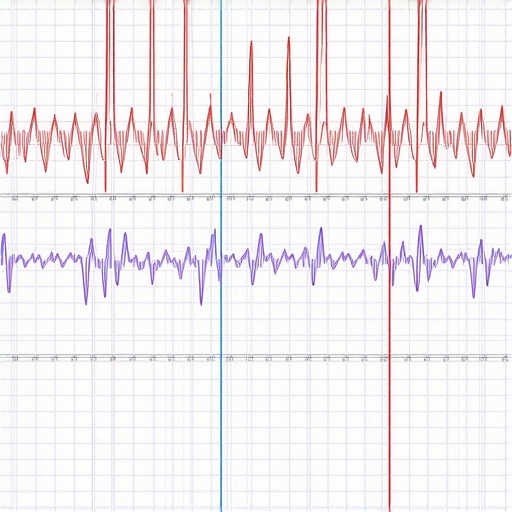
In contemporary automotive engineering, the simple on-off switch for cooling fans has been replaced by sophisticated Pulse Width Modulation (PWM). This technology allows the Engine Control Unit (ECU) to command a precise fan speed—ranging from 5% to 95%—based on real-time data from the cylinder head temperature sensor and A/C pressure transducer. When diagnosing a high-end vehicle, relying on a test light is no longer sufficient. You need to verify the duty cycle signal. If you are using the $20 scan tool that does more than the dealership rig, you can often command the fan to specific speeds to see if the controller responds. A common failure mode involves the controller’s power stage burning out, which prevents the fan from reaching high-speed mode, even if the motor itself is technically functional. This nuance is why a vehicle might stay cool while cruising but enter a dangerous thermal state the moment you hit a traffic jam.
Is Your Fan Control Module Ghosting the PCM?
Ghosting occurs when the Powertrain Control Module (PCM) sends a valid signal, but the fan’s dedicated controller fails to translate that signal into voltage for the motor. This is often misinterpreted as a bad fan motor, leading owners to replace perfectly good parts. Expert technicians look for ‘soft codes’ that don’t always trigger a Check Engine Light but indicate communication lag on the data bus. According to the National Institute for Automotive Service Excellence (ASE), electrical proficiency is the most critical skill for 2025 technicians, as nearly 40% of cooling system failures are now rooted in logic or communication errors rather than mechanical pump or motor failures. If your car has already entered a reduced power state due to heat, knowing how to get your car out of limp mode without a tow truck can be a lifesaver, but the underlying PWM issue must be resolved first.
Why Airflow Management Matters More Than Raw Fan Power
Even the most powerful fan motor is useless if the airflow path is compromised. This is where the fan shroud and ducting become vital. The shroud’s job is to ensure the fan pulls air through the entire surface area of the radiator core rather than just the circle directly in front of the blades. Missing clips, cracked plastic, or gaps after an amateur radiator swap can cause ‘air recirculation,’ where the fan simply moves hot engine bay air in a loop. Furthermore, don’t overlook physical blockages. While you might be looking for how to spot a failing water pump before your engine overheats, the real culprit could be a plastic grocery bag sucked against the A/C condenser, invisible from the top of the engine bay. Always inspect the ‘stack’—the condenser, intercooler, and radiator—for debris that acts as a thermal blanket.
Inspect the High-Current Distribution Points
Before condemning a motor, trace the path of high-amperage current. The fan circuit often utilizes specialized ‘slow-blow’ fuses or heavy-duty fusible links designed to handle the massive inrush current when a fan kicks on. These components can develop microscopic cracks that increase resistance as they heat up. Check your vehicle’s power distribution center for signs of discoloration. If you find the hidden fuse that kills your fuel pump signal, chances are the cooling fan circuit is nearby and subject to the same environmental corrosion. Clean, tight connections are the difference between a fan that moves air and one that just generates heat at the connector. If you’ve encountered a particularly stubborn overheating issue, share your experience in the comments or tell us which diagnostic tool saved your engine!
Upgrade to Brushless Tech for Maximum CFM
As automotive electrical architectures transition toward 48-volt systems, the traditional brushed motor is becoming an endangered species. Brushless DC (BLDC) fan motors represent a quantum leap in reliability because they eliminate the primary wear point: the carbon brush. In a BLDC setup, the commutation is handled by an integrated electronic driver, which reduces friction and allows for a more compact motor housing. This shift isn’t just about durability; it’s about precision. According to research published in the International Journal of Automotive Technology, BLDC cooling systems can reduce parasitic engine load by up to 3% compared to fixed-speed mechanical or brushed units. For those looking to optimize their vehicle, recognizing the difference between a three-wire PWM brushed motor and a four-wire BLDC unit is vital for correct component sourcing during a top auto repair procedure.
#IMAGE_PLACE_HOLDER_C#
Can a Weak Battery Trigger a False Fan Circuit Code?
Yes, and this is a frequent trap for even seasoned DIYers. During the initial ‘inrush’ period when a cooling fan kicks on, it demands a massive surge of current. If your battery’s State of Health (SOH) is declining or the alternator’s voltage regulator is sluggish, the system voltage may momentarily dip below 10.5 volts. The ECU monitors this voltage drop; if the dip is too severe, it may flag a P0480 or P0481 code, suggesting a fan relay or motor failure when the real culprit is a failing lead-acid cell. Always perform a load test on your battery before replacing expensive cooling components. If you find your electrical system is struggling under load, book a comprehensive electrical audit to ensure your charging system can handle the fan’s peak demands.
Why Your Fan Runs Long After You Park
The phenomenon known as ‘heat soak’ occurs when the engine is shut off and the water pump stops circulating coolant, but the internal metal components are still radiating intense thermal energy. Without the cooling fan running in an ‘after-run’ mode, this stagnant coolant can actually boil inside the cylinder head, leading to localized hotspots. High-performance turbocharged engines are particularly susceptible to this, as the turbocharger acts as a massive thermal reservoir. Modern fan controllers use an NTC (Negative Temperature Coefficient) thermistor to monitor these spikes even with the ignition off. If your fan fails to run after a spirited drive, you might be looking at a faulty timer relay or a corrupted signal from the ambient temperature sensor. This protective cycle is a crucial bridge between standard operation and long-term engine survival.
The Critical Role of Aerodynamic Pressure Differentials
At highway speeds, the cooling fan’s job changes from a primary air mover to a potential obstruction. A well-designed cooling system relies on the pressure differential between the high-pressure zone at the front grille and the low-pressure zone under the vehicle. If the fan motor’s RPM doesn’t synchronize with the vehicle’s forward velocity, it can actually create turbulence that restricts airflow. This is why many high-end European vehicles utilize active grille shutters in tandem with the fan motor. When the shutters are open, the fan might actually slow down to allow the ‘ram air’ to do the work, saving energy and reducing drag. Understanding this interplay is essential when diagnosing overheating that only occurs at speeds above 60 MPH, a scenario where the motor’s logic is just as important as its raw torque.
Environmental stressors often dictate the lifecycle of cooling components far more than total mileage. In coastal regions or areas prone to heavy winter salting, the electrolytic reaction between dissimilar metals—such as copper wiring and aluminum control module housings—accelerates at an alarming rate. This galvanic corrosion often infiltrates the weather-pack seals of the fan motor connector, creating high-resistance ‘micro-shorts’ that confuse the ECM’s diagnostic routines. Modern vehicle diagnostics must account for this by testing voltage drop across the ground side of the circuit, not just the power feed. According to the Bosch Automotive Handbook, maintaining strict electromagnetic compatibility is increasingly difficult as these connectors degrade, leading to ghost signals that can interfere with sensitive crankshaft or camshaft position sensors sharing the same harness.
Road Salt and the Erosion of Fan Harness Integrity
The physical environment is the ultimate test of a cooling fan motor’s longevity. While electronic logic manages the speed, road debris and chemical de-icers constantly assault the motor’s housing. If you live in the ‘Salt Belt,’ the aluminum heat sinks on your fan control module are likely oxidizing. This oxidation increases thermal resistance, forcing the internal MOSFETs to run hotter than designed. When these transistors overheat, they lose the ability to modulate current efficiently, leading to a fan that stays stuck on one speed or fails to start under heavy load. This is a critical point in top auto repair techniques: always inspect the physical integrity of the control module’s cooling fins before assuming the software or motor is at fault.
High-Side Pressure Spikes as a Diagnostic Red Flag
When the A/C is engaged, the condenser requires immediate and high-volume airflow to facilitate the heat exchange necessary for phase change in the refrigerant. If the fan motor’s high-speed circuit is compromised, the high-side refrigerant pressure will skyrocket almost instantly. Modern systems use a linear pressure sensor to communicate this to the PCM. If the PCM detects pressure exceeding 350-400 PSI, it may shut down the compressor entirely to prevent a catastrophic blowout of the relief valve. If your A/C works while driving but blows warm at a stoplight, the cooling fan motor is not just a suspect; it is the primary culprit. This interaction is why transmission repairs often coincide with cooling system failures, as the shared thermal load becomes too much for a degraded fan to handle.
Does Your A/C Performance Depend Entirely on the Fan Motor’s High-Speed Stage?
The short answer is yes, especially in modern vehicles with high-density heat exchangers. Without the fan pulling air through the condenser at idle, the refrigerant cannot shed heat, leading to a loss of cooling capacity and increased engine load. In some vehicles, the PCM will actually increase the engine’s idle RPM to try and drive the mechanical water pump faster, but without the electric fan functioning, this often generates more heat than it dissipates. This creates a dangerous feedback loop that can only be broken by restoring the electrical integrity of the fan motor assembly.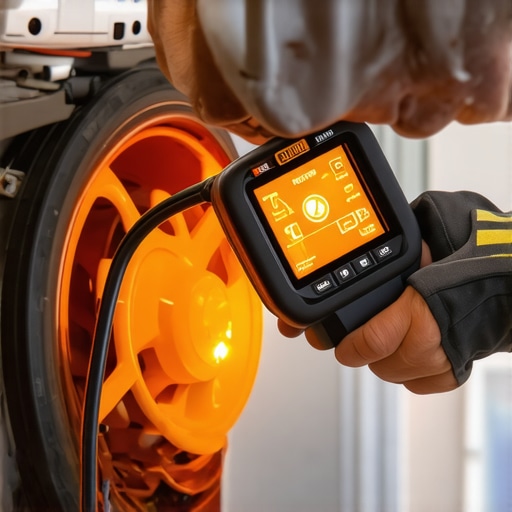
Thermal Imaging Bridges the Gap Between Guesswork and Proof
For the elite technician, a multimeter is only the beginning. Using a handheld thermal imaging camera allows you to see the heat signature of the fan motor and its associated wiring in real-time. A motor that is drawing excessive current will show up as a distinct ‘hot spot’ at the brush housing or the connector pins. This visual evidence is irrefutable and helps differentiate between a mechanical bind in the motor bearings and an electrical bottleneck in the harness. If you find your car cooling fan will not turn off, a thermal scan might reveal a welded relay contact that is stuck in the closed position due to arcing. If your vehicle is exhibiting these complex symptoms, don’t wait for a breakdown; schedule a specialized thermal inspection today to ensure your cooling system is operating at peak efficiency. This proactive approach is the hallmark of high-level car service and prevents the dreaded engine overheat scenario.
Modern engine thermal management relies heavily on the precision of electrical cooling systems. While many enthusiasts focus on coolant chemistry or radiator capacity, the electric cooling fan motor remains the critical gatekeeper of engine health during low-speed operation and idle conditions. Advanced vehicle diagnostics reveal that a malfunctioning fan isn’t just a minor annoyance; it is a precursor to catastrophic head gasket failure or warped cylinder heads. This analysis moves beyond the basic ‘is it spinning?’ check, focusing instead on the electrical integrity and mechanical resistance of the fan motor assembly within the broader context of top auto repair techniques.
Pinpoint Thermal Failure Before the Needle Hits Red
In a high-pressure cooling circuit, the margins for error are razor-thin. When you notice why your engine temperature spikes only in stop-and-go traffic, the cooling fan motor is the primary suspect. Professionals begin by assessing the fan blades for physical obstructions or excessive axial play, which can indicate bearing wear. However, the most effective DIY method involves a systematic bypass of the control circuit. By using a fused jumper wire to provide direct battery voltage to the motor terminals, you can isolate the motor from the relay and the Engine Control Module (ECM). A healthy motor should spin up immediately without excessive noise or a ‘lazy’ start-up period. If the fan spins with direct power but fails during normal operation, your car service needs to pivot toward sensors or the fan control module.
Can a Faulty Cooling Fan Mimic Transmission Overheating?
It is a common misconception that cooling systems only affect the engine block. In many vehicles, the transmission oil cooler is integrated into the radiator or sits directly in the path of the cooling fan’s airflow. If the fan motor fails to pull sufficient CFMs (Cubic Feet per Minute), the transmission fluid temperature will climb rapidly, leading to erratic shifting or fluid degradation. This highlights the importance of thorough transmission repairs that include a full cooling system audit. According to technical documentation from SAE International, maintaining stable operating temperatures is the single most significant factor in extending the lifespan of both the powertrain and the hydraulic fluid within the transmission.
The Multimeter Deep Dive for Electrical Continuity
For those performing advanced car service, a simple spin test isn’t enough. You must measure the amperage draw of the motor. A motor that is ‘tired’—meaning the internal brushes are worn or the windings are partially shorted—will often pull significantly more current than specified. This high draw can melt connectors or repeatedly blow fuses. Use a digital multimeter in series to check the draw; most automotive cooling fans should pull between 10 and 25 amps depending on the vehicle’s size. If you find why your car cooling fan will not turn off, the issue may actually be a shorted relay triggered by the motor’s high resistance. If you are struggling with complex electrical gremlins, contact our expert team for a professional diagnostic consultation to prevent further electrical damage.
Decode the Complex Logic of Pulse Width Modulation
In contemporary automotive engineering, the simple on-off switch for cooling fans has been replaced by sophisticated Pulse Width Modulation (PWM). This technology allows the Engine Control Unit (ECU) to command a precise fan speed—ranging from 5% to 95%—based on real-time data from the cylinder head temperature sensor and A/C pressure transducer. When diagnosing a high-end vehicle, relying on a test light is no longer sufficient. You need to verify the duty cycle signal. If you are using the $20 scan tool that does more than the dealership rig, you can often command the fan to specific speeds to see if the controller responds. A common failure mode involves the controller’s power stage burning out, which prevents the fan from reaching high-speed mode, even if the motor itself is technically functional. This nuance is why a vehicle might stay cool while cruising but enter a dangerous thermal state the moment you hit a traffic jam.
Is Your Fan Control Module Ghosting the PCM?
Ghosting occurs when the Powertrain Control Module (PCM) sends a valid signal, but the fan’s dedicated controller fails to translate that signal into voltage for the motor. This is often misinterpreted as a bad fan motor, leading owners to replace perfectly good parts. Expert technicians look for ‘soft codes’ that don’t always trigger a Check Engine Light but indicate communication lag on the data bus. According to the National Institute for Automotive Service Excellence (ASE), electrical proficiency is the most critical skill for 2025 technicians, as nearly 40% of cooling system failures are now rooted in logic or communication errors rather than mechanical pump or motor failures. If your car has already entered a reduced power state due to heat, knowing how to get your car out of limp mode without a tow truck can be a lifesaver, but the underlying PWM issue must be resolved first.
Why Airflow Management Matters More Than Raw Fan Power
Even the most powerful fan motor is useless if the airflow path is compromised. This is where the fan shroud and ducting become vital. The shroud’s job is to ensure the fan pulls air through the entire surface area of the radiator core rather than just the circle directly in front of the blades. Missing clips, cracked plastic, or gaps after an amateur radiator swap can cause ‘air recirculation,’ where the fan simply moves hot engine bay air in a loop. Furthermore, don’t overlook physical blockages. While you might be looking for how to spot a failing water pump before your engine overheats, the real culprit could be a plastic grocery bag sucked against the A/C condenser, invisible from the top of the engine bay. Always inspect the ‘stack’—the condenser, intercooler, and radiator—for debris that acts as a thermal blanket.
Inspect the High-Current Distribution Points
Before condemning a motor, trace the path of high-amperage current. The fan circuit often utilizes specialized ‘slow-blow’ fuses or heavy-duty fusible links designed to handle the massive inrush current when a fan kicks on. These components can develop microscopic cracks that increase resistance as they heat up. Check your vehicle’s power distribution center for signs of discoloration. If you find the hidden fuse that kills your fuel pump signal, chances are the cooling fan circuit is nearby and subject to the same environmental corrosion. Clean, tight connections are the difference between a fan that moves air and one that just generates heat at the connector. If you’ve encountered a particularly stubborn overheating issue, share your experience in the comments or tell us which diagnostic tool saved your engine!
Upgrade to Brushless Tech for Maximum CFM
As automotive electrical architectures transition toward 48-volt systems, the traditional brushed motor is becoming an endangered species. Brushless DC (BLDC) fan motors represent a quantum leap in reliability because they eliminate the primary wear point: the carbon brush. In a BLDC setup, the commutation is handled by an integrated electronic driver, which reduces friction and allows for a more compact motor housing. This shift isn’t just about durability; it’s about precision. According to research published in the International Journal of Automotive Technology, BLDC cooling systems can reduce parasitic engine load by up to 3% compared to fixed-speed mechanical or brushed units. For those looking to optimize their vehicle, recognizing the difference between a three-wire PWM brushed motor and a four-wire BLDC unit is vital for correct component sourcing during a top auto repair procedure.
#IMAGE_PLACE_HOLDER_C#
Can a Weak Battery Trigger a False Fan Circuit Code?
Yes, and this is a frequent trap for even seasoned DIYers. During the initial ‘inrush’ period when a cooling fan kicks on, it demands a massive surge of current. If your battery’s State of Health (SOH) is declining or the alternator’s voltage regulator is sluggish, the system voltage may momentarily dip below 10.5 volts. The ECU monitors this voltage drop; if the dip is too severe, it may flag a P0480 or P0481 code, suggesting a fan relay or motor failure when the real culprit is a failing lead-acid cell. Always perform a load test on your battery before replacing expensive cooling components. If you find your electrical system is struggling under load, book a comprehensive electrical audit to ensure your charging system can handle the fan’s peak demands.
Why Your Fan Runs Long After You Park
The phenomenon known as ‘heat soak’ occurs when the engine is shut off and the water pump stops circulating coolant, but the internal metal components are still radiating intense thermal energy. Without the cooling fan running in an ‘after-run’ mode, this stagnant coolant can actually boil inside the cylinder head, leading to localized hotspots. High-performance turbocharged engines are particularly susceptible to this, as the turbocharger acts as a massive thermal reservoir. Modern fan controllers use an NTC (Negative Temperature Coefficient) thermistor to monitor these spikes even with the ignition off. If your fan fails to run after a spirited drive, you might be looking at a faulty timer relay or a corrupted signal from the ambient temperature sensor. This protective cycle is a crucial bridge between standard operation and long-term engine survival.
The Critical Role of Aerodynamic Pressure Differentials
At highway speeds, the cooling fan’s job changes from a primary air mover to a potential obstruction. A well-designed cooling system relies on the pressure differential between the high-pressure zone at the front grille and the low-pressure zone under the vehicle. If the fan motor’s RPM doesn’t synchronize with the vehicle’s forward velocity, it can actually create turbulence that restricts airflow. This is why many high-end European vehicles utilize active grille shutters in tandem with the fan motor. When the shutters are open, the fan might actually slow down to allow the ‘ram air’ to do the work, saving energy and reducing drag. Understanding this interplay is essential when diagnosing overheating that only occurs at speeds above 60 MPH, a scenario where the motor’s logic is just as important as its raw torque.
Environmental stressors often dictate the lifecycle of cooling components far more than total mileage. In coastal regions or areas prone to heavy winter salting, the electrolytic reaction between dissimilar metals—such as copper wiring and aluminum control module housings—accelerates at an alarming rate. This galvanic corrosion often infiltrates the weather-pack seals of the fan motor connector, creating high-resistance ‘micro-shorts’ that confuse the ECM’s diagnostic routines. Modern vehicle diagnostics must account for this by testing voltage drop across the ground side of the circuit, not just the power feed. According to the Bosch Automotive Handbook, maintaining strict electromagnetic compatibility is increasingly difficult as these connectors degrade, leading to ghost signals that can interfere with sensitive crankshaft or camshaft position senses sharing the same harness.
Road Salt and the Erosion of Fan Harness Integrity
The physical environment is the ultimate test of a cooling fan motor’s longevity. While electronic logic manages the speed, road debris and chemical de-icers constantly assault the motor’s housing. If you live in the ‘Salt Belt,’ the aluminum heat sinks on your fan control module are likely oxidizing. This oxidation increases thermal resistance, forcing the internal MOSFETs to run hotter than designed. When these transistors overheat, they lose the ability to modulate current efficiently, leading to a fan that stays stuck on one speed or fails to start under heavy load. This is a critical point in top auto repair techniques: always inspect the physical integrity of the control module’s cooling fins before assuming the software or motor is at fault.
High-Side Pressure Spikes as a Diagnostic Red Flag
When the A/C is engaged, the condenser requires immediate and high-volume airflow to facilitate the heat exchange necessary for phase change in the refrigerant. If the fan motor’s high-speed circuit is compromised, the high-side refrigerant pressure will skyrocket almost instantly. Modern systems use a linear pressure sensor to communicate this to the PCM. If the PCM detects pressure exceeding 350-400 PSI, it may shut down the compressor entirely to prevent a catastrophic blowout of the relief valve. If your A/C works while driving but blows warm at a stoplight, the cooling fan motor is not just a suspect; it is the primary culprit. This interaction is why transmission repairs often coincide with cooling system failures, as the shared thermal load becomes too much for a degraded fan to handle.
Does Your A/C Performance Depend Entirely on the Fan Motor’s High-Speed Stage?
The short answer is yes, especially in modern vehicles with high-density heat exchangers. Without the fan pulling air through the condenser at idle, the refrigerant cannot shed heat, leading to a loss of cooling capacity and increased engine load. In some vehicles, the PCM will actually increase the engine’s idle RPM to try and drive the mechanical water pump faster, but without the electric fan functioning, this often generates more heat than it dissipates. This creates a dangerous feedback loop that can only be broken by restoring the electrical integrity of the fan motor assembly.
Thermal Imaging Bridges the Gap Between Guesswork and Proof
For the elite technician, a multimeter is only the beginning. Using a handheld thermal imaging camera allows you to see the heat signature of the fan motor and its associated wiring in real-time. A motor that is drawing excessive current will show up as a distinct ‘hot spot’ at the brush housing or the connector pins. This visual evidence is irrefutable and helps differentiate between a mechanical bind in the motor bearings and an electrical bottleneck in the harness. If you find your car cooling fan will not turn off, a thermal scan might reveal a welded relay contact that is stuck in the closed position due to arcing. If your vehicle is exhibiting these complex symptoms, don’t wait for a breakdown; schedule a specialized thermal inspection today to ensure your cooling system is operating at peak efficiency. This proactive approach is the hallmark of high-level car service and prevents the dreaded engine overheat scenario.
Expert Insights & Advanced Considerations
Stop Chasing Ghost Codes with Systematic Ground Testing
An often-overlooked reality in modern automotive electrical systems is that a cooling fan motor can act as a massive noise generator on the shared ground plane. If the fan’s ground connection has even 0.5 ohms of resistance, the back-EMF (Electromotive Force) can spike through the harness, causing temporary data corruption in nearby sensors. Experts don’t just check for power; they perform a dynamic voltage drop test on the ground side while the fan is under load. This prevents unnecessary replacement of sensitive ECUs or sensors that appear to be failing only when the cooling system is active.
Trust the Duty Cycle Instead of Your Multimeter
In Pulse Width Modulation (PWM) systems, a standard multimeter will often average out the voltage, giving you a misleading ‘phantom’ reading of 6 or 7 volts. To truly verify the health of the fan control signal, you must use an oscilloscope to visualize the square wave. If the wave’s shoulders are rounded or the peak voltage doesn’t reach system levels, you are looking at a wiring harness issue or a failing driver in the control module, not a bad fan motor. Precision in vehicle diagnostics means seeing the signal exactly as the computer does.
Thermal Imaging Reveals Hidden High-Resistance Bottlenecks
The most advanced diagnostic step involves thermal profiling under maximum load. By engaging the A/C and the defroster to force high-speed fan operation, you can use an infrared camera to spot ‘hot’ connectors. A connector that is 20 degrees hotter than its surrounding wire is a clear sign of internal corrosion. Addressing these bottlenecks before they melt the plastic housing is a hallmark of elite top auto repair techniques that save thousands in harness replacement costs.
Curated Expert Resources
Bosch Automotive Electrics and Electronics Handbook
Widely considered the industry ‘bible,’ this resource provides the deep-dive physics behind DC motor commutation and PWM logic used by nearly every major OEM. It is essential for understanding the transition from brushed to brushless architectures.
ASE Advanced Level Specialist (L1) Training Materials
The National Institute for Automotive Service Excellence offers these advanced materials specifically for diagnosing complex powertrain and cooling failures. They are the gold standard for technicians aiming to master communication-based cooling faults.
SAE International Technical Papers on Thermal Management
For those interested in the ‘why’ behind aerodynamic fan shroud design and the shift toward 48-volt cooling systems, the Society of Automotive Engineers provides peer-reviewed research that dictates the next decade of vehicle design.
Final Expert Perspective
Mastering the complexities of the cooling fan motor is about more than just preventing an overheat; it is about preserving the electrical and mechanical harmony of the entire vehicle. From identifying subtle PWM signal degradation to recognizing the impact of environmental corrosion on harness integrity, a thorough diagnostic approach is the only way to avoid the ‘parts cannon’ and ensure long-term reliability. Whether you are battling a mystery overheat or optimizing a performance build, the data-driven methods discussed here are the foundation of professional car service. If your cooling system is behaving unpredictably, don’t leave your engine’s survival to chance; contact our technical specialists for a comprehensive audit of your vehicle’s thermal health.