The High Cost of Assuming All Coolants Are Created Equal
Modern internal combustion engines operate under thermal loads that would have melted blocks just a few decades ago. Consequently, the cooling system is no longer a simple loop of water and ethylene glycol; it is a complex chemical environment. When you perform a car service, the choice of coolant is as critical as the oil grade. Mixing incompatible chemistries is not a minor error—it is a recipe for chemical precipitation. This process creates a gel-like sludge that restricts flow through narrow radiator passages and heater cores. If you are struggling with a heater that only works at high RPM, you might already be seeing the effects of such a mistake. You can find out more about why your car heater only works while you are driving to see if a blockage is the culprit.
Why Green and Orange Usually Don’t Play Nice
The traditional green antifreeze (Inorganic Acid Technology, or IAT) relies on silicates and phosphates to provide immediate protection to metal surfaces. In contrast, the orange or pink fluids (Organic Acid Technology, or OAT) use organic acids to provide longer-lasting protection. When these two are mixed, the chemical additives often react, causing the silicates to drop out of the solution. This leads to abrasive deposits that can chew through seals and cause extensive auto repair bills. Before you start a repair, it is crucial to find the hidden drain plug most people miss during a radiator flush to ensure every drop of the old, potentially contaminated fluid is removed.
Can You Trust the Color Code on the Bottle Anymore?
The short answer is no. In the past, color was a reliable indicator of chemistry. Green was IAT, orange was OAT. Today, the market is flooded with universal coolants and proprietary manufacturer blends (HOAT—Hybrid Organic Acid Technology) that come in shades of blue, purple, yellow, and even clear. Relying on color alone is a dangerous gamble for any modern vehicle’s longevity. Professional vehicle diagnostics often involve testing the pH and freeze point of the coolant to determine its health, rather than just looking at the hue. According to the SAE J1034 standard, the performance requirements are what truly matter, not the dye added by the manufacturer.
Stop the Sludge Before It Destroys Your Water Pump
The water pump is the heart of your cooling system, but it is incredibly sensitive to debris. When incompatible coolants mix and form solids, the pump’s mechanical seal is the first to suffer. A failing seal leads to coolant weeping, and eventually, total pump failure. It is imperative to how to spot a failing water pump before your engine overheats, as the window between a small leak and a blown head gasket is remarkably narrow. If you notice a sweet smell or a drop in your reservoir levels, don’t wait for a warning light. If your engine temperatures are fluctuating, consult our experts for a professional assessment to identify the root cause. Proper maintenance today prevents expensive transmission or engine overhauls tomorrow. Check your owner’s manual or the label on the radiator support—not the color of the liquid in the tank—to ensure you are using the correct specification.
Why a Failing Radiator Cap is a Silent Engine Killer
Most drivers view the radiator cap as a simple lid, but it is actually a calibrated pressure relief valve essential for modern auto repair. By maintaining system pressure, the cap raises the boiling point of the coolant, preventing localized boiling around the exhaust ports. If the spring weakens or the seal perishes, the pressure drops, and your coolant may flash into steam even if the gauge appears normal. This leads to cavitation—tiny vacuum bubbles that collapse with enough force to pit aluminum surfaces and erode water pump impellers. To check for flow issues related to pressure drops, you should learn how to tell if your radiator is clogged without opening it to rule out internal obstructions before replacing the cap.
How Can a Simple Multimeter Reveal a Chemical War Inside Your Block?
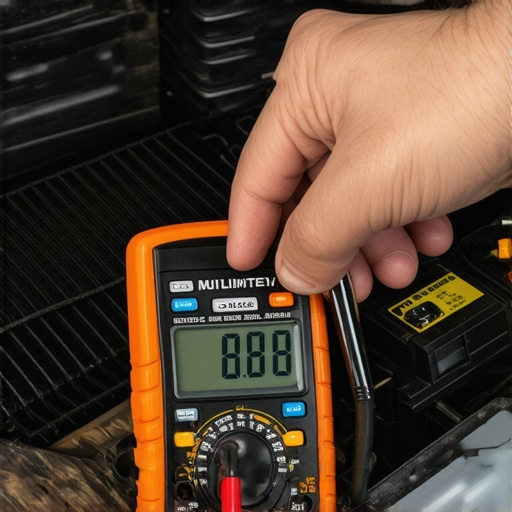
One of the most overlooked aspects of vehicle diagnostics is the phenomenon of electrolysis. As coolant ages and its corrosion inhibitors deplete, the fluid becomes chemically imbalanced and can actually carry an electrical current. This turns your cooling system into a battery, where the engine block and radiator act as electrodes. Over time, this process literally eats away at the heater core and radiator from the inside out. You can test for this by placing the negative lead of a digital multimeter on the battery ground and the positive lead directly into the coolant. A reading higher than 0.3 volts indicates that your coolant is no longer protecting your engine and is instead facilitating its destruction. This electrical degradation is often linked to poor grounding; for instance, how to tell if your alternator is killing your new battery often involves similar electrical pathing issues that accelerate component wear.
Managing the Air Pockets That Mimic Blown Head Gaskets
Modern cooling systems are notoriously difficult to bleed because many components sit higher than the radiator fill neck. An air pocket trapped in the cylinder head can cause a localized hotspot, leading to erratic temperature readings and a car that refuses to stay cool at stoplights. If you find that why your engine temperature spikes only in stop and go traffic is a recurring issue, you likely have air trapped in the upper bypass. Professional technicians often use vacuum-filling tools to ensure a 100% air-free fill, a standard emphasized by the National Institute for Automotive Service Excellence (ASE) for maintaining system integrity. Without this level of precision, you risk deceptive symptoms that look like a failing transmission cooler or a cracked block. If you notice a sweet scent in the cabin, it is time to investigate why your car smells like maple syrup and how to fix it, as this often points to a pressurized leak in the heater core area caused by these very air-pocket surges. Have you ever encountered a temperature spike that disappeared the moment you hit the highway? Share your diagnostic experiences in the comments below, or reach out to our team via our contact us page for a detailed system health check.
Stop the Slow Erosion of Your Plastic End Tanks
Modern radiator design favors weight reduction and thermal efficiency, leading manufacturers to move away from all-brass or copper units in favor of aluminum cores with plastic end tanks. While efficient, these polymer tanks are subject to intense thermal cycling fatigue. Over thousands of heat cycles, the plastic becomes brittle, eventually developing hairline fractures that only weep under maximum operating pressure. During your next car service, pay close attention to the crimp zones where the aluminum meets the plastic; any sign of ‘blooming’ or white powdery residue indicates a structural failure in progress. This isn’t just about a small leak; a sudden pressure drop at highway speeds can warp a cylinder head in seconds. For those performing their own auto repair, it is vital to inspect these seams whenever the engine is at full operating temperature, though extreme caution is required to avoid steam burns.
When Your Transmission Fluid Meets Your Coolant
In many vehicles, the transmission cooling loop is integrated directly into one of the radiator’s side tanks. This design is highly efficient for warming the transmission fluid to operating temperature quickly, but it creates a single point of failure that can destroy two expensive systems at once. If the internal heat exchanger develops a leak, the higher pressure of the cooling system often forces glycol into the transmission. This creates a thick, pink emulsion often referred to by technicians as ‘the strawberry milkshake of death.’ Once glycol saturates the friction material on the clutch plates, the damage is irreversible, necessitating a complete transmission overhaul. If you notice any milkiness in your transmission dipstick, do not drive the vehicle. Instead, refer to our guide on how to spot early signs of transmission failure before the damage becomes catastrophic.

Should You Trust Chemically Treated Test Strips?
Many DIY enthusiasts rely on litmus-style test strips to check the health of their coolant, but professional vehicle diagnostics require a more nuanced approach. While strips can give a basic pH reading, they often fail to account for the actual freeze point or the concentration of corrosion inhibitors like nitrites or molybdates. For a truly accurate assessment, many experts recommend using a refractometer. This tool measures the degree to which light bends as it passes through the fluid, providing a precise measurement of the glycol-to-water ratio. According to the ASTM D3306-21 standard, maintaining the correct chemical balance is non-negotiable for protecting the diverse alloys found in modern engines. If your readings are off, it’s not just a matter of adding more concentrate; you must determine if the system has been diluted by tap water, which introduces minerals that can cause scaling.
Why Does My Temperature Gauge Spike Only When the Air Conditioning Is On?
When you engage the A/C, you are placing a massive additional thermal load on the cooling system. The A/C condenser sits directly in front of the radiator, and as it sheds heat from the cabin, the air passing through to the radiator is already significantly warmed. If your fan clutch is weak or your electric puller fans are not reaching their high-speed stage, the system will struggle to maintain equilibrium. This is a classic diagnostic crossroads: is the issue a lack of airflow, or is the radiator’s internal efficiency compromised? If you find yourself sweating over a rising needle, our team can perform a high-pressure flow test to see if your radiator is actually shedding heat as intended. To learn more about how your electrical system impacts these fans, check out the connection between bad grounds and overheating to ensure you aren’t chasing a ghost in the wiring. The interaction between the electrical load and the mechanical cooling capacity is a delicate balance that requires precise calibration.
The Critical Role of the Expansion Tank in Pressure Management
In many European and modern domestic designs, the traditional radiator cap has been replaced by a pressurized expansion tank, or ‘de-gas’ bottle. This isn’t just a reservoir; it is a vital part of the pressurized circuit designed to continuously purge air from the system. If the cap on this tank fails to hold the specified pressure—often marked in Bars or PSI on the lid—the entire cooling strategy collapses. A pressure loss here leads to localized boiling inside the engine block, even if the radiator itself feels cool to the touch. This localized boiling creates steam pockets that can crack an aluminum head near the exhaust valves. When performing a car service, never ignore a reservoir that appears stained or dark; this often indicates that exhaust gases are leaking into the coolant, a hallmark sign of a failing head gasket. If you suspect an internal leak, a combustion leak test is the most definitive way to
…confirm a breached head gasket before committing to a labor-intensive auto repair. Beyond the integrity of the gaskets, you must look at the flexible components that connect the system. While many owners wait for a hose to bulge or burst, the real danger often starts on the inside. Electrochemical Degradation (ECD) is a sophisticated failure mode where the cooling system acts like a battery, generating a low-voltage current that strips electrons from the hose’s internal lining. This creates micro-cracks that eventually lead to a sudden, catastrophic rupture. During a comprehensive car service, a technician shouldn’t just squeeze the hoses; they should look for signs of internal pitting near the clamps. According to the Gates Corporation Technical Bulletin, ECD is a primary cause of cooling system failure in vehicles older than four years, making preventative replacement of hoses more than just a suggestion—it is a technical necessity.
Look Beyond the Surface of Your Radiator Hoses
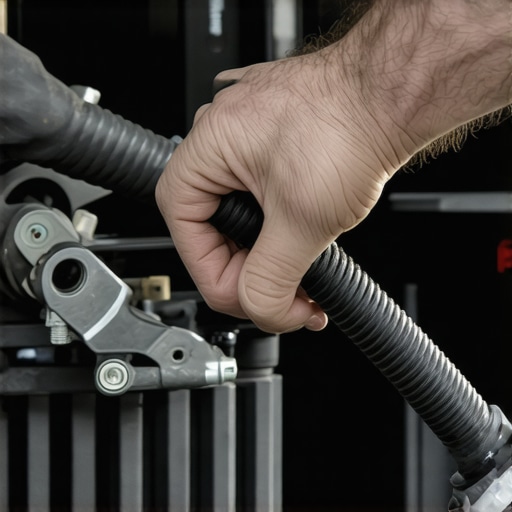
Hoses are often the most neglected part of the thermal management loop. Modern EPDM (Ethylene Propylene Diene Monomer) rubber is significantly more durable than the materials used in the past, but it is not invincible. When performing vehicle diagnostics, it is essential to check for ‘striking,’ where the hose feels crunchy when squeezed near the connectors. This sensation is the physical manifestation of the internal rubber layers breaking down due to the chemical war we discussed earlier. If you are already dealing with strange odors, you might want to investigate why your car smells like burning rubber even when not overheating to see if a hose is resting against a hot exhaust manifold or if internal friction is the cause.
Does a Fail-Safe Thermostat Actually Offer Real Protection?
Many DIYers and some shops opt for ‘fail-safe’ thermostats, which are designed to lock in the open position if the engine reaches a certain overheat threshold. While this sounds like a brilliant safety net, it can lead to its own set of problems. If a fail-safe thermostat triggers prematurely, your engine will never reach proper operating temperature. This prevents the oil from reaching its optimal viscosity and forces the ECU to stay in ‘open-loop’ mode, significantly increasing fuel consumption and potentially damaging the catalytic converter. In auto repair, we often find that a high-quality OEM-spec thermostat is superior to a fail-safe version because it maintains the precise thermal equilibrium required by modern, high-compression engines. If your heater is underperforming, it might not be a clog; the thermostat might simply be stuck partially open, a nuance that requires professional tools to verify.
The Silent Work of Electric Auxiliary Pumps
In the era of downsizing and turbocharging, the mechanical water pump is often assisted by one or more electric auxiliary pumps. These units are critical for ‘after-run’ cooling, where the pump continues to circulate coolant through the turbocharger bearings after the engine is shut off. Failure of these small electric motors won’t always trigger a dashboard light immediately, but it will lead to ‘coking’—the carbonization of oil inside the turbo. This eventually leads to a failure that can feel like a transmission slip or a loss of power. Monitoring these pumps during a car service is a hallmark of an expert technician. If you suspect your cooling system is struggling under load, don’t guess; let our specialists run a full data-log of your cooling fans and auxiliary pumps to ensure every component is pulling its weight. Is your vehicle’s cooling system ready for the next heatwave, or are you driving a ticking time bomb? Contact us today to schedule a deep-dive diagnostic and keep your engine running at its peak.
Catch Cavitation Before It Destroys Your Water Pump
Why pressure testing the cap is a mandatory diagnostic step
Many technicians overlook the radiator cap during a standard car service, yet it is the primary safeguard against localized boiling. When a cap fails to maintain the specified pressure, the boiling point of the coolant drops significantly, allowing steam pockets to form around the hottest parts of the cylinder head. This isn’t just an overheating risk; it’s a mechanical threat. These steam bubbles collapse with incredible force—a process known as cavitation—which can physically erode the metal of your water pump impeller or the cylinder liners themselves. To prevent this, you must know how to spot a failing water pump before your engine overheats, ensuring you catch the damage while it’s still a simple component swap rather than an engine rebuild.
Why universal coolants are not always the smart choice
While ‘all-makes, all-models’ coolants are marketed as a catch-all solution, they often lack the specific corrosion inhibitors required by certain aluminum alloys or plastic gaskets used in European and Japanese imports. Relying on these can lead to ‘additive fallout,’ where the chemicals precipitate out of the liquid and form a gritty sludge. This is why professional vehicle diagnostics prioritize factory-spec fluids over marketing claims. If you have already noticed a drop in cooling efficiency, you might need to investigate the $20 fix for a leaky radiator hose or a full system flush to remove these contaminants before they clog the heater core or impact transmission cooling lines.
#IMAGE_PLACE_HOLDER_E#
Essential Literature for Cooling System Mastery
To truly master modern thermal management, you should consult the same sources the pros use. The SAE J1034 Standard provides the foundational performance requirements for engine coolants, ensuring they meet the high thermal loads of modern engines. For those interested in the chemistry of hose degradation, the Gates Corporation ECD Technical Library is an invaluable resource for understanding how electrical currents destroy rubber from the inside out. Additionally, referring to the National Institute for Automotive Service Excellence (ASE) technical bulletins can provide the precision needed for complex tasks, such as diagnosing why your car cooling fan will not turn off or managing pressurized expansion tanks effectively.
The Bottom Line on Advanced Auto Repair Strategy
Modern auto repair is no longer just about turning wrenches; it is about managing complex chemical and electrical balances. By integrating vehicle diagnostics into every maintenance interval, you can identify issues like electrolysis or pressure loss before they manifest as catastrophic failures like transmission contamination or warped heads. If you want to dive deeper into the technical nuances of your vehicle’s systems, explore the hidden world of vehicle diagnostics to see how the experts stay ahead of the curve. Your vehicle’s longevity depends on a proactive approach to thermal management—do not wait for the warning light to act. Connect with our technical team via our contact us page to schedule a professional system evaluation and keep your engine in its optimal temperature zone.