Stop Guessing and Start Measuring Thermal Flow
The thermostat is often the most misunderstood component in a modern cooling system. It is not merely a valve; it is a precision thermal gatekeeper that dictates the volumetric efficiency and longevity of your internal combustion engine. When a thermostat fails to reach its full opening lift, the result is more than just a rising gauge; it leads to localized hot spots within the cylinder head that can compromise head gasket integrity long before the dashboard warning light illuminates. Effective auto repair necessitates moving beyond simple guesswork and into the realm of empirical verification. In many high-performance scenarios, identifying thermal lag requires a deep understanding of vehicle diagnostics and the physics of heat transfer. According to the Society of Automotive Engineers (SAE), maintaining a tight thermal window is critical for minimizing parasitic loss and ensuring that emissions equipment functions within its intended parameters.
The Science of Radiator Hose Heat Differentials
One of the most reliable methods for verifying thermostat operation involves analyzing the temperature delta between the upper and lower radiator hoses. As the engine approaches its target operating temperature, usually between 190°F and 210°F, the upper hose should remain relatively cool until the thermostat hits its opening point. Once the wax pellet expands and overcomes the spring tension, a sudden, palpable surge of heat should travel through the upper hose. If the hose warms up gradually from the moment the engine starts, the thermostat is likely stuck open or leaking past the seal. Conversely, if the engine block reaches critical temperatures while the radiator remains cold, you are facing a total flow blockage. This process is distinct from other issues, such as when you need to identify a clogged radiator without opening it, as the thermostat specifically controls the initial onset of flow. Proper car service protocols always involve checking these thermal transitions before condemning more expensive components like the water pump or the head gasket.
Can You Trust Your Dashboard Sensor?
Many drivers rely solely on the instrument cluster, but modern gauges are often ‘buffered’ by the ECU to stay in the center across a wide range of temperatures, masking the early stages of a failing thermostat. To truly verify opening, you must tap into the live data stream. By using a scan tool to monitor the Engine Coolant Temperature (ECT) sensor in real-time, you can observe the ‘dip’ in temperature that occurs exactly when the thermostat opens and introduces cold radiator fluid into the block. This level of precision is part of the top auto repair techniques that separate professional technicians from parts-changers. If your temperature stays static or climbs without that characteristic dip, the thermostat is likely restricted.
[IMAGE_PLACEHOLDER]
Verify Operation with Infrared Thermography
For a non-invasive but highly accurate assessment, infrared (IR) thermometers provide a visual map of heat distribution. Point the IR laser at the thermostat housing itself and then at the radiator inlet. A functioning thermostat will show a sharp temperature increase at the housing once the opening threshold is reached. This is especially useful for diagnosing why an engine temperature spikes only in stop-and-go traffic, where airflow is limited and the thermostat’s ability to fully retract is tested. If you suspect your cooling system is struggling under load, consider seeking a professional car service to perform a full system pressure test and flow analysis. Mastering these diagnostic layers ensures that your engine remains within its peak thermal efficiency zone, preventing the cascading failures often associated with neglected cooling maintenance.
Force the Issue with a Controlled Boil Test
When in-car diagnostics leave room for doubt, the definitive answer lies in the ‘boil test.’ By removing the thermostat and suspending it in a pot of water with a high-accuracy thermometer, you can visually confirm the exact temperature at which the valve begins to retract. A common failure point in aftermarket components is a ‘lazy’ spring that does not fully compress, or a wax pellet that has lost its expansion properties over time. Just as there is a notable difference between cheap and expensive oil filters, the internal metallurgy of a thermostat determines its responsiveness to thermal flux. If the valve fails to reach its specified lift—usually around 0.3 inches—at the rated temperature, it will restrict flow enough to cause high-load overheating regardless of how new it is.
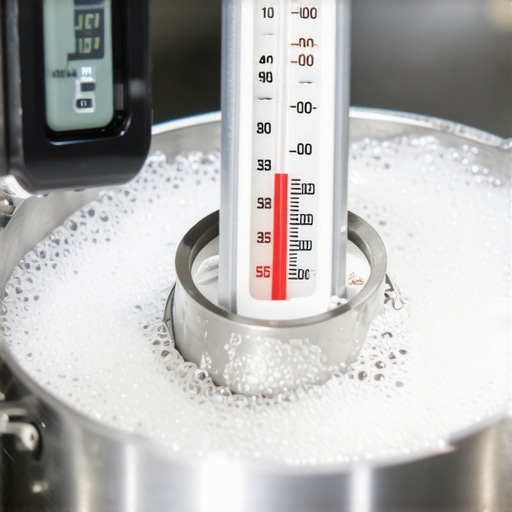
Why Does a Brand New Thermostat Fail the Boiling Water Test?
It is a frustrating reality that ‘new’ does not always mean ‘functional’ in the world of auto repair. Manufacturing defects can result in a thermostat that is calibrated incorrectly from the factory. Furthermore, many DIYers fail to realize that if the thermostat is not suspended—if it touches the bottom of the pot—the direct heat transfer from the metal surface will provide a false reading, leading to an incorrect diagnosis. According to technical data from the National Institute for Automotive Service Excellence (ASE), cooling system failures are among the top causes of roadside breakdowns, often traced back to poor-quality replacement parts or improper installation. Always verify the stamped temperature rating on the flange against your actual test results before committing to the labor-intensive process of reinstallation.
The Treacherous Trap of Air Pockets and Jiggle Pins
Even a perfect thermostat cannot function if it is shrouded in air rather than coolant. Air is a poor conductor of heat, meaning an air pocket trapped behind the thermostat will prevent the wax pellet from ‘sensing’ the true engine temperature, causing a delay in opening that leads to rapid overheating. This is why many high-quality thermostats feature a ‘jiggle pin’ or a small bleed hole. When you perform a car service, ensuring this pin is positioned at the 12 o’clock mark allows trapped air to migrate toward the radiator. Neglecting this step often leads to scenarios where the engine temperature spikes only when the AC is running, as the system is already under thermal stress and cannot compensate for the lack of initial flow. To prevent these air pockets, you may need to locate the hidden drain plug most people miss during a flush to ensure a completely clean, bubble-free fill.
Modern MAP-Controlled Thermostats and Electronic Overrides
In high-performance or late-model European vehicles, the traditional wax pellet is often augmented by an internal heating element controlled by the engine management system. This ‘Map-Controlled Thermostat’ allows the engine to run hotter for fuel efficiency under light loads and cooler for mechanical protection under high loads. Diagnosing these requires more than a thermometer; it necessitates vehicle diagnostics tools to check for electrical resistance in the heater circuit. Using the wrong fluid in these sensitive systems is catastrophic; always consult the coolant color guide to ensure chemical compatibility with the electronic seals and sensors. If you have encountered a thermostat that seems to have a mind of its own after a coolant change, share your experience in the comments below—your diagnostic journey could save another driver from a costly and unnecessary engine teardown.
Your Transmission Depends on That $20 Valve
Modern drivetrain architecture rarely isolates the engine’s thermal cycle from the rest of the vehicle. In many automatic and dual-clutch configurations, the engine coolant serves a dual purpose by regulating transmission fluid temperatures via an integrated heat exchanger. When a thermostat fails to open fully, it doesn’t just put the cylinder head at risk; it effectively chokes the cooling loop for the transmission. Overheated transmission fluid undergoes rapid thermal breakdown, losing its friction-modifying properties and leading to harsh shifts or internal clutch slippage. If you notice erratic gear hunting while your temperature gauge is creeping upward, you aren’t just looking at an auto repair bill for a cooling component; you are witnessing the early stages of a transmission failure. Ensuring your thermostat achieves its full rated lift is a critical step in preserving the sophisticated hydraulics of your gearbox.
Chemical Warfare Inside Your Cooling Passages
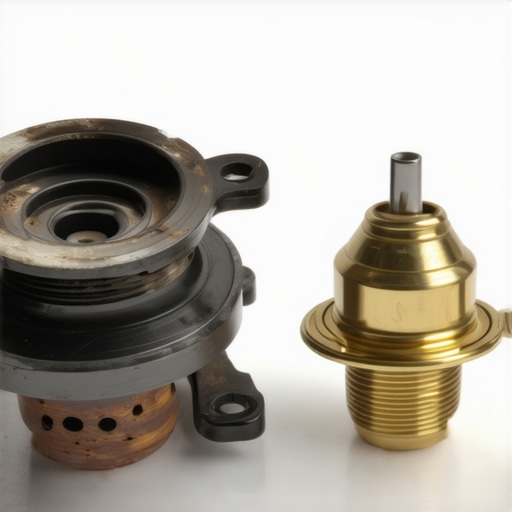
Beyond mechanical fatigue, thermostats are frequently the victims of a silent, microscopic process known as electrolysis. If the engine’s grounding straps are degraded or if the coolant pH has shifted into the acidic range, the cooling system becomes a low-voltage battery. This electrical current literally pulls ions from the soft metal of the thermostat housing and the spring assembly. This chemical erosion can pit the sealing surface, causing the thermostat to ‘hang’ or fail to seat properly even when cold. According to technical insights from Mahle Aftermarket, localized cavitation and mineral scaling can further insulate the wax pellet, creating a thermal lag that prevents the valve from reacting to rapid temperature spikes. This is why a simple visual inspection isn’t enough; you must look for the tell-tale signs of discoloration or ‘shaving’ on the center pin that indicates the valve is traveling off-axis.
Does installing a lower-temperature thermostat actually boost horsepower?
A common myth in the tuning community suggests that swapping a factory 195°F thermostat for a 160°F or 180°F unit will automatically increase power by keeping the intake charge cooler. However, modern vehicle diagnostics reveal a more complex reality. While a cooler engine may slightly reduce the risk of detonation under extreme boost, it often forces the ECU to remain in ‘open-loop’ mode longer, increasing fuel consumption and soot accumulation. Furthermore, engine oil requires a specific thermal threshold to effectively boil off moisture and combustion byproducts. Running too cold can lead to oil dilution and accelerated wear on the cylinder walls. If you are considering a modification, it should only be done in conjunction with a complete ECU re-map that accounts for the altered thermal floor. If you’ve experimented with different temperature ratings, we’d love to hear how it impacted your long-term fuel trims in the comments.
Pressure Caps: The Unsung Hero of Thermal Regulation
It is impossible to discuss thermostat precision without addressing the radiator cap. The boiling point of your coolant is directly proportional to the pressure maintained within the system. A weak cap that fails to hold the specified 15-18 PSI will allow localized boiling around the exhaust ports, creating steam pockets that can fool the thermostat into staying shut or cycling erratically. If you’re noticing a ‘bouncing’ needle on your dashboard, it’s time to schedule a car service to perform a pressure decay test on the entire cooling circuit. A thermostat is only as effective as the pressure environment it operates in, and a micro-leak in the cap seal can undermine the most expensive car service you could perform. The interplay between the expansion tank pressure and the thermostat’s opening curve is a delicate balance that defines your engine’s survival during a summer heatwave.
Stop Cavitation Before It Eats Your Water Pump
When a thermostat becomes restrictive or fails to reach its designated lift height, the downstream effects extend far beyond simple overheating. This restriction creates a significant pressure differential across the water pump, leading to a phenomenon known as cavitation. As the pump impeller spins at high RPMs against a restricted flow, low-pressure vapor bubbles form and violently implode against the metal surfaces. Over time, this microscopic bombardment physically erodes the impeller blades, drastically reducing the pump’s volumetric efficiency. Even if you eventually replace the thermostat, the damaged pump will no longer move enough fluid to maintain thermal equilibrium under load. Professionals performing a car service should always inspect the pump’s weep hole and listen for the distinct ‘gravel’ sound that indicates cavitation-induced bearing wear. This is a critical intersection of vehicle diagnostics where one small valve’s failure causes a catastrophic mechanical cascade.

Can a Faulty Thermostat Trigger a Lean Run Condition?
The short answer is yes, albeit indirectly. Modern engine management systems utilize the Engine Coolant Temperature (ECT) sensor to determine the target air-fuel ratio. If a thermostat is stuck open or has a ‘lazy’ spring that opens too early, the engine may never reach the closed-loop operating temperature. In this state, the ECU continues to command a rich fuel mixture to stabilize combustion, which eventually leads to carbon fouling on the oxygen sensors and catalytic converter. Conversely, a thermostat that opens late can cause localized overheating in the cylinder head, leading the ECU to pull ignition timing and add fuel to cool the combustion chamber—a ‘limp mode’ response that mimics a vacuum leak or a fuel delivery issue. Expert auto repair requires looking at long-term fuel trims alongside temperature data to see if the thermal cycle is the root cause of poor drivability.
Ditch the Multimeter for High-Speed Data Logging
While a basic multimeter can check a sensor’s resistance, it lacks the temporal resolution to catch a thermostat that is ‘hunting.’ By using high-speed data logging via an OBDII interface, you can plot the coolant temperature against engine load and vehicle speed. A healthy system should show a stable, flat line once the operating temperature is reached, regardless of whether you are idling or climbing a steep grade. If you see rhythmic oscillations in the temperature graph, it suggests that the thermostat’s wax pellet has lost its damping properties, causing the valve to bounce between open and closed positions. This mechanical instability stresses the radiator’s plastic end tanks through constant thermal expansion and contraction. According to technical data from Gates Corporation, these rapid thermal cycles are a leading cause of premature seal failure in modern aluminum-core radiators.
High-Altitude Cooling Challenges You Haven’t Considered
Atmospheric pressure plays a silent role in how your cooling system behaves, especially when traversing mountain passes. As altitude increases, the boiling point of the coolant drops significantly. At 10,000 feet, water boils at roughly 193°F—dangerously close to the opening temperature of many factory thermostats. In these environments, the pressure cap’s role is magnified, but the thermostat must also be in peak condition to prevent the fluid from flashing into steam the moment it leaves the pressurized block. If your vehicle struggles with ‘ghost’ overheating in high-altitude regions but performs perfectly at sea level, the thermostat’s calibration may be drifting just enough to lose the battle against vapor pressure. Have you ever noticed your temperature gauge behaving differently during a road trip through the mountains? Share your high-altitude diagnostic stories in the comments to help others troubleshoot these complex environmental variables.
Stop Guessing and Start Measuring Thermal Flow
The thermostat is often the most misunderstood component in a modern cooling system. It is not merely a valve; it is a precision thermal gatekeeper that dictates the volumetric efficiency and longevity of your internal combustion engine. When a thermostat fails to reach its full opening lift, the result is more than just a rising gauge; it leads to localized hot spots within the cylinder head that can compromise head gasket integrity long before the dashboard warning light illuminates. Effective auto repair necessitates moving beyond simple guesswork and into the realm of empirical verification. In many high-performance scenarios, identifying thermal lag requires a deep understanding of vehicle diagnostics and the physics of heat transfer. According to the Society of Automotive Engineers (SAE), maintaining a tight thermal window is critical for minimizing parasitic loss and ensuring that emissions equipment functions within its intended parameters.
The Science of Radiator Hose Heat Differentials
One of the most reliable methods for verifying thermostat operation involves analyzing the temperature delta between the upper and lower radiator hoses. As the engine approaches its target operating temperature, usually between 190°F and 210°F, the upper hose should remain relatively cool until the thermostat hits its opening point. Once the wax pellet expands and overcomes the spring tension, a sudden, palpable surge of heat should travel through the upper hose. If the hose warms up gradually from the moment the engine starts, the thermostat is likely stuck open or leaking past the seal. Conversely, if the engine block reaches critical temperatures while the radiator remains cold, you are facing a total flow blockage. This process is distinct from other issues, such as when you need to identify a clogged radiator without opening it, as the thermostat specifically controls the initial onset of flow. Proper car service protocols always involve checking these thermal transitions before condemning more expensive components like the water pump or the head gasket.
Can You Trust Your Dashboard Sensor?
Many drivers rely solely on the instrument cluster, but modern gauges are often ‘buffered’ by the ECU to stay in the center across a wide range of temperatures, masking the early stages of a failing thermostat. To truly verify opening, you must tap into the live data stream. By using a scan tool to monitor the Engine Coolant Temperature (ECT) sensor in real-time, you can observe the ‘dip’ in temperature that occurs exactly when the thermostat opens and introduces cold radiator fluid into the block. This level of precision is part of the top auto repair techniques that separate professional technicians from parts-changers. If your temperature stays static or climbs without that characteristic dip, the thermostat is likely restricted.
[IMAGE_PLACEHOLDER]
Verify Operation with Infrared Thermography
For a non-invasive but highly accurate assessment, infrared (IR) thermometers provide a visual map of heat distribution. Point the IR laser at the thermostat housing itself and then at the radiator inlet. A functioning thermostat will show a sharp temperature increase at the housing once the opening threshold is reached. This is especially useful for diagnosing why an engine temperature spikes only in stop-and-go traffic, where airflow is limited and the thermostat’s ability to fully retract is tested. If you suspect your cooling system is struggling under load, consider seeking a professional car service to perform a full system pressure test and flow analysis. Mastering these diagnostic layers ensures that your engine remains within its peak thermal efficiency zone, preventing the cascading failures often associated with neglected cooling maintenance.
Force the Issue with a Controlled Boil Test
When in-car diagnostics leave room for doubt, the definitive answer lies in the ‘boil test.’ By removing the thermostat and suspending it in a pot of water with a high-accuracy thermometer, you can visually confirm the exact temperature at which the valve begins to retract. A common failure point in aftermarket components is a ‘lazy’ spring that does not fully compress, or a wax pellet that has lost its expansion properties over time. Just as there is a notable difference between cheap and expensive oil filters, the internal metallurgy of a thermostat determines its responsiveness to thermal flux. If the valve fails to reach its specified lift—usually around 0.3 inches—at the rated temperature, it will restrict flow enough to cause high-load overheating regardless of how new it is.
Why Does a Brand New Thermostat Fail the Boiling Water Test?
It is a frustrating reality that ‘new’ does not always mean ‘functional’ in the world of auto repair. Manufacturing defects can result in a thermostat that is calibrated incorrectly from the factory. Furthermore, many DIYers fail to realize that if the thermostat is not suspended—if it touches the bottom of the pot—the direct heat transfer from the metal surface will provide a false reading, leading to an incorrect diagnosis. According to technical data from the National Institute for Automotive Service Excellence (ASE), cooling system failures are among the top causes of roadside breakdowns, often traced back to poor-quality replacement parts or improper installation. Always verify the stamped temperature rating on the flange against your actual test results before committing to the labor-intensive process of reinstallation.
The Treacherous Trap of Air Pockets and Jiggle Pins
Even a perfect thermostat cannot function if it is shrouded in air rather than coolant. Air is a poor conductor of heat, meaning an air pocket trapped behind the thermostat will prevent the wax pellet from ‘sensing’ the true engine temperature, causing a delay in opening that leads to rapid overheating. This is why many high-quality thermostats feature a ‘jiggle pin’ or a small bleed hole. When you perform a car service, ensuring this pin is positioned at the 12 o’clock mark allows trapped air to migrate toward the radiator. Neglecting this step often leads to scenarios where the engine temperature spikes only when the AC is running, as the system is already under thermal stress and cannot compensate for the lack of initial flow. To prevent these air pockets, you may need to locate the hidden drain plug most people miss during a flush to ensure a completely clean, bubble-free fill.
Modern MAP-Controlled Thermostats and Electronic Overrides
In high-performance or late-model European vehicles, the traditional wax pellet is often augmented by an internal heating element controlled by the engine management system. This ‘Map-Controlled Thermostat’ allows the engine to run hotter for fuel efficiency under light loads and cooler for mechanical protection under high loads. Diagnosing these requires more than a thermometer; it necessitates vehicle diagnostics tools to check for electrical resistance in the heater circuit. Using the wrong fluid in these sensitive systems is catastrophic; always consult the coolant color guide to ensure chemical compatibility with the electronic seals and sensors. If you have encountered a thermostat that seems to have a mind of its own after a coolant change, share your experience in the comments below—your diagnostic journey could save another driver from a costly and unnecessary engine teardown.
Your Transmission Depends on That $20 Valve
Modern drivetrain architecture rarely isolates the engine’s thermal cycle from the rest of the vehicle. In many automatic and dual-clutch configurations, the engine coolant serves a dual purpose by regulating transmission fluid temperatures via an integrated heat exchanger. When a thermostat fails to open fully, it doesn’t just put the cylinder head at risk; it effectively chokes the cooling loop for the transmission. Overheated transmission fluid undergoes rapid thermal breakdown, losing its friction-modifying properties and leading to harsh shifts or internal clutch slippage. If you notice erratic gear hunting while your temperature gauge is creeping upward, you aren’t just looking at an auto repair bill for a cooling component; you are witnessing the early stages of a transmission failure. Ensuring your thermostat achieves its full rated lift is a critical step in preserving the sophisticated hydraulics of your gearbox.
Chemical Warfare Inside Your Cooling Passages
Beyond mechanical fatigue, thermostats are frequently the victims of a silent, microscopic process known as electrolysis. If the engine’s grounding straps are degraded or if the coolant pH has shifted into the acidic range, the cooling system becomes a low-voltage battery. This electrical current literally pulls ions from the soft metal of the thermostat housing and the spring assembly. This chemical erosion can fit the sealing surface, causing the thermostat to ‘hang’ or fail to seat properly even when cold. According to technical insights from Mahle Aftermarket, localized cavitation and mineral scaling can further insulate the wax pellet, creating a thermal lag that prevents the valve from reacting to rapid temperature spikes. This is why a simple visual inspection isn’t enough; you must look for the tell-tale signs of discoloration or ‘shaving’ on the center pin that indicates the valve is traveling off-axis.
Does installing a lower-temperature thermostat actually boost horsepower?
A common myth in the tuning community suggests that swapping a factory 195°F thermostat for a 160°F or 180°F unit will automatically increase power by keeping the intake charge cooler. However, modern vehicle diagnostics reveal a more complex reality. While a cooler engine may slightly reduce the risk of detonation under extreme boost, it often forces the ECU to remain in ‘open-loop’ mode longer, increasing fuel consumption and soot accumulation. Furthermore, engine oil requires a specific thermal threshold to effectively boil off moisture and combustion byproducts. Running too cold can lead to oil dilution and accelerated wear on the cylinder walls. If you are considering a modification, it should only be done in conjunction with a complete ECU re-map that accounts for the altered thermal floor. If you’ve experimented with different temperature ratings, we’d love to hear how it impacted your long-term fuel trims in the comments.
Pressure Caps: The Unsung Hero of Thermal Regulation
It is impossible to discuss thermostat precision without addressing the radiator cap. The boiling point of your coolant is directly proportional to the pressure maintained within the system. A weak cap that fails to hold the specified 15-18 PSI will allow localized boiling around the exhaust ports, creating steam pockets that can fool the thermostat into staying shut or cycling erratically. If you’re noticing a ‘bouncing’ needle on your dashboard, it’s time to schedule a car service to perform a pressure decay test on the entire cooling circuit. A thermostat is only as effective as the pressure environment it operates in, and a micro-leak in the cap seal can undermine the most expensive car service you could perform. The interplay between the expansion tank pressure and the thermostat’s opening curve is a delicate balance that defines your engine’s survival during a summer heatwave.
Stop Cavitation Before It Eats Your Water Pump
When a thermostat becomes restrictive or fails to reach its designated lift height, the downstream effects extend far beyond simple overheating. This restriction creates a significant pressure differential across the water pump, leading to a phenomenon known as cavitation. As the pump impeller spins at high RPMs against a restricted flow, low-pressure vapor bubbles form and violently implode against the metal surfaces. Over time, this microscopic bombardment physically erodes the impeller blades, drastically reducing the pump’s volumetric efficiency. Even if you eventually replace the thermostat, the damaged pump will no longer move enough fluid to maintain thermal equilibrium under load. Professionals performing a car service should always inspect the pump’s weep hole and listen for the distinct ‘gravel’ sound that indicates cavitation-induced bearing wear. This is a critical intersection of vehicle diagnostics where one small valve’s failure causes a catastrophic mechanical cascade.
Can a Faulty Thermostat Trigger a Lean Run Condition?
The short answer is yes, albeit indirectly. Modern engine management systems utilize the Engine Coolant Temperature (ECT) sensor to determine the target air-fuel ratio. If a thermostat is stuck open or has a ‘lazy’ spring that opens too early, the engine may never reach the closed-loop operating temperature. In this state, the ECU continues to command a rich fuel mixture to stabilize combustion, which eventually leads to carbon fouling on the oxygen sensors and catalytic converter. Conversely, a thermostat that opens late can cause localized overheating in the cylinder head, leading the ECU to pull ignition timing and add fuel to cool the combustion chamber—a ‘limp mode’ response that mimics a vacuum leak or a fuel delivery issue. Expert auto repair requires looking at long-term fuel trims alongside temperature data to see if the thermal cycle is the root cause of poor drivability.
Ditch the Multimeter for High-Speed Data Logging
While a basic multimeter can check a sensor’s resistance, it lacks the temporal resolution to catch a thermostat that is ‘hunting.’ By using high-speed data logging via an OBDII interface, you can plot the coolant temperature against engine load and vehicle speed. A healthy system should show a stable, flat line once the operating temperature is reached, regardless of whether you are idling or climbing a steep grade. If you see rhythmic oscillations in the temperature graph, it suggests that the thermostat’s wax pellet has lost its damping properties, causing the valve to bounce between open and closed positions. This mechanical instability stresses the radiator’s plastic end tanks through constant thermal expansion and contraction. According to technical data from Gates Corporation, these rapid thermal cycles are a leading cause of premature seal failure in modern aluminum-core radiators.
High-Altitude Cooling Challenges You Haven’t Considered
Atmospheric pressure plays a silent role in how your cooling system behaves, especially when traversing mountain passes. As altitude increases, the boiling point of the coolant drops significantly. At 10,000 feet, water boils at roughly 193°F—dangerously close to the opening temperature of many factory thermostats. In these environments, the pressure cap’s role is magnified, but the thermostat must also be in peak condition to prevent the fluid from flashing into steam the moment it leaves the pressurized block. If your vehicle struggles with ‘ghost’ overheating in high-altitude regions but performs perfectly at sea level, the thermostat’s calibration may be drifting just enough to lose the battle against vapor pressure. Have you ever noticed your temperature gauge behaving differently during a road trip through the mountains? Share your high-altitude diagnostic stories in the comments to help others troubleshoot these complex environmental variables.
Expert Insights & Advanced Considerations
Why Infrared Cameras Beat Simple Thermometers
While a standard IR thermometer gives you a single point-of-contact reading, high-resolution thermal imaging reveals the specific flow patterns through the radiator core. This allows you to differentiate between a partially restricted thermostat and the early stages of a failing water pump. Professional-grade auto repair diagnostics rely on these heat maps to identify laminar flow disruptions that a single-point laser simply cannot detect.
The Hidden Grounding Strap Connection
Many technicians overlook the role of electrical grounds in cooling system health. If your engine lacks a clean path to the chassis, the coolant becomes a conductor for stray current. This electrolysis doesn’t just corrode the radiator; it chemically attacks the thermostat’s wax element, causing it to lose its expansion properties years ahead of schedule. Always integrate a ground-check into your vehicle diagnostics routine to protect your internal sensors from premature degradation.
Don’t Ignore the Transmission Heat Exchange
In many modern platforms, the thermostat acts as the primary gatekeeper for transmission fluid cooling. A valve that doesn’t fully lift restricts flow to the auxiliary heat exchanger, leading to the type of transmission troubles that can cost thousands in gear-set replacements. Precision thermal management is as much about the health of your gearbox as it is about preventing engine melt-down.
Curated Expert Resources
SAE International Technical Library: The definitive source for engineering papers on the fluid dynamics and metallurgy behind modern cooling system design.
Gates Technical Bulletins: An invaluable resource for real-world failure analysis, offering deep dives into how specific belt and hose failures impact thermostat cycling and system pressure.
ASE Certification Study Guides: Essential for mastering the electrical side of expert auto repair tips for 2025, specifically regarding MAP-controlled cooling circuits and multi-stage thermostats.
Final Expert Perspective
Mastering the thermal environment of a vehicle requires moving beyond the “replace and pray” mentality. By integrating high-speed data logging, thermal imaging, and chemical analysis, you can ensure that every auto repair intervention is backed by empirical evidence rather than intuition. If you are unsure of your current cooling system health, seek out a specialized car service that utilizes advanced diagnostic tools. We invite fellow technicians and enthusiasts to share their most challenging cooling system “ghost” stories in the comments—your professional insights help build a more resilient automotive community for everyone.