The phenomenon of dashboard illumination intensifying as engine revolutions increase is rarely a benign characteristic of a healthy vehicle. It serves as a real-time visual indicator of the delicate interplay between the engine’s rotational speed and the electrical charging system’s capacity to regulate current. In a standard 12-volt system, the alternator must generate a higher voltage—typically between 13.5 and 14.7 volts—to effectively charge the battery and power the vehicle’s electronics. However, when the output begins to mirror the throttle input too closely, it signifies a loss of control within the voltage regulation circuit. Expert vehicle diagnostics reveal that this variance is the precursor to more significant component failure, potentially damaging sensitive semiconductors within the engine control unit (ECU). [image_placeholder]
The Alternator’s Reactive Output and the Myth of Constant Voltage
The primary driver of this fluctuation is the alternator’s internal voltage regulator. As the engine revs higher, the rotor spins faster within the stator, increasing the rate at which magnetic lines of flux are cut. This naturally increases the raw AC voltage produced. The regulator’s job is to pulse-width modulate the field current to maintain a steady DC output. When the regulator begins to fail, it loses its ability to ‘clamp’ this output, leading to the surge in brightness you witness. This is fundamentally different from a scenario where your headlights dim when you turn the steering wheel, which usually indicates an amperage draw exceeding supply. Here, we are witnessing a supply-side over-saturation.
Why do your lights react so aggressively to the throttle?
The aggressive response to RPM often points to a ‘leaky’ diode within the bridge rectifier. The bridge rectifier consists of several diodes that allow current to flow in one direction only, converting AC to DC. If one of these diodes fails or becomes ‘leaky,’ AC voltage ripples can enter the DC electrical system. This ‘dirty’ power causes flickering and erratic brightness. It is essential to learn how to spot a bad ground wire before it kills your new battery, as a poor ground can force the alternator to work harder, accelerating the wear on these internal components.
Protect Your ECU from Voltage Over-Saturation
Modern vehicles are essentially rolling computers. While older, purely mechanical systems could tolerate slight voltage surges, today’s auto repair landscape is dominated by delicate sensors and microchips. According to standards set by SAE International (Standard J180), automotive charging systems must maintain a strict voltage ceiling to prevent thermal runaway. An overcharging alternator can literally boil the electrolyte in your battery and shorten the lifespan of every bulb and control module in the car. If you notice your dash lights behaving like a tachometer, the system is no longer operating within safe parameters.
Stop Bridge Rectifier Failure Before the Battery Boils
Technicians use oscilloscopes to view the voltage waveform to confirm this instability. If you see a ‘sawtooth’ pattern rather than a flat line, your rectifier is compromised. This instability can also affect electronic shifting logic. If your vehicle is exhibiting these electrical anomalies alongside shifting issues, explore our breakdown on transmission failures decoded to see how low voltage or AC interference impacts solenoid performance. Professionals should always verify the alternator’s ripple voltage before condemning a battery that appears to be failing prematurely.
When the Chassis Becomes an Unwanted Resistor
While the alternator and its internal regulator are the primary suspects, the vehicle’s grounding path often acts as a silent conspirator. In a perfectly functioning circuit, the ground should provide a path of zero resistance back to the battery’s negative terminal. However, road salt, vibration, and age-induced corrosion at the engine block or the negative battery terminal introduce parasitic resistance. When this occurs, the voltage regulator ‘senses’ a lower voltage than what is actually present at the battery because the return path is choked. To compensate, it ramps up the alternator’s field current to increase output. As you accelerate and the alternator spins faster, this compensation becomes hyper-reactive, leading to that characteristic surge in dashboard light intensity. It is vital to learn how to identify a bad ground wire without a multimeter to rule out these basic connection failures before spending hundreds on a new alternator. High-resistance grounds don’t just brighten lights; they create electrical ‘noise’ that can interfere with sensitive sensors, leading to frustrating cases where your dashboard lights flicker every time you hit a pothole due to momentary physical interruptions in the ground loop.
Can your battery’s internal resistance trick the charging system?
This is a critical question for any enthusiast. A battery with a shorted cell or significant plate sulfation presents a high load to the alternator regardless of the current state of charge. According to technical bulletins from the Battery Council International (BCI), a battery that can no longer act as a ‘buffer’ or capacitor for the electrical system forces the alternator to carry the entire load of the vehicle’s ignition and accessory systems directly. When the battery is chemically unable to absorb the alternator’s output or damp its ripples, the excess energy manifests as high-voltage spikes during acceleration. You must discern how to tell if your battery is truly dying or just has dirty terminals, as a simple cleaning might save the regulator from burning out under the constant strain of a ‘phantom’ load. 
Thermal Stress and the Cold Start Paradox
Alternators are most efficient when cool, but they generate immense heat during high-load operation. Many drivers notice the brightening dash lights more prominently during a cold start or in freezing temperatures. This occurs because the internal regulator allows a higher ‘bulk’ charge voltage when the ambient temperature is low to overcome the naturally higher internal resistance of cold battery chemistry. However, if the regulator’s thermal compensation circuit is faulty, it will fail to taper this voltage off as the engine warms up. This sustained high voltage is often the reason why the hidden electrical drain killing your battery while the car is parked might actually be a damaged diode that has stayed in a ‘partially open’ state after a heat-soak cycle.
Ghost in the Machine and CAN-Bus Interference
Beyond the visible flicker, excessive voltage spikes can wreak havoc on the vehicle’s Controller Area Network (CAN-bus). When the alternator sends out unfiltered AC voltage or surges past 15 volts, the digital communication packets between the engine control module and the transmission control module can become corrupted. This often leads to ‘ghost codes’—random warning lights for the ABS, traction control, or airbags that have no mechanical basis. If you have experienced these symptoms along with a strange ozone smell or a battery case that feels hot to the touch, please share your story in the comments or suggest a topic for our next deep dive; catching these electrical surges early is the only way to prevent a total control module meltdown.The mechanical connection between the crankshaft and the alternator is often overlooked in favor of purely electrical diagnostics, yet it is a frequent source of voltage instability. Modern high-output charging systems frequently utilize an Overrunning Alternator Decoupler (OAD) pulley rather than a solid piece of machined steel. These specialized components contain an internal spring and clutch mechanism designed to absorb the torsional vibrations of the engine, particularly in downsized, high-compression powerplants. When the internal spring fatigues or the clutch seizes, the alternator rotor is subjected to the engine’s microscopic accelerations and decelerations within a single combustion cycle. This mechanical ‘jitter’ causes the magnetic field inside the stator to fluctuate wildly, manifesting as the very brightening and dimming cycles that mimic the throttle’s position. If you suspect your pulley is the culprit, our guide on vehicle diagnostics can help you differentiate between a bearing whine and a decoupling failure. 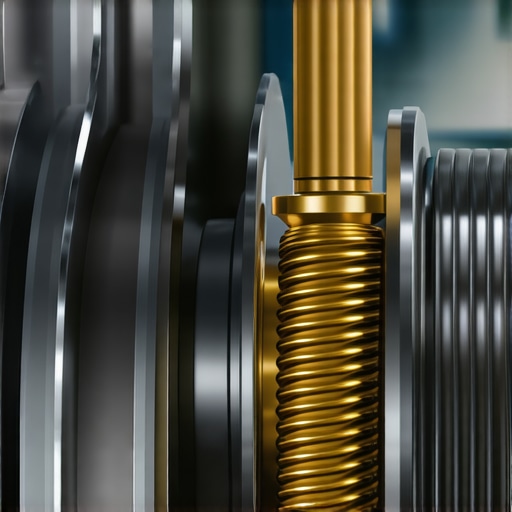
Smart Charging Logic and the ECM’s Invisible Hand
In vehicles manufactured within the last decade, the concept of a standalone voltage regulator is largely obsolete. Instead, the Engine Control Module (ECM) manages the alternator via a Local Interconnect Network (LIN) bus or Pulse Width Modulation (PWM). This ‘smart charging’ system deliberately varies the voltage based on drive cycles, fuel economy targets, and even the calculated temperature of the battery plates. According to technical documentation from Bosch Mobility Solutions, these systems can command a voltage spike up to 15.5 volts during deceleration to capture ‘free’ energy—a process known as regenerative charging. However, if the battery current sensor (usually located on the negative terminal) provides inaccurate data, the ECM may erroneously command these high-voltage states during acceleration, leading to unintended dashboard illumination.
How does a failing harmonic balancer impact electrical stability?
While it seems like a strictly mechanical concern, the harmonic balancer plays a pivotal role in electrical consistency. If the rubber dampening ring between the inner and outer halves of the balancer begins to slip, the belt drive speed no longer correlates perfectly with engine RPM. During rapid acceleration, the outer ring may lag or ‘chatter’ against the inner hub. This causes the alternator’s rotational speed to fluctuate independently of the actual engine speed, creating an erratic voltage output that the regulator cannot dampen fast enough. This mechanical slip often produces a faint ‘chirp’ that drivers mistake for a loose belt, but the visual result is a strobe-like effect on the instrument cluster that grows more intense as you climb the power band.
Harmonic Distortion and the High-Frequency Ripple Effect
Advanced technicians often look beyond simple DC voltage and investigate the ‘AC ripple’ using a digital storage oscilloscope (DSO). Every alternator produces some level of AC ripple—essentially the leftover ‘noise’ from the rectification process. However, as the alternator’s carbon brushes wear down or the slip rings become pitted, the physical contact point becomes inconsistent. At higher RPMs, the centrifugal force can cause the brushes to ‘bounce’ slightly off the slip rings. This creates high-frequency harmonic distortion that bypasses the battery’s natural filtering capabilities. This interference doesn’t just brighten the lights; it can induce false signals in the crankshaft position sensor circuit, leading to mysterious engine stumbles that only occur under load. The topography of the slip ring surface is critical; even a few microns of uneven wear can create enough turbulence at 5,000 alternator RPM to disrupt current flow. As the heat increases, the metal expands, potentially exacerbating these gaps and leading to a cascading failure of the voltage regulation loop. Have you ever noticed your car ‘hiccuping’ just as the dash lights peak in brightness? Understanding the link between physical brush contact and digital signal integrity is key to solving these intermittent gremlins. Check out our deep dive into expert auto repair tips for more on oscilloscope diagnostics.
Fail-Safe Circuits That Aren’t Failing Safely
The interaction between RPM and illumination often reveals an overlooked victim: the electrolytic capacitors within the instrument cluster and the Engine Control Module. These components act as local shock absorbers, smoothing out the minor fluctuations that the primary voltage regulator misses. As these capacitors age or suffer from thermal exhaustion, their Equivalent Series Resistance (ESR) increases. This degradation means they can no longer ‘clamp’ the high-frequency spikes generated by an alternator spinning at peak velocity. Consequently, the dash lights become a direct window into the raw, unfiltered electrical environment of the charging system. This is a critical stage in vehicle diagnostics where a simple part swap might not be enough if the internal filtering of your expensive modules has already been compromised by heat.
Does your car’s dimmer switch hide the symptoms of a dying alternator?
Many drivers unknowingly mask the early warning signs of an overcharging system by keeping their dashboard illumination at a lower setting. However, if the dimmer rheostat or the digital PWM controller is nearing its thermal limit, the increased current from a high-RPM surge can cause the dimming circuit to ‘bypass’ or fail in a closed state, momentarily jumping to full brightness. Professionals utilize high-speed data loggers to capture these ‘Load Dump’ transients that a standard multimeter might miss. According to technical insights on ISO 7637-2 standards for road vehicles, these electrical disturbances can reach levels that exceed the breakdown voltage of protective Zener diodes, leading to permanent hardware damage. 
Why Newer LEDs Mask the Traditional Signs of Overcharging
In older incandescent systems, the filament brightness is a linear response to voltage. Modern LED clusters, however, use specialized drivers. If these drivers are poorly shielded or have inadequate input filtering, the increased alternator frequency can cause ‘beating’ interference with the LED’s internal clock. This creates a shimmering effect rather than a steady brightening. If you notice a high-pitched whine through your radio speakers synchronized with the light surges, you are likely hearing the alternator’s phase-shift through the vehicle’s audio ground. This crossover interference is a major red flag for a failing rectifier bridge, much like the issues discussed in our guide on why dashboard lights flicker when physical connections are taxed.
Inductive Kickback and the Danger of Sudden Electrical Load Shedding
Another complex factor is ‘load shedding.’ If your alternator is pumping out 100 amps at high RPM and a large consumer like the radiator fan suddenly switches off, the sudden drop in demand creates a massive inductive kickback. A healthy battery acts as a giant sponge for this energy, but a battery with high internal resistance—which we cover in our tutorial on dirty battery terminals versus dying cells—cannot absorb it. This transient spike is what you see as that sudden flare in your dash lights. Over time, these spikes degrade the insulation on the copper windings of your alternator, eventually leading to an internal short.
Rescue Your Modules Before the Voltage Spikes Permanentize
The cost of ignoring a surging alternator extends far beyond a few blown bulbs. High-voltage transients can ‘punch through’ the thin gate oxide layers of the MOSFETs inside your transmission controller. If you’ve felt a harsh shift right as your lights surged, the solenoids are likely receiving more current than the logic was programmed to handle. This relationship between electrical health and mechanical performance is explored further in our article on transmission failures decoded. Before you replace the alternator, perform a voltage drop test on the positive battery cable. A slight resistance here can trick the ‘smart’ regulator into thinking the battery is perpetually discharged, causing it to ‘full-field’ its output at high RPMs. Have you caught a voltage surge early enough to save your ECU? Share your diagnostic findings in the comments and let us know which tool helped you pinpoint the fault before it became a costly repair.
Expert Insights & Advanced Considerations
Put Down the Multimeter and Grab an Oscilloscope
While a standard multimeter is useful for basic battery health, it lacks the sampling frequency to capture the transient voltage spikes that cause dashboard illumination to surge. Experts utilize an oscilloscope to visualize the AC ripple; a visible “sawtooth” pattern confirms a failing bridge rectifier within the alternator. This precision in vehicle diagnostics is the only way to prevent high-frequency interference from corrupting your engine control unit logic.
Stop Treating Your Battery as a Passive Component
The battery acts as a massive capacitor for the entire vehicle electrical system. When its internal resistance increases due to sulfation, it loses its ability to buffer the alternator’s output. You should why you should never ignore a flickering dashboard light, as it is often a visual cue that the battery is no longer smoothing out the electrical surges produced during rapid acceleration.
Audit Your Chassis Grounds Every Two Years
Grounding points are prone to galvanic corrosion that is often invisible to the naked eye. A high-resistance ground path forces the voltage regulator to over-compensate, leading to the brightness fluctuations you see at higher RPMs. Utilizing the simple trick to find a parasitic battery drain can often reveal these high-resistance connections before they lead to a total charging system failure.
[image_placeholder]
Curated Expert Resources
SAE International J180 Standards: These documents provide the definitive technical limits for automotive charging systems and are essential for anyone studying the engineering behind voltage regulation.
Bosch Mobility Technical Archives: A premier source for understanding the LIN-bus communication protocols used between modern alternators and the ECM.
Battery Council International (BCI): Offers comprehensive data on how internal resistance and battery chemistry impact the load-carrying capacity of vehicle electronics.
Final Expert Perspective
When your dashboard lights grow brighter in direct response to engine speed, your vehicle is signaling a critical loss of electrical regulation. By leveraging advanced expert auto repair tips for 2025, you can move beyond basic parts-swapping and identify the root cause—whether it is a leaky diode or a deteriorating ground loop. If your diagnostic findings remain inconclusive, learning how to find reliable car service near you in 2025 ensures that your vehicle’s sensitive semiconductors are protected by professional-grade equipment. Have you successfully diagnosed a surging alternator before it damaged your ECU? Share your insights and diagnostic steps in the comments to help fellow drivers master their vehicle’s electrical health.