The Critical Intersection of Mechanical Power and Electrical Reliability
In the sophisticated landscape of modern automotive engineering, the charging system serves as the heartbeat of the vehicle’s electrical nervous system. While most car owners perceive the battery as the ultimate power source, it is the alternator that performs the heavy lifting during operation, converting rotational energy from the engine into the electricity required to power everything from fuel injectors to infotainment systems. Misdiagnosing a failed charging system as a simple battery issue is one of the most common and costly errors in DIY auto repair. By understanding the symbiotic relationship between these components, you can effectively navigate the hidden world of vehicle diagnostics to pinpoint the root cause of electrical instability before you find yourself stranded.
Spotting Electrical Gremlins Before the System Fails
One of the most reliable indicators of a dying alternator is a phenomenon known as voltage fluctuation. Unlike a battery, which provides a steady but limited reserve of power, a healthy alternator must adapt its output to the electrical load demanded by the vehicle. If you notice your dashboard lights get brighter when you rev the engine, you are witnessing an inconsistent voltage regulator struggling to maintain equilibrium. This instability often manifests in secondary systems first; your power windows might move sluggishly, or your radio may experience intermittent signal loss. These symptoms are precursors to a total system collapse and should be treated as urgent warnings rather than minor inconveniences.
Could a Failing Alternator Actually Mimic a Transmission Failure?
It is a little-known fact among casual drivers that modern electronically controlled transmissions rely heavily on stable voltage to manage shift points and solenoid engagement. When an alternator begins to fail, the resulting ‘dirty’ electricity or low voltage can cause the Transmission Control Module (TCM) to behave erratically. This often results in harsh shifting or ‘limp mode,’ leading many to mistakenly seek transmission failures decoded when the actual culprit is a failing diode bridge in the charging unit. Before committing to expensive drivetrain repairs, always ensure your electrical system is providing the 13.5 to 14.5 volts necessary for sensitive control modules to function correctly.
Use a Multimeter to Prove Your Alternator is the Culprit
If you suspect your charging system is compromised, you do not need a dealership-grade scanner to confirm your suspicions. A simple multimeter set to DC voltage can provide definitive proof. With the engine off, a healthy battery should read approximately 12.6 volts. Once the engine is running, that reading should jump to at least 13.8 volts. If the voltage stays the same or drops after starting the car, the alternator is not providing the necessary current to recharge the battery. This test is the most efficient way to determine how to tell if your alternator is killing your new battery. According to standards set by the Society of Automotive Engineers (SAE), consistent voltage regulation is vital for the longevity of both the lead-acid battery and the vehicle’s sensitive semiconductor components.
Mechanical Clues You Can Hear and Smell
Sometimes the best diagnostic tools are your own senses. A failing alternator often produces a high-pitched whining or grinding noise, usually indicating a bearing failure within the unit’s housing. Furthermore, if you smell burning rubber or hot wires, the alternator belt may be slipping or the internal coils may be overheating due to excessive electrical demand. Ignoring these mechanical signals can lead to a snapped serpentine belt, which results in an immediate loss of power steering and engine cooling. To sharpen your diagnostic skills and avoid common pitfalls, consider reviewing these top auto repair techniques for 2025. If you have encountered a persistent electrical mystery, we invite you to share your experience with our community of experts to help others refine their diagnostic process.
Why a Shiny New Alternator Won’t Fix a Bad Ground
Even the most powerful high-output alternator is rendered useless if the electricity has no clear path back to the battery. Many DIY mechanics overlook the importance of the engine ground strap and the battery cables themselves. A corroded ground creates resistance, heat, and a massive voltage drop, forcing the alternator to work harder until it eventually burns out its internal diodes. Before assuming your charging unit is toast, inspect the terminals for corrosion or physical looseness. Sometimes, the solution is as simple as the 2-fix for a loose battery cable that won’t tighten. By performing a voltage drop test between the alternator case and the negative battery terminal, you can ensure the ground circuit is actually capable of handling the current load. 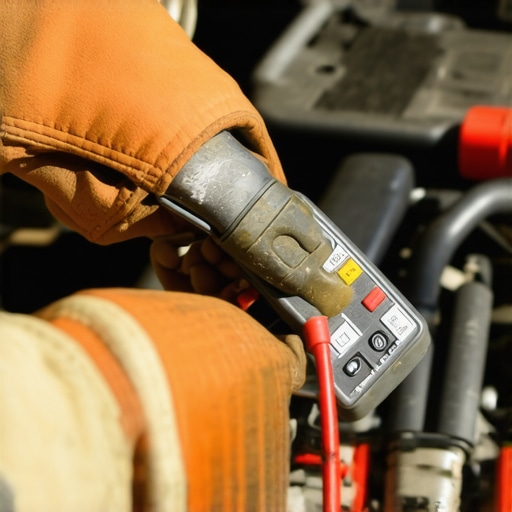
Smart Charging and the Modern Power Management Module
Unlike vehicles from a decade ago, modern cars often utilize ‘smart’ charging systems where the Powertrain Control Module (PCM) dictates exactly how much voltage the alternator should produce. These systems are designed to improve fuel economy by reducing the alternator’s drag on the engine when the battery is fully charged. However, this complexity means a failing sensor or a software glitch can mimic a hardware failure. If your charging light is on but the alternator tests fine on a bench, the issue may lie within the communication network. This is why it is essential to stop your alternator from dying early with this clean tip: ensure all electrical connectors are free of oil and debris, as high resistance in a sensor wire can confuse the PCM into shutting down the charging process entirely.
Is Your Serpentine Belt Tensioner Lying to You?
A common diagnostic pitfall involves focusing solely on the alternator while ignoring the mechanical components that drive it. A serpentine belt might look perfectly intact, but if the automatic tensioner has lost its spring rate, the belt will slip under high electrical loads. This slippage isn’t always audible; you won’t always hear a screeching sound. Instead, the alternator simply fails to spin at the RPM required to generate peak current. If you notice your charging issues specifically when the AC is on or when your serpentine belt is squealing every morning, the tensioner is the most likely culprit. According to technical field data from AAA, mechanical drive-system failures account for a significant percentage of misdiagnosed alternator issues, leading to unnecessary part replacements.
Stop Chasing Ghosts and Test for Parasitic Draws
If your charging system checks out but you still find yourself needing a jump-start, you likely have a parasitic draw—an electrical component that stays ‘awake’ after the key is removed. Identifying the source of this drain is crucial, especially if your battery dies every three days even if it is new. Using a multimeter to monitor amperage while pulling fuses one by one is the professional way how to find a battery drain with a simple light bulb or a dedicated meter. This systematic approach prevents the frustration of replacing expensive components only to have the same problem resurface forty-eight hours later. Have you ever been haunted by a mystery electrical drain that turned out to be something simple like a trunk light? Share your most frustrating ‘electrical ghost’ story in the comments below to help fellow drivers avoid the same headache.
Keep Your Alternator Cool to Prevent Diode Failure
Heat management is frequently the most overlooked aspect of alternator longevity. While these units are designed to withstand significant engine bay temperatures, the internal rectifier bridge—responsible for converting alternating current into the direct current your car needs—is incredibly sensitive to thermal spikes. Once internal temperatures exceed 250 degrees Fahrenheit, the efficiency of the silicon diodes begins to degrade exponentially. This is why many performance vehicles and heavy-duty trucks utilize dedicated cooling ducts or plastic shrouds specifically for the alternator. If your vehicle is missing an air duct or a heat shield after a previous repair, you are effectively cutting the lifespan of your charging system in half. Ensuring these aerodynamic components are intact is a critical step in advanced cooling system maintenance that directly impacts your electrical health.
Spotting Invisible Electrical Noise with an Oscilloscope
While a multimeter is excellent for checking static voltage, it lacks the sampling rate to see the micro-fluctuations happening within the electrical waves. This is where an automotive oscilloscope becomes an indispensable tool for the advanced technician. By probing the B+ terminal of the alternator, you can visualize the AC ripple voltage. A healthy alternator produces a consistent, tightly packed wave pattern. However, a single blown diode will create a jagged, inconsistent drop-off in the pattern. This ‘dirty’ electricity creates electromagnetic interference (EMI) that can wreak havoc on your crankshaft position sensor or cause your GPS and infotainment systems to behave erratically. According to technical specifications from Bosch Automotive, AC ripple should ideally stay below 500mV; anything higher indicates a failing bridge that is slowly taxing every semiconductor in your vehicle. 
Can a Failing Alternator Actually Fry Your Car’s Main Computer?
The short answer is yes, and the mechanism is more common than many realize. Beyond simply failing to charge, an alternator with a malfunctioning voltage regulator can ‘run away,’ pushing 17 to 19 volts into a 12-volt system. This over-voltage condition is catastrophic for the Engine Control Module (ECM) and other sensitive microprocessors. Modern cars have some degree of over-voltage protection, but they are not designed to handle a sustained high-voltage surge. If you see your dashboard lights flashing or your gauges dancing wildly, pull over immediately. It is far cheaper to pay for a tow than to replace a fried ECM and re-program the entire vehicle security system. For those interested in preventative measures, learning how to install a voltage stabilizer can provide an extra layer of protection against these rare but devastating surges.
Why Modern AGM Batteries Demand More from Your Charging System
Transitioning to high-performance batteries introduces new variables into the charging equation. If you have upgraded to an Absorbent Glass Mat (AGM) battery, your alternator must work harder and smarter. AGM batteries have significantly lower internal resistance, meaning they can accept a much higher charge current than traditional flooded lead-acid batteries. If your alternator is not specifically programmed or rated for high-output charging, the constant demand from a discharged AGM battery can lead to premature brush wear and stator failure. This is particularly relevant if you have added aftermarket accessories like off-road winches or high-wattage lighting. To avoid these issues, always verify that your alternator is rated for your total electrical load. Are you planning a major electrical upgrade soon? Share your setup details with us so we can help you calculate the necessary amperage to keep your system stable and prevent an expensive mid-trip failure.
Listen for the Subtle Chirp of a Dying Overrunning Pulley
In recent years, manufacturers have moved away from solid pulleys in favor of the Overrunning Alternator Decoupler (OAD) or One-Way Clutch (OWC). These sophisticated components are designed to dampen the rotational vibrations produced by modern high-compression engines, effectively protecting the alternator’s internal components from the ‘snap’ of the serpentine belt during rapid deceleration. When these pulleys fail, they often seize, causing a distinctive ‘chirp’ or ‘rattle’ that is frequently misdiagnosed as a failing water pump or an internal engine knock. A seized OAD forces the alternator to absorb harmonic vibrations it wasn’t built to handle, leading to premature internal structural failure. If you are performing advanced vehicle diagnostics, always check the pulley’s ability to freewheel in one direction. Ignoring this mechanical nuance ensures that even a premium replacement alternator will fail within months.
Your Car’s Computer Now Dictates Every Milliamp
We have moved past the era where the alternator was a standalone analog device. Modern vehicles utilize the Local Interconnect Network (LIN) or CAN-bus protocols to allow the Engine Control Module (ECM) to command specific voltage outputs based on fuel maps and environmental conditions. This ‘smart’ regulation means the alternator is a node on a digital network. If the communication wire—often a single thin wire at the connector—is frayed or corroded, the alternator may default to a ‘limp-home’ charging mode of exactly 13.8 volts, or it may stop charging entirely. This digital handshake is why simply bench-testing an alternator at a local parts store is no longer a definitive test; the bench tester cannot always simulate the specific LIN-bus commands your car’s computer sends. 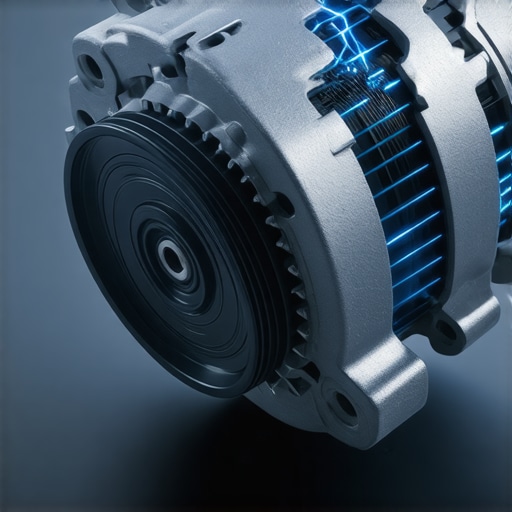
Why does your brand new alternator fail after only three months?
The most common reason for ‘infant mortality’ in replacement alternators is the failure to address the battery’s state of health simultaneously. An aged battery with high internal resistance acts as a massive electrical sponge, forcing the new alternator to operate at 100% duty cycle for extended periods. Alternators are designed to provide ‘top-off’ current, not to serve as a continuous high-output charger for a damaged battery. According to technical training modules from the National Institute for Automotive Service Excellence (ASE), failing to perform a full system load test after installation is the leading cause of warranty returns. Furthermore, many European and late-model domestic vehicles require a ‘Battery Registration’ via a scan tool to reset the charging logic. Without this reset, the computer continues to blast the new alternator with the high-voltage profile it used for the old, dying battery, effectively ‘cooking’ the new unit from the inside out.
The High-Resistance Trap Inside Your Fusable Links
While most enthusiasts check for blown fuses, the insidious failure of a ‘fusable link’—a specialized wire designed to melt during a massive surge—can be harder to spot. These links can partially fail, where the internal strands are burnt but the outer insulation remains intact. This creates a high-resistance bottleneck that prevents the alternator’s current from reaching the main power distribution block. You might see 14.2 volts at the alternator post but only 12.4 volts at the battery. This discrepancy is a clear sign of a compromised primary circuit. Before you decide to upgrade your alternator for high-power accessories, use your multimeter to perform a voltage drop test along the entire length of the B+ cable. Have you ever spent hours chasing a charging issue only to find a single crusty wire was the culprit? Join our forum discussion and share the specific diagnostic path that finally cracked the case for your vehicle.
Expert Insights & Advanced Considerations
Don’t Trust Every Replacement Part Out of the Box
One of the most frustrating experiences in the garage is installing a “new” part only to find it DOA. High-volume remanufacturing plants often cut corners by only replacing the most obvious wear components, like brushes, while leaving aged stator windings or marginal diode bridges intact. If you want to unlock your car’s potential, always perform a bench test on a replacement alternator before the final installation. This proactive step ensures you aren’t fighting a clicking sound when you turn the key because of a faulty “new” component. #IMAGE_PLACEHOLDER_E#
The Invisible Danger of High Resistance in Main Cables
While most mechanics look for a total break in a circuit, professional technicians look for subtle resistance. A battery cable that looks perfect from the outside can be “rotting” internally due to acid wicking or corrosion under the insulation. This creates a bottleneck that limits amperage even if voltage appears normal. Using the $20 scan tool that does more than the dealership rig can help you monitor live data and see if the charging system is reacting too slowly to load changes, which is a hallmark of high-resistance cabling.
Digital Handshakes and the Limp Mode Trap
Modern vehicles don’t just “turn on” the alternator; they conduct a digital handshake via the CAN-bus or LIN-bus protocols. If this communication is interrupted, the car might enter a restricted state to protect the electronic control units. Knowing how to get your car out of limp mode without a tow truck often involves verifying these digital signals. A simple software reset or clearing a communication error code can sometimes restore charging function that seemed like a catastrophic hardware failure.
Curated Expert Resources
ASE Technical Training Modules
The National Institute for Automotive Service Excellence provides the gold standard for technician certification. Their technical modules on electrical and electronic systems are essential for anyone moving beyond basic DIY repairs and into professional-grade diagnostics.
SAE International Technical Papers
For those who want to understand the deep physics of energy conversion and thermal management in charging systems, the Society of Automotive Engineers offers peer-reviewed research papers that define global industry standards for alternator efficiency.
Bosch Mobility Solutions Catalog
Often referred to as the industry benchmark, Bosch provides specific engineering data and troubleshooting guides for the alternators, rectifiers, and voltage regulators used by the world’s leading automotive manufacturers.
Final Expert Perspective
Mastering the intricacies of the automotive charging system requires moving beyond simple parts swapping and embracing a holistic diagnostic mindset. By integrating advanced tools like oscilloscopes and smart scan tools into your routine, you can master the hidden world of vehicle diagnostics and ensure your electrical system remains bulletproof. If you are struggling with a persistent electrical mystery or need help finding reliable car service near you, we encourage you to contact us for expert guidance or to share your technical findings with our professional community.