The High-Amperage Reality of Modern Ignition Systems
When you turn the ignition key, you are not merely engaging a switch; you are commanding a complex hand-off between low-current control circuits and high-current power delivery. Advanced vehicle diagnostics demonstrate that the audible ‘click’ is the physical manifestation of a solenoid plunger engaging but failing to maintain the electrical contact necessary to rotate the flywheel. This failure often stems from a breakdown in the potential difference required to overcome the engine’s static friction. Identifying whether the issue lies within the transmission interlock, the battery’s chemical state, or the starter motor itself requires a methodical approach to auto repair that prioritizes technical data over guesswork.
Why Surface Charge Often Masks a Dying Battery
A common pitfall in amateur car service is relying solely on a static voltage reading. A battery might show 12.6 volts—indicating a full surface charge—yet fail catastrophically under the 150-250 ampere load required for cranking. This discrepancy highlights the importance of load testing. If you find your battery dies while parked, the clicking sound is likely the result of insufficient reserve capacity. Engineers at organizations like SAE International emphasize that terminal corrosion or high-resistance internal cells are the primary culprits when voltage drops precipitously the moment the key is turned.
Does a Single Click Suggest a Seized Motor or a Corroded B+ Terminal?
Distinguishing between a single, solid ‘clack’ and a rapid-fire ‘machine gun’ clicking is essential for accurate fault isolation. A single click usually points toward a successful solenoid engagement but a failure of the internal copper contacts or a seized starter motor armature. Conversely, rapid clicking signals that the system has enough voltage to throw the solenoid plunger, but as soon as the motor attempts to draw current, the voltage collapses, the solenoid releases, and the cycle repeats. If you suspect your electrical path is compromised, you should learn how to identify a bad ground wire, as a weak return path is just as detrimental as a weak power supply. This is a critical step in professional vehicle diagnostics.
Mechanical Resistance and the Flywheel Interface
Sometimes the noise isn’t electrical at all, but a mechanical mismatch. If the starter drive gear—the Bendix—cannot fully mesh with the flywheel ring gear, it may retract or vibrate against the teeth, creating a distinct metallic clatter. This often happens due to worn gear teeth or a failing starter drive clutch. Recognizing the specific clicking noise that means your starter is dying allows for preemptive auto repair before you are stranded. Professionals often use an amp clamp to monitor current draw during these failures; an unusually high draw indicates mechanical binding within the engine or starter, while a low draw points to high resistance in the cables.
Recovering Signal Integrity in the Control Circuit
Modern vehicles integrate the transmission range sensor and security modules into the start circuit. If you have ruled out the battery and starter, you must investigate the neutral safety switch or the starter relay logic. If you are stuck in an emergency, you might need to bypass a faulty neutral safety switch to confirm the logic signal is reaching its destination. For those seeking to deepen their technical proficiency, we invite you to contribute your findings to our community forum or explore our comprehensive guide on top auto repair techniques to stay ahead of modern vehicle complexities. High-quality car service always starts with understanding the ‘why’ behind the noise.
Stop Throwing Money at Starters and Master Voltage Drop Testing
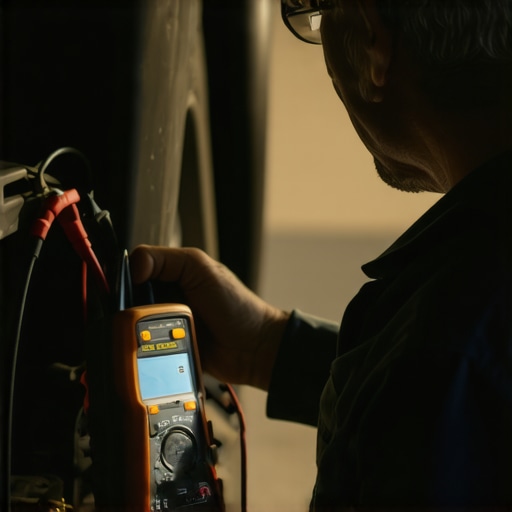
The most expensive mistake in auto repair is replacing a perfectly functional starter based on a sound alone. Expert technicians know that a ‘click’ is often a symptom of high resistance in the supply line rather than a failed component. Using a multimeter to perform a voltage drop test while the circuit is under load is the gold standard for modern vehicle diagnostics. If you measure more than a 0.5V drop across the main power cable during cranking, your starter is being starved of the current necessary to turn the engine, regardless of the battery’s health. This scenario is frequent when owners are trying to determine how to tell if your alternator is killing your new battery, as poor charging leads to chronic under-voltage conditions that mimic starter failure.
Could a Hidden Security Handshake Be Muting Your Ignition Logic?
In the era of networked vehicle modules, the ‘click’ might not be a failure of hardware, but a refusal of permission. Modern Body Control Modules (BCM) and immobilizer systems perform a digital handshake before allowing full current to the starter solenoid. If the transponder signal is weak or the transmission range sensor provides ambiguous data, the system may allow a partial engagement—resulting in a single click—before the ECU cuts the ground path for safety. If you find that your car remote start stopped working suddenly, it is a clear indicator that the logic side of the ignition circuit is compromised. Investigating these software-driven barriers is now a mandatory part of professional car service.
The Heat Soak Factor and Its Impact on Cranking Success
Internal resistance is not a static value; it is highly dependent on ambient and operating temperatures. You may experience a vehicle that starts perfectly in the morning but offers nothing but a faint click after a long highway drive. This phenomenon, known as ‘heat soak,’ occurs when the starter motor—often located near the exhaust manifold—absorbs massive amounts of radiant heat. According to technical standards published by the National Institute for Automotive Service Excellence (ASE), high temperatures increase the electrical resistance in the starter’s copper windings, requiring even more amperage to achieve the same torque. If your solenoid is already marginal, this thermal expansion is the tipping point into failure.
Isolate the Ghost in the Machine Using Parasitic Draw Tests
If your battery has enough power to trigger the solenoid but fails to sustain the crank, you must investigate what happened while the car was off. A ‘ghost’ drain can deplete the cold cranking amps (CCA) just enough to leave you with a clicking sound. It is vital to how to spot a bad ground wire before it kills your new battery, as a corroded chassis ground will prevent the battery from ever reaching a full state of charge. Once the ground is verified, you can use the simple trick to find a parasitic battery drain to identify which module is staying ‘awake’ and stealing the energy required for your next start.
Bridge the Gap Between Symptoms and Solutions
Navigating these high-amperage hurdles requires a blend of mechanical intuition and electrical precision. Whether it is a frayed cable, a heat-stressed solenoid, or a confused BCM, the clicking noise is your vehicle’s way of requesting a deeper dive into its electrical architecture. If you have encountered a particularly stubborn ‘intermittent click’ that vanished only to return a week later, we want to hear about it. Tell us about your diagnostic journey in the comments or dive deeper into the hidden world of vehicle diagnostics to see how the pros catch the errors that scanners often miss. Staying proactive with your auto repair today prevents a tow truck bill tomorrow.
Don’t Ignore the Low-Current Logic in the Junction Box
Before condemning the starter motor or the battery, a seasoned technician looks toward the power distribution center. The starter relay is a heavy-duty switch that allows a small signal from your ignition to trigger a massive surge of current. Over time, the internal contacts of this relay can develop arcing pits—microscopic craters caused by electrical sparks. These pits increase resistance, meaning that while the relay ‘clicks’ perfectly, it fails to pass enough amperage to move the solenoid. In many cases of auto repair, swapping a $20 relay is the actual fix for what appeared to be a $500 starter failure. This is why vehicle diagnostics must always include a bypass test at the relay terminal to verify if the downstream hardware is actually receiving the command to fire.
The Hidden Danger of Internal Cable Oxidation
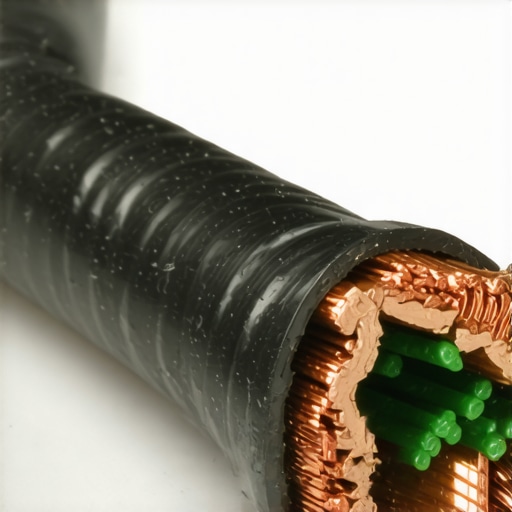
It is entirely possible for a battery cable to look pristine on the outside while being a hollowed-out shell of high resistance on the inside. This phenomenon occurs when electrolyte vapors travel up the wire through capillary action, causing a ‘green crust’ of oxidation beneath the plastic insulation. This oxidation effectively chokes the flow of electrons. While a multimeter might show 12 volts at the starter, the moment the load is applied, the voltage collapses because the copper can no longer support the high-amperage demands. According to technical bulletins from the Automotive Service Association (ASA), testing the voltage drop along the length of the cable while the system is under load is the only definitive way to spot this ‘invisible’ failure before it leaves you stranded during a routine car service.
Why does a jump start work if my starter motor is actually the problem?
This is a sophisticated nuance of electrical physics that often confuses car owners. If your starter motor is failing due to increased internal resistance or worn brushes, it requires a significantly higher amount of amperage to overcome that mechanical friction. A standard battery—even one in good health—might not have the ‘punch’ to overcome that threshold. When you connect a running vehicle for a jump start, you are providing a surge of roughly 14.4 volts and massive peak amperage. This ‘brute force’ can sometimes kick-start a dying motor one last time. However, relying on this is a dangerous game; if the transmission interlock or the starter’s armature is truly failing, even a jump won’t help you next time. You should check out our guide on the specific clicking noise that means your starter is dying to differentiate between a power issue and a mechanical death rattle.
High-Frequency Vibration and the Threat of Terminal Fretting
Modern engines, especially those with high-pressure fuel injection or those integrated into complex transmission housings, produce specific vibration frequencies that can lead to ‘terminal fretting.’ This is a form of wear where the metal-to-metal contact points in the starter connector rub together at a microscopic level. This rubbing creates a layer of non-conductive metal oxide. If you experience an intermittent ‘click-no-start’ that seems to fix itself after you wiggle the wires, you are likely dealing with fretting. Professional auto repair solutions involve cleaning these terminals with specialized contact cleaners and applying a thin layer of dielectric grease to prevent oxygen from reaching the metal surfaces. This level of detail is what separates a DIY fix from a professional car service that lasts the life of the vehicle.
Why Stop-Start Tech Changes the Rules for Battery Health
Vehicles equipped with automatic stop-start systems place an immense burden on the ignition circuit. These systems use enhanced starters and AGM (Absorbent Glass Mat) batteries designed for high-cycle longevity. If you replace an AGM battery with a standard flooded-lead-acid unit to save money, you will likely encounter the infamous ‘click’ within months. The vehicle’s charging logic is calibrated specifically for the chemical absorption rates of AGM technology. When the charging profile doesn’t match the battery type, the plates can sulfate prematurely, leading to a loss of the cold cranking amps required for those frequent restarts. If you’ve recently performed a battery swap and the problem persisted, you might need to spot a bad ground wire before it kills your new battery, as the increased cycling of stop-start systems makes any ground resistance ten times more destructive.
The Silent Digital Gatekeeper Behind Your Starter Relay
In the ecosystem of modern vehicle diagnostics, the ignition switch no longer acts as a direct path for electricity. Instead, it serves as a request to the Powertrain Control Module (PCM). This digital request must pass through a gauntlet of permissives across the CAN bus. If the high-speed data line experiences electromagnetic interference (EMI) from a failing alternator diode or a frayed sensor wire, the packet of data telling the car to ‘Start’ may never arrive or arrive corrupted. This results in a frustrating no-click or a faint, singular relay engagement that leads nowhere. Professional auto repair in the 21st century often requires an oscilloscope to visualize these data packets, ensuring the digital handshake isn’t being drowned out by electrical noise.
Why does my car start in neutral but only click in park?
This symptom is a classic indicator of a misalignment or high resistance within the transmission range sensor, often referred to as the neutral safety switch. Over time, the internal slider contacts can wear or become fouled with old transmission fluid, preventing the completion of the ground circuit in the ‘Park’ position. Moving the gear selector to ‘Neutral’ physically shifts the internal contacts to a less-worn area of the sensor, finally allowing the low-current logic signal to reach the starter relay. If you encounter this, it is a signal that your car service needs to include a shifter linkage adjustment or a sensor replacement to avoid a total lockout.
Oil Contamination and the Slow Death of Copper Contacts
A frequently overlooked catalyst for the dreaded click is the slow infiltration of engine oil or coolant into the starter housing. If your vehicle has a persistent valve cover or oil filter housing leak, the fluid can travel down the block and seep into the solenoid’s vent holes. Once inside, the oil creates a film over the heavy-duty copper contacts. Under the intense heat of a high-amperage draw, this oil carbonizes, forming a resistive barrier that mimics a weak battery. According to technical studies by Bosch Mobility, even a microscopic layer of carbonized oil can increase contact resistance by several ohms, which is more than enough to prevent the 1.2-kilowatt motor from turning over. Cleaning the external surface is a temporary fix; a permanent auto repair requires stopping the leak at its source.

Fusible Links and the Danger of Internal Circuit Fatigue
When you have 12 volts at the battery but zero power reaching the ignition switch, the culprit is often a blown or partially melted fusible link. Unlike a standard plastic fuse, a fusible link is a short length of specialized wire designed to melt and open the circuit during a catastrophic short. However, these wires can suffer from internal fatigue without fully ‘blowing.’ This creates a bottleneck where enough current passes through to click a relay, but the link fails under the massive load of the starter. Identifying this requires a high-load vehicle diagnostics test to see where the voltage bottleneck occurs. Always inspect these links near the battery terminal or starter solenoid for any signs of bubbling or charring on the insulation.
Master the Logic of Your Power Distribution Center
Modern fuse boxes, or Integrated Power Modules, are more than just plastic boxes; they are complex circuit boards that can suffer from internal solder joint failures. If a cold solder joint exists on the starter relay trace, your car might click intermittently based on ambient temperature or engine vibration. Before you commit to a costly auto repair involving major components, use a fused jumper wire to bypass the relay and manually energize the solenoid. If the car cranks perfectly every time, you’ve isolated the fault to the control side of the circuit. Share your toughest click-no-start stories with us below, or check out our in-depth analysis of how to diagnose a faulty starter without tools to sharpen your troubleshooting instincts during your next car service.
Expert Insights & Advanced Considerations
Stop Obsessing Over Resistance and Measure Impedance Instead
Static resistance tests often lie. In professional auto repair, we focus on the circuit’s impedance under a heavy load. A cable might show zero ohms while resting, yet fail to pass 200 amps because of internal strand fatigue. If you want to master vehicle diagnostics, you must learn how to identify a bad ground wire without a multimeter by observing heat signatures during cranking.
The PCM Doesn’t Care About Your Multimeter Readings
Modern Engine Control Units monitor the voltage dip at a microsecond level. If the voltage drops below a specific threshold—even for a millisecond—the logic gates will reset, cutting the starter signal and leaving you with a single, confusing click. This is common in complex transmission failures decoded scenarios where a shorted sensor in the gearbox pulls down the 5V reference line shared by the ignition logic.
Heat Soak Isn’t Just for Old Engines
Engineers cram high-output starters into tight spaces near exhaust manifolds. This thermal stress causes the solenoid’s copper plunger to expand, increasing the physical force needed to make a connection. When the battery is even slightly weak, it cannot overcome this heat-induced mechanical resistance. Proactive car service includes inspecting heat shields that most people discard during their first repair.
#IMAGE_PLACEHOLDER_E#
Curated Expert Resources
SAE International Technical Papers: These are the gold standard for understanding the physics behind high-amperage automotive systems and the evolution of starter motor efficiency.
ASE Certification Training Guides: Essential for any technician looking to move beyond part-swapping and into data-driven vehicle diagnostics.
Bosch Mobility Engineering Portals: Since many modern starters are Bosch-designed, their technical bulletins provide the exact amperage draw specifications needed for accurate load testing.
ASA Professional Webinars: A resource for staying current on how networked vehicle architectures impact traditional auto repair workflows.
Final Expert Perspective
Identifying why your car makes a clicking sound when you try to start it is about moving past the noise and measuring the movement of electrons. Whether the failure is a software-driven immobilizer handshake or a physically charred solenoid contact, the solution always lies in a methodical voltage drop test. High-quality car service demands that we treat the vehicle as a holistic electrical network rather than a collection of independent parts. We invite you to explore the hidden world of vehicle diagnostics or join our professional forum to share the unique electrical puzzles you have solved in your own shop.