Wheel bearings represent a critical nexus in automotive engineering, acting as the primary interface between the vehicle’s stationary suspension and its rotating mass. These components are designed to withstand massive centrifugal forces and thermal stress, yet they remain susceptible to the inevitable entropy of mechanical friction. For a professional engaged in vehicle diagnostics, early detection of bearing fatigue—often manifesting as spalling or micro-pitting on the raceways—is paramount to preventing hub assembly seizure. Unlike other suspension components that offer a gradual decline in performance, a wheel bearing reaching its critical failure point can lead to wheel separation, transforming a routine commute into a high-stakes emergency. Mastering the nuances of hub health requires an expert-level understanding of rotational dynamics and the specific acoustic frequencies emitted during various stages of degradation.
Spot the Subtle Hub Growl Before the Wheels Stop Turning
The most common indicator of a failing bearing is a low-frequency hum or growl that changes in pitch relative to vehicle speed. This sound is often confused with tire noise or aerodynamic drag, but a seasoned expert knows to listen for the ‘cycling’ effect. When a vehicle performs a lane change or enters a sweeping turn, the lateral load shifts onto the failing bearing, intensifying the vibration. If you notice a change in volume when veering left or right, you are likely hearing the specific noise your wheel bearing makes before it fails. In professional auto repair, we utilize chassis ears—electronic stethoscopes—to isolate this frequency from the ambient noise of the transmission and engine. According to research from the National Highway Traffic Safety Administration, wheel end failures are frequently preceded by these specific acoustic warnings that many drivers overlook until the vibration becomes palpable through the steering column.
Differentiate Hub Wear from Tire Cupping and CV Joint Clicks
Accurate diagnosis involves a process of elimination. A common mistake in general car service is misidentifying tire cupping or a failing CV joint as a wheel bearing issue. Tire cupping typically produces a rhythmic thumping that remains constant regardless of lateral loading, whereas bearing noise fluctuates with weight transfer. Furthermore, a clicking sound during tight, low-speed maneuvers is usually an indicator of a worn outer CV joint rather than the bearing itself. To be certain, one must diagnose a bad CV joint by the sound of your turn before committing to a hub replacement. Professional technicians also check for ‘axial play’ by elevating the vehicle and attempting to rock the wheel at the 12 and 6 o’clock positions. Any detectable movement or ‘clunk’ suggests that the internal clearances have exceeded safe tolerances, necessitating an immediate hub assembly replacement to maintain roadworthiness.
Could Your Steering Pull Be More Than an Alignment Issue?
While many drivers assume a pulling sensation is purely an alignment problem, a severely worn wheel bearing can create enough internal drag to mimic a misaligned front end. If the internal lubrication has dried or been contaminated by road salt, the resulting friction creates a parasitic load on that corner of the vehicle. This is why your car pulls to the left even after an alignment in some cases; the mechanical resistance of the bearing is literally fighting the engine’s torque. Furthermore, excessive heat generated by this friction can transfer to the brake rotor, causing ‘heat checking’ or warping, which adds a pulsing sensation to the brake pedal. If you are experiencing unexplained handling quirks, exploring our guide on top auto repair techniques can help you distinguish between simple maintenance and deep-seated mechanical failures.
If you suspect your vehicle is displaying these symptoms, do not delay a professional inspection. Proactive car service is the only way to ensure your hub assemblies remain reliable under pressure.
The thermal dynamics of a rotating hub are often underestimated by even seasoned technicians. When a bearing begins to fail, the microscopic pitting—known as spalling—creates a friction-rich environment that rapidly elevates internal temperatures. This localized heat does not just degrade the complex grease polymers; it physically causes thermal expansion in the metal races, which can eventually lead to a catastrophic mechanical weld if the vehicle is driven under sustained high-load conditions. In the modern landscape of vehicle diagnostics, we frequently observe this heat migrating toward the sensitive electronics of the ABS (Anti-lock Braking System). Many contemporary hubs feature integrated magnetic encoder rings embedded within the bearing seal itself. If the bearing develops even a nominal amount of axial play, the air gap between the sensor and this ring fluctuates, resulting in erratic data packets being sent to the ECU.
Why Does Your ABS Light Flicker Only During High-Speed Cornering?
This phenomenon is a classic hallmark of early-stage bearing deflection. As you navigate a high-speed curve, centrifugal force pushes the wheel hub slightly off its primary axis. If the internal races have lost their factory-specified tolerances, this deflection moves the magnetic encoder ring out of the optimal range of the ABS sensor. It is a subtle mechanical clue that prevents many drivers from realizing they have a structural failure until the wheel vibration becomes violent. While you might assume you are dealing with a simple electronic glitch, the hidden world of vehicle diagnostics reveals that these intermittent codes are often the first signs of a drying bearing. Often, these codes persist even after the mechanical part is replaced, which is why your check engine light stays on after you fixed the problem in some complex sensor-integrated systems.
Precision Installation Over Brute Force
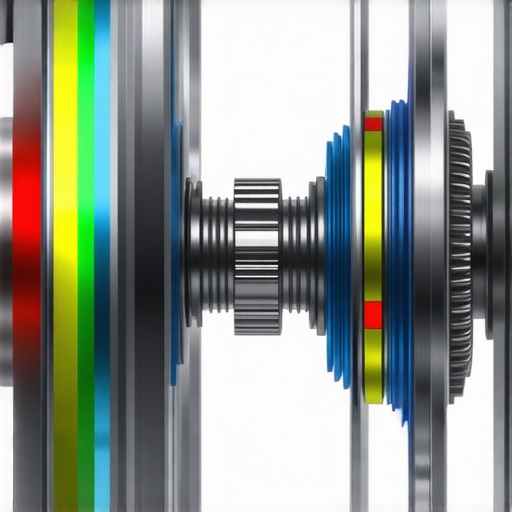
Professional auto repair necessitates a strict departure from the archaic method of seating a hub with a sledgehammer. Delivering a shock load to a new bearing can cause ‘brinelling’—a condition where the hardened steel balls or rollers dent the raceway surface upon impact. This creates a permanent, rhythmic vibration that will cause the new component to fail within weeks. Instead, expert technicians utilize hydraulic presses and specialized hub pullers to ensure the installation load is distributed strictly across the outer race. According to engineering standards set by SAE International (J2530), maintaining the exact factory-specified preload during installation is the single most critical factor in ensuring the longevity of tapered roller bearings. Skipping this precision step during car service is the primary reason why many aftermarket bearings fail prematurely compared to their OEM counterparts.
Moisture Ingress and the Failure of Premium Seals
Even the highest-quality bearing cannot survive if its seal integrity is compromised. Road salt, pressurized car washes, and deep puddles are the natural enemies of the hub assembly. Once moisture bypasses the outer lip seal, it emulsifies the grease, turning it into a gritty paste that accelerates abrasive wear. This process is silent and invisible until the damage reaches the internal races. To maintain total drivetrain health, you should monitor all potential fluid paths; just as you would look for the source of a mystery oil leak, inspecting the dust caps and seals during every brake service is essential. Have you ever replaced a hub only to have the noise return a few months later? It could be an installation error or a misdiagnosed secondary vibration. Share your most challenging diagnostic stories in the comments below, or read our breakdown of the real reason your car shakes at highway speeds to ensure you are treating the root cause rather than just the symptoms.
The precision required for modern hub assembly longevity extends far beyond the physical mounting of the component; it resides within the infinitesimal adjustments of the spindle nut torque. Every automotive manufacturer defines a specific ‘preload’ or ‘end play’ range that ensures the rolling elements sit perfectly within the raceways under load. When a technician ignores these specs, they risk inducing a condition known as ‘false brinelling.’ This isn’t just a minor error; it’s a death sentence for the bearing. If the nut is too tight, the friction-induced heat expansion will quickly exceed the lubricant’s drop point, leading to metal-on-metal contact. Conversely, leaving it too loose allows the hub to wobble, creating uneven impact loads that fracture the hardened surfaces. This delicate balance is why every car service checklist must prioritize a calibrated torque wrench over an impact gun.
Torque Specifications Aren’t Suggestions—They’re Safety Critical
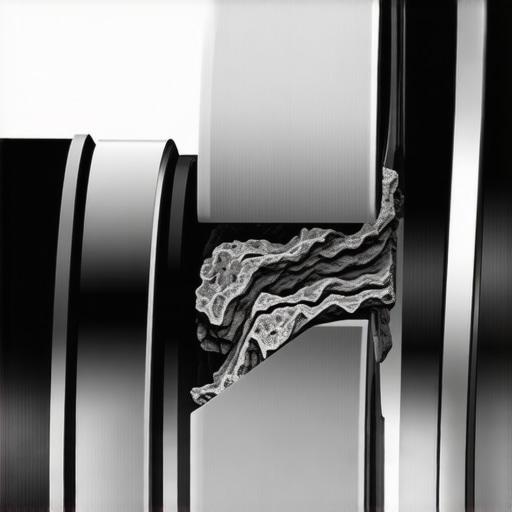
According to technical bulletins from Timken, one of the world’s leading bearing manufacturers, over 50% of premature hub failures can be traced back to incorrect installation torque. The metallurgical stress of an over-torqued nut compresses the inner races, forcing the tapered rollers to bite into the surface, creating micro-fractures that will eventually manifest as a loud hum. In professional auto repair, we often see DIYers make the mistake of using a breaker bar and ‘feeling’ the tightness, which is a recipe for disaster on modern vehicles equipped with sensitive electronic sensors. Proper vehicle diagnostics requires checking the spindle nut for any signs of backing off or crushing, as even a few degrees of rotation outside of spec can alter the entire geometry of the wheel end.
Why Do New Bearings Fail After Only a Few Thousand Miles?
Infant mortality in hub assemblies is rarely the result of a manufacturing defect and is almost always linked to environmental contamination or installation error. If a technician handles a new bearing with grease-covered gloves that have picked up metallic shavings from a brake lathe, those microscopic particles act as grinding paste the moment the wheel starts spinning. Furthermore, if the mounting surface on the steering knuckle wasn’t meticulously cleaned with a wire brush and solvent, the new hub will not sit perfectly flush. This creates a minute runout—a slight wobble—that wears the bearing unevenly. If you’ve recently replaced a part only to have the noise return, you might be dealing with a chronic installation issue; explore our deep dive into the most overlooked steps in bearing replacement to see what went wrong.
Combat the Lever Effect of Aftermarket Wheels
Beyond the internal mechanics, external modifications play a massive role in premature hub degradation. Enthusiasts often install wider wheels or aggressive spacers without realizing they are fundamentally altering the vehicle’s scrub radius. By moving the wheel’s centerline outward, you create a larger lever arm that exerts significantly higher bending moments on the bearing races. This ‘lever effect’ means the outer bearing row is constantly under a higher load than the inner row, leading to asymmetrical wear patterns. For those engaged in performance vehicle diagnostics, checking for these modifications is the first step in explaining why a modified vehicle is chewing through hubs every six months. It isn’t a part failure; it’s a physics problem that requires heavy-duty components or adjusted maintenance intervals.
The Microscopic Reality of Sub-Surface Fatigue
In the realm of metallurgy, we must also consider the phenomenon of sub-surface fatigue. Before you ever hear that tell-tale growl, microscopic cracks are forming beneath the surface of the raceway. These cracks, often caused by non-metallic inclusions in the steel, eventually migrate to the surface and cause a flake of metal to break away—the process we call spalling. This is where the distinction between premium OEM parts and bargain-bin alternatives becomes glaringly obvious. Higher-purity steel resists these initial micro-cracks for significantly longer cycles. If you’ve ever wondered if premium auto parts are worth the extra cost, the structural integrity of a bearing raceway under 2,000 pounds of pressure provides a definitive answer. The thermal cycling—constant heating and cooling—further aggravates these cracks, particularly in heavy transmission applications where heat soak is common. Modern car service experts must use thermal imaging to detect these hotspots before they lead to a complete hub seizure.
Stop Mixing Greases Unless You Want a Chemical Meltdown
The molecular stability of grease is the unsung hero of hub longevity, yet it is often the first thing compromised during a hasty car service. Most high-performance hub units are factory-sealed with a specific polyurea-based thickener designed for high-load, high-temperature cycles. However, when a technician attempts to ‘supplement’ this with a standard lithium-complex grease, they risk a catastrophic chemical incompatibility known as phase separation. The two thickeners can react to lower the grease’s drop point, causing the lubricant to liquefy and weep past the seals. Once the lubricant is gone, the rolling elements begin to gall against the races, leading to rapid heat buildup and localized welding. According to technical documentation from the Society of Tribologists and Lubrication Engineers (STLE), using the incorrect lubricant chemistry is a leading cause of ‘boundary lubrication failure,’ where the protective film thickness drops below the surface roughness of the metal, ensuring an early grave for even the most expensive auto repair components.

Could a Worn Bearing Stealthily Deactivate Your Lane Keep Assist?
In the era of smart vehicles, a wheel bearing is no longer just a mechanical pivot; it is a critical data node for Advanced Driver Assistance Systems (ADAS). When a bearing develops even infinitesimal play—often as little as 0.005 inches of axial runout—it creates ‘signal jitter’ in the ABS wheel speed sensor. While this might not be enough to trigger a persistent warning light, it creates enough noise in the data stream to confuse the Lane Departure Warning and Electronic Stability Control systems. The ECU may perceive this inconsistent data as a loss of traction or a sensor glitch, leading to the sudden, unexplained deactivation of your semi-autonomous driving features. This is a prime example of how modern vehicle diagnostics have evolved; we aren’t just looking for mechanical noise anymore; we are looking for digital integrity within the transmission of sensor data across the CAN-bus network.
Capture the Phantom Fault with an Oscilloscope Waveform
If you have exhausted traditional diagnostic methods, it is time to move beyond the human ear and into the realm of signal analysis. By back-probing an active wheel speed sensor with a digital storage oscilloscope, you can visualize the ‘heartbeat’ of the hub. A healthy bearing produces a clean, consistent square wave. However, a hub with a damaged encoder ring or excessive play will show ‘dropouts’ or irregular pulse widths in the waveform that correspond directly to the physical rotation of the wheel. This method allows a technician to pinpoint a failing bearing long before it becomes audible or develops palpable play. It transforms guesswork into a science, ensuring that every car service is backed by empirical data rather than just intuition. If you are struggling with a steering vibration that defies logic, take a moment to investigate the real reason your car shakes at highway speeds through the lens of high-frequency data capture. Don’t let a ghost in the machine compromise your safety; perform a dial-indicator runout test on your hubs this weekend to ensure your vehicle remains as precise as the day it left the factory.
The thermal dynamics of a rotating hub are often underestimated by even seasoned technicians. When a bearing begins to fail, the microscopic pitting—known as spalling—creates a friction-rich environment that rapidly elevates internal temperatures. This localized heat does not just degrade the complex grease polymers; it physically causes thermal expansion in the metal races, which can eventually lead to a catastrophic mechanical weld if the vehicle is driven under sustained high-load conditions. In the modern landscape of vehicle diagnostics, we frequently observe this heat migrating toward the sensitive electronics of the ABS (Anti-lock Braking System). Many contemporary hubs feature integrated magnetic encoder rings embedded within the bearing seal itself. If the bearing develops even a nominal amount of axial play, the air gap between the sensor and this ring fluctuates, resulting in erratic data packets being sent to the ECU.
Why Does Your ABS Light Flicker Only During High-Speed Cornering?
This phenomenon is a classic hallmark of early-stage bearing deflection. As you navigate a high-speed curve, centrifugal force pushes the wheel hub slightly off its primary axis. If the internal races have lost their factory-specified tolerances, this deflection moves the magnetic encoder ring out of the optimal range of the ABS sensor. It is a subtle mechanical clue that prevents many drivers from realizing they have a structural failure until the wheel vibration becomes violent. While you might assume you are dealing with a simple electronic glitch, the hidden world of vehicle diagnostics reveals that these intermittent codes are often the first signs of a drying bearing. Often, these codes persist even after the mechanical part is replaced, which is why your check engine light stays on after you fixed the problem in some complex sensor-integrated systems.
Precision Installation Over Brute Force
Professional auto repair necessitates a strict departure from the archaic method of seating a hub with a sledgehammer. Delivering a shock load to a new bearing can cause ‘brinelling’—a condition where the hardened steel balls or rollers dent the raceway surface upon impact. This creates a permanent, rhythmic vibration that will cause the new component to fail within weeks. Instead, expert technicians utilize hydraulic presses and specialized hub pullers to ensure the installation load is distributed strictly across the outer race. According to engineering standards set by SAE International (J2530), maintaining the exact factory-specified preload during installation is the single most critical factor in ensuring the longevity of tapered roller bearings. Skipping this precision step during car service is the primary reason why many aftermarket bearings fail prematurely compared to their OEM counterparts.
Moisture Ingress and the Failure of Premium Seals
Even the highest-quality bearing cannot survive if its seal integrity is compromised. Road salt, pressurized car washes, and deep puddles are the natural enemies of the hub assembly. Once moisture bypasses the outer lip seal, it emulsifies the grease, turning it into a gritty paste that accelerates abrasive wear. This process is silent and invisible until the damage reaches the internal races. To maintain total drivetrain health, you should monitor all potential fluid paths; just as you would look for the source of a mystery oil leak, inspecting the dust caps and seals during every brake service is essential. Have you ever replaced a hub only to have the noise return a few months later? It could be an installation error or a misdiagnosed secondary vibration. Share your most challenging diagnostic stories in the comments below, or read our breakdown of the real reason your car shakes at highway speeds to ensure you are treating the root cause rather than just the symptoms.
Strategic Nuances in Hub Assembly Longevity
Thermal Runaway and the Spindle Nut Trap
Achieving the perfect preload is a high-wire act where millimetres of variance dictate years of service life. When a spindle nut is over-torqued, the rolling elements are crushed against the raceways, leading to rapid heat expansion. This expansion creates a feedback loop—thermal runaway—where the heat increases the pressure, which in turn increases the friction. Always use a calibrated torque wrench to avoid turning your auto repair into a recurring nightmare.
The Invisible Threat of Signal Jitter
Modern hub assemblies are essentially rotating data nodes. Even if a bearing feels mechanically sound, micro-oscillations can cause ‘signal jitter’ in the ABS sensor. This digital noise often disables traction control or Lane Keep Assist without throwing a hard mechanical code. If your advanced safety features are acting up, the hub’s internal tolerances are the first place an expert looks during vehicle diagnostics.
Stop Mixing Greases to Prevent Chemical Phase Separation
Never assume all blue or red grease is compatible. Mixing a polyurea-based lubricant with a lithium-complex alternative often results in phase separation, where the oil leaks out and leaves a dry, waxy thickener behind. This chemical meltdown is why many DIY bearing repacks fail within the first 5,000 miles. Stick to a single chemical family to ensure the transmission of force remains smooth and frictionless.
Curated Expert Resources
Timken TechTips Library
This is the industry standard for troubleshooting bearing failures. It provides high-resolution imagery of spalling, brinelling, and etching, allowing you to match your physical evidence to proven failure modes.
SAE International J2530 Standards
For those looking to understand the metallurgical and load-bearing requirements of aftermarket wheels, this resource defines the structural testing protocols that ensure a hub can handle increased lateral stress.
STLE Lubrication Fundamentals
The Society of Tribologists and Lubrication Engineers offers deep dives into boundary lubrication and the molecular shear rates of automotive greases, essential for understanding why specific lubricants are chosen for high-heat environments.
Final Expert Perspective
Mastering the complexities of the modern wheel hub requires moving beyond the ‘replace and forget’ mentality. By prioritizing precision torque, chemical compatibility, and digital integrity, you ensure that your vehicle diagnostics and subsequent repairs stand the test of time. A hub failure is rarely just a bad part; it is usually a symptom of installation error or environmental stress that went unaddressed. If you are experiencing persistent handling issues, investigate why your steering wheel vibrates at exactly 60 mph to see if your hubs are the culprit. For those seeking long-term reliability, choosing the right car service for seamless vehicle maintenance is the best way to ensure your drivetrain remains silent and secure. We invite you to share your most difficult hub diagnostic puzzles in the comments below or reach out to our team for advanced technical support.