When you shift your vehicle from Park or Neutral into Reverse, you are initiating a complex sequence of hydraulic and mechanical events that require millisecond precision. A violent ‘thud’ or ‘pop’ is far more than a nuisance; it represents an uncontrolled release of kinetic energy that can eventually compromise your entire drivetrain. From an engineering perspective, this shock is usually the result of excessive backlash in the mechanical components or a spike in line pressure within the transmission’s hydraulic circuits. Identifying the root cause requires a systematic approach to the hidden world of vehicle diagnostics, where we must distinguish between mounting failures and internal valving issues.
The Mechanical Violence of Gear Engagement
In many cases, the sensation of a hard shift is not actually caused by the transmission internals, but rather by the failure of the isolation components. Engine and transmission mounts are designed to absorb the torque reaction when the powertrain shifts its weight. When these rubber-to-metal bonds fail, the entire assembly shifts violently, creating a metal-on-metal impact. This is often why your car makes a loud pop when you shift into reverse. Beyond mounts, worn universal joints or constant velocity (CV) joints can develop ‘slop,’ allowing the driveshaft to spin several degrees before catching the load, resulting in a predictable and audible clunk. Professionals often use a ‘brake torque’ test to observe engine movement and isolate these external vibrations.
Stop the Shock Before It Shatters Your Differentials
Hydraulic pressure is the lifeblood of any automatic gearbox. If the Transmission Control Module (TCM) detects a slip, it may command the solenoids to increase line pressure to its maximum setting as a ‘fail-safe’ measure. This results in harsh engagements that feel like a physical strike to the floorboard. This often occurs when the fluid has degraded past its useful life, losing its frictional properties. This is why many experts argue that the truth about lifetime transmission fluid is that it is a marketing myth; regular flushes are essential to prevent solenoid clogging. According to the Society of Automotive Engineers (SAE), fluid oxidation is the leading cause of hydraulic control failure in modern multi-speed transmissions.
Could a Minor Fluid Discrepancy Cause Major Drivetrain Shock?
Absolutely. Even being half a quart low can introduce air into the pump, leading to cavitation. Aerated fluid is compressible, unlike pure hydraulic oil, which causes unpredictable pressure spikes and delayed clutch engagement. When the pressure finally builds enough to move the piston, it does so with a sudden ‘slam’ rather than a smooth transition. To prevent this, you should master transmission failures decoded to understand how fluid levels correlate with shift quality. If you want to refine your maintenance skills further, explore top auto repair techniques every car owner should know to ensure your diagnostic process is as precise as possible.
Isolate the Noise Using Advanced Diagnostic Logic
Before committing to an expensive rebuild, consider the role of the engine’s idle speed. If the engine is idling even 200 RPM too high—perhaps due to a vacuum leak or a dirty throttle body—the torque converter will be transmitting significantly more energy when you drop it into gear. Cleaning a sensor or fixing a small air leak can sometimes eliminate a ‘transmission problem’ for less than twenty dollars. Always check for diagnostic trouble codes (DTCs) even if the check engine light is not illuminated, as pending codes for gear ratio errors can provide the evidence needed to pinpoint a failing solenoid or a worn-out internal seal.
Eliminate Ghost Shifts by Probing the Electronic Brain
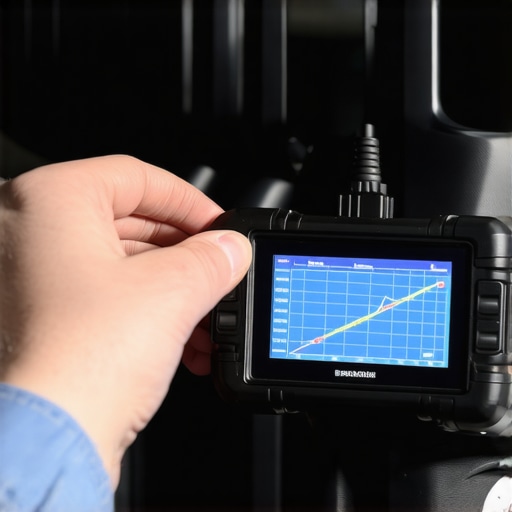
Modern vehicles rely on a sophisticated interplay between the Transmission Control Module (TCM) and various engine sensors to determine the exact timing for gear engagement. If your vehicle experience a sudden jolt, the problem may not be mechanical, but a failure in data communication. The TCM uses pulse-width modulation to control solenoids, and if it receives an erratic signal from the throttle position sensor or the mass air flow sensor, it may default to a ‘high-pressure’ mode to protect the internal clutches. To verify this, you don’t need a professional workshop immediately; often, the $20 scan tool that actually finds hidden transmission codes can reveal pending errors that standard OBD-II readers miss. According to the National Institute for Automotive Service Excellence (ASE), technician-level diagnostic software is frequently the only way to see ‘real-time’ data streams where subtle sensor lags become visible. By monitoring these PIDs, you can determine if a simple sensor cleaning is all that stands between you and a smooth shift.
Why Does My Gearbox Only Slam When the Morning Is Cold?
Temperature significantly alters the viscosity of transmission fluid and the elasticity of internal rubber seals. When the fluid is cold, it is thicker and flows more slowly through the narrow passages of the valve body. If internal seals have become brittle over time, they may fail to hold pressure until they have expanded through heat, leading to a ‘delayed engagement’ followed by a violent slam as the pressure finally builds. This specific symptom is a hallmark of internal wear, and understanding why your transmission slips when cold but runs fine when warm is critical for long-term gearbox health. Neglecting these early thermal warnings often leads to scorched friction plates, as the brief moment of slipping before the ‘slam’ generates immense localized heat.
Diagnose Slack in the Driveline Before the Axle Snaps
While we often blame the transmission for every clunk, the physical connection between the gearbox and the wheels is a frequent culprit for reverse-gear noise. Every time you change direction from Drive to Reverse, the torque is applied to the opposite side of the gear teeth in your differential and the internal components of your CV joints. Over hundreds of thousands of miles, these components develop ‘backlash’—a physical gap that allows the driveshaft to rotate slightly before it makes contact with the wheels. This ‘take-up’ of slack is heard as a sharp pop or metallic clink. It is vital to learn how to tell if your CV axle is about to snap by checking for torn boots or excessive play in the shaft while the vehicle is on a lift. If the noise is accompanied by a rhythmic clicking during turns, your axles are almost certainly the source of your frustration rather than the transmission internals.
Distinguish Between Valve Body Wear and Linkage Slop
Sometimes the solution is as simple as a loose bolt or a stretched cable. Mechanical linkages that connect your gear shifter to the transmission can wear out, causing the internal manual valve to be slightly out of alignment when you select Reverse. This misalignment can cause port blockage, preventing fluid from reaching the reverse clutch pack quickly enough. This results in fixing the common delay when shifting from reverse to drive becoming a matter of adjusting a cable rather than dropping the transmission. If you hear a rattling or a buzzing during this process, it might even be as trivial as the $15 fix for a rattling heat shield that sounds like engine failure. Always start with the external, visible components before assuming the worst about your planetary gearsets. If you’ve experienced a specific noise that doesn’t quite match these descriptions, leave a comment below with your vehicle’s make and model so we can help you narrow down the culprit based on known manufacturer technical service bulletins.
Update the Software Before You Replace the Hardware
In the era of ‘smart’ vehicles, a mechanical symptom often has a digital root. Modern automatic transmissions use ‘Adaptive Learning’ to compensate for internal wear by gradually adjusting solenoid pulse-widths and line pressures over time. However, these software-based adjustments can sometimes reach their limit or become corrupted by battery failures or sensor glitches. When this happens, the Transmission Control Module (TCM) may apply the reverse clutch pack with excessive force, ignoring the buffer zones programmed during its initial calibration. A simple ‘TCM Reset’ or a software reflash—often referred to as a Quick Learn procedure—can recalibrate these parameters and eliminate the shift-shock without a single wrench touching the transmission housing.
Can an Overly Aggressive Adaptive Learning Strategy Mimic Gearbox Failure?
Yes, and it is a diagnostic trap that catches many DIYers and even some generalist mechanics. If you have recently performed a repair, such as replacing a battery or a throttle body, the computer might be operating on old ‘learned’ data that no longer matches the engine’s current performance profile. This discrepancy leads to timing mismatches during the transition from Park to Reverse. According to technical data from the Automatic Transmission Service Group (ATSG), nearly 20% of ‘harsh shift’ complaints in late-model vehicles can be resolved through TCM software updates or clearing the adaptive memory rather than mechanical overhauls. This is why checking for Technical Service Bulletins (TSBs) is a non-negotiable first step before pulling the pan.
Verify the Integrity of the Accumulator Pistons
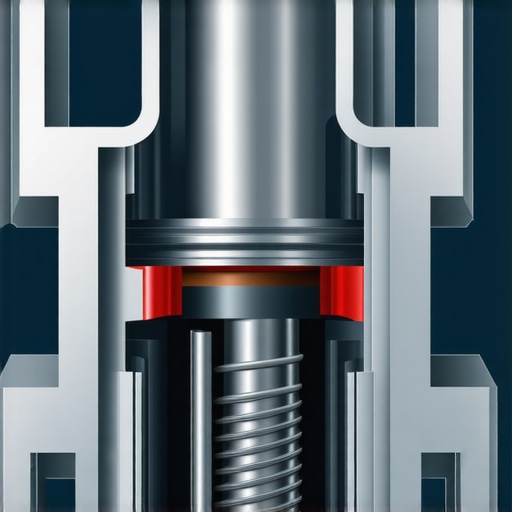
Inside the valve body, accumulator pistons act as the transmission’s internal shock absorbers. Their sole purpose is to cushion the application of a clutch or band by absorbing the initial surge of hydraulic pressure using a spring-loaded reservoir. These pistons are held in place by heavy-duty springs that can, over time, suffer from metal fatigue or snap entirely. If the spring behind the reverse accumulator piston breaks, there is nothing to dampen the hydraulic ‘hit’ when the fluid is routed to the reverse circuit. The result is an instantaneous, violent engagement that vibrates through the entire chassis. Inspecting these components usually requires removing the transmission pan and valve body, but it is a far more affordable alternative to a full transmission swap.
Don’t Overlook the Torque Converter’s Hidden Drag
The torque converter is designed to allow for a degree of slip when the vehicle is stationary. However, if the Torque Converter Clutch (TCC) solenoid is leaking or if the internal friction material has warped, it may create ‘drag’ even when it should be fully disengaged. This drag places a constant load on the input shaft. When you force the transmission into reverse against this load, you are essentially slamming two moving forces together. You can test for this by monitoring the engine RPM drop when shifting; a drop of more than 150 RPM often indicates that the converter is not letting go as it should. If you suspect your torque converter is the culprit, exploring advanced transmission troubleshooting beyond the basics can help you perform a stall test safely. Professional-grade live data is often required to see if the TCC slip percentage is hovering near zero when it should be infinite.
Test the Engine’s Vacuum Stability
For older vehicles equipped with a vacuum modulator, the ‘thud’ is almost always tied to engine load signals rather than internal mechanical failure. The modulator uses engine vacuum to tell the transmission how hard to shift; low vacuum, which typically occurs under heavy throttle, signals the transmission to shift ‘hard’ to prevent clutch slippage. If your vacuum line is cracked or the modulator diaphragm has ruptured, the transmission ‘thinks’ you are at wide-open throttle even when you are just idling in your driveway. This leads to maximum line pressure and a neck-snapping engagement into reverse. A simple vacuum gauge test at the modulator port can reveal if your gearbox is simply reacting to a five-dollar piece of dry-rotted rubber hose.
While most enthusiasts focus on the fluid within the transmission casing, the mechanical path to the wheels often hides the most elusive culprits of the ‘reverse-gear pop.’ In all-wheel-drive (AWD) and four-wheel-drive systems, the transfer case introduces a second layer of complexity. If the internal drive chain has stretched due to high-mileage fatigue, shifting into reverse can cause the chain to ‘whip’ against the guide or casing. This produces a hollow, metallic thud that mimics a failing gear set but is actually a symptom of slack within the auxiliary drive unit. Assessing the rotational play at the transfer case output flange is a specialized diagnostic step that distinguishes a dying gearbox from a simple chain replacement.
Why AWD Systems Are Prone to Reverse-Gear Snaps
The transition from a forward-rotating gear to a reverse-load scenario places a unique stress on the center differential. In many modern SUVs, the electronically controlled coupling provides torque to the rear axle only when slip is detected; however, a software glitch or a failing hall-effect sensor can cause the coupling to engage prematurely or with excessive force when reverse is selected. This sudden ‘binding’ of the driveline creates a shockwave that travels from the rear differential back through the prop-shaft. To diagnose this, technicians often disconnect the electronic coupling to see if the noise persists, effectively isolating the mechanical components from the digital control system.
Is Your Slip-Yoke Starving for Lubrication?
One of the most frequently misdiagnosed sounds in truck and RWD sedan maintenance is the slip-yoke ‘clunk.’ As the vehicle’s suspension moves or as the drivetrain shifts under load, the driveshaft must slightly change its length by sliding along the splines of the output shaft. If these splines become dry or contaminated with road grime, they ‘bind’ rather than slide. When you shift into reverse, the torque twist finally overcomes the friction, causing the yoke to snap into its new position with a violent jerk. This phenomenon, often called ‘stiction,’ can be cured with specialized PTFE-infused grease. If you suspect this is the case, applying a high-quality lubricant to the splines is a far more cost-effective first step than authorized dealer transmission replacements.
Lift Kits and Lowering Springs: The Hidden Cost of Modified Geometry
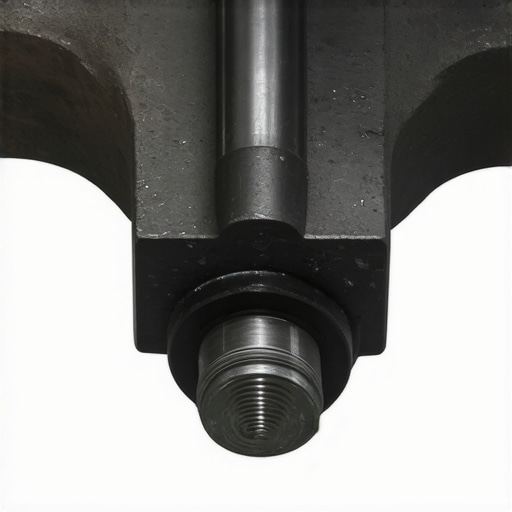
Changing the ride height of your vehicle does more than alter its stance; it fundamentally changes the working angles of your universal joints. When a vehicle is lifted or lowered significantly, the ‘pinion angle’—the relationship between the driveshaft and the differential—is pushed out of its engineered spec. According to the engineering standards published by Dana Incorporated, universal joints are designed to operate within a specific narrow range of degrees to cancel out vibrations. If the angle is too steep, shifting into reverse forces the U-joint into a ‘bind’ at the start of its rotation, resulting in a predictable and heavy pop. Correcting this often requires the installation of shim kits to tilt the differential back into alignment with the transmission output.
Pinion Bearing Pre-load and the Decay of the Crush Sleeve
Inside the rear differential, a component known as a ‘crush sleeve’ maintains the tension on the pinion bearings. Under extreme load or after years of hard launches, this sleeve can further compress, leading to a loss of bearing pre-load. This creates ‘end-play’ where the pinion gear can physically move forward and backward within the housing. When you select reverse, the pinion gear is sucked deeper into the ring gear before it begins to rotate, resulting in a heavy, low-frequency ‘clunk’ that resonates through the trunk floor. Measuring the pinion depth and checking for axial play is a high-level diagnostic task that should be performed before assuming the transmission’s planetary gears have failed.
Have you already checked your fluid and mounts but still hear that frustrating sound? Share the specific timing of your gear-shift noise in the comments below, and let’s dive deeper into your vehicle’s specific driveline geometry together.
Expert Insights & Advanced Considerations
Heat Soak and the Quiet Failure of Shift Solenoids
Temperature-induced resistance in electromagnetic solenoids often masks itself as a mechanical failure. When a solenoid coil begins to degrade, its internal resistance increases as the engine bay reaches operating temperature. This causes a delay in the plunger’s movement, leading to a late and violent engagement of the reverse clutch pack. If you find that your shift quality deteriorates only after twenty minutes of driving, you are likely dealing with an electrical component struggling to maintain its magnetic field strength. Using the $30 tool that lets you see inside your engine or transmission pan can sometimes reveal the varnish buildup that exacerbates this thermal sticking.
Wait Three Seconds Before You Back Out
High-pressure hydraulic systems require a brief stabilization period to reach equilibrium. Shifting immediately from Drive to Reverse without a momentary pause in Neutral forces the valve body to redirect high-pressure fluid while the internal drums are still rotating in the opposite direction. This ‘counter-rotation’ shock is a primary reason why drivelines develop premature backlash. Experts recommend a full two-second count in Neutral to allow the input shaft to synchronize, effectively neutralizing the kinetic energy before the reverse gear is engaged.
The Catastrophic Cost of Ignoring Driveline Slack
Every small ‘pop’ is a micro-fracture event for the teeth of your ring and pinion gears. While it may seem like a minor annoyance, the cumulative effect of these impacts leads to metal fatigue. Once the case-hardening on the gear teeth is compromised, the failure curve becomes exponential. Reviewing transmission troubles: how to save time and money with proven repairs will show that early intervention on a $150 mount can prevent a $4,000 differential explosion. Don’t let a simple vibration turn into a structural failure through sheer procrastination.
#IMAGE_PLACEHOLDER_E#
Curated Expert Resources
Automatic Transmission Service Group (ATSG) Tech Manuals
These are the bibles of the transmission rebuilding industry. They provide specific hydraulic circuit diagrams and check-ball locations that are essential for diagnosing valve body cross-leaks that cause harsh shifts.
Society of Automotive Engineers (SAE) Technical Papers
For those who want to understand the fluid dynamics of cavitation and aeration, SAE papers offer the peer-reviewed data necessary to grasp why specific fluid viscosities are mandated for modern multi-speed gearboxes.
ALLDATA Professional Repair Databases
This resource provides access to factory Technical Service Bulletins (TSBs). Many ‘hard pops’ are known manufacturing defects with specific software patches or updated part numbers that are not documented in generic owner’s manuals.
Final Expert Perspective
Solving the mystery of why your car makes a loud pop when you shift into reverse requires moving past surface-level symptoms and looking at the vehicle as a unified mechanical and electronic system. Whether the culprit is a dry slip-yoke, a cracked vacuum line, or a confused TCM, the methodology remains the same: isolate the external components before condemning the internal hardware. Mastering the hidden world of vehicle diagnostics is the only way to ensure your repair is both permanent and cost-effective. If you are struggling to pinpoint the source of your drivetrain shock, contact us for a professional consultation or find a reliable car service near you to perform a specialized live-data pressure test.