Detect Radial Pull Before Blaming the Geometry
When a vehicle continues to drift after a technician has verified the caster, camber, and toe are within factory specifications, we enter the realm of advanced chassis forensics. This is rarely a failure of the alignment machine itself, but rather a manifestation of secondary forces that standard static measurements fail to capture. One of the most overlooked culprits is radial pull, a phenomenon where the internal construction of a tire creates a lateral force similar to a steering input. If the steel belts within the tire are not perfectly centered during manufacturing, the tire develops a cone-like rolling characteristic. To diagnose this, an expert technician will perform a cross-rotation; if the car pulls to the left even after an alignment and then switches direction after rotating the front tires, the issue is definitively tire-related rather than a geometry defect.
Identifying Memory Steer and Binding Suspension Components
Memory steer is a sophisticated diagnostic challenge where the vehicle ‘remembers’ a turn and continues to pull in that direction after the steering wheel is released. This typically stems from excessive friction in the steering linkage or suspension pivots. Components like dry ball joints or seizing strut mount bearings prevent the steering system from naturally returning to the center. Unlike a standard alignment issue, which remains constant, memory steer often feels erratic. When performing vehicle diagnostics, professionals must check for binding in the tie rod ends and the steering rack itself. In many cases, the easy way to tell if your struts are actually blown or binding is to monitor the pivot points while an assistant cycles the steering wheel under load.
Does a flawless alignment report actually guarantee straight tracking?
Technically, no. A printed alignment report only reflects the orientation of the wheels relative to the chassis while the vehicle is stationary on a level rack. It does not account for ‘dynamic toe’ or ‘bump steer’—changes in geometry that occur as the suspension compresses or when the vehicle is under aerodynamic load at highway speeds. According to research published by SAE International on steering and suspension dynamics, lateral force variation (LFV) often originates from internal tire belt inconsistencies that static alignment racks cannot detect. Furthermore, if you notice the car pulls to one side only when braking, the issue likely resides in a sticking brake caliper piston or a collapsed flexible brake hose rather than the wheel alignment itself.
Force Variation and Chassis Deflection Under Torque
In high-torque applications or front-wheel-drive platforms, torque steer can mimic an alignment pull. This occurs when unequal half-shaft lengths or worn control arm bushings allow the engine’s power to deflect the suspension geometry. As the bushings soften with age, they allow the lower control arm to move fore and aft, causing the wheel to ‘toe out’ under acceleration. This dynamic shift is invisible on an alignment rack but becomes painfully obvious during real-world driving. If you suspect your vehicle’s issues extend beyond the chassis into the powertrain, delve into our guide on transmission failures decoded to ensure a comprehensive diagnostic approach. Ensuring your vehicle tracks straight requires a holistic view of the car service process, looking beyond the lasers of the alignment machine to the mechanical integrity of every moving part.
Calibrate the Electronics Before You Chase the Hardware
In the era of Advanced Driver Assistance Systems (ADAS), the relationship between mechanical alignment and digital sensors is inseparable. A vehicle might have physically straight wheels, but if the Steering Angle Sensor (SAS) is not electronically zeroed, the Electric Power Steering (EPS) motor may apply a constant, subtle torque to find what it perceives as the true center. This ‘active’ pull is a ghost in the machine that traditional wrenches cannot fix. When utilizing the 20 dollar scan tool that does more than the dealership rig, technicians can verify that the digital steering angle matches the physical rack position. Ignoring this step often leads to a car that feels like it is fighting the driver, especially during highway cruising where lane-keep assist systems are most active.
Read the Rubber to Decode Hidden Geometry Flaws
Tire wear patterns act as a high-fidelity data log for a vehicle’s suspension history. While a technician can adjust toe and camber on the rack, the rubber reveals how those settings perform under load. For instance, if you notice why your tires are wearing unevenly on the inside edge, it often points to a combination of excessive negative camber and dynamic toe-out caused by worn control arm bushings. This is distinct from the ‘cupping’ patterns often associated with damping failures. Before committing to a new set of tires, experts recommend identifying a bad wheel bearing before it becomes dangerous, as a hub with even a millimeter of play will render a precision alignment useless once the vehicle is in motion.

Why do alignment settings shift the moment you leave the shop?
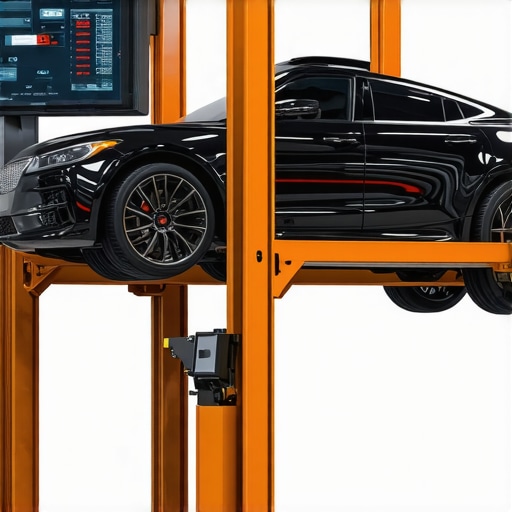
It is a common frustration: the car felt perfect for the first five miles, and then the drift returned. This phenomenon usually occurs because the suspension ‘settled’ after being lifted on the rack or because a technician failed to perform a proper caster sweep. According to maintenance standards established by the National Institute for Automotive Service Excellence (ASE), any adjustment to the tie rods or eccentric bolts must be followed by a short test drive and a secondary measurement to account for bushing memory. If the hardware is not torqued to spec while the suspension is at ride height—rather than hanging freely—the rubber bushings remain under constant preload, eventually ‘snapping’ back and pulling the geometry out of spec. To avoid this, ensure your shop utilizes a drive-on lift for the final torque sequence to unlock your car’s potential for long-term stability.
The Ghost of the Rear Axle and Thrust Angle Correction
A vehicle’s front wheels always attempt to align themselves with the direction the rear wheels are pointing. If the rear axle is skewed—a condition known as a thrust angle error—the car will ‘dog-track,’ moving down the road at a slight angle even if the steering wheel is level. This is particularly prevalent in vehicles with independent rear suspensions where a single curb strike can bend a lateral link. Professionals must treat the rear wheels as the foundation of the alignment; if the rear is not square to the chassis, no amount of front-end adjustment will yield a straight drive. If you have noticed a persistent drift that defies logic, drop a comment below with your alignment printout specs—our community often spots the subtle thrust angle deviations that quick-lube shops overlook.
How Aerodynamics Redefine Your Front-End Geometry
At standard city speeds, the physical weight of the vehicle is the primary force acting upon the tires. However, as you climb toward highway velocities, the equation shifts toward fluid dynamics. Air rushing beneath the chassis can create localized areas of low pressure or lift, which effectively lightens the load on the front suspension. If the vehicle has an uneven ride height—perhaps due to a sagging spring or an incorrectly installed aftermarket lip spoiler—the resultant aerodynamic imbalance can mimic a caster pull. This phenomenon is often the reason why a vehicle feels perfectly stable at 40 mph but becomes nervous and drifts at 75 mph. For those who frequently encounter this, checking for missing air dams or damaged underbody shielding is as critical as the alignment itself, as these components manage the high-pressure zones that keep the tires pressed firmly against the pavement.
Does internal steering rack leakage cause a permanent drift?
Internal hydraulic bypass is one of the most insidious ‘ghost’ issues in modern steering systems. Within a hydraulic power steering rack, a rotary valve directs fluid to either side of the piston based on driver input. If the internal seals become compromised or the torsion bar loses its tension, fluid can ‘bleed’ into one side of the cylinder even when the steering wheel is centered. This creates a constant hydraulic assist in one direction, forcing the driver to provide counter-torque just to stay straight. This is not a geometry failure, but a component failure that an alignment rack will never see. If your vehicle feels like it is being pushed by a phantom hand, it is essential to perform a pressure balance test. Before committing to a full rack replacement, consult our guide on vehicle diagnostics to ensure you aren’t overlooking a simpler sensor calibration error.
Match Mounting and the Science of Lateral Force Variation
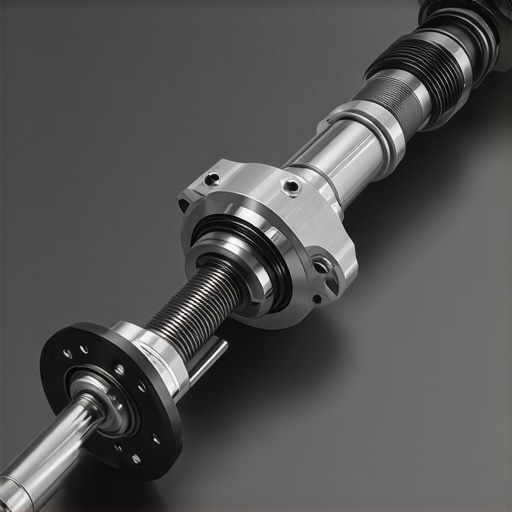
Even the most expensive tires are not perfectly round or uniform in density. Lateral Force Variation (LFV) refers to the ‘hard’ or ‘soft’ spots in the tire’s sidewall that occur during the vulcanization process. When these spots hit the road, they create a momentary tug. According to technical standards established by the Tire Industry Association (TIA), LFV can be mitigated through a process called match mounting. This involves measuring the high point of the tire’s radial force and aligning it with the low point of the wheel’s runout. By indexing the tire to the rim, you cancel out the harmonic vibrations and pulling forces that a standard spin balancer ignores. If you have recently purchased new rubber and the steering feels ‘jittery’ despite a fresh alignment, insisting on a Road Force Balance is the only way to neutralize these manufacturing inconsistencies.
The Hidden Role of Bushing Durometer in Dynamic Alignment
The rubber bushings in your control arms are designed with a specific ‘durometer’—a measure of hardness—that allows for NVH (Noise, Vibration, and Harshness) isolation while maintaining geometry. However, as rubber ages, it undergoes a process called thermo-oxidative degradation, causing it to soften or crack. Under the heavy load of cornering or braking, a soft bushing allows the control arm to shift significantly more than the factory intended. This results in a massive ‘dynamic toe’ change that disappears the moment the vehicle stops moving. Enthusiasts often swap to polyurethane bushings to sharpen handling, but this increases the transfer of road energy into the chassis. Choosing the right material balance is a delicate science; if the bushing is too stiff, it can bind the suspension, whereas too soft a material leads to a steering feel that is perpetually ‘vague’ and prone to wandering. Evaluating the deflection of these components requires a pry-bar test while the vehicle is on a drive-on lift to simulate the actual loads of the road…
When the Chassis Itself Loses Its Square
Sophisticated diagnostics often reveal that a persistent pull isn’t the fault of the wheels, but rather a loss of structural integrity in the unibody or frame. Even without a major accident, years of traversing pothole-ridden infrastructure can cause minor structural fatigue or ‘frame diamonding,’ where the rectangle formed by the wheel centers becomes a parallelogram. In these instances, standard alignment heads might report green numbers, but the vehicle’s thrust line remains fundamentally skewed relative to its centerline. Technicians must utilize three-dimensional measuring systems, often found in high-end collision centers, to verify that the hard mounting points for the subframes have not shifted. If the foundation is out of square, adjusting the tie rods is merely a temporary mask for a deep-seated structural deviation.
Road Crown Compensation and the Art of the Intentional Pull
Experienced alignment specialists know that a perfectly ‘neutral’ alignment can actually lead to driver fatigue on most public highways. Most roads are engineered with a ‘crown’—a slight slope toward the shoulder to facilitate water drainage. A vehicle set to factory-perfect zero specifications will naturally drift toward the curb due to gravity. To counteract this, professionals often introduce a ‘lead’ by setting the passenger-side caster slightly higher than the driver-side caster, typically within a 0.5-degree margin. This subtle asymmetry creates a slight pull toward the center of the road, effectively neutralizing the effect of the crown and allowing the car to track straight with minimal driver effort. If your vehicle feels like it is constantly falling off the side of the road, your last alignment may have been too ‘perfect’ for real-world conditions.
Can a miscalibrated yaw rate sensor mimic a mechanical pull?
In the complex ecosystem of modern vehicle dynamics, the answer is a resounding yes. The Electronic Stability Control (ESC) system relies on the yaw rate sensor to determine if the vehicle is rotating around its vertical axis. If this sensor provides an offset or ‘noisy’ signal, the ABS module may conclude that the vehicle is unintentionally veering and will apply a single-wheel brake tap to correct the perceived path. This ‘active’ correction manifests to the driver as a mysterious, intermittent tug on the steering wheel. According to technical bulletins from I-CAR, recalibrating the inertial measurement unit (IMU) and ensuring the steering angle sensor is synchronized is a mandatory post-alignment step for any vehicle equipped with Level 2 autonomy or advanced ESC. Without this digital handshake, the hardware and software remain in a state of perpetual conflict.
The Synergy of Laser Alignment and Electronic Stability Logic
We are witnessing a shift where the mechanical wrench is becoming a secondary tool to the diagnostic tablet. When a vehicle undergoes a suspension overhaul—perhaps replacing worn bushings or installing new struts—the physical geometry changes are only half the story. The vehicle’s computer must be ‘taught’ the new baseline. Failure to perform a Steering Angle Sensor (SAS) reset can lead to the Electric Power Steering (EPS) motor providing uneven assist, as it attempts to return the wheel to a digital center that no longer matches the physical rack position. This creates a ‘heavy’ feeling in one direction and a ‘light’ feeling in the other, a nuance that many general repair shops miss. For those looking to master these complex systems, we recommend reviewing our specialized insights on vehicle diagnostics to bridge the gap between mechanical repair and electronic calibration.
Stop Treating the Symptom and Fix the Root Structural Flaw
If you have cycled through multiple alignment shops and still find yourself fighting the steering wheel, it is time to look deeper into the chassis forensics. Ensure your technician performs a comprehensive ‘set-back’ and ‘toe-out-on-turns’ check, which can identify bent steering knuckles that standard measurements often overlook. Don’t settle for a ‘toe-and-go’ service that ignores the broader health of your suspension. Take the initiative to ask for a full four-wheel printout and look specifically at the thrust angle and caster stagger. Are you ready to stop the drift and restore your car’s factory-fresh handling? Reach out to a specialist who understands that alignment is a three-dimensional puzzle, not just a two-dimensional adjustment.
Expert Insights and Advanced Considerations
Stop Blindly Trusting the Green Numbers
Technicians often fall into the trap of ‘chasing the green,’ assuming that as long as the software displays a favorable value, the vehicle is cured. However, static alignment measurements ignore the dynamic shifts that occur under load. If you suspect your vehicle is still drifting, utilize the 20 dollar scan tool that does more than the dealership rig to check live data during a road test, specifically looking for steering angle offsets that do not manifest on a stationary rack.
High-Performance Tires Mask Underlying Geometry Flaws
While sticky, low-profile tires provide exceptional grip, their stiff sidewalls can often camouflage significant suspension issues. A slightly bent control arm might not cause a noticeable pull with high-performance rubber until the tires begin to wear unevenly. To truly evaluate a chassis, an expert will inspect for the real reason your car shakes at highway speeds, which often involves subtle harmonic imbalances that interact with the alignment geometry.
Digital Center Calibration Trumps Mechanical Adjustment
In the age of electronic assist, the physical position of the steering wheel is secondary to the Steering Angle Sensor (SAS) data. If you have resolved transmission troubles or suspension wear but the car still feels ‘off,’ the issue is likely a failure to reset the digital zero point. The computer may be fighting your mechanical adjustments, leading to an artificial pull that no wrench can fix.
Real-World Road Crown Ruins a Perfect Rack Setup
A car that tracks perfectly on a flat alignment rack will almost certainly drift to the right on a standard American highway. Experienced masters know to dial in a slight ‘lead’ by intentionally offsetting caster to compensate for the drainage slope of the road. If your steering wheel feels jittery or inconsistent, check if your steering wheel vibrates at exactly 60 mph, as this speed often amplifies the conflict between road crown and improper caster settings.
Curated Expert Resources
Hunter Engineering Technical Training
Widely considered the gold standard for wheel service, Hunter provides deep-dive technical documentation on lateral force variation and ADAS recalibration protocols that are essential for modern chassis technicians.
I-CAR Professional Guidelines
This resource is critical for understanding how structural repairs and frame alignment impact the dynamic handling of modern unibody vehicles, especially after significant impacts.
SAE International Technical Archives
For those who want to understand the fluid dynamics and physics of suspension geometry, the SAE archives offer peer-reviewed research on steering response and tire-road interface dynamics.
Final Expert Perspective
True vehicle stability is the result of a synchronized relationship between mechanical geometry, tire construction, and electronic sensor logic. Finding a reliable car service that looks beyond the basic alignment printout is essential for maintaining a high-performance machine. By treating the chassis as a single, holistic system rather than a collection of independent parts, you can eliminate persistent drifts and restore the confident, straight-line tracking your vehicle was engineered to provide. If you have encountered a ‘ghost’ pull that defied traditional fixes, we invite you to share your diagnostic process or consult our advanced technical guides to solve the mystery.