When a vehicle reaches cruising velocity, it enters a state of high-frequency operation where even a minor imbalance in rotating mass transforms from a negligible nuance into a violent harmonic oscillation. This phenomenon, often felt as a rhythmic shudder in the steering wheel or a seat-base tremor, is frequently misdiagnosed by generalists as a simple tire balance issue. However, a rigorous approach to vehicle diagnostics reveals that highway-speed instability is often a symptom of complex parasitic resonances originating within the transmission, driveline, or suspension geometry. As an expert in mechanical forensics, it is essential to distinguish between centrifugal force issues and component-specific failures that only manifest under the high torque loads and rotational speeds of interstate driving.
High-Speed Resonance and the Physics of Rotating Mass
At 70 MPH, a standard automotive tire rotates at approximately 800 to 900 revolutions per minute. At this frequency, small deviations in the radial or lateral runout of a wheel assembly create significant centrifugal force. Yet, if the shake persists after a road-force balance, the investigation must pivot toward the drivetrain. High-velocity vibrations are frequently tied to the driveshaft or half-shafts. A slightly bent axle or a worn universal joint can reach its critical speed—the point where its natural frequency matches its rotational speed—causing a dramatic increase in vibration amplitude. This is precisely why your steering wheel vibrates at exactly 60 mph but might smooth out at higher speeds as the system moves past that specific resonant frequency.
Could a Failing Torque Converter Mimic a Tire Flat Spot?
One of the most complex diagnoses involves the transmission’s torque converter clutch (TCC). In modern overdrive systems, the TCC engages at highway speeds to create a direct mechanical link between the engine and the transmission for fuel efficiency. If the TCC friction material is degraded or the hydraulic pressure is inconsistent, the vehicle may experience ‘TCC shudder.’ This feels remarkably like driving over rumble strips and occurs specifically when the transmission is under light load at high speeds. Distinguishing this from a mechanical tire vibration requires an expert to monitor the TCC slip rate using a high-level scan tool during a road test. According to research published by SAE International on Noise, Vibration, and Harshness (NVH), these drivetrain-induced vibrations are often misinterpreted by owners as alignment issues, leading to unnecessary expenses.
Structural Failures Hiding in the Driveline
Beyond the wheels, the integrity of the CV (Constant Velocity) joints plays a pivotal role in high-speed stability. While most drivers associate CV joint failure with clicking sounds during low-speed maneuvers, an inboard joint failure often presents as a side-to-side wobble under acceleration at highway speeds. You can often diagnose a bad CV joint by paying close attention to whether the vibration disappears when you lift off the accelerator; if the shake is load-dependent, the driveline is the primary suspect. Furthermore, engine and transmission mounts that have lost their damping properties can allow the entire powertrain to oscillate, amplifying minor vibrations that would otherwise be absorbed by the chassis. If you have recently performed an auto repair and the vibration persists, the mounting hardware should be inspected for micro-cracks or fluid leaks in the case of hydraulic mounts.
Expert technicians should always utilize a vibration analyzer app or tool to determine the exact frequency (Hz) of the shake, which allows for the isolation of the specific rotating component at fault. Have you encountered a persistent vibration that defied standard balancing? Contribute your professional insights to our technical forum to help refine these diagnostic protocols.
When the Brake Pedal Becomes a Vibration Amplifier
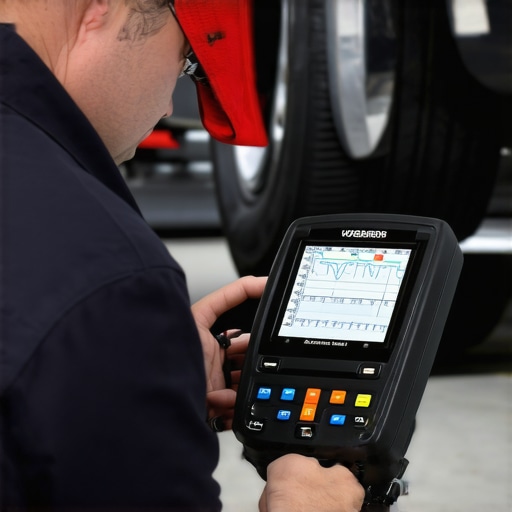
High-speed stability is not just about maintaining velocity; it is equally dependent on the vehicle’s ability to shed that kinetic energy without compromising control. At speeds exceeding 60 MPH, the rotors are rotating at a high frequency, and any microscopic thickness variation (TV) or thermal distortion results in high-frequency pulsations. This is exactly why your steering wheel shakes when you hit the brakes specifically on off-ramps or during sudden highway decelerations. Unlike low-speed braking where the driver might feel a slow surge, high-speed braking amplifies these imperfections into a violent shudder that can degrade braking efficiency and increase stopping distances. According to the National Institute for Automotive Service Excellence (ASE), technicians must use a micrometer to check for rotor runout, as even a variance of 0.002 inches can be felt by a sensitive driver at cruising speeds.
Is Your ABS System Overcorrecting a Ghost Vibration?
In the realm of advanced diagnostics, we must consider how electronic safety systems interact with mechanical failures. Modern Anti-lock Braking Systems (ABS) and Electronic Stability Programs (ESP) rely on millisecond-accurate data from wheel speed sensors. If a wheel bearing is beginning to develop play—even if it has not yet reached the stage of audible growling—it can cause ‘sensor jitter.’ The computer may misinterpret this slight oscillation as a loss of traction, momentarily engaging the ABS pump or modulating brake pressure. This electronic interference manifests as a phantom vibration that feels mechanical but is actually a software response to a failing hardware component. Identifying the specific noise your wheel bearing makes before it fails is a critical skill for any owner looking to avoid expensive diagnostic rabbit holes.
Aerodynamic Drag Meets Worn Suspension Geometry
At lower speeds, the suspension mostly manages road surface irregularities. However, as velocity increases, aerodynamic drag exerts hundreds of pounds of downforce and lateral pressure on the vehicle’s body. If the dampers are soft, the wind resistance can actually cause the vehicle to ‘hunt’ across the lane, a sensation often confused with poor alignment. It is vital to know the easy way to tell if your struts are actually blown by observing how the chassis settles after a high-speed compression. When suspension components like bushings or ball joints have excessive play, the air rushing under the car can cause these parts to oscillate. This is particularly prevalent in vehicles with large frontal areas or modified ride heights where the airflow is no longer optimized. Using the $20 scan tool that does more than the dealership rig, you can often check for chassis-related codes or sensor data that point toward an overactive stability control system fighting these aerodynamic forces. If you have navigated a mystery vibration that felt more like wind than wheels, share your story in the comments below or recommend this deep dive to a friend whose car is currently ‘the shaker.’
Ultimately, achieving a smooth ride at 75 MPH requires a holistic view of the machine. By choosing the right car service for seamless vehicle maintenance, you ensure that the technician is looking beyond the tire balancer and into the heart of the driveline geometry.
Stop the Buzz: How Your Differential Ruins a Smooth Cruise
When the investigation moves beyond the external components, the focus must shift to the internal mechanics of the differential. A pinion bearing that has lost its preload or a ring gear with localized pitting can induce a high-frequency vibration that feels like a ‘buzz’ rather than a ‘shake.’ This microscopic mechanical discordance is often magnified by the hollow structure of the driveshaft, which acts as an acoustic resonator for gear noise. As you search for solutions, choosing the right car service ensures the technician checks the backlash of the differential gears with a dial indicator rather than relying on a simple visual inspection. This level of precision is necessary because even a few thousandths of an inch of gear play can translate into a significant harmonic disturbance at 3,000 RPM. If you have noticed a high-pitched whine accompanying your highway shimmy, it is time to inspect the gear contact pattern for signs of irregular wear or improper tooth engagement.
The Geometry of Silence: Fixing Drive Shaft Phase Angles
The physics of universal joints requires that they operate in pairs with matching angles to cancel out the natural non-uniform velocity of a single joint. If a vehicle has been lifted or lowered without correcting the pinion angle, these joints fight each other at high speeds, creating a secondary harmonic that no amount of tire balancing can solve. This torsional vibration is particularly elusive because it often disappears when the car is on a traditional lift and the suspension is unloaded. 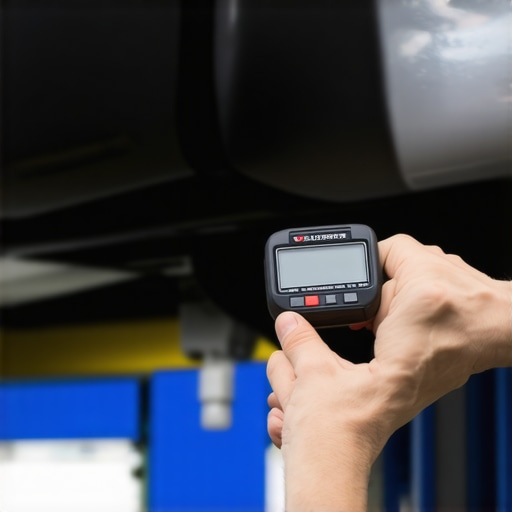 Identifying the correct ‘working angle’ of each joint requires a digital inclinometer and a deep understanding of driveline phasing. When the angles are out of sync, the driveshaft accelerates and decelerates twice per revolution, leading to a rhythmic thrum that resonates through the entire floorboard. If you are performing an auto repair involving the driveshaft, always mark the orientation of the flanges to ensure they are reinstalled in their original, balanced position.
Can a Clogged Transmission Cooler Cause Highway Speed Vibrations?
It is a sophisticated question that many DIYers overlook: the relationship between thermal management and mechanical stability. A clogged or restricted transmission cooler leads to localized overheating within the torque converter, causing the automatic transmission fluid (ATF) to lose its kinematic viscosity. When the fluid thins beyond its designed parameters, the internal clutches may struggle to maintain a consistent lock-up, resulting in a ‘micro-slip’ condition. This rapid cycling of engagement and disengagement mimics a mechanical vibration. According to standards established by ASTM International regarding the shear stability of lubricants, fluid degradation directly correlates to a loss of damping properties in the drivetrain. Monitoring your transmission fluid temperature via a reliable scan tool during high-speed runs can reveal if your ‘vibration’ is actually a thermal failure in disguise.
Friction Modifiers and the High-Velocity Fluid Interface
Beyond mechanical hardware, the chemistry of your vehicle plays a silent role in its high-speed behavior. In limited-slip differentials and modern electronically controlled transmissions, the friction modifiers in the oil are responsible for ensuring smooth transitions between moving parts. As these additives deplete over time, the ‘stick-slip’ phenomenon occurs, where parts momentarily grab and release instead of sliding smoothly. This creates a high-frequency chatter that travels through the axle shafts. Ensuring you are using the exact specification of fluid is paramount; substituting a generic gear oil for a high-performance synthetic can introduce resonances that were previously suppressed by the original fluid’s molecular structure. While many drivers focus on the hard parts, the fluid interface is the frontline of vibration control. If you have recently changed your differential fluid and suddenly developed a highway tremor, the friction coefficient of the new lubricant may be the culprit. Consider investigating the transmission failures decoded to see how fluid-based issues manifest across different vehicle architectures.
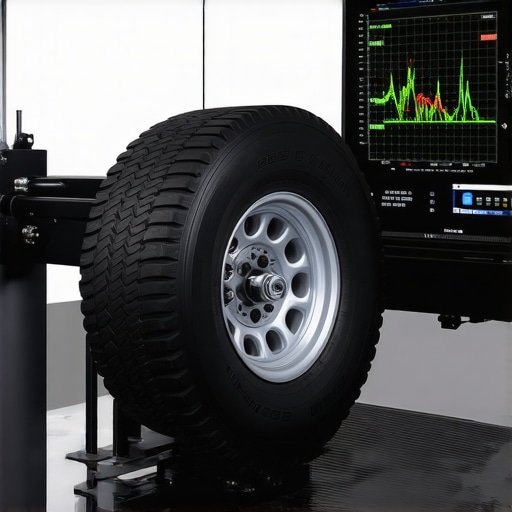
While most diagnostic pathways for high-speed vibrations begin and end with the balancer, seasoned master technicians recognize that the internal architecture of the tire itself can be a silent saboteur. Radial Force Variation (RFV) is a phenomenon where the tire’s carcass possesses non-uniform stiffness or a slight out-of-round condition that cannot be corrected by adding lead weights. Even a perfectly balanced wheel assembly can exert a cyclic upward force every time the ‘hard spot’ of the tire hits the pavement, creating a rhythmic pounding that mimics a heavy imbalance. This is where advanced vehicle diagnostics must involve road-force measurement, simulating the weight of the vehicle on the tire to identify internal belt shifts or manufacturing defects that only manifest under load. If you are experiencing a shake that refuses to subside after multiple balances, the internal structural integrity of your rubber is likely the culprit.
Hydraulic Feedback Loops Inside the Steering Rack
In vehicles equipped with traditional hydraulic power steering, the steering rack can actually become an amplifier for minute road vibrations. If the internal valving or the spool valve assembly develops internal leakage or wear, it can create a ‘hydraulic hunt’ at highway speeds. This occurs when the pressurized fluid oscillates between the left and right cylinders of the rack, attempting to center a steering wheel that is receiving high-frequency inputs from the road. This feedback loop is often mistaken for a front-end alignment issue or worn tie-rod ends. To isolate this, an expert might temporarily disable the power assist or use a pressure gauge to monitor hydraulic spikes during a road test. When you seek a car service for a steering-related vibration, ensure they are checking for internal rack bypass, as this specialized failure mode requires a complete component replacement rather than a simple fluid flush.
Can Electronic Power Steering Calibration Mask a Mechanical Defect?
With the industry shift toward Electronic Power Steering (EPS), the diagnostic landscape has evolved into the digital realm. Modern EPS units often feature ‘active nibble cancellation,’ a software-driven feature designed to filter out road-induced vibrations before they reach the driver’s hands. While this provides a more comfortable driving experience, it can also mask the early warning signs of a failing wheel bearing or a deteriorating ball joint. If the EPS motor is working overtime to suppress a mechanical vibration, it may eventually overheat or trigger a fault code. In such cases, a technician must use a high-level $20 scan tool or a professional-grade equivalent to disable these software filters and feel the raw mechanical feedback from the suspension. Only by stripping away the electronic interference can the true health of the chassis be assessed.
Chassis Harmonics and the Engineering of Silence
Every vehicle has a natural resonant frequency—the ‘pitch’ at which its frame and body like to vibrate. Automotive engineers spend thousands of hours ensuring that engine and road frequencies do not match this natural frequency. However, as a vehicle ages, the structural rigidity changes. Worn bushings, rusted subframe mounts, or even a previous collision repair can lower the vehicle’s resonant frequency into the range of highway cruising speeds. According to research published by the Institution of Mechanical Engineers (IMechE), the degradation of elastomeric dampers in a vehicle’s subframe can lead to ‘chassis drone,’ a low-frequency vibration that permeates the cabin. This type of vibration is holistic; it isn’t coming from one part, but rather from the failure of the system to isolate the cabin from the road. If your vehicle feels ‘loose’ or noisy at 75 MPH despite having new tires, it is time to perform an auto repair centered on the subframe isolation mounts. Have you ever chased a vibration that felt like it was coming from everywhere and nowhere at once? Share your diagnostic journey in our community forum and help others decode these complex harmonic mysteries.
Expert Insights & Advanced Considerations
Why High-Velocity Fluid Breakdown Mimics Mechanical Failure
It is often overlooked that transmission fluid serves as more than just a lubricant; it is a critical component of the damping system. When fluid undergoes thermal degradation, its kinematic viscosity fails to suppress high-frequency oscillations within the torque converter. This leads to a phantom vibration that often results in unnecessary transmission teardowns. A forensic approach suggests checking the fluid’s shear stability before condemning hardware. If you suspect thermal instability, monitoring the slip rate during high-speed runs is the only way to confirm.
Stop Blaming the Hardware When Sensors Go Rogue
Modern vehicles often suffer from sensor jitter, where a marginally worn wheel bearing creates a signal noise that the ESP interprets as traction loss. Before replacing physical components, utilize the $20 scan tool that does more than the dealership rig to graph live data. This allows you to differentiate between a mechanical imbalance and a software-driven correction cycle that manifests as a steering wheel shudder. Digital interference is the most common diagnostic trap in late-model European and domestic platforms.
Your Frame Has a Natural Rhythm You Need to Break
Every chassis has a resonant frequency that changes as elastomeric dampers harden with age. When the body’s ability to attenuate road noise vanishes, even a perfectly balanced tire will feel like a jackhammer. If you have replaced the rubber and the shake remains, look toward the subframe bushings. This holistic auto repair strategy addresses the root cause of resonance rather than just the symptoms. Addressing the structural integrity of the mounts is often the final step in restoring a factory-quiet ride.
Curated Expert Resources
SAE International (Society of Automotive Engineers): This is the gold standard for understanding Noise, Vibration, and Harshness (NVH) standards. Their technical papers provide the mathematical foundations for critical speeds and resonant frequencies in rotating shafts.
ASE (National Institute for Automotive Service Excellence): For technicians seeking to master the art of the road-test, ASE provides specialized certification tracks that focus on drivetrain and suspension geometry, ensuring you avoid common misdiagnoses.
ASTM International: Their database on lubricant shear stability is invaluable when investigating how friction modifiers and fluid age contribute to torque converter shudder and limited-slip differential chatter.
#IMAGE_PLACEHOLDER_E#
Final Expert Perspective
Achieving a vibration-free ride at triple-digit frequencies requires more than just luck; it demands a forensic approach to vehicle diagnostics. Whether the issue lies in the phase angles of a driveshaft or the thermal breakdown of a friction modifier, the solution is always found in the data. If your vehicle continues to resist standard balancing, it is time to transition from a generalist view to an expert-level mechanical analysis by choosing the right car service. What is the most elusive vibration you have ever diagnosed? Share your professional breakthroughs in our technical forum or consult our advanced guides to refine your troubleshooting process.