In the high-stakes world of modern vehicle diagnostics, identifying an elusive electrical leak is often the difference between a successful fix and a repeat customer. While digital multimeters are the industry standard, the humble incandescent test light offers a tangible, visual indicator of current flow that is invaluable during initial car service assessments. A parasitic draw occurs when a component remains active long after the ignition is switched off, slowly siphoning energy from the battery. If you find your battery dies every three days even if it is new, you are likely dealing with a module that has failed to enter its designated sleep state.
Stop Guessing and Start Isolating the Parasitic Draw
Mastery over your vehicle’s electrical health begins with isolation. Professional auto repair relies on systematic elimination to find the hidden electrical drain killing your battery while the car is parked. By placing a test light in series between the negative battery cable and the negative terminal, the bulb becomes a bridge for all electrical activity. A glowing bulb indicates a current flow significant enough to drain the system. This method is particularly effective for spotting heavy draws like a stuck relay or a faulty alternator killing your new battery, which might otherwise cause a digital meter to fluctuate wildly. Modern car service protocols highlight that vehicles can take anywhere from 10 to 60 minutes to fully ‘go to sleep.’ Using a test light allows you to see the brightness dim as various computers shut down, providing a real-time narrative of the car’s power management system. This level of visual confirmation is often more intuitive than watching numbers scroll on a screen during complex vehicle diagnostics sessions.
Can a Basic Test Light Outperform Expensive Digital Multimeters?
The answer depends on the nature of the fault. For quick triage, the test light is superior because it places a small load on the circuit, which can help reveal ‘ghost voltages’ that a high-impedance multimeter might misinterpret. However, according to technical guidelines from SAE International, precise measurement below 50 milliamperes is necessary for modern luxury cars. For many technicians, the simple trick to find a parasitic battery drain with a bulb provides the immediate visual feedback needed to start pulling fuses one by one until the light goes out. If the light remains bright after pulling common fuses, the issue may reside in the unfused circuits of the starter or the alternator, requiring a more aggressive diagnostic approach.
How to Secure the Connection Without Shorting Your Electronics
Safety is paramount when performing any electrical vehicle diagnostics. Always work on the negative terminal to prevent accidental grounding against the chassis. While performing this test, ensure that all doors are closed or latches are manually tripped to simulate a parked state. If your investigation leads you to believe the issue is related to deeper drivetrain modules, such as those discussed in our guide on transmission failures decoded, professional intervention may be required. For a deeper dive into your specific vehicle’s symptoms, feel free to visit our contact page to speak with a diagnostic specialist. This methodical approach ensures you don’t just replace parts, but actually solve the root cause of the failure, maintaining the integrity of your auto repair efforts.
Move Past the Fuse Pulling Trap
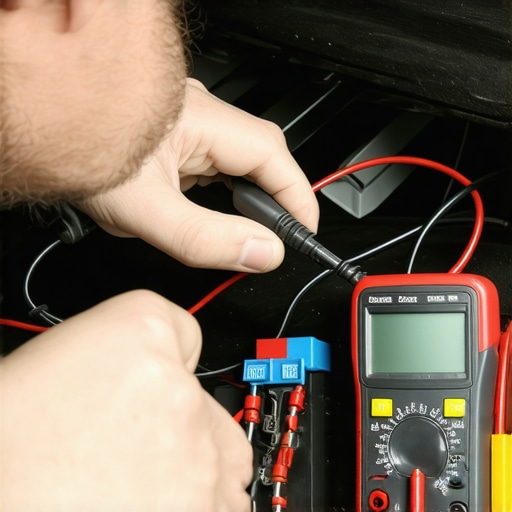
While the ‘fuse-pulling’ method is a staple of entry-level car service, it contains a significant flaw for modern, networked vehicles. When you remove a fuse, you effectively ‘hard reset’ any module on that circuit. If a Body Control Module or Infotainment unit was ‘stuck’ in an active state, pulling the fuse fixes the glitch temporarily. Once the fuse is reinserted, the module may enter its proper sleep cycle, leaving you with a vehicle that tests fine but will fail again in 48 hours. Expert-level vehicle diagnostics now favor the voltage drop test across fuses. By measuring millivolts across the two small metal test points on the back of a blade fuse, you can calculate the actual amperage draw without ever breaking the circuit. This keeps the car’s ‘brain’ undisturbed and ensures you catch the module in the act of staying awake.
Why Does Your Luxury Sedan Refuse to Go to Sleep?
Modern vehicles are essentially rolling computer networks, and like any computer, they can suffer from ‘software insomnia.’ A frequent culprit is the CAN-bus system, which keeps modules ‘talking’ even after the key is removed. If a single door latch sensor fails to signal that the car is locked, or if your car alarm goes off for no reason at night, the entire network may stay in a high-power state. This isn’t just a battery issue; it’s a communication breakdown. According to technical documentation from Mitchell 1, a trusted authority in professional repair data, parasitic draws in late-model vehicles are often traced back to aftermarket accessories like remote starts or dash cams that prevent the vehicle’s gateway module from entering deep sleep mode.
Hunt for Resistance in the Unprotected Lines
If you have checked every fuse and the draw remains, you must turn your attention to the high-current, unfused circuits. The starter motor and the alternator are directly connected to the battery. A leaking diode inside the alternator is a classic ‘silent killer’ of batteries. It won’t show up on a fuse-box test because the current is leaking internally through the alternator’s rectifying bridge. You can diagnose this by safely disconnecting the main B+ cable from the alternator (with the battery disconnected first) and then re-testing the draw at the battery terminal. If the draw disappears, you’ve found your culprit. This level of scrutiny is what separates a standard oil change shop from a specialist capable of unlocking your car’s potential through precise electrical repair.
The Hidden Impact of Corroded Ground Paths
Never underestimate the power of a bad ground to create ‘ghost’ electrical issues. High resistance in a ground wire can force current to find alternative, unintended paths to complete a circuit, which can manifest as a parasitic drain. Learning how to identify a bad ground wire without a multimeter by using a high-wattage test light can help you see if a circuit can actually handle a load. If you are noticing other strange symptoms, such as the engine stumbling, consider checking the 20-fix for a rough idle that mechanics overlook, as these issues are frequently linked to the same grounding points that stabilize your battery’s discharge rate. Before you commit to replacing expensive modules, always ensure the foundation of your electrical system—the cables and connectors—are free of green crust and loose hardware. Have you encountered a drain that only appears when it rains? Share your weirdest electrical stories in the comments below, or check out our other diagnostic guides to keep your vehicle in peak condition.
Stop Chasing Phantoms with Long-Term Data Logging
Even the most seasoned technician can be humbled by a parasitic draw that refuses to manifest during shop hours. These intermittent drains are the ‘ghosts’ of the automotive world, often triggered by specific environmental variables like a drop in ambient temperature or a rise in humidity that affects a corroded connector. When a standard test light or multimeter fails to capture the event, you must pivot to long-term data logging. By utilizing an oscilloscope or a dedicated battery-monitoring logger, you can record voltage drops over a 24-hour period. This data provides a ‘heartbeat’ of the vehicle’s electrical consumption, allowing you to pinpoint exactly when a module wakes up and how long it stays active. If you notice a spike in activity every four hours, you aren’t looking for a broken wire; you’re looking for a programmed event, such as an EVAP system self-test or a telematics unit attempting to ‘phone home’ to a distant server.
How Do You Diagnose a Battery Drain That Only Occurs Periodically?
The key to solving periodic drains lies in capturing the ‘pre-event’ data. Advanced diagnostics require the use of a low-amp current clamp coupled with a graphing multimeter. This setup allows you to monitor current flow without interrupting the circuit, which is vital for vehicles that reset their error states once the battery is disconnected. According to technical documentation from Bosch Mobility, modern Gateway Control Units (GCU) manage the sleep-wake cycles of dozens of subordinate modules. If the GCU receives a ‘keep-awake’ signal—perhaps from a faulty door handle touch sensor or a localized area network (LIN) bus error—the vehicle will never enter its lowest power state. Pinpointing these signals requires a level of patience that standard flat-rate service rarely allows, but it is the only way to ensure the vehicle won’t leave the owner stranded again.
See the Heat Before You Smell the Smoke
One of the most revolutionary shifts in modern auto repair is the integration of thermal imaging into the diagnostic workflow. Every electrical circuit produces a small amount of heat when current flows through resistance. A module or fuse that is actively drawing power will appear ‘hotter’ than its dormant neighbors when viewed through an infrared lens. This allows you to scan an entire fuse block in seconds, identifying the active circuit without ever touching a probe. 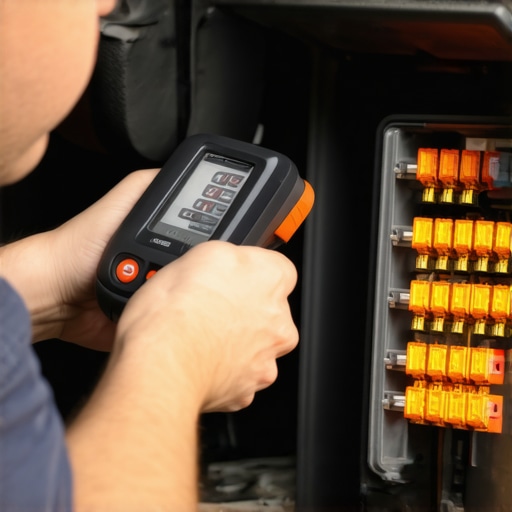 This non-invasive method is particularly effective for identifying ‘internal’ shorts in modules that are tucked behind dashboards or under seats. If you’ve been struggling with a complex drain, unlocking your car’s potential often starts with seeing the invisible energy being wasted as heat. This technique not only saves hours of labor but also prevents the physical wear and tear on plastic clips and sensitive connectors that occurs during manual teardowns.
Register Your Battery to Save Your Alternator
In many modern European and high-end domestic vehicles, the charging system is no longer a ‘set it and forget it’ mechanical operation. These cars use sophisticated Battery Management Systems (BMS) that track the age and health of the battery to adjust the alternator’s output accordingly. When a battery ages, its internal resistance increases, and the BMS commands the alternator to push a higher charging voltage. If you replace the battery without ‘registering’ the new unit in the car’s computer, the BMS continues to treat the new battery as if it were the old, failing one. This leads to overcharging, which can mimic a parasitic drain by off-gassing the battery or damaging sensitive electronics. Ensuring your diagnostic tool can communicate with the BMS is a critical step in any comprehensive car service. If you are curious about how these systems interact with your drivetrain, our analysis of transmission failures decoded explores how low-voltage conditions can even trigger erratic shifting and ‘limp home’ modes. Before you commit to deeper repairs, consider how these software-driven charging cycles impact the longevity of your components.
In regions where humidity is high or road salt is common, the diagnostic landscape shifts from simple component failure to environmental interference. Moisture acts as a bridge, creating low-resistance paths across cracked wire insulation or corroded connector pins. This “creeping voltage” often disappears once the car dries out in a heated shop, making it a nightmare for standard car service workflows. To catch these phantoms, you may need to simulate a wet environment using a misting bottle while monitoring the current draw. If the vehicle diagnostics equipment shows a spike in activity after a light spray near the bulkhead or wheel wells, you have narrowed the search to a compromised wiring harness or a failing seal that allows water into a sensitive module.
Can a Failing Ignition Switch Mimic a Persistent Parasitic Draw?
Technicians often overlook the physical ignition cylinder when hunting for drains, but a worn internal contact can keep the “Accessory” or “Run” bus energized even when the key is in your pocket. This won’t necessarily turn on the radio or dashboard lights, but it can prevent the Body Control Module from initiating its shutdown sequence. According to safety bulletins and recall data from the National Highway Traffic Safety Administration (NHTSA), several vehicle generations have suffered from “key-off” drains caused by faulty switch logic or physical wear. If your test light remains dimly lit after pulling all interior fuses, back-probing the ignition switch connector is a mandatory step to ensure the mechanical core of the vehicle is actually severing the connection as intended.
The Telematics Trap Where Your Car Stays Awake to Talk to Satellites
We live in an era where vehicles are “always-on” nodes in a global network. Telematics units, responsible for everything from emergency calls to remote start apps, are designed to ping servers periodically. However, if the car is parked in an underground garage with poor cellular reception, the unit may enter a high-power “search mode,” desperately trying to establish a handshake. This creates a cyclical parasitic battery drain that only happens in specific parking spots. For those dealing with high-tech luxury sedans, disabling the cellular fuse or moving the car to an area with clear line-of-sight to the sky can often prove if the car is simply working too hard to stay connected. This is a prime example of how auto repair in 2025 requires as much knowledge of network protocols as it does of mechanical wrenches.
Stop the Costly Cycle of Pointless Battery Swaps
Replacing a battery without identifying the root cause of the drain is merely treating a symptom while the “disease” continues to spread. A deep discharge cycle can permanently damage even the most resilient AGM batteries, leading to a situation where the new unit fails within months. By mastering the advanced techniques of voltage drop testing and thermal scanning, you protect your investment and ensure your vehicle remains reliable. If you are tired of waking up to a clicking starter, it is time to move beyond guesswork. Connect with our experts today to schedule a comprehensive electrical audit and experience the peace of mind that comes with a truly healthy charging system. Don’t let a hidden leak drain your wallet—take control of your vehicle’s electrical future now.
Expert Insights and Advanced Diagnostic Tactics
Stop Blaming the Battery for Software Insomnia
A significant percentage of modern electrical failures are not mechanical failures but logic-based errors where a module enters a keep-awake loop. In high-level vehicle diagnostics, we often find that a single faulty sensor on a non-critical circuit prevents the entire vehicle from sleeping. If you have been searching for the hidden electrical drain killing your battery while the car is parked, remember that the software handshake is as critical as the physical wire.
Monitor the Network Peak Instead of Just Amperage
While most technicians look for a constant draw, a digital oscilloscope can reveal burst patterns or short spikes of activity every few minutes. This is a hallmark of telematics units or security modules attempting to communicate. If your car alarm goes off for no reason at night, it may be a symptom of these erratic voltage fluctuations triggering the sensor logic.
Simulate Real-World Conditions for Intermittent Faults
A vehicle in a climate-controlled shop rarely behaves like one parked in a damp driveway. To truly test a circuit’s integrity, you must occasionally induce a load or simulate environmental stressors. This is how you identify a bad ground wire without a multimeter by observing how the circuit responds to a high-wattage load under stress. #IMAGE_PLACEHOLDER_E#
Essential Resources for Electrical Mastery
ASE Electrical Training L6 provides the theoretical foundation necessary for moving beyond simple fuse pulling and into advanced computer-controlled engine and chassis electronics.
AllData Wiring Schematics allow you to map out complex CAN-bus networks accurately during a difficult car service, ensuring you target the correct communication lines.
ScannerDanner Educational Series offers field-tested logic that helps technicians visualize electrical pressure and flow through comprehensive case studies.
The Professional Path to Electrical Reliability
Solving the hidden electrical drain killing your battery while the car is parked requires a shift from being a parts-swapper to becoming a data-analyst. By utilizing thermal imaging, voltage drop testing, and a deep understanding of network sleep cycles, you can eliminate the guesswork that plagues standard car service workflows. If you are struggling with a ghost in the machine that defies traditional logic, we invite you to reach out to our team via our contact page for specialized consultation. Professional auto repair is about more than just finding a broken wire; it is about restoring the digital and electrical harmony of your vehicle.