Modern suspension systems are marvels of engineering designed to maintain a consistent tire contact patch across varying road surfaces. However, when you observe the inside edge of your tires wearing significantly faster than the rest of the tread, it signals a breakdown in the delicate balance of alignment and component integrity. This isn’t merely a maintenance nuisance; it is a critical indicator of suspension geometry failure that demands professional auto repair intervention. Inner edge wear, often referred to as ‘camber wear’ or ‘toe scrub,’ typically stems from a convergence of mechanical issues that shift the vehicle’s weight onto a narrow strip of rubber, compromising both traction and safety.
The Hidden Load Factors Pulling Your Wheels Out of Spec
Excessive negative camber is a primary culprit for inner tread depletion. This occurs when the top of the tire tilts inward toward the chassis, placing disproportionate pressure on the inner shoulder. While a small degree of negative camber can improve cornering stability in performance-oriented setups, daily drivers rely on a more neutral stance. Over time, the heavy components of your vehicle can cause springs to sag and struts to lose their dampening efficacy, leading to a permanent change in ride height and camber angle. To determine if your suspension is the root cause, you can explore the easy way to tell if your struts are actually blown before the damage necessitates a complete overhaul. In advanced vehicle diagnostics, technicians look for these gradual shifts in structural support that laser alignments alone might not immediately resolve.
How Dynamic Toe-Out Shreds Your Inner Tread
While camber is a static angle, ‘toe’ refers to the direction the tires point relative to the vehicle’s centerline. When wheels are ‘toed-out,’ they point away from each other, causing the tires to drag sideways as the vehicle moves forward. This scrubbing action is incredibly destructive to the inner edge. Even if your static alignment appears correct on a rack, ‘dynamic toe-out’ can occur while driving if your tie rods or control arm bushings are worn. As you accelerate or brake, the forces acting on the wheels push them out of alignment. This is why some owners find that their car pulls to the left even after an alignment; the issue isn’t the setting, but the mechanical play in the steering rack or transmission-related driveline components that destabilize the front end.
Are Your Bushings Masking a Major Suspension Failure?
Rubber and polyurethane bushings act as the joints of your vehicle’s suspension. When these components dry rot or tear, they allow the control arms to shift excessively under load. This ‘slop’ in the system makes it impossible to maintain a consistent tire footprint. Furthermore, a failing wheel bearing can introduce enough lateral movement to mimic alignment issues while also generating significant heat. It is vital to learn how to identify a failing wheel bearing before the hub seizes up, as this can lead to catastrophic failure on the highway. According to the Society of Automotive Engineers (SAE), even a few millimeters of unintended movement in a control arm can result in a 20% reduction in tire life over just 5,000 miles.
Stop the Cycle of Premature Tire Replacement
Addressing uneven wear requires a holistic approach to car service. Simply replacing the tires is a temporary fix that ignores the underlying pathology. A thorough inspection should include a check of the ball joints, bushings, and steering linkage. If you suspect your vehicle’s geometry is compromised, it is time to schedule a deep-dive vehicle diagnostics session to prevent the high cost of premature tire replacement and ensure your car remains stable at highway speeds.
Why Your Car Service Needs to Look Beyond the Alignment Rack
The static measurement on an alignment rack provides a snapshot of your vehicle at rest, but it rarely accounts for the dynamic forces at play during a highway commute. When a vehicle is in motion, the aerodynamic downforce and centrifugal energy during cornering expose weaknesses that a stationary test simply cannot detect. This phenomenon, often referred to as ‘suspension compliance,’ occurs when aged rubber components yield excessively under load. If your car exhibits unsettling feedback, such as why your steering wheel vibrates at exactly 60 mph, it often indicates a harmonic resonance caused by these worn pivot points. A high-quality car service must include a ‘shakedown’ test where technicians apply force to the wheels while the vehicle is on the lift to simulate the lateral stresses of real-world driving. This proactive approach identifies ‘ghost’ alignment shifts that only manifest when you are behind the wheel.
Could Your Lowering Springs Be Eating Your Tread from the Inside Out?
Enthusiasts who modify their vehicles often encounter accelerated inner edge wear due to a fundamental change in the suspension’s roll center. Lowering a vehicle frequently increases negative camber beyond the manufacturer’s intended range, moving the tire’s contact patch toward the inner shoulder. This isn’t just an aesthetic trade-off; it dramatically alters the scrub radius. When the suspension geometry is altered, the steering axis no longer intersects with the center of the tire’s footprint, leading to a constant dragging sensation. To maintain safety and longevity after modifications, owners should consult unlock your car’s potential: expert auto repair tips for 2025 to understand how to integrate adjustable camber kits and roll-center adjusters. Without these corrective measures, the most expensive performance tires will be reduced to scrap in a matter of months.
The Financial Impact of Neglected Driveline Slop
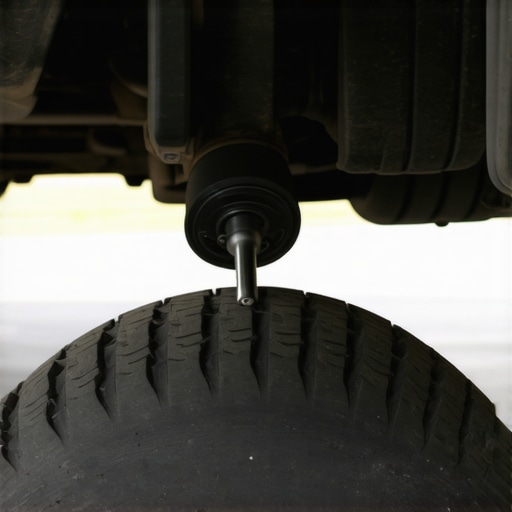
It is easy to blame the struts alone, but the entire driveline plays a role in how a tire meets the pavement. Worn-out CV joints or a failing steering rack can introduce subtle oscillations that scrub the inner tread away during acceleration. Expert vehicle diagnostics often reveal that what looks like a simple alignment issue is actually the result of mechanical play in the drivetrain. For instance, knowing how to diagnose a bad CV joint by the sound of your turn can save you from a cascading failure that ultimately destroys your tires and your steering rack. According to the National Highway Traffic Safety Administration (NHTSA), tire-related issues contribute to thousands of avoidable accidents annually, many of which stem from poor maintenance of the underlying suspension components. If you have noticed an uneven wear pattern or heard a strange thud when hitting bumps, don’t ignore the warning signs. Contact our expert team to schedule a comprehensive inspection and protect your investment before the next mile.
Stop Trying to Fix Alignment Issues with Your Air Compressor
A common misconception in the driveway is that pumping more air into a tire will lift the inner shoulder off the pavement. While proper inflation is critical for the structural integrity of the tire casing, it cannot counteract the sheer force of a misaligned spindle. In fact, over-inflating a tire that is already suffering from negative camber often results in a ‘dual-wear’ pattern: the inner edge continues to scrub away due to geometry, while the center tread begins to bald from excessive pressure. This leaves a dangerously thin strip of rubber as the only point of contact between your vehicle and the asphalt. High-performance auto repair requires a precision-first mindset; you must address the hardware—the control arms and eccentric bolts—rather than treating the symptoms with a hand-held air gauge.
Why Does My Alignment Shift When I Have Passengers?
Suspension geometry is dynamic, meaning it is designed to move through an arc as the vehicle compresses. For many modern cars, especially those with MacPherson strut or multi-link setups, the camber curve is engineered to become more negative as the springs compress. This means that a car perfectly aligned while empty might experience significant toe-out and negative camber when loaded with a full tank of gas and four passengers. This is particularly prevalent in the burgeoning EV market, where heavy battery packs place immense constant stress on the subframe. According to technical bulletins from the Tire Industry Association (TIA), ignoring these ‘load-induced’ alignment shifts can lead to a 15% increase in rolling resistance, which directly impacts both fuel economy and battery range.
When Electronic Sensors Fight Your Mechanical Geometry
In the era of Advanced Driver Assistance Systems (ADAS), a mechanical alignment issue like inner edge wear is no longer just a tire problem; it’s a software problem. Your car’s Lane Keep Assist and Electronic Stability Control (ESC) rely on a Steering Angle Sensor (SAS) to know exactly where the wheels are pointed. If your inner tread is wearing because of a bent tie rod or a shifted subframe, the steering wheel may be physically off-center to keep the car going straight. The onboard computer sees this as a permanent turn and may attempt to ‘correct’ the vehicle’s path by pulsing individual brakes. This creates a feedback loop where the vehicle diagnostics system is fighting the physical reality of the road. Expert car service now requires a digital reset of these sensors following any physical adjustment to ensure the car’s ‘eyes’ match its ‘feet.’

Feel the Tread to Tell If Your Steering Rack Is Failing
Run your hand across the tread from the outside in. If you feel sharp, saw-tooth edges pointing toward the center of the car, you aren’t just dealing with a tilt issue—you have a ‘feathering’ problem caused by excessive toe-out. This is often the smoking gun for a steering rack that has developed internal play. When the internal gears of the rack wear down, the wheels are free to ‘flutter’ at high speeds, scrubbing the inner edges with every vibration. If you’ve already had an alignment but the problem persists, it may be time for a deeper dive into your transmission and steering linkage. To avoid a catastrophic loss of control, you should learn more about the critical vehicle diagnostics techniques that top-tier technicians use to find these hidden mechanical gremlins. Often, the vibration felt through the floorboards is the first sign that the rack’s internal seals are failing, allowing the fluid pressure to bypass the piston and……and reduce the assist power, forcing the driver to overcompensate.
Don’t Let Seized Hardware Sabotage Your Alignment Efforts
In regions where road salt and moisture are prevalent, the very hardware designed to fix your alignment can become your worst enemy. Eccentric bolts—the specialized fasteners used to adjust camber and toe—frequently seize inside the metal sleeves of the control arm bushings. When a technician attempts an adjustment, the bolt may appear to turn, but it is actually just twisting the rubber bushing rather than sliding the arm into the correct position. This creates a ‘spring-back’ effect where the car looks aligned on the rack, but the moment you hit a pothole, the bushing snaps back to its distorted state. This mechanical stalemate is a frequent cause of recurring inner edge wear that defies standard auto repair protocols. A truly expert car service will identify these frozen components early, often requiring thermal induction or surgical extraction to restore the suspension’s range of motion. 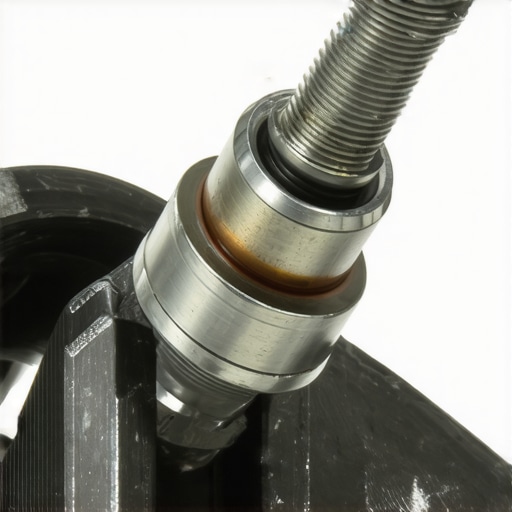
Why Does My Car Eat Inner Tires Even with Brand New Shocks?
While fresh dampers improve ride quality, they cannot compensate for a subframe that has shifted even a fraction of an inch. If your vehicle has ever kissed a curb or endured a significant impact, the mounting points for the entire suspension may be slightly out of square. This ‘thrusted’ condition means the rear wheels are not following the front wheels perfectly, forcing the car to crab-walk down the highway. This constant lateral tension shreds the inner tread of the leading tires as they fight to maintain a straight path. Advanced vehicle diagnostics should include a ‘four-wheel thrust angle’ check to ensure the chassis itself is true. According to the American Automobile Association (AAA), even minor frame misalignments can increase tire drag to the point of reducing fuel efficiency by up to 10%, effectively turning your tires into expensive erasers.
Multi-Link Geometry Secrets and the Virtual Pivot Point
High-end European and performance vehicles often employ complex multi-link suspension setups that create a ‘virtual’ pivot point in space. This design offers superior handling but makes auto repair significantly more challenging. Each link has two bushings; if any of these twelve or more pivot points soften, the geometry collapses under the weight of the vehicle during high-speed cornering. This isn’t a static failure you can see while the car is parked. It requires a technician who understands ‘elastokinematics’—the study of how suspension parts move when the rubber bushings compress. If you are tired of replacing tires every season, it is time to look past the tread and into the heart of the machine. Book an expert consultation today to perform a high-stress suspension analysis and finally stop the silent destruction of your tires before your next long-distance trip.
Expert Insights & Advanced Considerations
Stop Aligning Empty Vehicles if You Carry Heavy Cargo
Standard car service often fails because alignments are performed on unladen vehicles. For those who frequently transport heavy equipment or utilize high-capacity battery packs in EVs, the static alignment changes significantly once the car is in motion. Requesting a “weighted alignment” or “ballasted check” ensures your tire contact patch remains optimal under real-world conditions. This advanced technique prevents the premature destruction of the inner shoulder during long highway commutes.
Calibrate the Software to Match the Hardware
In the age of smart suspensions, physical auto repair is only half the battle. When you correct a mechanical toe-out issue, you must also reset the Steering Angle Sensor (SAS). If the digital center does not match the mechanical center, the vehicle’s traction control systems may intervene unnecessarily, causing microscopic braking events that continue to scrub the tread. Always ensure your technician performs a digital recalibration after any major suspension work.
#IMAGE_PLACE_HOLDER_E#
Heat Is the Silent Killer of Suspension Bushings
Excessive inner tread wear is often a sign of thermal degradation within the suspension joints. As tires drag sideways due to poor geometry, they generate friction heat that transfers into the control arm bushings. Over time, this softens the rubber and creates “dynamic slop,” making it impossible to hold an alignment. Comprehensive vehicle diagnostics should include a visual check for “weeping” bushings or heat-discolored hardware to identify parts that are failing under stress even if they look fine on a lift.
Curated Expert Resources
SAE International: The gold standard for engineering technical papers, offering deep dives into the kinematics of multi-link suspension systems and tire scrub radius theory.
National Highway Traffic Safety Administration (NHTSA): An essential resource for tracking technical service bulletins (TSBs) related to subframe shifts and steering rack recalls that may be the true cause of your alignment issues.
The Tire Industry Association (TIA): Provides rigorous standards for tire maintenance and professional training that go far beyond basic retail advice, focusing on casing integrity and load-induced wear patterns.
Final Expert Perspective
Solving chronic inner tire wear requires moving beyond the surface and looking into the “elastokinematics” of your vehicle. It is rarely just a single loose bolt; it is usually a symphony of worn bushings, shifted subframes, and aged dampers working together to compromise your safety. By integrating advanced vehicle diagnostics and precision auto repair, you can extend your tire life and restore the handling characteristics the factory intended. Insights into the hidden world of vehicle diagnostics provide the framework needed to diagnose these complex issues correctly. To ensure your vehicle is performing at its peak, check out these expert auto repair tips for 2025 or reach out to our specialist team for a high-stress suspension analysis that catches the problems standard shops miss.