Experienced technicians know that a spongy or mushy brake pedal after an extended journey is rarely a coincidence. It is a symptomatic manifestation of a hydraulic system losing its incompressibility under extreme thermal stress. When you traverse long distances, especially through mountainous terrain or in heavy stop-and-go traffic, your braking system converts massive amounts of kinetic energy into heat. If that heat is not dissipated effectively, it begins to alter the physical properties of your brake fluid. Professional vehicle diagnostics often reveal that this phenomenon, known as brake fade, is the precursor to complete system failure if the underlying chemistry of the fluid is compromised.
Stop the Fluid from Boiling: The Role of Hygroscopy in Long-Distance Braking
Brake fluid is naturally hygroscopic, meaning it actively absorbs moisture from the atmosphere over time through microscopic pores in hoses and seals. During a long drive, the calipers can reach temperatures exceeding 400°F. If your fluid is contaminated with even 3% water, the boiling point drops significantly. When this threshold is crossed, the moisture turns into steam. Unlike liquid, gas is highly compressible. This creates that terrifying sensation where the pedal travels further toward the floor than usual. While many drivers assume they just need a bleed, the real reason your brake pedal feels like spongy cake after bleeding is often the failure to address this degraded fluid quality during a routine car service.
Why does my brake pedal go to the floor only when the components are hot?
This specific symptom usually points to internal leakage in the master cylinder or localized vapor lock. When the engine bay and braking components heat up, the rubber seals within the master cylinder can expand or soften. If the seals are worn, they allow fluid to bypass the piston rather than being forced down the lines. This is a critical junction where advanced auto repair knowledge is required to distinguish between a simple air bubble and a failing primary cylinder. If the pedal returns to normal once the car cools down, you are likely experiencing the early stages of hydraulic vapor lock, a condition that demands immediate professional attention to prevent a total loss of stopping power.
Rubber Hose Expansion and the Loss of Volumetric Efficiency
Beyond the fluid itself, the physical delivery system—the rubber brake lines—can be the primary culprit for a soft pedal. As these hoses age, they lose their internal structural integrity. Under the high pressure and high temperature of a long-distance haul, the rubber can actually swell or expand when the pedal is depressed. This expansion absorbs the hydraulic pressure that should be going to the pads. Long-term neglect of these components can lead to catastrophic failure, making it vital to understand the simple move to prevent your brake lines from rusting out and degrading. According to engineering standards from SAE International, maintaining the volumetric efficiency of hydraulic lines is the single most important factor in preventing thermal-related brake failure in modern passenger vehicles. If your pedal has started to feel inconsistent, don’t wait for a total loss of pressure; explore the hidden world of vehicle diagnostics to understand how professional tools isolate these complex hydraulic issues.
While thermal fluid degradation is the most common culprit, mechanical interference often masquerades as a hydraulic issue during long-distance travel. Consider the phenomenon of piston knock-back. When you drive for hours, a rotor with even a slight lateral runout—often too small to feel as a vibration—can physically push the brake pads and caliper pistons back into their housings. This occurs because of the constant, minute oscillation of the rotor against the pads over hundreds of miles of highway travel. Consequently, when you finally depress the pedal, the first half of the stroke is merely taking up that excess clearance. This is precisely why your brake rotors keep warping every six months regardless of brand, as uneven cooling and mechanical stress create a cycle of deteriorating pedal feel.
Is your ABS pump actually hiding a trapped air pocket?
The complexity of modern Anti-lock Braking Systems (ABS) adds another layer of diagnostic difficulty for the average car owner. Within the ABS hydraulic control unit, there are series of tiny valves and accumulators designed to manage pressure during emergency stops. If air was introduced during a previous service, it can become trapped in these secondary circuits. Under normal city driving, these valves remain closed and the pedal feels firm. However, on a long highway stretch where stability control or adaptive cruise control might subtly engage the brakes to maintain distance, these valves cycle, potentially releasing trapped air into the primary lines. To effectively clear this, you often need more than a manual bleed; you need the 20 scan tool that does more than the dealership rig to perform a specialized service bleed that cycles the ABS solenoids electronically.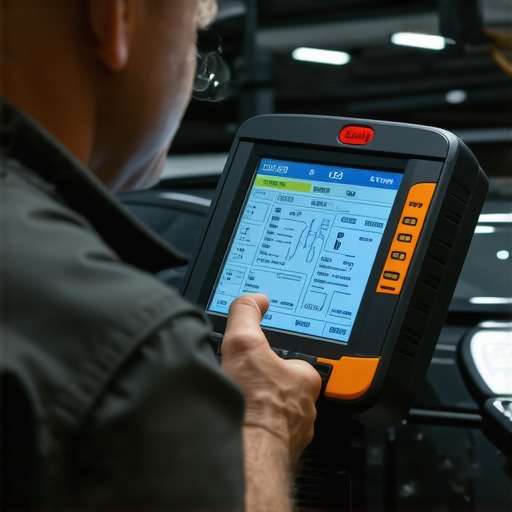
Fight Friction Fade with High-Temp Engineering
Beyond the hydraulics, we must evaluate the friction material itself. Brake pads are designed to operate within a specific thermal window. Once a pad exceeds its maximum operating temperature, the resins holding the friction material together can begin to break down and turn into a gas. This creates a microscopic thin layer of gas between the pad and the rotor, effectively acting like a lubricant. Professional racing data from Brembo indicates that this outgassing can reduce the coefficient of friction by over 50% in seconds. This isn’t just about the pedal feeling soft; it is about the car physically refusing to stop despite the pressure applied. If you notice a strange, pungent scent accompanying the spongy feel, it is worth learning the specific smell that tells you your brakes are dragging and overheating your pads prematurely. Maintaining your braking system involves a holistic approach to the entire hydraulic and mechanical assembly. If you’ve encountered a situation where your car behaves differently after an hour on the highway, consider how to unstick a caliper without replacing the whole brake system as a first step in troubleshooting mechanical drag. Have you experienced a sinking pedal on a mountain pass or a long summer road trip? Share your story in the comments below so we can help you decode the specific symptoms of your vehicle braking behavior.
Stop the Heat Soak by Fixing Clogged Air Ducts
Most drivers ignore the plastic shielding under their front bumper, but these aerodynamic components are precision-engineered to funnel cool air directly onto the rotor face and caliper body. During a multi-hour highway cruise, the constant airflow acts as a heat sink. However, if a plastic liner has come loose or if road debris has clogged the cooling channels, that airflow is severed. The result is a localized heat soak where the stagnant air around the wheel well reaches critical temperatures, even if you aren’t braking aggressively. This ambient heat transfers into the caliper pistons and, eventually, the fluid itself, leading to that dreaded sinking sensation during the first exit ramp after a long stretch of cruising.
#IMAGE_PLACE_HOLDER_C#
Experienced track enthusiasts often upgrade to stainless steel braided lines to combat the expansion mentioned earlier, but for a daily driver, simply ensuring your factory ducting is intact can provide a similar safety margin. If you have ever hit a curb or a piece of road debris, your brake cooling efficiency might be compromised by as much as 30%. This is one of those nuanced details that a standard quick-lube shop will miss, but a dedicated car service professional will identify immediately during a high-level inspection.
Can a loose wheel bearing mimic a hydraulic leak?
While it sounds unrelated, the integrity of your wheel bearings is inextricably linked to your brake pedal feel. If a hub assembly has even a fraction of a millimeter of play, the entire rotor wobbles as it spins at high speeds. On a long highway drive, this oscillation acts like a hammer, slowly knocking the brake pads further away from the rotor surface. When you finally go to use the brakes, the master cylinder has to move a massive volume of fluid just to bring the pads back into contact with the disc. This creates a dead zone at the top of the pedal travel that feels remarkably similar to air in the lines. To check for this, you need to perform a hub runout test using a dial indicator, a staple of advanced vehicle diagnostics.
Push Past the Limits of Standard DOT 3 Fluid
The chemistry of your hydraulic system is governed by strict regulations, but not all fluids are created equal for long-distance reliability. According to the FMVSS No. 116, fluids are categorized by their minimum dry and wet boiling points, but these are merely the baseline requirements. For vehicles frequently used for towing or traversing elevation changes, the standard DOT 3 fluid is often insufficient. Upgrading to a high-performance DOT 4 or a synthetic DOT 5.1 provides a much higher thermal ceiling. The higher the wet boiling point—the temperature at which the fluid boils after absorbing moisture—the more resilient your pedal will be during the final hours of a cross-country trek. If you are planning a major trip, a proactive flush with a premium fluid is the single most effective insurance policy against hydraulic failure. Have you ever checked the color of your fluid before a road trip? Let us know if you have questions about which fluid grade is right for your specific setup.
The Critical Role of Caliper Slide Pin Lubrication
A final, often overlooked mechanical factor in the spongy pedal mystery is the health of your caliper slide pins. In a floating caliper system, these pins allow the caliper to center itself over the rotor. If the lubricant has dried out or been washed away, the caliper can bind or twist slightly during application. This twisting motion requires more pedal travel to overcome, leading to a soft and inconsistent feel. During a professional auto repair, these pins should be cleaned and coated with a high-temperature silicone-based grease. Without this, the heat from a long drive can cause the pins to seize momentarily, leading to uneven pad wear and a pedal that feels like it is fighting against you. When you encounter a sticky pin, the heat buildup becomes exponential, leading us into the often-misunderstood relationship between the brake booster vacuum supply and the way the pedal responds under varying engine loads, especially when
the vehicle is under high load or cruising at low RPM. When you are descending a long mountain grade or navigating heavy highway congestion, the engine’s vacuum production fluctuates significantly. A micro-tear in the brake booster’s internal rubber diaphragm might remain negligible during short urban commutes, but the cumulative heat soak of a multi-hour journey makes that rubber more pliable and prone to structural compromise. This results in an inconsistent pedal—shifting between an unexpected firmness and a terrifying sink—as the booster fails to maintain a stable pressure differential against atmospheric pressure.
When the Booster Diaphragm Succumbs to Heat Soak
This thermal fatigue in the booster is often misdiagnosed as air in the lines. However, a telltale sign of booster failure during long-distance travel is a change in engine idle or a faint hissing sound when the pedal is depressed after the engine bay has reached peak operating temperature. High-level auto repair requires a vacuum gauge test to ensure the check valve isn’t sticking. If the vacuum supply is inconsistent, the mechanical advantage provided by the booster vanishes, leaving the driver to provide all the stopping force manually. This creates a psychological “spongy” feel as the driver overcompensates for the lack of power assistance.
Can a blocked master cylinder compensation port simulate a leak?
Yes, and this is a deep-dive technical issue that often baffles even seasoned DIYers. The master cylinder contains a tiny compensation port that allows fluid to move between the pressure chamber and the reservoir. As heat builds up during a long drive, the brake fluid expands. If this port is blocked by microscopic debris or a swollen internal seal, the expanding fluid cannot return to the reservoir. This can cause the brakes to “drag” slightly, creating even more heat in a vicious cycle. Conversely, if the port is partially blocked, it may prevent the piston from fully retracting, leading to a low pedal height on the next application. This is a primary reason why vehicle diagnostics must include a physical inspection of the reservoir’s internal condition.
#IMAGE_PLACE_HOLDER_D#
Master the Rear Brake Gap for a Sharper Bite
Even in modern vehicles equipped with rear disc brakes, the mechanical “parking brake” mechanism or the electronic actuator can fall out of adjustment. On a long drive, the heat causes the brake rotors or drums to expand outward. If the self-adjusting mechanism is seized due to lack of car service, the gap between the friction material and the metal surface grows too wide. When you finally hit the brakes at an exit ramp, the master cylinder must displace a larger volume of fluid just to bridge that physical gap. According to safety reports from the National Highway Traffic Safety Administration (NHTSA), mechanical misadjustment is a leading factor in “surprising” brake performance degradation during highway operation. Ensuring your rear calipers or drums are properly indexed is vital for maintaining that immediate, high-pedal response.
The complexity of these systems means that a soft pedal is rarely just one thing; it is the culmination of hydraulic, thermal, and mechanical variables reaching a breaking point simultaneously. Have you noticed your pedal feel changing specifically when the outside temperature climbs above 90 degrees? Join the discussion below and let us know your vehicle’s make and model so we can help you pinpoint the likely culprit in your hydraulic circuit.
Mastering Thermal Limits and Professional Shortcuts
Validate Heat Soak with an Infrared Pyrometer
A professional car service technician doesn’t just guess at heat; they measure it. After a long drive where the pedal felt soft, use an infrared thermometer to compare temperatures between the left and right calipers. A variance of more than 50°F suggests a dragging piston or a restricted hose that is localized, narrowing your search before you even open the bleeder screws.
Altitude Drastically Lowers Your Safety Margin
As you climb into mountain passes, atmospheric pressure drops. This effectively lowers the boiling point of any moisture trapped in your lines. If you’ve been putting off a fluid flush, a high-altitude trip is where those vehicle diagnostics become critical, as the “wet” boiling point of your fluid might be reached much sooner than at sea level. This is often why your car pulls to one side only when braking on steep descents as one side reaches critical temperature first.
Electronic Pre-Fill Systems Can Hide Mechanical Lag
Modern stability control units often have a “brake pre-fill” feature that slightly nudges the pads toward the rotors when you lift off the throttle quickly. While helpful, this can mask a failing master cylinder or excessive hub runout during normal driving. If the pedal only feels soft during slow, deliberate applications, your car’s software might be compensating for a physical defect that requires immediate auto repair.
Authoritative Manuals for Serious DIYers
SAE International Technical Papers: These documents provide the rigorous engineering standards for brake fluid chemistry and hose expansion rates, offering a level of detail far beyond standard owner manuals.
Brembo Technical Portal: As a leader in high-performance braking, their insights into thermal dissipation and friction material outgassing are essential for anyone pushing their vehicle’s limits.
NHTSA Safety Recalls and Bulletins: Regularly searching this database can reveal if your specific model has known issues with ABS modules or master cylinder seals that mimic standard wear.
Final Take on Maintaining Hydraulic Integrity
A soft pedal after a long journey is the vehicle’s way of signaling that its thermal capacity has been breached. Whether the culprit is old fluid, expanding rubber, or a mechanical misalignment, the solution always begins with rigorous vehicle diagnostics to isolate the variable. Don’t settle for a simple bleed when the system is trying to tell you a deeper story about its internal health. By investing in a high-quality car service and utilizing tools like the 20 scan tool that does more than the dealership rig, you can ensure consistent stopping power regardless of the distance. Do you have a specific diagnostic challenge or a tool that saved your road trip? Reach out via our contact page and share your professional insights with our community.