Thermal Equilibrium and the Failure of Fluid Velocity at Low RPM
Automotive thermal management is a sophisticated balance of fluid dynamics, pressure regulation, and heat exchange. When a car heater fails to provide warmth at idle but resumes function under load, it indicates a breakdown in the system’s ability to maintain a consistent delta T between the engine coolant and the cabin air. This phenomenon is rarely a simple thermostat failure; rather, it is a symptom of reduced coolant flow or insufficient fluid volume that only overcomes the thermal resistance of the heater core once engine revolutions increase the centrifugal force of the water pump. A professional approach to vehicle diagnostics is required to differentiate between mechanical pump degradation and hydraulic air locks within the cooling circuit.
Why Does Your Cabin Temperature Plummet Whenever You Hit a Red Light?
The core of this issue typically lies in the relationship between engine RPM and the water pump’s impeller speed. At idle, the pump may lack the necessary kinetic energy to push coolant through the narrow passages of the heater core, especially if there is an internal obstruction or air pocket. According to research published by the Society of Automotive Engineers (SAE), heat exchanger efficiency is directly proportional to the mass flow rate of the working fluid. When your vehicle is in motion, the increased pump speed compensates for these inefficiencies, forcing heated coolant through the core. If you notice a sweet, cloying odor during these fluctuations, you should investigate why your car smells like maple syrup, as this often points to a slow leak that has introduced air into the system.
Air Pockets and the Critical Impact of Coolant Volume on Heat Transfer
One of the most frequent yet overlooked causes of intermittent heat is an air lock in the cooling system. Since the heater core is often one of the highest points in the cooling circuit, air naturally migrates there, creating a physical barrier that prevents fluid from entering the core at low pressure. This condition often stems from a cooling system that has been improperly bled or a slow, undiagnosed leak. If you find your reservoir frequently low, it is vital to understand why your coolant level drops without any visible puddles, as even a minor loss of head pressure can lead to stagnant fluid at idle. Expert-level maintenance requires using a vacuum-fill tool to ensure the system is entirely devoid of atmospheric air, restoring the hydraulic integrity necessary for consistent heat distribution.
Centrifugal Pump Degradation and the Loss of Low-End Pressure
Beyond fluid levels, the mechanical health of the water pump itself must be scrutinized. Over time, cavitation or electrolysis can erode the metal or plastic impeller blades inside the pump. While the pump may still move enough fluid to prevent the engine from overheating, it may no longer generate the low-RPM pressure required to overcome the height and resistance of the heater core hoses. This mechanical fatigue represents a significant challenge in car service, as it often bypasses standard temperature gauge monitoring until the pump fails entirely. If you are experiencing these symptoms, we encourage you to share your specific vehicle year and model in our professional forums to help us narrow down known impeller failure patterns in your specific drivetrain.
How Sediment and Scale Paralyze Your Heater Core at Low Pressure
While mechanical pump failure is a common culprit, the internal geometry of the heater core itself often harbors the root cause of idle-temperature fluctuations. Over years of operation, the chemical stabilizers in engine coolant break down, leading to the precipitation of silicates and phosphates. These solids settle in the narrow, labyrinthine passages of the core, creating a layer of scale that acts as a thermal insulator. At highway speeds, the sheer force of the coolant bypasses these micro-obstructions through sheer velocity. However, at idle, the flow transitions from turbulent to laminar, allowing the fluid to take the path of least resistance—often bypassing the clogged fins entirely. This necessitates a deep understanding of top auto repair techniques every car owner should know to properly diagnose a restricted core versus a failing pump.
#IMAGE_PLACE_HOLDER_B#
Can a Faulty Vacuum Line Trick You Into Replacing a Healthy Water Pump?
In many older vehicles, the climate control system relies on vacuum-operated actuators to move the blend doors that regulate air temperature. A hairline crack in a vacuum hose can lead to a drop in pressure that is only significant enough to affect the actuator at low engine speeds when the manifold vacuum is lower. This results in the blend door partially closing, allowing cold outside air to mix with the heated air, mimicking a cooling system failure. Before committing to expensive mechanical repairs, using an unconventional method like how to find a vacuum leak using a 5 cigar can save hundreds in misdiagnosed parts. The nuance here is that the symptom disappears as you accelerate, not because the coolant got hotter, but because the increased vacuum resealed the leaky diaphragm or hose.
The Critical Role of the Bypass Valve and Thermostatic Precision
Modern engine designs often incorporate a bypass valve that prioritizes engine cooling over cabin comfort during the initial warm-up phase. If this valve sticks or if the thermostat is slightly out of calibration, it can lead to erratic heating performance. A thermostat that hangs open by just a fraction of a millimeter will prevent the engine from reaching its optimal operating temperature at idle, especially in colder climates. Data from technical bulletins provided by the Car Care Council emphasizes that even a 5-degree variance in coolant temperature can result in a 20% drop in cabin heater output. If you suspect your system is over-cooling, investigating why your car cooling fan will not turn off is a logical next step, as a fan running constantly at idle will strip heat from the radiator and lower the overall delta T of the coolant before it ever reaches your dashboard.
Electronic Actuator Calibration and the Digital Dilemma
In contemporary vehicles equipped with dual-zone climate control, the issue is frequently digital rather than hydraulic. Stepper motors control the blend doors based on inputs from interior temperature sensors. These sensors can accumulate dust or lose calibration, causing the ECU to command the blend door to a cooler position when the car is stationary. The feedback loop might struggle with the lower voltage or varying electrical noise at idle, leading to ‘hunting’ where the door never finds its seat. This is where advanced vehicle diagnostics become indispensable. By accessing the live data stream of the HVAC module, a technician can observe the ‘commanded’ versus ‘actual’ position of the blend door. If you have noticed that your passenger side stays warm while the driver side goes cold, we recommend leaving a comment below with your diagnostic trouble codes so our community can help decode the specific actuator failure common to your make and model.
Combustion Gases and the Invisible Air Lock
When a head gasket begins to fail, it doesn’t always result in a catastrophic mixing of oil and coolant. Sometimes, the failure is subtle—a microscopic breach between the combustion chamber and a water jacket. Under the high pressure of the combustion stroke, exhaust gases are forced into the cooling system. These gases naturally migrate to the highest point, which in many vehicle architectures is the heater core. At idle, the static pressure of these gas bubbles is enough to stop the centrifugal flow of coolant entirely. As you accelerate, the increased hydraulic head from the water pump compresses these bubbles or flushes them back into the reservoir, momentarily restoring heat. This creates a confusing diagnostic path where the car never overheats, yet the cabin remains freezing. To verify this, a chemical block test is necessary to detect the presence of CO2 within the radiator.
Does a Clogged Cabin Air Filter Kill Your Heat at Red Lights?
While the cabin air filter primarily manages air quality, a severe restriction can simulate a heater core issue. At idle, the blower motor might not have the static pressure capacity to pull air through a heavily soot-laden filter and then push it through the heater core’s fins. This leads to a perception of no heat because the volume of air reaching the vents is negligible. However, once the alternator spins faster at higher RPMs, providing a slight voltage boost to the blower motor, you might feel a marginal increase in warmth. It is a classic case of confusing a mass flow air issue with a thermal transfer fluid issue. If you haven’t serviced your HVAC filters recently, checking them is a low-cost first step before diving into the cooling system’s plumbing.
Why Your Radiator Cap Holds the Key to Low-RPM Warmth
The humble radiator cap is actually a calibrated pressure relief valve, and its role in heat retention is paramount. The cooling system must operate under pressure—typically 13 to 16 PSI—to raise the boiling point of the coolant and maintain the structural integrity of the fluid column. If the cap’s seal has perished, the system cannot maintain this pressure. This lack of backpressure allows the coolant to cavitate at the water pump’s impeller at low speeds, significantly reducing its efficiency. According to technical standards established by the National Institute for Automotive Service Excellence (ASE), a cooling system that cannot maintain its rated pressure will suffer from localized boiling, which creates steam pockets that specifically stall flow to the heater core while the car is stationary.
Spotting Thermal Dead Zones with Infrared Imaging
Traditional diagnostic methods often involve feeling the hoses, but this is remarkably imprecise due to the heat-soak properties of rubber. Advanced technicians now utilize long-wave infrared (LWIR) thermography to visualize the actual heat exchange process in real-time. By aiming a thermal camera at the heater core’s inlet and outlet hoses, you can see the precise moment the temperature delta collapses at idle. If the inlet hose remains glowing red while the outlet turns a cool blue, you have confirmed a flow restriction within the core itself, rather than a pump or thermostat issue. 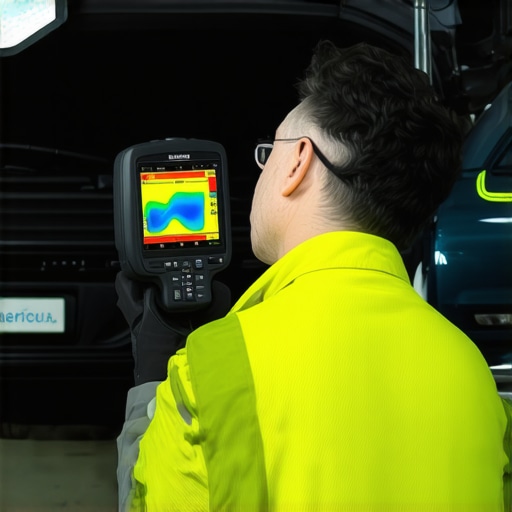 This visual data is irrefutable and allows for a surgical approach to repairs, ensuring you aren’t replacing a perfectly functional water pump when the issue is a $20 bypass hose or a partially obstructed internal passage.
The Delicate Balance of Coolant Chemistry and pH Levels
The chemical composition of your coolant does more than just prevent freezing; it maintains the surface tension necessary for efficient heat transfer. When coolant becomes overly acidic due to age, it begins to strip the protective oxide layers from the internal aluminum surfaces of the heater core. This process, known as electrolysis, creates a pitting effect that increases the surface roughness of the internal tubes. This increased friction coefficient requires more force to move fluid through the core—force that is only present when the engine is under load. If you suspect your coolant is spent, a simple digital multimeter test can reveal the voltage present in the fluid; anything over 0.4 volts indicates that your coolant has become an electrolyte and is actively sabotaging your vehicle’s thermal efficiency. We recommend checking our guide on top auto repair techniques every car owner should know to learn how to perform a proper voltage drop test on your cooling system.
Surface Tension and the Stealthy Failure of Thermal Transfer
When investigating a heater that refuses to cooperate at a standstill, we must look beyond basic mechanical flow and into the micro-physics of the fluid itself. At low RPM, the Reynolds number within the heater core tubes often drops below the threshold for turbulent flow, transitioning into a laminar state where the boundary layer of the coolant acts as a thermal insulator. If the coolant mixture is improperly balanced, its surface tension and viscosity can impede its ability to ‘wet’ the internal surfaces of the heater core efficiently. This is particularly problematic in modern aluminum cores with ultra-thin passages designed for maximum surface area but minimal volume. If the fluid cannot maintain a high enough velocity to break this boundary layer, the heat remains trapped in the center of the fluid stream rather than transferring to the cabin air fins.
How Much Does Your Coolant’s Prandtl Number Affect Cabin Warmth?
The Prandtl number, a dimensionless ratio of momentum diffusivity to thermal diffusivity, is critical in determining the effectiveness of your car’s heat exchanger. In a study published by the American Society of Mechanical Engineers (ASME), it was demonstrated that even minor deviations in the concentration of ethylene glycol can significantly alter the heat transfer coefficient at low flow rates. A mixture that is too ‘heavy’ on antifreeze increases viscosity, which requires more pumping work to achieve the same thermal output. At idle, your water pump simply may not have the torque to overcome this increased fluid thickness, leading to the cold-air phenomenon you are experiencing. Ensuring a precise 50/50 distilled water-to-coolant ratio is not just about corrosion—it is about maintaining the hydraulic properties required for low-pressure heat exchange.
Pulse Width Modulation: The Digital Gatekeeper of Your Heater Valve
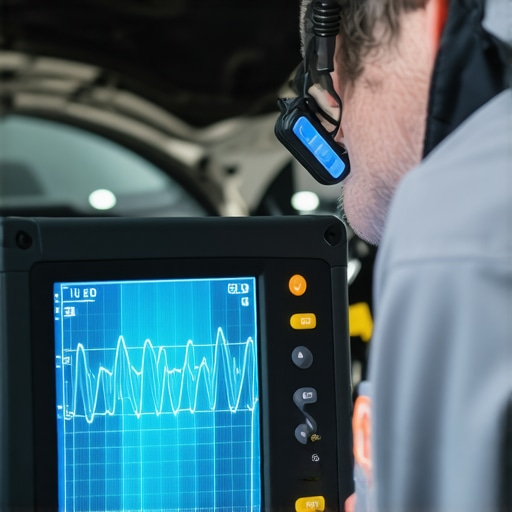
In many premium European and late-model domestic vehicles, the flow of coolant to the heater core is managed by an electronic solenoid valve rather than a mechanical thermostat. These valves are controlled via Pulse Width Modulation (PWM), where the ECU rapidly cycles the valve open and closed to maintain a specific temperature. If the valve’s internal pintle is slightly fouled with silicate buildup, it may become sluggish. At higher engine speeds, the increased alternator voltage and higher system pressure can force the valve to cycle correctly. However, at idle, the lower system voltage and reduced hydraulic assistance can cause the valve to ‘stick’ in a partially closed position. This digital failure often leaves no diagnostic trouble codes but can be identified by using a digital storage oscilloscope to monitor the duty cycle of the heater control valve during the transition from idle to 2500 RPM.
The Impact of Low-Voltage Blower Motor Parasitics
We must also consider the electrical load on the vehicle’s charging system during idle. At a stoplight, the alternator is at its lowest output capacity while the blower motor, headlights, and heated seats are often at maximum draw. This can result in a marginal voltage drop that specifically affects the blower motor’s static pressure. If the blower cannot push enough CFM (cubic feet per minute) through the heater core’s dense fin structure, the small amount of heat that is available at idle is quickly dissipated before it reaches the vents. This creates a misleading symptom where the coolant is hot, but the air delivery system is underperforming. Analyzing the voltage at the blower motor resistor while the car is in ‘Drive’ at a stop is a sophisticated diagnostic step that separates electrical bottlenecks from cooling system failures. Are you dealing with a complex thermal mystery? Share your vehicle’s live data stream readings in the comments below, and let’s diagnose the root cause together.
Expert Insights & Advanced Considerations
Why Pump Cavitation Stops Your Heater Cold
One of the most elusive issues in automotive cooling is the presence of cavitation at the water pump impeller. When the cooling system pressure is compromised, typically by a failing radiator cap or a microscopic leak, the fluid begins to boil prematurely at the pump’s spinning blades. This creates steam pockets that stall the flow specifically to the heater core while the engine is at idle. To effectively navigate this, you need to unlock your car’s potential by ensuring the pressure integrity of the entire circuit is maintained above 13 PSI. Without this pressure, the centrifugal force of the pump is wasted on air rather than fluid.
Your Dashboard Gauge Lies to You Regularly
Most modern instrument clusters use ‘buffered’ temperature gauges. These are software-dampened to stay dead center as long as the engine is within a broad operating range, often between 180°F and 230°F. By the time the needle actually moves toward the red, the heater core flow has already been compromised for miles. True vehicle diagnostics require a live data stream to monitor the actual PID values for the engine coolant temperature sensor. Only then can you see if the block is truly dropping below the thermostatic threshold when the vehicle is stationary.
Ground Wires Kill Heaters Faster Than Clogs
Electrical resistance is a significant yet overlooked factor in modern climate control systems. If the blower motor or the electronic blend door actuator lacks a clean path to ground, its performance will degrade precisely when the alternator output dips at idle. You can often solve ‘mechanical’ heating issues by learning how to identify a bad ground wire without a multimeter. A poor connection can drop the blower’s CFM output just enough to make the air feel cold, even if the heater core itself is boiling hot.
Curated Expert Resources
To further refine your diagnostic skills and master the thermal management of your vehicle, we recommend consulting these high-level technical authorities:
ASE Technical Training Modules: These offer the industry standard for cooling system architecture and are essential for those mastering top auto repair techniques every car owner should know.
SAE International Technical Papers: Specifically, research on ‘Micro-channel Heat Exchanger Efficiency’ provides deep insights into why modern thin-core heaters are so susceptible to laminar flow transitions at low RPM.
OEM Service Information (AllData/Mitchell 1): This is the only place to find the specific Pulse Width Modulation (PWM) duty cycle charts required to test electronic heater control valves accurately in European and premium domestic models.
#IMAGE_PLACE_HOLDER_E#
Final Expert Perspective
Solving a car heater that only functions under load requires moving past the ‘parts cannon’ approach. It is a complex interplay of hydraulic head pressure, fluid chemistry, and digital actuator calibration. By focusing on the mass flow rate and the thermal delta T across the core, rather than simply swapping the thermostat, you can resolve even the most stubborn heating failures. If you are struggling with a specific diagnostic code or a persistent air lock that refuses to bleed, we invite you to contact us or share your live data findings in the comments below to leverage the collective expertise of our professional mechanical community.