Identify the Harmonic Hum Before It Becomes a Grinding Disaster
In the realm of advanced vehicle diagnostics, the ear is often as powerful as the scan tool. A failing wheel bearing does not simply stop working; it undergoes a progressive acoustic degradation that reveals the state of its internal health to the trained observer. Unlike transmission issues that typically correlate with gear shifts or engine load, wheel bearing noise is strictly tied to wheel speed. As a seasoned technician, I have observed that early-stage failure often manifests as a subtle, low-frequency hum, often mistaken for road noise or aggressive tire tread. This sound is the result of ‘spalling’—a condition where the smooth surface of the bearing races begins to flake away due to heat and friction. High-quality auto repair begins with identifying these microscopic surface failures before they lead to catastrophic hub seizure.
The Physics of Load-Induced Noise Variation
One of the most definitive ways to separate wheel bearing failure from other mechanical issues is through lateral load testing. When you are driving on a safe, open road and gently sway the vehicle from side to side, you are shifting the weight of the car between the inboard and outboard bearings. If the noise intensifies when you turn left, the load is being placed on the right-side bearing, suggesting it is the culprit. This diagnostic nuance is critical because it allows for precision in your car service strategy, ensuring you don’t replace the wrong side. According to a specialized technical paper by SKF Global, bearing life is drastically shortened by lubricant contamination, which often precedes the audible ‘growl’ drivers notice. Once the protective grease is compromised by moisture or road salt, the metal-on-metal contact creates a distinct harmonic resonance that rises in pitch as you accelerate.
Does a rhythmic chirping always mean a total hub replacement?
While the classic ‘growl’ is the most common symptom, many drivers report a rhythmic chirping or squeaking at lower speeds. This often indicates a bearing that has developed a flat spot or has significant internal play, causing the brake rotor to wobble slightly against the pads. This is a higher-stakes situation than a simple hum, as it implies the structural integrity of the bearing assembly is compromised. In such cases, standard auto repair protocols suggest immediate inspection. You can learn how to diagnose a bad wheel bearing using a jack to check for play in the wheel hub, which is a vital step in modern vehicle diagnostics. If the wheel moves when gripped at the 12 and 6 o’clock positions, the bearing’s internal clearances have exceeded safe limits.
Differentiate Between Tread Wear and Internal Friction
It is common for even professional technicians to confuse the sound of cupped tires with a failing bearing. To differentiate the two, pay close attention to the surface texture of the sound. Tire noise tends to change dramatically based on the road surface (asphalt versus concrete), whereas a wheel bearing maintains a consistent, mechanical groan regardless of the pavement type. Furthermore, vehicle diagnostics specialists know that a bearing failure will often send a slight vibration through the floorboards or steering wheel as the rollers struggle to stay in their races. If you are experiencing these symptoms alongside transmission failures or other drivetrain issues, the cumulative effect on vehicle stability can be dangerous. Take the next step in professional car service by learning to differentiate minor vibrations from catastrophic component failure before your next long trip.
Heat Maps Don’t Lie When Internal Friction Takes Over
Beyond the acoustic profile, heat is the most reliable secondary indicator of a bearing in distress. When a bearing’s internal lubrication breaks down, the resulting friction generates significant thermal energy that dissipates through the wheel hub. An expert diagnostic technique involves using an infrared thermometer to compare the temperatures of all four hubs after a ten-mile drive. A variance of more than 20 degrees Fahrenheit between wheels on the same axle is a glaring red flag. This thermal buildup often explains why the steering wheel shakes at 60 mph but stops at 70, as the expanding metal components alter the rotational balance of the hub assembly. Identifying this early can prevent the heat from transferring to the CV joints or ruining the brake rotor’s tempering.

The Domino Effect on Your ABS and Traction Control Systems
Modern vehicle diagnostics are heavily reliant on digital sensors, and the wheel bearing is the foundation for several electronic safety nets. Most contemporary vehicles house the ABS tone ring directly on the bearing’s inner race or the wheel hub itself. When the bearing develops internal play, the tone ring begins to wobble, causing the air gap between the sensor and the ring to fluctuate. This inconsistency sends erratic data to the ECU, often triggering a ‘Check ABS’ or ‘Traction Control’ warning. This is why you should never ignore a flickering dashboard light in these systems; it could be the first digital sign of a mechanical collapse. According to the Car Care Council, neglected wheel-end components are a primary contributor to secondary braking system failures, as excessive heat and vibration eventually migrate into the spindle and calipers.
Why do modern sealed hubs fail faster than old-school serviceable bearings?
The automotive industry shifted toward sealed hub assemblies to reduce assembly line costs and simplify the replacement process, but this ‘maintenance-free’ design comes with a trade-off. Unlike the serviceable bearings of the past, which could be repacked with fresh grease every 30,000 miles, modern sealed units are vulnerable to ‘heat soak.’ Once the factory-sealed lubricant loses its viscosity or the rubber seal is breached by high-pressure car washes, there is no way to restore it. This ‘set-it-and-forget-it’ mentality is similar to the misconceptions surrounding the truth about lifetime transmission fluid. While the unit is designed to last the ‘life’ of the car, that life is often cut short by environmental factors that a sealed design cannot adapt to, leading to premature metal fatigue and catastrophic failure.
Mastering the Old-School Screwdriver Trick for Pinpoint Accuracy
If you lack a digital stethoscope, you can revert to a classic mechanical diagnostic method using a long-handled screwdriver. With the vehicle safely on jack stands, have an assistant spin the wheel while you place the tip of the screwdriver against the stationary knuckle and your ear against the handle. This improvised stethoscope allows you to bypass road noise and hear the internal ‘crunching’ of the rollers directly. It is simple but effective. This method helps you troubleshoot without relying on expensive equipment, much like how you might learn how to identify a bad ground wire without a multimeter. If you detect a harsh, grinding resonance rather than a smooth, clean whir, the bearing has reached its end of service life. If you’re unsure whether that noise is a bearing or something more complex, contact us for a professional evaluation or browse our other diagnostic guides to ensure your vehicle stays road-ready. You might even find that using the 20 scan tool that actually finds hidden transmission codes can help rule out other drivetrain vibrations that mimic wheel hub issues.
Preload and the Fine Art of Axle Nut Torque
A common pitfall in DIY auto repair is the ‘tighter is better’ mentality when securing the axle nut. In reality, the longevity of a modern hub assembly depends on a precise amount of preload—a specific clamping force that keeps the internal rollers in their designated races. If the nut is under-torqued, the assembly develops excessive play, leading to rapid ‘brinelling,’ where the rollers dent the races. Conversely, over-torquing crushes the internal spacer and creates excessive heat, leading to premature metal fatigue. Professional vehicle diagnostics often reveal that a bearing failed not due to age, but due to a previous car service where a high-powered impact wrench was used instead of a calibrated torque wrench. According to Timken’s Technical Tips, even a minor deviation from the manufacturer’s torque specification can reduce bearing life by as much as 50%.
Why Your Custom Wheels Are Killing Your Hubs
The geometry of your suspension is a delicate balance of levers and fulcrums. When you install aftermarket wheels with a different offset (the distance from the hub mounting surface to the centerline of the wheel), you effectively change the ‘scrub radius’ and the load distribution across the bearing. Moving the wheel further out increases the leverage applied to the outboard row of rollers. This creates an uneven wear pattern that no amount of high-quality grease can fix. If you’ve noticed your transmission feels sluggish or you’re hearing a drone after upgrading your rims, it’s rarely the drivetrain; it’s the bearings screaming under the uncalculated leverage of a wider stance.
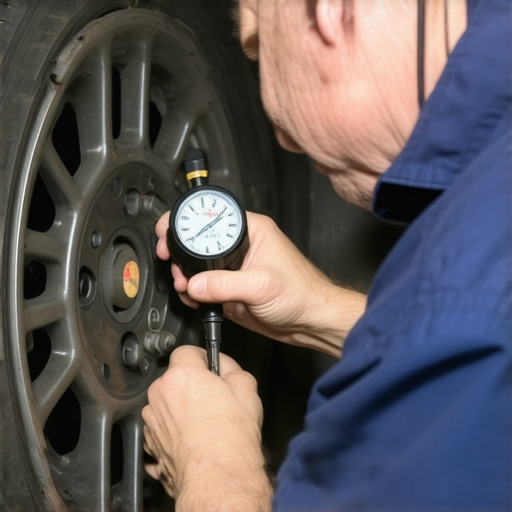
Can an over-torqued axle nut cause immediate bearing failure?
While ‘immediate’ failure is rare, the damage starts the moment the vehicle begins to move. Over-torquing eliminates the microscopic clearance required for the lubricant to form a ‘hydrodynamic film’ between the metal surfaces. Without this film, the bearing operates in a state of boundary lubrication, where metal-to-metal contact is constant. This causes a rapid rise in internal temperature, often exceeding the drop point of the grease. If you’ve recently had a car service and notice a new, high-pitched whine, the preload might be the culprit. You can contact us to verify the specific torque sequence for your vehicle’s make and model, as some require a ‘torque-to-yield’ process that demands a brand-new nut every time.
The Precision of the Dial Indicator in Lateral Play Analysis
When the ‘shake the wheel’ test proves inconclusive, seasoned masters of vehicle diagnostics reach for a dial indicator. By mounting the magnetic base to the steering knuckle and placing the plunger on the hub face, you can measure the ‘end play’ in thousandths of an inch. Most manufacturers specify a maximum allowable play of around .002 to .005 inches. This level of precision is necessary because the human hand often cannot feel the minute movement that causes a ‘ghost’ ABS code or a subtle brake pedal pulsation. This scientific approach separates a guess from a professional diagnosis. It is the same level of detail required when managing transmission failures, where minute tolerances dictate the difference between a smooth shift and a catastrophic slip.
Metallurgy and the Microscopic War Against Spalling
At the microscopic level, a bearing failure is a battle of metallurgy. High-quality bearings are made of high-carbon chrome steel, hardened through specific quenching processes. However, even the toughest steel cannot withstand ‘pitting’ once the surface is breached. Once a single microscopic flake of metal—known as spall—breaks loose, it acts as an abrasive within the grease, accelerating the destruction of every other roller in the assembly. This is why a bearing that is ‘just starting to make noise’ can go from a faint hum to a grinding disaster in a matter of hours. This rapid degradation is a primary reason auto repair experts advise against long-distance travel once a noise is confirmed. Understanding these material limits helps you appreciate choosing the right car service that uses OEM-grade components rather than cheap, unhardened white-box alternatives.
Stop the Bleeding Before Your CV Boot Splits Open
When a wheel bearing reaches the end of its fatigue life, the damage rarely stays localized to the hub. The excessive heat generated by internal friction quickly migrates through the axle stub, often reaching the outboard CV joint. This thermal transfer is the primary cause of premature boot failure, as the intense heat causes the specialized grease to liquefy and weep past the clamps. In my years of professional vehicle diagnostics, I have seen countless cases where a ‘simple’ bearing replacement turned into a full drivetrain overhaul because the internal friction was allowed to cook the surrounding components. To prevent this, you must treat a noisy hub with the same urgency as a low oil pressure light. Delaying auto repair for a week can result in a seized axle that requires a hydraulic press and an oxy-acetylene torch to remove, significantly increasing your total car service bill.
Look for the Sine Wave Glitch in Your ABS Data
For those who have moved beyond the stethoscope, an oscilloscope is the ultimate tool for verifying a failing bearing before it is loud enough to hear. By tapping into the wheel speed sensor wires, you can observe the analog sine wave generated by the tone ring. A healthy bearing produces a consistent, uniform wave pattern. However, a hub with even .003 inches of internal play will create ‘jitter’ or frequency modulation in the wave as the gap between the sensor and the ring fluctuates. This microscopic instability is what triggers ‘phantom’ traction control activations on dry pavement. Identifying these digital signatures is the pinnacle of vehicle diagnostics, allowing you to catch failures in the latent stage before they manifest as physical vibrations. 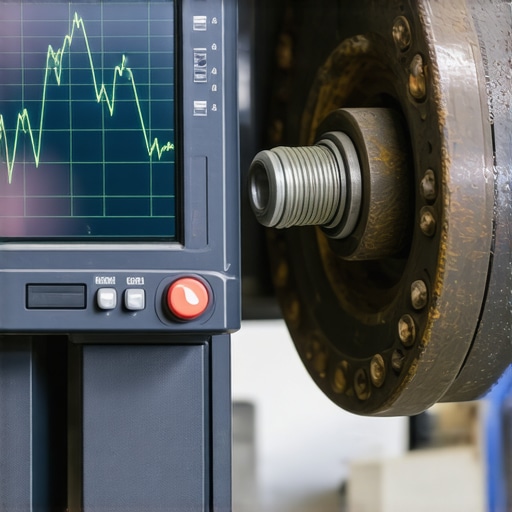
Can a faulty brake caliper slide pin trick you into replacing a healthy bearing?
It happens more often than most technicians care to admit. A seized caliper slide pin can cause the brake pads to drag against the rotor, creating a high-pitched metallic moan that perfectly mimics the frequency of a failing bearing. Furthermore, the heat generated by a dragging brake will transfer to the hub, leading to a false positive on a thermal camera test. Before committing to a hub replacement, always perform a ‘coast test’ in neutral; if the noise persists without brake application and changes pitch specifically with vehicle speed, the bearing is the likely culprit. This level of discernment is what defines high-quality auto repair and ensures you aren’t chasing ghosts at the customer’s expense.
Why Your Brake Pedal Feels Like a Pulse After a Hub Swap
Many DIYers and junior techs are baffled when a brand-new hub causes a pulsating brake pedal. This is rarely a warped rotor; instead, it is usually ‘hub runout’ caused by a failure to clean the mounting surface on the steering knuckle. Even a single flake of rust trapped between the hub and the knuckle can tilt the assembly just enough to cause the rotor to wobble. According to the technical experts at Schaeffler FAG, as little as .002 inches of misalignment at the hub face can translate to .005 inches of runout at the edge of the rotor, leading to ‘disc thickness variation’ over time. Precision in car service requires using a wire wheel to achieve a ‘bright metal’ finish on all mating surfaces before the final torque sequence is initiated.
Grease Chemistry and the Myth of Universal Lubricants
In the world of modern sealed units, the chemistry of the grease is as engineered as the steel itself. Most high-end bearings utilize a polyurea-based thickener because of its incredible resistance to ‘shear’ and high-temperature oxidation. When homeowners attempt to ‘inject’ grease into a sealed bearing through the ABS sensor hole, they often mix incompatible soap bases—like lithium and polyurea—which leads to a chemical reaction called ‘grease bleed.’ This reduces the lubricant to a watery consistency that quickly leaks out, leaving the rollers to run dry. Authentic auto repair means respecting the factory seal and recognizing that once the lubricant is compromised, the assembly has reached its thermodynamic limit. Don’t gamble with your vehicle’s structural integrity; perform the lateral play test today and ensure your hub isn’t one mile away from a total weld-seizure.
Expert Insights & Advanced Considerations
The Thermal Lag Fallacy and Real-World Friction
One common mistake in vehicle diagnostics is checking for hub heat immediately after a slow city drive. High-carbon steel hubs require consistent, high-speed friction to build a readable thermal signature. If you suspect a bearing is failing but the temperatures are equal, take the car for a five-mile highway run with minimal braking. This isolates bearing friction from brake heat. If you are still seeing strange behavior, you might need to check why your car pulls to the left even after an alignment, as uncorrected thrust angles can put asymmetrical stress on your wheel ends.
Lateral G-Force Tells the Truth Jacks Can’t Find
A wheel bearing can be pitted and noisy without showing any physical play on a jack. This is because the weight of the vehicle (static load) keeps the rollers seated. Only when you apply lateral G-forces during cornering do the rollers move across the damaged race surface. This is why a professional car service includes a dynamic road test. If the noise disappears under load, you are not just hearing a bearing; you are hearing the specific geometry of the failure. This level of nuance is similar to how the 20 scan tool that actually finds hidden transmission codes can reveal issues that do not yet have a mechanical feel.
Digital Forensics and Tone Ring Integrity
Never replace a hub without inspecting the magnetic integrity of the ABS tone ring. Modern auto repair often overlooks the fact that road debris or metallic dust from a failing bearing can coat the magnetic segments, leading to erratic wheel speed data. Even if the bearing is physically sound, a contaminated ring will cause safety systems to malfunction. This is a critical part of vehicle diagnostics that prevents the parts-cannon approach to repair. Before you start pulling hubs, ensure you do not have a simpler electrical issue; for instance, knowing how to spot a bad ground wire can save hours of troubleshooting if your ABS module is losing power.
#IMAGE_PLACEHOLDER_E#
Curated Expert Resources
SKF Bearing Analysis Guides: Essential for technicians who want to understand the difference between fatigue, spalling, and brinelling. It provides the visual references needed to diagnose the root cause of failure rather than just the symptoms.
Timken Tech Series: This resource offers deep dives into the metallurgy of hub assemblies and the specific torque requirements for different axle nut designs, ensuring you never compromise the preload of a new unit.
The Motor Age Diagnostic Library: A high-level collection of case studies that demonstrate how to use oscilloscopes and thermal imaging to catch latent mechanical failures before they become safety risks.
Final Expert Perspective
Mastering vehicle diagnostics for wheel bearings requires a synthesis of old-school acoustic observation and modern digital data analysis. From identifying the first rhythmic chirp to measuring micro-inches of runout with a dial indicator, the goal is always precision. A failing hub is a ticking clock that threatens your braking efficiency and suspension health. If your vehicle is exhibiting any of the harmonic groans or vibrations we have discussed, do not wait for the wheel to seize. For a definitive analysis and precision repair, contact us today. We prioritize your safety by applying the most advanced auto repair standards in the industry, ensuring your vehicle remains stable and silent for the long haul.