How Temperature Alters Hydraulic Engagement
In the high-precision world of modern automotive engineering, the automatic transmission remains one of the most complex hydraulic systems in existence. When an engine is cold, the automatic transmission fluid (ATF) possesses a significantly higher viscosity than its optimal operating state. This ‘thickened’ fluid moves slower through the intricate passages of the valve body, leading to a momentary lag in hydraulic pressure. This delay forces the transmission control module (TCM) to compensate by increasing line pressure to ensure gear engagement, which often manifests as a harsh or ‘jerky’ shift. Understanding transmission failures decoded through this lens reveals that what many drivers perceive as a mechanical break is actually a fluid dynamics challenge. Expert vehicle diagnostics often point toward the viscosity index of the fluid being used, especially in climates where sub-zero temperatures are common.
The Critical Role of Hardened Seals and Solenoids
As a vehicle ages, the internal rubber seals and gaskets within the transmission lose their elasticity. In cold weather, these components become brittle and fail to seat properly until the engine reaches operating temperature. This thermal contraction allows for internal pressure leaks, meaning the transmission must work harder to compress the friction plates. For those experiencing these symptoms, why your transmission shifts hard only between second and third can often be traced back to specific solenoid groups that are more sensitive to these pressure variances. According to research by SAE International, the shear stability of ATF under low-temperature startup conditions is a primary factor in preventing premature wear of planetary gearsets. If your vehicle is struggling with these transitions, it may be time for a professional car service to evaluate the integrity of your hydraulic circuit.
Is it just the cold or is your valve body failing?
Distinguishing between normal cold-start behavior and a legitimate mechanical fault requires a nuanced understanding of shift timing. A normal cold shift might be slightly firmer, but a total hesitation or a violent ‘thud’ suggests that the shift solenoids are sticking or the valve body is contaminated with debris. Utilizing the hidden world of vehicle diagnostics allows technicians to monitor real-time data streams to see if the TCM is commanding a shift that the hardware is too slow to execute. This is often the precursor to more significant auto repair needs. If you notice that your transmission slips when cold but miraculously heals itself after ten minutes of driving, you are likely dealing with the early stages of seal bypass or fluid degradation. Don’t wait for a total failure; explore our expert-led guides or contact our technical team to schedule a deep-dive diagnostic session before a small fluid issue becomes a multi-thousand-dollar rebuild.
Why Your TCM Might Be Training for Failure
Modern transmissions are ‘adaptive,’ meaning the computer learns your driving habits and adjusts shift points to compensate for internal wear. However, when the fluid is cold, these adaptive strategies can backfire. The computer may attempt to apply ‘garage shifts’ or ‘cold-start maps’ that are too aggressive for the current fluid temperature. This is why high-quality auto repair shops emphasize the importance of using the exact OEM-spec fluid. Using a generic ‘universal’ ATF can alter the friction coefficient just enough to cause harsh engagement during the warm-up cycle. Reviewing transmission troubles and proven repairs can help owners identify if their software needs a flash update or if the hardware is truly at its limit.
Why Your Car Thuds Even After the Fluid Warms Up
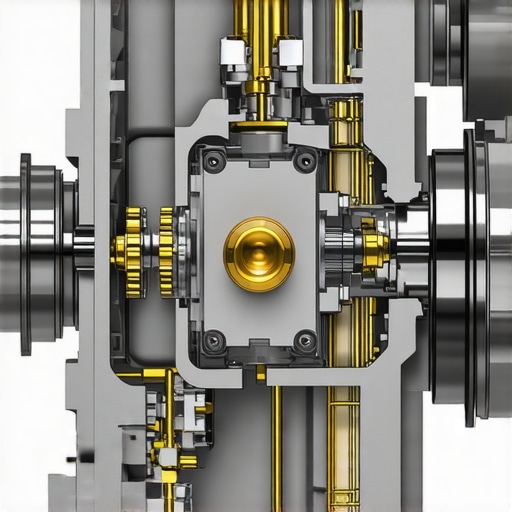
While cold temperatures are often the primary suspect, a persistent jerk or thud during gear changes—even after the engine has reached its operating range—frequently points toward the accumulator pistons. These components act as hydraulic shock absorbers, cushioning the blow when the transmission switches from one gear set to another. Inside the accumulator, a series of springs and rubber o-rings work in tandem to manage pressure spikes. If these springs lose their tension or the o-rings become flattened, the ‘cushion’ disappears, resulting in a harsh metal-on-metal engagement feel. Many owners mistake this for a total transmission failure, but in reality, it could be a localized pressure issue that is surprisingly manageable with the right expertise. If you are noticing a specific transmission thud when shifting into reverse, it is often a sign that the reverse engagement circuit is losing its ability to regulate line pressure effectively. Real-time data from vehicle diagnostics can help pinpoint whether these pistons are reacting too slowly to hydraulic commands.
Could a simple $10 gasket be the reason your gears feel like they are fighting you?
In many cases, the most violent shifting symptoms do not stem from a shattered gearset but from a loss of hydraulic integrity at a junction point. A degraded seal at the filter neck or a failing internal gasket can allow air to be sucked into the pump along with the fluid. This aeration creates a ‘spongy’ hydraulic response where the TCM expects a firm application but gets a stuttering engagement instead. Identifying the 10 dollar gasket that stops your transmission from leaking overnight can be a revelation for car owners who were quoted thousands for a replacement. These minor leaks often hide in plain sight, causing ‘morning sickness’ where the car refuses to move until the fluid expands enough to seal the gap. If you have been struggling with a vehicle that feels sluggish or hesitant, have you checked the fluid level recently? Let us know in the comments if a simple fluid top-off solved your problem, or check out our guide on fixing the common delay when shifting from reverse to drive for more DIY insights.
Stop Ignoring the Myth of Lifetime Fluid
A significant point of contention in modern auto repair is the manufacturer’s claim of ‘filled-for-life’ transmission fluid. Expert technicians and transmission manufacturers often disagree with this marketing-driven narrative. According to technical documentation from ZF Friedrichshafen, a global leader in transmission systems, fluid should be changed at least every 60,000 miles to maintain the protective properties of the additives, especially under heavy load or extreme temperature variations. Over time, heat cycles break down the long-chain polymers in the ATF, reducing its ability to coat moving parts and resist foaming. This degradation is exactly the truth about lifetime transmission fluid that many dealerships hesitate to share. When the fluid loses its shear stability, the shift solenoids—which are essentially tiny electromagnetic valves—begin to stick, leading to the very ‘jerky’ behavior drivers dread during their morning commute.
Don’t Let Software Glitches Mimic Hardware Failure
Before committing to an expensive mechanical teardown, it is crucial to eliminate electronic malfunctions. The communication between your engine sensors and the transmission is a delicate dance of data. A faulty mass air flow sensor or a dragging brake caliper can confuse the TCM, leading it to command shift pressures that are inappropriate for the current load. Professional vehicle diagnostics utilize high-level scanners to look for ‘pending’ codes that do not always trigger a check engine light. Investing in the 20 dollar scan tool that actually finds hidden transmission codes can empower you to see exactly what the computer is seeing. Often, a ‘hard shift’ is simply the computer’s failsafe mode—intended to protect the transmission by maximizing pressure when it detects a sensor mismatch. By addressing the root electronic cause through targeted auto repair, you can often restore factory-smooth shifting without ever opening the gearbox.
When Friction Material Becomes Your Transmission’s Secret Enemy
Deep inside the clutch drums, microscopic layers of cellulose, resins, and ceramic particles create the dynamic friction needed to lock gear sets together. Over years of operation, extreme heat cycles can cause a phenomenon known as ‘glazing,’ where the once-porous friction material becomes as smooth as glass. When your transmission fluid is cold, it lacks the chemical activity to penetrate this glazed surface, causing the plates to slip momentarily. Once the transmission control module (TCM) detects this mismatch in input and output speeds, it spikes the hydraulic line pressure as a failsafe. This sudden surge is what results in that bone-jarring ‘thud’ that feels like you have been rear-ended. Professional vehicle diagnostics can often reveal this by monitoring the ‘Clutch Volume Index’ (CVI), which tracks the precise volume of fluid required to apply a clutch pack. If your CVIs are out of range, it is a clear indicator that the mechanical tolerances have drifted beyond the software’s ability to compensate.

Why does my car jerk specifically when slowing down to a stop?
While many drivers focus on acceleration, a jerk that occurs during deceleration—often called a ‘downshift clunk’—points toward a specific failure in the coast clutch or the downshift timing solenoids. As the vehicle slows, the TCM must release a higher gear and engage a lower one with millisecond precision. If a solenoid hangs open due to debris or a weakened return spring, two gears can be partially engaged simultaneously, a condition known as ‘binding.’ This is frequently observed in modern 8-speed and 10-speed units where the gear ratios are tightly packed. According to technical specifications from Aisin Seiki, a global leader in transmission manufacturing, maintaining a stable friction coefficient is vital; even a minor drop in fluid quality can lead to these ‘bind-up’ events. If you are experiencing this, a targeted auto repair strategy often involves cleaning the solenoid screen rather than replacing the entire unit.
Stop Starving Your Gearbox of Clean Cooling
The transmission depends on a thermal exchange system that is often overlooked during routine car service. Most vehicles utilize a transmission cooler integrated into the main engine radiator. If this cooler becomes restricted by sediment or corrosion, the fluid cannot shed heat effectively. While you might expect this to only cause issues in summer, it actually wreaks havoc on cold-start performance by preventing the fluid from reaching a stable operating temperature quickly. This thermal instability causes the rubber seals within the valve body to expand and contract unevenly, leading to internal pressure leaks. Our guide on how to flush your transmission cooler the right way provides a technical walkthrough for clearing these obstructions to ensure your gearbox stays within its ‘Goldilocks’ temperature zone.
Beyond the external lines, the internal thermal bypass valve acts as a gatekeeper for hydraulic flow. This valve is designed to keep fluid circulating solely within the transmission case until it reaches a specific temperature—usually around 160°F—before allowing it to flow to the radiator. If this valve sticks in the ‘closed’ position, the fluid will rapidly overheat, leading to fluid thinning and harsh shifts. Conversely, if it sticks ‘open,’ the fluid may never reach the viscosity required for smooth engagement during winter months. Advanced vehicle diagnostics involve using infrared thermography to track the temperature delta across these cooling lines, ensuring the bypass valve is reacting to thermal loads as engineered by the factory…
Why the Torque Converter Clutch Fails the Morning Test
While much of the focus on cold-start jerking centers on the gearsets themselves, the torque converter clutch (TCC) is often the silent culprit behind that initial ‘jump’ when you put the car in gear. In modern six-, eight-, and ten-speed transmissions, the TCM uses the TCC to create a partial mechanical link even at low speeds to improve fuel efficiency and generate heat. When the fluid is cold, the TCM attempts a ‘controlled slip’ to frictionally heat the ATF. However, if the TCC solenoid is partially restricted by microscopic debris, it cannot modulate this pressure smoothly. This results in a sudden, full engagement that feels like a physical lurch forward. Expert vehicle diagnostics often involve monitoring the ‘TCC Slip RPM’—if this number drops to zero instantly while cold, the clutch is ‘grabbing’ instead of sliding, a clear sign that the hydraulic control is compromised by fluid thickness.
Can a Corroded Ground Wire Actually Kill Your Shift Quality?
It sounds like a stretch, but some of the most frustrating ‘mechanical’ failures are actually electrical interference issues. Transmission solenoids operate on very low voltage and use Pulse Width Modulation (PWM) to control fluid flow. A corroded engine-to-chassis ground strap or a weak battery can introduce electrical ‘noise’ into the TCM’s circuits. In cold weather, batteries naturally output less current, and metal terminals contract, potentially loosening a marginally stable connection. This noise disrupts the clean signal required to pulse the solenoids. Instead of a smooth pressure ramp-up, the solenoid gets a stuttered signal, causing the valves to hammer open and shut. Before authorizing an expensive auto repair for internal hardware, a high-level technician will perform a voltage drop test on the transmission’s wiring harness to ensure the ‘brains’ aren’t being sabotaged by poor grounding.
PWM Solenoids Struggle Against High Viscosity Environments
The transition from traditional ‘on/off’ solenoids to Pulse Width Modulation has revolutionized shift quality, but it has also made transmissions more sensitive to fluid temperature. PWM solenoids function by rapidly opening and closing hundreds of times per second to achieve a target pressure. When the ATF is thick and cold, its resistance to flow increases exponentially. The solenoid must work significantly harder to move this ‘heavier’ fluid through the tiny orifices of the valve body. If the fluid has not been changed recently, its viscosity index may have degraded, making it even more resistant to these high-frequency pulses. According to technical data from the Automatic Transmission Rebuilders Association (ATRA), the resulting pressure ‘overshoot’ is a primary cause of the harsh engagement experienced in the first few miles of driving. This is why a professional car service that includes a high-quality synthetic fluid swap can often ‘cure’ a car that shifts like a sledgehammer in the winter.

The Hidden Impact of Planetary Bushing Expansion
Beyond the fluids and the electronics, we must consider the metallurgy of the transmission itself. A transmission is a collection of various metals—aluminum, steel, and brass—each with different thermal expansion rates. The planetary gear carriers rely on bushings that must maintain a specific clearance to ensure proper lubrication and alignment. In extreme cold, these clearances can tighten beyond their design limits. This increased friction creates a drag on the rotating assemblies, which the TCM tries to overcome by increasing line pressure. Once the parts begin to rotate and generate localized heat, the metal expands, the clearances return to normal, and the ‘jerkiness’ disappears. However, if you continue to drive aggressively before this thermal equilibrium is reached, you risk scouring the bushings or flat-spotting the needle bearings. If you’ve noticed a persistent whine accompanied by your cold-start jerks, it’s time to consult our transmission failures decoded guide to see if your internal bearings are at risk. Don’t let a minor thermal delay turn into a major mechanical overhaul—reach out to our diagnostic team today for a comprehensive fluid and pressure analysis.
How Temperature Alters Hydraulic Engagement
In the high-precision world of modern automotive engineering, the automatic transmission remains one of the most complex hydraulic systems in existence. When an engine is cold, the automatic transmission fluid (ATF) possesses a significantly higher viscosity than its optimal operating state. This ‘thickened’ fluid moves slower through the intricate passages of the valve body, leading to a momentary lag in hydraulic pressure. This delay forces the transmission control module (TCM) to compensate by increasing line pressure to ensure gear engagement, which often manifests as a harsh or ‘jerky’ shift. Understanding transmission failures decoded through this lens reveals that what many drivers perceive as a mechanical break is actually a fluid dynamics challenge. Expert vehicle diagnostics often point toward the viscosity index of the fluid being used, especially in climates where sub-zero temperatures are common.
The Critical Role of Hardened Seals and Solenoids
As a vehicle ages, the internal rubber seals and gaskets within the transmission lose their elasticity. In cold weather, these components become brittle and fail to seat properly until the engine reaches operating temperature. This thermal contraction allows for internal pressure leaks, meaning the transmission must work harder to compress the friction plates. For those experiencing these symptoms, why your transmission shifts hard only between second and third can often be traced back to specific solenoid groups that are more sensitive to these pressure variances. According to research by SAE International, the shear stability of ATF under low-temperature startup conditions is a primary factor in preventing premature wear of planetary gearsets. If your vehicle is struggling with these transitions, it may be time for a professional car service to evaluate the integrity of your hydraulic circuit.
Is it just the cold or is your valve body failing?
Distinguishing between normal cold-start behavior and a legitimate mechanical fault requires a nuanced understanding of shift timing. A normal cold shift might be slightly firmer, but a total hesitation or a violent ‘thud’ suggests that the shift solenoids are sticking or the valve body is contaminated with debris. Utilizing the hidden world of vehicle diagnostics allows technicians to monitor real-time data streams to see if the TCM is commanding a shift that the hardware is too slow to execute. This is often the precursor to more significant auto repair needs. If you notice that your transmission slips when cold but miraculously heals itself after ten minutes of driving, you are likely dealing with the early stages of seal bypass or fluid degradation. Don’t wait for a total failure; explore our expert-led guides or contact our technical team to schedule a deep-dive diagnostic session before a small fluid issue becomes a multi-thousand-dollar rebuild.
Why Your TCM Might Be Training for Failure
Modern transmissions are ‘adaptive,’ meaning the computer learns your driving habits and adjusts shift points to compensate for internal wear. However, when the fluid is cold, these adaptive strategies can backfire. The computer may attempt to apply ‘garage shifts’ or ‘cold-start maps’ that are too aggressive for the current fluid temperature. This is why high-quality auto repair shops emphasize the importance of using the exact OEM-spec fluid. Using a generic ‘universal’ ATF can alter the friction coefficient just enough to cause harsh engagement during the warm-up cycle. Reviewing transmission troubles and proven repairs can help owners identify if their software needs a flash update or if the hardware is truly at its limit.
Why Your Car Thuds Even After the Fluid Warms Up
While cold temperatures are often the primary suspect, a persistent jerk or thud during gear changes—even after the engine has reached its operating range—frequently points toward the accumulator pistons. These components act as hydraulic shock absorbers, cushioning the blow when the transmission switches from one gear set to another. Inside the accumulator, a series of springs and rubber o-rings work in tandem to manage pressure spikes. If these springs lose their tension or the o-rings become flattened, the ‘cushion’ disappears, resulting in a harsh metal-on-metal engagement feel. Many owners mistake this for a total transmission failure, but in reality, it could be a localized pressure issue that is surprisingly manageable with the right expertise. If you are noticing a specific transmission thud when shifting into reverse, it is often a sign that the reverse engagement circuit is losing its ability to regulate line pressure effectively. Real-time data from vehicle diagnostics can help pinpoint whether these pistons are reacting too slowly to hydraulic commands.
Could a simple $10 gasket be the reason your gears feel like they are fighting you?
In many cases, the most violent shifting symptoms do not stem from a shattered gearset but from a loss of hydraulic integrity at a junction point. A degraded seal at the filter neck or a failing internal gasket can allow air to be sucked into the pump along with the fluid. This aeration creates a ‘spongy’ hydraulic response where the TCM expects a firm application but gets a stuttering engagement instead. Identifying the 10 dollar gasket that stops your transmission from leaking overnight can be a revelation for car owners who were quoted thousands for a replacement. These minor leaks often hide in plain sight, causing ‘morning sickness’ where the car refuses to move until the fluid expands enough to seal the gap. If you have been struggling with a vehicle that feels sluggish or hesitant, have you checked the fluid level recently? Let us know in the comments if a simple fluid top-off solved your problem, or check out our guide on fixing the common delay when shifting from reverse to drive for more DIY insights.
Stop Ignoring the Myth of Lifetime Fluid
A significant point of contention in modern auto repair is the manufacturer’s claim of ‘filled-for-life’ transmission fluid. Expert technicians and transmission manufacturers often disagree with this marketing-driven narrative. According to technical documentation from ZF Friedrichshafen, a global leader in transmission systems, fluid should be changed at least every 60,000 miles to maintain the protective properties of the additives, especially under heavy load or extreme temperature variations. Over time, heat cycles break down the long-chain polymers in the ATF, reducing its ability to coat moving parts and resist foaming. This degradation is exactly the truth about lifetime transmission fluid that many dealerships hesitate to share. When the fluid loses its shear stability, the shift solenoids—which are essentially tiny electromagnetic valves—begin to stick, leading to the very ‘jerky’ behavior drivers dread during their morning commute.
Don’t Let Software Glitches Mimic Hardware Failure
Before committing to an expensive mechanical teardown, it is crucial to eliminate electronic malfunctions. The communication between your engine sensors and the transmission is a delicate dance of data. A faulty mass air flow sensor or a dragging brake caliper can confuse the TCM, leading it to command shift pressures that are inappropriate for the current load. Professional vehicle diagnostics utilize high-level scanners to look for ‘pending’ codes that do not always trigger a check engine light. Investing in the 20 dollar scan tool that actually finds hidden transmission codes can empower you to see exactly what the computer is seeing. Often, a ‘hard shift’ is simply the computer’s failsafe mode—intended to protect the transmission by maximizing pressure when it detects a sensor mismatch. By addressing the root electronic cause through targeted auto repair, you can often restore factory-smooth shifting without ever opening the gearbox.
When Friction Material Becomes Your Transmission’s Secret Enemy
Deep inside the clutch drums, microscopic layers of cellulose, resins, and ceramic particles create the dynamic friction needed to lock gear sets together. Over years of operation, extreme heat cycles can cause a phenomenon known as ‘glazing,’ where the once-porous friction material becomes as smooth as glass. When your transmission fluid is cold, it lacks the chemical activity to penetrate this glazed surface, causing the plates to slip momentarily. Once the transmission control module (TCM) detects this mismatch in input and output speeds, it spikes the hydraulic line pressure as a failsafe. This sudden surge is what results in that bone-jarring ‘thud’ that feels like you have been rear-ended. Professional vehicle diagnostics can often reveal this by monitoring the ‘Clutch Volume Index’ (CVI), which tracks the precise volume of fluid required to apply a clutch pack. If your CVIs are out of range, it is a clear indicator that the mechanical tolerances have drifted beyond the software’s ability to compensate.
Why does my car jerk specifically when slowing down to a stop?
While many drivers focus on acceleration, a jerk that occurs during deceleration—often called a ‘downshift clunk’—points toward a specific failure in the coast clutch or the downshift timing solenoids. As the vehicle slows, the TCM must release a higher gear and engage a lower one with millisecond precision. If a solenoid hangs open due to debris or a weakened return spring, two gears can be partially engaged simultaneously, a condition known as ‘binding.’ This is frequently observed in modern 8-speed and 10-speed units where the gear ratios are tightly packed. According to technical specifications from Aisin Seiki, a global leader in transmission manufacturing, maintaining a stable friction coefficient is vital; even a minor drop in fluid quality can lead to these ‘bind-up’ events. If you are experiencing this, a targeted auto repair strategy often involves cleaning the solenoid screen rather than replacing the entire unit.
Stop Starving Your Gearbox of Clean Cooling
The transmission depends on a thermal exchange system that is often overlooked during routine car service. Most vehicles utilize a transmission cooler integrated into the main engine radiator. If this cooler becomes restricted by sediment or corrosion, the fluid cannot shed heat effectively. While you might expect this to only cause issues in summer, it actually wreaks havoc on cold-start performance by preventing the fluid from reaching a stable operating temperature quickly. This thermal instability causes the rubber seals within the valve body to expand and contract unevenly, leading to internal pressure leaks. Our guide on how to flush your transmission cooler the right way provides a technical walkthrough for clearing these obstructions to ensure your gearbox stays within its ‘Goldilocks’ temperature zone.
Beyond the external lines, the internal thermal bypass valve acts as a gatekeeper for hydraulic flow. This valve is designed to keep fluid circulating solely within the transmission case until it reaches a specific temperature—usually around 160°F—before allowing it to flow to the radiator. If this valve sticks in the ‘closed’ position, the fluid will rapidly overheat, leading to fluid thinning and harsh shifts. Conversely, if it sticks ‘open,’ the fluid may never reach the viscosity required for smooth engagement during winter months. Advanced vehicle diagnostics involve using infrared thermography to track the temperature delta across these cooling lines, ensuring the bypass valve is reacting to thermal loads as engineered by the factory…
Why the Torque Converter Clutch Fails the Morning Test
While much of the focus on cold-start jerking centers on the gearsets themselves, the torque converter clutch (TCC) is often the silent culprit behind that initial ‘jump’ when you put the car in gear. In modern six-, eight-, and ten-speed transmissions, the TCM uses the TCC to create a partial mechanical link even at low speeds to improve fuel efficiency and generate heat. When the fluid is cold, the TCM attempts a ‘controlled slip’ to frictionally heat the ATF. However, if the TCC solenoid is partially restricted by microscopic debris, it cannot modulate this pressure smoothly. This results in a sudden, full engagement that feels like a physical lurch forward. Expert vehicle diagnostics often involve monitoring the ‘TCC Slip RPM’—if this number drops to zero instantly while cold, the clutch is ‘grabbing’ instead of sliding, a clear sign that the hydraulic control is compromised by fluid thickness.
Can a Corroded Ground Wire Actually Kill Your Shift Quality?
It sounds like a stretch, but some of the most frustrating ‘mechanical’ failures are actually electrical interference issues. Transmission solenoids operate on very low voltage and use Pulse Width Modulation (PWM) to control fluid flow. A corroded engine-to-chassis ground strap or a weak battery can introduce electrical ‘noise’ into the TCM’s circuits. In cold weather, batteries naturally output less current, and metal terminals contract, potentially loosening a marginally stable connection. This noise disrupts the clean signal required to pulse the solenoids. Instead of a smooth pressure ramp-up, the solenoid gets a stuttered signal, causing the valves to hammer open and shut. Before authorizing an expensive auto repair for internal hardware, a high-level technician will perform a voltage drop test on the transmission’s wiring harness to ensure the ‘brains’ aren’t being sabotaged by poor grounding.
PWM Solenoids Struggle Against High Viscosity Environments
The transition from traditional ‘on/off’ solenoids to Pulse Width Modulation has revolutionized shift quality, but it has also made transmissions more sensitive to fluid temperature. PWM solenoids function by rapidly opening and closing hundreds of times per second to achieve a target pressure. When the ATF is thick and cold, its resistance to flow increases exponentially. The solenoid must work significantly harder to move this ‘heavier’ fluid through the tiny orifices of the valve body. If the fluid has not been changed recently, its viscosity index may have degraded, making it even more resistant to these high-frequency pulses. According to technical data from the Automatic Transmission Rebuilders Association (ATRA), the resulting pressure ‘overshoot’ is a primary cause of the harsh engagement experienced in the first few miles of driving. This is why a professional car service that includes a high-quality synthetic fluid swap can often ‘cure’ a car that shifts like a sledgehammer in the winter.
The Hidden Impact of Planetary Bushing Expansion
Beyond the fluids and the electronics, we must consider the metallurgy of the transmission itself. A transmission is a collection of various metals—aluminum, steel, and brass—each with different thermal expansion rates. The planetary gear carriers rely on bushings that must maintain a specific clearance to ensure proper lubrication and alignment. In extreme cold, these clearances can tighten beyond their design limits. This increased friction creates a drag on the rotating assemblies, which the TCM tries to overcome by increasing line pressure. Once the parts begin to rotate and generate localized heat, the metal expands, the clearances return to normal, and the ‘jerkiness’ disappears. However, if you continue to drive aggressively before this thermal equilibrium is reached, you risk scouring the bushings or flat-spotting the needle bearings. If you’ve noticed a persistent whine accompanied by your cold-start jerks, it’s time to consult our transmission failures decoded guide to see if your internal bearings are at risk. Don’t let a minor thermal delay turn into a major mechanical overhaul—reach out to our diagnostic team today for a comprehensive fluid and pressure analysis.
Expert Advice for Persistent Transmission Jerks
Reset the Software to Solve Hardware Symptoms
Modern adaptive transmissions are remarkably resilient, but they can become trapped in negative feedback loops. If you have recently replaced a component or performed a fluid flush, the TCM may still be applying high-pressure maps designed for worn components. Utilizing high-level vehicle diagnostics to perform a ‘TCM Relearn’ procedure clears these old habits, allowing the transmission to calibrate its solenoid duty cycles to the current fluid viscosity and hardware tolerances.
#IMAGE_PLACEHOLDER_E#
Send Your Fluid to a Lab for Forensic Proof
A simple visual dipstick check is insufficient for diagnosing intermittent cold-start issues. Professional fluid analysis, such as that provided by specialized labs, can detect parts-per-million levels of bronze or aluminum. These findings can tell a technician whether a specific planet carrier or bushing is undergoing accelerated wear during those cold mornings, potentially saving you from a catastrophic failure later in the winter season.
Verify Your Electrical Grounds Before Pulling the Pan
One of the most overlooked auto repair steps is the verification of the electrical return path. Solenoids are sensitive to voltage drops that often worsen in cold, damp weather. Before condemning an internal valve body, ensure your technician performs a voltage drop test. You can even learn how to identify a bad ground wire without a multimeter to rule out simple connectivity issues that mimic complex hydraulic failures.
Top Resources for Transmission Mastery
ATRA Technical Bulletin Library: A massive repository of specific failure patterns and OEM workarounds used by transmission specialists globally. It is the gold standard for troubleshooting obscure shift behaviors.
ZF LifeGuard Documentation: Essential technical specifications for anyone driving modern high-performance vehicles, offering precise thermal operating ranges and fluid requirements.
Blackstone Laboratories Analysis: A forensic fluid service that helps car owners transition from guessing to knowing exactly what is happening inside their gearbox.
Reliable Auto Cares Diagnostic Archive: Our curated list of expert auto repair tips for 2025 provides deeper dives into the sensors and seals that dictate your drive quality.
The Final Verdict on Shift Quality
Restoring a smooth morning commute requires moving beyond the myth of lifetime fluids and embracing a proactive approach to **vehicle diagnostics**. Whether you are dealing with a simple software glitch or a physical seal failure, the key is identifying the root cause before the computer’s failsafe pressures cause irreversible damage. High-quality **auto repair** is as much about data as it is about wrenches. If your gearbox is still fighting you every morning, we invite you to share your specific shift symptoms in the comments below or reach out for a consultation. Let’s keep your vehicle running seamlessly through every temperature shift.