Vehicular directional stability during deceleration is a complex interplay between hydraulic pressure, friction coefficients, and suspension geometry. When a car pulls to one side specifically under braking—rather than during steady-state cruising—the diagnostic path shifts from simple wheel alignment to a deeper investigation of the braking system’s mechanical and hydraulic integrity. This phenomenon usually indicates that one wheel is exerting more stopping force than its counterpart on the same axle, or that the suspension is failing to maintain the wheel’s caster and toe settings under the stress of weight transfer. Identifying the root cause requires a systematic approach to vehicle diagnostics to prevent uneven tire wear or, more critically, a loss of control during emergency maneuvers.
Hydraulic Asymmetry and the Seized Caliper Phenomenon
The most frequent culprit behind a directional pull is a compromised brake caliper. In a functional system, the master cylinder distributes equal hydraulic pressure to both sides. However, if a piston becomes sluggish due to internal corrosion or debris, it fails to exert the necessary force on the rotor. Conversely, a seized caliper on one side can cause that wheel to lag, while the other side grabs normally, dragging the vehicle toward the side with the higher friction. This requires precision auto repair to differentiate between a collapsed brake hose—which acts as a one-way valve—and a mechanical piston failure. If you notice a distinct variance in pedal feel, you may need to investigate the difference between a soft brake pedal and a spongy one to identify air infiltration or fluid degradation.
Does a failing control arm bushing create the illusion of a brake fault?
Experienced technicians often look beyond the rotors. During braking, the front suspension undergoes significant loading. If a control arm bushing is torn or degraded, the forward force of the wheel will shift the suspension arm’s position, momentarily changing the wheel’s alignment. This ‘dynamic toe change’ can cause the car to dart to one side even if the brakes themselves are perfect. A professional car service includes a thorough ‘pry bar test’ on all rubber components to ensure they aren’t yielding under the thousand-plus pounds of force generated during a hard stop. This is often misdiagnosed as an alignment issue when it is actually a structural failure.
Friction Material Dynamics and Thermal Inconsistency
Not all brake pads are created equal, and even identical pads can behave differently if bedded incorrectly. If one rotor has suffered from thermal glazing or ‘cementite’ buildup—a chemical transformation of the iron caused by extreme heat—the friction coefficient drops significantly. This creates a scenario where the vehicle pulls toward the ‘healthier’ side. In some cases, drivers find that their car pulls to the left after a professional brake job because the technician failed to clean the hub surfaces, leading to lateral runout. According to the SAE International technical standards, even a minor discrepancy in pad-to-rotor contact can lead to measurable yaw moments during high-speed deceleration. While the transmission typically manages power delivery, engine braking can also amplify these pulls if the drivetrain exhibits drag on one side. To ensure your vehicle remains predictable, always schedule a comprehensive inspection of the hydraulic lines and slide pins. If you’ve recently bled your system and still experience issues, consider exploring why your brake pedal feels like spongy cake after bleeding to rule out master cylinder bypass.
The Stealth Saboteur Inside Your Brake Hoses
While many drivers immediately blame the metal components, the rubber brake hoses often hold the secret to unpredictable handling. Over years of thermal cycling, the internal lining of a flexible brake hose can delaminate, creating a microscopic flap of rubber. This flap acts as a one-way check valve, allowing high-pressure fluid to reach the caliper during initial application but preventing it from returning to the master cylinder when you lift your foot. This trapped pressure causes the brake to remain partially engaged. If you notice the specific smell that tells you your brakes are dragging, the hose is a prime suspect. Unlike a hard metal line, a soft hose shouldn’t show external cracks to be considered ‘failed’; its structural integrity is internal. Failure to address this leads to excessive heat, which can warp rotors and eventually damage the transmission seals if the vehicle is forced to overcome constant drag. 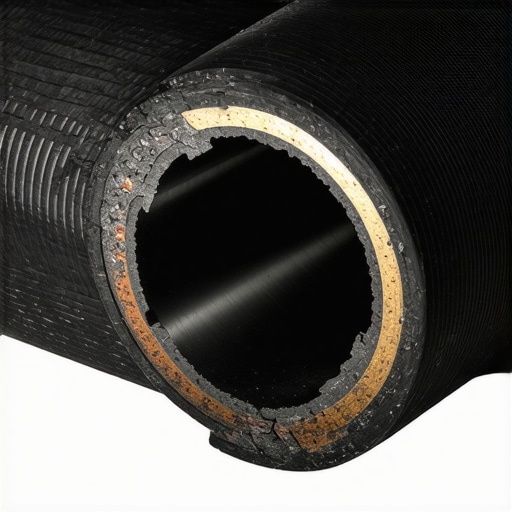
Can a simple tire rotation hide a deeper hydraulic failure?
It is a common pitfall in auto repair to overlook the influence of the tires when a car darts to the side during deceleration. If the front tires have uneven tread depths or varying ‘conicity’—a manufacturing or wear-related slant in the tire’s shape—the vehicle will naturally wander toward the side with less diameter. When braking, the weight shifts forward, magnifying this imbalance. However, if you suspect the hardware, you should check if your tire pressure light stays on after you fill the tires, as even a 5-PSI difference across the front axle can cause a significant pull under heavy load. Professional vehicle diagnostics should always involve a ‘cross-rotation’ of the front tires to see if the pull follows the tire or stays with the corner of the car. This simple step prevents the unnecessary replacement of expensive calipers.
The Invisible Link Between Wheel Bearings and Deceleration Drifting
A failing wheel bearing does more than just hum or growl at highway speeds. As the internal ball bearings or races wear down, they create ‘play’ or lateral movement in the wheel hub. Under the intense clamping force of the brakes, this play allows the entire wheel and rotor assembly to tilt slightly out of alignment. This movement changes the contact patch of the tire, leading to a pull that only manifests when the brakes are applied. In extreme cases, a worn bearing can cause the ABS sensor to misread the wheel speed due to an inconsistent air gap, triggering an unnecessary electronic intervention. Learning how to identify a failing wheel bearing before the hub seizes up is a critical skill for any enthusiast. According to the National Highway Traffic Safety Administration (NHTSA), maintaining the structural integrity of the hub assembly is paramount, as catastrophic bearing failure at speed can lead to total loss of steering control. If you have ruled out the hydraulic system, use a dial indicator to check the hub for runout. Have you ever experienced a sudden jerk in the steering wheel that vanished the moment you let off the brakes? Share your diagnostic story in the comments below or suggest what technical deep-dive we should tackle next. Consistency in your car service routine is the only way to catch these subtle shifts in geometry before they become dangerous. If you are still seeing warnings on your cluster, check why your brake lights stay on even when the car is off to ensure your electrical switches aren’t causing additional drag or logic errors in the stability control module.The interplay between electronic stability systems and hydraulic hardware often creates a ‘ghost in the machine’ scenario that standard checks miss. Modern vehicle diagnostics must now account for Electronic Brakeforce Distribution (EBD), a sophisticated software layer that has largely replaced the mechanical proportioning valves of the past. If the EBD algorithm receives skewed data from a faulty steering angle sensor or a lateral G-sensor, it may command the ABS solenoids to pulse with uneven frequency across the front axle. This isn’t a mechanical failure in the traditional sense, but it results in a tangible, violent pull during high-speed deceleration. Professional auto repair facilities now utilize bi-directional scan tools to manually cycle these internal valves, ensuring that the electronic ‘brain’ isn’t accidentally sabotaging your directional stability. 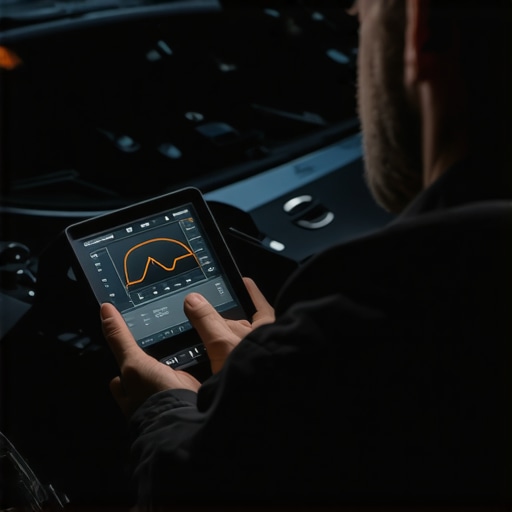
Can a worn steering rack mounting bushing cause a brake-induced drift?
While many focus on the calipers, the physical security of the steering rack itself is a critical variable. When you apply the brakes, the front tires attempt to stop while the vehicle’s momentum continues forward. If the bushings holding the steering rack to the subframe have softened or become oil-soaked, the entire rack assembly can shift laterally. This shift alters the tie-rod geometry on both sides simultaneously, effectively ‘steering’ the car without any input from the driver. It mimics a brake pull perfectly because it only manifests under high-load deceleration. A high-quality car service should include a visual inspection for ‘witness marks’ around the rack mounts, indicating movement that shouldn’t be there. Beyond the steering linkage, the internal state of the master cylinder can lead to a ‘diagonal split’ failure. Many modern vehicles use a diagonal braking circuit—where the front-left and rear-right are paired. If a primary seal inside the master cylinder begins to bypass, you may lose pressure in only one circuit. This results in a pull because only one front wheel is providing maximum clamping force. According to the engineering standards published by Bosch Automotive Technology, the tolerances for these internal seals are so tight that even microscopic debris from a failing transmission cooler line—should it ever contaminate the shared cooling or fluid paths—can cause a pressure imbalance. When diagnosing these deep-level issues, it is vital to determine if the pull is immediate or progressive. Does the car dart the moment you touch the pedal, or does it wait until the weight has fully shifted? If you are tired of ‘parts cannon’ repairs that don’t fix the issue, consider booking a specialized hydraulic pressure test to see exactly what each caliper is receiving. This level of precision is the only way to separate a steering geometry flaw from a true hydraulic imbalance. The nuances of how rear suspension ‘squat’ affects front-end dive further complicate the diagnostic tree…The nuances of how rear suspension ‘squat’ affects front-end dive further complicate the diagnostic tree because the vehicle’s center of gravity is not static. If the rear trailing arm bushings are asymmetrical in their stiffness, one side of the car will ‘hike’ more than the other during deceleration, forcing a weight transfer that is diagonally biased. This bias overloads the opposite front tire, creating a momentary pull that vanishes the second the car levels out. Identifying this requires more than a simple visual check; it demands a high-level car service perspective where the technician observes the vehicle’s pitch and roll characteristics under load.
Rear-Axle Geometry Dictates Front-End Stability
While the front wheels handle the majority of braking force, the rear axle acts as the vehicle’s anchor for directional orientation. If the rear brakes—whether drum or disc—are out of adjustment, the ‘drag’ force on the rear of the vehicle will be uneven. This unevenness creates a yaw moment, effectively pivoting the car around its center point. In many cases, a pull felt in the steering wheel is actually the front end trying to compensate for a rear-end trailing issue. When performing vehicle diagnostics, technicians must verify that the rear proportioning remains balanced, especially on older vehicles with mechanical load-sensing valves. Modern systems rely on complex sensors, but the physics of a dragging rear shoe or a seized slider pin remains a persistent reality in auto repair that can mimic a front-end disaster.
Does an imbalanced shock absorber create a phantom brake pull?
A shock absorber that has lost its damping oil provides less resistance to the rapid weight transfer that occurs when the pads bite the rotors. This causes the ‘weak’ side of the suspension to compress faster and deeper than the ‘strong’ side. As the strut compresses, the steering geometry—specifically the caster and camber—undergoes a ‘bump steer’ effect. This geometric shift causes the tire to point slightly inward or outward, resulting in a sharp dart to one side. This isn’t a braking failure, but a damping failure. According to the engineering data from Brembo’s technical research, maintaining consistent vertical load on all four contact patches is the only way to ensure the braking system achieves its theoretical maximum efficiency. #IMAGE_PLACE_HOLDER_D#
Ditch the Guesswork with Hydraulic Pressure Transducers
To truly master the diagnostic process, one must move beyond the ‘replace and pray’ method. Advanced vehicle diagnostics now involve the use of hydraulic pressure transducers that plug directly into the bleeder screw ports. This allows a technician to see real-time pressure curves on a digital oscilloscope. If the left front reaches 1,000 PSI while the right front lags at 850 PSI, the problem is definitively upstream—likely a restricted flex hose or a failing ABS modulator valve. This level of forensic analysis is what separates a standard car service from a high-performance specialist. Furthermore, we must consider the transmission and its interaction with the driveline. In all-wheel-drive vehicles, a binding center differential can introduce parasitic drag that pulls the car to one side during coasting or braking, particularly if the tire circumferences are not perfectly matched. The internal friction of a failing transmission can also manifest as a pull if the torque distribution is unevenly applied during engine braking scenarios. If you have ever spent hundreds on calipers and pads only to have the car still pull under braking, it is time to look at the dynamic forces at play. Have you checked your rear subframe bushings or the internal pressure of your ABS block lately? Join the discussion below and let us know which hidden culprit finally solved your steering drift issues.
Precision Tactics for Braking Stability
Thermal Profiling with Infrared Pyrometers
A professional technician shouldn’t rely on visual inspection alone. By measuring rotor temperatures immediately after a series of controlled stops, you can identify a lazy caliper that hasn’t yet fully seized. A variance of more than 50 degrees Fahrenheit across the same axle indicates a clear friction imbalance. This is a critical step in vehicle diagnostics that catches issues before they warp your hardware.
The Latent Danger of Internal Hose Delamination
While many focus on the metal, the rubber brake hose is a high-wear item. Internal failures act as one-way valves, holding pressure and causing a pull that feels like a seized piston. If you’ve been wondering why your brake rotors keep warping every six months regardless of brand, an intermittently restricted hose is often the root cause of localized overheating.
Electronic Brake Distribution Algorithms
On modern chassis, the computer replaces the mechanical proportioning valve. If the steering angle sensor is off by just a few degrees, the ABS module may over-compensate, creating a ‘ghost pull.’ Ensure your alignment is perfect or you might find yourself asking why your car pulls to the left even after an alignment. #IMAGE_PLACEHOLDER_E#
Authoritative Literature for Brake Experts
For those looking to expand their technical library, the Bosch Automotive Handbook is the gold standard for understanding hydraulic control logic and transmission integration. Additionally, the SAE International technical papers provide peer-reviewed data on friction material coefficients under thermal stress. To maintain your vehicle’s longevity, implementing the one maintenance move that doubles the life of your rotors is an essential practice for every performance-minded owner.
Mastering the Art of Modern Vehicle Braking
Solving a directional pull requires looking at the vehicle as a unified system where hydraulic pressure meets suspension geometry. Whether it is a failing driveline component affecting drag or a sophisticated software error in the EBD, successful auto repair depends on systematic isolation. We invite you to share your most challenging diagnostic cases in the comments below or reach out via our contact page for specialized advice on complex car service needs. Consistency in your diagnostic approach is the only way to ensure safety and performance on the road.