Deciphering the Logic of Restricted Performance Mode
When a modern internal combustion engine refuses to crest the 3,000 RPM mark, it is rarely a random mechanical hiccup. Instead, you are likely witnessing the Powertrain Control Module (PCM) or Transmission Control Module (TCM) executing a ‘Limp Home’ strategy. This protective software state is triggered when the vehicle’s onboard sensors detect a parameter so far out of the expected range that continued high-speed operation could lead to catastrophic engine or transmission failure. Professionals recognize this as a safety ceiling designed to prevent lean-burn conditions, over-heating, or mechanical synchronization issues. To truly address the problem, one must move beyond clearing codes and delve into the hidden world of vehicle diagnostics to understand what the computer is trying to protect.
Airflow Inaccuracies and the Mass Air Flow Ceiling
The calculation of the air-fuel ratio is the most delicate balance in your engine. If the Mass Air Flow (MAF) sensor sends a signal that contradicts the throttle position or oxygen sensor feedback, the ECU may default to a fixed, safe timing map that limits RPM to prevent a melt-down. Before assuming a component is dead, many technicians find that cleaning the sensitive heating element can restore data accuracy. You can often resolve this by learning how to clean a mass air flow sensor without damaging the hot wire. According to technical standards published by SAE International, modern Electronic Throttle Control (ETC) systems must implement ‘fail-safe’ modes that limit engine speed if the accelerator pedal position sensors do not correlate perfectly, ensuring the car remains controllable even during a hardware malfunction.
Why Does My Engine Stop Climbing Exactly at 3,000 RPM?
Readers often ask why the limit is so precise. This occurs because the PCM utilizes ‘lookup tables’ for fuel and ignition. When a critical sensor—such as the Camshaft Position Sensor or the VVT solenoid—fails to report, the PCM can no longer accurately time sparks at high velocities. Consequently, it locks the engine into a low-load table that physically cannot support combustion cycles beyond a specific frequency, typically hovering between 2,500 and 3,200 RPM. If your diagnosis leads you toward more complex internal failures, reach out via our contact-us page for professional guidance.
Exhaust Backpressure and the Silent Choke of a Clogged Converter
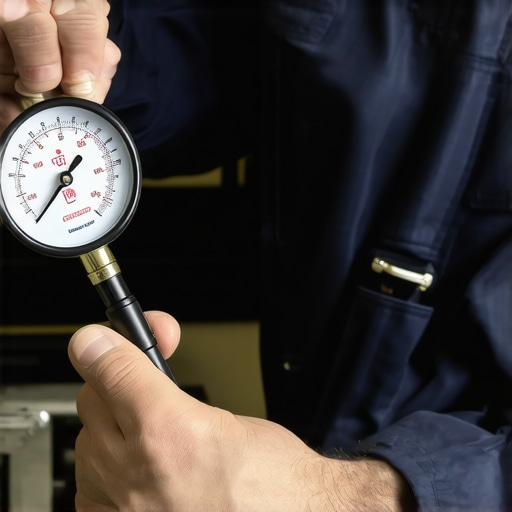
Sometimes the limitation isn’t electronic, but purely physical. If the engine cannot evacuate spent gases, it cannot draw in a fresh charge for the next cycle. A partially melted or restricted catalytic converter creates a backpressure wall that mimics an electronic rev limiter. As RPM increases, the volume of exhaust gas grows exponentially; eventually, the pressure in the manifold becomes so high that the engine simply ‘stalls’ at a specific RPM. It is vital to learn the easy way to tell if your catalytic converter is clogged using a vacuum gauge or backpressure tester before condemning the engine’s management system.
TCM Intervention and Torque Management Failures
The relationship between the transmission and the engine is more symbiotic than most drivers realize. If the TCM detects a slipping clutch pack or a faulty pressure solenoid, it will send a ‘torque reduction’ request to the engine. This prevents the transmission from burning itself out under load. Identifying these internal communication errors requires specialized equipment; however, you can start your own investigation using the 20 scan tool that actually finds hidden transmission codes to see if the gearbox is the one holding the engine back.
Fuel Pressure Walls in Direct Injection Systems
In the era of Gasoline Direct Injection (GDI), the fuel system operates at pressures that can exceed 2,000 PSI under load. If the high-pressure fuel pump (HPFP) fails to maintain the commanded rail pressure as the engine approaches higher demand, the PCM will instantly intervene. Unlike older port-injected engines that might simply sputter or lose power gradually, a GDI system detects the slightest pressure drop and enforces a strict RPM ceiling to prevent a lean-out condition that could damage the cylinders. This is frequently the reason a car feels perfectly fine during city driving but hits a hard wall the moment you merge onto a highway. Often, the culprit isn’t the expensive pump itself, but a restriction elsewhere, such as the hidden filter that is quietly killing your fuel economy and preventing high-volume delivery. If you notice the car struggles specifically when the tank is low or on steep inclines, you should investigate why your car loses power uphill but runs fine on flat roads to rule out lift-pump failure.
Chasing Boost Leaks Before the ECU Shuts Down
For those driving turbocharged vehicles, the 3,000 RPM limit is frequently tied to a ‘boost deviation’ fault. The engine management system expects a precise ratio between the turbocharger wastegate duty cycle and the actual manifold pressure. If a silicone coupler has a hairline crack or an intercooler has been punctured by road debris, the turbo will over-spin to compensate for the lost air. Once the ECU detects this inefficiency, it enters a protective state to prevent the turbocharger from self-destructing due to over-speeding. Before assuming you need a new turbo assembly, perform a systematic pressure test; you can often identify these issues by learning the 15 way to find a vacuum leak without a smoke machine to save hundreds in diagnostic labor. This ‘soft’ limp mode often resets when the ignition is cycled, but will return as soon as the turbo is asked to produce peak boost again.
Can Electrical Noise Mimic a Mechanical Rev Limiter?
Experienced diagnostic technicians often look beyond the sensors to the wires themselves. ‘Dirty’ electricity—caused by a failing alternator diode or a corroded engine block ground—can introduce Radio Frequency Interference (RFI) into the Crankshaft Position Sensor signal. As engine speed increases, the frequency of this interference rises until the PCM can no longer distinguish between a genuine engine pulse and electrical static. The result is a ‘phantom’ rev limit where the engine stumbles or refuses to rev higher because it has lost its timing reference. If you suspect an electrical ghost is haunting your tachometer, it is crucial to know how to identify a bad ground wire without a multimeter by performing a simple voltage drop test under load. This type of interference rarely throws a direct code for the alternator, making it one of the most elusive diagnostic challenges.
Hydraulic Failures in Variable Valve Timing Systems
Modern engines use engine oil not just for lubrication, but as a hydraulic fluid to phase camshafts for better efficiency. If the oil is contaminated or the incorrect viscosity is used, the VVT solenoids cannot move the phasers quickly enough to keep up with high-RPM demands. According to the National Institute for Automotive Service Excellence (ASE), specifically within their L1 Advanced Engine Performance guidelines, timing correlation errors are among the most common triggers for diagnostic flags that result in immediate power de-rate. If the cams cannot reach their ‘advanced’ or ‘retarded’ targets, the computer locks the timing into a neutral ‘base’ position, effectively capping your power to protect the valves. You might find that you can stop your engine from hunting at idle with this 12 intake trick, which often addresses the early signs of sludge buildup in the solenoid screens. If you have ever dealt with a phantom rev limit that disappeared after an oil change, share your story in the comments below or consult the checklist for buying a used car with 150000 miles to see if your high-mileage engine is showing signs of hydraulic fatigue.
When Control Modules Stop Talking via the CAN Bus
The invisible architecture of the Controller Area Network (CAN) is often the silent killer of engine performance. When the ABS module fails to transmit wheel speed data to the powertrain controller, the vehicle loses its ability to calculate traction and stability parameters in real-time. In many high-performance European marques, this communication dropout doesn’t just trigger a dashboard warning; it forces a hard rev limit to prevent high-speed instability. This is what engineers at Bosch, the pioneers of CAN technology, describe as a ‘fail-safe’ protocol where the system defaults to a known safe state when the data stream becomes unreliable. If your scan tool shows ‘U’ codes alongside ‘P’ codes, you aren’t looking at a mechanical failure, but a digital disconnect that requires a logic-based approach rather than a wrench.
Heat Soak and the Electronic Cooldown Wall
Modern engine management is obsessed with thermal efficiency. If the intake air temperature (IAT) sensor detects temperatures soaring beyond 150°F (65°C)—common in heavy traffic or during heat soak after a hot restart—the ECU will aggressively pull ignition timing and limit RPM. This is a preventative measure against pre-ignition and knock, which can destroy a piston crown in seconds. Unlike a hard limp mode caused by a sensor failure, this thermal wall is dynamic. As you begin to move and airflow through the intercooler or radiator drops the temperatures, the PCM may gradually lift the ceiling. If your car consistently hits a wall after sitting in traffic, you should investigate why your car overheats only at idle but cools down when moving to address the underlying cooling system inefficiency before the computer decides to shut things down permanently.
Is it possible for a bad battery to trigger a precise RPM limit?
While it sounds like an old mechanic’s tale, a failing battery or a weak alternator can indeed simulate a mechanical rev limiter. Most modern fuel injectors and ignition coils require a stable 13.5 to 14.2 volts to operate at high frequencies. If the charging system dips below 12.5 volts while the engine is under load, the solenoid response time in the injectors slows down, leading to a lean condition. The PCM, detecting this voltage drop and the subsequent lean-burn signal from the oxygen sensors, will truncate the RPM range to protect the catalytic converter from the resulting misfires. Before you replace high-cost items like the turbocharger or the high-pressure fuel pump, use a multimeter to check for AC ripple voltage which could be poisoning the sensor data.
Why the Gas Pedal is More Than Just a Lever
The transition to Drive-by-Wire technology replaced the physical throttle cable with a dual-track potentiometer inside the pedal assembly. These two sensors operate on opposing voltage scales; as one goes up, the other goes down. If the PCM detects even a millivolt of discrepancy between these two signals—known as a correlation error—it immediately enters a ‘Limp Home’ mode. This is a critical safety feature mandated by the NHTSA to prevent unintended acceleration. A tiny bit of debris or moisture in the pedal connector can cause this mismatch, leading to a frustrating RPM cap that feels like a brick wall. If you suspect your pedal is the culprit, check out our guide on how to reset your electronic throttle control without tools to see if a simple recalibration can restore your engine’s full range.
The Aeration Trap and Hydraulic Lifter Collapse
In high-mileage engines, we occasionally see a mechanical rev limit caused by oil aeration. If the oil level is too high or if the incorrect oil pump pickup tube is used, the crankshaft can whip the oil into a frothy foam. Air, unlike oil, is compressible. When this foam reaches the hydraulic lifters or the VVT phasers, they lose their structural integrity. The valves fail to open to their full lift, effectively choking the engine at higher speeds. This creates a soft ‘floating’ limit where the engine sounds labored and refuses to climb, yet no electronic codes are present. It is a subtle but devastating issue that demonstrates why the choice of oil filter and viscosity is not just about lubrication, but about maintaining the hydraulic timing of the entire valvetrain.
Altitude Compensation and the MAP Sensor’s Silent Veto
The Barometric Pressure (BARO) sensor serves as a critical yet often overlooked arbiter of engine performance. In modern turbocharged vehicles, the ECM uses this data to calculate the pressure ratio across the compressor. If the BARO sensor reports an implausible value—suggesting, for instance, that the vehicle is operating at an impossible altitude—the system will immediately truncate the RPM range to prevent turbocharger overspeed. This logic ensures the turbine remains within its efficient operating map, a concept detailed extensively in technical papers from Garrett Motion concerning aerodynamic load management and engine safety. If you notice your rev limit fluctuates significantly as you change elevation, the BARO signal is the primary suspect in this digital filtering process.
Does a Stored History Code Still Trigger Limp Mode?
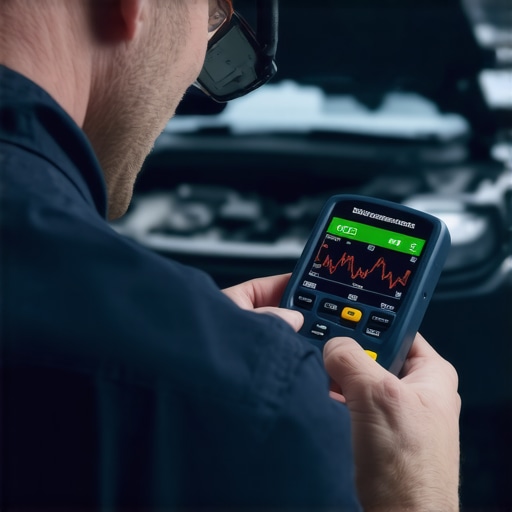
Many technicians encounter what are known as ‘latching faults’ where the vehicle remains in a restricted state despite the physical issue being resolved. Even if a momentary misfire or a brief over-boost is no longer present, the ECU may maintain a restricted performance state until a full drive cycle is completed or a hard reset is performed via a bi-directional scan tool. These ‘shadow codes’ reside in the Non-Volatile Random Access Memory (NVRAM) and act as a persistent safety lock. To clear these, you often need more than a basic code reader; you need to understand the 20 scan tool that actually finds hidden transmission codes to release the software-level lock and restore full throttle authority.
Software-Driven Thermal Guarding for Auxiliary Systems
Sophisticated engine management extends its protective reach far beyond simple coolant temperature monitoring. In vehicles equipped with active aerodynamics, electronic limited-slip differentials, or complex all-wheel-drive systems, the ECM monitors the temperature of the differential fluid and even the power steering rack. If these auxiliary components approach their thermal thresholds during spirited driving, the ‘Performance Derate’ protocol is engaged. This isn’t merely an engine safeguard; it is a holistic vehicle protection strategy. By enforcing a 3,000 RPM ceiling, the system reduces the mechanical load across the entire powertrain, allowing every component to shed heat simultaneously. This inter-module communication ensures that a minor overheating event in the drivetrain doesn’t escalate into a total mechanical catastrophe.
Inter-Module Handshakes and the Complexity of Total System Health
The integration of the Electronic Power Steering (EPS) and the Powertrain Control Module has introduced a new layer of complexity to the 3,000 RPM wall. If the steering angle sensor loses calibration, the car may limit engine power because it can no longer guarantee that the Stability Control system can safely manage a high-speed maneuver. To the driver, it feels like an engine failure, but to the computer, it is a necessary precaution to prevent loss of control. If your RPM issues started after an alignment or a battery swap, you might need to learn how to reset your electronic throttle control without tools or perform a steering angle sweep to satisfy the safety logic. Have you experienced a power loss that felt more like a computer glitch than a mechanical break? Join our community discussion below and share your diagnostic journey to help others bypass these digital hurdles.
Expert Insights & Advanced Considerations
Cyclic Resets Mask Fatal Design Flaws
It is tempting to believe the issue is resolved when an ignition cycle clears a restricted performance mode. However, modern ECUs often perform a ‘soft reset’ that ignores historical faults until specific load parameters are met again. If your vehicle consistently hits a wall after twenty minutes of highway driving, you are likely dealing with a thermal expansion issue in a sensor or a high-pressure fuel pump that is losing efficiency as its internal components heat up. Understanding these patterns is a cornerstone of expert auto repair tips for 2025 that focus on long-term reliability rather than quick fixes.
Stop Replacing Parts Based on Generic Codes
A P0101 code doesn’t always mean the Mass Air Flow sensor is bad; it means the data doesn’t make sense. Professionals look for vacuum leaks or intake obstructions before condemning the electronics. If you find yourself stuck in a loop of failed repairs, it is time to look at the hidden world of vehicle diagnostics to understand the logic behind the error. Often, a physical symptom like a dragging brake can trigger a performance limit without throwing an engine code, which is why you must learn the specific smell that tells you your brakes are dragging to rule out mechanical drag.
#IMAGE_PLACEHOLDER_E#
Voltage Stability is the Foundation of Performance
High-speed combustion requires high-speed electrical responses. Even a microscopic amount of corrosion on a ground strap can drop the available voltage just enough to delay injector timing at high RPM. Before committing to a major repair, knowing how to identify a bad ground wire without a multimeter is a skill that saves thousands in unnecessary component replacements. This is especially critical in vehicles where dashboard lights flicker when you hit a bump, signaling a loose connection that could be poisoning the ECU data stream.
Curated Expert Resources
For those looking to move beyond basic troubleshooting, we recommend the following professional-grade resources:
ASE Advanced Engine Performance (L1) Guidelines: This is the gold standard for understanding how integrated powertrain systems interact under failure conditions and is essential for mastering top auto repair techniques every car owner should know.
Bosch Automotive Handbook: The definitive technical reference for the CAN bus architecture and fuel injection logic that governs modern ‘limp home’ strategies.
NHTSA Safety Bulletins: Essential for identifying if your specific RPM limitation is part of a known safety recall or software update related to Drive-by-Wire systems.
Reliable Auto Cares Diagnostic Archive: A deep-dive collection of real-world case studies, including transmission troubles how to save time and money with proven repairs, tailored for DIY enthusiasts and professionals alike.
Final Expert Perspective
Navigating a restricted performance mode requires a transition from mechanical intuition to digital logic. Whether the 3,000 RPM ceiling is triggered by a physical blockage in a catalytic converter or a communication breakdown between control modules, the engine is effectively pleading for intervention. By treating the symptoms as data points rather than just frustrations, you can systematically restore your vehicle’s full potential. If you are struggling to find the root cause, please visit our contact-us page for specialized advice or consult our guide on how to find reliable car service near you in 2025 to ensure your vehicle receives the advanced care it deserves.