When you observe your headlights flickering or dimming during a sharp turn at low speeds, you aren’t just seeing a minor quirk; you are witnessing a momentary deficit in your vehicle’s electrical reserve. This phenomenon is particularly prevalent in vehicles equipped with Electronic Power Steering (EPS), which has largely replaced traditional hydraulic systems to improve fuel efficiency and enable advanced driver assistance features. As an expert in auto repair and vehicle diagnostics, I have seen how these systems, while beneficial, place an immense transient load on the charging system that older alternators and aging batteries struggle to buffer. Identifying the root cause requires a systematic approach to the vehicle’s electrical architecture.
Modern Steering Systems Strain Your Car’s Electrical Backbone
In a modern car service environment, we often find that the EPS motor is one of the highest current-drawing components in the vehicle. Unlike a hydraulic pump that runs constantly, an electric steering motor demands a massive spike in amperage the moment the driver initiates a turn. This sudden surge can momentarily exceed the alternator’s immediate output, especially at idle when the engine RPM is low. When the alternator cannot meet this peak demand, the system pulls from the battery. If the battery is aged or the internal resistance is high, the voltage across the entire bus drops, causing the resistive filaments or LED drivers in your headlights to dim. This isn’t merely a battery issue; it is a failure of the charging system to maintain a stable voltage under load.
Why the Alternator Struggles Under Heavy Steering Loads
The alternator is designed to provide a steady flow of current, but its efficiency curve is heavily dependent on rotation speed. At a stoplight, your engine may only be turning at 700-800 RPM, meaning the alternator is at its weakest point. When you crank the wheel to pull into a parking spot, the EPS might demand upwards of 60 to 100 amps for a split second. If you suspect your charging system is flagging, you can how to test your car battery with a simple headlight trick to see if the voltage drop is within acceptable parameters. In many cases, a failing voltage regulator inside the alternator is the culprit, unable to react quickly enough to the shifting load demands of the steering rack.
Is Your Battery Dying or Just Overwhelmed by the EPS?
The battery acts as a massive capacitor in your car’s electrical circuit, smoothing out spikes and filling in the gaps when the alternator falls short. As a battery ages, its ability to deliver high cold-cranking amps (CCA) and its reserve capacity diminish. Professional vehicle diagnostics involve testing the battery’s conductance to ensure it can handle the steering motor’s transient requests. According to standards set by the Society of Automotive Engineers (SAE), automotive charging systems must maintain a specific voltage range to ensure the longevity of sensitive electronic control units. If your battery is on its last legs, the headlights become a visual indicator of a system operating on the edge of failure.
Small Grounding Faults Lead to Large Visual Distortions
Resistance is the enemy of any electrical circuit. Often, the issue isn’t the battery or the alternator themselves, but the path the electricity must take to return to the chassis. Corroded ground straps or loose connections increase resistance, which exacerbates voltage drops during high-load events like steering. It is vital to inspect the hidden ground wire that causes intermittent starting issues as it is frequently the same culprit behind dimming lights. A clean, tight connection to the frame ensures that the return path has minimal impedance, allowing the electrical system to recover faster from the steering motor’s draw. For those looking to dive deeper into the complexities of modern sensors and electronics, I highly recommend you explore our guide on the hidden world of vehicle diagnostics to better understand how your car’s computers manage these power-hungry systems.
The ECU Logic Behind Forced Load Shedding
In many vehicles produced after 2015, the Power Control Module (PCM) or Engine Control Unit (ECU) manages the alternator output through a Pulse Width Modulation (PWM) signal. This is not your grandfather’s charging system where the alternator pumped out max voltage regardless of need. Instead, the computer calculates the exact energy requirements of the car to maximize fuel economy. When the Electronic Power Steering demands a high-current surge, the ECU may intentionally perform ‘load shedding.’ This means it temporarily sacrifices non-critical power users, such as headlight intensity or blower motor speed, to ensure the steering rack has enough current to assist your turn. If this is happening frequently, it might be due to the one sensor that ruins your gas mileage without triggering a warning light, as a failing manifold or oxygen sensor can cause the engine to struggle at idle, reducing the alternator’s torque reserve.
Could a Glazed Serpentine Belt Be the Phantom Culprit?
Mechanical failures often masquerade as electrical ghosts. The alternator is driven by the serpentine belt, which must maintain a specific tension to transfer the engine’s rotational energy into electrical power. When the EPS motor kicks in, it creates significant electromagnetic drag within the alternator, which in turn places a massive physical load on the belt. If your belt is old, glazed, or the tensioner has weakened, the belt may slip silently. You won’t always hear a scream, but that micro-slip is enough to drop the alternator’s RPM below the threshold needed to sustain full voltage. If you’ve noticed any noise from your engine bay during cold starts, check out our guide on how to quiet a screeching fan belt for less than the cost of lunch to see if a simple mechanical adjustment can stabilize your electrical output.

Stop Chasing Shadows with a Dedicated Voltage Drop Test
Expert-level diagnostics require more than just a battery tester. According to the National Institute for Automotive Service Excellence (ASE), a ‘voltage drop’ test is the gold standard for finding hidden resistance that a standard multimeter reading might miss. By measuring the voltage difference between the battery’s positive post and the alternator’s output terminal while the car is running and the steering is being turned, you can identify if the wiring itself is the bottleneck. High resistance in these cables causes the electricity to convert into heat rather than light, leading to the dimming you see in your headlights. It is also essential to perform how to spot a bad ground wire before it kills your new battery, as a weak ground can cause erratic behavior across the entire dashboard.
Why Unstable Power Risks More Than Just Dim Headlights
Ignoring these visual warnings can lead to more expensive repairs down the road. Sensitive control modules are designed to operate within a narrow voltage window. When the voltage dips and spikes every time you navigate a parking lot, it stresses the internal capacitors of your car’s computers. This instability can manifest in strange ways; you might even experience why your dashboard lights flicker every time you hit a pothole because the system is already on the verge of a brown-out. Maintaining a robust electrical system is about more than just seeing the road; it’s about protecting the digital brain of your vehicle. If you’ve dealt with a stubborn electrical ghost in your steering system, drop a comment below—your fix might help another driver avoid a costly and unnecessary alternator replacement.
S t o p D i r t y E l e c t r i c i t y B e f o r e I t S c r a m b l e s Y o u r S e n s i t i v e M o d u l e s
W h i l e w e o f t e n f o c u s o n t h e q u a n t i t y o f v o l t a g e, t h e q u a l i t y o f t h a t p o w e r i s e q u a l l y c r i t i c a l. I n s i d e y o u r a l t e r n a t o r, a b r i d g e r e c t i f i e r c o n t a i n i n g s e v e r a l d i o d e s c o n v e r t s a l t e r n a t i n g c u r r e n t (A C) i n t o t h e d i r e c t c u r r e n t (D C) y o u r c a r r e q u i r e s. W h e n o n e o f t h e s e d i o d e s b e g i n s t o l e a k o r f a i l s e n t i r e l y, i t i n t r o d u c e s ‘A C r i p p l e’ i n t o t h e e l e c t r i c a l s y s t e m. T h i s i s n’t j u s t a m i n o r f l u c t u a t i o n; i t’s h i g h – f r e q u e n c y i n t e r f e r e n c e t h a t c a n w r e a k h a v o c o n t h e E l e c t r o n i c P o w e r S t e e r i n g (E P S) c o n t r o l l e r. B e c a u s e t h e E P S r e l i e s o n p r e c i s e p u l s e – w i d t h m o d u l a t e d s i g n a l s t o d e t e r m i n e h o w m u c h t o r q u e t o a p p l y t o t h e r a c k, t h i s e l e c t r i c a l n o i s e c a n l e a d t o i n c o n s i s t e n t s t e e r i n g f e e l o r r a p i d f l i c k e r i n g i n L E D h e a d l i g h t d r i v e r s t h a t a r e s e n s i t i v e t o f r e q u e n c y s h i f t s.
W h y D o e s M y S t e e r i n g W h e e l F e e l H e a v i e r W h e n t h e L i g h t s D i m?
T h i s i s a c l a s s i c s y m p t o m o f t h e v e h i c l e’s c o m p u t e r p r i o r i t i z i n g e l e c t r i c a l s t a b i l i t y o v e r d r i v e r c o m f o r t. W h e n t h e s t e e r i n g a n g l e s e n s o r d e t e c t s a r a p i d i n p u t a t l o w s p e e d s a n d t h e v o l t a g e d r o p s b e l o w a c a l i b r a t e d t h r e s h o l d (o f t e n a r o u n d 1 1.5 t o 1 2 v o l t s), t h e E P S c o n t r o l m o d u l e m a y r e d u c e t h e m o t o r’s p o w e r o u t p u t t o p r e v e n t a t o t a l s y s t e m b r o w n – o u t. T h i s ‘l i m p – h o m e’ l o g i c e n s u r e s t h a t y o u d o n’t l o s e t h e e n g i n e o r c r i t i c a l s a f e t y s y s t e m s l i k e A B S, b u t i t r e s u l t s i n a s u d d e n, h e a v y s t e e r i n g f e e l e x a c t l y w h e n y o u n e e d t h e a s s i s t a n c e m o s t. I t i s t h e d i g i t a l e q u i v a l e n t o f c a t c h i n g y o u r b r e a t h d u r i n g a s p r i n t; t h e c a r i s i n t e n t i o n a l l y s l o w i n g d o w n t h e p o w e r s t e e r i n g’ s c o n s u m p t i o n t o k e e p t h e h e a d l i g h t s a n d i g n i t i o n s y s t e m a l i v e.
K i l l t h e T r a n s i e n t V o l t a g e D r o p W i t h a n A G M U p g r a d e
F o r d r i v e r s w h o h a v e a d d e d a f t e r m a r k e t a c c e s s o r i e s o r w h o o p e r a t e v e h i c l e s i n e x t r e m e c l i m a t e s, t h e f a c t o r y – s p e c f l o o d e d l e a d – a c i d b a t t e r y m a y s i m p l y b e t h e b o t t l e n e c k. A b s o r b e d G l a s s M a t (A G M) b a t t e r i e s o f f e r a s i g n i f i c a n t a d v a n t a g e b e c a u s e o f t h e i r l o w e r i n t e r n a l r e s i s t a n c e a n d s u p e r i o r a b i l i t y t o h a n d l e d e e p d i s c h a r g e s. A c c o r d i n g t o d a t a f r o m t h e B a t t e r y C o u n c i l I n t e r n a t i o n a l (B C I) < / a >, t h e i n t e r n a l r e s i s t a n c e o f a s t a n d a r d f l o o d e d b a t t e r y i n c r e a s e s s i g n i f i c a n t l y a s i t a g e s, w h i c h d i r e c t l y l i m i t s i t s a b i l i t y t o d e l i v e r t h e i n s t a n t a n e o u s h i g h – a m p e r a g e s u r g e s r e q u i r e d b y a n E P S m o t o r a t f u l l l o c k. B y s w i t c h i n g t o a n A G M b a t t e r y, y o u p r o v i d e a m o r e r o b u s t ‘b u f f e r’ t h a t c a n r e s p o n d t o t h e s t e e r i n g r a c k’ s d e m a n d s i n m i l l i s e c o n d s, o f t e n e l i m i n a t i n g t h e h e a d l i g h t d i m m i n g w i t h o u t n e e d i n g t o r e p l a c e t h e a l t e r n a t o r i t s e l f.
B e e f U p Y o u r W i r i n g t o S u p p o r t t h e E x t r a C u r r e n t
E v e n t h e m o s t p o w e r f u l a l t e r n a t o r c a n n o t d e l i v e r c u r r e n t t h r o u g h a s t r a w. M a n y m a n u f a c t u r e r s u s e t h e m i n i m u m g a u g e w i r e n e c e s s a r y t o s a v e w e i g h t a n d c o s t, c r e a t i n g a n a t u r a l p o i n t o f r e s i s t a n c e. E n t h u s i a s t s o f t e n p e r f o r m w h a t i s k n o w n a s t h e ‘B i g T h r e e’ u p g r a d e t o s o l v e t h e s e s y s t e m i c i s s u e s. T h i s i n v o l v e s a d d i n g o r r e p l a c i n g t h r e e c r i t i c a l c a b l e s w i t h h i g h – g a u g e w i r i n g: t h e a l t e r n a t o r – t o – b a t t e r y p o s i t i v e c a b l e, t h e e n g i n e – b l o c k – t o – c h a s s i s g r o u n d, a n d t h e b a t t e r y – n e g a t i v e – t o – c h a s s i s g r o u n d. #IMAGE_PLACE_HOLDER_C# T h i s m o d i f i c a t i o n r e d u c e s t h e t o t a l c i r c u i t r e s i s t a n c e, a l l o w i n g t h e a l t e r n a t o r t o r e p l e n i s h t h e b a t t e r y a n d p o w e r t h e s t e e r i n g r a c k w i t h f a r l e s s v o l t a g e d r o p. I f y o u h a v e a l r e a d y t r i e d a h i g h – o u t p u t a l t e r n a t o r s w a p t o s o l v e y o u r f l i c k e r i n g i s s u e s, s h a r e y o u r r e s u l t s i n t h e c o m m u n i t y f o r u m — d i d i t f i n a l l y s t a b i l i z e y o u r v o l t a g e o r d i d y o u f i n d a n o t h e r b o t t l e n e c k? T h e t h i c k n e s s o f y o u r c o p p e r i s o f t e n m o r e i m p o r t a n t t h a t t h e r a t i n g o n y o u r a l t e r n a t o r ‘ s c a s i n g.
H e a t S o a k a n d t h e S i l e n t D e a t h o f C h a r g i n g E f f i c i e n c y
T e m p e r a t u r e p l a y s a m a s s i v e r o l e i n h o w y o u r c a r m a n a g e s p o w e r. A s t h e e n g i n e b a y h e a t s u p d u r i n g a l o n g c o m m u t e o r w h i l e i d l i n g i n t r a f f i c, t h e r e s i s t a n c e i n t h e c o p p e r w i n d i n g s o f t h e a l t e r n a t o r i n c r e a s e s. T h i s t h e r m a l s t r e s s r e d u c e s t h e a l t e r n a t o r ‘ s m a x i m u m o u t p u t e x a t l y w h e n t h e c o o l i n g f a n s a r e l i k e l y r u n n i n g a t f u l l s p e e d, f u r t h e r t a x i n g t h e s y s t e m. W h e n y o u c o m b i n e t h e l o a d o f t h e r a d i a t o r f a n s a n d a h i g h – d e m a n d t u r n o n t h e E P S r a c k, y o u c r e a t e a p e r f e c t s t o r m o f e l e c t r i c a l d e m a n d t h a t c a n o v e r w h e l m e v e n a h e a l t h y c h a r g i n g s y s t e m. M o n i t o r i n g t h e l i v e d a t a f r o m y o u r v e h i c l e ’ s c h a r g i n g s y s t e m d u r i n g t h e s e h e a t – s o a k e d c o n d i t i o n s i s t h e o n l y w a y t o s e e t h e t r u e p e r f o r m a n c e c u r v e o f y o u r h a r d w a r r …
hardware. When you dig into the data streams of a vehicle equipped with a ‘smart’ charging system, you often see the alternator output drop significantly during cruising to minimize parasitic drag on the engine. This strategy, while beneficial for meeting modern fuel economy standards, often leaves the battery in a partially discharged state. When you suddenly demand a high-amperage surge for a quick steering maneuver, the battery lacks the ‘surface charge’ necessary to bridge the gap, leading to a noticeable visual dip in your lighting. This is a design trade-off that modern technicians must account for when differentiating between ‘programmed’ behavior and a genuine component failure.
Why Your Smart Alternator Might Be Too Clever for Its Own Good
In systems managed by a LIN (Local Interconnect Network) bus, the alternator is no longer an independent unit but a slave to the Body Control Module (BCM). According to technical documentation from Delphi Technologies, these smart systems can intentionally disable the alternator during certain driving conditions to reduce engine load. If your steering event happens to coincide with a specific ECU-commanded charging inhibition, the dimming is a byproduct of high-efficiency software logic rather than a hardware fault. Distinguishing between this intentional behavior and a failing regulator requires a deep dive into the alternator’s duty cycle data via a high-end scan tool.
Catch the Voltage Ghost with an Oscilloscope
A standard digital multimeter is a fantastic tool, but it updates its display far too slowly to capture the transient voltage spikes that occur when an EPS motor engages. To truly visualize the health of your electrical backbone, you must use a lab-grade oscilloscope. By graphing the voltage directly at the headlight connector or the EPS power feed, you can see if the drop is a clean ‘dip’—indicating a capacity issue—or a ‘noisy’ waveform, which suggests a failing diode or electromagnetic interference from the motor brushes. 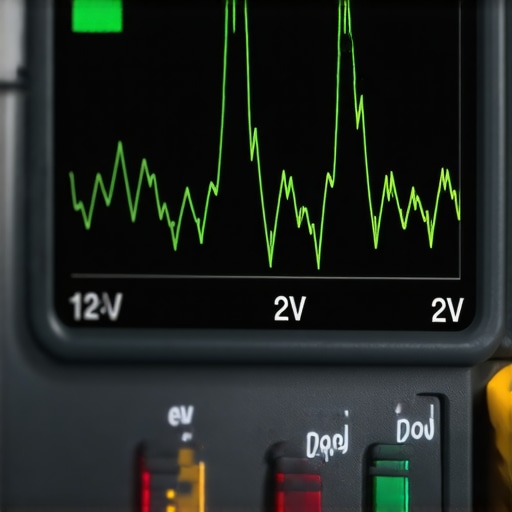 This level of precision allows you to stop guessing and start replacing only the parts that are actually failing.
Can a faulty steering angle sensor cause electrical flickering?
While it may seem unrelated, a steering angle sensor or torque sensor providing erratic data to the EPS controller can cause the motor to ‘hunt’ for its position. This rapid oscillation in demand creates a high-frequency toggling of the electrical load, manifesting as a strobe-like flicker in your headlights. This is often mistaken for a failing alternator when the root cause is actually a sensor calibration issue. Technicians should always check the ‘Steering Torque’ PID for smooth, linear transitions before condemning the charging system.
The Copper Tax Your Manufacturer Refused to Pay
Modern vehicle weight reduction has ushered in the era of ‘thin-wall’ wiring. While this saves fuel, it increases the inherent resistance in the circuit, especially over long runs from a trunk-mounted battery to a front-mounted steering rack. Performance enthusiasts often solve persistent dimming by bypassing the factory harness with a dedicated 4-gauge oxygen-free copper line for the EPS system. This modification reduces the ‘voltage sag’ during high-load events, providing the steering motor with the stable power it craves. If you have successfully diagnosed a ‘phantom’ dimming issue using a lab scope or a wiring upgrade, join the discussion below—your specific fix could be the missing piece for another frustrated driver.
Expert Insights & Advanced Considerations
Stop Treating Your Battery Like a Passive Component
In the world of high-level auto repair, we view the battery as a dynamic reservoir rather than a simple storage tank. Most drivers assume a battery either works or it doesn’t, but professional vehicle diagnostics reveal that internal plate sulfation can create a high-impedance barrier. This barrier allows the car to start perfectly but prevents the battery from absorbing or releasing the massive current spikes required by Electronic Power Steering. If your lights dim, you aren’t just seeing a low charge; you are seeing a battery that can no longer act as a high-speed buffer for the alternator.
Ditch the Static Multimeter Mentality
A multimeter is often the first tool pulled from the box, yet it is frequently the most misleading in complex electrical cases. Because digital multimeters average their readings over several milliseconds, they are ‘blind’ to the sub-millisecond voltage drops that cause LED drivers to flicker. Experts rely on lab scopes to capture these transients. To get a better handle on these invisible issues, I recommend learning how to identify a bad ground wire without a multimeter to find the mechanical resistance that tools often overlook.
Recognize the Limitations of Factory Grounding
Manufacturers build cars to a price point, which often means grounding straps are just ‘good enough’ for stock conditions. Over time, oxidation at the chassis mating point turns a perfect connection into a resistor. During a car service, we frequently find that adding a secondary ground from the engine block to the strut tower eliminates flickering that three previous shops couldn’t solve. This is a foundational step in any performance-oriented auto repair strategy.
Curated Expert Resources
The ASE Electrical Systems Study Guide: This is the gold standard for anyone wanting to master the relationship between amperage draw and voltage drop in modern multiplexed systems. It provides the theoretical framework for why specific components fail under transient loads.
Pico Technology Automotive Application Notes: For those ready to move beyond basic testing, Pico’s library of oscilloscope waveforms provides a visual ‘map’ of what a healthy EPS motor draw should look like versus one with a failing internal controller.
Battery Council International (BCI) Technical Manuals: These resources offer deep dives into chemical discharge rates and how temperature extremes affect the ability of a battery to support high-current steering racks.
Reliable Auto Cares Diagnostic Archive: For practical, real-world applications of these theories, explore our expert auto repair tips for 2025 to stay ahead of the curve as vehicle electronics become increasingly complex.
Final Expert Perspective
Addressing flickering headlights is rarely about a single failing part; it is about restoring the equilibrium of the entire charging architecture. Whether the root cause is a ‘smart’ alternator being too conservative with its output or a grounding point that has succumbed to the elements, the solution lies in precision measurement. By utilizing advanced vehicle diagnostics and high-quality components like AGM batteries, you ensure your car’s electrical backbone can handle the demands of modern steering technology. If you are struggling with a persistent drain that seems to defy logic, you might find the answer in our guide on the simple trick to find a parasitic battery drain. We invite you to share your diagnostic breakthroughs in the comments—your experience with specialized scan tools or wiring upgrades is invaluable to our professional community.