The Single Sharp Snap of Solenoid Engagement
When an internal combustion engine refuses to turn over, the auditory signature it leaves behind is often the most precise diagnostic tool available to a technician. While many drivers mistake a non-start for a simple battery failure, the specific metallic ‘snap’ of a starter solenoid engaging without subsequent motor rotation indicates a distinct failure mode within the electrical subsystem. This isn’t just about a dead battery; it is about a breakdown in the electromechanical conversion process that requires advanced vehicle diagnostics to isolate. This lone click occurs when the solenoid’s plunger moves forward to engage the flywheel, but the internal motor lacks the torque—or the electrical continuity—to rotate the crankshaft. In the world of professional auto repair, we distinguish this from the rapid chattering sound often associated with a depleted lead-acid battery. Before you assume the worst, it is crucial to how to tell if your battery is truly dying or just has dirty terminals, as high resistance at the posts can mimic a mechanical starter failure.
Differentiate Between Amperage Starvation and Component Seizure
In high-level car service environments, the diagnostic process begins by analyzing the current draw. If you hear a single click and your dashboard lights remain bright, the issue likely resides within the starter motor’s internal brushes or a flat spot on the armature. However, if the lights dim significantly during that click, you are likely dealing with high resistance or a mechanical seizure. According to research published by SAE International, the degradation of copper contact plates within the solenoid is the primary driver of high-resistance failure in starting systems. This wear eventually prevents the high-amperage current from reaching the motor windings, effectively turning your starter into an expensive paperweight. Understanding these nuances is a key part of professional auto repair and prevents the unnecessary replacement of healthy components. If you find yourself stranded, there are ways to how to bypass a faulty starter motor to get home, but these should be considered temporary emergency measures only.
Why Does Your Starter Only Seize Up After a Long Highway Drive?
Heat soak is a phenomenon well-known to master technicians but often baffling to the average car owner. When a vehicle runs for an extended period, the heat generated by the transmission and engine migrates to the starter motor, which is often tucked into a tight, poorly ventilated space. Heat increases electrical resistance. A starter motor that functions perfectly when cold may fail to engage when hot because its worn internal components can no longer overcome the increased resistance. This specific scenario is a hallmark of a starter that is in its final stages of life. If you experience this, you can sometimes stop the clicking sound when you turn your key with this relay trick to get the motor spinning one last time, but permanent repair is inevitable.
Advanced Bench Testing vs. In-Situ Diagnostics
Relying solely on an auto parts store’s bench test can be misleading. A starter under no load may spin freely, yet fail when tasked with the 150-400 amps required to crank a high-compression engine. A comprehensive vehicle diagnostics approach involves a voltage drop test on the starter circuit while the component is still installed. This identifies if the ‘click’ is caused by a faulty ground, a failing ignition switch, or the starter itself. If your vehicle is exhibiting these symptoms, it’s time to move beyond guesswork and consult a professional for a comprehensive vehicle diagnostics check to prevent a total breakdown. Proactive car service ensures that these minor auditory warnings don’t turn into major logistical headaches.
The Silent Saboteur of Your Starting System
While the starter motor often takes the blame for a failure to crank, a seasoned technician knows that the electrical circuit is only as strong as its weakest connection—and that connection is frequently the ground. Corroded ground straps or loose engine-to-chassis bonds create high resistance that starves the starter of the amperage it needs to overcome the engine’s compression. Over time, galvanic corrosion can form an insulating layer between the ground cable and the engine block, effectively ghosting the starter motor. This is why learning how to spot a bad ground wire before it kills your new battery is a fundamental skill for any DIYer or professional. If the return path to the battery is compromised, the electricity will find ‘alternative’ routes through sensitive components like transmission shift cables or throttle linkages, potentially causing catastrophic damage. Identifying the hidden ground wire that causes intermittent starting issues is often the difference between a five-minute fix and a five-hundred-dollar mistake in parts.
Is Your Transmission Blocking Your Starter From Engaging?
Sometimes the ‘click’ you hear isn’t the solenoid at all, but the relay clicking while the neutral safety switch (NSS) prevents the high-power circuit from closing. In vehicles equipped with an automatic transmission, the computer must verify the car is in Park or Neutral before it allows the starter to engage. A misaligned shift linkage or a failing range sensor can send a false signal, leading to a frustrating intermittent no-start condition. If you find that your car only starts if you jiggle the shifter, you are likely looking at transmission failures decoded in the form of a dying safety sensor. On newer push-to-start models, this diagnostic path also involves the Brake Pedal Position (BPP) sensor; if the car doesn’t see the brakes applied, the starter relay will never trigger. This safety logic is deeply integrated into modern vehicle diagnostics and requires specific scan tools to monitor live data from the Transmission Control Module (TCM). 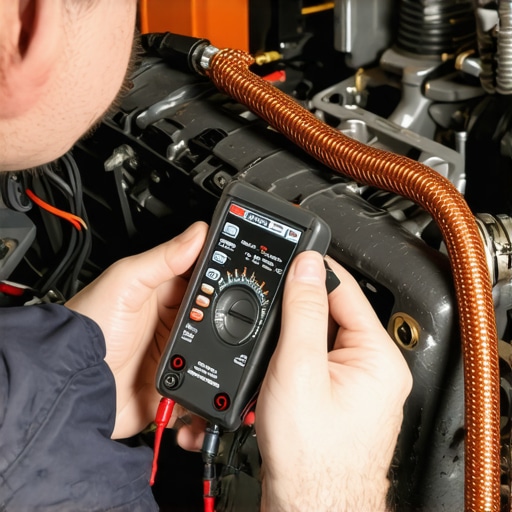
Why 12 Volts Isn’t Always Enough to Start
A common misconception in auto repair is that a multimeter reading of 12.6 volts indicates a ‘good’ battery. However, surface voltage is a poor indicator of cranking capacity. A battery can show 12 volts but fail under the massive 300-amp load required during the starting cycle. This phenomenon is often exacerbated by the hidden electrical drain killing your battery while the car is parked. Modern Engine Control Units (ECUs) have a strict voltage floor; if the system drops below 9.6 volts during cranking, the computer may shut down the fuel injectors or ignition coils as a protective measure. According to the National Institute for Automotive Service Excellence (ASE), even a minor parasitic draw can degrade a battery’s reserve capacity over time, leading to a ‘lazy’ starter. Additionally, in colder climates, the chemical reaction within the battery slows significantly, making it even harder for a compromised system to deliver the high-amperage burst required to turn over a thick, cold oil-filled engine. Professional car service includes a load test that simulates the actual stress of starting, revealing internal cell degradation that a standard voltmeter would miss. If you have experienced a mysterious ‘no-start’ that resolved itself after a few minutes, leave a comment below with your car’s symptoms—our experts are here to help you troubleshoot the noise!
Stop the Grinding Before You Ruin Your Flywheel
When you hear a screeching or metallic grinding sound instead of a smooth engine turnover, the diagnostic path has moved from the electrical to the purely mechanical. The starter motor utilizes a pinion gear that must physically mesh with the ring gear on your engine’s flywheel or flexplate. If the solenoid’s shift lever is worn or the return spring has lost its tension, the teeth may only partially engage, leading to high-speed metal-on-metal abrasion. In the realm of advanced auto repair, this is a critical junction; ignoring this sound can lead to a ‘burred’ flywheel, a repair that often requires pulling the entire transmission to fix.  Professional vehicle diagnostics frequently involve using a borescope to view the ring gear through the starter mounting hole, ensuring that the teeth haven’t been flattened or ‘mushed’ by repeated misfires. If you have been hearing this noise, don’t wait for a total failure; check out our guide on identifying electrical faults before they cause mechanical damage.
How One-Touch Smart Start Logic Changes Everything
Modern vehicles have largely moved away from direct-linkage ignition switches to ‘Smart Start’ systems. When you press the start button, you aren’t actually completing a high-current circuit; you are sending a digital request to the Powertrain Control Module (PCM). The PCM then evaluates dozens of parameters—from fuel rail pressure to anti-theft ‘handshakes’—before it decides to ground the starter relay. This digital layer adds a new dimension to car service. If your vehicle is unresponsive despite a perfect battery, the fault could lie in the Immobilizer system or a corrupted CAN-bus signal rather than the starter motor itself. According to technical documentation from Bosch Mobility, the precision required for modern start-stop systems means these components are rated for over 250,000 cycles, yet they remain highly sensitive to voltage ripples that older systems would simply ignore.
Can a faulty crankshaft position sensor prevent the starter from engaging?
While it seems counterintuitive, many modern European engine management systems will actually inhibit the starter relay if the crankshaft position sensor (CKP) returns an implausible signal during the initial ‘wake up’ phase. The computer essentially refuses to crank an engine it cannot properly synchronize with. This is where high-end vehicle diagnostics tools become mandatory; you need to see if the ‘Start Enable’ bit is toggled to ‘Yes’ within the ECU data stream. If you’ve been chasing a ‘no-click’ issue on a late-model vehicle, have you checked your sensor pulse yet? Leave a comment below with your car’s year and model if you’re stuck, and our team will help you find the specific sensor logic for your build.
Carbon Dust and the Slow Death of Internal Commutators
The internal anatomy of the motor itself is where the final breakdown occurs. Inside the casing, carbon brushes ride against a spinning commutator to transfer massive amounts of current. Over years of intensive car service, these brushes wear down, leaving a fine layer of conductive carbon dust throughout the housing. This dust can create internal micro-shorts or increase resistance to the point where the motor spins too slowly to start the engine, a condition commonly known as a ‘lazy starter.’ Have you ever noticed your car starts better after you tap the starter with a hammer? You’re actually physically jarring those worn brushes back into contact with the commutator—a sure sign that an auto repair appointment is overdue. While the mechanical and electrical components represent the bulk of the system, the logic governing exactly how much current is allowed to reach these brushes is increasingly tied to the vehicle’s security architecture, specifically the…
Why the Security Handshake Stops Your Starter
The security architecture mentioned earlier is often governed by the Immobilizer Control Module, which serves as a digital gatekeeper between your ignition switch and the starter motor. When you insert a modern transponder key or enter with a proximity fob, a complex challenge-response exchange occurs. If the rolling code provided by the key does not match the expected value stored in the Body Control Module (BCM), the ‘Start Enable’ bit is never sent to the engine computer. In high-level vehicle diagnostics, we frequently see perfectly functional starters replaced because the technician failed to check for security-related fault codes. This digital lockout mimics a mechanical failure but requires a software reset or key reprogramming rather than a wrench. 
Stop Chasing Ghosts in the CAN-Bus Network
Modern auto repair is as much about data integrity as it is about mechanical torque. The starter relay is no longer a simple mechanical switch; it is a node on a Controller Area Network (CAN). If a high-priority module—such as the transmission control unit or the ABS module—is ‘screaming’ data errors across the bus, the Powertrain Control Module may delay the starter engagement to protect system integrity. According to the International Automotive Technicians Network (iATN), ‘ghost’ starting issues are frequently traced back to electromagnetic interference (EMI) or harness chafing that disrupts these micro-second communications. Professional car service now involves using an oscilloscope to ‘see’ the health of these data packets before condemning any physical hardware.
Can a Failing Alternator Diode Actually Mimic a Dead Starter?
Surprisingly, yes. If one of the diodes in the alternator’s rectifier bridge fails, it can allow alternating current (AC) to ‘leak’ into the vehicle’s direct current (DC) system. This ‘AC ripple’ acts as electrical noise that can confuse the sensitive logic gates inside the starter relay or the PCM. You might hear a erratic clicking or experience a total ‘no-start’ condition that disappears once the alternator is disconnected. This is a classic example of why a holistic approach to vehicle diagnostics is essential; the component that isn’t working (the starter) is often just the victim of a component that is failing elsewhere (the alternator).
The Intelligent Battery Sensor Is Watching You
On late-model vehicles, look closely at the negative battery terminal and you will likely find a small black box known as the Intelligent Battery Sensor (IBS). This device monitors the State of Charge (SoC), State of Health (SoH), and internal resistance of the battery in real-time. If the IBS detects that the battery’s reserve capacity has dipped below a specific threshold, it will proactively disable non-essential electrical consumers and may even prevent the starter from engaging to ensure there is enough ‘buffer’ to keep the vehicle’s memory alive. In the world of premium car service, replacing a battery now requires ‘coding’ the new unit to the IBS so the charging logic can reset. Failing to do this can lead to a premature ‘no-click’ condition, even with a brand-new battery under the hood. Have you encountered a mysterious starting issue that standard tests couldn’t find? Share your car’s behavior in the comments below, and let’s decode the data together.
The Single Sharp Snap of Solenoid Engagement
When an internal combustion engine refuses to turn over, the auditory signature it leaves behind is often the most precise diagnostic tool available to a technician. While many drivers mistake a non-start for a simple battery failure, the specific metallic ‘snap’ of a starter solenoid engaging without subsequent motor rotation indicates a distinct failure mode within the electrical subsystem. This isn’t just about a dead battery; it is about a breakdown in the electromechanical conversion process that requires advanced vehicle diagnostics to isolate. This lone click occurs when the solenoid’s plunger moves forward to engage the flywheel, but the internal motor lacks the torque—or the electrical continuity—to rotate the crankshaft. In the world of professional auto repair, we distinguish this from the rapid chattering sound often associated with a depleted lead-acid battery. Before you assume the worst, it is crucial to how to tell if your battery is truly dying or just has dirty terminals, as high resistance at the posts can mimic a mechanical starter failure.
Differentiate Between Amperage Starvation and Component Seizure
In high-level car service environments, the diagnostic process begins by analyzing the current draw. If you hear a single click and your dashboard lights remain bright, the issue likely resides within the starter motor’s internal brushes or a flat spot on the armature. However, if the lights dim significantly during that click, you are likely dealing with high resistance or a mechanical seizure. According to research published by SAE International, the degradation of copper contact plates within the solenoid is the primary driver of high-resistance failure in starting systems. This wear eventually prevents the high-amperage current from reaching the motor windings, effectively turning your starter into an expensive paperweight. Understanding these nuances is a key part of professional auto repair and prevents the unnecessary replacement of healthy components. If you find yourself stranded, there are ways to how to bypass a faulty starter motor to get home, but these should be considered temporary emergency measures only.
Why Does Your Starter Only Seize Up After a Long Highway Drive?
Heat soak is a phenomenon well-known to master technicians but often baffling to the average car owner. When a vehicle runs for an extended period, the heat generated by the transmission and engine migrates to the starter motor, which is often tucked into a tight, poorly ventilated space. Heat increases electrical resistance. A starter motor that functions perfectly when cold may fail to engage when hot because its worn internal components can no longer overcome the increased resistance. This specific scenario is a hallmark of a starter that is in its final stages of life. If you experience this, you can sometimes stop the clicking sound when you turn your key with this relay trick to get the motor spinning one last time, but permanent repair is inevitable.
Advanced Bench Testing vs. In-Situ Diagnostics
Relying solely on an auto parts store’s bench test can be misleading. A starter under no load may spin freely, yet fail when tasked with the 150-400 amps required to crank a high-compression engine. A comprehensive vehicle diagnostics approach involves a voltage drop test on the starter circuit while the component is still installed. This identifies if the ‘click’ is caused by a faulty ground, a failing ignition switch, or the starter itself. If your vehicle is exhibiting these symptoms, it’s time to move beyond guesswork and consult a professional for a comprehensive vehicle diagnostics check to prevent a total breakdown. Proactive car service ensures that these minor auditory warnings don’t turn into major logistical headaches.
The Silent Saboteur of Your Starting System
While the starter motor often takes the blame for a failure to crank, a seasoned technician knows that the electrical circuit is only as strong as its weakest connection—and that connection is frequently the ground. Corroded ground straps or loose engine-to-chassis bonds create high resistance that starves the starter of the amperage it needs to overcome the engine’s compression. Over time, galvanic corrosion can form an insulating layer between the ground cable and the engine block, effectively ghosting the starter motor. This is why learning how to spot a bad ground wire before it kills your new battery is a fundamental skill for any DIYer or professional. If the return path to the battery is compromised, the electricity will find ‘alternative’ routes through sensitive components like transmission shift cables or throttle linkages, potentially causing catastrophic damage. Identifying the hidden ground wire that causes intermittent starting issues is often the difference between a five-minute fix and a five-hundred-dollar mistake in parts.
Is Your Transmission Blocking Your Starter From Engaging?
Sometimes the ‘click’ you hear isn’t the solenoid at all, but the relay clicking while the neutral safety switch (NSS) prevents the high-power circuit from closing. In vehicles equipped with an automatic transmission, the computer must verify the car is in Park or Neutral before it allows the starter to engage. A misaligned shift linkage or a failing range sensor can send a false signal, leading to a frustrating intermittent no-start condition. If you find that your car only starts if you jiggle the shifter, you are likely looking at transmission failures decoded in the form of a dying safety sensor. On newer push-to-start models, this diagnostic path also involves the Brake Pedal Position (BPP) sensor; if the car doesn’t see the brakes applied, the starter relay will never trigger. This safety logic is deeply integrated into modern vehicle diagnostics and requires specific scan tools to monitor live data from the Transmission Control Module (TCM). #IMAGE_PLACE_HOLDER_B#
Why 12 Volts Isn’t Always Enough to Start
A common misconception in auto repair is that a multimeter reading of 12.6 volts indicates a ‘good’ battery. However, surface voltage is a poor indicator of cranking capacity. A battery can show 12 volts but fail under the massive 300-amp load required during the starting cycle. This phenomenon is often exacerbated by the hidden electrical drain killing your battery while the car is parked. Modern Engine Control Units (ECUs) have a strict voltage floor; if the system drops below 9.6 volts during cranking, the computer may shut down the fuel injectors or ignition coils as a protective measure. According to the National Institute for Automotive Service Excellence (ASE), even a minor parasitic draw can degrade a battery’s reserve capacity over time, leading to a ‘lazy’ starter. Additionally, in colder climates, the chemical reaction within the battery slows significantly, making it even harder for a compromised system to deliver the high-amperage burst required to turn over a thick, cold oil-filled engine. Professional car service includes a load test that simulates the actual stress of starting, revealing internal cell degradation that a standard voltmeter would miss. If you have experienced a mysterious ‘no-start’ that resolved itself after a few minutes, leave a comment below with your car’s symptoms—our experts are here to help you troubleshoot the noise!
Stop the Grinding Before You Ruin Your Flywheel
When you hear a screeching or metallic grinding sound instead of a smooth engine turnover, the diagnostic path has moved from the electrical to the purely mechanical. The starter motor utilizes a pinion gear that must physically mesh with the ring gear on your engine’s flywheel or flexplate. If the solenoid’s shift lever is worn or the return spring has lost its tension, the teeth may only partially engage, leading to high-speed metal-on-metal abrasion. In the realm of advanced auto repair, this is a critical junction; ignoring this sound can lead to a ‘burred’ flywheel, a repair that often requires pulling the entire transmission to fix. #IMAGE_PLACE_HOLDER_C# Professional vehicle diagnostics frequently involve using a borescope to view the ring gear through the starter mounting hole, ensuring that the teeth haven’t been flattened or ‘mushed’ by repeated misfires. If you have been hearing this noise, don’t wait for a total failure; check out our guide on identifying electrical faults before they cause mechanical damage.
How One-Touch Smart Start Logic Changes Everything
Modern vehicles have largely moved away from direct-linkage ignition switches to ‘Smart Start’ systems. When you press the start button, you aren’t actually completing a high-current circuit; you are sending a digital request to the Powertrain Control Module (PCM). The PCM then evaluates dozens of parameters—from fuel rail pressure to anti-theft ‘handshakes’—before it decides to ground the starter relay. This digital layer adds a new dimension to car service. If your vehicle is unresponsive despite a perfect battery, the fault could lie in the Immobilizer system or a corrupted CAN-bus signal rather than the starter motor itself. According to technical documentation from Bosch Mobility, the precision required for modern start-stop systems means these components are rated for over 250,000 cycles, yet they remain highly sensitive to voltage ripples that older systems would simply ignore.
Can a faulty crankshaft position sensor prevent the starter from engaging?
While it seems counterintuitive, many modern European engine management systems will actually inhibit the starter relay if the crankshaft position sensor (CKP) returns an implausible signal during the initial ‘wake up’ phase. The computer essentially refuses to crank an engine it cannot properly synchronize with. This is where high-end vehicle diagnostics tools become mandatory; you need to see if the ‘Start Enable’ bit is toggled to ‘Yes’ within the ECU data stream. If you’ve been chasing a ‘no-click’ issue on a late-model vehicle, have you checked your sensor pulse yet? Leave a comment below with your car’s year and model if you’re stuck, and our team will help you find the specific sensor logic for your build.
Carbon Dust and the Slow Death of Internal Commutators
The internal anatomy of the motor itself is where the final breakdown occurs. Inside the casing, carbon brushes ride against a spinning commutator to transfer massive amounts of current. Over years of intensive car service, these brushes wear down, leaving a fine layer of conductive carbon dust throughout the housing. This dust can create internal micro-shorts or increase resistance to the point where the motor spins too slowly to start the engine, a condition commonly known as a ‘lazy starter.’ Have you ever noticed your car starts better after you tap the starter with a hammer? You’re actually physically jarring those worn brushes back into contact with the commutator—a sure sign that an auto repair appointment is overdue. While the mechanical and electrical components represent the bulk of the system, the logic governing exactly how much current is allowed to reach these brushes is increasingly tied to the vehicle’s security architecture, specifically the…
Why the Security Handshake Stops Your Starter
The security architecture mentioned earlier is often governed by the Immobilizer Control Module, which serves as a digital gatekeeper between your ignition switch and the starter motor. When you insert a modern transponder key or enter with a proximity fob, a complex challenge-response exchange occurs. If the rolling code provided by the key does not match the expected value stored in the Body Control Module (BCM), the ‘Start Enable’ bit is never sent to the engine computer. In high-level vehicle diagnostics, we frequently see perfectly functional starters replaced because the technician failed to check for security-related fault codes. This digital lockout mimics a mechanical failure but requires a software reset or key reprogramming rather than a wrench. #IMAGE_PLACE_HOLDER_D#
Stop Chasing Ghosts in the CAN-Bus Network
Modern auto repair is as much about data integrity as it is about mechanical torque. The starter relay is no longer a simple mechanical switch; it is a node on a Controller Area Network (CAN). If a high-priority module—such as the transmission control unit or the ABS module—is ‘screaming’ data errors across the bus, the Powertrain Control Module may delay the starter engagement to protect system integrity. According to the International Automotive Technicians Network (iATN), ‘ghost’ starting issues are frequently traced back to electromagnetic interference (EMI) or harness chafing that disrupts these micro-second communications. Professional car service now involves using an oscilloscope to ‘see’ the health of these data packets before condemning any physical hardware.
Can a Failing Alternator Diode Actually Mimic a Dead Starter?
Surprisingly, yes. If one of the diodes in the alternator’s rectifier bridge fails, it can allow alternating current (AC) to ‘leak’ into the vehicle’s direct current (DC) system. This ‘AC ripple’ acts as electrical noise that can confuse the sensitive logic gates inside the starter relay or the PCM. You might hear a erratic clicking or experience a total ‘no-start’ condition that disappears once the alternator is disconnected. This is a classic example of why a holistic approach to vehicle diagnostics is essential; the component that isn’t working (the starter) is often just the victim of a component that is failing elsewhere (the alternator).
The Intelligent Battery Sensor Is Watching You
On late-model vehicles, look closely at the negative battery terminal and you will likely find a small black box known as the Intelligent Battery Sensor (IBS). This device monitors the State of Charge (SoC), State of Health (SoH), and internal resistance of the battery in real-time. If the IBS detects that the battery’s reserve capacity has dipped below a specific threshold, it will proactively disable non-essential electrical consumers and may even prevent the starter from engaging to ensure there is enough ‘buffer’ to keep the vehicle’s memory alive. In the world of premium car service, replacing a battery now requires ‘coding’ the new unit to the IBS so the charging logic can reset. Failing to do this can lead to a premature ‘no-click’ condition, even with a brand-new battery under the hood. Have you encountered a mysterious starting issue that standard tests couldn’t find? Share your car’s behavior in the comments below, and let’s decode the data together.
Precision Strategies for Advanced Troubleshooting
Stop Guessing and Start Measuring Voltage Drop
A static voltage reading tells you almost nothing about a circuit’s ability to carry current. If you have been hunting for the source of a single click, you must perform a voltage drop test while the circuit is under load. This method reveals high resistance that a standard resistance test would miss due to the small amount of current used by a multimeter. To master this, you can learn how to test your car battery with a simple headlight trick to see if your supply remains stable when the starter attempts to engage. #IMAGE_PLACE_HOLDER_E#
Why Cheap Starters Cost More in the Long Run
Opting for a bargain-basement remanufactured starter is a common mistake in auto repair. These units often reuse worn solenoids or armatures that are barely within tolerance, leading to failure shortly after the warranty expires. High-quality car service demands OEM or premium-tier components that have been tested for thermal resistance and brush longevity. Saving fifty dollars today often costs five hundred dollars in towing fees tomorrow.
Protect Your Solenoid From Heat Soak
In high-performance or heavy-duty applications, the starter is often located near the exhaust manifold. Heat soak is the enemy of electrical components. Installing a reflective heat shield or a thermal wrap can drop internal starter temperatures by as much as 50 degrees, significantly extending the life of the solenoid contacts. This proactive step prevents intermittent starting issues after long drives, especially in vehicles with complex transmission cooling lines that limit airflow around the motor.
Authority Resources for Master Technicians
To deepen your expertise beyond the basics, consult these industry-standard resources used by top-tier automotive professionals: iATN (International Automotive Technicians Network) provides a database of millions of real-world repair cases and verified oscilloscope waveforms for identifying rare electrical faults. SAE International offers technical papers that define the engineering standards for high-amperage starting systems and data-bus integrity. Bosch Mobility Solutions provides the foundational documentation for modern CAN-bus starter logic and start-stop system efficiency. ASE (Automotive Service Excellence) guides are essential for staying current with the evolving certifications required for high-level vehicle diagnostics.
The Master Technician’s Final Verdict
Modern starting systems have evolved from simple mechanical switches into integrated digital networks. Successfully resolving a no-start condition requires moving beyond part-swapping and embracing a data-driven approach to vehicle diagnostics. Whether you are dealing with a faulty transmission safety sensor, a security handshake error, or a heat-soaked solenoid, precision is your most valuable tool. By applying professional car service protocols and advanced auto repair techniques, you can ensure your vehicle remains reliable for the long haul. To stay ahead of the curve, explore our latest expert auto repair tips for 2025 or check out our guide on the $20 scan tool that actually finds hidden transmission codes. Have you ever been stumped by a ghost in your starting system? Share your professional insights in the comments below.