Detecting Internal Race Pitting Before the Growl Begins
Wheel bearings are the unsung heroes of vehicle dynamics, managing immense radial and axial loads while facilitating low-friction rotation. When these components fail, the transition from a subtle harmonic vibration to a seized hub can be dangerously rapid. As a technician, I have observed that the earliest signs of failure often manifest as minute changes in the vehicle’s acoustic profile. Expert vehicle diagnostics require more than just a keen ear; they require a systematic approach to identifying metallurgical fatigue before it leads to wheel separation. According to technical standards discussed by the Society of Automotive Engineers (SAE), the lifespan of a hub assembly is fundamentally dictated by the integrity of its lubrication seal. Once moisture or debris ingress occurs, the chemical breakdown of the grease accelerates friction, leading to spalling on the bearing races.
Why Your Steering Wheel Shakes During Lateral Transitions
Many drivers confuse the early stages of bearing failure with poor wheel balance. However, a distinct differentiator is how the symptom reacts to weight transfer. If you feel a vibration that intensifies during high-speed cornering, you are likely dealing with a compromised hub assembly rather than a simple tire issue. When the vehicle’s weight shifts to the outer wheel, the increased load on the failing bearing amplifies the noise. You can learn how to identify which wheel bearing is noisy while driving by performing gentle lane changes on a clear, safe road. If the noise subsides when you steer in one direction and worsens in the other, you have successfully isolated the failing side. This is a critical skill in auto repair that prevents unnecessary part replacement.
Is It a Bad Bearing or Just Feathered Tire Tread?
Distinguishing between tire noise and bearing failure is a common challenge even for seasoned enthusiasts. Tire noise generally remains constant regardless of side-to-side weight shifts, whereas bearing noise is highly reactive to lateral force. Furthermore, if you notice your steering wheel shakes at 60 mph but stabilizes at higher speeds, it may indicate excessive play in the hub assembly. To verify this, use a floor jack to lift the suspect wheel and check for movement by grasping the tire at the 12 and 6 o’clock positions. Any detectable play is a sign that the hub is nearing the end of its service life. If you are unsure about the sounds you are hearing, you can also diagnose a bad wheel bearing using only your ears by listening for a rhythmic ‘whoop-whoop’ sound that increases in frequency with vehicle speed.
Heat Mapping the Hub for Early Warning Signs
For a more advanced diagnostic approach, consider the use of an infrared thermometer. After a significant drive, measure the temperature of the hub centers on both sides of the same axle. A failing bearing generates significant internal friction, which translates into heat. If one hub is significantly hotter than its counterpart, the internal components are likely grinding against one another. This friction is the precursor to the hub seizing entirely. Have you encountered a noise that baffled your local shop? Share your diagnostic challenges with our community or contact our master technicians for a professional consultation. Catching these issues early is the only way to avoid the high costs associated with complete transmission and drivetrain stress caused by seized rotational components.
How Internal Runout Destroys Your Braking Precision
Experienced technicians know that a failing wheel bearing does more than just create an annoying hum; it fundamentally alters the geometry of your braking system. When a bearing develops internal play, the hub no longer rotates on a perfectly true axis. This creates lateral runout, where the brake rotor wobbles slightly as it passes through the caliper. This wobble pushes the brake pads further apart, leading to a phenomenon known as ‘pad knock-back.’ If you find that the difference between a soft brake pedal and a spongy one is becoming harder to distinguish, your wheel bearing might be the culprit. Over time, this oscillation can cause premature wear on the braking surfaces. Implementing the one maintenance move that doubles the life of your rotors is useless if the underlying hub assembly is compromised, as the heat generated from uneven pad contact will eventually warp even the highest-quality steel.
Why Does Your Brake Pedal Pulse Even After a Rotor Change?
It is a common frustration: you have replaced the pads and rotors, yet a persistent pulsation remains under braking. Most drivers assume they received defective parts, but the reality is often found in the bearing’s tolerance. A bearing with excessive clearance allows the rotor to tilt, causing the brake pads to hit the high spots of the rotor unevenly. According to technical bulletins from the National Institute for Automotive Service Excellence (ASE), even a few thousandths of an inch of hub play can manifest as significant pedal feedback at highway speeds. This is why professional choosing the right car service for seamless vehicle maintenance involves checking hub runout with a dial indicator rather than just relying on a visual inspection.
Watch Your Dash for the Hidden Bearing Warning
In modern vehicles, the wheel bearing is no longer a standalone mechanical component; it is a critical data point for the vehicle’s Electronic Control Unit (ECU). Most contemporary hub assemblies feature integrated Anti-lock Braking System (ABS) tone rings and sensors. As the bearing degrades, the air gap between the sensor and the magnetic ring fluctuates. This inconsistency often triggers intermittent warning lights. You might notice why your abs light comes on every time it rains or during sharp turns; this is frequently caused by the bearing shifting just enough to disrupt the signal. Identifying these sensor errors early through the 20 scan tool that actually finds hidden transmission codes and chassis faults can save you from a complete system shutdown while driving through heavy traffic.#IMAGE_PLACE_HOLDER_B#
Pinpoint Noises with a Mechanic’s Stethoscope
When a road test is inconclusive, the most reliable way to confirm a failing unit is to use a mechanic’s stethoscope while the vehicle is safely supported on a lift. By placing the probe on the steering knuckle or the hub housing while the wheel is spun, you can hear the distinct metallic ‘crunch’ of pitted ball bearings that the human ear cannot detect over road noise. This method is far superior to simply shaking the wheel, as many high-performance sealed bearings will not show physical play until they are moments away from catastrophic failure. If you are already checking your suspension and want to know how to tell if your struts are shot without a mechanic, adding a stethoscope check to your routine provides a complete picture of your front-end health. Have you noticed a vibration that disappears when you coast? Tell us about your symptoms in the comments or share this guide with a friend who is dealing with a mysterious front-end noise.
Stop Guesstimating Axle Nut Torque
Transitioning from diagnostic tools to installation errors, it is vital to recognize that many failures are ‘induced’ during the previous service. The relationship between the axle nut torque and bearing preload is precise and unforgiving. If you over-torque the nut, you compress the internal rollers against the races beyond their design limit, leading to immediate overheating and ‘brinelling.’ Conversely, under-torquing allows the hub assembly to walk on the spindle, creating the very lateral runout that destroys braking precision. Professionals always refer to the manufacturer’s specific foot-pound rating, as even a 10% deviation can reduce the bearing’s service life by half. Using a calibrated torque wrench is not an optional step; it is the difference between a repair that lasts years and one that fails in months.
Avoid the Temptation of the High-Torque Impact Gun
It is common to see technicians zip an axle nut on with a high-powered pneumatic gun and call the job finished. This is a recipe for internal disaster. The hammering action of an impact wrench can cause ‘false brinelling,’ where the balls or rollers are forced into the race surface while the vehicle is stationary. This creates microscopic indentations that quickly develop into the growling noise we identify as failure. According to the technical engineering guidelines in the Timken Bearing Damage Analysis Guide, these microscopic surface disruptions are the primary catalyst for premature spalling and eventual metallurgical collapse. Proper installation requires a steady, linear force that only a manual wrench can provide.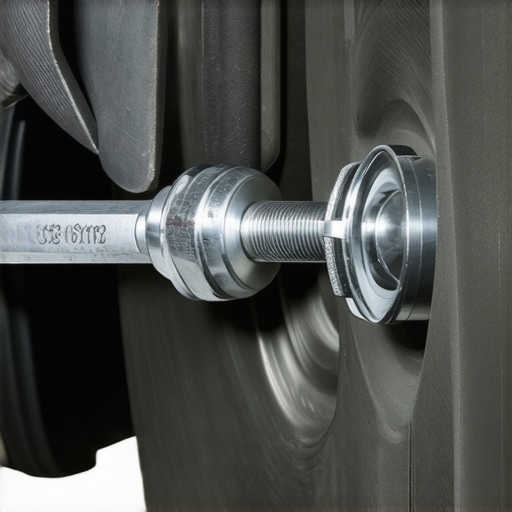
Can a failing wheel bearing trigger your stability control system?
This is a sophisticated issue that many drivers encounter when their dashboard suddenly illuminates multiple warning lights. Since modern Electronic Stability Control (ESC) relies on millisecond-accurate data from the hub-mounted speed sensors, any physical ‘play’ in the bearing can lead to erratic data spikes. If the sensor detects a sudden change in the air gap because the hub is wobbling, the computer may interpret this as a loss of traction. This can cause the vehicle to unexpectedly apply the brakes to a single wheel or reduce engine power, even on a perfectly dry, straight road. If you experience ‘phantom’ braking events, checking the mechanical integrity of your bearings is just as important as scanning for electronic codes. If your vehicle is exhibiting these high-tech symptoms, don’t wait for a mechanical failure; consult a specialist who understands the interplay between mechanical play and electronic interference.
Spotting the Red Dust of Fretting Corrosion
When you disassemble a hub and find a fine, reddish-brown powder that looks like rust but has a distinctively dry, cocoa-like texture, you are looking at fretting corrosion. This occurs when there is microscopic movement between the bearing’s inner race and the spindle. This movement is often the result of an out-of-spec spindle or a bearing that was not pressed into the knuckle with the correct amount of hydraulic force. This ‘micro-welding’ effect wears down the mating surfaces, making the next bearing you install even more likely to fail because the fit is no longer ‘snug.’ To prevent this cycle of failure, always ensure the mounting surfaces are cleaned and inspected for any signs of ‘stepping’ or diameter loss before pressing in a new unit. If the spindle diameter has been reduced by even a fraction of a millimeter, the best bearing in the world will not stay seated properly under heavy cornering loads.
Grease Emulsification and the Slow Death of Your Hub
Inside every sealed hub, there is a sophisticated chemical cocktail designed to withstand extreme thermal cycles. However, as the seal wears, atmospheric moisture begins to mix with the high-pressure grease. This process, known as emulsification, destroys the lubricant’s load-carrying capacity. Instead of a protective film between the steel rollers and the race, you end up with a watery slurry that provides zero protection against metal-to-metal contact. This is why a car that has sat for months may suddenly develop a noisy bearing shortly after returning to the road; the stagnant moisture has had time to etch the metal surfaces, leading to rapid spalling once the vehicle reaches highway speeds.
Could driving through deep puddles ruin your bearings instantly?
While a single splash won’t cause immediate failure, submersing a hot hub assembly in cold water creates a vacuum effect. As the internal air cools rapidly, it pulls external contaminants and water directly past the seals via atmospheric pressure. This is a common failure point for off-road vehicles and cars in flood-prone areas. If your wheels have been submerged, a proactive inspection is your only defense against a seized axle down the road. Catching this early prevents the moisture from turning into the ‘red death’ of internal rust.
Road Salt is a Silent Killer for Sealed Hub Units
In the ‘Salt Belt’ regions, the combination of calcium chloride and moisture creates an electrolyte that accelerates galvanic corrosion at an alarming rate. This doesn’t just rust the outside of the hub; it attacks the microscopic gap where the ABS sensor meets the tone ring. According to technical documentation from SKF’s Bearing Failure Analysis, environmental contamination accounts for nearly 14% of all premature bearing replacements. The salt works its way into the labyrinth seal, eventually hardening into an abrasive paste that grinds down the sealing lip. Once that seal is breached, the internal metallurgy is defenseless against the elements.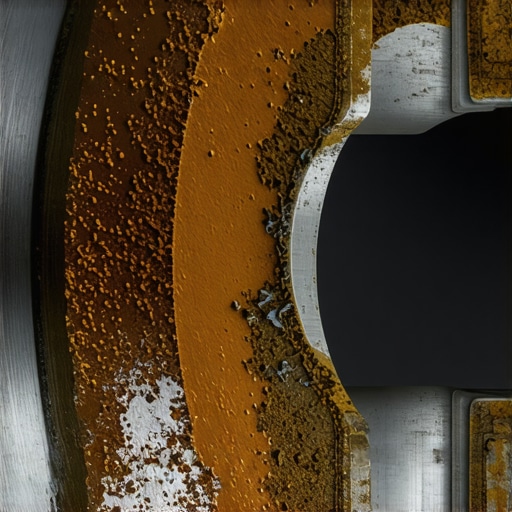
Ceramic Bearings Offer Performance but Demand Perfection
In high-performance or track-focused applications, many owners look toward ceramic hybrid bearings to reduce unsprung weight and lower rolling resistance. While ceramic balls are harder and smoother than steel, they are significantly less forgiving of installation errors. Any misalignment or ‘shock loading’ during the press-in process can shatter the ceramic components, leading to a catastrophic failure far more violent than the slow growl of a traditional steel unit. For daily drivers, high-quality steel remains the gold standard for durability and noise suppression, as it handles the shock of potholes with far more resilience.
Vibrations That Hide in Your Drivetrain
Sometimes, the most frustrating hub failures are the ones that don’t make noise at all. A ‘ghost vibration’ that feels like a misfiring engine or a transmission shudder can actually be a wheel bearing with localized flat spots on the rollers. These spots create a rhythmic vibration that travels through the chassis rather than the air as sound. If you have chased a driveline vibration through multiple shops without success, it is time for a professional to analyze your wheel hubs with a vibration frequency monitor. Ready to solve that mystery once and for all? Reach out to our diagnostic team to schedule a deep-dive analysis of your vehicle’s rotational integrity and restore your driving confidence.
Expert Insights & Advanced Considerations
Look for the Red Cocoa Powder of Fretting Corrosion
When disassembling a hub assembly, the presence of a dry, reddish-brown dust indicates microscopic movement between the bearing’s inner race and the steering knuckle or spindle. This is a clear signal that the press-fit integrity has been compromised. If you ignore this metallurgical red flag, even the highest quality replacement will fail prematurely because the mounting surface has lost its dimensional tolerance. This is why expert vehicle diagnostics must extend to the physical inspection of the spindle diameter itself.
The Air Gap Fluctuations That Trigger Phantom Braking
Modern stability control systems rely on a consistent air gap between the ABS tone ring and the sensor. As a bearing develops even minute play, this gap varies during cornering, sending erratic data spikes to the ECU. This is often the hidden reason why your abs light comes on every time it rains or during sharp maneuvers, as the moisture bridges the fluctuating electronic gap. Identifying these chassis-speed sensor discrepancies with the 20 scan tool that actually finds hidden transmission codes and chassis faults is critical before the system defaults to a limp mode.
Linear Force Beats the Hammering of an Impact Gun
The temptation to use a high-torque impact wrench on an axle nut is the primary cause of ‘induced failure.’ The hammering action can force the internal rollers into the race surface, creating microscopic depressions known as false brinelling. Proper installation requires a calibrated torque wrench to ensure the specific preload requested by the manufacturer. This precision is the only way to prevent the lateral runout that leads to why your brake rotors keep warping every six months regardless of brand.
Curated Expert Resources
The Timken Bearing Damage Analysis Guide: This technical manual is the industry gold standard for identifying metallurgical failure patterns. It is an essential resource for those mastering top auto repair techniques and seeking to differentiate between lubrication failure and load fatigue.
SAE International Technical Standards: These provide the precise engineering specifications for automotive lubricants and seal integrity, offering deep insights into how environmental contamination leads to chemical grease emulsification.
ASE Steering and Suspension Study Guides: Specifically the A4 certification materials, which detail the geometric relationship between hub play, wheel alignment, and braking precision in modern passenger vehicles.
Final Expert Perspective
Mastering hub assembly health requires a shift from reactive hearing to proactive, data-driven inspection. By understanding how to how to identify which wheel bearing is noisy while driving and correlating those findings with infrared heat mapping and runout checks, you protect the entire drivetrain. A failing bearing is never an isolated issue; it is a catalyst for rotor damage and electronic sensor errors that can compromise your safety in high-stress driving situations. #IMAGE_PLACEHOLDER_E# If you are struggling with a persistent vibration or an elusive front-end hum that persists after multiple repairs, we recommend a deep-dive diagnostic session. Have you encountered a hub issue that defied standard logic? Contact our master technicians to share your findings or schedule a consultation to restore your vehicle’s rotational integrity.