The phenomenon of directional instability under load, specifically when a vehicle veers left during hard acceleration, indicates a complex interplay between drivetrain torque and suspension geometry. Unlike a static pull, which often results from simple tire pressure variance, acceleration-induced drift typically stems from torque steer or compromised suspension bushings that allow the wheel to shift its toe or camber angle under the stress of engine output. In high-performance or front-wheel-drive vehicles, unequal length half-shafts create different torque vectors. When mechanical wear enters the equation, the manufacturer’s original compensations fail, leading to an unpredictable driving experience that requires professional auto repair intervention.
The Mechanics of Asymmetrical Force Distribution
When you depress the accelerator, the engine generates significant rotational force that must be transferred to the road. If the suspension components, particularly the control arm bushings or ball joints, have lost their structural integrity, this force causes the wheels to physically shift position within the wheel well. This ‘dynamic alignment’ change is a common reason for a sudden pull. To accurately identify these deviations, one must utilize advanced vehicle diagnostics to monitor how the chassis behaves under load. According to research published by SAE International, even minute deviations in powertrain mounting can drastically affect the scrub radius during high-torque events, causing the vehicle to follow the path of least resistance—often to the left.
Why Torque Steer Dominates the Front-Wheel Drive Experience
In many transverse-engine layouts, the driveshafts are of unequal lengths. The shorter shaft is stiffer and transmits torque more directly, while the longer shaft may experience a slight twist, or ‘torsional wind-up.’ This disparity creates a moment arm that pulls the steering to one side. While modern electronic power steering (EPS) systems often include software-based compensation, mechanical failures in the transmission or differential can override these safety nets. If the sensation is accompanied by a rhythmic shudder, you might be facing transmission failures that require immediate teardown and inspection. Drivers often confuse this with the more common issue of why your car pulls to the right even after an alignment, but the acceleration-specific pull points toward a distinct subset of mechanical variables related to torque delivery.
Could a Failing CV Joint Be Steering Your Car?
An often-overlooked culprit in directional pulling is the constant velocity (CV) joint. If the inner joint develops a ‘pit’ or a flat spot, it can create significant resistance when the suspension compresses under acceleration. This resistance effectively acts as a brake on one side of the drivetrain, forcing the car to pivot toward the side with more drag. Identifying this requires a keen ear; you might want to learn how to diagnose a bad wheel bearing using only your ears or look for similar localized friction indicators. If you notice grease leakage or torn boots during your inspection, the joint is likely the primary source of your steering instability.
Proactive Solutions and Professional Intervention
Addressing a car that pulls left requires a systematic approach that goes beyond the standard alignment rack. Technicians must inspect engine mounts, subframe bolts, and the internal health of the differential. A worn engine mount can allow the entire powertrain to tilt, altering the angle of the driveshafts and exacerbating the pull. If you are experiencing these symptoms, don’t wait for a total component failure; consult a professional to perform comprehensive car service before the damage translates into a costly drivetrain replacement. We encourage readers to share their specific vehicle symptoms in professional forums to help build a better database of torque-related steering issues.
Differential Dynamics Can Overpower Your Alignment
Beyond the suspension, the internal health of the transaxle plays a pivotal role in maintaining a straight line under load. In a standard open differential, power follows the path of least resistance. If one side of the drivetrain has slightly higher internal friction due to worn spider gears or carrier bearings, the vehicle will naturally pivot toward the side receiving less torque. This internal resistance mimics the symptoms of alignment issues but remains invisible on a static rack. Addressing transmission troubles early is vital, as a differential that fails to distribute load evenly can eventually lead to catastrophic gear failure. If you have already ruled out traditional alignment and tire pressure, the transaxle’s internal tolerances are the next logical frontier for investigation.
Does Your CV Axle Still Have the Structural Integrity to Handle Peak Torque?
While we often look for visible signs of damage, the internal failure of a CV joint can be far more subtle. As the engine delivers power, the inner ‘tripod’ joint must plunge and rotate simultaneously. If the needle bearings inside the housing are flat-spotted or the lubricant has carbonized, the joint can bind specifically during the high-torque phase of acceleration. This binding creates a ‘force vector’ that pushes against the transmission, causing the vehicle to veer. Knowing how to tell if your CV axle is about to snap is important, but recognizing these early-stage dynamic pulls can save the rest of your drivetrain from secondary vibration damage. If your car feels heavy and resistant specifically when merging onto a highway, the CV joint is a primary suspect.
Why Your Tires Might Be Shaped Like Cones
A fascinating yet often misunderstood cause of directional pulling is tire conicity. This manufacturing defect or wear pattern occurs when the belts inside the tire shift, causing the tread to take on a slightly conical shape rather than a perfectly cylindrical one. Under the high downward force of acceleration, this cone shape forces the tire to roll in a circle, pulling the car toward the apex. According to technical data from Tire Rack, conicity is frequently mistaken for alignment error because the pull persists even when the steering wheel is centered. To test this, experts recommend rotating the front tires from left to right; if the pull changes direction, you have confirmed a radial tire pull rather than a mechanical suspension fault.
If you have recently performed work on your front end and still feel a lack of precision, consider why your car makes a clunking noise when you go over speed bumps as a clue to loose subframe bolts or failing struts that allow the engine to shift under load. We recommend checking your tire tread depth across four points on each tire to rule out uneven wear before moving to more expensive repairs.
Calibrate the Digital Brain Behind Your Steering Rack
Modern vehicles rely on Electronic Power Steering (EPS) to manage the driver’s input. These systems utilize a steering angle sensor and a torque sensor to determine how much assistance the motor should provide. If the sensor is slightly out of calibration, the motor might perceive a ‘neutral’ position as a slight turn, or it may over-compensate for torque steer by pulling the rack to the left. This digital interference can be difficult to diagnose without specialized software. Using the $30 tool that lets you see inside your engine or a high-end OBD-II scanner can sometimes reveal the live data streams of these sensors. If the steering angle reads anything other than zero while the wheels are straight, a software recalibration is necessary to eliminate the ghost in the machine that is steering your car toward the shoulder.
How Rubber Bushings Sabotage Your Straight-Line Speed
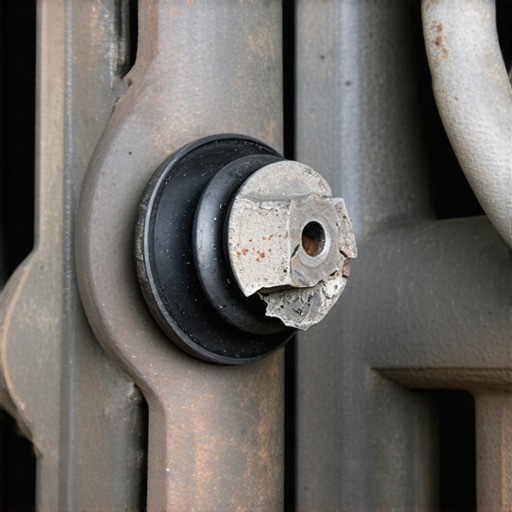
While most drivers focus on the metal components of their suspension, the real culprit behind an acceleration-induced pull is often the rubber that isolates those parts. These bushings are designed to allow for a specific amount of “compliance” to dampen road vibration. However, when the rubber undergoes significant degradation, this compliance becomes excessive. Under the high-torque load of a hard launch, the lower control arm can physically shift forward or backward. This shift alters the toe angle of the left front wheel independently of the steering rack’s position. According to technical documentation from Moog Parts, even a 1/16th-inch deflection in a control arm bushing can translate to a several-degree change in dynamic alignment, effectively steering the wheel into a leftward turn while the rest of the car tries to go straight.
Why does my steering wheel stay straight while the car drifts left under load?
This specific phenomenon suggests that the “pull” is not happening at the steering rack or the steering column, but rather at the contact patch of the tire. If your steering wheel remains dead-center but the vehicle’s trajectory changes during acceleration, you are likely witnessing a dynamic toe change. This happens when a suspension component, such as a trailing arm or a control arm, flexes under the immense rotational force of the engine. It creates a temporary steering effect at the wheels that the steering wheel doesn’t always reflect. This is a primary reason why a standard static alignment often fails to solve the problem; the car is perfectly aligned when sitting still, but the geometry collapses the moment you hit the gas. If you suspect this is happening, it may be time to consider a full auto repair assessment of your front-end hardware.
The Hidden Math of Offset and Scrub Radius
Many enthusiasts overlook the role of wheel offset in torque-steer management. The “scrub radius” is the distance between where the steering axis intersects the ground and the center of the tire’s contact patch. If you have installed aftermarket wheels that push the tires further out, you have increased this scrub radius. This increase creates a longer “lever arm” for torque to act upon. When the engine sends power to the wheels, the force acts at the center of the tire. If that center is too far from the steering axis, the tire will try to pivot outward. In many cases, if there is even a slight discrepancy in tire grip or axle length, the car will lurch violently to the left. This isn’t just a nuisance; it’s a fundamental change in your vehicle’s handling characteristics that can make high-speed maneuvers dangerous.
Engine Mount Failures That Bend Your Driveline
We often think of engine mounts as simple vibration dampeners, but they are critical for maintaining the proper angle of the CV axles. When an engine mount fails—particularly the rear or passenger-side mount—the entire engine and transmission assembly can tilt several degrees under load. This tilt changes the operating angle of the CV joints. An axle that was designed to operate at a three-degree angle might suddenly be forced to operate at six or seven degrees. This increase in angle increases the internal friction within the joint, causing one wheel to experience more drag than the other. This drag creates a yaw moment that pulls the car to one side. You might notice this more during gear shifts when the engine “rocks” on its mounts. If you’re ready to stop the drift and restore your car’s precision, schedule a professional car service to inspect the structural integrity of your powertrain supports. Beyond the mounts, the internal stability of the differential must be considered, as a worn-out limited-slip clutch pack can also contribute to this uneven power distribution.
Stop Ignoring the Rear Suspension During Front-End Pulls
The conversation around acceleration drift typically begins and ends with the front wheels, but seasoned master technicians know that the rear suspension dictates the vehicle’s actual thrust direction. When weight shifts to the rear during a hard launch, any lateral play in the trailing arm bushings or the multi-link geometry becomes magnified. This rear-steer effect pushes the chassis at an angle, forcing the front end to compensate by veering left. According to technical deep-dives from Brake & Front End Magazine, a misaligned thrust angle is one of the most common reasons why high-torque vehicles fail to track straight, even after multiple front-end alignments. If your car drifts left only when the rear end squats, your problem isn’t in the steering rack—it’s in the rear subframe bushings or worn control arms that allow the axle to shift out of parallel.
How Electronic Stability Control Can Secretly Hijack Your Steering
Modern performance vehicles utilize sophisticated Brake Vectoring or Electronic Stability Control (ESC) systems to manage power delivery. If a wheel speed sensor is sending noisy or erratic data, the ECU might perceive a momentary loss of traction on one side and apply a subtle, nearly imperceptible braking force to correct it. This creates a phantom pull that only manifests when the computer is actively monitoring high-torque output. Diagnosing this requires a technician who can perform a graphing road test with a scan tool to monitor real-time brake pressure across all four corners. If you’re tired of fighting the wheel, it’s time to invest in a comprehensive auto repair strategy that accounts for these digital ghost-forces. Finding a shop that understands the nuance of transmission-linked torque management is the first step in reclaiming your vehicle’s stability.
Can a Seized Brake Caliper Mimic Torque Steer Under Load?
While torque steer is a drivetrain phenomenon, a partially seized brake caliper slide pin can create a similar sensation. Under acceleration, the vehicle’s weight transfer can cause a dragging pad to bite harder against the rotor, creating a rotational drag that pulls the vehicle to one side. This is often confused with transmission issues because the pull is load-dependent. To test this, professionals check for heat variance across the rotors after a spirited drive. If one side is significantly hotter, the friction is likely mechanical rather than torque-based. Addressing this through a specialized car service ensures that your braking system isn’t fighting your drivetrain for control of the steering wheel.
The Hidden Impact of Aerodynamic Lift on Front-End Grip
At higher speeds, acceleration-induced pull can be exacerbated by aerodynamic imbalances. If the front air dam is damaged or the underbody shielding is loose, the resulting lift can reduce the downward force on the front tires. This reduction in grip makes the vehicle more susceptible to minute differences in tire diameter or axle torque. A car that feels stable at 30 mph but lurches left at 70 mph under load is often suffering from a combination of mechanical wear and aerodynamic instability. Inspecting the integrity of your vehicle’s aero-plastic components is just as vital as checking the ball joints. If your vehicle’s behavior remains erratic despite standard fixes, it is time to stop guessing and seek a master-level technician who can perform a total vehicle health check. Don’t let a subtle mechanical deviation turn into a safety hazard; bring your vehicle in for a high-level diagnostic review today.
The phenomenon of directional instability under load, specifically when a vehicle veers left during hard acceleration, indicates a complex interplay between drivetrain torque and suspension geometry. Unlike a static pull, which often results from simple tire pressure variance, acceleration-induced drift typically stems from torque steer or compromised suspension bushings that allow the wheel to shift its toe or camber angle under the stress of engine output. In high-performance or front-wheel-drive vehicles, unequal length half-shafts create different torque vectors. When mechanical wear enters the equation, the manufacturer’s original compensations fail, leading to an unpredictable driving experience that requires professional auto repair intervention.
The Mechanics of Asymmetrical Force Distribution
When you depress the accelerator, the engine generates significant rotational force that must be transferred to the road. If the suspension components, particularly the control arm bushings or ball joints, have lost their structural integrity, this force causes the wheels to physically shift position within the wheel well. This ‘dynamic alignment’ change is a common reason for a sudden pull. To accurately identify these deviations, one must utilize advanced vehicle diagnostics to monitor how the chassis behaves under load. According to research published by SAE International, even minute deviations in powertrain mounting can drastically affect the scrub radius during high-torque events, causing the vehicle to follow the path of least resistance—often to the left.
Why Torque Steer Dominates the Front-Wheel Drive Experience
In many transverse-engine layouts, the driveshafts are of unequal lengths. The shorter shaft is stiffer and transmits torque more directly, while the longer shaft may experience a slight twist, or ‘torsional wind-up.’ This disparity creates a moment arm that pulls the steering to one side. While modern electronic power steering (EPS) systems often include software-based compensation, mechanical failures in the transmission or differential can override these safety nets. If the sensation is accompanied by a rhythmic shudder, you might be facing transmission failures that require immediate teardown and inspection. Drivers often confuse this with the more common issue of why your car pulls to the right even after an alignment, but the acceleration-specific pull points toward a distinct subset of mechanical variables related to torque delivery.
Could a Failing CV Joint Be Steering Your Car?
An often-overlooked culprit in directional pulling is the constant velocity (CV) joint. If the inner joint develops a ‘pit’ or a flat spot, it can create significant resistance when the suspension compresses under acceleration. This resistance effectively acts as a brake on one side of the drivetrain, forcing the car to pivot toward the side with more drag. Identifying this requires a keen ear; you might want to learn how to diagnose a bad wheel bearing using only your ears or look for similar localized friction indicators. If you notice grease leakage or torn boots during your inspection, the joint is likely the primary source of your steering instability.
Proactive Solutions and Professional Intervention
Addressing a car that pulls left requires a systematic approach that goes beyond the standard alignment rack. Technicians must inspect engine mounts, subframe bolts, and the internal health of the differential. A worn engine mount can allow the entire powertrain to tilt, altering the angle of the driveshafts and exacerbating the pull. If you are experiencing these symptoms, don’t wait for a total component failure; consult a professional to perform comprehensive car service before the damage translates into a costly drivetrain replacement. We encourage readers to share their specific vehicle symptoms in professional forums to help build a better database of torque-related steering issues.
Differential Dynamics Can Overpower Your Alignment
Beyond the suspension, the internal health of the transaxle plays a pivotal role in maintaining a straight line under load. In a standard open differential, power follows the path of least resistance. If one side of the drivetrain has slightly higher internal friction due to worn spider gears or carrier bearings, the vehicle will naturally pivot toward the side receiving less torque. This internal resistance mimics the symptoms of alignment issues but remains invisible on a static rack. Addressing transmission troubles early is vital, as a differential that fails to distribute load evenly can eventually lead to catastrophic gear failure. If you have already ruled out traditional alignment and tire pressure, the transaxle’s internal tolerances are the next logical frontier for investigation.
Does Your CV Axle Still Have the Structural Integrity to Handle Peak Torque?
While we often look for visible signs of damage, the internal failure of a CV joint can be far more subtle. As the engine delivers power, the inner ‘tripod’ joint must plunge and rotate simultaneously. If the needle bearings inside the housing are flat-spotted or the lubricant has carbonized, the joint can bind specifically during the high-torque phase of acceleration. This binding creates a ‘force vector’ that pushes against the transmission, causing the vehicle to veer. Knowing how to tell if your CV axle is about to snap is important, but recognizing these early-stage dynamic pulls can save the rest of your drivetrain from secondary vibration damage. If your car feels heavy and resistant specifically when merging onto a highway, the CV joint is a primary suspect.
Why Your Tires Might Be Shaped Like Cones
A fascinating yet often misunderstood cause of directional pulling is tire conicity. This manufacturing defect or wear pattern occurs when the belts inside the tire shift, causing the tread to take on a slightly conical shape rather than a perfectly cylindrical one. Under the high downward force of acceleration, this cone shape forces the tire to roll in a circle, pulling the car toward the apex. According to technical data from Tire Rack, conicity is frequently mistaken for alignment error because the pull persists even when the steering wheel is centered. To test this, experts recommend rotating the front tires from left to right; if the pull changes direction, you have confirmed a radial tire pull rather than a mechanical suspension fault.
#IMAGE_PLACEHOLDER_A#
If you have recently performed work on your front end and still feel a lack of precision, consider why your car makes a clunking noise when you go over speed bumps as a clue to loose subframe bolts or failing struts that allow the engine to shift under load. We recommend checking your tire tread depth across four points on each tire to rule out uneven wear before moving to more expensive repairs.
Calibrate the Digital Brain Behind Your Steering Rack
Modern vehicles rely on Electronic Power Steering (EPS) to manage the driver’s input. These systems utilize a steering angle sensor and a torque sensor to determine how much assistance the motor should provide. If the sensor is slightly out of calibration, the motor might perceive a ‘neutral’ position as a slight turn, or it may over-compensate for torque steer by pulling the rack to the left. This digital interference can be difficult to diagnose without specialized software. Using the $30 tool that lets you see inside your engine or a high-end OBD-II scanner can sometimes reveal the live data streams of these sensors. If the steering angle reads anything other than zero while the wheels are straight, a software recalibration is necessary to eliminate the ghost in the machine that is steering your car toward the shoulder.
How Rubber Bushings Sabotage Your Straight-Line Speed
While most drivers focus on the metal components of their suspension, the real culprit behind an acceleration-induced pull is often the rubber that isolates those parts. These bushings are designed to allow for a specific amount of “compliance” to dampen road vibration. However, when the rubber undergoes significant degradation, this compliance becomes excessive. Under the high-torque load of a hard launch, the lower control arm can physically shift forward or backward. This shift alters the toe angle of the left front wheel independently of the steering rack’s position. According to technical documentation from Moog Parts, even a 1/16th-inch deflection in a control arm bushing can translate to a several-degree change in dynamic alignment, effectively steering the wheel into a leftward turn while the rest of the car tries to go straight.
Why does my steering wheel stay straight while the car drifts left under load?
This specific phenomenon suggests that the “pull” is not happening at the steering rack or the steering column, but rather at the contact patch of the tire. If your steering wheel remains dead-center but the vehicle’s trajectory changes during acceleration, you are likely witnessing a dynamic toe change. This happens when a suspension component, such as a trailing arm or a control arm, flexes under the immense rotational force of the engine. It creates a temporary steering effect at the wheels that the steering wheel doesn’t always reflect. This is a primary reason why a standard static alignment often fails to solve the problem; the car is perfectly aligned when sitting still, but the geometry collapses the moment you hit the gas. If you suspect this is happening, it may be time to consider a full auto repair assessment of your front-end hardware.
Expert Insights and Advanced Considerations
Stop Blaming Length and Look at Half-Shaft Mass
While unequal shaft length is the textbook explanation for torque steer, seasoned technicians also look at the rotational mass and harmonic dampening of the axles. A replacement axle that lacks the original equipment’s harmonic balancer can vibrate at specific torque loads, creating a momentary loss of traction that manifests as a leftward pull. Ensuring your components match OEM specifications is vital for maintaining high-speed stability.
Digital Compensation Shields Mechanical Failure
Many modern drivers don’t realize their car is broken because the Electronic Power Steering is working overtime to correct a mechanical pull. This ‘software masking’ can lead to premature wear of the steering motor. If you suspect your steering feels ‘heavier’ in one direction than the other during a merge, your car might be compensating for a hardware issue that standard vehicle diagnostics must uncover before the motor burns out.
The Thrust Angle Dictates Your Front-End Path
Never assume a front-end pull is caused by the front end. If the rear thrust angle is off by even a fraction of a degree, it essentially turns the rear of the car into a rudder. This forces the front tires to fight for a straight line, a battle they often lose when the weight shifts rearward during acceleration. Always request a four-wheel alignment to see the total geometric picture, especially if why your steering wheel is off-center after a repair remains an unsolved mystery.
Curated Expert Resources
To further your technical understanding, we recommend exploring Hunter Engineering Alignment Guides for industry-standard precision metrics, SAE International Technical Papers for deep dives into powertrain kinematics, and the Tire Rack Tech Center for empirical data on how tire conicity and radial pull affect modern chassis.
Final Expert Perspective
Diagnosing a vehicle that veers under load requires a transition from static observation to dynamic analysis. By understanding how torque delivery interacts with suspension compliance and digital steering systems, you can move beyond guesswork. Utilizing expert auto repair tips for 2025 ensures that your vehicle remains a precision instrument rather than a liability. We encourage you to seek out high-level diagnostic reviews whenever the path forward feels less than straight. Whether you are dealing with a complex differential issue or a simple bushing failure, professional intervention is the key to reclaiming your car’s performance and safety.