When a vehicle maintains smooth operation on level ground but falters the moment the gradient increases, we are not looking at a simple mechanical failure; we are observing a breakdown in the engine’s ability to manage high-load stoichiometry. On flat roads, the engine operates in a low-demand state, often requiring minimal fuel enrichment and moderate ignition timing. However, an incline forces the powertrain to work against gravity, increasing internal cylinder pressures and demanding a precise surge in fuel and air volume. If any component in the delivery chain is marginally compromised—be it a tired fuel pump or a restricted filter—the deficit only manifests when the demand peaks. Professional car service providers often see this as the ‘litmus test’ for a vehicle’s health.
Gravity Exposes the Weak Links in Your Fuel System
In many cases, the sensation of losing power while climbing is directly linked to fuel starvation. While your car might run fine at 60 mph on the highway, the volume of fuel required to maintain that same speed on a 6% grade is significantly higher. A fuel pump that is beginning to fail may still provide enough pressure for low-load cruising but will fall short of the required flow rate when the injectors open for longer durations. This often causes the real reason your gas mileage suddenly dropped to become apparent, as the engine struggles to find a stable air-to-fuel ratio. Beyond the pump, a clogged fuel filter acts as a bottleneck that restricts the high-pressure flow needed for peak performance during auto repair assessments.
Why does my car bog down uphill but idle perfectly in the driveway?
An engine at idle has almost zero load, meaning it needs very little energy to keep the crankshaft spinning. When you face an incline, you are effectively asking the engine to lift the entire weight of the vehicle. This requires maximum volumetric efficiency. If you have a vacuum leak, the extra air entering the system might be manageable at idle via the IAC (Idle Air Control), but under load, it throws off the mass air flow readings. Many technicians use a simple tool to find every vacuum leak to ensure the system is sealed before moving to more expensive repairs.
The Hidden Toll of Transmission Slip Under High Load
Sometimes the issue isn’t the engine at all, but rather the transmission failing to effectively transfer power to the wheels. Under the stress of an uphill climb, the torque converter must lock up or the clutch packs must hold firm. If there is internal wear, the increased torque demand will cause the transmission to slip, resulting in an increase in RPM without a corresponding increase in vehicle speed. This is a classic symptom highlighted in transmission failures decoded. If you notice a ‘shuddering’ sensation specifically on hills, it may be time for a specialized vehicle diagnostics check on your gearbox health.
Exhaust Backpressure and the Silent Chokehold
An engine is essentially a large air pump. If the air cannot get out, it cannot come in. A partially clogged catalytic converter may allow enough exhaust flow for low-speed city driving, but as exhaust volume increases with engine load, the backpressure builds up. This backpressure prevents the cylinders from fully purging spent gases, leaving no room for a fresh intake charge. According to the Society of Automotive Engineers (SAE), excessive backpressure significantly degrades thermal efficiency and can lead to rapid engine overheating under load. If your car feels like it is being choked as the road rises, you may need a technician to perform a backpressure test. If your vehicle is exhibiting these symptoms, it is time to perform professional vehicle diagnostics before a minor restriction becomes a total engine failure.
While exhaust flow is a critical bottleneck, the ignition system often presents a more deceptive challenge when gravity starts to work against you. As cylinder pressure rises during an uphill climb, the dielectric strength required to jump the spark plug gap increases significantly. A coil pack that provides a sufficient spark under low-load conditions may simply fail to overcome this increased resistance when the engine is under strain. This results in a ‘load-based misfire’ that disappears as soon as the road levels out. To verify this, seasoned DIYers often learn how to test a coil pack with a simple spark plug tool to identify which cylinder is dropping out under pressure.
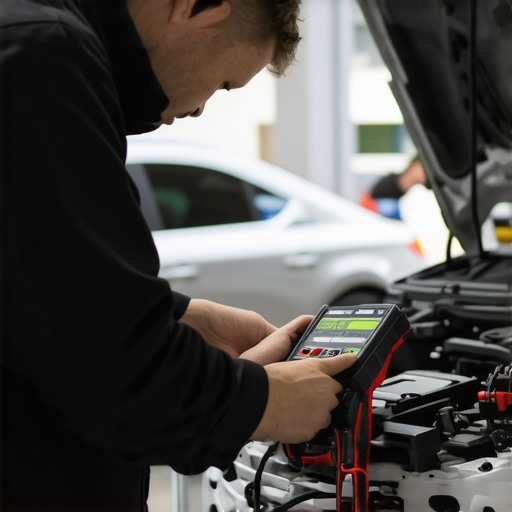
Dirty Air Sensors Trick the ECU into Limping
Modern engine management relies heavily on the accuracy of the Mass Air Flow (MAF) sensor to calculate the precise weight of incoming air. Over time, microscopic debris and oil vapor coat the sensor’s hot wire, insulating it and slowing its response time. On flat ground, the ECU can compensate using oxygen sensor feedback, but the rapid demand for more air on a steep grade leaves the system lagging. This ‘lazy’ sensor behavior prevents the engine from entering its optimal power band, often making the car feel sluggish or unresponsive. Understanding how to clean your mass air flow sensor to fix a rough idle and improve load response is one of the most cost-effective top auto repair techniques every car owner should know.
Could a single dirty sensor really mimic a blown transmission?
The short answer is yes. Many modern vehicles use ‘load-based’ shifting logic. If the MAF or Manifold Absolute Pressure (MAP) sensor reports lower-than-actual engine load because of dirt or a vacuum leak, the transmission control module may fail to trigger a necessary downshift. This leaves you in too high a gear for the incline, creating a sensation of power loss that feels like a mechanical failure in the gearbox. Before assuming your clutches are gone, it is vital to check the data stream for sensor accuracy. Using the $30 tool that lets you see inside your engine through live OBD-II data can reveal whether your sensors are actually communicating the truth to the computer.
Camshaft Timing Failures Steal Your Climbing Power
Variable Valve Timing (VVT) is responsible for adjusting the engine’s breathing characteristics across the RPM range. When you hit a hill, the VVT solenoids should adjust the camshaft position to maximize low-end torque. If these solenoids are clogged with sludge or if the oil pressure is insufficient, the timing remains ‘parked’ in a high-speed efficiency mode, leaving you with no grunt for the climb. According to technical bulletins from Bosch Mobility, even a slight deviation in VVT phasing can result in a 15-20% loss in peak torque under load. This emphasizes the importance of using the correct oil viscosity and maintaining a strict service schedule to prevent hydraulic lag in the timing system. If you’ve noticed these symptoms along with any 3 noises your engine makes that mean you should stop driving immediately, it is time for a professional intervention. Have you ever experienced a sudden loss of power on a familiar hill? Share your diagnostic journey in the comments below or reach out to us for a deeper look into your vehicle’s performance data.
Stop Ignoring Your Turbocharger’s Silent Whistle
Forced induction systems—turbochargers and superchargers—are designed to compensate for the thin air and high demands of steep climbs, but they are also highly susceptible to pressurized leaks. Under normal cruising conditions, a hairline crack in an intercooler or a slightly loose hose clamp may not leak enough air to be noticed. However, the moment you hit an incline and the engine demands 15 or 20 PSI of boost, that small fissure expands under pressure. This creates a massive air-fuel imbalance that the ECU cannot rectify. The result is a sudden ‘stumble’ or a lack of pull that feels like the engine has hit a wall. If you hear a high-pitched whistling or a ‘whoosh’ sound that corresponds with throttle input, you are likely losing your compressed air charge before it ever reaches the cylinders.

Is it a boost leak or a failing wastegate actuator?
Distinguishing between a physical air leak and a control issue is critical for avoiding unnecessary auto repair costs. A boost leak usually manifests with a rich condition and black smoke in diesel engines, as the metered air is escaping while the fuel is still being injected. Conversely, a failing wastegate actuator or a sticky boost control solenoid may prevent the turbo from spooling up at all, leaving you with a naturally aspirated engine trying to haul a heavy load. Specialized vehicle diagnostics involving a smoke test can pinpoint these leaks in minutes, saving hours of guesswork. If your vehicle feels sluggish specifically after the turbo should have kicked in, testing the vacuum lines leading to the wastegate is a logical first step.
Heat Soak and the ECU’s Defensive Power Cut
Modern engine management systems are programmed with ‘fail-safe’ maps that prioritize engine longevity over immediate performance. When you are climbing a long grade, the thermal load on the engine spikes. If your radiator is partially restricted or the water pump’s impeller is worn, the coolant temperature will rise rapidly. According to technical data from Delphi Technologies, once cylinder head temperatures cross a specific threshold, the ECU will aggressively retard ignition timing to prevent pre-detonation (knock). This ‘timing pull’ can feel like you’ve suddenly lost 30% of your horsepower. This is not a failure of the engine itself, but a protective measure. If you notice your power returning once the road levels out and the temperature gauge drops, your cooling system is likely the bottleneck.
The Impact of Electrical Resistance on Fuel Delivery
As components get hot, electrical resistance increases. This is particularly problematic for high-mileage fuel pumps and old wiring harnesses. On a steep hill, the fuel pump must work at its maximum duty cycle to maintain the high rail pressure required for the climb. If there is a corroded ground wire or a failing relay, the increased heat generated by the high amperage draw can cause a voltage drop. This drop prevents the pump from spinning at its required RPM, leading to a lean condition exactly when the engine needs fuel the most. This is why some vehicles only experience ‘fuel starvation’ after 20 minutes of driving or during a strenuous climb. Using a digital multimeter to check for voltage drop at the pump connector during a simulated load test is a standard part of any deep-dive vehicle diagnostics procedure. Have you noticed your car’s performance degrading only after it’s been running for a while? Share your specific symptoms with us so we can help you narrow down the source of the heat-induced power loss.
Why Carbon Buildup Chokes Your Engine Under Load
In Gasoline Direct Injection (GDI) engines, the absence of fuel washing over the intake valves leads to significant carbon accumulation over time. On flat roads, the airflow is sufficient to bypass these ‘carbon stalactites,’ but during a high-load ascent, the intake turbulence caused by these deposits disrupts the laminar flow into the combustion chamber. This turbulence prevents the air and fuel from mixing homogeneously, causing an inefficient burn and a noticeable lack of torque. While many drivers try to solve this with fuel additives, the reality is that the fuel never touches these deposits in a GDI system. Understanding the mechanics of carbon cleaning is one of the more advanced auto repair topics that can restore ‘like-new’ climbing ability to a high-mileage car.
When the Torque Converter Stator Quits Multiplying Your Power
While most drivers focus on the engine’s internal combustion, the hydraulic link between the engine and the wheels—the torque converter—is often the culprit when the road turns upward. Inside the converter sits a stator, a small but vital component containing a one-way clutch designed to redirect fluid flow and multiply torque at low speeds. If this stator clutch fails and begins to freewheel in both directions, the engine will still rev, but the hydraulic multiplication required to move a heavy load from a standstill or up a steep grade vanishes. This specific mechanical failure often leaves technicians scratching their heads because the vehicle may perform flawlessly at cruising speeds on level ground. Only a professional auto repair specialist using a stall test can confirm if the converter has lost its ability to amplify the engine’s output.
Could an unnoticed brake drag mimic a dying engine on steep grades?
It is a scenario often overlooked: the car isn’t losing power; it is fighting against itself. As you descend one hill and begin the ascent of the next, your braking system absorbs significant thermal energy. If your caliper slide pins are poorly lubricated or a flexible brake hose has internal degradation, the piston may not fully retract. This creates a parasitic load that acts like a constant anchor. On flat ground, the engine’s momentum masks the drag, but the moment you demand maximum effort for a climb, the friction becomes an insurmountable hurdle. According to the technical training experts at Mitchell 1, identifying these “chassis-side” power losses requires a systematic check of rolling resistance and hub temperatures immediately after a high-load event.

Decode Short-Term Fuel Trims to Spot the Lean Bog Before It Breaks You
To truly master vehicle diagnostics, one must look beyond the generic trouble codes and peer into the live data of fuel trims. Short-Term Fuel Trim (STFT) and Long-Term Fuel Trim (LTFT) provide a window into how hard the ECU is working to compensate for imbalances. If you see your fuel trims spiking to +20% or higher as you apply throttle on an incline, the engine is screaming for fuel that it cannot get. This often points to a “scaling” issue with the fuel injectors or a high-pressure pump that can’t keep up with the duty cycle demand. By monitoring these values during a test drive, you can catch a failing component long before it triggers a permanent “limp mode” or a Check Engine Light. High-level car service is not just about replacing parts; it’s about interpreting the digital heartbeat of the machine.
The Hidden Math of Rotational Mass and Hill Climbing Physics
Sometimes the loss of power isn’t a failure, but a conflict between the vehicle’s hardware and the laws of physics. Many truck and SUV owners install larger tires for aesthetics without considering the impact on the final drive ratio. A larger diameter tire effectively lengthens your gearing, meaning the engine must produce significantly more torque to move the vehicle at the same speed. Furthermore, the increased unsprung weight and rotational inertia require more energy to accelerate and maintain speed against gravity. This energy drain is further compounded by rolling resistance; a tire that is under-inflated by just a few PSI can significantly increase the load on the powertrain. If your vehicle was already at the edge of its performance envelope, these modifications will make every hill feel like a struggle. If you have modified your drivetrain, a professional transmission specialist may recommend a gear ratio swap to restore the mechanical advantage needed for mountain driving. Are you tired of your car feeling like it’s gasping for air every time the road gets steep? Book a comprehensive performance audit today and let our experts pinpoint the exact bottleneck in your drivetrain.
When the road begins to rise, your vehicle’s hidden vulnerabilities are laid bare. A car that cruises effortlessly on the flats but gasps for air or stutters on an incline is sending a clear message: the equilibrium between fuel, air, and mechanical load has been broken. Solving this requires more than just guesswork; it demands a systematic approach to identifying bottlenecks in the combustion and delivery chains. By mastering these variables, you can ensure your powertrain remains resilient regardless of the terrain.
#IMAGE_PLACEHOLDER_E#
Expert Insights & Advanced Considerations
Watch the Fuel Trims When the Road Gets Steep
Static diagnostic tests in a garage rarely tell the whole story. To truly understand why power drops off, you must monitor Short-Term Fuel Trims while the engine is under peak load. A spike in positive values indicates the ECU is trying to compensate for a lean condition, often caused by a fuel pump that maintains pressure but lacks the necessary flow volume for high-demand scenarios. If you want to unlock your cars potential expert auto repair tips for 2025, start by analyzing data while the car is actually fighting gravity.
How Heat Soak Pulls Timing Without a Warning Light
Your engine management system is incredibly protective. During a long uphill climb, cylinder head temperatures can skyrocket, even if the dashboard needle appears normal. When the ECU detects these thermal spikes, it aggressively retards ignition timing to prevent catastrophic engine knock. This safety measure feels like a massive loss of horsepower to the driver. This is why staying ahead of cooling system maintenance is a core pillar of choosing the right car service for seamless vehicle maintenance.
Don’t Overlook the Driveline’s Physical Limitations
Sometimes the engine is healthy, but the mechanical advantage has been compromised. Aftermarket modifications like larger tires or a failing torque converter stator can prevent the engine’s torque from ever reaching the pavement. If you’ve heard any 3 noises your engine makes that mean you should stop driving immediately, it could indicate that the struggle uphill is a precursor to a total mechanical failure within the drivetrain.
Curated Expert Resources
SAE International Technical Papers
The Society of Automotive Engineers provides the definitive research on engine load characteristics and thermal efficiency. Their peer-reviewed papers are the gold standard for understanding how modern powertrains manage high-torque demands and fuel stoichiometry.
Mitchell 1 ProDemand
This is the go-to resource for professional technicians. It offers specific wiring diagrams, TSBs (Technical Service Bulletins), and real-world fixes that are essential for decoding complex transmission failures decoded in the field.
Delphi Technologies Resource Center
As a leading OEM supplier, Delphi offers deep-dive technical insights into fuel injection and ignition system architecture. Their resources are invaluable for anyone looking to understand the ‘why’ behind sensor failure and fuel starvation.
Final Expert Perspective
Identifying why a vehicle falters on an incline requires a blend of mechanical intuition and digital precision. Whether the culprit is a lazy mass air flow sensor, a clogged catalytic converter, or a fuel pump nearing the end of its life, the symptoms are always a call for action. Relying on advanced vehicle diagnostics is the only way to move beyond part-swapping and into true resolution. By addressing these high-load failures early, you protect your engine from the compounding stress of thermal overload and lean combustion. If you are tired of the uncertainty every time the road turns upward, we invite you to contact us for a professional performance audit. Let’s get your vehicle back to its peak climbing potential together.