Advanced vehicle diagnostics often reside at the intersection of chemical engineering and mechanical fluid dynamics. While many car owners view the catalytic converter as a passive component, an expert technician recognizes it as the gatekeeper of engine volumetric efficiency. When the ceramic honeycomb monolith within the converter becomes obstructed—whether through thermal meltdown from unburned fuel or physical soot accumulation—the engine essentially begins to suffocate. This obstruction creates excessive exhaust backpressure, which prevents the combustion chamber from clearing spent gases, leading to a cascade of performance failures that can baffle even seasoned DIYers. Mastering the art of identifying these failures before they lead to total engine shutdown is a hallmark of professional-grade auto repair.
Why Your Engine Suffocates When the Catalyst Fails
The primary function of the converter is to facilitate a redox reaction, converting toxic gases into less harmful substances. However, when the internal substrate degrades, the flow of exhaust is severely restricted. One of the most immediate indicators is the real reason your car smells like rotten eggs, which signifies a breakdown in the sulfur reduction process. Beyond the olfactory warnings, a clogged catalyst causes a tangible drop in torque. This is because the engine has to work harder to push exhaust through a restricted passage, a phenomenon often measured in pounds per square inch (PSI) of backpressure. According to standards and research by SAE International, any backpressure exceeding 1.5 to 2.0 PSI at 2,000 RPM usually indicates a significant restriction in the exhaust path. Understanding these thermal and pressure-related dynamics is essential for any comprehensive car service routine.
Can a Clogged Converter Mimic a Failing Fuel Pump?
It is surprisingly common for technicians to mistake a clogged converter for a failing fuel pump or a faulty fuel injector. Both issues lead to a “bogging down” sensation under load. However, the diagnostic distinction lies in the behavior of the vacuum gauge. A healthy engine will maintain a steady vacuum at idle, but a clogged converter will cause the vacuum to drop steadily as the RPMs are held constant, as the exhaust cannot escape fast enough to allow for fresh intake air. Diving deeper into the hidden world of vehicle diagnostics allows for a more nuanced interpretation of these fluctuating sensor readings. If you notice your car hesitates during acceleration but starts fine, you are likely dealing with a flow restriction rather than a fuel delivery problem. If you suspect these symptoms are affecting your driveability, you might also want to rule out transmission failures that can cause similar sluggishness.
Ditching the OBD-II for High-Fidelity Mechanical Tests
While an OBD-II scanner might throw a P0420 code, that signal is often just the tip of the iceberg. True expertise involves physical verification. The “easy way” to confirm a clog without expensive machinery is the infrared thermometer test. By measuring the temperature at the inlet and outlet of the converter, a professional looks for a temperature increase at the outlet. If the outlet is cooler than the inlet, the chemical reaction is dead, and the core is likely blocked. Another field-tested method is the rattle test; a simple tap on the converter housing can reveal if the ceramic substrate has shattered, a common precursor to total obstruction. These hands-on techniques ensure that your vehicle diagnostics are grounded in mechanical reality rather than just software assumptions. If your diagnostics point to a failing exhaust system, don’t ignore the warning signs. Contribute your findings to our community forum or explore our more advanced guides to keep your vehicle at peak performance.
The relationship between backpressure and fuel trim is a critical focal point for technicians who look beyond simple error codes. When the exhaust path becomes restricted, the volumetric efficiency of the engine plummet. This happens because the engine cannot effectively purge the cylinders of spent gases, which in turn limits the volume of fresh air-fuel mixture that can be drawn in during the intake stroke. The Engine Control Module (ECM) reacts to this by adjusting the long-term fuel trims, often leaning out the mixture as it detects a lower mass of incoming air. This specific interaction is frequently the real reason your gas mileage suddenly dropped, even if your driving habits haven’t changed. Identifying this shift early prevents the localized overheating that can warp cylinder heads or damage valves.
Is Your Car Lying to You Through the O2 Sensor?
One of the greatest challenges in modern auto repair is determining whether a sensor is reporting a failure or causing one. In a restricted exhaust system, the oxygen sensors are often bathed in a stagnant, high-pressure environment that prevents them from getting an accurate cross-section of the exhaust stream. According to the Environmental Protection Agency (EPA), the On-Board Diagnostic (OBD) system is mandated to monitor the efficiency of the catalyst by comparing the switching rates of the upstream and downstream O2 sensors. However, the system is less adept at identifying physical blockages that haven’t yet reached a chemical failure threshold. This means you could have a significant power loss while the computer remains convinced that everything is operating within legal emission limits. Relying solely on the dashboard light is a reactive strategy; proactive drivers look for subtle cues like why your car bogs down when you turn on the air conditioner, as the extra engine load makes an exhaust restriction much more apparent.
Stop Chasing Shadows and Verify the Core
When the data is ambiguous, the expert reaches for tools that provide visual or physical proof. One of the most effective ways to confirm a melted or soot-clogged substrate without removing the entire exhaust assembly is to use a borescope through the upstream oxygen sensor port. By utilizing the $30 tool that lets you see inside your engine, you can visually inspect the face of the ceramic honeycomb for signs of ‘meltdown’ or oil fouling. If you see a smooth, white or light-tan surface, the obstruction may lie further downstream in the muffler or resonator. 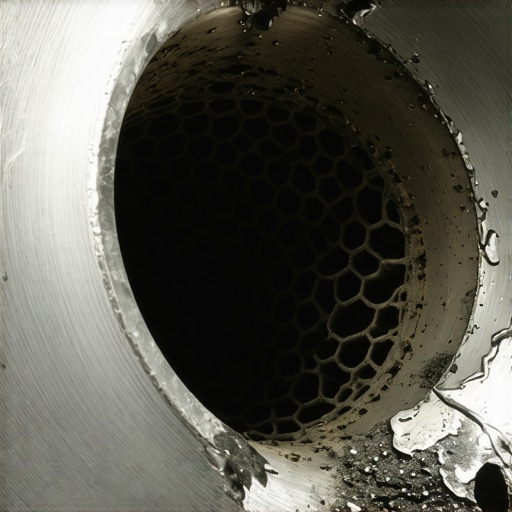 This level of vehicle diagnostics eliminates the guesswork that leads to expensive, unnecessary part replacements.
Mechanical anomalies often present as acoustic signatures before they manifest as catastrophic failures. A rattling sound from the undercarriage isn’t just an annoyance; it is often the sound of a shattered catalyst core bouncing inside its housing. This can lead to intermittent power loss as the broken pieces shift and periodically block the exit pipe. If you are hearing strange thumps or metallic pings, it is worth comparing those sounds against our guide on 3 noises your engine makes that mean you should stop driving immediately. If your exhaust system is clear but the sluggishness remains, we suggest reading our deep dive into transmission troubles to ensure the drag isn’t coming from a failing torque converter or internal gear slippage. Sharing your diagnostic results with a trusted technician can save hundreds in labor costs by narrowing the search area before the car even hits the lift.
The transition from a mechanical obstruction to a chemical failure often begins with ‘catalyst poisoning,’ a process where the internal precious metals are coated by contaminants. While thermal meltdowns are dramatic and easy to spot, chemical poisoning is a stealthier adversary. It usually stems from internal engine leaks, such as worn valve stem seals or fatigued piston rings, which allow motor oil to enter the combustion stream. The phosphorus and zinc found in standard engine oils act as a glaze, sealing the microscopic pores of the ceramic substrate. This prevents the exhaust gases from ever touching the catalyst, rendering the unit inert even if it appears physically intact. Expert auto repair necessitates identifying the source of these contaminants before installing a new converter, otherwise, the replacement will meet the same fate within months.
Why Carbon Buildup Is Your Catalyst’s Silent Executioner
Beyond oil consumption, carbon soot from an over-rich fuel mixture creates a physical barrier that restricts flow long before the honeycomb melts. This is particularly prevalent in vehicles used for short ‘stop-and-go’ trips where the exhaust never reaches the light-off temperature required for self-cleaning. As the soot accumulates, it effectively reduces the diameter of the exhaust passages, increasing the velocity of the remaining flow while simultaneously spiking the backpressure. A professional car service should include a ‘snap-throttle’ test, where the technician quickly opens the throttle and monitors the rate of pressure decay in the exhaust manifold. A slow decay is a definitive sign of a restrictive soot load. For those dealing with persistent performance issues, checking for the real reason your gas mileage suddenly dropped can often lead back to this hidden carbon accumulation.
How Does High Exhaust Backpressure Mess With Variable Valve Timing?
Modern engines equipped with Variable Valve Timing (VVT) are exceptionally sensitive to exhaust dynamics. In a healthy system, the ‘scavenging’ effect uses the momentum of exiting exhaust pulses to help pull the fresh air-fuel mixture into the cylinder during the valve overlap period. However, when backpressure rises due to a clogged converter, this pressure gradient is reversed. Instead of pulling fresh air in, the high-pressure spent gases are pushed back into the intake manifold. This creates an internal EGR effect that dilutes the intake charge, causing rough idles and erratic power delivery that a standard scanner might misinterpret as a VVT solenoid failure. According to technical data from BorgWarner, even a minor deviation in exhaust pressure can significantly delay the response time of hydraulic cam phasers, leading to a loss of synchronization between the crankshaft and camshaft. 
The Critical Role of Scavenging and Pulse Tuning
Exhaust systems are not merely pipes; they are tuned resonators designed to operate at specific frequencies. When a restriction like a failing catalyst is introduced, it disrupts the ‘standing waves’ within the manifold. This disruption prevents the engine from achieving peak volumetric efficiency, as the pressure waves reflect back toward the exhaust valve at the wrong time. This is why a car with a partially clogged converter might feel powerful at low RPMs but completely fall flat as the engine speed increases and the exhaust pulses become more frequent. If you are noticing a strange ‘hissing’ sound under heavy acceleration, you are likely hearing those compressed gases escaping through the smallest gaps in your manifold gaskets. This is a high-stakes game of physics; ignoring these signs can lead to localized hotspots that eventually crack the exhaust manifold itself. If you’ve already noticed strange vibrations or noises, it’s time to consult our guide on 3 noises your engine makes that mean you should stop driving immediately to prevent a total engine meltdown.
Advanced vehicle diagnostics often require looking at the ‘fuel trim cells’ to see how the ECM is compensating at different load ranges. If the long-term fuel trims are excessively negative at high loads, the computer is likely trying to compensate for the lack of fresh air entering the cylinders due to the backpressure. This data, combined with a physical backpressure gauge reading, provides a 360-degree view of the engine’s health. By the time a P0420 code appears, the damage is usually well-advanced. Technicians who want to stay ahead of the curve should prioritize flow-testing as part of any 100,000-mile inspection, ensuring the exhaust path remains as clear as the day it left the factory.
The stakes of exhaust restriction escalate dramatically when dealing with forced induction. For a turbocharged engine, the catalytic converter is not just an emissions device; it is the primary pressure drop point that determines turbocharger efficiency. When a converter becomes partially obstructed, the pressure differential across the turbine wheel decreases. This reduction in ‘delta P’ prevents the turbo from spooling correctly, leading to massive lag and a significant increase in EGT (Exhaust Gas Temperature). Prolonged exposure to these elevated temperatures can lead to ‘heat soak,’ which eventually crystallizes the oil within the turbo’s center housing rotating assembly (CHRA). This is a prime example of how a failure in the auto repair of the exhaust system can cascade into a multi-thousand-dollar engine rebuild.
Turbocharged Engines Pay the Highest Price for Exhaust Backpressure
In a high-performance car service environment, technicians often monitor the pressure ratio between the intake manifold and the exhaust manifold. If the exhaust pressure exceeds the intake pressure significantly—a condition known as ‘negative scavenging’—the engine will begin to ingest its own waste heat. This not only spikes the cylinder temperatures but also promotes pre-ignition or ‘knock.’ According to technical white papers from Garrett Motion, maintaining a low-restriction exhaust path is vital for the longevity of the turbine’s journal bearings, as excessive backpressure creates an axial thrust load that the internal components were never designed to withstand.  By the time you notice a loss of boost, the internal heat may have already compromised the structural integrity of the turbocharger housing.
Can an Obstruction Upstream Actually Blow Your Turbo Seals?
The answer lies in the delicate balance of oil pressure and exhaust gas pressure. Inside the turbocharger, dynamic seals rely on a pressure differential to keep oil within the bearing housing. When a clogged catalytic converter spikes the backpressure in the turbine housing, it can actually overcome these seals, forcing exhaust gases into the oiling system or, conversely, pushing oil out into the exhaust stream. This creates a feedback loop of destruction: the leaking oil then coats the remaining clear sections of the catalyst, accelerating the clogging process. This hidden mechanical struggle is a core reason why vehicle diagnostics must include a physical inspection of the turbocharger’s bypass valve and wastegate when an exhaust restriction is suspected.
Decoding the Waveform with Pressure Transducers
To reach the pinnacle of diagnostic accuracy, master technicians are moving away from static gauges and toward in-cylinder pressure transducers paired with high-speed oscilloscopes. This method allows you to see the actual ‘exhaust plateau’ during the exhaust stroke. A rounded or elevated plateau on the waveform is a smoking gun for a restriction, providing a visual representation of the engine’s struggle to breathe that no OBD-II scanner can match. If your vehicle feels lethargic or is exhibiting inconsistent boost levels, don’t wait for a check engine light to confirm the worst. Share your symptoms with our expert community below or schedule a deep-dive flow test to ensure your engine’s vitals remain within factory specifications. Staying ahead of these thermal dynamics is the only way to guarantee long-term reliability in the modern era of high-strung, downsized engines.
Advanced vehicle diagnostics often reside at the intersection of chemical engineering and mechanical fluid dynamics. While many car owners view the catalytic converter as a passive component, an expert technician recognizes it as the gatekeeper of engine volumetric efficiency. When the ceramic honeycomb monolith within the converter becomes obstructed—whether through thermal meltdown from unburned fuel or physical soot accumulation—the engine essentially begins to suffocate. This obstruction creates excessive exhaust backpressure, which prevents the combustion chamber from clearing spent gases, leading to a cascade of performance failures that can baffle even seasoned DIYers. Mastering the art of identifying these failures before they lead to total engine shutdown is a hallmark of professional-grade auto repair.
Why Your Engine Suffocates When the Catalyst Fails
The primary function of the converter is to facilitate a redox reaction, converting toxic gases into less harmful substances. However, when the internal substrate degrades, the flow of exhaust is severely restricted. One of the most immediate indicators is the real reason your car smells like rotten eggs, which signifies a breakdown in the sulfur reduction process. Beyond the olfactory warnings, a clogged catalyst causes a tangible drop in torque. This is because the engine has to work harder to push exhaust through a restricted passage, a phenomenon often measured in pounds per square inch (PSI) of backpressure. According to standards and research by SAE International, any backpressure exceeding 1.5 to 2.0 PSI at 2,000 RPM usually indicates a significant restriction in the exhaust path. Understanding these thermal and pressure-related dynamics is essential for any comprehensive car service routine.
Can a Clogged Converter Mimic a Failing Fuel Pump?
It is surprisingly common for technicians to mistake a clogged converter for a failing fuel pump or a faulty fuel injector. Both issues lead to a “bogging down” sensation under load. However, the diagnostic distinction lies in the behavior of the vacuum gauge. A healthy engine will maintain a steady vacuum at idle, but a clogged converter will cause the vacuum to drop steadily as the RPMs are held constant, as the exhaust cannot escape fast enough to allow for fresh intake air. Diving deeper into the hidden world of vehicle diagnostics allows for a more nuanced interpretation of these fluctuating sensor readings. If you notice your car hesitates during acceleration but starts fine, you are likely dealing with a flow restriction rather than a fuel delivery problem. If you suspect these symptoms are affecting your driveability, you might also want to rule out transmission failures that can cause similar sluggishness.
Ditching the OBD-II for High-Fidelity Mechanical Tests
While an OBD-II scanner might throw a P0420 code, that signal is often just the tip of the iceberg. True expertise involves physical verification. The “easy way” to confirm a clog without expensive machinery is the infrared thermometer test. By measuring the temperature at the inlet and outlet of the converter, a professional looks for a temperature increase at the outlet. If the outlet is cooler than the inlet, the chemical reaction is dead, and the core is likely blocked. Another field-tested method is the rattle test; a simple tap on the converter housing can reveal if the ceramic substrate has shattered, a common precursor to total obstruction. These hands-on techniques ensure that your vehicle diagnostics are grounded in mechanical reality rather than just software assumptions. If your diagnostics point to a failing exhaust system, don’t ignore the warning signs. Contribute your findings to our community forum or explore our more advanced guides to keep your vehicle at peak performance.
The relationship between backpressure and fuel trim is a critical focal point for technicians who look beyond simple error codes. When the exhaust path becomes restricted, the volumetric efficiency of the engine plummet. This happens because the engine cannot effectively purge the cylinders of spent gases, which in turn limits the volume of fresh air-fuel mixture that can be drawn in during the intake stroke. The Engine Control Module (ECM) reacts to this by adjusting the long-term fuel trims, often leaning out the mixture as it detects a lower mass of incoming air. This specific interaction is frequently the real reason your gas mileage suddenly dropped, even if your driving habits haven’t changed. Identifying this shift early prevents the localized overheating that can warp cylinder heads or damage valves.
Is Your Car Lying to You Through the O2 Sensor?
One of the greatest challenges in modern auto repair is determining whether a sensor is reporting a failure or causing one. In a restricted exhaust system, the oxygen sensors are often bathed in a stagnant, high-pressure environment that prevents them from getting an accurate cross-section of the exhaust stream. According to the Environmental Protection Agency (EPA), the On-Board Diagnostic (OBD) system is mandated to monitor the efficiency of the catalyst by comparing the switching rates of the upstream and downstream O2 sensors. However, the system is less adept at identifying physical blockages that haven’t yet reached a chemical failure threshold. This means you could have a significant power loss while the computer remains convinced that everything is operating within legal emission limits. Relying solely on the dashboard light is a reactive strategy; proactive drivers look for subtle cues like why your car bogs down when you turn on the air conditioner, as the extra engine load makes an exhaust restriction much more apparent.
Stop Chasing Shadows and Verify the Core
When the data is ambiguous, the expert reaches for tools that provide visual or physical proof. One of the most effective ways to confirm a melted or soot-clogged substrate without removing the entire exhaust assembly is to use a borescope through the upstream oxygen sensor port. By utilizing the $30 tool that lets you see inside your engine, you can visually inspect the face of the ceramic honeycomb for signs of ‘meltdown’ or oil fouling. If you see a smooth, white or light-tan surface, the obstruction may lie further downstream in the muffler or resonator. This level of vehicle diagnostics eliminates the guesswork that leads to expensive, unnecessary part replacements.
Mechanical anomalies often present as acoustic signatures before they manifest as catastrophic failures. A rattling sound from the undercarriage isn’t just an annoyance; it is often the sound of a shattered catalyst core bouncing inside its housing. This can lead to intermittent power loss as the broken pieces shift and periodically block the exit pipe. If you are hearing strange thumps or metallic pings, it is worth comparing those sounds against our guide on 3 noises your engine makes that mean you should stop driving immediately. If your exhaust system is clear but the sluggishness remains, we suggest reading our deep dive into transmission troubles to ensure the drag isn’t coming from a failing torque converter or internal gear slippage. Sharing your diagnostic results with a trusted technician can save hundreds in labor costs by narrowing the search area before the car even hits the lift.
The transition from a mechanical obstruction to a chemical failure often begins with ‘catalyst poisoning,’ a process where the internal precious metals are coated by contaminants. While thermal meltdowns are dramatic and easy to spot, chemical poisoning is a stealthier adversary. It usually stems from internal engine leaks, such as worn valve stem seals or fatigued piston rings, which allow motor oil to enter the combustion stream. The phosphorus and zinc found in standard engine oils act as a glaze, sealing the microscopic pores of the ceramic substrate. This prevents the exhaust gases from ever touching the catalyst, rendering the unit inert even if it appears physically intact. Expert auto repair necessitates identifying the source of these contaminants before installing a new converter, otherwise, the replacement will meet the same fate within months.
Why Carbon Buildup Is Your Catalyst’s Silent Executioner
Beyond oil consumption, carbon soot from an over-rich fuel mixture creates a physical barrier that restricts flow long before the honeycomb melts. This is particularly prevalent in vehicles used for short ‘stop-and-go’ trips where the exhaust never reaches the light-off temperature required for self-cleaning. As the soot accumulates, it effectively reduces the diameter of the exhaust passages, increasing the velocity of the remaining flow while simultaneously spiking the backpressure. A professional car service should include a ‘snap-throttle’ test, where the technician quickly opens the throttle and monitors the rate of pressure decay in the exhaust manifold. A slow decay is a definitive sign of a restrictive soot load. For those dealing with persistent performance issues, checking for the real reason your gas mileage suddenly dropped can often lead back to this hidden carbon accumulation.
How Does High Exhaust Backpressure Mess With Variable Valve Timing?
Modern engines equipped with Variable Valve Timing (VVT) are exceptionally sensitive to exhaust dynamics. In a healthy system, the ‘scavenging’ effect uses the momentum of exiting exhaust pulses to help pull the fresh air-fuel mixture into the cylinder during the valve overlap period. However, when backpressure rises due to a clogged converter, this pressure gradient is reversed. Instead of pulling fresh air in, the high-pressure spent gases are pushed back into the intake manifold. This creates an internal EGR effect that dilutes the intake charge, causing rough idles and erratic power delivery that a standard scanner might misinterpret as a VVT solenoid failure. According to technical data from BorgWarner, even a minor deviation in exhaust pressure can significantly delay the response time of hydraulic cam phasers, leading to a loss of synchronization between the crankshaft and camshaft.
The Critical Role of Scavenging and Pulse Tuning
Exhaust systems are not merely pipes; they are tuned resonators designed to operate at specific frequencies. When a restriction like a failing catalyst is introduced, it disrupts the ‘standing waves’ within the manifold. This disruption prevents the engine from achieving peak volumetric efficiency, as the pressure waves reflect back toward the exhaust valve at the wrong time. This is why a car with a partially clogged converter might feel powerful at low RPMs but completely fall flat as the engine speed increases and the exhaust pulses become more frequent. If you are noticing a strange ‘hissing’ sound under heavy acceleration, you are likely hearing those compressed gases escaping through the smallest gaps in your manifold gaskets. This is a high-stakes game of physics; ignoring these signs can lead to localized hotspots that eventually crack the exhaust manifold itself. If you’ve already noticed strange vibrations or noises, it’s time to consult our guide on 3 noises your engine makes that mean you should stop driving immediately to prevent a total engine meltdown.
Advanced vehicle diagnostics often require looking at the ‘fuel trim cells’ to see how the ECM is compensating at different load ranges. If the long-term fuel trims are excessively negative at high loads, the computer is likely trying to compensate for the lack of fresh air entering the cylinders due to the backpressure. This data, combined with a physical backpressure gauge reading, provides a 360-degree view of the engine’s health. By the time a P0420 code appears, the damage is usually well-advanced. Technicians who want to stay ahead of the curve should prioritize flow-testing as part of any 100,000-mile inspection, ensuring the exhaust path remains as clear as the day it left the factory.
The stakes of exhaust restriction escalate dramatically when dealing with forced induction. For a turbocharged engine, the catalytic converter is not just an emissions device; it is the primary pressure drop point that determines turbocharger efficiency. When a converter becomes partially obstructed, the pressure differential across the turbine wheel decreases. This reduction in ‘delta P’ prevents the turbo from spooling correctly, leading to massive lag and a significant increase in EGT (Exhaust Gas Temperature). Prolonged exposure to these elevated temperatures can lead to ‘heat soak,’ which eventually crystallizes the oil within the turbo’s center housing rotating assembly (CHRA). This is a prime example of how a failure in the auto repair of the exhaust system can cascade into a multi-thousand-dollar engine rebuild.
Turbocharged Engines Pay the Highest Price for Exhaust Backpressure
In a high-performance car service environment, technicians often monitor the pressure ratio between the intake manifold and the exhaust manifold. If the exhaust pressure exceeds the intake pressure significantly—a condition known as ‘negative scavenging’—the engine will begin to ingest its own waste heat. This not only spikes the cylinder temperatures but also promotes pre-ignition or ‘knock.’ According to technical white papers from Garrett Motion, maintaining a low-restriction exhaust path is vital for the longevity of the turbine’s journal bearings, as excessive backpressure creates an axial thrust load that the internal components were never designed to withstand. By the time you notice a loss of boost, the internal heat may have already compromised the structural integrity of the turbocharger housing.
Can an Obstruction Upstream Actually Blow Your Turbo Seals?
The answer lies in the delicate balance of oil pressure and exhaust gas pressure. Inside the turbocharger, dynamic seals rely on a pressure differential to keep oil within the bearing housing. When a clogged catalytic converter spikes the backpressure in the turbine housing, it can actually overcome these seals, forcing exhaust gases into the oiling system or, conversely, pushing oil out into the exhaust stream. This creates a feedback loop of destruction: the leaking oil then coats the remaining clear sections of the catalyst, accelerating the clogging process. This hidden mechanical struggle is a core reason why vehicle diagnostics must include a physical inspection of the turbocharger’s bypass valve and wastegate when an exhaust restriction is suspected.
Decoding the Waveform with Pressure Transducers
To reach the pinnacle of diagnostic accuracy, master technicians are moving away from static gauges and toward in-cylinder pressure transducers paired with high-speed oscilloscopes. This method allows you to see the actual ‘exhaust plateau’ during the exhaust stroke. A rounded or elevated plateau on the waveform is a smoking gun for a restriction, providing a visual representation of the engine’s struggle to breathe that no OBD-II scanner can match. If your vehicle feels lethargic or is exhibiting inconsistent boost levels, don’t wait for a check engine light to confirm the worst. Share your symptoms with our expert community below or schedule a deep-dive flow test to ensure your engine’s vitals remain within factory specifications. Staying ahead of these thermal dynamics is the only way to guarantee long-term reliability in the modern era of high-strung, downsized engines.
Expert Insights & Advanced Considerations
Chemical Cleaners Rarely Fix a Melted Honeycomb
While many over-the-counter additives promise to clear a restricted converter, they are ineffective against thermal meltdown. If the ceramic substrate has fused due to excessive heat, no chemical solvent can restore the exhaust flow. Technicians must differentiate between simple carbon soot and physical structural failure to maintain professional auto repair standards.
Physical Gauges Beat Software Data for Flow Verification
Modern vehicle diagnostics rely heavily on digital signals, but an OBD-II port cannot measure physical resistance. A dedicated backpressure gauge provides a raw, undeniable measurement of the engine’s breathing capacity. This verification is essential in any car service aiming to solve intermittent power loss without speculative parts replacement.
Lower Tolerance for Backpressure in Forced Induction
Naturally aspirated engines might tolerate minor restrictions, but in a turbocharged setup, the same backpressure is catastrophic. Catching these pressure spikes early is vital for unlocking your car’s potential and preventing turbocharger bearing failure.
Curated Expert Resources
SAE International Technical Library: The ultimate resource for engineering standards regarding exhaust flow and catalyst redox efficiency.
Garrett Motion Engineering Guides: A specialized deep-dive into the critical relationship between turbine efficiency and exhaust backpressure.
BorgWarner VVT White Papers: Essential reading for understanding how exhaust pressure waves impact the timing of hydraulic cam phasers.
Final Expert Perspective
The integrity of the exhaust system is a fundamental pillar of engine longevity. Whether you are experiencing subtle torque loss or severe bogging, the catalytic converter remains a primary suspect. By looking beyond the check engine light and employing advanced tools like the $30 tool that lets you see inside your engine, you can perform vehicle diagnostics with surgical precision. To further elevate your maintenance routine, we recommend exploring our top auto repair techniques every car owner should know to ensure your vehicle remains as efficient as the day it left the showroom.