The Reality of Thermal Stabilization in Modern Friction Materials
In the professional sphere of automotive maintenance, the first drive after a brake pad replacement is viewed as a critical period of thermal stabilization. For many vehicle owners, observing wisps of smoke emanating from the wheel wells triggers immediate concern. However, from a metallurgical and chemical perspective, a controlled degree of ‘off-gassing’ is frequently a standard byproduct of the bedding-in process. Modern friction materials, such as those utilized in top-tier auto repair applications, rely on complex phenolic resins and binders. These components must undergo a final high-heat curing cycle—essentially a ‘trial by fire’—to achieve their optimal coefficient of friction and long-term durability. This phenomenon, often accompanied by a distinct acrid scent, typically dissipates within the first 10 to 50 miles of urban driving where frequent stops facilitate consistent heat cycles.
Stop Ignoring the Protective Oil Coating on New Rotors
One of the most common oversights during a standard car service involves the preparation of the brake rotors. Manufacturers apply a thin, petroleum-based rust inhibitor to raw steel rotors to prevent oxidation during shipping and storage. If a technician or DIY enthusiast fails to thoroughly degrease these surfaces using a specialized solvent, the residual oil will vaporize the moment the pads apply kinetic pressure. This creates a thick, white smoke that is purely superficial but can be alarming. It is vital to differentiate this from a hydraulic leak. According to technical documentation from SAE International, any fluid contamination on the friction surface significantly alters the brake’s performance characteristics, potentially leading to glazed pads if the thermal load is not managed correctly. If you are performing your own maintenance, learning how to inspect your components without full disassembly can help you spot these residues early.
Does Your Brake Pedal Feel Firm Despite the Visual Smoke?
When diagnosing smoking brakes, the physical feedback through the pedal is your most reliable diagnostic tool. If the smoke is accompanied by a firm, responsive pedal and consistent stopping power, you are likely witnessing the benign curing of resins or the burning off of manufacturing oils. Conversely, if the pedal feels soft or if the vehicle pulls to one side, you are likely facing a mechanical failure, such as a seized caliper piston or collapsed flexible brake line. In these scenarios, the smoke is a symptom of extreme friction resulting from the pads failing to retract from the rotor surface. This mechanical drag generates temperatures far exceeding the design limits of street-legal hardware, often leading to uneven pad wear and warped rotors. Professional vehicle diagnostics are essential in these cases to prevent catastrophic brake fade.
Distinguishing Chemical Curing from Mechanical Seizure
Expert technicians look for specific ‘witness marks’ to determine if smoke is a cause for alarm. A blueish tint on the rotor surface or a localized ‘hot spot’ indicates that the brake is dragging, which is a significant safety hazard. This often occurs when the caliper slide pins are not properly lubricated during the auto repair process, preventing the assembly from centering itself over the disc. If the smoke persists for more than 24 hours of regular use, the probability of a mechanical defect increases significantly. In some instances, the smoke may even stem from a failing transmission seal leaking fluid onto the hot exhaust or brake components, masquerading as a brake issue. If your pedal feel remains inconsistent after service, consider reading our expert analysis on troubleshooting spongy brake pedals to ensure your hydraulic system is fully integrity-tested.
The Dangers of Hidden Hydraulic Fluid Combustion
Beyond the chemical curing of the friction material, a far more hazardous cause of smoke is the combustion of hydraulic brake fluid. If a technician accidentally scores a piston seal or fails to properly torque a bleeder screw during a routine flush, fluid can weep onto the rotor. Unlike the dry, acrid smell of resin, burning brake fluid has a sharp, chemical odor and often produces a heavier, more persistent smoke. This is often the root cause when drivers find that how we fixed a spongy brake pedal when bleeding the lines failed was only half the battle. High-quality DOT 4 fluids have high boiling points, but when they meet a rotor that has reached 400 degrees Fahrenheit, they will ignite or vaporize instantly, signaling a major safety failure that requires immediate intervention.
Why Dry Caliper Pins Create a Smoke Screen
Equally critical is the state of the caliper slide pins. If these are not cleaned and lubricated with a high-temperature silicone-based grease, the caliper cannot float freely. This leads to the inner pad remaining in constant contact with the rotor, creating a friction-induced smoke storm. This is a primary reason why your brake pads are wearing unevenly on one side. When a pad cannot retract, the kinetic energy is converted into localized heat that can eventually crystallize the friction material, a process known as glazing, which permanently reduces your stopping power.
Is Your New Brake Hardware Actually Melting?
In rare cases, what appears to be smoke is actually the failure of inferior hardware components. Low-grade rubber boots on the caliper pins or cheap plastic shims can literally melt if the braking system isn’t properly bedded. However, an expert technician also knows to look beyond the brakes. If the smoke is coming from the center of the wheel, it might be a failing hub assembly. Learning how to identify which wheel bearing is noisy while driving can help you distinguish between a brake issue and a catastrophic bearing failure that is throwing grease onto the hot brake components.
The Scientific Way to Bed-In Your Pads
To mitigate these issues, following a strict bedding-in or ‘burnishing’ protocol is non-negotiable. According to technical bulletins from Akebono Brake Corporation, the burnishing process involves a series of controlled stops that transfer a thin, uniform layer of friction material—the transfer film—from the pad to the rotor surface. Without this film, the pads rub directly against the raw metal, increasing heat and the likelihood of smoke. By applying top auto repair techniques every car owner should know, such as performing 10 stops from 30 mph with moderate pressure, you stabilize the temperature and ensure the resins cure without overheating. This proactive approach transforms a potentially scary ‘smoking’ event into a routine part of high-performance maintenance. Have you noticed a strange smell after your last service? Share your experience in the comments or check out our guide on how to tell if your mechanic actually changed your oil filter to stay on top of your shop’s quality control.
Stop Blaming the Pads When Your Hub Surface is Filthy
In the high-stakes environment of a professional shop, the interface between the wheel hub and the brake rotor is often treated with less reverence than it deserves. If a technician fails to scale off the corrosion and rust on the hub face before mounting a new rotor, the assembly will suffer from lateral run-out. Even a deviation of a few thousandths of an inch causes the rotor to “wobble” between the pads. This unintended contact generates localized heat during high-speed cruising, leading to a mysterious smoke that appears only after twenty minutes of highway driving. This isn’t a bedding-in issue; it’s a mechanical misalignment that can lead to DTV (Disc Thickness Variation). If you’ve recently upgraded your hardware but notice a rhythmic vibration along with the smoke, you might be seeing the results of a skipped cleaning step. This is why vehicle diagnostics must include a run-out gauge check to ensure the rotor is perfectly perpendicular to the spindle.
How do you tell if that smoke is coming from your wheel bearings instead?
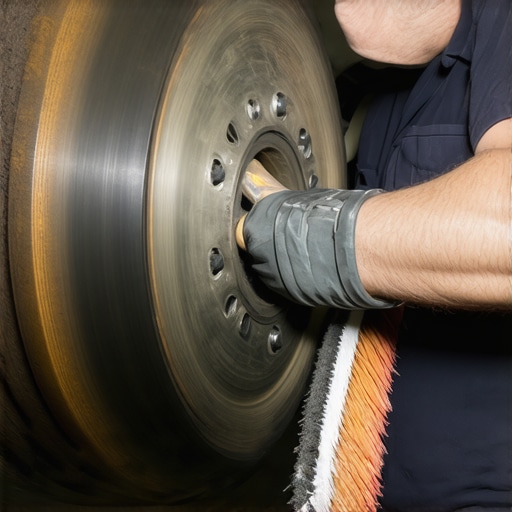
Distinguishing between a brake-related thermal event and a failing wheel bearing requires a keen sense of smell and a bit of spatial observation. While brake resin has a sharp, almost “fishy” or acrid chemical scent, burning wheel bearing grease is noticeably heavier, more oily, and “sweeter.” Furthermore, pay close attention to the point of origin. Brake smoke typically curls out from the vents of the rotor or the gaps in the caliper. Bearing smoke, however, tends to seep from the center of the hub behind the dust cap or the alloy wheel’s center bore. If the center of your wheel is too hot to touch while the outer rim remains relatively cool, your issue likely lies in the hub assembly rather than the friction material. Learning how to identify which wheel bearing is noisy while on the road can save you from a costly and unnecessary brake job.
Don’t Let Brake Cleaner Residue Become a Fire Hazard
While we emphasize cleaning rotors, the type of solvent used and the timing of the application are critical. Non-chlorinated brake cleaners are excellent degreasers, but they are also highly flammable. If a technician sprays a caliper to clear away dust and immediately begins a heavy bedding-in session, the trapped liquid in the crevices of the pads can reach its flashpoint. According to safety data sheets and engineering insights from StopTech, the “white smoke” often observed during initial runs can sometimes be the rapid evaporation—or combustion—of these residual solvents. Always ensure the components are bone-dry before the first test drive. If the smoke persists beyond the first few stops, it indicates a deeper contamination issue that might require a complete solvent wash and a re-evaluation of the assembly process.
Why You Must Avoid the Temptation of Back-to-Back Emergency Stops
A common mistake among DIYers is thinking that more heat is always better during the bedding process. They perform ten consecutive 60-0 mph panic stops, thinking they are “sealing” the pads. In reality, this often leads to “green fade,” where the binders in the pad haven’t had a chance to off-gas slowly. This creates a cushion of gas between the pad and rotor, much like a puck on an air-hockey table, resulting in a total loss of braking power and massive clouds of smoke. This over-bedding can also cause the brake fluid to exceed its dry boiling point, leading to a dangerous pedal drop. If you find yourself in this situation, you must drive at a moderate speed without using the brakes to allow the airflow to cool the system gradually. Understanding the nuances of top-tier auto repair techniques means knowing when to push the hardware and when to let it breathe. Have you ever felt your brakes lose their “bite” after a series of hard stops? This thermal saturation is often the precursor to permanent component damage.
The Thermal Trap of Over-Tightened Wheel Bolts
It sounds counterintuitive, but the way you tighten your lug nuts can directly influence whether your brakes smoke. If an impact wrench is used to hammer the bolts on without a torque wrench, the uneven clamping force can actually distort the brake rotor and the hub. This distortion creates “hot spots” where the pad makes more contact in one area than another. This localized friction results in uneven heating, causing the rotor to expand asymmetrically. The resulting smoke isn’t just a nuisance; it’s a sign that the rotor is being “pinched,” which will eventually lead to permanent warping. Professional shops always utilize a star pattern and a calibrated torque wrench to ensure even pressure across the entire mounting surface, preventing the thermal imbalances that lead to smoke and vibration.
Let the Metal Breathe During Initial Thermal Stress
Modern brake systems are precision-engineered to operate within tight tolerances, yet the macroscopic world of a workshop often introduces microscopic variables that lead to thermal anomalies. When we discuss the smoke emanating from new components, we must look beyond the immediate friction surface and consider the internal stresses of the pad backing plate and the integrity of the shim adhesive. High-performance pads often use specialized dampening shims bonded with high-temperature polymers. If these polymers are exposed to a rapid, unmanaged temperature spike—rather than the gradual increase recommended during burnishing—the adhesive can reach its smoke point prematurely. This isn’t necessarily a failure of the pad, but a sign that the heat soak has reached the rear of the assembly faster than the cooling air can dissipate it. Professionals refer to this as the asymptotic approach to thermal equilibrium, where the system must be allowed to cycle down to ambient temperature to ensure the chemical bonds within the friction material fully stabilize.
Stop Blaming the Caliper When the Bracket is Corroded
Even if your slider pins are swimming in high-grade silicone grease, the caliper bracket itself can be a hidden source of unintended friction. The metal tabs, or ‘ears,’ of the brake pads must slide freely within the stainless-steel abutment clips. Over time, road salt and moisture cause oxidation to bloom underneath these clips, a phenomenon known as ‘bracket squeeze.’ This rust expansion pinches the pad, preventing it from retracting even when the hydraulic pressure is released. This constant, light contact creates a localized thermal event that manifests as a thin, persistent stream of smoke. It is a critical step in any top-tier auto repair to file down the bracket surface to bare metal and apply a thin layer of anti-seize before installing new clips. Failure to address this ensures that even the most expensive ceramic pads will smoke and glaze within the first week of service.
Why Does Smoke Persist After the First Ten Miles?
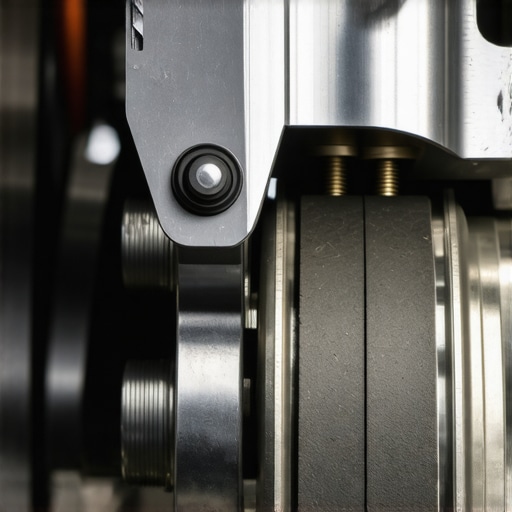
If you have surpassed the initial off-gassing phase and still observe a distinct haze from the wheel wells, you might be dealing with ‘thermal shock’ rather than standard curing. According to technical documentation from Brembo, improper bedding—specifically making a full stop while the pads are at peak temperature—can cause the material to transfer unevenly, creating ‘cementite’ spots on the rotor. These ultra-hard spots create a barrier that prevents heat from escaping the rotor, leading to a feedback loop where surface temperatures continue to climb until the remaining resins in the core of the pad begin to vaporize. This is often the precursor to permanent disc thickness variation and the characteristic ‘brake judder’ that plagues poorly executed maintenance jobs.
Don’t Ignore the Micro-Gaps in Your Pad Abutment Clips
The geometry of the abutment clips serves a secondary purpose: heat dissipation and vibration dampening. If these clips are bent during installation or if cheap, non-OEM hardware is used, the pad may sit slightly askew. This misalignment causes the leading edge of the pad to bite harder than the trailing edge, resulting in ‘taper wear’ and excessive heat on one side of the hardware. The smoke you see is often the literal burning of the protective coating on the back of the pad because the localized temperature has exceeded 600 degrees Fahrenheit. Ensuring a perfect, perpendicular fit is why vehicle diagnostics should always include a visual inspection of the pad’s footprint on the rotor. Is your vehicle behaving unpredictably after a recent brake upgrade? Consult our advanced guide to pinpoint the mechanical root cause before your next road trip or share your symptoms in the comments below for expert feedback.
The Reality of Thermal Stabilization in Modern Friction Materials
In the professional sphere of automotive maintenance, the first drive after a brake pad replacement is viewed as a critical period of thermal stabilization. For many vehicle owners, observing wisps of smoke emanating from the wheel wells triggers immediate concern. However, from a metallurgical and chemical perspective, a controlled degree of ‘off-gassing’ is frequently a standard byproduct of the bedding-in process. Modern friction materials, such as those utilized in top-tier auto repair applications, rely on complex phenolic resins and binders. These components must undergo a final high-heat curing cycle—essentially a ‘trial by fire’—to achieve their optimal coefficient of friction and long-term durability. This phenomenon, often accompanied by a distinct acrid scent, typically dissipates within the first 10 to 50 miles of urban driving where frequent stops facilitate consistent heat cycles.
Stop Ignoring the Protective Oil Coating on New Rotors
One of the most common oversights during a standard car service involves the preparation of the brake rotors. Manufacturers apply a thin, petroleum-based rust inhibitor to raw steel rotors to prevent oxidation during shipping and storage. If a technician or DIY enthusiast fails to thoroughly degrease these surfaces using a specialized solvent, the residual oil will vaporize the moment the pads apply kinetic pressure. This creates a thick, white smoke that is purely superficial but can be alarming. It is vital to differentiate this from a hydraulic leak. According to technical documentation from SAE International, any fluid contamination on the friction surface significantly alters the brake’s performance characteristics, potentially leading to glazed pads if the thermal load is not managed correctly. If you are performing your own maintenance, learning how to inspect your components without full disassembly can help you spot these residues early.
Does Your Brake Pedal Feel Firm Despite the Visual Smoke?
When diagnosing smoking brakes, the physical feedback through the pedal is your most reliable diagnostic tool. If the smoke is accompanied by a firm, responsive pedal and consistent stopping power, you are likely witnessing the benign curing of resins or the burning off of manufacturing oils. Conversely, if the pedal feels soft or if the vehicle pulls to one side, you are likely facing a mechanical failure, such as a seized caliper piston or collapsed flexible brake line. In these scenarios, the smoke is a symptom of extreme friction resulting from the pads failing to retract from the rotor surface. This mechanical drag generates temperatures far exceeding the design limits of street-legal hardware, often leading to uneven pad wear and warped rotors. Professional vehicle diagnostics are essential in these cases to prevent catastrophic brake fade.
Distinguishing Chemical Curing from Mechanical Seizure
Expert technicians look for specific ‘witness marks’ to determine if smoke is a cause for alarm. A blueish tint on the rotor surface or a localized ‘hot spot’ indicates that the brake is dragging, which is a significant safety hazard. This often occurs when the caliper slide pins are not properly lubricated during the auto repair process, preventing the assembly from centering itself over the disc. If the smoke persists for more than 24 hours of regular use, the probability of a mechanical defect increases significantly. In some instances, the smoke may even stem from a failing transmission seal leaking fluid onto the hot exhaust or brake components, masquerading as a brake issue. If your pedal feel remains inconsistent after service, consider reading our expert analysis on troubleshooting spongy brake pedals to ensure your hydraulic system is fully integrity-tested.
The Dangers of Hidden Hydraulic Fluid Combustion
Beyond the chemical curing of the friction material, a far more hazardous cause of smoke is the combustion of hydraulic brake fluid. If a technician accidentally scores a piston seal or fails to properly torque a bleeder screw during a routine flush, fluid can weep onto the rotor. Unlike the dry, acrid smell of resin, burning brake fluid has a sharp, chemical odor and often produces a heavier, more persistent smoke. This is often the root cause when drivers find that how we fixed a spongy brake pedal when bleeding the lines failed was only half the battle. High-quality DOT 4 fluids have high boiling points, but when they meet a rotor that has reached 400 degrees Fahrenheit, they will ignite or vaporize instantly, signaling a major safety failure that requires immediate intervention.
Expert Insights & Advanced Considerations
Why Glazing is the Silent Killer of Performance
Many drivers assume that smoke is the worst-case scenario, but the true threat is crystallization. If the thermal load is unmanaged, the pad surface turns into a smooth, glass-like substance that offers zero bite. Using top auto repair techniques every car owner should know, such as controlled thermal cycling, is the only way to prevent this permanent damage.
Stop Ignoring the Hub Face During Installation
Even the best pads will smoke if the rotor isn’t sitting flat. Lateral run-out caused by rust on the hub face leads to unintended contact and localized overheating. Professional vehicle diagnostics must include a run-out check to ensure the assembly is perfectly aligned before the first mile is driven.
The 400-Degree Threshold for Thermal Stability
Most street-level smoke occurs when components reach approximately 400 degrees Fahrenheit for the first time. This is the critical zone where resins off-gas. If your smoke persists beyond this thermal peak, it’s no longer curing; it’s a mechanical drag issue or a fluid leak that demands an unlock of your car’s potential through proper hardware adjustment.
Curated Expert Resources
Akebono Technical Training Portals
An essential resource for understanding the specific chemistry of ceramic pads and why their bedding-in odors differ from semi-metallic alternatives.
Brembo Advanced Bedding Protocols
This resource provides the high-performance standard for managing thermal stress in high-friction environments to prevent rotor warping.
SAE J2522 Braking Standards
For those looking for deep-level technical data, the SAE papers offer the scientific benchmarks for how friction materials should behave under extreme heat.
Final Expert Perspective
Distinguishing between the normal curing of high-quality friction materials and a dangerous mechanical failure is a hallmark of an informed vehicle owner. While some smoke is expected as resins stabilize and manufacturing oils burn off, the context of your brake pedal feel and the scent of the vapor are your ultimate guides. By applying top auto repair techniques and ensuring meticulous cleanliness during installation, you can navigate the bedding-in period with confidence. If you encounter persistent smoke or a loss of pedal pressure, do not hesitate to seek a professional car service to verify your system’s integrity. We invite you to share your own experiences with new brake performance in the comments or contact our experts for a deeper diagnostic review.