The interplay between mechanical tolerances and hydraulic fluid dynamics is never more evident than during the first five minutes of a cold start. For professional technicians and performance enthusiasts, a hard shift isn’t just a minor annoyance; it is a diagnostic window into the health of the transmission’s internal seal integrity and electronic pressure regulation logic. As the ambient temperature drops, the physical properties of the transmission fluid change, demanding more from the vehicle’s computer systems to maintain gear-change smoothness. Understanding the nuances of this behavior requires looking past basic maintenance and into the fluid dynamics and electronic mapping that govern modern drivetrains.
Temperature-Induced Viscosity Shifts and Hydraulic Latency
Transmission fluid acts as the lifeblood of the gearbox, serving as a lubricant, a coolant, and a hydraulic medium. When the engine is cold, the viscosity of the Automatic Transmission Fluid (ATF) increases significantly, making it more resistant to flow through the intricate passages of the valve body. According to technical documentation from the Society of Automotive Engineers (SAE), the time required for a solenoid to reach its commanded pressure is directly proportional to the fluid’s kinematic viscosity. This latency means that the clutch packs may engage with more force than intended because the Electronic Pressure Control (EPC) solenoid cannot bleed off pressure as quickly as it would at operating temperature. Proactive owners can mitigate these issues by researching the truth about lifetime transmission fluid, as older, degraded fluid loses its viscosity index much faster than fresh, synthetic alternatives. Over time, these hard shifts can lead to micro-fretting on gear teeth, eventually requiring deeper transmission failures decoded through forensic mechanical analysis.
Why Does the TCM Aggressively Advance Line Pressure During Cold Starts?
The Transmission Control Module (TCM) is programmed with specific software maps dedicated to cold-start scenarios. During this phase, the computer intentionally increases line pressure to ensure that clutches do not slip while the fluid is thick and sluggish. While this protects the friction material from burning, it often results in the jarring shift quality drivers experience. Furthermore, modern vehicle diagnostics often show that as sensors like the Transmission Fluid Temperature (TFT) sensor age, they may report inaccurate data, leading the TCM to maintain high-pressure maps for longer than necessary. This mismatch between actual fluid temperature and the computer’s perception is a common root cause of persistent hard shifting that persists even after the first few miles of driving.
Seal Shrinkage and Internal Bleed-Off Challenges
Internal hydraulic seals, often made of nitrile or Viton, tend to harden and shrink in cold climates. When these seals lose their elasticity, they may allow fluid to leak past them—a condition known as internal bleed-off. Until the fluid warms up and causes the seals to expand and soften, the pump must work harder to maintain the necessary pressure for a smooth gear transition. If you find that your vehicle struggles to engage gears at all during the winter months, you should investigate why your automatic transmission shifts hard when the engine is cold to identify if seal failure is the primary culprit. If the hard shifting becomes so severe that the vehicle limits performance, learn how to get your car out of limp mode to avoid being stranded while you plan your next repair step.
The complexity of a modern transmission involves more than just gears and fluid; it relies on sophisticated adaptive learning algorithms. These programs track the wear of internal components and adjust shift timing to compensate for frictional changes over time. However, when the environment shifts to freezing temperatures, these learned values often become counterproductive. The computer expects a certain response time based on warm fluid data, and when the viscous, cold fluid responds slower, the TCM over-corrects by spiking line pressure. This digital-to-analog disconnect is why many drivers find that the $20 scan tool that does more than the dealership rig is an essential tool for resetting adaptives after a fluid change or a sudden seasonal shift. Resetting these values forces the computer to re-evaluate the engagement windows under current conditions.
Is Your Five-Minute Warm-Up Routine Actually Starving Your Gearbox?
Many drivers believe idling the engine in the driveway is sufficient to warm up the entire vehicle. From a transmission perspective, this is a half-truth. While the engine reaches operating temperature via internal combustion, the transmission fluid often remains cold because it only circulates through the cooling loop and heat exchanger once the thermostat opens or the vehicle is in motion. According to technical insights from the National Institute for Automotive Service Excellence (ASE), extended idling provides minimal benefit to the drivetrain compared to light-load driving. For those dealing with transmission troubles how to save time and money with proven repairs, shifting through the gears while stationary can help circulate fluid through the valve body, but gentle driving is the only real way to bring the gearbox up to temperature safely without causing excessive wear.

The Hidden Fatigue of Accumulator Springs and Check Balls
Inside the valve body, mechanical accumulators act as hydraulic buffers to smooth out the transition between gear states. These are essentially pistons backed by heavy-duty springs designed to absorb the shock of engagement. Over years of thermal cycling, these springs can lose their tension or break entirely. When the fluid is cold and dense, a fatigued spring cannot provide the necessary counter-pressure, resulting in a bang shift that feels like being rear-ended. If you notice that your vehicle only behaves this way during the winter, or why your transmission slips only when you make a sharp turn, it may point to debris or physical wear within these hydraulic buffers. Diagnostic data from high-end tools can sometimes pinpoint which specific solenoid or accumulator is lagging, allowing for a surgical repair rather than a total overhaul.
When Electronic Solenoids Face High Resistance
Electrical resistance fluctuates as temperatures drop, which can subtly change how much current is required to actuate a shift solenoid. A solenoid that is nearing the end of its service life might function perfectly at 190 degrees but struggle to overcome the physical friction of cold fluid when the copper coil is cold. This is why professional shops often recommend how to find reliable car service near you in 2025 that utilizes oscilloscope testing to monitor the amperage draw of these components. Catching a sticky solenoid early can prevent the excessive heat generation that occurs when a transmission is forced to work with improper line pressures. If the vehicle is already struggling to maintain speed, you might be facing a situation where the car feels sluggish and a $15 filter fixes it, or it could be the first sign of a failing torque converter clutch. Have you noticed your car shifting differently as the seasons change? Share your experience in the comments or read our guide on transmission failures decoded to see if your symptoms match common mechanical red flags.
Update Your TCM Software to Eliminate Ghost Shifts
Modern transmissions are effectively computers on wheels, and much like your smartphone, they require periodic software updates to function optimally. Manufacturers frequently release Technical Service Bulletins (TSBs) that contain updated shift maps specifically designed to address harsh cold-start engagements. These updates modify how the Transmission Control Module (TCM) commands the solenoids to react when the fluid temperature is below a certain threshold. Instead of a hardware failure, your hard shift might simply be a software bug in the original programming that failed to account for the long-term wear of the internal friction plates or the extreme viscosity changes in northern climates. These technical bulletins often describe shift hunting—a condition where the transmission cannot decide which gear to stay in—specifically during the warm-up cycle. Professional diagnostic technicians often look for these software revisions before recommending a teardown. 
Can Relearning Adaptive Values Save Your Clutch Packs?
The short answer is yes, but with a caveat. The TCM continuously learns the fill time of each clutch—the exact millisecond it takes for fluid to move the piston and engage the gear. As fluid thickens in the cold, these learned values, which were calibrated during warm driving, become inaccurate. Initiating a clutch relearn or adaptive reset via a high-end scan tool forces the computer to start from a clean slate and re-measure the engagement windows. According to repair standards established by the Automotive Service Association (ASA), resetting these adaptives without first changing the fluid can sometimes mask deeper mechanical issues, so it is vital to ensure the ATF is clean before recalibrating the brain of the gearbox. If you are noticing these symptoms, do not wait for a warning light; explore the hidden world of vehicle diagnostics to understand how your car communicates its health before a breakdown occurs.
Why Group IV Synthetics Outperform Standard ATF in the Cold
The molecular structure of your transmission fluid determines its pour point—the lowest temperature at which it remains fluid. Conventional fluids often contain paraffinic waxes that crystallize in extreme cold, creating a thick syrup effect that hampers solenoid response and causes the characteristic bang shift. In contrast, Group IV synthetic oils, known as Polyalphaolefins (PAO), and Group V esters are engineered to maintain a consistent flow rate across a massive temperature range. By switching to a high-quality synthetic, you provide the hydraulic system with a more predictable medium, allowing the TCM to maintain smooth shift timing even at sub-zero temperatures. The friction modifiers in the ATF are chemically designed to work within a specific heat range; outside of this, the coefficient of friction changes, causing the clutch plates to grab and release unevenly. This is often why a simple fluid swap is the most cost-effective mechanical repair you can perform for a winter-weary vehicle.
The Torque Converter Clutch and the Battle for Early Engagement
One of the most complex events during a cold start is the engagement of the Torque Converter Clutch (TCC). This clutch is responsible for creating a direct mechanical link between the engine and the transmission to improve fuel economy at cruising speeds. However, when the fluid is cold, the TCC may shudder or engage with a violent thud. This happens because the TCM is trying to balance the need for fuel efficiency with the physical limitations of the cold fluid’s friction modifiers. If the TCC engages too early or with too much pressure while the fluid is still viscous, it can create a vibration that feels like driving over rumble strips. Understanding how the TCC lock-up schedule changes based on engine load and ambient air temperature is critical for diagnosing why a car might feel perfectly smooth on the highway but jerky in stop-and-go morning traffic. Identifying these nuances often requires monitoring real-time data streams to see exactly when the lock-up command is issued relative to the felt impact…
The nuance of the Torque Converter Clutch (TCC) engagement is merely the tip of the spear when it comes to cold-weather drivability. Beyond the physical engagement, we must consider the volumetric efficiency of the transmission pump itself. At low temperatures, the higher viscosity of the fluid can induce cavitation, where air bubbles form and then collapse violently against the metal surfaces of the gears and pump housing. This phenomenon, often mistaken for a mechanical slip, creates microscopic pits that eventually compromise the entire hydraulic circuit. Experts in tribology note that while modern lubricants are resilient, they cannot entirely counteract the physics of fluid starvation if the intake screen is partially obstructed by debris or varnish.
When Brittle Seals Fail to Hold the Line
As the mercury drops, the elastomer compounds used in internal seals and O-rings reach their glass transition temperature. In this state, the material loses its ability to deform and seal against the metal bores of the valve body. This leads to cross-leaks, where pressurized fluid meant for one clutch pack escapes into another, or worse, back into the pan. This internal leakage is a primary driver of the delayed engagement symptom, where you shift into Drive, but the vehicle hesitates for several seconds before slamming into gear. Addressing this requires a specialized understanding of seal swell additives and the mechanical limits of high-mileage components. 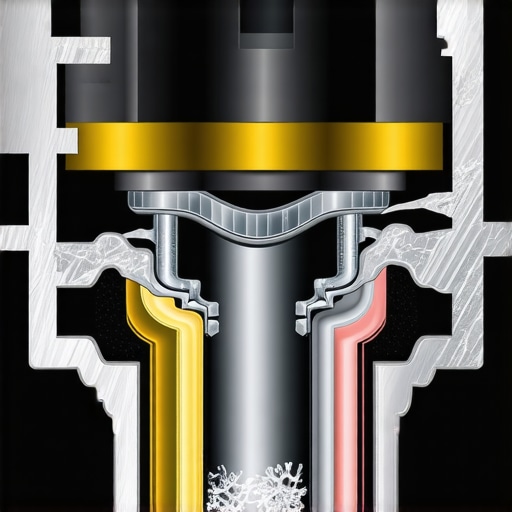
How Does Cold Fluid Affect Your Solenoid’s Electrical Resistance?
The relationship between temperature and electrical conductivity is a cornerstone of modern automotive diagnostics. As the solenoid coils cool, their electrical resistance decreases, which can lead to a higher current draw for a given voltage. The TCM must be sophisticated enough to compensate for this cold coil effect; otherwise, the solenoid may snap open or shut with excessive speed, translating into a harsh shift. According to technical standards from the Automatic Transmission Rebuilders Association (ATRA), many ghost problems in the valve body are actually electrical timing issues caused by the degradation of the copper windings within these actuators. This is why a simple resistance test at room temperature often fails to capture the intermittent failures occurring at zero degrees.
The Molecular Advantage of Ester-Based Lubricants
While standard synthetic ATFs offer significant improvements over conventional oils, top-tier Group V ester-based lubricants provide a level of polar attraction to metal surfaces that is unmatched. This clinging effect ensures that even after a long night in freezing temperatures, a thin film of lubricant remains on the clutch plates and gear teeth, reducing the initial friction of the first shift. These esters also act as natural detergents, keeping the sensitive check balls and tiny orifices of the valve body free from the varnish that cold fluid tends to leave behind. Switching to a high-performance fluid isn’t just about smooth shifting; it’s about preserving the metallurgical integrity of the planet carrier and sun gears.
Stop Guessing and Start Monitoring Real-Time Data Streams
Transitioning from reactive maintenance to proactive optimization requires looking at the Shift Adapt numbers via a professional-grade interface. If your shift adaptives are maxed out, the computer is telling you it can no longer compensate for the mechanical wear or fluid sluggishness present in the system. By monitoring the PIDs (Parameter IDs) for shift time and pressure command, a technician can see exactly where the hydraulic delay is occurring. Are you ready to stop guessing why your car jerks in the morning? Review our comprehensive guide on transmission failures decoded to pinpoint the exact component failing your winter stress test.
Expert Perspectives on Hydraulic Resilience
Why You Can’t Always Outrun Factory Software Limitations
Even the most advanced transmission control modules have a ‘ceiling’ for adaptive learning. When internal wear exceeds the software’s ability to adjust solenoid timing, no amount of ‘relearning’ will fix a hard shift. This is where the hidden world of vehicle diagnostics becomes essential; you need to look at the ‘fill time’ data to see if the hardware is physically incapable of meeting the computer’s demands. Professional technicians use these metrics to differentiate between a simple fluid issue and a mechanical deadline.
Stop Settling for Conventional Fluid in Freezing Climates
Many owners ignore the truth about lifetime transmission fluid claims, but cold-weather performance is where this neglect shows most. Moving to a high-viscosity-index synthetic reduces the ‘hammer effect’ of cold fluid because the lubricant maintains a more consistent flow rate. This prevents the TCM from overcompensating with massive pressure spikes that cause that jarring ‘bang’ into gear. High-quality synthetics also protect the valve body from the microscopic debris that cold, thick fluid tends to drag through the system.
Watch the Milliseconds Before They Cost You a Gearbox
A hard shift that lasts only a few minutes might seem benign, but it represents thousands of cycles of unnecessary stress on the planetary gear sets and clutch hubs. Utilizing the $20 scan tool that does more than the dealership rig allows you to monitor solenoid amperage in real-time, catching a failing actuator before it causes catastrophic transmission failures decoded in our technical guides. Identifying these latency issues early is the difference between a solenoid swap and a four-thousand-dollar rebuild.
#IMAGE_PLACEHOLDER_E#
Deep-Dive Resources for Serious Drivetrain Analysis
ATRA Technical Bulletins: The Automatic Transmission Rebuilders Association provides granular data on specific solenoid failure patterns that are often missed by generic OBD-II scanners. SAE International Research: For those interested in the physics of cavitation, searching SAE journals for ‘low-temperature hydraulic latency’ offers peer-reviewed insights into fluid behavior. OEM Technical Service Bulletins (TSBs): Always check for software-specific updates; many manufacturers have released patches specifically to soften the ‘cold-start bang’ through revised pressure mapping. Utilizing expert auto repair tips for 2025 can help you navigate these professional resources effectively.
The Strategic Path to Transmission Longevity
Solving a hard shift isn’t about chasing symptoms; it’s about mastering the intersection of fluid chemistry and electronic logic. Whether you are dealing with transmission troubles how to save time and money with proven repairs or simply trying to survive a harsh winter, the goal is always to minimize hydraulic shock. If your car continues to struggle even after a fluid refresh, how to find reliable car service near you in 2025 involves finding a shop that prioritizes data-driven diagnostics over ‘parts-cannon’ replacements. We invite you to share your diagnostic findings or reach out via our contact us page to join the conversation on professional-grade vehicle maintenance.