A morning squeal from the engine bay is rarely just a nuisance; it is a critical diagnostic signal indicating a failure in the auxiliary drive system’s ability to manage torque. The serpentine belt, a core component analyzed in advanced vehicle diagnostics, relies on precise tension and high friction coefficients to drive the alternator, power steering pump, and air conditioning compressor. When these variables fall out of alignment, the resulting slip creates the characteristic high-pitched chirp or squeal that signifies impending component failure or advanced belt degradation. Understanding the mechanical relationship between temperature and rubber elasticity is vital for any car owner looking to avoid a total breakdown on the highway.
Stop Ignoring the Morning Slip Before It Snaps
The serpentine belt system operates within a narrow tolerance of mechanical tension. During the overnight period, moisture can accumulate on the pulleys due to temperature fluctuations, particularly if the vehicle is parked outdoors. This layer of condensation reduces the initial coefficient of friction. As the engine cranks, the belt must suddenly overcome the rotational inertia of multiple accessories. If the EPDM (Ethylene Propylene Diene Monomer) material has hardened due to age—a process often identified during a routine car service—it cannot grip the pulley grooves effectively until the heat generated by the friction softens the rubber. This temporary slippage is what produces the noise you hear.
[IMAGE_PLACEHOLDER]
How Cold Starts Expose Tensioner Spring Fatigue
In many modern vehicles, the squeal isn’t actually the fault of the belt itself but rather the automatic tensioner. The tensioner utilizes a heavy-duty internal spring and a dampening mechanism to maintain constant pressure. Over time, the internal spring loses its rate, or the dampening fluid leaks out, leading to belt flutter. When the engine is cold, the oil inside the tensioner is more viscous, making it slower to react to the rapid vibrations of a starting engine. If you notice the belt vibrating excessively, you may need to apply specific auto repair techniques to evaluate the tensioner’s range of motion rather than simply replacing the belt. According to the Car Care Council, auxiliary drive belts should be inspected every 60,000 miles to prevent sudden failure that could leave you stranded.
Why does the noise vanish after several minutes of driving?
The disappearance of the noise is a phenomenon known as thermal expansion and friction-induced softening. As the belt slips, it generates significant heat. This heat causes the rubber compound to become more pliable and expands the belt slightly, allowing it to seat deeper into the pulley grooves. Simultaneously, the heat evaporates any morning dew or frost that was acting as a lubricant. However, this is a dangerous cycle; the heat generated by slipping significantly accelerates the oxidation of the rubber, leading to micro-cracks and eventual snapping. While many drivers search for how to quiet a screeching fan belt quickly, these are often temporary fixes for a deep-seated mechanical issue.
Check for Fluid Contamination Beyond Simple Wear
Sometimes the squeal is a symptom of a secondary leak. If your engine is leaking oil or coolant, even a small amount can migrate onto the belt surface. Ethylene glycol (coolant) is particularly problematic as it acts as a permanent lubricant, making it impossible for the belt to gain traction regardless of its age. If you find your car making strange noises, it is always wise to consult an expert regarding expert auto repair tips to ensure you aren’t masking a failing water pump or a leaking front main seal. Professional technicians use specialized lighting and dyes to detect these contaminants before they ruin a brand-new belt. If your vehicle is exhibiting these symptoms alongside shifting irregularities, it is imperative to investigate whether your transmission is also being affected by parasitic drag or sensor errors caused by erratic alternator output.
Pulleys That Fight Back: The Misalignment Trap
Even a brand-new belt will produce an agonizing chirp if the pulleys are not perfectly coplanar. Mechanical misalignment comes in two forms: parallel and angular. Parallel misalignment occurs when a pulley is pressed too far onto a shaft, while angular misalignment happens when a component, like an alternator or power steering pump, is bolted on slightly crooked. This offset forces the belt ribs to scrub against the sides of the pulley grooves, creating high-frequency vibrations. If you have recently performed a repair and the noise persists, you may need to identify a bad ground wire or check mounting brackets for hairline fractures that allow components to shift under load. Specialized laser alignment tools are now the gold standard in modern shops to ensure the belt path is true within a fraction of a millimeter.
The Hidden Clutch Failure Inside Your Alternator
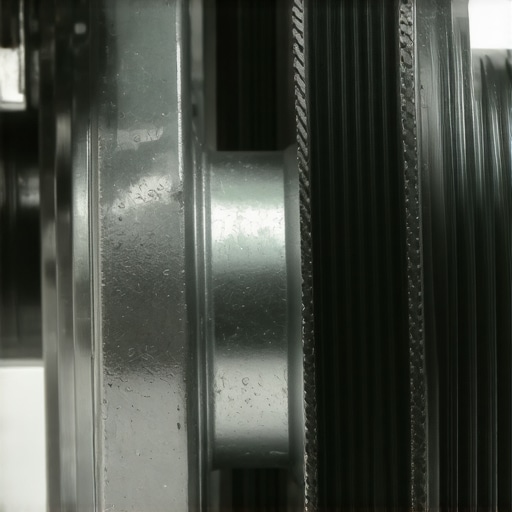
Many vehicle owners are unaware that their alternator likely contains an Overrunning Alternator Pulley (OAP) or an Overrunning Alternator Decoupler (OAD). These sophisticated components allow the alternator rotor to ‘freewheel’ when the engine speed suddenly drops, preventing the belt from snapping or slipping due to the alternator’s rotational inertia. When these internal clutches seize, the belt is forced to absorb the shock of every gear change and deceleration. This leads to a distinct rattle or squeal specifically during downshifts or when turning the engine off. Understanding how these components interact with the rest of the charging system is critical; failure to diagnose a seized OAP can quickly lead to you wondering how to tell if your alternator is killing your new battery, as the erratic tension wreaks havoc on electrical output.
Can a dying battery actually force your belt to scream?
It sounds counterintuitive, but the state of your electrical system directly dictates the mechanical resistance on the serpentine belt. When a battery is struggling to hold a charge or has an internal short, the voltage regulator commands the alternator to maximize its output. This creates a powerful electromagnetic field inside the alternator, making the rotor significantly harder to turn. This increased torque requirement is often the ‘tipping point’ for a belt that is slightly worn or a tensioner that is borderline weak. You might notice that your headlights dim when you turn the steering wheel or at the exact moment the belt chirps; this is a clear indication that the mechanical and electrical loads are competing for limited drive-system energy.
Distinguish Belt Slip from Bearing Failure in Seconds
Before throwing parts at the problem, use the ‘water spray test’ to isolate the source. Lightly misting the ribbed side of the belt with water while the engine is running will momentarily increase lubricity. If the noise disappears instantly, the issue is definitely belt-to-pulley friction or misalignment. However, if the noise remains unchanged or intensifies, you are likely dealing with a failing bearing inside an idler pulley or an accessory. According to SAE International (Society of Automotive Engineers) standard J2432, the performance of multi-ribbed belts is heavily dependent on the stability of the tensioning system and the surface integrity of the pulleys. If your diagnostics reveal deeper issues, investing in a 20-dollar scan tool can help you monitor real-time engine load and alternator duty cycles to see if the engine is fighting an uphill battle against parasitic drag. Have you ever had a mystery squeal that turned out to be something other than the belt? Share your diagnostic wins in the comments below or check out our guide on how to find reliable car service near you to get a professional second opinion.
Stop Blaming the Belt for a Bad Harmonic Balancer
The crankshaft pulley, or harmonic balancer, serves as the pulse-setter for the entire auxiliary drive system. When the elastomeric bond between the inner hub and outer ring begins to shear, the pulley no longer rotates in a perfectly concentric circle. This subtle oscillation sends destructive shockwaves through the belt, often mistaken for a weak tensioner or a cheap belt material. High-mileage engines are particularly prone to this failure, where the rubber dampening element dry-rots and causes a rhythmic chirp rather than a constant squeal. Replacing the belt in this scenario provides only a temporary reprieve, as the underlying vibration will eventually strip the new belt’s ribs or destroy the bearings in the nearest accessory. To diagnose this, a technician must observe the balancer under strobe light or use a dial indicator to check for lateral runout that exceeds manufacturer specifications.
Spotting Invisible EPDM Wear Before the Ribs Shred
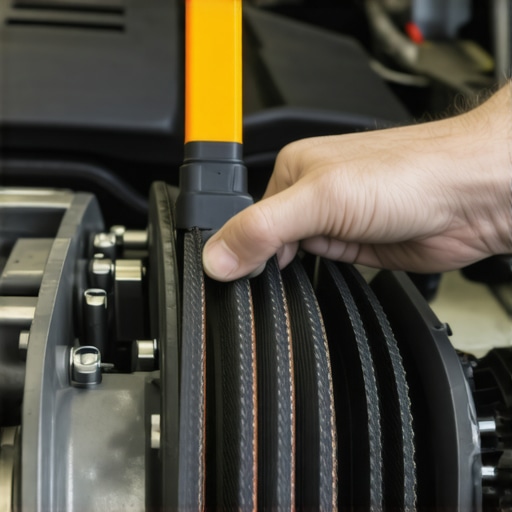
Modern belt materials like EPDM (Ethylene Propylene Diene Monomer) have revolutionized longevity, but they have also made visual inspections far more deceptive for the average car owner. Unlike the old-school neoprene belts that would develop clear, transverse cracks as they aged, EPDM wears down similarly to a tire tread—gradually losing material without showing any cracks at all. The ‘valleys’ between the ribs widen, and the ‘peaks’ become sharp, reducing the surface area contact with the pulleys. According to technical data from Gates Corporation, even a 10% loss in rib material can significantly increase the risk of belt hydroplaning on the pulley surface during heavy rain or high-humidity conditions. To accurately assess this, you cannot rely on a flashlight alone; professionals use a precision plastic rib gauge to measure the gap depth, a critical step often skipped during a standard car service.
Why does the squeal intensify only when the AC compressor kicks in?
When you engage the air conditioning, you aren’t just turning on a fan; you are dropping a massive mechanical load onto the drive system via an electromagnetic clutch. The AC compressor requires significant torque to compress refrigerant from a low-pressure gas to a high-pressure liquid. This sudden spike in resistance can expose a glazed belt that was otherwise ‘getting by’ under the light load of the alternator. If the belt screams the moment the AC cycles on, it usually indicates that the belt has lost its surface ‘tack’ or that the compressor’s internal oil is contaminated, creating drag that exceeds the belt’s friction limit. If you find yourself in this situation, it is wise to review auto repair techniques specifically for AC clutch air gaps, as an improper gap can also cause the belt to slip during engagement.
Why Cheap Aftermarket Belts Often Fail the Silence Test
The pursuit of a quiet engine bay often leads to a debate between OEM (Original Equipment Manufacturer) and budget aftermarket replacements. Not all rib profiles are created equal; many cheaper alternatives use a generic V-angle that doesn’t perfectly match the specific pulley sheaves of European or Japanese makes. This mismatch creates a ‘wedge’ effect where the belt sits too high or too low in the groove, leading to localized heat buildup and premature glazing. For those dealing with persistent ‘belt slap’—a common issue on high-compression diesel engines—upgrading to a high-modulus belt with aramid cords can be a game-changer. These belts offer much higher tensile strength and resist stretching under heavy load. If your drive system still sounds like a bag of angry cats despite a brand-new belt, it’s time to look deeper into the structural integrity of the mounting brackets themselves. Even a fraction of a degree of bracket flex under load can throw the entire system out of alignment, leading back to the same vehicle diagnostics hurdles you started with.
Analyzing the Physics of High-Frequency Harmonic Vibration
Sometimes the noise isn’t a slip at all, but a resonance frequency being reached at specific RPM ranges. This phenomenon occurs when the natural frequency of the belt span matches the firing frequency of the engine…
This phenomenon occurs when the natural frequency of the belt span matches the firing frequency of the engine, creating a “standing wave” that physically whips the belt off the pulleys. In engines with high-torque demands or cylinder deactivation technology, these harmonics are even more pronounced. This is where the Torsional Vibration Damper (TVD) becomes the unsung hero, absorbing the crankshaft’s micro-accelerations before they can reach the auxiliary system. If the elastomer inside the TVD has degraded, the resulting “dirty” torque will shred even the highest quality belts within weeks.
Start-Stop Systems Turn Your Belt Into a Structural Component
Modern stop-start technology has fundamentally redefined the stresses placed on the front-end accessory drive. In vehicles equipped with a Belt Alternator Starter (BAS), the belt is no longer a passive participant; it is the primary bridge for re-firing the engine. This requires a much higher pre-tension and a specialized “high-modulus” EPDM construction. When these systems fail to operate silently, the culprit is often a failing decoupler pulley designed to handle the massive torque reversals. Unlike traditional pulleys, these house internal springs and clutches that act as mechanical fuses. Ignoring a slight “clack” during a restart can lead to the belt snapping and potentially being sucked into the timing cover—a catastrophic scenario often discussed in high-level vehicle diagnostics.
Why Your Drive System Needs More Than Just a Visual Pass
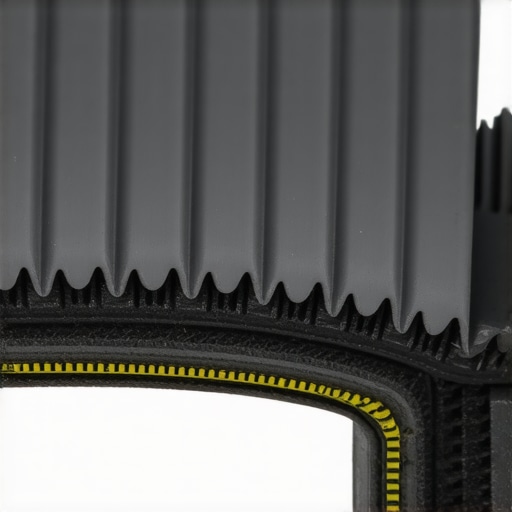
Environmental contaminants like road salt and fine silica act as industrial-grade sandpaper on your pulleys. Over several years, the pulley grooves themselves actually change shape, becoming “pointed” rather than “flat-bottomed.” This geometry shift means that even a brand-new belt will bottom out, losing the friction-generating contact on the rib sidewalls. According to technical bulletins from Continental, pulley wear is a primary cause of repeat belt failures that mechanics often overlook. If you see a “shiny” or polished look in the bottom of the pulley grooves, the pulley itself must be replaced alongside the belt to restore factory-spec grip. This level of attention is what separates a quick fix from a permanent car service solution.
Could a failing belt drive actually trigger a false misfire code?
The short answer is yes. Advanced Engine Control Units (ECUs) monitor the crankshaft position sensor with extreme precision to detect the slight deceleration caused by a misfiring cylinder. If a serpentine belt is slipping or a tensioner is vibrating violently, it creates “torsional noise” on the crankshaft. The ECU can misinterpret these mechanical tremors as erratic combustion, throwing a P0300 (random misfire) code when the engine is actually healthy. Before you tear into the ignition system, check the health of your drive system using auto repair techniques that isolate the belt from the engine’s rotation.
Master the Tensioner Index to Prevent the Highway Snap
Every automatic tensioner features a small cast-in mark known as the “wear indicator.” When the belt is new, the pointer should sit comfortably in the center of the range. As the belt stretches and the tensioner spring fatigues, that pointer migrates toward the outer stop. Once it hits the limit, the tensioner can no longer take up the slack, leading to the dreaded “belt slap” during rapid acceleration. If you notice your tensioner is at the end of its travel, don’t wait for the noise to become permanent. Investigating these signs early is a hallmark of expert auto repair tips that save thousands in repair bills. Have you checked your tensioner’s health lately? Jump under the hood today and see if your indicator is telling a story of impending failure.
Expert Insights & Advanced Considerations
Why Seasonal Humidity Plays Havoc With EPDM Compounds
Many technicians overlook the hygroscopic nature of road debris and dust that settle into belt grooves. When combined with morning dew, this creates a microscopic slurry that temporarily reduces the static friction coefficient. If you are trying to figure out how to quiet a screeching fan belt, remember that cleaning the pulleys is often as important as replacing the rubber. Moisture doesn’t just lubricate; it facilitates the ‘hydroplaning’ of the belt over the pulley peaks.
Stop Treating the Symptom When Your Harmonic Balancer Is Separating
A frequent error in high-mileage repairs is ignoring the crankshaft pulley’s internal rubber dampener. As this bond shears, the outer ring slips relative to the hub, causing a rhythmic chirp that mimics a bad belt. Utilizing expert auto repair tips involves marking the balancer with a white paint line; if the marks move apart after a drive, the balancer is the true culprit, not the belt tensioner.
[IMAGE_PLACEHOLDER_E]
Don’t Let Torsional Vibration Trigger a False Misfire Code
Modern engine management is so sensitive that a flapping serpentine belt can vibrate the crankshaft enough to fool the position sensor. This creates ghost misfire codes that lead owners to waste money on spark plugs and coils. Advanced vehicle diagnostics should always include a physical check of the belt dampening system before chasing electrical phantoms.
Why Every Pulleys Service Must Include a Groove Profile Check
Pulleys are wear items, just like brake rotors. Over 100,000 miles, the V-grooves sharpen into ‘V’ shapes that no longer support the belt’s ribs correctly. During a professional car service, a plastic gauge should be used to ensure the belt isn’t bottoming out, which causes heat build-up and catastrophic failure.
Curated Expert Resources
Gates Corporation Knowledge Center: The gold standard for technical bulletins regarding EPDM wear and pulley alignment specifications. SAE International J2432 Standards: Detailed engineering data on multi-ribbed belt performance under varying torque loads. Continental Engine Parts Tech Center: Excellent visual guides for identifying pulley geometry failure and belt glazing.
Final Expert Perspective
Mastering the nuances of the auxiliary drive system requires looking beyond the obvious squeal and understanding the physics of torque, tension, and thermal expansion. By applying advanced vehicle diagnostics and checking for underlying issues like harmonic balancer separation or pulley wear, you ensure long-term reliability rather than a temporary fix. If you’ve encountered a noise that defies the standard solutions, we invite you to contact us for a deeper technical consultation or to share your findings with our community of automotive experts.