In the realm of high-performance internal combustion, the absolute separation of the lubrication and cooling circuits is non-negotiable for mechanical longevity. When a technician pulls a dipstick only to find a light-brown, frothy substance—frequently likened to a milkshake—it signals a catastrophic breach in the engine’s internal integrity. This phenomenon is a chemical emulsion, occurring when glycol-based coolant and petroleum-based engine oil are agitated together under high heat and pressure. Identifying this issue early through precise vehicle diagnostics is the difference between a minor seal replacement and a complete powertrain overhaul.
Coolant Intrusion Destroys Bearing Surfaces Instantly
The primary function of engine oil is to provide a thin hydrodynamic film between moving metal parts, such as crankshaft journals and rod bearings. When coolant infiltrates the oiling system, it creates an emulsion that lacks the shear strength required to maintain this film. According to research published by the Society of Automotive Engineers (SAE), the presence of glycol significantly accelerates wear on lead-tin-copper bearings through chemical etching and oxidation. This breakdown often necessitates comprehensive auto repair strategies that go far beyond a simple oil change. In some cases, the same cooling loops that service the engine also interact with the transmission, meaning a failure in the radiator’s internal heat exchanger could contaminate both systems simultaneously.
Check the Oil Cooler Before You Pull the Heads
While most enthusiasts immediately fear a blown head gasket, a seasoned expert knows to look elsewhere first. Modern turbocharged and high-output engines often utilize oil-to-water heat exchangers. If the internal seals of this unit fail, the higher pressure of the oiling system—especially during cold starts—can force oil into the cooling system, or conversely, allow coolant to seep into the oil pan once the engine is shut down. Before committing to a head gasket replacement, professional car service procedures should include a cooling system pressure test and a chemical block test to detect the presence of combustion gases in the radiator. You might find that how to spot a failing water pump is just as critical as checking for external leaks, as internal pump failures can also lead to fluid mixing in specific engine architectures.
Why Does My Oil Look Milky After Short Winter Trips?
Not every instance of milky oil requires a heavy-duty engine teardown. In colder climates, short-trip driving prevents the engine from reaching full operating temperature, which is necessary to evaporate normal atmospheric condensation that accumulates in the crankcase. This moisture mixes with oil vapors to form a creamy sludge on the underside of the oil filler cap. However, if the fluid on the dipstick itself is affected, the problem is likely internal. If you are seeing these signs, consult with our expert diagnostic team to verify the health of your engine before internal friction causes permanent damage.
The Critical Role of Intake Manifold Gaskets in Fluid Separation
In many V-configured engines, the intake manifold serves as a bridge for coolant passages. A degraded intake gasket can allow pressurized coolant to leak directly into the lifter valley, where it drains straight into the oil pan. This is often a preferred scenario compared to a head gasket failure, as the repair is less invasive. Technicians must remain vigilant, as ignoring the ‘milkshake’ can lead to hydro-locking the cylinders or seizing the camshafts due to lack of lubrication. If you have noticed your car exhibits other symptoms, such as why your car stutters at 40mph, it may be a sign of systemic failure affecting both fuel delivery and internal cooling.
The conversation surrounding fluid contamination often ignores the dual-threat posed by modern radiator designs. Many vehicles route transmission fluid through an internal cooler located inside the radiator’s side tank. If the barrier between the coolant and the ATF (Automatic Transmission Fluid) fails, you are not just dealing with a ‘milkshake’ in the engine; you are looking at transmission troubles that can dissolve friction clutches within miles. This cross-contamination produces a pink, frothy sludge that is equally as destructive as its engine-oil counterpart. 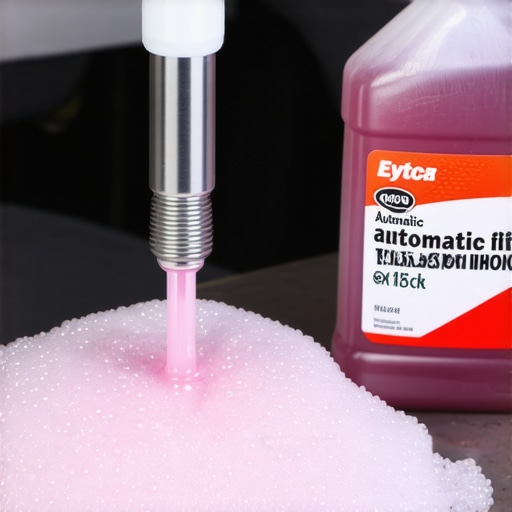
Is Your Radiator Actually a Double Agent?
When a radiator fails internally, the pressure differential between the cooling system and the transmission determines the direction of the fluid flow. Under heavy load, the transmission often operates at higher pressures, forcing ATF into the coolant. However, once the engine is shut down and the cooling system remains pressurized while the transmission pump stops, coolant is forced back into the gearbox. This ‘Strawberry Milkshake of Death’ requires immediate action and a complete system flush. Understanding the coolant color guide can help you distinguish between routine aging and catastrophic chemical contamination before the damage becomes irreversible.
Why Visual Inspections Often Miss the Real Culprit
Expert technicians know that a perfect-looking gasket doesn’t guarantee a sealed engine. Cylinder heads are prone to warping and hairline fractures that only open under extreme thermal expansion. According to technical bulletins from MAHLE Aftermarket, micro-cracks in the cylinder head casting—often located between the valve seats or leading to a coolant jacket—can be invisible to the naked eye. These fissures require specialized pressure testing in a hot tank to replicate engine operating temperatures and confirm the breach. Failing to account for these microscopic breaches leads to the dreaded ‘comeback’ where a new gasket is installed, but the oil remains milky. Integrating unlock your cars potential expert auto repair tips for 2025 into your maintenance schedule ensures that these high-level diagnostic steps are never skipped during a major teardown. If you find your temperature gauge fluctuating or how to verify your thermostat is actually opening becomes a daily concern, it is time to perform a cylinder leak-down test. This procedure introduces pressurized air into the combustion chamber to see if it bubbles out through the radiator, confirming a crack in the head or block even when the engine is cold. If you have noticed a sudden change in your fluid levels or a strange texture on your dipstick, do not wait for the engine to seize. Share your experience in the comments below or suggest a topic you would like us to cover next regarding engine health. Protecting your vehicle investment starts with accurate data and professional-grade diagnostic tools.
How Spectrometry Reveals the Chemical Secrets of Your Oil
While the ‘milkshake’ texture on a dipstick is a definitive red flag, relying solely on visual cues is a reactive strategy that often comes too late. Proactive fleet managers and performance enthusiasts increasingly turn to Used Oil Analysis (UOA) to detect sub-clinical levels of glycol contamination. By using Inductively Coupled Plasma (ICP) spectrometry, a lab can identify elevated levels of sodium and potassium—standard additives in most anti-freeze formulations—long before the oil turns opaque. According to standards established by ASTM International, even a 0.1% concentration of coolant in the oil can significantly alter the lubricant’s oxidation stability. This microscopic intrusion acts as a catalyst, accelerating the formation of organic acids that attack the soft metal overlays of your main bearings.
Can Cooling System Pressure Peaks Hide Intermittent Gasket Failures?
A common frustration in high-level vehicle diagnostics is the ‘ghost’ leak—a situation where a cooling system holds pressure during a static shop test but allows fluid mixing under wide-open throttle. This occurs because combustion pressures are exponentially higher than the 15-20 PSI maintained by a radiator cap. Under load, cylinder pressures can force exhaust gases into the water jacket, displacing coolant and creating localized steam pockets. When the engine throttles down, the cooling system, now over-pressurized by combustion gas, forces coolant back through the same microscopic breach into the oiling circuit. If you find your expansion tank smells of fuel or shows ‘soot’ traces, you are likely witnessing a dynamic failure that a standard pressure tester will never catch.
VVT Solenoids Face a Deadly Threat from Emulsified Lubricants
Modern engines rely on oil not just for lubrication, but as a hydraulic fluid for Variable Valve Timing (VVT) and active fuel management systems. These systems utilize solenoids with extremely fine mesh screens and narrow oil galleries. When glycol-laden oil begins to foam, it introduces compressibility into the hydraulic circuit. This leads to erratic cam phasing, causing the stuttering or lack of power often associated with why your car stutters at 40mph. The emulsion acts more like a non-Newtonian fluid, increasing in viscosity under the shear of the VVT pump and effectively ‘clogging’ the control valves before they can even reach the phasers.
The damage to these components is often irreversible; even after the primary leak is fixed, residual sludge trapped in the solenoids can lead to persistent timing codes. To prevent a recurring nightmare, contact our expert diagnostic team for a deep-system flush that targets these hydraulic passages specifically. Failing to clear these tiny arteries is a common reason why DIY head gasket repairs fail shortly after the vehicle returns to the road.
Hunt for Porosity with Dye Penetrant Testing
When the gaskets appear intact but the oil remains milky, the investigation must shift to the structural integrity of the castings. Aluminum cylinder heads are susceptible to ‘porosity’—microscopic voids formed during the manufacturing process that can open up after years of heat cycles. A sophisticated technique involves using a fluorescent dye penetrant. After stripping the head, a technician applies a low-viscosity dye that seeps into any surface-breaking cracks or pores. Under a UV light, these defects glow, revealing leak paths that are invisible under normal lighting. This level of scrutiny is what separates a standard auto repair from an expert-grade restoration. It is the only way to confirm if a ‘milkshake’ is caused by a replaceable seal or a terminal casting flaw. As the engine block expands under operating temperatures…
Thermal Growth Rates Often Snap Weakened Gasket Bonds
As the engine block expands under operating temperatures, the differential in expansion rates between an aluminum head and a cast-iron block can shear a low-quality head gasket in a literal ‘sawing’ motion. This bi-metal stress is why torque-to-yield (TTY) bolts are critical; they act as springs to maintain clamping force. If the hardware is reused or torqued incorrectly, that ‘milkshake’ will return within weeks regardless of the gasket’s quality. High-performance builds often require multi-layer steel (MLS) gaskets that utilize a specialized coating to accommodate this micro-movement without losing the seal. Advanced auto repair involves verifying the surface finish of both the head and block with a profilometer to ensure it meets the specific Ra requirements of these modern gaskets.
Look Beyond the Block to the Turbocharger’s Internal Seals
In the world of forced induction, the turbocharger’s Center Housing Rotating Assembly (CHRA) is a common but often ignored culprit for fluid mixing. These units are frequently water-cooled and oil-lubricated. A hairline crack in the CHRA casting or a failed internal seal allows high-pressure oil to enter the lower-pressure coolant jacket, or vice-versa during cool-down. Before you pull the cylinder heads on a turbocharged vehicle, bypass the turbo cooling lines and pressure test the unit independently to rule it out. Identifying a failed turbo early through precision vehicle diagnostics can save you thousands in unnecessary engine teardowns and labor hours.
Could Stray Voltage Be the Real Reason Your Gaskets Keep Rotting?
Even the most perfect mechanical seal cannot withstand the effects of electrolysis. This occurs when a cooling system lacks proper grounding, or the coolant’s chemistry has degraded to the point where it becomes an electrolyte. According to the technical experts at Gates Corporation, stray electrical current travels through the coolant, physically stripping metal ions from the engine block and radiator. This galvanic corrosion creates ‘pinhole’ leaks in the timing cover or head gasket interface that look like simple wear but are actually electrical in nature. If you find your gaskets failing repeatedly, a digital multimeter test of the coolant is mandatory to prevent systemic destruction.
Neutralize the Acidic Aftermath Before the First Startup
Fixing the leak is only half the battle. The residual glycol-oil emulsion is highly acidic and will continue to attack new seals and soft metal bearings if not properly neutralized. A standard water flush is insufficient; you must use a dedicated chemical emulsifier designed to break the molecular bond between the oil and the water. This ensures that every passage, including the heater core and oil cooler, is clinically clean. Once the system is purged, recalibrating your vehicle’s thermal management via unlock your cars potential expert auto repair tips for 2025 ensures the cooling fans and thermostats are operating within their specified parameters. Have you ever dealt with a recurring ‘milkshake’ even after a head gasket swap? Let us know your troubleshooting process in the comments or reach out to our team for a specialized consult.
Expert Insights & Advanced Considerations
Avoid the Trap of Thermal Shock During Emergency Refills
Adding cold water to an overheated engine that has run dry is a frequent mistake that leads to terminal block damage. The sudden temperature drop causes rapid contraction, creating stress fractures that allow coolant to bypass gaskets entirely. Professional auto repair protocols dictate waiting for the block to stabilize at ambient temperatures to prevent these structural failures. In many cases, these micro-fissures are the root cause of the persistent milkshake texture seen on the dipstick.
Seal the Deal with Proper Surface Profiling
When executing a head gasket replacement, the surface finish measured in Ra (Roughness Average) is just as critical as the torque sequence. Modern Multi-Layer Steel (MLS) gaskets require a specific surface texture to achieve a gas-tight seal; a surface that is too smooth will not allow the gasket to mechanically bond, while one that is too rough provides microscopic leak paths. Utilizing unlock your cars potential expert auto repair tips for 2025 means ensuring your machinist provides a surface profile tailored to your specific gasket choice.
Bypass the Oil Cooler to Rule Out External Mixing
Before committing to an invasive engine teardown, seasoned technicians perform an oil cooler bypass. By looping the coolant lines away from the heat exchanger, you can isolate the unit. If the formation of emulsified oil ceases, you have identified a failed internal seal in the cooler rather than a cracked block. This simple step is a hallmark of sophisticated vehicle diagnostics that saves both time and significant repair costs.
Curated Expert Resources
SAE International Technical Papers
This is the gold standard for understanding the physics of lubricant breakdown. Their research papers offer deep dives into how glycol interaction destroys the shear strength of motor oil and accelerates bearing erosion.
AERA Engine Builders Association
AERA provides specialized technical bulletins that highlight known casting flaws and porosity issues in specific engine families, which is invaluable for identifying non-obvious leak sources.
Blackstone Laboratories Education Portal
Their guides on Used Oil Analysis (UOA) explain how to read spectrometry reports to catch coolant intrusion at the parts-per-million level before it becomes visible to the eye.
Final Expert Perspective
The presence of emulsified oil signals a systemic breach that demands more than a superficial fix. Success in protecting your powertrain depends on accurate vehicle diagnostics and an understanding of the chemical and thermal forces at play. Whether you are dealing with a failed intake gasket or a cracked cylinder head, a methodical approach ensures the repair is permanent rather than a temporary patch. Have you faced a recurring contamination issue that defied traditional fixes? Contact our expert diagnostic team today to secure the longevity of your engine or share your professional troubleshooting experiences in the comments below.