When a vehicle transitions from forward momentum to reverse, the mechanical load on the braking system undergoes a significant vector shift. For most drivers, a sudden squeal while backing out of a driveway is a source of immediate concern. From a professional diagnostic perspective, this audible feedback is often a manifestation of harmonic resonance triggered by the change in friction direction. Identifying whether the noise stems from pad wear indicators, moisture accumulation, or glazed friction surfaces requires an analytical approach to vehicle diagnostics that goes beyond surface-level inspection. Proper identification is critical to preventing long-term damage to the rotors and calipers.
Why Reverse Rotation Triggers Harmonic Vibrations
In most modern braking systems, the brake pads are seated to optimize friction during forward travel. Over time, the pads develop a specific wear pattern and a ‘set’ within the caliper bracket. When you shift the vehicle into reverse and apply pressure, the pads move slightly within their housing, striking the bracket at a different angle. This shift can excite natural frequencies within the metal components, leading to a high-pitched squeal. As noted by technical specialists at SAE International, brake squeal is essentially a friction-induced vibration that occurs when the friction material excites the natural frequencies of the brake assembly. If the noise is metallic and rhythmic, it might indicate a more complex issue with the transmission output or axle play, though the brakes remain the primary suspect.
Do Metallic Wear Indicators Only Signal in Reverse?
A common phenomenon in high-mileage vehicles is the activation of the mechanical wear indicator—a small metal tab designed to scrape the rotor when the friction material is low. In some instances, this tab may only make contact when the pads shift during reverse movement. This serves as an early warning system. If you find yourself needing an auto repair specialist, having them check the remaining thickness of your pads is the first step. You can also try to stop your drum brakes from squealing by checking the self-adjuster mechanism, which often operates specifically during reverse braking events.
Surface Oxidation and the Early Morning Noise
Atmospheric moisture is a silent contributor to brake noise. Overnight, a thin layer of iron oxide (rust) can form on the surface of the rotors. When you first back out of your garage, the pads act as a lathe, scraping this oxidation off. This process creates a temporary but loud screech. While this is often harmless, persistent noise may suggest that the friction material has become glazed—hardened by excessive heat—which prevents the pads from biting into the rotor smoothly. If the noise persists after several stops, a comprehensive car service is necessary to deglaze the pads or replace them entirely. Addressing these minor harmonic issues early prevents the need for more costly rotor resurfacing later. If you are hearing persistent noises that affect your confidence behind the wheel, we encourage you to contact us for a professional evaluation.
Mechanical tolerance within the caliper assembly is often measured in fractions of a millimeter, and when these tolerances are exceeded due to worn anti-rattle clips or fatigued abutment shims, the brake pads are granted a degree of unwanted freedom. In forward motion, centrifugal force and the natural rotation of the wheel keep the pads pinned against one side of the bracket. However, as soon as the wheels rotate backward, the pads shift violently to the opposite side of the caliper housing. If the hardware is dry or worn, this shift does not just happen once; it creates a high-frequency micro-vibration that resonates through the rotor. This is frequently the source of the clicking or snapping sound that precedes a high-pitched reverse squeal. Professionals often use top auto repair techniques to apply high-temperature ceramic grease to these contact points, which dampens the vibrations before they become audible.
Worn Clips and Dry Pins Create Unwanted Play
The National Institute for Automotive Service Excellence (ASE) emphasizes that ignoring these minor harmonic shifts can eventually lead to uneven pad taper, which compromises emergency braking performance. When the lubricant on the caliper slide pins dries out, the caliper cannot center itself correctly over the rotor during the directional change of reverse travel. This misalignment forces one edge of the pad to dig in harder than the other, resulting in a localized hot spot and an intense squeal. Replacing the hardware kit—which includes new clips and springs—is a low-cost solution that often yields immediate results during a reliable car service. Maintenance of these small components is what separates a standard brake job from an expert-level restoration of the system’s integrity.
Why Does the Squeal Intensify During Cold Morning Reverses?
While moisture accumulation is a significant factor, thermal contraction also plays a critical role in early-morning brake noise. Metal components like the caliper bracket and the pad’s steel backing plate contract slightly in lower temperatures, which creates larger physical gaps within the assembly. These gaps allow for more movement and resonance until the components expand with friction-generated heat. If you notice that your car exhibits other symptoms, such as why your car pulls to one side only when braking, the issue may extend to a seized piston or a restricted brake hose rather than simple harmonic noise. In such cases, learning how to unstick a caliper without replacing the whole brake system can be a valuable diagnostic skill, though professional verification is recommended to ensure safety.
Debris Entrapment and the Reverse-Only Squeak
Sometimes, the architecture of the brake dust shield acts as a physical trap for road contaminants. Small pebbles or road salt crystals can become lodged between the thin metal shield and the spinning rotor. In forward motion, the rotation might keep the debris pushed away from the contact surfaces, but reversing the rotation can tumble the debris, wedging it firmly against the rotor face. This produces a distinctive scraping or screeching sound that vanishes as soon as the vehicle moves forward again. If you have noticed the specific smell that tells you your brakes are dragging alongside this noise, it is vital to inspect the rear assembly for trapped material or failing return springs. Share your experience with mystery car noises in the comments below, or let us know if these diagnostic tips helped you identify your brake squeak!
The chemical makeup of your friction material dictates how it responds to the sudden reversal of the rotor’s shear force. Semi-metallic pads, which contain a high concentration of steel, iron, and copper fibers, are inherently more prone to directional harmonics than their ceramic counterparts. These metallic strands are oriented during the bedding-in process to provide maximum bite during forward deceleration. When the rotation is inverted, these fibers can catch on the rotor’s microscopic peaks—a phenomenon known as ‘stick-slip’ vibration. As documented in technical bulletins from Akebono Brake Corporation, the transfer layer—a thin film of friction material deposited onto the rotor surface—is critical for quiet operation. If this layer is unevenly distributed, reversing the rotation causes the pad to skip over these deposits, generating the characteristic chirp or squeal that many drivers find so frustrating.
When Disc Thickness Variation Bites Back
Beyond the pads themselves, the physical condition of the rotor’s surface—specifically lateral runout—plays a massive role in reverse-only acoustics. Lateral runout refers to the ‘wobble’ of the rotor as it spins. Even if this wobble is within the typical tolerance of 0.05mm for forward driving, the reversed centrifugal forces can cause the brake pad to oscillate at a frequency that aligns perfectly with the air cavity of the wheel well. This creates a megaphone effect, amplifying a minor mechanical misalignment into a neighborhood-waking screech. Checking for Disc Thickness Variation (DTV) with a micrometer is often the only way to confirm if the rotor surface is truly parallel, as even the slightest taper can cause the pads to tilt and scream when the rotation changes.
Can a Worn Wheel Bearing Cause Brake Squeal Only in Reverse?
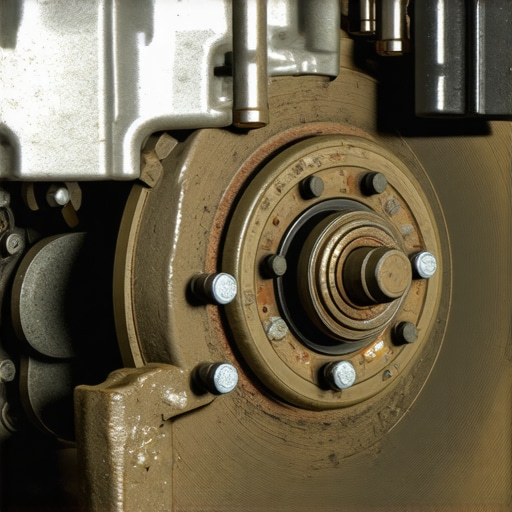
While often overlooked, the structural integrity of the wheel hub and bearing assembly is inextricably linked to brake performance. A wheel bearing in the early stages of failure may have enough lateral play to allow the rotor to tilt slightly under the unique torque loads of reversing. This tilt shifts the rotor’s contact patch against the brake pads just enough to trigger a harmonic response that isn’t present during forward motion. If you have already replaced your pads and hardware but the noise persists, it may be time to perform a ‘shake test’ on the hub. If you’re experiencing a combination of noise and steering instability, exploring how to diagnose a bad wheel bearing could save you from an expensive secondary repair. Diagnosing these multi-system interactions is a hallmark of master-level technician work.
Dampening the Noise with Pastes and Shims
The interface between the brake pad’s steel backing plate and the caliper piston is a primary site for high-frequency noise generation. Most premium pads come equipped with multi-layered shims—often a sandwich of steel and vulcanized rubber—designed to decouple the pad from the caliper. Over years of heat cycles, these shims can delaminate or lose their elasticity. In reverse, the pad is pulled upward by the rotor’s rotation rather than pushed downward into the bracket, which can cause a delaminated shim to vibrate like a reed in a wind instrument. Applying a dedicated damping paste, such as a synthetic moly-filled lubricant, creates a hydraulic cushion that absorbs these micro-oscillations before they reach the caliper body. This step is frequently skipped in budget brake jobs, highlighting the importance of choosing a car service that prioritizes component longevity over speed. The interaction doesn’t stop at the brakes; the entire corner of the suspension is under stress during a directional shift. Control arm bushings, which are designed to absorb the fore-aft movement of the wheel assembly, can develop cracks that allow the entire strut or knuckle to shift when the car moves backward. This shift changes the toe and camber of the wheel momentarily, altering how the pad contacts the rotor surface and potentially initiating a resonance that would never occur during normal forward travel.
The suspension’s role in managing brake noise is often overlooked by non-specialists. Every time you shift from Drive to Reverse, the torque reaction on the control arms reverses direction. If the rubber in your control arm bushings has hardened or cracked, this transition allows the entire knuckle assembly to pivot slightly. This pivot changes the “angle of attack” for the brake pads. Instead of meeting the rotor perfectly flush, the pad might lead with its edge, initiating a high-frequency vibration known as “spragging.” This is why a suspension refresh is often the “missing link” in curing a persistent reverse squeal that new pads alone couldn’t fix.
Bushings and the Hidden Geometry of Reverse Braking
When the vehicle’s direction changes, the weight transfer puts a unique stress on the lower control arm bushings. If these bushings allow for even a few degrees of extra movement, the caliper bracket no longer sits perpendicular to the rotor during deceleration. This misalignment causes the pad to oscillate within the bracket at a frequency that matches the resonant frequency of the hub. Technicians often find that replacing old, compressed rubber bushings with high-durometer polyurethane versions can drastically reduce the “knock” and “squeak” associated with reverse maneuvers. It’s a vivid reminder that the braking system does not operate in a vacuum; it is part of a dynamic kinetic chain.
Why Does Your Parking Brake Only Scream When You Back Up?
In many vehicles, the rear braking system utilizes a “drum-in-hat” design for the parking brake. This setup features small brake shoes located inside the center portion of the rotor. Over time, dust and debris from these shoes can accumulate. When the car moves backward, the leading and trailing shoes within the drum react differently to the rotational force. A weak return spring or a frayed cable can allow a shoe to lightly drag, creating a rhythmic scraping sound that only appears in reverse. As noted in research by Link Engineering Company, a world leader in brake testing and laboratory solutions, the interaction between different friction couples within the same hub assembly can create complex multi-tonal noise profiles that confuse standard diagnostic tools.
The Stealthy Role of Electronic Parking Brake Calibration
Modern luxury vehicles and EVs often feature Electronic Parking Brakes (EPB) that integrate the motor directly into the caliper. These systems require precise software calibration to ensure the piston retracts to the exact specified “air gap.” If the system has not been recalibrated via a scan tool after a service, the pads may remain in a “ready” state, sitting too close to the rotor. In reverse, the rotational shear force can pull the pad into the rotor’s surface, causing a high-pitched chirp. This is why a professional vehicle diagnostics session is often more effective than a simple driveway inspection. We encourage you to reach out if your modern car is exhibiting these digital-age braking quirks; our team has the specialized equipment to reset your EPB and restore factory-quiet performance.
Furthermore, the “Transfer Layer”—the thin film of friction material that pads deposit onto the rotor surface—is directionally sensitive. When you drive forward 99% of the time, this layer is smoothed out in one direction. Reversing the rotation is akin to rubbing a cat’s fur the wrong way; it encounters resistance. If your rotor finish has a “non-directional” swirl from a recent resurfacing, this is less of an issue. However, on older rotors, the “micro-grooves” can act as a secondary source of friction-induced vibration. This highlights why high-quality car service often includes a light scuffing of the rotors to break up the directional glaze during a pad swap.
When a vehicle transitions from forward momentum to reverse, the mechanical load on the braking system undergoes a significant vector shift. For most drivers, a sudden squeal while backing out of a driveway is a source of immediate concern. From a professional diagnostic perspective, this audible feedback is often a manifestation of harmonic resonance triggered by the change in friction direction. Identifying whether the noise stems from pad wear indicators, moisture accumulation, or glazed friction surfaces requires an analytical approach to vehicle diagnostics that goes beyond surface-level inspection. Proper identification is critical to preventing long-term damage to the rotors and calipers.
Why Reverse Rotation Triggers Harmonic Vibrations
In most modern braking systems, the brake pads are seated to optimize friction during forward travel. Over time, the pads develop a specific wear pattern and a ‘set’ within the caliper bracket. When you shift the vehicle into reverse and apply pressure, the pads move slightly within their housing, striking the bracket at a different angle. This shift can excite natural frequencies within the metal components, leading to a high-pitched squeal. As noted by technical specialists at SAE International, brake squeal is essentially a friction-induced vibration that occurs when the friction material excites the natural frequencies of the brake assembly. If the noise is metallic and rhythmic, it might indicate a more complex issue with the transmission output or axle play, though the brakes remain the primary suspect.
Do Metallic Wear Indicators Only Signal in Reverse?
A common phenomenon in high-mileage vehicles is the activation of the mechanical wear indicator—a small metal tab designed to scrape the rotor when the friction material is low. In some instances, this tab may only make contact when the pads shift during reverse movement. This serves as an early warning system. If you find yourself needing an auto repair specialist, having them check the remaining thickness of your pads is the first step. You can also try to stop your drum brakes from squealing by checking the self-adjuster mechanism, which often operates specifically during reverse braking events.
Surface Oxidation and the Early Morning Noise
Atmospheric moisture is a silent contributor to brake noise. Overnight, a thin layer of iron oxide (rust) can form on the surface of the rotors. When you first back out of your garage, the pads act as a lathe, scraping this oxidation off. This process creates a temporary but loud screech. While this is often harmless, persistent noise may suggest that the friction material has become glazed—hardened by excessive heat—which prevents the pads from biting into the rotor smoothly. If the noise persists after several stops, a comprehensive car service is necessary to deglaze the pads or replace them entirely. Addressing these minor harmonic issues early prevents the need for more costly rotor resurfacing later. If you are hearing persistent noises that affect your confidence behind the wheel, we encourage you to contact us for a professional evaluation.
Mechanical tolerance within the caliper assembly is often measured in fractions of a millimeter, and when these tolerances are exceeded due to worn anti-rattle clips or fatigued abutment shims, the brake pads are granted a degree of unwanted freedom. In forward motion, centrifugal force and the natural rotation of the wheel keep the pads pinned against one side of the bracket. However, as soon as the wheels rotate backward, the pads shift violently to the opposite side of the caliper housing. If the hardware is dry or worn, this shift does not just happen once; it creates a high-frequency micro-vibration that resonates through the rotor. This is frequently the source of the clicking or snapping sound that precedes a high-pitched reverse squeal. Professionals often use top auto repair techniques to apply high-temperature ceramic grease to these contact points, which dampens the vibrations before they become audible.
Worn Clips and Dry Pins Create Unwanted Play
The National Institute for Automotive Service Excellence (ASE) emphasizes that ignoring these minor harmonic shifts can eventually lead to uneven pad taper, which compromises emergency braking performance. When the lubricant on the caliper slide pins dries out, the caliper cannot center itself correctly over the rotor during the directional change of reverse travel. This misalignment forces one edge of the pad to dig in harder than the other, resulting in a localized hot spot and an intense squeal. Replacing the hardware kit—which includes new clips and springs—is a low-cost solution that often yields immediate results during a reliable car service. Maintenance of these small components is what separates a standard brake job from an expert-level restoration of the system’s integrity.
Why Does the Squeal Intensify During Cold Morning Reverses?
While moisture accumulation is a significant factor, thermal contraction also plays a critical role in early-morning brake noise. Metal components like the caliper bracket and the pad’s steel backing plate contract slightly in lower temperatures, which creates larger physical gaps within the assembly. These gaps allow for more movement and resonance until the components expand with friction-generated heat. If you notice that your car exhibits other symptoms, such as why your car pulls to one side only when braking, the issue may extend to a seized piston or a restricted brake hose rather than simple harmonic noise. In such cases, learning how to unstick a caliper without replacing the whole brake system can be a valuable diagnostic skill, though professional verification is recommended to ensure safety.
Debris Entrapment and the Reverse-Only Squeak
Sometimes, the architecture of the brake dust shield acts as a physical trap for road contaminants. Small pebbles or road salt crystals can become lodged between the thin metal shield and the spinning rotor. In forward motion, the rotation might keep the debris pushed away from the contact surfaces, but reversing the rotation can tumble the debris, wedging it firmly against the rotor face. This produces a distinctive scraping or screeching sound that vanishes as soon as the vehicle moves forward again. If you have noticed the specific smell that tells you your brakes are dragging alongside this noise, it is vital to inspect the rear assembly for trapped material or failing return springs. Share your experience with mystery car noises in the comments below, or let us know if these diagnostic tips helped you identify your brake squeak!
The chemical makeup of your friction material dictates how it responds to the sudden reversal of the rotor’s shear force. Semi-metallic pads, which contain a high concentration of steel, iron, and copper fibers, are inherently more prone to directional harmonics than their ceramic counterparts. These metallic strands are oriented during the bedding-in process to provide maximum bite during forward deceleration. When the rotation is inverted, these fibers can catch on the rotor’s microscopic peaks—a phenomenon known as ‘stick-slip’ vibration. As documented in technical bulletins from Akebono Brake Corporation, the transfer layer—a thin film of friction material deposited onto the rotor surface—is critical for quiet operation. If this layer is unevenly distributed, reversing the rotation causes the pad to skip over these deposits, generating the characteristic chirp or squeal that many drivers find so frustrating.
When Disc Thickness Variation Bites Back
Beyond the pads themselves, the physical condition of the rotor’s surface—specifically lateral runout—plays a massive role in reverse-only acoustics. Lateral runout refers to the ‘wobble’ of the rotor as it spins. Even if this wobble is within the typical tolerance of 0.05mm for forward driving, the reversed centrifugal forces can cause the brake pad to oscillate at a frequency that aligns perfectly with the air cavity of the wheel well. This creates a megaphone effect, amplifying a minor mechanical misalignment into a neighborhood-waking screech. Checking for Disc Thickness Variation (DTV) with a micrometer is often the only way to confirm if the rotor surface is truly parallel, as even the slightest taper can cause the pads to tilt and scream when the rotation changes.
Can a Worn Wheel Bearing Cause Brake Squeal Only in Reverse?
While often overlooked, the structural integrity of the wheel hub and bearing assembly is inextricably linked to brake performance. A wheel bearing in the early stages of failure may have enough lateral play to allow the rotor to tilt slightly under the unique torque loads of reversing. This tilt shifts the rotor’s contact patch against the brake pads just enough to trigger a harmonic response that isn’t present during forward motion. If you have already replaced your pads and hardware but the noise persists, it may be time to perform a ‘shake test’ on the hub. If you’re experiencing a combination of noise and steering instability, exploring how to diagnose a bad wheel bearing could save you from an expensive secondary repair. Diagnosing these multi-system interactions is a hallmark of master-level technician work.
Dampening the Noise with Pastes and Shims
The interface between the brake pad’s steel backing plate and the caliper piston is a primary site for high-frequency noise generation. Most premium pads come equipped with multi-layered shims—often a sandwich of steel and vulcanized rubber—designed to decouple the pad from the caliper. Over years of heat cycles, these shims can delaminate or lose their elasticity. In reverse, the pad is pulled upward by the rotor’s rotation rather than pushed downward into the bracket, which can cause a delaminated shim to vibrate like a reed in a wind instrument. Applying a dedicated damping paste, such as a synthetic moly-filled lubricant, creates a hydraulic cushion that absorbs these micro-oscillations before they reach the caliper body. This step is frequently skipped in budget brake jobs, highlighting the importance of choosing a car service that prioritizes component longevity over speed. The interaction doesn’t stop at the brakes; the entire corner of the suspension is under stress during a directional shift. Control arm bushings, which are designed to absorb the fore-aft movement of the wheel assembly, can develop cracks that allow the entire strut or knuckle to shift when the car moves backward. This shift changes the toe and camber of the wheel momentarily, altering how the pad contacts the rotor surface and potentially initiating a resonance that would never occur during normal forward travel.
The suspension’s role in managing brake noise is often overlooked by non-specialists. Every time you shift from Drive to Reverse, the torque reaction on the control arms reverses direction. If the rubber in your control arm bushings has hardened or cracked, this transition allows the entire knuckle assembly to pivot slightly. This pivot changes the “angle of attack” for the brake pads. Instead of meeting the rotor perfectly flush, the pad might lead with its edge, initiating a high-frequency vibration known as “spragging.” This is why a suspension refresh is often the “missing link” in curing a persistent reverse squeal that new pads alone couldn’t fix.
Bushings and the Hidden Geometry of Reverse Braking
When the vehicle’s direction changes, the weight transfer puts a unique stress on the lower control arm bushings. If these bushings allow for even a few degrees of extra movement, the caliper bracket no longer sits perpendicular to the rotor during deceleration. This misalignment causes the pad to oscillate within the bracket at a frequency that matches the resonant frequency of the hub. Technicians often find that replacing old, compressed rubber bushings with high-durometer polyurethane versions can drastically reduce the “knock” and “squeak” associated with reverse maneuvers. It’s a vivid reminder that the braking system does not operate in a vacuum; it is part of a dynamic kinetic chain.
Why Does Your Parking Brake Only Scream When You Back Up?
In many vehicles, the rear braking system utilizes a “drum-in-hat” design for the parking brake. This setup features small brake shoes located inside the center portion of the rotor. Over time, dust and debris from these shoes can accumulate. When the car moves backward, the leading and trailing shoes within the drum react differently to the rotational force. A weak return spring or a frayed cable can allow a shoe to lightly drag, creating a rhythmic scraping sound that only appears in reverse. As noted in research by Link Engineering Company, a world leader in brake testing and laboratory solutions, the interaction between different friction couples within the same hub assembly can create complex multi-tonal noise profiles that confuse standard diagnostic tools.
The Stealthy Role of Electronic Parking Brake Calibration
Modern luxury vehicles and EVs often feature Electronic Parking Brakes (EPB) that integrate the motor directly into the caliper. These systems require precise software calibration to ensure the piston retracts to the exact specified “air gap.” If the system has not been recalibrated via a scan tool after a service, the pads may remain in a “ready” state, sitting too close to the rotor. In reverse, the rotational shear force can pull the pad into the rotor’s surface, causing a high-pitched chirp. This is why a professional vehicle diagnostics session is often more effective than a simple driveway inspection. We encourage you to reach out if your modern car is exhibiting these digital-age braking quirks; our team has the specialized equipment to reset your EPB and restore factory-quiet performance.
Furthermore, the “Transfer Layer”—the thin film of friction material that pads deposit onto the rotor surface—is directionally sensitive. When you drive forward 99% of the time, this layer is smoothed out in one direction. Reversing the rotation is akin to rubbing a cat’s fur the wrong way; it encounters resistance. If your rotor finish has a “non-directional” swirl from a recent resurfacing, this is less of an issue. However, on older rotors, the “micro-grooves” can act as a secondary source of friction-induced vibration. This highlights why high-quality car service often includes a light scuffing of the rotors to break up the directional glaze during a pad swap.
Expert Insights & Advanced Considerations
Break the Cycle with Reverse-Specific Bedding
Seasoned technicians know that standard bedding focuses almost exclusively on forward inertia. To eliminate chronic reverse squeal, perform several controlled low-speed stops in reverse on a flat surface. This helps distribute a stable friction layer against the bracket’s trailing edge. You can also learn the secret to making your brake rotors last 100000 miles by ensuring your pads wear evenly across both rotational directions.
#IMAGE_PLACEHOLDER_E#
Stop Overlooking the Steel Backing Plate
The interface between the pad and the caliper is a prime site for micro-vibrations. Many enthusiasts only lubricate the back of the pad, but the critical contact points are the ears that slide within the clips. Ensuring these points are treated with high-temperature ceramic solids is a hallmark of expert auto repair. If dry metal strikes dry metal, the resulting chatter is amplified by the rotor’s hollow structure.
Humidity and Your Morning Alarm
A “morning squeal” is often an indicator of high carbon content in your rotors reacting to atmospheric moisture. If the noise disappears after two stops, the system is likely healthy. However, if the sound persists, it may indicate localized hot spots or glazing. If you notice other symptoms like why your steering wheel shakes when you hit the brakes, the rotor surface likely requires a professional machine finish to restore parallelism.
Curated Expert Resources
SAE International Technical Papers
SAE provides the deepest scientific look into NVH (Noise, Vibration, and Harshness). Their research into friction-induced oscillation is the foundation for all modern braking system designs.
Brake & Front End Magazine
This industry publication offers real-world case studies from master technicians. It is an invaluable resource for identifying rare vehicle-specific anomalies that standard manuals might miss.
Akebono Technical Bulletins
As a leader in ceramic friction science, Akebono offers detailed guides on maintaining the transfer layer, which is essential for ensuring silent operation across all temperature ranges.
Final Expert Perspective
Curing a brake squeal that only occurs in reverse is a diagnostic puzzle that requires looking at the entire corner of the vehicle as a unified kinetic chain. From the software calibration of your electronic parking brake to the structural integrity of your control arm bushings, every component contributes to the final acoustic profile. Professional vehicle diagnostics remains the most efficient path to a quiet ride, preventing the frustration and expense associated with cheap brake repairs. If you have encountered mystery sounds or want to investigate symptoms like how to diagnose a bad cv joint by the sound of your turn, our team is ready to provide the specialized care your vehicle deserves. Contact us today to schedule an inspection and restore your confidence behind the wheel.