The Shift from Neoprene to EPDM and Why It Changes Your Inspection Routine
For decades, auto repair specialists relied on a simple visual check: if the belt had three or more cracks in a one-inch span, it was time for a swap. However, the industry-wide transition to Ethylene Propylene Diene Monomer (EPDM) materials has rendered the old crack-counting method nearly obsolete. Unlike older neoprene belts, EPDM belts rarely show visible micro-cracks until they are far past their functional lifespan. This material evolution requires a shift toward more sophisticated vehicle diagnostics to prevent sudden failure of the accessory drive system. Modern belts are designed to withstand extreme thermal fluctuations, but they hide their age through internal fatigue and rib thinning rather than external fracturing.
Rib Depth Loss Is the New Performance Benchmark
In the world of high-tier car service, the focus has shifted from surface integrity to volumetric loss. As an EPDM belt ages, the rubber in the ribs wears away, much like tire tread disappears over thousands of miles. This wear increases the space between the belt ribs and the pulley grooves, leading to a loss of friction and potential “hydroplaning” during heavy rain or high-torque demands. If you notice that your serpentine belt is squealing every morning, it is likely due to this lack of proper seating rather than mere tension issues. Professional technicians now use precision-machined rib gauges to measure this wear; once a belt has lost 10% of its rib volume, its ability to transmit power efficiently is compromised, regardless of how few cracks are visible.
How Many Micro-Cracks Actually Signal an Imminent Snap?
While micro-cracks are less common in EPDM, when they do appear, they signify advanced thermal degradation. According to technical data from Gates Corporation, the global leader in belt technology, any crack that extends through the rib and into the belt backing is a “red alert” scenario. This structural compromise can lead to the belt shredding, which may instantly disable your cooling system. To avoid such a fate, you must learn to spot a failing water pump before your engine overheats, as a seized pulley often creates the friction that melts these high-tech belts in seconds. Expert analysis shows that once a crack reaches the tensile cord, the belt’s integrity is halved.
Protect Your Charging System with Proactive Maintenance
A neglected belt doesn’t just stop the car; it damages expensive components through harmonic vibration and high-frequency slippage. An improperly seated belt causes parasitic drag on the alternator, leading to internal heat buildup and premature failure of the diodes. You can stop your alternator from dying early by ensuring the belt’s rib profile and the automatic tensioner are both within factory specifications. Furthermore, while the serpentine belt handles engine accessories, don’t overlook related driveline components; for instance, understanding why your transmission kicks when you shift into reverse is part of a complete auto repair strategy. If you suspect your belt is nearing the end of its service life, do not wait for a catastrophic failure. Explore our guide on expert auto repair tips for 2025 to stay ahead of mechanical fatigue and ensure your vehicle remains a benchmark of reliability.
Stop Blaming the Belt for Your Tensioner’s Failures
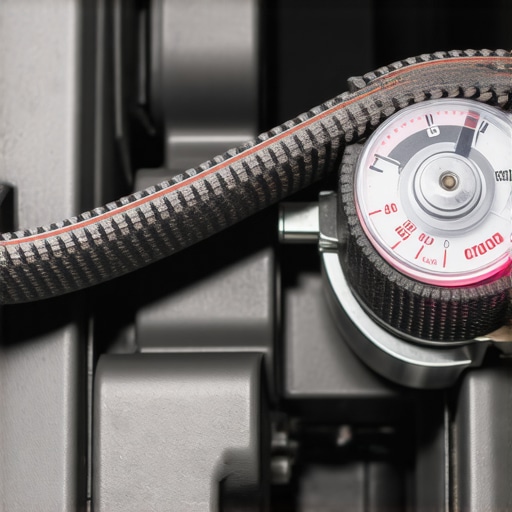
In many modern accessory drive systems, the belt is merely the messenger. The real culprit behind premature wear is often the automatic tensioner. This spring-loaded component is designed to maintain a specific amount of force against the belt to prevent slippage, but over time, the internal damping mechanism loses its ability to absorb torsional vibrations from the crankshaft. When this happens, the belt begins to flutter, leading to rapid rib wear and uneven heat distribution. If you find yourself frequently identifying the simple way to tell if your alternator is toast without a mechanic, you should also inspect the tensioner arm for excessive oscillation. A failing tensioner doesn’t just shorten the belt’s life; it places unnecessary stress on the bearings of every driven accessory, from the water pump to the A/C compressor.
Can a Worn Belt Actually Tank Your Fuel Economy?
It sounds like an exaggeration, but the physics of parasitic loss suggest otherwise. As a belt thins and loses its grip, the engine’s ECU detects the inconsistent load on the alternator and other pulleys, often compensating by slightly increasing the idle speed or adjusting the fuel map to maintain electrical stability. This inefficiency is a hidden reason your gas mileage just dropped without a single check-engine light appearing on your dash. Furthermore, a glazed belt that slips even slightly causes the air conditioning compressor to work harder to achieve the same cooling output, forcing the engine to burn more fuel to maintain cabin temperature. Precision is the enemy of waste; ensuring your belt’s ribs are deep and seated correctly is a low-cost way to keep your MPG at its factory peak.
Deciphering the Squeal to Save Your Pulleys
Not all engine noises are created equal. A high-pitched chirp that occurs only during acceleration usually points to a tension issue or a glazed belt surface. Conversely, a constant whistling or grinding sound often indicates a bearing failure within one of the idler pulleys. According to technical bulletins from Continental Aftermarket, misaligned pulleys are a leading cause of side-wall wear on EPDM belts, which can lead to the belt jumping off its tracks entirely. If you are trying to figure out why your car whistles when you reach highway speeds, start by inspecting the alignment of the accessory drive with a laser tool or a simple straight-edge. A pulley that is off by even a few millimeters can create enough lateral force to shred a brand-new belt in less than a thousand miles.
Mastering the DIY Replacement Without the Headache
Replacing a serpentine belt is a rite of passage for many car owners, but modern engine bays are notoriously cramped. The key to a successful swap lies in the tools and the preparation. Before you begin, always draw a diagram of the belt routing—relying on memory is a recipe for frustration once the old belt is removed. If you encounter hardware that hasn’t been moved in years, knowing the secret to removing stuck bolts without breaking them will save you hours of drilling and tapping. Once the new belt is installed, run the engine for several minutes and re-check the tensioner’s position indicator to ensure everything has seated correctly. If you’ve addressed the belt but still notice strange resonance, consider checking why your dashboard vibrates at idle but stops while driving, as worn engine mounts can often masquerade as accessory drive issues. We want to hear from you: have you ever had a belt snap at the worst possible moment? Share your story or ask a technical question in the comments below to help our community stay on the road.
How a Worn Harmonic Balancer Slowly Kills Your New Belt
While most enthusiasts focus on the belt itself, the structural integrity of the crankshaft pulley—often called the harmonic balancer—is frequently the silent architect of belt failure. This component features a thick rubber ring sandwiched between two metal masses, designed to absorb the torsional vibrations of the engine’s power strokes. Over time, heat and oil exposure cause this rubber to swell or crack, leading to the outer ring slipping or wobbling. When this happens, the belt is no longer running on a true plane, causing lateral stress that shreds the belt ribs long before their time. If you have recently learned about the hidden world of vehicle diagnostics, you know that a simple visual check isn’t enough; you must observe the balancer while the engine is running to ensure there is zero axial runout. A vibrating balancer acts like a hammer on the belt’s tensile cords, eventually leading to a snap that can leave you stranded.
Why Does Your Car Chirp Only When the A/C Is On?
This specific symptom is one of the most common PAA-style queries in the auto repair world, and the answer lies in the sudden increase of torque load. When the air conditioning compressor clutch engages, it demands immediate power from the accessory drive. If the belt is glazed or the tensioner is weak, the belt will slip momentarily against the compressor pulley, creating that characteristic high-pitched chirp. This isn’t just an annoyance; it is a sign that the belt’s friction coefficient has dropped. To prevent this, you should look into why your car whistles when you reach highway speeds, as these noises are often related to the same aerodynamic or friction-based failures. Ignoring a chirp under load will eventually lead to the compressor pulley overheating, which can melt the belt and even damage the compressor’s internal seals.
Modern Alternator Pulleys That Hide Major Problems
Technological advancements have introduced the Overrunning Alternator Decoupler (OAD) and the Overrunning Alternator Pulley (OAP). These aren’t your standard solid pulleys; they contain internal springs and one-way clutches designed to allow the alternator to “freewheel” when engine speed drops suddenly, such as during a gear shift. According to technical documentation from Motor Magazine, a seized OAD can increase the peak-to-peak tension on a belt by over 50% during deceleration. This massive surge in tension causes the belt to flutter violently, often resulting in a loud rhythmic thumping or “growling” sound that many mistake for a bad bearing. When these pulleys fail, they place an immense burden on the automatic tensioner, causing it to hit its internal stops and eventually break. Testing these pulleys requires removing the belt and ensuring the alternator rotor can spin freely in one direction but locks in the other.
The Quick Water Test for Stealthy Alignment Issues
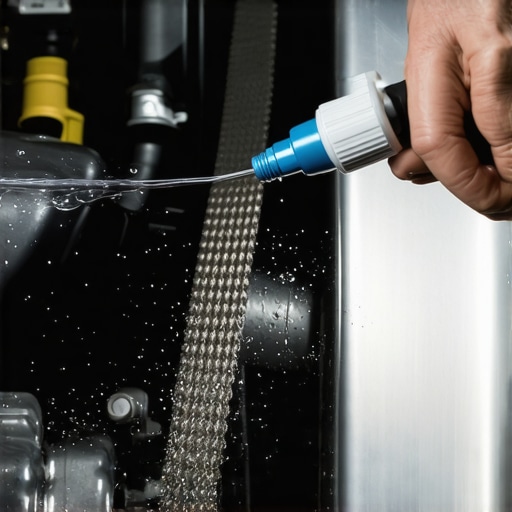
If you are struggling to differentiate between a worn-out belt and a misaligned pulley, a simple spray bottle filled with water is your best diagnostic ally. While the engine is idling and making the suspect noise, lightly mist the ribbed side of the belt with water. If the noise disappears instantly, the problem is likely a lack of tension or a worn belt profile. However, if the noise gets significantly louder or stays the same, you are almost certainly dealing with a pulley alignment issue. Misalignment forces the ribs of the belt to scrub against the sides of the pulley grooves, creating friction that water only serves to lubricate, making the sound even more erratic. For those performing a DIY car service, this test is the fastest way to narrow down the culprit before you start throwing parts at the problem. Proper alignment is critical, especially after you’ve learned the secret to removing stuck bolts without breaking them and are ready to reinstall your drive components. Even a deviation of a few degrees can cause the belt to jump a tooth, which is a leading cause of catastrophic engine bay damage.
Stop Ignoring the Oily Residue on Your Ribs
In the high-stakes environment of auto repair, even the most advanced EPDM belt is no match for chemical contamination. While these belts are chemically engineered for heat resistance, they remain highly susceptible to petroleum-based degradation. An oil leak from a front main seal or a valve cover gasket can saturate the belt, causing the rubber to swell and soften. This doesn’t just cause slippage; it alters the belt’s effective length, leading to a loss of tension that the automatic tensioner cannot compensate for. If you have been diving into the hidden world of vehicle diagnostics, you should know that any presence of fluid on the belt requires immediate intervention. Once a belt is contaminated, no amount of cleaning agent can restore the structural integrity of its internal bonds. The oil permeates the EPDM, eventually causing the ribs to detach from the backing in a process known as delamination.
Is a Stretch-Fit Belt Truly Maintenance-Free?
Many modern engines have eliminated the traditional tensioner altogether in favor of “Stretch-Fit” or elasticated belts. These components are designed with a high-modulus tensile cord that maintains a constant tension throughout its lifespan. However, this creates a unique challenge for car service professionals: because there is no tensioner to absorb shock, the belt itself must handle all the torque spikes from the crankshaft. Replacing these requires specialized installation tools to avoid over-stretching the cords during the mount. According to technical insights from SKF Automotive, a global leader in bearing and drive technology, using a screwdriver or pry bar to force these belts onto the pulley can cause microscopic internal fractures. These invisible breaks eventually manifest as a catastrophic snap under load, often taking out nearby plastic sensors or wiring looms in the process.
Why High-Performance Engines Crave Aramid Tensile Cords
When dealing with forced induction or high-compression powerplants, standard polyester cords may not suffice. Performance-grade belts often utilize Aramid or Kevlar fibers within the tensile layer to minimize stretch under extreme RPM shifts. These materials offer superior dimensional stability, ensuring that the timing of accessory components remains precise even during aggressive gear changes. If you are investigating transmission failures decoded, you might find that inconsistent accessory drag from a stretching belt can actually mimic the feeling of a hunting transmission during light-throttle cruising. Upgrading to a heavy-duty belt is a proactive measure for any vehicle used for towing or track days, as it provides a higher safety margin against the thermal spikes that melt standard EPDM compounds.
Stop-Start Technology Adds a New Layer of Drive Stress
The rise of hybrid and micro-hybrid systems has fundamentally changed the duty cycle of the serpentine system. In a vehicle with stop-start technology, the belt must handle thousands of additional engine starts over its lifetime. Every time the engine fires, the belt experiences a massive peak in tension as it overcomes the inertia of the alternator and A/C compressor. This can lead to premature fatigue in the tensioner spring and the belt’s rib-to-cord bond. To ensure your vehicle remains reliable, you must learn how to spot a failing water pump early, as the added stress of a stop-start system will exploit any existing weakness in the cooling system’s drive. We invite you to join the discussion: have you noticed faster belt wear on your newer stop-start vehicle, or has a specific noise stumped your diagnostic efforts? Tell us your experience in the comments so we can keep the community informed on these evolving automotive challenges.
Expert Insights & Advanced Considerations
Thermal Cameras Reveal Seizing Bearings Before They Squeal
Professional shops are moving beyond the simple stethoscope. A handheld infrared camera can detect a 20-degree temperature differential between an idler pulley and the surrounding bracketry, signaling a bearing that is losing its lubrication. Catching this early is one of the most effective top auto repair techniques every car owner should know to prevent a roadside snap.
Document the Tensioner Witness Mark to Track Fatigue
Most modern tensioners feature a cast-in scale on the housing. When you install a fresh belt, mark the position of the indicator with a paint pen. If the arm moves significantly toward the limit stop within a few months, you aren’t just dealing with a stretchy belt; you likely have a failing dampener or a pulley that is slowly walking off its shaft. This level of detail separates basic maintenance from advanced vehicle diagnostics.
Micro-Slippage Ruins Efficiency in Hybrid Systems
In high-voltage hybrids, the belt-alternator-starter (BAS) handles massive torque spikes. A belt that has lost even 5% of its rib depth will slip invisibly during the regenerative braking phase, reducing the energy returned to the battery. If you have been wondering how to tell if your alternator is killing your new battery, check the belt’s rib-to-groove contact first; the electrical system can only be as efficient as the physical connection allows.
#IMAGE_PLACE_HOLDER_E#
Curated Expert Resources
ASE Test Prep and Technical Certification
For those looking to move into professional-level maintenance, the ASE (Automotive Service Excellence) A8 Engine Performance and A6 Electrical systems modules offer the industry’s most rigorous benchmarks for understanding drive systems and advanced auto repair.
The Gates Be Belt Smart Technical Portal
Gates provides the gold standard in EPDM wear analysis tools. Their digital archives offer deep dives into chemical degradation that go far beyond what a typical owner’s manual provides for standard car service.
Continental Aftermarket Support Bulletins
Continental’s technical bulletins are invaluable for identifying specific vehicle models that suffer from pulley misalignment issues from the factory, helping you solve recurring belt noise once and for all.
Final Expert Perspective
Transitioning from the old cracks-equal-failure mindset to a volumetric wear approach is the hallmark of modern car service excellence. As EPDM belts become the standard, technicians and DIY enthusiasts alike must adopt proactive strategies to ensure their accessory drive doesn’t become a liability. By focusing on tensioner oscillation, pulley alignment, and rib depth, you transform a simple rubber loop into a high-precision component of engine longevity. If you want to dive deeper into the nuances of modern maintenance or find a reliable car service near you in 2025, staying informed is your best defense against mechanical failure. We invite you to share your professional insights or technical questions in the comments to help our community stay on the road.