The Rhythmic Clicking That Predicts a Drivetrain Catastrophe
The constant velocity (CV) axle is the critical conduit of torque between your transmission and the wheels. In modern front-wheel-drive and all-wheel-drive configurations, this component undergoes immense stress, handling both suspension travel and steering angles simultaneously. When a CV axle approaches its breaking point, it rarely does so in silence. Professional mechanics prioritize the identification of harmonic disruptions and mechanical feedback as the primary indicators of imminent failure. Ignoring these signals doesn’t just lead to an inconvenient breakdown; a snapped axle can result in a total loss of power to the wheels and, in some cases, significant damage to the transmission housing or wheel hubs. Experts often view the axle as a fuse for the drivetrain; it is designed to handle load, but once its structural integrity is compromised, the entire kinetic chain is at risk.
Visible Grease Is the Final Warning for Your CV Joint
Before the metal components themselves begin to disintegrate, the protective rubber or thermoplastic boot usually fails. This boot holds the specialized molybdenum disulfide grease required to lubricate the intricate bearings within the joint. If you notice a dark, thick substance splattered on the inner rim of your wheel or along the lower control arm, the seal has been breached. Once the grease escapes, centrifugal force ensures that dirt, moisture, and road salt enter the joint, causing rapid abrasive wear. This process is often documented in vehicle diagnostics as the “death spiral” of the drivetrain. According to the Society of Automotive Engineers (SAE), joint degradation accelerates exponentially once environmental contaminants reach the internal raceways, leading to excessive heat and metal fatigue.
Can You Differentiate Between a Failing CV Axle and a Bad Wheel Bearing?
Distinguishing between various front-end noises is a hallmark of an expert technician. While both a bad bearing and a failing CV joint produce audible cues, the nature of the sound reveals the culprit. A wheel bearing typically produces a low-frequency hum or growl that changes pitch with vehicle speed, whereas a failing CV joint emits a sharp, rhythmic clicking or popping sound specifically during tight maneuvers or heavy acceleration. If you are struggling to pinpoint the source, learning how to identify which wheel bearing is noisy while driving can help you rule out other hub-related possibilities. A CV joint that is about to snap will often “bind” during a turn, creating a physical resistance you can feel through the steering rack.
Heavy Vibrations Often Mask Serious Internal Joint Degradation
While clicking is the most famous symptom, vertical and lateral vibrations during acceleration often point to the inner CV joint. Unlike the outer joint which handles steering, the inner joint manages the plunging motion of the axle as the suspension moves up and down. When the internal tripod or rollers wear down, they create a shudder that feels remarkably like a tire out of balance. However, if the vibration disappears the moment you lift off the throttle, it is almost certainly a drivetrain issue rather than a wheel balance problem. This type of wear is frequently linked to broader transmission failures decoded in professional repair manuals, as excessive axle play can damage the transmission output seals. If your vehicle is exhibiting these high-stress symptoms, we strongly encourage you to contact us for a professional assessment before a catastrophic failure occurs on the highway.
Altered Geometry Ruins More Than Just Your Alignment
Vehicles that have been modified with leveling kits, lowering springs, or aggressive suspension lifts place the CV axles at extreme angles they were never engineered to sustain. When the operating angle of a constant velocity joint exceeds its design parameters, the internal cage and bearings experience localized heat spikes. This isn’t just about wear; it’s about the physics of torque transfer. An axle operating at an extreme angle must ‘plunge’ further into the inner joint housing during suspension travel, which can lead to bottoming out or internal binding. This mechanical interference often manifests as a subtle ‘tug’ in the steering wheel when traversing speed bumps or during hard cornering. If you are noticing these symptoms after a suspension modification, it is vital to investigate transmission troubles early, as the stress on the axle eventually migrates to the transmission’s differential bearings.
The High Cost of Choosing Budget-Grade Replacement Axles
When an axle finally fails, the temptation to purchase the cheapest ‘remanufactured’ unit available is high, but this often leads to a phenomenon known as ‘aftermarket vibration.’ Many budget axles are constructed with solid steel shafts rather than the hollow, tuned-harmonic shafts used by Original Equipment Manufacturers (OEM). These solid shafts lack the dampening characteristics required to cancel out engine and transmission frequencies. The result is a persistent, fine vibration felt through the floorboards at highway speeds that no amount of wheel balancing can fix. The Automotive Service Association (ASA) notes that drivetrain harmonics are frequently the most overlooked diagnostic data point, often leading owners to replace tires or brakes unnecessarily when the culprit is actually an imbalanced or poorly weighted replacement axle. Quality matters because a sub-par axle can also cause premature wear on your wheel hubs and seals.
Why Does Your Car Pull Hard to One Side Under Heavy Load?
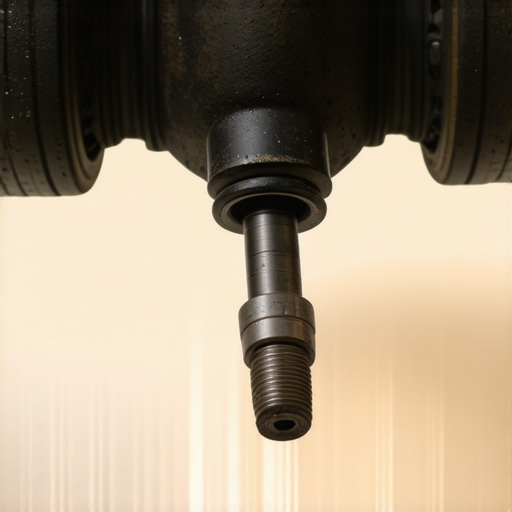
While most drivers associate ‘pulling’ with alignment issues or uneven tire pressure, an expert looks at the drivetrain. In front-wheel-drive vehicles, unequal length axles are common, but they are engineered to deliver power symmetrically. When one CV joint begins to develop excessive internal friction or ‘galling’ on the races, it creates a discrepancy in torque delivery. Under heavy acceleration, the vehicle may veer toward the side with the compromised axle—a condition often mistaken for torque steer. This is a nuanced diagnostic that requires more than a visual inspection. Using the $30 tool that lets you see inside your engine or inspecting the grease for metallic flakes can confirm if internal components are grinding away. If you’ve recently felt an odd twitch in your steering during acceleration, we suggest you learn how to find reliable car service near you in 2025 to get a professional opinion before the joint seizes entirely.
Precision Diagnosis Stops the Guessing Game
Experienced technicians often use ‘chassis ears’—small microphones clipped to various suspension points—to isolate the exact location of drivetrain noise. This level of precision is necessary because the sound of a failing inner CV joint can telecast through the subframe, making it sound like it’s coming from the opposite side of the car. If you are attempting a DIY diagnosis, pay close attention to when the noise occurs. A noise that is present regardless of whether you are coasting or accelerating usually points to a wheel bearing, but a noise that is strictly load-dependent is the signature of a failing axle. Understanding these distinctions is part of the expert auto repair tips for 2025 that save car owners from expensive ‘parts cannon’ repair strategies where components are replaced based on guesses rather than data.
Extreme Heat Turns Your CV Grease Into Water
While mechanical wear is the primary driver of failure, thermal degradation is the silent catalyst that accelerates the process. Under high-load conditions—such as towing or spirited driving—the internal temperature of a constant velocity joint can spike significantly. Most high-quality CV boots are packed with molybdenum disulfide grease, a lubricant chosen for its high-pressure properties. However, as the grease ages or is exposed to excessive heat cycles, it undergoes ‘shear thinning,’ a state where the chemical bonds break down and the lubricant loses its viscosity. This liquefied grease cannot maintain the necessary protective film between the steel balls and the raceways. If you find your vehicle struggling with heat soak after long commutes, this is why vehicle diagnostics must extend beyond a simple test drive to include thermal imaging or grease sampling.
Why Differential Play Is Often Misdiagnosed as a Bad Axle
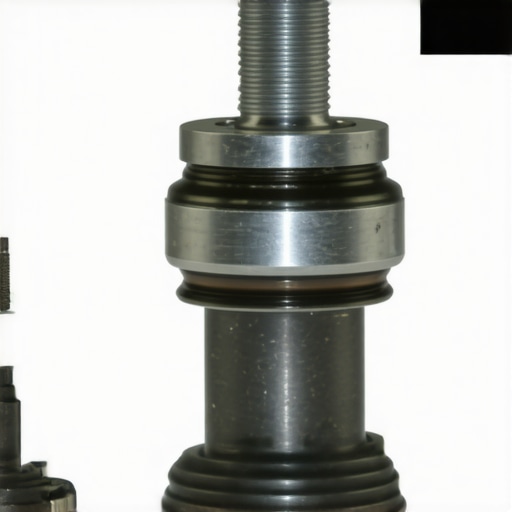
Experienced technicians know that a ‘clunk’ when shifting from Reverse to Drive isn’t always the axle’s fault. Often, the culprit is excessive play within the transmission’s differential side gears. When the splines on the inner CV tulip mate with the transmission, they are held in place by a precision-engineered tolerance. Over hundreds of thousands of rotations, these splines can develop ‘galling’—a form of wear caused by friction and adhesion. According to technical standards maintained by the Automatic Transmission Rebuilders Association (ATRA), excessive lateral movement at the transmission-to-axle interface is a primary cause of repetitive seal failure and fluid leaks. If you’re hearing a rhythmic thud that doesn’t quite fit the ‘clicking’ profile, book a diagnostic session with our drivetrain specialists today to verify if the issue is the shaft or the gearbox itself.
Can a Total CV Axle Failure Destroy Your Entire Transmission?
The short answer is a resounding yes. When a CV axle snaps while the vehicle is in motion, the portion of the shaft still attached to the transmission becomes a heavy, rotating flail. Centrifugal force causes this metal remnant to whip around at thousands of RPMs, often striking nearby components like brake lines, wiring harnesses, or the aluminum transmission casing itself. In a worst-case scenario, the flailing shaft can punch a hole through the transmission housing, leading to a total loss of fluid and immediate internal seizure. This risk is why we categorize transmission failures decoded as a critical safety concern rather than just a maintenance nuisance. The kinetic energy stored in a spinning drivetrain is immense; once the structural integrity of the axle is lost, that energy is discharged uncontrollably.
Spotting Metallurgical Fatigue Before the Shaft Snaps
Professional-grade inspection involves looking for ‘case hardening’ failure. CV axles are induction-hardened to ensure the outer surface can resist wear while the inner core remains somewhat flexible to handle torque. When you see a rainbow-colored ‘bluing’ on the metal surface of the tulip or the shaft, it indicates the metal has reached its critical temperature threshold, effectively ‘annealing’ or softening the steel. This change in metallurgy makes the axle brittle and prone to catastrophic snapping under sudden torque loads, such as merging onto a highway. This level of detail is a hallmark of expert auto repair tips for 2025, moving beyond ‘it looks broken’ to ‘why it broke.’ A key area to inspect is the circlip or snap ring engagement at the end of the splined shaft, which ensures the axle remains seated within the differential gear despite the engine’s lateral movements.
Why Neoprene and Silicone Choice Dictates Boot Longevity
Environmental stressors do more than just wear down mechanical parts; they chemically alter the protective barriers of your drivetrain. While standard neoprene boots are common, they often succumb to ‘ozone cracking’ in urban environments or extreme cold. High-performance silicone alternatives offer superior flexibility but are more prone to tearing from road debris. According to the ASTM International (American Society for Testing and Materials), the tensile strength of drivetrain elastomers must be matched to the specific thermal operating window of the vehicle to prevent premature oxidation. This material science is why an axle that survives a desert climate might fail within months in a sub-zero tundra.
How a Cracked Tone Ring Triggers Phantom ABS Intervention
Modern vehicle safety systems are inextricably linked to the physical condition of the CV axle. Many axles feature a press-fit ‘tone ring’—a notched wheel that provides speed data to the Anti-lock Braking System (ABS). If rust builds up beneath this ring, it can expand, causing the ring to crack or sit eccentric to the sensor. This results in ‘phantom ABS’ activation, where the brake pedal pulses during normal stops on dry pavement. Identifying this requires an oscilloscope to monitor the wheel speed signal for dropouts, a nuance often missed by basic OBD-II scanners.
Could Your Drivetrain Vibration Stem from a Faulty Carrier Bearing?
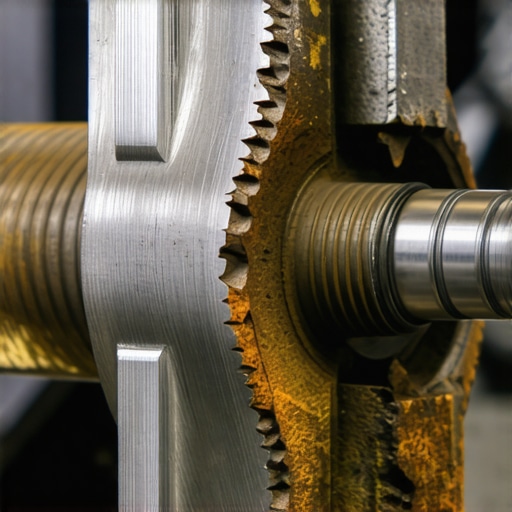
In vehicles with unequal-length front drive shafts, an intermediate shaft is used to keep the half-shafts at identical angles, minimizing torque steer. This shaft is supported by a carrier bearing bolted to the engine block. When this bearing begins to seize or develops internal play, it produces a high-frequency vibration and a distinctive ‘howling’ sound that mimics a failing inner CV joint or a transmission output bearing. Distinguishing between the two requires a physical ‘shake test’ of the intermediate shaft to check for lateral movement in the housing.
Aligning Internal Components to Neutralize Harmonics
Beyond the boots, the actual steel of the ‘tulip’ or inner housing is susceptible to ‘hydrogen embrittlement’ if exposed to certain corrosive cleaning agents or road de-icers through a torn boot. This invisible chemical change makes the metal brittle at a molecular level. Furthermore, when assembling high-performance CV joints, ‘clocking’ or phase-aligning the inner and outer joints is a technique used by master technicians to cancel out minor imbalances. While often ignored by high-volume repair shops, this attention to detail prevents the subtle ‘shimmer’ felt through the gas pedal during high-speed cruising.
Stop Replacing Parts Without Checking Intermediate Shaft Runout
Precision in drivetrain repair extends to the geometry of the entire assembly. Even a brand-new axle can fail if the intermediate shaft runout—the amount the shaft wobbles while spinning—exceeds a few thousandths of an inch. A bent intermediate shaft, often the result of a previous minor collision or a heavy curb strike, puts constant ‘pumping’ stress on the new CV joints, leading to a repeat failure within weeks. If you are experiencing persistent drivetrain issues despite multiple repairs, we strongly urge you to schedule a specialized drivetrain analysis. Our technicians utilize dial indicators to measure tolerances that others simply guess at, ensuring your vehicle returns to factory-smooth operation without the recurring nightmare of ‘mystery’ vibrations.
Expert Insights & Advanced Considerations
Heat Discoloration Signals Permanent Structural Weakness
When an axle reaches temperatures high enough to turn the steel a rainbow-blue color, the molecular bond of the metal has been compromised. This isn’t just a surface issue; the annealing process softens the steel, making it incapable of handling peak torque. If you notice this during an inspection, skip the grease and replace the entire unit immediately. For more complex issues, review transmission failures decoded to ensure the heat hasn’t migrated into the gearbox.
Phase-Alignment Prevents Micro-Vibrations
Master technicians often ‘clock’ the inner and outer joints to cancel out the natural harmonics produced by the engine and transmission. While budget shops ignore this step, aligning the mass centers of both joints is what separates a factory-smooth ride from a persistent floorboard shimmer. This is a critical component of top auto repair techniques every car owner should know when performing DIY replacements.
Why Differential Tolerances Mimic Axle Issues
A loose transmission output bearing can create a lateral wobble that feels identical to a failing inner CV joint. Before condemning the axle, perform a radial play test on the transmission tulip. If the movement is inside the case, a new axle won’t fix your vibration. You might need to learn how to check your transmission fluid level without a dipstick as part of a broader diagnostic routine to look for metallic debris in the oil.
Curated Expert Resources
SAE International Technical Papers: The definitive source for drivetrain engineering standards, specifically J2028 which governs CV joint design. ATRA Technical Bulletins: Essential for understanding the delicate relationship between axle splines and differential side-gear wear. ASTM International: Specifically for data on elastomer tensile strength, helping you choose between neoprene and silicone boots based on your climate.
Final Expert Perspective
Properly maintaining your CV axle involves more than just listening for clicks; it requires a holistic understanding of how drivetrain harmonics, thermal stress, and lubricant chemistry interact. By identifying the signs of failure early—such as grease spray or load-dependent vibrations—you protect the more expensive components of your transmission and suspension. If you are experiencing high-speed shudders that defy standard wheel balancing, we encourage you to contact us for a professional evaluation. Explore our expert auto repair tips for 2025 to stay ahead of mechanical wear and keep your vehicle operating at peak efficiency.
#IMAGE_PLACEHOLDER_E#