Moisture Acts as a Bridge for Latent Electrical Faults
In the realm of advanced automotive engineering, a vehicle’s electrical system is designed to be a sealed ecosystem. However, as components age, the integrity of insulation and seals degrades. When it rains, atmospheric humidity and direct water contact increase the conductivity of the surfaces surrounding your battery and wiring harnesses. This phenomenon creates a ‘surface discharge’ path where current leaks across the battery casing from the positive terminal to the negative post, often mediated by a layer of road grime that becomes conductive when damp. This is not merely a nuisance; it is a symptom of a system where the dielectric barriers have failed, necessitating a professional-grade car service to prevent total system collapse.
Pinpoint the Exact Component Siphoning Your Amps
Most drivers suspect the battery itself is the culprit, but the reality often lies within the vehicle diagnostics data stream. Rainwater can infiltrate the engine bay and seep into cracked fuse boxes or corroded ground straps. These compromised points create high-resistance shorts that don’t always blow a fuse but do create enough of a parasitic draw to deplete a lead-acid or AGM battery overnight. If your vehicle struggles to start specifically after a storm, it is likely that the simple trick to find a parasitic battery drain will reveal a sensor or module that is staying ‘awake’ due to moisture-induced circuit bridging. Professional auto repair in these instances involves more than just a battery swap; it requires tracing the harness for capillary action where water travels up the wire strands into the ECU.
Can Rainwater Infiltration Create a Ghost Load on Your Control Modules?
Yes, and this is a frequent point of discussion among master technicians. Modern vehicles utilize complex Controller Area Network (CAN-bus) systems. When water enters a connector, it can change the voltage levels on the communication lines. The vehicle’s computer may interpret these erratic signals as a command to remain in an active state rather than entering ‘sleep mode.’ This prevents the modules from powering down, leading to a massive drain on the reserve capacity. This interaction between environmental factors and digital logic is a cornerstone of the hidden world of vehicle diagnostics, where software behavior is often dictated by physical hardware degradation. According to the Society of Automotive Engineers (SAE), environmental sealing is one of the most critical factors in maintaining long-term electronic reliability in modern platforms.
The Critical Connection Between Your Charging System and Humidity
Often, the battery is just the victim of a failing alternator that struggles under the load of wet weather accessories. When it rains, you use headlights, wipers, and defrosters simultaneously, placing an immense load on the charging system. If your alternator’s internal diodes are already weak, the added humidity can cause internal arcing or reduced efficiency. It is vital to determine how to tell if your alternator is killing your new battery before you spend money on a replacement that will die just as quickly. In many cases, the moisture simply exposes a charging system that was already operating at the edge of its capacity. If you suspect your vehicle’s electrical health is compromised by the weather, contact our expert team today for a comprehensive diagnostic evaluation of your charging and starting systems.
Stop Ignoring Your Deteriorating Ground Straps
While most enthusiasts focus on the positive terminal, the vehicle’s grounding system is where moisture-induced failure often begins. A chassis ground strap that appears intact can develop internal oxidation that becomes significantly more resistive when saturated with rainwater. This resistance creates a bottleneck for the return current, forcing the battery to work harder to maintain the circuit’s integrity. To prevent this, implementing the simple trick to keep your battery terminals from corroding is a foundational step, but you must also inspect the engine-to-chassis bonds. When moisture bridges a corroded ground, it can cause ‘voltage drop’ issues that mimic a dead battery, even if the cells themselves are healthy. Master technicians often find that cleaning these contact points solves intermittent starting issues that only manifest during the rainy season.
Could a Simple Rainstorm Turn Your Ignition System Into a Light Show?
Wet weather often reveals microscopic cracks in ignition coil housings and spark plug wires that are invisible during dry conditions. High-voltage electricity always seeks the path of least resistance; when the air is thick with humidity, moisture coats these components, providing a convenient route for the spark to jump to the engine block rather than the plug. This is known as secondary ignition breakdown. If your engine stumbles or feels weak when it pours, knowing how to diagnose a misfire without a code reader becomes an essential skill. Under the cover of darkness during a storm, you can often see blue arcs of electricity—a literal light show—emanating from compromised wires. This stray current creates an additional load on the battery and alternator as the system compensates for poor combustion efficiency.
Keep Your Sensors Dry to Avoid Erroneous Dash Lights
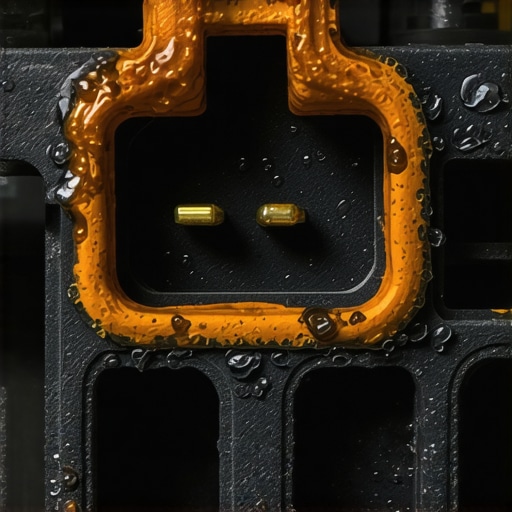
Modern vehicles are rolling sensor arrays, and many of these sensors live in areas highly exposed to the elements, such as the wheel wells and lower engine cradle. Moisture infiltration into a wheel speed sensor or an oxygen sensor connector can send erratic data to the ECU. This often triggers a cascade of warning lights, leading to confusion about the root cause. If you have recently driven through deep puddles and notice your instrument cluster glowing, it is common to wonder why your check engine light stays on after you fixed the problem, only to find that latent moisture is still trapped inside a weather-pack connector. The National Institute for Automotive Service Excellence (ASE) emphasizes that environmental contamination is a leading cause of ‘no-fault-found’ diagnostic returns, as sensors often recover once the vehicle dries out in a heated shop environment.
Cleanliness is More Than Aesthetic for Modern Electronics
A layer of dirt on your battery or fuse box might seem harmless, but it acts as a sponge for atmospheric moisture. This ‘hygroscopic grime’ becomes a semi-conductive film that allows current to slowly bleed away while the car is parked. Maintaining a pristine engine compartment is a legitimate preventative maintenance strategy. Learning the right way to clean your engine bay without shorting fuses ensures that you remove these conductive paths without introducing new water-related hazards. By keeping the dielectric surfaces clean, you significantly reduce the risk of overnight parasitic drain. If you’ve noticed your vehicle acting up only when the clouds roll in, share your experience in the comments below or check out our guide on how to find reliable car service near you in 2025 to get a professional evaluation before the next downpour.
Clear Your Sunroof Drains Before They Short Your BCM
Many owners overlook the fact that rainwater management isn’t just about the engine bay; it is a whole-vehicle concern. When the drainage channels located near the sunroof or the base of the windshield (the cowl) become obstructed by debris, water is redirected into the cabin’s A-pillars and floorboards. This is catastrophic for modern vehicles because the Body Control Module (BCM) is frequently located in these low-lying areas. Once submerged or even slightly dampened, the BCM can trigger a ‘parasitic wake-up’ signal, keeping the vehicle’s interior lights or infotainment system powered long after you’ve locked the doors. This drain is invisible and often misdiagnosed as a faulty battery, but the root cause is environmental mismanagement within the chassis itself.
Does High Ambient Humidity Accelerate the Rate of Self-Discharge in Sealed AGM Batteries?
Technically, the internal chemistry of a sealed Absorbent Glass Mat (AGM) battery is protected from direct humidity, but the external environment dictates the discharge rate of the entire system. High humidity levels—specifically those exceeding 80%—drastically lower the air’s resistance. Research published in the Journal of Electrochemical Science and Technology suggests that moisture film formation on the battery lid can create a microscopic conductive path between terminals. While this leakage current might only be in the micro-ampere range, it compounds over time, especially in vehicles equipped with sophisticated telematics that already sit at the edge of their standby power budgets. This is why a vehicle parked in a damp garage often exhibits lower cranking voltage than one kept in a climate-controlled environment.
Stop Water from Wicking Into Your Vehicle’s Main Wiring Loom
One of the most insidious ways moisture destroys a battery is through ‘capillary action’ or wicking. If a sensor connector located low on the chassis—such as an O2 sensor or a transmission range sensor—has a compromised weather seal, water can enter the wire jacket. Through pressure differentials and surface tension, that moisture can travel inches or even feet through the copper strands, eventually reaching a critical junction box or the ECU. This moisture introduces resistance and corrosion where none should exist, forcing the charging system to work harder to overcome the resulting voltage drops. This phenomenon is a primary reason why auto repair for wet-weather electrical issues requires a deep dive into the vehicle diagnostics suite to check for out-of-range sensor voltages.

The Deadly Intersection of Salt Air and Rainfall
For those living near coastal regions, the problem of rain-induced battery drain is amplified tenfold. Rainwater is relatively pure, but as it mixes with salt-laden air and road grime, it becomes a highly efficient electrolyte. This mixture creates an ‘external galvanic cell’ on the surface of your battery and fuse box. The salt acts as a catalyst, accelerating the oxidation of copper terminals and aluminum heat sinks. If you’ve noticed a white or green powdery substance on your electrical connections after a storm, you are witnessing the physical destruction of your vehicle’s electrical pathways. This is the ideal time to seek a car service that specializes in electrical cleaning and the application of dielectric grease to seal out future environmental incursions. If your car is showing signs of terminal corrosion, reach out to our diagnostic specialists to ensure your wiring hasn’t become a victim of salt-induced degradation.
Your Battery Terminal Seals Are Not Permanent
Over time, the lead posts of a battery expand and contract due to thermal cycling. This can create microscopic gaps between the post and the plastic casing. During a heavy rainstorm, moisture can seep into these gaps, reaching the internal plate straps. While modern batteries are remarkably resilient, this ingress can lead to localized sulfation at the top of the plates, which reduces the total cold-cranking amps (CCA) available during the next start. This specific type of failure is why simply jumping the car isn’t enough; the chemical damage within the battery cell may have already begun to compromise the internal resistance of the unit, leading to a cycle of constant under-charging and eventual stranded-on-the-road scenarios…
Thermal Shock and the Vacuum Effect on Battery Casings
While surface conductivity is a known threat, the subtle physics of thermal contraction pose a more insidious risk during a heavy downpour. When your vehicle operates, the battery and under-hood electronics generate significant heat. A sudden influx of cold rainwater creates a rapid temperature drop, causing the air inside the battery casing and various sensor housings to contract. This creates a momentary internal vacuum that can actively pull moisture through microscopic fissures in the plastic or rubber gaskets. This “aspiration effect” explains why a vehicle may exhibit no symptoms during a brief car wash but suffers a complete electrical failure after a prolonged drive in a thunderstorm. Once moisture is pulled into the internal architecture, it triggers localized corrosion that degrades the plates’ ability to hold a charge, effectively turning a high-performance battery into a sluggish weight.
Can a Drenched Chassis Wiring Harness Actually Ghost Your Ignition?
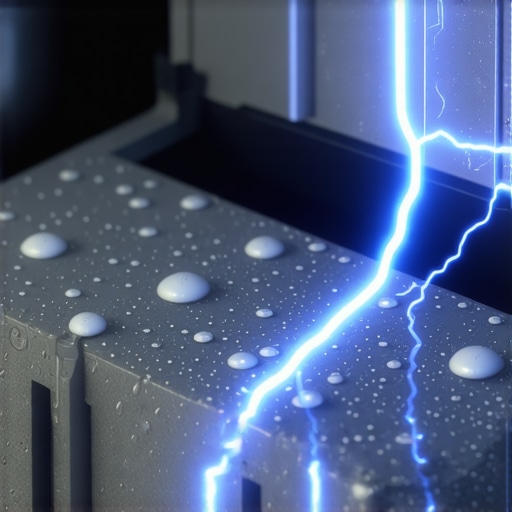
The short answer is a resounding yes, though the mechanics are often misunderstood. When the wiring harness that runs along the lower chassis becomes saturated, the moisture acts as a resistor in parallel with the vehicle’s intended circuits. This doesn’t always result in a dead short that blows a fuse; instead, it creates a “voltage divider” effect. The current intended for the starter solenoid or the fuel pump relay is partially diverted through the wet grime on the harness. Consequently, the component receives 9 or 10 volts instead of the required 12.6, leading to a “no-start” condition that many drivers mistake for a dead battery. Advanced vehicle diagnostics are required here to measure the voltage drop across the circuit while it is under load—a test that reveals the hidden impact of environmental saturation.
The Invisible Creep of Insulation Resistance Loss
Beyond the obvious pooling of water, high-humidity environments induce a phenomenon known as insulation resistance (IR) degradation. In any electrical system, the “leakage current” should be negligible. However, as documented by the Institute of Electrical and Electronics Engineers (IEEE) in their standards for insulation testing, even high-quality polymers can absorb moisture over time, becoming less effective as dielectrics. When the humidity hits 90%, the IR of your wiring harness can drop by orders of magnitude. This allows a tiny, persistent flow of electrons to escape the copper and find ground, bypassing the ignition switch entirely. To combat this, master technicians recommend a routine car service that includes the application of specialized hydrophobic sprays to critical junction points, effectively restoring the water-shedding properties of the factory insulation.
Halt the Silent Current Leakage with Precision Maintenance
Prevention in the age of computerized vehicles requires a shift from reactive repairs to proactive environmental sealing. Simply replacing a battery that has been “killed” by rain is a temporary fix if the underlying pathways of ingress remain open. It is essential to inspect the plastic “scuttles” at the base of the windshield; if these are cracked, they allow water to drip directly onto the primary wiring loom. By utilizing high-viscosity dielectric grease on every multi-pin connector and ensuring that all rubber grommets are seated correctly, you can immunize your vehicle against the whims of the weather. If you’ve struggled with mysterious power loss during the rainy season, don’t wait for the next storm to leave you stranded. Book a professional electrical system audit to identify and seal these vulnerabilities before they compromise your vehicle’s logic modules.
Moisture Acts as a Bridge for Latent Electrical Faults
In the realm of advanced automotive engineering, a vehicle’s electrical system is designed to be a sealed ecosystem. However, as components age, the integrity of insulation and seals degrades. When it rains, atmospheric humidity and direct water contact increase the conductivity of the surfaces surrounding your battery and wiring harnesses. This phenomenon creates a ‘surface discharge’ path where current leaks across the battery casing from the positive terminal to the negative post, often mediated by a layer of road grime that becomes conductive when damp. This is not merely a nuisance; it is a symptom of a system where the dielectric barriers have failed, necessitating a professional-grade car service to prevent total system collapse.
Pinpoint the Exact Component Siphoning Your Amps
Most drivers suspect the battery itself is the culprit, but the reality often lies within the vehicle diagnostics data stream. Rainwater can infiltrate the engine bay and seep into cracked fuse boxes or corroded ground straps. These compromised points create high-resistance shorts that don’t always blow a fuse but do create enough of a parasitic draw to deplete a lead-acid or AGM battery overnight. If your vehicle struggles to start specifically after a storm, it is likely that the simple trick to find a parasitic battery drain will reveal a sensor or module that is staying ‘awake’ due to moisture-induced circuit bridging. Professional auto repair in these instances involves more than just a battery swap; it requires tracing the harness for capillary action where water travels up the wire strands into the ECU.
Can Rainwater Infiltration Create a Ghost Load on Your Control Modules?
Yes, and this is a frequent point of discussion among master technicians. Modern vehicles utilize complex Controller Area Network (CAN-bus) systems. When water enters a connector, it can change the voltage levels on the communication lines. The vehicle’s computer may interpret these erratic signals as a command to remain in an active state rather than entering ‘sleep mode.’ This prevents the modules from powering down, leading to a massive drain on the reserve capacity. This interaction between environmental factors and digital logic is a cornerstone of the hidden world of vehicle diagnostics, where software behavior is often dictated by physical hardware degradation. According to the Society of Automotive Engineers (SAE), environmental sealing is one of the most critical factors in maintaining long-term electronic reliability in modern platforms.
The Critical Connection Between Your Charging System and Humidity
Often, the battery is just the victim of a failing alternator that struggles under the load of wet weather accessories. When it rains, you use headlights, wipers, and defrosters simultaneously, placing an immense load on the charging system. If your alternator’s internal diodes are already weak, the added humidity can cause internal arcing or reduced efficiency. It is vital to determine how to tell if your alternator is killing your new battery before you spend money on a replacement that will die just as quickly. In many cases, the moisture simply exposes a charging system that was already operating at the edge of its capacity. If you suspect your vehicle’s electrical health is compromised by the weather, contact our expert team today for a comprehensive diagnostic evaluation of your charging and starting systems.
Stop Ignoring Your Deteriorating Ground Straps
While most enthusiasts focus on the positive terminal, the vehicle’s grounding system is where moisture-induced failure often begins. A chassis ground strap that appears intact can develop internal oxidation that becomes significantly more resistive when saturated with rainwater. This resistance creates a bottleneck for the return current, forcing the battery to work harder to maintain the circuit’s integrity. To prevent this, implementing the simple trick to keep your battery terminals from corroding is a foundational step, but you must also inspect the engine-to-chassis bonds. When moisture bridges a corroded ground, it can cause ‘voltage drop’ issues that mimic a dead battery, even if the cells themselves are healthy. Master technicians often find that cleaning these contact points solves intermittent starting issues that only manifest during the rainy season.
Could a Simple Rainstorm Turn Your Ignition System Into a Light Show?
Wet weather often reveals microscopic cracks in ignition coil housings and spark plug wires that are invisible during dry conditions. High-voltage electricity always seeks the path of least resistance; when the air is thick with humidity, moisture coats these components, providing a convenient route for the spark to jump to the engine block rather than the plug. This is known as secondary ignition breakdown. If your engine stumbles or feels weak when it pours, knowing how to diagnose a misfire without a code reader becomes an essential skill. Under the cover of darkness during a storm, you can often see blue arcs of electricity—a literal light show—emanating from compromised wires. This stray current creates an additional load on the battery and alternator as the system compensates for poor combustion efficiency.
Keep Your Sensors Dry to Avoid Erroneous Dash Lights
Modern vehicles are rolling sensor arrays, and many of these sensors live in areas highly exposed to the elements, such as the wheel wells and lower engine cradle. Moisture infiltration into a wheel speed sensor or an oxygen sensor connector can send erratic data to the ECU. This often triggers a cascade of warning lights, leading to confusion about the root cause. If you have recently driven through deep puddles and notice your instrument cluster glowing, it is common to wonder why your check engine light stays on after you fixed the problem, only to find that latent moisture is still trapped inside a weather-pack connector. The National Institute for Automotive Service Excellence (ASE) emphasizes that environmental contamination is a leading cause of ‘no-fault-found’ diagnostic returns, as sensors often recover once the vehicle dries out in a heated shop environment.
Cleanliness is More Than Aesthetic for Modern Electronics
A layer of dirt on your battery or fuse box might seem harmless, but it acts as a sponge for atmospheric moisture. This ‘hygroscopic grime’ becomes a semi-conductive film that allows current to slowly bleed away while the car is parked. Maintaining a pristine engine compartment is a legitimate preventative maintenance strategy. Learning the right way to clean your engine bay without shorting fuses ensures that you remove these conductive paths without introducing new water-related hazards. By keeping the dielectric surfaces clean, you significantly reduce the risk of overnight parasitic drain. If you’ve noticed your vehicle acting up only when the clouds roll in, share your experience in the comments below or check out our guide on how to find reliable car service near you in 2025 to get a professional evaluation before the next downpour.
Clear Your Sunroof Drains Before They Short Your BCM
Many owners overlook the fact that rainwater management isn’t just about the engine bay; it is a whole-vehicle concern. When the drainage channels located near the sunroof or the base of the windshield (the cowl) become obstructed by debris, water is redirected into the cabin’s A-pillars and floorboards. This is catastrophic for modern vehicles because the Body Control Module (BCM) is frequently located in these low-lying areas. Once submerged or even slightly dampened, the BCM can trigger a ‘parasitic wake-up’ signal, keeping the vehicle’s interior lights or infotainment system powered long after you’ve locked the doors. This drain is invisible and often misdiagnosed as a faulty battery, but the root cause is environmental mismanagement within the chassis itself.
Does High Ambient Humidity Accelerate the Rate of Self-Discharge in Sealed AGM Batteries?
Technically, the internal chemistry of a sealed Absorbent Glass Mat (AGM) battery is protected from direct humidity, but the external environment dictates the discharge rate of the entire system. High humidity levels—specifically those exceeding 80%—drastically lower the air’s resistance. Research published in the Journal of Electrochemical Science and Technology suggests that moisture film formation on the battery lid can create a microscopic conductive path between terminals. While this leakage current might only be in the micro-ampere range, it compounds over time, especially in vehicles equipped with sophisticated telematics that already sit at the edge of their standby power budgets. This is why a vehicle parked in a damp garage often exhibits lower cranking voltage than one kept in a climate-controlled environment.
Stop Water from Wicking Into Your Vehicle’s Main Wiring Loom
One of the most insidious ways moisture destroys a battery is through ‘capillary action’ or wicking. If a sensor connector located low on the chassis—such as an O2 sensor or a transmission range sensor—has a compromised weather seal, water can enter the wire jacket. Through pressure differentials and surface tension, that moisture can travel inches or even feet through the copper strands, eventually reaching a critical junction box or the ECU. This moisture introduces resistance and corrosion where none should exist, forcing the charging system to work harder to overcome the resulting voltage drops. This phenomenon is a primary reason why auto repair for wet-weather electrical issues requires a deep dive into the vehicle diagnostics suite to check for out-of-range sensor voltages.
The Deadly Intersection of Salt Air and Rainfall
For those living near coastal regions, the problem of rain-induced battery drain is amplified tenfold. Rainwater is relatively pure, but as it mixes with salt-laden air and road grime, it becomes a highly efficient electrolyte. This mixture creates an ‘external galvanic cell’ on the surface of your battery and fuse box. The salt acts as a catalyst, accelerating the oxidation of copper terminals and aluminum heat sinks. If you’ve noticed a white or green powdery substance on your electrical connections after a storm, you are witnessing the physical destruction of your vehicle’s electrical pathways. This is the ideal time to seek a car service that specializes in electrical cleaning and the application of dielectric grease to seal out future environmental incursions. If your car is showing signs of terminal corrosion, reach out to our diagnostic specialists to ensure your wiring hasn’t become a victim of salt-induced degradation.
Your Battery Terminal Seals Are Not Permanent
Over time, the lead posts of a battery expand and contract due to thermal cycling. This can create microscopic gaps between the post and the plastic casing. During a heavy rainstorm, moisture can seep into these gaps, reaching the internal plate straps. While modern batteries are remarkably resilient, this ingress can lead to localized sulfation at the top of the plates, which reduces the total cold-cranking amps (CCA) available during the next start. This specific type of failure is why simply jumping the car isn’t enough; the chemical damage within the battery cell may have already begun to compromise the internal resistance of the unit, leading to a cycle of constant under-charging and eventual stranded-on-the-road scenarios…
Thermal Shock and the Vacuum Effect on Battery Casings
While surface conductivity is a known threat, the subtle physics of thermal contraction pose a more insidious risk during a heavy downpour. When your vehicle operates, the battery and under-hood electronics generate significant heat. A sudden influx of cold rainwater creates a rapid temperature drop, causing the air inside the battery casing and various sensor housings to contract. This creates a momentary internal vacuum that can actively pull moisture through microscopic fissures in the plastic or rubber gaskets. This “aspiration effect” explains why a vehicle may exhibit no symptoms during a brief car wash but suffers a complete electrical failure after a prolonged drive in a thunderstorm. Once moisture is pulled into the internal architecture, it triggers localized corrosion that degrades the plates’ ability to hold a charge, effectively turning a high-performance battery into a sluggish weight.
Can a Drenched Chassis Wiring Harness Actually Ghost Your Ignition?
The short answer is a resounding yes, though the mechanics are often misunderstood. When the wiring harness that runs along the lower chassis becomes saturated, the moisture acts as a resistor in parallel with the vehicle’s intended circuits. This doesn’t always result in a dead short that blows a fuse; instead, it creates a “voltage divider” effect. The current intended for the starter solenoid or the fuel pump relay is partially diverted through the wet grime on the harness. Consequently, the component receives 9 or 10 volts instead of the required 12.6, leading to a “no-start” condition that many drivers mistake for a dead battery. Advanced vehicle diagnostics are required here to measure the voltage drop across the circuit while it is under load—a test that reveals the hidden impact of environmental saturation.
The Invisible Creep of Insulation Resistance Loss
Beyond the obvious pooling of water, high-humidity environments induce a phenomenon known as insulation resistance (IR) degradation. In any electrical system, the “leakage current” should be negligible. However, as documented by the Institute of Electrical and Electronics Engineers (IEEE) in their standards for insulation testing, even high-quality polymers can absorb moisture over time, becoming less effective as dielectrics. When the humidity hits 90%, the IR of your wiring harness can drop by orders of magnitude. This allows a tiny, persistent flow of electrons to escape the copper and find ground, bypassing the ignition switch entirely. To combat this, master technicians recommend a routine car service that includes the application of specialized hydrophobic sprays to critical junction points, effectively restoring the water-shedding properties of the factory insulation.
Halt the Silent Current Leakage with Precision Maintenance
Prevention in the age of computerized vehicles requires a shift from reactive repairs to proactive environmental sealing. Simply replacing a battery that has been “killed” by rain is a temporary fix if the underlying pathways of ingress remain open. It is essential to inspect the plastic “scuttles” at the base of the windshield; if these are cracked, they allow water to drip directly onto the primary wiring loom. By utilizing high-viscosity dielectric grease on every multi-pin connector and ensuring that all rubber grommets are seated correctly, you can immunize your vehicle against the whims of the weather. If you’ve struggled with mysterious power loss during the rainy season, don’t wait for the next storm to leave you stranded. Book a professional electrical system audit to identify and seal these vulnerabilities before they compromise your vehicle’s logic modules.
Expert Insights & Advanced Considerations
Voltage Creep Through Conductive Surface Grime
Many technicians overlook the fact that a dirty battery case is a capacitor in waiting. When humidity rises, the layer of dust and oil on top of the battery becomes semi-conductive, allowing current to flow across the plastic between the positive and negative terminals. This is a primary driver of overnight voltage loss. To identify this, you can learn how to find a battery drain with a simple light bulb, or better yet, a digital multimeter set to measure milliamps. Keeping the top of the battery casing bone-dry and surgically clean is a low-cost, high-impact defense strategy.
Clear Cowl Drains to Prevent BCM Failure
Water intrusion into the cabin is often misinterpreted as a bad battery because it triggers the Body Control Module (BCM) to stay awake. If your sunroof drains or windshield cowl are clogged, water can seep into the floorboards where expensive modules live. This is why we often recommend the 12 dollar fix for a leaky sunroof as a preventative measure. When these modules get damp, they “ghost” the ignition system, keeping circuits active and draining the battery to zero in a matter of hours.
Why Your Alarm Triggers During the Storm
Intermittent electrical faults in rain often manifest as security system glitches. If your hood latch sensor or door pins get wet, the resistance change can signal the car that a break-in is occurring. This is a classic reason why your car alarm goes off for no reason at night during heavy rain. The siren and flashing lights then become the ultimate parasitic drain, killing the battery before morning.
Curated Expert Resources
SAE International (Society of Automotive Engineers): This organization provides the gold standard for environmental testing of automotive electronics. Their technical papers on ingress protection (IP) ratings are essential for understanding why certain components fail in high-humidity climates.
ASE Electrical Systems Guide: For those looking to master the art of vehicle diagnostics, the ASE A6 study materials offer deep dives into circuit theory and the behavior of semiconductors under environmental stress.
Battery Council International (BCI): This resource provides comprehensive data on lead-acid and AGM battery chemistry, including detailed studies on how ambient humidity affects self-discharge rates over time.
Final Expert Perspective
The relationship between precipitation and electrical failure is rarely about the battery itself; it is about the integrity of the vehicle’s protective seals and the cleanliness of its dielectric surfaces. When moisture creates a bridge for current to escape, the battery is simply the reservoir being drained. Successful auto repair in these scenarios requires a holistic view of the electrical system, moving beyond simple parts-swapping and into the realm of environmental mitigation. If your vehicle continues to struggle every time the forecast calls for rain, a professional car service is the only way to pinpoint whether you are dealing with a simple parasitic leak or a complex module wake-up issue. Reach out to our specialist team to schedule a diagnostic session and secure your car reliability before the next storm hits.