The tactile feedback of a manual or automatic gear selector is the primary interface between the driver and the vehicle’s drivetrain. When that feedback becomes ‘vague,’ ‘rubbery,’ or ‘sloppy,’ we are witnessing a critical degradation of mechanical synchronicity. Effective vehicle diagnostics in this arena require a granular look at the mechanical path between the cabin and the transmission. Often, what appears to be a catastrophic internal failure is merely the result of a disintegrated $5 polymer bushing that has succumbed to years of thermal cycling. Professional auto repair begins with the elimination of these external variables before condemning expensive internal components.
When Your Gearbox Stops Listening to the Shifter
A loose shift linkage is frequently the byproduct of age-related embrittlement in the plastic or rubber grommets that secure the shift cable to the selector arm. This mechanical slop can lead to missed shifts, gear grinding, or an inability to engage ‘Park’ correctly, which poses a significant safety risk. When performing a car service, technicians must distinguish between a stretched cable—which requires total replacement—and a failed bushing, which can be addressed in minutes. Many transmission troubles that feel like internal hydraulic issues are actually just lost motion in the linkage. By isolating the linkage from the gearbox, an expert can manually cycle the transmission to confirm the internal health of the unit.
Could a Worn Bushing Be Masking Major Transmission Failure?
In many professional forums, the debate often centers on whether a ‘limp’ shifter is a symptom of a failing neutral safety switch or a mechanical disconnect. If the selector moves freely but the indicator on the dash or the actual gear engagement does not respond, the physical connection has likely severed. This is the primary reason for a car that will not shift out of park despite the brake pedal being depressed. According to technical standards established by SAE International, the integrity of these shift control systems is vital for preventing unintended vehicle movement. A failure here is not just a nuisance; it is a breach of the vehicle’s primary safety controls.
The 10-Minute Surgical Approach to Bushing Replacement
To execute this fix, one must typically access the cable end, either under the center console or atop the transmission housing in the engine bay. The ‘surgical’ approach involves using a small pick or flat-head screwdriver to clear out the brittle remnants of the old nylon. Applying a small amount of silicone-based lubricant—which does not degrade plastic—ensures the new bushing snaps into place without cracking. This simple maintenance task can prevent the frustration of transmission failures decoded by amateur diagnostics. While the area is exposed, it is wise to check for a gasket that stops transmission leaks, as fluid contamination is a leading cause of premature bushing failure. If you have ever felt your shifter go ‘numb’ on a cold morning, you have experienced the exact moment these polymers fail. Have you encountered a similar mechanical disconnect that felt like a total transmission loss? Share your diagnostic journey with us to help others differentiate between a cheap bushing and a multi-thousand dollar repair.Moving from physical linkages to the hydraulic medium itself, we encounter one of the most pervasive myths in modern automotive maintenance: the ‘sealed’ gearbox. The truth about lifetime transmission fluid claims is that no lubricant is immune to the sheer forces and thermal stress of thousands of operational hours. Over time, the viscosity index improvers within the fluid break down, leading to a loss of film strength. This degradation manifests as ‘shift flares,’ where the engine RPMs spike momentarily between gears because the hydraulic pressure can no longer hold the clutch packs firmly. Professional auto repair requires acknowledging that fluid is a wearable component, regardless of what the manufacturer’s marketing brochure suggests.
Why Lifetime Transmission Fluid Is a Costly Marketing Myth
When a driver notices that their automatic transmission shifts hard when the engine is cold, they are experiencing the direct result of fluid thickening and sediment accumulation. In a cold state, degraded fluid struggles to flow through the narrow orifices of the valve body, leading to delayed engagement. This is not necessarily a sign of a mechanical failure but rather a cry for a fluid exchange. Unlike a simple ‘drain and fill,’ a professional car service uses specialized equipment to ensure the torque converter is also purged of old, oxidized oil. Neglecting this maintenance leads to the build-up of varnish on sensitive solenoids, which eventually necessitates a full rebuild. Experts at the National Institute for Automotive Service Excellence (ASE) emphasize that regular fluid analysis is the only way to truly gauge the health of a transmission’s internal environment.
Is Your Software Actually the One Grinding Your Gears?
Modern vehicle diagnostics have shifted significantly from the mechanical to the digital. It is now common for a ‘transmission problem’ to be nothing more than a corrupted adaptation table within the Transmission Control Module (TCM). These computers ‘learn’ your driving habits and adjust shift pressures accordingly. Over time, these learned values can become skewed, causing harsh shifts or erratic behavior. Before pulling the transmission, a technician will often perform a ‘software reset’ or ‘re-learn’ procedure. Using the $20 scan tool that does more than the dealership rig, savvy owners can often check for pending codes or software updates that address these specific shift quality issues without ever turning a wrench. 
How Invisible Electrical Gremlins Sabotage Your Shifts
Beyond software, the physical electrical path is a frequent failure point that mimics catastrophic mechanical breakdown. Solenoids require a precise voltage to actuate, and any resistance in the circuit can lead to sluggish performance. Knowing how to identify a bad ground wire without a multimeter is a critical skill here; often, a simple visual inspection for corrosion at the chassis ground or engine block can reveal the culprit. If the TCM cannot see a clean 12-volt signal, it may default to ‘limp mode,’ locking the vehicle in second or third gear to prevent damage. This electronic failsafe is frequently misinterpreted as a blown gearset. If you have ever felt your car ‘surge’ while cruising at a steady speed, you might be dealing with an electrical signal interference rather than a slipping belt or clutch. If you suspect your vehicle is struggling with these digital ghosts, we recommend reading our deep dive into advanced sensor troubleshooting to narrow down the source. Have you ever fixed a major driving issue by simply cleaning a battery terminal or updating software? Share your experience below to help others avoid unnecessary repair bills.
How the Cooling System Quietly Kills Your Transmission
The internal thermodynamics of a transmission are managed by a delicate dance with the vehicle’s cooling system. Most drivers remain unaware that their radiator often serves a dual purpose, housing a dedicated cooling loop for the automatic transmission fluid (ATF). When this internal heat exchanger fails, a catastrophic event known in the industry as the ‘strawberry milkshake of death’ occurs. Ethylene glycol from the engine coolant reacts violently with the friction material on clutch plates, causing them to delaminate within a matter of miles. Identifying the early signs of a failing transmission cooler—such as a slight ‘frothing’ or unusual discoloration on the dipstick—can save a drivetrain before the damage becomes irreversible. According to technical bulletins from the Automatic Transmission Rebuilders Association (ATRA), even a 20-degree rise above the optimal operating temperature of 175°F can cut the lifespan of the fluid by half, leading to accelerated wear of internal seals and bushings. 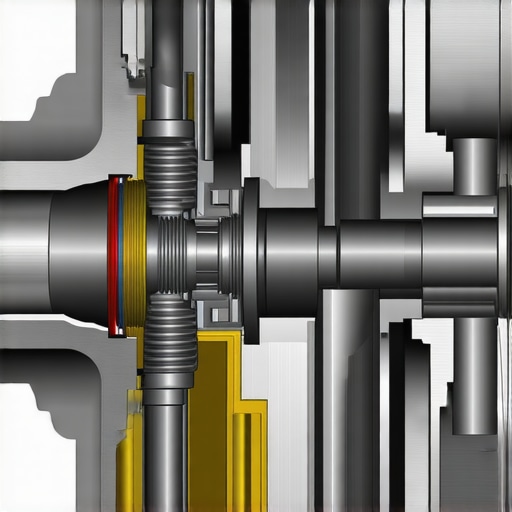
Can a Dirty Valve Body Mimic a Total Transmission Failure?
Inside the transmission case sits the valve body, a complex hydraulic labyrinth that acts as the gearbox’s mechanical brain. It directs pressurized fluid to the appropriate clutch packs via a series of check balls, springs, and precision-machined spool valves. Over time, the aluminum casting of the valve body can suffer from ‘bore wear,’ allowing fluid to leak past the valves rather than engaging the gear. This internal pressure drop results in delayed engagement, ‘hunting’ for gears, or harsh downshifts that feel like a physical collision. While many dealerships will quote a full transmission replacement for these symptoms, specialized repair kits allow technicians to ream out worn bores and install oversized valves to restore factory-spec pressure. This level of vehicle diagnostics separates the mere parts-changers from true transmission specialists. Before committing to a rebuild, always ask for a line-pressure test to see if the pump is actually failing or if the pressure is simply bleeding out through a tired valve body.
Stop the Shudder Before It Destroys Your Torque Converter
When your vehicle feels like it is driving over ‘rumble strips’ at highway speeds, you are likely encountering Torque Converter Clutch (TCC) shudder. This phenomenon occurs when the friction lining inside the converter fails to grip the impeller smoothly, often due to depleted friction modifiers in the fluid or contaminated ATF. While many owners fear this requires a new transmission, a high-quality fluid exchange using specific synthetic additives can often provide an immediate remedy by restoring the necessary coefficient of friction. However, if the vibration persists specifically during the ‘lock-up’ phase, it may indicate a deeper mechanical imbalance or a failing TCC solenoid. By analyzing these mechanical nuances, you can determine if a simple solenoid swap is enough or if the converter itself has reached its end of life. If you have noticed a strange vibration during cruising speeds, we recommend checking our guide on advanced fluid analysis to see if your lubricant is still protecting your internals or if it has turned into a grinding paste. Have you ever experienced a mysterious highway vibration that turned out to be a simple fluid issue? Share your diagnostic journey below to help others identify this common but misunderstood symptom. Moving beyond the converter, we must also examine the mechanical integrity of the planetary gearsets, where the actual torque multiplication happens…
When Failed Engine Mounts Masquerade as Internal Slippage
The kinematic chain of a vehicle does not end at the transmission housing; it is inextricably linked to the chassis through a series of specialized mounts. When these elastomeric components fail, they introduce a chaotic variable into vehicle diagnostics. A collapsed transmission mount often mimics the symptoms of a failing gearset by allowing the entire powertrain to tilt under load. This misalignment can pull shift cables taut or cause the drivetrain to ‘thud’ during downshifts, leading many to incorrectly assume the transmission is nearing its end. In transverse engine layouts, a worn torque strut mount allows for excessive rotational movement, which can interrupt the fluid flow in external oil cooler lines or stress delicate electrical connectors. Before committing to an invasive auto repair, a technician must verify that the physical orientation of the gearbox remains within factory tolerances during high-torque events. 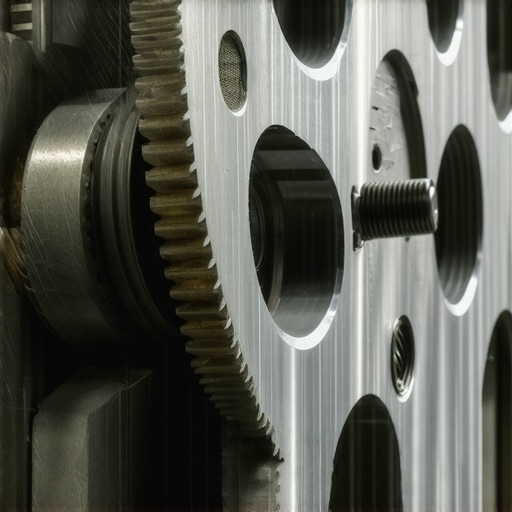 Examining the planetary gearset requires a transition from external observation to forensic mechanical analysis. These intricate assemblies rely on microscopic tolerances and high-pressure lubrication to manage torque multiplication. If a thrust washer—the sacrificial barrier between rotating gears—disintegrates, it introduces radial play that eventually leads to gear ‘howl’ or a complete mechanical lockup. Experts at ZF Friedrichshafen AG note that many modern multi-speed units utilize specialized coatings on these washers that, if compromised by contaminated fluid, lead to rapid thermal runaway within the gear carrier.
Is Your Differential Whine Actually a Bearing Warning from the Output Shaft?
Distinguishing between a failing final drive and an internal transmission bearing requires an ear for frequency and a deep understanding of load-dependent acoustics. A ‘whine’ that changes pitch with vehicle speed, regardless of engine RPM, points directly toward the output shaft or the differential ring and pinion. In transaxle configurations, where the transmission and differential share a common housing, the migration of metallic slurry from a chipped differential gear can quickly contaminate the entire hydraulic circuit. This is why a magnetic drain plug inspection is a mandatory step in any professional car service; the presence of ‘silver glitter’ in the oil is a definitive signal that the mechanical interface is shedding material. If you find your vehicle vibrating specifically during deceleration, you may be witnessing the early stages of pinion bearing failure, a condition often misdiagnosed as a brake rotor warp or a tire balance issue. Advanced vehicle diagnostics involve using a chassis ear—a multi-channel electronic stethoscope—to isolate these vibrations to a specific bearing race before the housing itself becomes heat-damaged. Have you ever chased a mysterious drivetrain noise that only appeared at specific highway speeds? Documenting the exact conditions—load, speed, and gear—is the first step toward a surgical fix rather than a broad, expensive replacement. We invite you to share your findings to help refine our community’s diagnostic protocols for complex gear harmonics.
Expert Insights & Advanced Considerations
Think Like a Chemist When Choosing ATF
Reliable vehicle diagnostics require acknowledging that automatic transmission fluid is a sophisticated chemical cocktail, not just a lubricant. When tackling transmission failures decoded by standard scanners, remember that friction modifiers are highly specific to clutch material. Using the wrong fluid can lead to glazing that necessitates a full rebuild.
Don’t Ignore the Physical Alignment of the Powertrain
A ‘clunk’ isn’t always an internal gear issue. If your auto repair strategy doesn’t include inspecting engine and transmission mounts, you might miss how a misaligned drivetrain stresses shift linkages and cooler lines. Maintaining physical orientation is as critical as maintaining hydraulic pressure.
Differentiate Between Solenoid Lag and Mechanical Slippage
Using the $20 scan tool that does more than the dealership rig allows you to monitor solenoid duty cycles in real-time. If the electrical command is fast but the gear engagement is slow, you have isolated a hydraulic or mechanical leak, saving hours of unnecessary troubleshooting.
Curated Expert Resources
ATRA Technical Bulletins: These provide granular hydraulic circuit maps that are essential for diagnosing valve body wear and internal pressure leaks.
ZF Friedrichshafen Service Portal: A must-read for anyone performing a car service on modern high-speed units, offering precise torque specs and fluid requirements.
ASE A2 Certification Material: This resource builds the foundational logic needed to bridge the gap between simple code-reading and expert-level vehicle diagnostics.
#IMAGE_PLACEHOLDER_E#
Mastering the Art of Mechanical Forensics
Effective vehicle diagnostics in the world of modern transmissions require a balance of digital literacy and mechanical intuition. By looking past the superficial truth about lifetime transmission fluid claims and addressing the root causes—be it a $5 bushing or a worn valve bore—you ensure the longevity of the vehicle’s most complex system. We invite you to contribute your own diagnostic findings or explore our guide on choosing the right car service for seamless vehicle maintenance to keep your drivetrain in factory condition. What was the most elusive gearbox issue you ever solved?