How Harmonic Resonance Turns a Slight Misfire into a Shaking Dashboard
When a vehicle exhibits a rhythmic tremor through the dashboard while stationary—only for that tremor to vanish once the throttle is applied—we are rarely looking at a simple mechanical failure. Instead, we are witnessing a failure in the vehicle’s NVH (Noise, Vibration, and Harshness) management system. At idle, the engine operates at its lowest frequency, typically between 600 and 800 RPM. This low-frequency oscillation is precisely where structural weaknesses in the chassis and drivetrain become most apparent. If you notice other symptoms, such as why your car oil light comes on at idle, the issue may involve deeper oil pressure or lubrication challenges that affect internal balance. Professional vehicle diagnostics are essential to determine if the vibration is a symptom of a lean burn condition or a mechanical decoupling issue within the motor mounts.
Stop Blaming the Engine and Start Inspecting the Drivetrain Mounts
The primary role of engine and transmission mounts is to isolate the cabin from the natural torque pulses of the internal combustion process. Over time, the elastomeric compounds within these mounts degrade or leak—in the case of hydraulic mounts—leading to a direct metal-to-metal transfer of kinetic energy. According to standards established by SAE International regarding vehicle NVH, once the RPM increases, the frequency of the vibration often exceeds the natural resonance of the dashboard materials, which explains why the sensation ‘smooths out’ at higher speeds. It is not that the vibration has stopped; it has simply moved to a frequency the human hand and the plastic components of the dash no longer amplify. If the vibration is accompanied by a clunk, you might want to look into the $20 fix for a rough idle that mechanics overlook to see if a simple cleaning or adjustment can restore balance.
Is it Possible for a Failing Vacuum System to Target Only Idle Speeds?
Absolutely. A common nuance in car service is the ‘vanishing’ vacuum leak. At idle, the throttle plate is nearly closed, creating high vacuum pressure within the intake manifold. A small crack in a vacuum hose allows ‘unmetered air’ to enter, leaning out the air-fuel mixture and causing a rough idle. Once you accelerate, the throttle opens, manifold vacuum drops, and the percentage of unmetered air relative to the total intake becomes negligible, causing the engine to feel smooth again. You can often find these elusive leaks yourself using specialized techniques; for example, learning how to find a vacuum leak using a $5 cigar can save you hours of guesswork in the shop. [image_placeholder]
Why Centrifugal Force Masks Mechanical Imbalance During Acceleration
In many cases, the vibration is tied to the transmission or the torque converter. If the internal balance of the converter is slightly off, the erratic movement is most violent when the unit is under minimal load at a stop. As the input shaft speed increases, centrifugal force acts as a stabilizing agent, essentially ‘centering’ the rotational mass and masking the defect. This is why a car might feel like a vibrator at a red light but a luxury sedan on the highway. If you suspect your gearbox is at the heart of the issue, exploring professional auto repair assessments is the next logical step. Don’t wait for a minor vibration to become a catastrophic failure; share your diagnostic findings with a specialist or contact our expert team today to schedule a comprehensive drivetrain analysis.
When Your Alternator Starves the Engine at Red Lights
While most drivers associate the alternator with charging the battery, its role as a parasitic load on the engine is often overlooked during vibration diagnostics. At idle, the engine produces its minimum amount of torque. If the alternator is struggling to meet the electrical demand—perhaps due to a failing diode or a heavily discharged battery—the resulting electromagnetic resistance creates a significant physical drag on the crankshaft. This extra load can cause the RPMs to dip just enough to hit the resonance frequency of the dashboard, causing that annoying rattle. You should verify this by observing if the shaking intensifies when you switch on the headlights or the rear defroster. Learning how to tell if your alternator is killing your new battery can provide clues; a failing charging system often forces the engine to work harder than necessary at a standstill, leading to a noticeable shudder that disappears as soon as the RPMs rise and the alternator’s efficiency improves.
Could a Failing Battery Actually Cause a Physical Tremor?
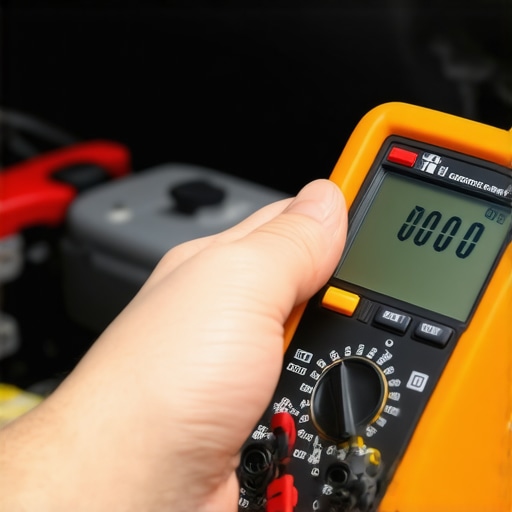
It sounds counterintuitive, but the battery acts as a massive buffer for the entire electrical system. When a battery has a shorted cell or high internal resistance, the alternator must work at 100% duty cycle even at idle. This creates a constant mechanical load that the Engine Control Unit (ECU) may struggle to compensate for, especially in older vehicles with slower processing speeds. The result is a ‘hunting’ idle where the needle barely moves, but the chassis vibrates. If you have already checked your mounts, performing a load test on the battery is a high-priority diagnostic step. Furthermore, if you notice your heater performance is also inconsistent during these episodes, it might be worth investigating why your car heater only works while you are driving, as this often points to low coolant flow or electrical fan issues that correlate with low-idle vibrations.
The Carbon-Clogged Lungs of Your Intake System
In the world of vehicle diagnostics, the Idle Air Control Valve (IACV) and the throttle body are the most frequent culprits for stationary tremors. Over thousands of miles, oil vapors from the PCV system coat the internal passages of the intake with a sticky carbon film. At idle, when the throttle plate is closed, the engine relies on the tiny opening of the IACV to ‘breathe.’ When this passage is restricted, the ECU constantly adjusts the timing and fuel trim to prevent a stall, creating a rhythmic vibration. Fortunately, this is often a DIY-friendly fix. Utilizing the easy way to clean your car throttle body can restore the smooth, factory-spec idle your car had when it was new. Once the vehicle is in motion, the throttle plate opens wide, the carbon restriction becomes irrelevant, and the vibration instantly vanishes.
Transmission Fluid Viscosity and the Ghost in the Torque Converter
If the vibration feels more like a low-frequency hum that resonates through the seat, the problem might lie within the transmission fluid itself. According to technical data from the Automotive Service Association (ASA), degraded transmission fluid can lose its frictional properties, causing the torque converter’s internal clutch to ‘chatter’ or partially engage even when it should be free-wheeling at a stop. This creates a direct mechanical link between the engine and the stationary wheels, essentially trying to move the car while your foot is on the brake. Many manufacturers claim their fluids are ‘fill-for-life,’ but the truth about lifetime transmission fluid claims is that heat and shearing eventually break down the fluid’s ability to dampen these vibrations. Refreshing the fluid can often decouple this ghost-load and smooth out the idle. Does your dashboard vibrate more when the A/C kicks in? Share your experience in the comments below, or check our guide on how to diagnose a misfire without a code reader to see if your tremor is actually a subtle ignition miss.
Exhaust Hangers That Act Like Tuning Forks
Even when the engine is perfectly balanced, the path the vibration takes to reach your hands matters immensely. Exhaust hangers are engineered to decouple the massive, pulsing weight of the exhaust system from the vehicle’s unibody. When these rubber isolators harden due to heat cycles or when a tailpipe rests against a heat shield, the dashboard becomes an acoustic and physical amplifier for every combustion event. Unlike a tire balance issue, this resonant frequency is most aggressive at low RPMs where the engine’s physical displacement is most pronounced. Checking these mounts often reveals why a simple visual inspection of the engine bay fails to find the culprit; a slight bend in a mid-pipe can turn the entire floorpan into a vibrating diaphragm. If you are noticing these symptoms, it might be time to look into auto repair options that focus on structural damping rather than just the engine block itself.
Can a Lazy Oxygen Sensor Cause Shaking Only When Stopped?
Yes, and the diagnostic path is often overlooked because it doesn’t always trigger a fault code. An O2 sensor that has become ‘lazy’—meaning it cycles slower than the required millisecond intervals—may stay within the ‘acceptable’ voltage range for the ECU but fail to provide real-time data accuracy. At idle, the ECU relies heavily on these rapid-fire readings to maintain a stoichiometric air-fuel ratio. If the sensor reports a lean condition even a fraction of a second too late, the ECU over-compensates with fuel, causing a slight ‘stumble’ or ‘hunt’ that is felt as a dash tremor. Once you accelerate, the ECU moves into ‘open loop’ or uses map-based fueling where these micro-adjustments are ignored, explaining the sudden smoothness. 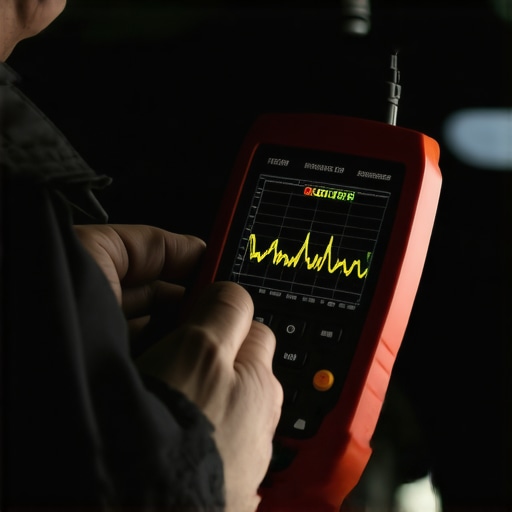
How Your ECU’s Adaptive Memory Can Sabotage the Idle
Modern vehicles utilize ‘Adaptive Memory’ to compensate for natural mechanical wear. If you recently disconnected your battery or cleared a code, the ECU may have lost its ‘learned’ throttle position or fuel trim offsets. For the first few drive cycles, the car may shake at stoplights as the computer ‘re-learns’ how to keep the engine stable against the parasitic loads of the transmission and accessories. This is a classic example of where vehicle diagnostics requires patience rather than parts replacement. If you have been chasing a ghost, consider whether a recent power loss or dead battery triggered the instability. You should also verify if your spark plugs are up to the task; reading about how to check spark plugs without removing them can help you rule out ignition-side inconsistencies before resetting the computer’s memory.
The Dual-Mass Flywheel Dilemma in Modern Drivetrains
In many newer vehicles, especially those equipped with manual or dual-clutch transmissions, the dual-mass flywheel (DMF) is a frequent source of phantom vibrations. The DMF is essentially two weights connected by a series of internal springs designed to absorb torsional spikes from the crankshaft. When these springs weaken or the internal grease dries out, the two masses oscillate out of sync at low speeds. At a standstill, this creates a distinct ‘judder’ through the floorboards. As the centrifugal force of higher RPMs pins the components into a more stable rotation, the vibration vanishes. According to industry reports from Aftermarket News, DMF failure is increasingly common in downsized, high-torque turbocharged engines where the stress on the drivetrain is maximized at low engine speeds. If you have noticed this judder, tell us your vehicle’s mileage in the comments below; it often correlates with the end of the flywheel’s service life.
Why Cooling Fan Imbalance Mimics a Rough Engine
One of the most deceptive sources of stationary vibration is the radiator cooling fan. In many cars, the fan is programmed to kick on only when the vehicle is stationary and airflow through the radiator drops. If a fan blade is chipped or the motor bearing is failing, the resulting centrifugal imbalance sends a high-frequency vibration through the radiator support and into the dash. Because this only happens when the engine is hot and stopped, it is frequently misdiagnosed as an engine misfire or a transmission problem. You can test this by turning your A/C to ‘Max,’ which forces the fans to engage; if the shaking starts immediately even with a cold engine, you have found your culprit. Exploring why your car is shaking when the AC is on can provide deeper insights into how these auxiliary systems put stress on the idle quality.
Look Behind the Crankshaft Pulley for a Fractured Harmonic Balancer
While most technicians immediately check the top-side components, the real culprit often lies at the leading edge of the crankshaft. The harmonic balancer, or torsional damper, is designed with a rubber isolation ring that absorbs the violent twisting forces inherent in the internal combustion cycle. When this elastomer layer perishes or develops micro-cracks, it loses its ability to dampen low-frequency vibrations. At idle, these undampened pulses resonate directly through the chassis, turning your dashboard into a sounding board. As engine speed increases, the rotational inertia of the pulley provides a self-centering effect that temporarily masks the imbalance. Inspecting this component requires more than a glance; you must look for ‘wobble’ while the engine is running or evidence of rubber protruding from the assembly. If you find your engine also exhibits unusual cooling patterns, consider how oil pressure fluctuations might be a secondary symptom of internal mechanical stress.
Does a Sluggish VVT Solenoid Starve Your Engine’s Equilibrium?
Variable Valve Timing (VVT) is a marvel of modern efficiency, but it relies heavily on precise oil pressure to maintain cam phasing. At idle, oil pressure is at its lowest threshold. If a VVT solenoid is partially clogged or electrically ‘lazy,’ the camshaft may not lock into its intended base position, causing a slight overlap in valve timing that leads to a rough, vibrating idle. According to technical documentation from Delphi Technologies, even a minor deviation in cam phase angle can increase manifold vacuum fluctuations, which the ECU struggles to stabilize at low RPMs. Once you accelerate, the increase in oil pressure and the command for advanced timing override the sticking point, making the engine feel perfectly smooth. 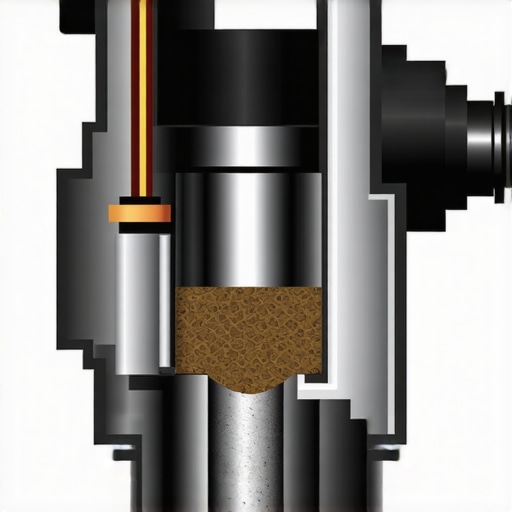
Stop Ignoring the Corroded Ground Straps in Your Engine Bay
In the digital landscape of modern vehicle diagnostics, electrical ‘noise’ is just as detrimental as mechanical wear. A corroded engine-to-chassis ground strap can introduce high resistance into the electrical return path. This resistance forces the alternator to work harder and can actually interfere with the sensitive signals sent by the crankshaft and camshaft position sensors. When these signals are ‘dirty,’ the ECU’s ignition timing may jitter by just a few degrees—enough to create a physical tremor at a standstill. At higher speeds, the signal-to-noise ratio improves as the sensor voltage output increases, effectively drowning out the interference. Cleaning your ground points is a foundational step in any auto repair strategy. If you suspect your electrical system is underperforming, verify it by checking if your alternator is affecting the battery health, as these systems are deeply interconnected.
Why the Stoichiometric Tug-of-War Triggers a Cabin Tremor
Fuel injector balance is often overlooked during car service unless a misfire code is present. However, a minute variance in flow rates—where one injector delivers 3% less fuel than the others—creates an uneven power stroke that is most palpable at low engine speeds. Because the engine is not under load at a stop, the lack of momentum makes this ‘kick’ highly noticeable through the dashboard. Once the throttle opens, the total volume of fuel and air increases, and the percentage of variance becomes negligible compared to the total power output. This is a classic case where transmission behavior and engine smoothness are falsely conflated. Have you noticed your dashboard vibration getting worse after a specific gas station visit? Share your experience in the comments or reach out to our diagnostic experts for a professional fuel trim analysis to pinpoint the exact cylinder causing the disruption.
How Harmonic Resonance Turns a Slight Misfire into a Shaking Dashboard
When a vehicle exhibits a rhythmic tremor through the dashboard while stationary—only for that tremor to vanish once the throttle is applied—we are rarely looking at a simple mechanical failure. Instead, we are witnessing a failure in the vehicle’s NVH (Noise, Vibration, and Harshness) management system. At idle, the engine operates at its lowest frequency, typically between 600 and 800 RPM. This low-frequency oscillation is precisely where structural weaknesses in the chassis and drivetrain become most apparent. If you notice other symptoms, such as why your car oil light comes on at idle, the issue may involve deeper oil pressure or lubrication challenges that affect internal balance. Professional vehicle diagnostics are essential to determine if the vibration is a symptom of a lean burn condition or a mechanical decoupling issue within the motor mounts.
Stop Blaming the Engine and Start Inspecting the Drivetrain Mounts
The primary role of engine and transmission mounts is to isolate the cabin from the natural torque pulses of the internal combustion process. Over time, the elastomeric compounds within these mounts degrade or leak—in the case of hydraulic mounts—leading to a direct metal-to-metal transfer of kinetic energy. According to standards established by SAE International regarding vehicle NVH, once the RPM increases, the frequency of the vibration often exceeds the natural resonance of the dashboard materials, which explains why the sensation ‘smooths out’ at higher speeds. It is not that the vibration has stopped; it has simply moved to a frequency the human hand and the plastic components of the dash no longer amplify. If the vibration is accompanied by a clunk, you might want to look into the $20 fix for a rough idle that mechanics overlook to see if a simple cleaning or adjustment can restore balance.
Is it Possible for a Failing Vacuum System to Target Only Idle Speeds?
Absolutely. A common nuance in car service is the ‘vanishing’ vacuum leak. At idle, the throttle plate is nearly closed, creating high vacuum pressure within the intake manifold. A small crack in a vacuum hose allows ‘unmetered air’ to enter, leaning out the air-fuel mixture and causing a rough idle. Once you accelerate, the throttle opens, manifold vacuum drops, and the percentage of unmetered air relative to the total intake becomes negligible, causing the engine to feel smooth again. You can often find these elusive leaks yourself using specialized techniques; for example, learning how to find a vacuum leak using a $5 cigar can save you hours of guesswork in the shop. [image_placeholder]
Why Centrifugal Force Masks Mechanical Imbalance During Acceleration
In many cases, the vibration is tied to the transmission or the torque converter. If the internal balance of the converter is slightly off, the erratic movement is most violent when the unit is under minimal load at a stop. As the input shaft speed increases, centrifugal force acts as a stabilizing agent, essentially ‘centering’ the rotational mass and masking the defect. This is why a car might feel like a vibrator at a red light but a luxury sedan on the highway. If you suspect your gearbox is at the heart of the issue, exploring professional auto repair assessments is the next logical step. Don’t wait for a minor vibration to become a catastrophic failure; share your diagnostic findings with a specialist or contact our expert team today to schedule a comprehensive drivetrain analysis.
When Your Alternator Starves the Engine at Red Lights
While most drivers associate the alternator with charging the battery, its role as a parasitic load on the engine is often overlooked during vibration diagnostics. At idle, the engine produces its minimum amount of torque. If the alternator is struggling to meet the electrical demand—perhaps due to a failing diode or a heavily discharged battery—the resulting electromagnetic resistance creates a significant physical drag on the crankshaft. This extra load can cause the RPMs to dip just enough to hit the resonance frequency of the dashboard, causing that annoying rattle. You should verify this by observing if the shaking intensifies when you switch on the headlights or the rear defroster. Learning how to tell if your alternator is killing your new battery can provide clues; a failing charging system often forces the engine to work harder than necessary at a standstill, leading to a noticeable shudder that disappears as soon as the RPMs rise and the alternator’s efficiency improves.
Could a Failing Battery Actually Cause a Physical Tremor?
It sounds counterintuitive, but the battery acts as a massive buffer for the entire electrical system. When a battery has a shorted cell or high internal resistance, the alternator must work at 100% duty cycle even at idle. This creates a constant mechanical load that the Engine Control Unit (ECU) may struggle to compensate for, especially in older vehicles with slower processing speeds. The result is a ‘hunting’ idle where the needle barely moves, but the chassis vibrates. If you have already checked your mounts, performing a load test on the battery is a high-priority diagnostic step. Furthermore, if you notice your heater performance is also inconsistent during these episodes, it might be worth investigating why your car heater only works while you are driving, as this often points to low coolant flow or electrical fan issues that correlate with low-idle vibrations.
The Carbon-Clogged Lungs of Your Intake System
In the world of vehicle diagnostics, the Idle Air Control Valve (IACV) and the throttle body are the most frequent culprits for stationary tremors. Over thousands of miles, oil vapors from the PCV system coat the internal passages of the intake with a sticky carbon film. At idle, when the throttle plate is closed, the engine relies on the tiny opening of the IACV to ‘breathe.’ When this passage is restricted, the ECU constantly adjusts the timing and fuel trim to prevent a stall, creating a rhythmic vibration. Fortunately, this is often a DIY-friendly fix. Utilizing the easy way to clean your car throttle body can restore the smooth, factory-spec idle your car had when it was new. Once the vehicle is in motion, the throttle plate opens wide, the carbon restriction becomes irrelevant, and the vibration instantly vanishes.
Transmission Fluid Viscosity and the Ghost in the Torque Converter
If the vibration feels more like a low-frequency hum that resonates through the seat, the problem might lie within the transmission fluid itself. According to technical data from the Automotive Service Association (ASA), degraded transmission fluid can lose its frictional properties, causing the torque converter’s internal clutch to ‘chatter’ or partially engage even when it should be free-wheeling at a stop. This creates a direct mechanical link between the engine and the stationary wheels, essentially trying to move the car while your foot is on the brake. Many manufacturers claim their fluids are ‘fill-for-life,’ but the truth about lifetime transmission fluid claims is that heat and shearing eventually break down the fluid’s ability to dampen these vibrations. Refreshing the fluid can often decouple this ghost-load and smooth out the idle. Does your dashboard vibrate more when the A/C kicks in? Share your experience in the comments below, or check our guide on how to diagnose a misfire without a code reader to see if your tremor is actually a subtle ignition miss.
Exhaust Hangers That Act Like Tuning Forks
Even when the engine is perfectly balanced, the path the vibration takes to reach your hands matters immensely. Exhaust hangers are engineered to decouple the massive, pulsing weight of the exhaust system from the vehicle’s unibody. When these rubber isolators harden due to heat cycles or when a tailpipe rests against a heat shield, the dashboard becomes an acoustic and physical amplifier for every combustion event. Unlike a tire balance issue, this resonant frequency is most aggressive at low RPMs where the engine’s physical displacement is most pronounced. Checking these mounts often reveals why a simple visual inspection of the engine bay fails to find the culprit; a slight bend in a mid-pipe can turn the entire floorpan into a vibrating diaphragm. If you are noticing these symptoms, it might be time to look into auto repair options that focus on structural damping rather than just the engine block itself.
Can a Lazy Oxygen Sensor Cause Shaking Only When Stopped?
Yes, and the diagnostic path is often overlooked because it doesn’t always trigger a fault code. An O2 sensor that has become ‘lazy’—meaning it cycles slower than the required millisecond intervals—may stay within the ‘acceptable’ voltage range for the ECU but fail to provide real-time data accuracy. At idle, the ECU relies heavily on these rapid-fire readings to maintain a stoichiometric air-fuel ratio. If the sensor reports a lean condition even a fraction of a second too late, the ECU over-compensates with fuel, causing a slight ‘stumble’ or ‘hunt’ that is felt as a dash tremor. Once you accelerate, the ECU moves into ‘open loop’ or uses map-based fueling where these micro-adjustments are ignored, explaining the sudden smoothness.
How Your ECU’s Adaptive Memory Can Sabotage the Idle
Modern vehicles utilize ‘Adaptive Memory’ to compensate for natural mechanical wear. If you recently disconnected your battery or cleared a code, the ECU may have lost its ‘learned’ throttle position or fuel trim offsets. For the first few drive cycles, the car may shake at stoplights as the computer ‘re-learns’ how to keep the engine stable against the parasitic loads of the transmission and accessories. This is a classic example of where vehicle diagnostics requires patience rather than parts replacement. If you have been chasing a ghost, consider whether a recent power loss or dead battery triggered the instability. You should also verify if your spark plugs are up to the task; reading about how to check spark plugs without removing them can help you rule out ignition-side inconsistencies before resetting the computer’s memory.
The Dual-Mass Flywheel Dilemma in Modern Drivetrains
In many newer vehicles, especially those equipped with manual or dual-clutch transmissions, the dual-mass flywheel (DMF) is a frequent source of phantom vibrations. The DMF is essentially two weights connected by a series of internal springs designed to absorb torsional spikes from the crankshaft. When these springs weaken or the internal grease dries out, the two masses oscillate out of sync at low speeds. At a standstill, this creates a distinct ‘judder’ through the floorboards. As the centrifugal force of higher RPMs pins the components into a more stable rotation, the vibration vanishes. According to industry reports from Aftermarket News, DMF failure is increasingly common in downsized, high-torque turbocharged engines where the stress on the drivetrain is maximized at low engine speeds. If you have noticed this judder, tell us your vehicle’s mileage in the comments below; it often correlates with the end of the flywheel’s service life.
Why Cooling Fan Imbalance Mimics a Rough Engine
One of the most deceptive sources of stationary vibration is the radiator cooling fan. In many cars, the fan is programmed to kick on only when the vehicle is stationary and airflow through the radiator drops. If a fan blade is chipped or the motor bearing is failing, the resulting centrifugal imbalance sends a high-frequency vibration through the radiator support and into the dash. Because this only happens when the engine is hot and stopped, it is frequently misdiagnosed as an engine misfire or a transmission problem. You can test this by turning your A/C to ‘Max,’ which forces the fans to engage; if the shaking starts immediately even with a cold engine, you have found your culprit. Exploring why your car is shaking when the AC is on can provide deeper insights into how these auxiliary systems put stress on the idle quality.
Look Behind the Crankshaft Pulley for a Fractured Harmonic Balancer
While most technicians immediately check the top-side components, the real culprit often lies at the leading edge of the crankshaft. The harmonic balancer, or torsional damper, is designed with a rubber isolation ring that absorbs the violent twisting forces inherent in the internal combustion cycle. When this elastomer layer perishes or develops micro-cracks, it loses its ability to dampen low-frequency vibrations. At idle, these undampened pulses resonate directly through the chassis, turning your dashboard into a sounding board. As engine speed increases, the rotational inertia of the pulley provides a self-centering effect that temporarily masks the imbalance. Inspecting this component requires more than a glance; you must look for ‘wobble’ while the engine is running or evidence of rubber protruding from the assembly. If you find your engine also exhibits unusual cooling patterns, consider how oil pressure fluctuations might be a secondary symptom of internal mechanical stress.
Does a Sluggish VVT Solenoid Starve Your Engine’s Equilibrium?
Variable Valve Timing (VVT) is a marvel of modern efficiency, but it relies heavily on precise oil pressure to maintain cam phasing. At idle, oil pressure is at its lowest threshold. If a VVT solenoid is partially clogged or electrically ‘lazy,’ the camshaft may not lock into its intended base position, causing a slight overlap in valve timing that leads to a rough, vibrating idle. According to technical documentation from Delphi Technologies, even a minor deviation in cam phase angle can increase manifold vacuum fluctuations, which the ECU struggles to stabilize at low RPMs. Once you accelerate, the increase in oil pressure and the command for advanced timing override the sticking point, making the engine feel perfectly smooth.
Stop Ignoring the Corroded Ground Straps in Your Engine Bay
In the digital landscape of modern vehicle diagnostics, electrical ‘noise’ is just as detrimental as mechanical wear. A corroded engine-to-chassis ground strap can introduce high resistance into the electrical return path. This resistance forces the alternator to work harder and can actually interfere with the sensitive signals sent by the crankshaft and camshaft position sensors. When these signals are ‘dirty,’ the ECU’s ignition timing may jitter by just a few degrees—enough to create a physical tremor at a standstill. At higher speeds, the signal-to-noise ratio improves as the sensor voltage output increases, effectively drowning out the interference. Cleaning your ground points is a foundational step in any auto repair strategy. If you suspect your electrical system is underperforming, verify it by checking if your alternator is affecting the battery health, as these systems are deeply interconnected.
Why the Stoichiometric Tug-of-War Triggers a Cabin Tremor
Fuel injector balance is often overlooked during car service unless a misfire code is present. However, a minute variance in flow rates—where one injector delivers 3% less fuel than the others—creates an uneven power stroke that is most palpable at low engine speeds. Because the engine is not under load at a stop, the lack of momentum makes this ‘kick’ highly noticeable through the dashboard. Once the throttle opens, the total volume of fuel and air increases, and the percentage of variance becomes negligible compared to the total power output. This is a classic case where transmission behavior and engine smoothness are falsely conflated. Have you noticed your dashboard vibration getting worse after a specific gas station visit? Share your experience in the comments or reach out to our diagnostic experts for a professional fuel trim analysis to pinpoint the exact cylinder causing the disruption.
Expert Insights & Advanced Considerations
Diagnose Vibrations Like a Pro with Frequency Mapping
Modern master technicians now use accelerometer apps and piezoelectric sensors to map the specific frequency of a vibration in Hertz (Hz). If your dash tremor occurs at exactly 12Hz, it often points to a structural resonance issue rather than a random engine misfire. Integrating top auto repair techniques every car owner should know involves moving from guesswork to scientific measurement.
Look Beyond the Surface of Your Engine Mounts
Even if an engine mount appears solid, the internal elastomeric compounds lose their dampening ability after 100,000 miles. This progressive hardening shifts the mount’s natural frequency, allowing idle vibrations to enter the cabin. Following expert auto repair tips for 2025 means treating mounts as wear items with a limited lifespan, not just checking for physical cracks.
Stop Overlooking the Impact of Electrical Resistance
A ground strap with high internal resistance can cause signal ‘jitter’ at the crankshaft sensor, leading to micro-adjustments in timing that manifest as a physical tremor. Knowing how to spot a bad ground wire before it kills your new battery is essential for stabilizing a ‘dirty’ electrical signal that clears up only when the alternator’s output increases at driving speeds.
Curated Expert Resources
SAE International Technical Library
The Society of Automotive Engineers provides comprehensive white papers on NVH engineering. These documents are the primary resource for understanding how different chassis materials react to specific engine frequencies at idle.
Professional Technician Diagnostic Networks
Platforms like IATN allow experts to share real-world case studies. This collective database is invaluable for spotting patterns, such as internal transmission failures decoded for your specific vehicle year and make.
Original Equipment Technical Bulletins
Manufacturer Technical Service Bulletins (TSBs) often contain specific software updates or revised parts designs specifically intended to address phantom idle vibrations that standard diagnostics might miss.
Final Expert Perspective
Solving why a car shakes at a stoplight while remaining smooth on the open road requires a holistic approach to vehicle diagnostics. From checking the health of the transmission fluid to verifying the structural integrity of exhaust hangers, every component plays a role in dampening the engine’s natural harmonics. When basic auto repair steps like cleaning the throttle body fail to restore balance, the answer usually lies in the nuanced interactions of electrical loads or mechanical decoupling points. We invite you to contribute your findings to the discussion below or contact our expert team for an advanced analysis to keep your vehicle performing with factory-spec precision.