Why a Simple Radiator Drain Leaves Half the Contaminants Behind
Thermal management in modern internal combustion engines is a precise science, far removed from the rudimentary cooling systems of the mid-20th century. While most owners recognize the need for periodic car service, the technical execution of a cooling system flush is frequently compromised by incomplete drainage. A standard radiator drain via the petcock typically only removes about 40% to 60% of the total fluid volume, leaving a significant concentration of degraded ethylene glycol and corrosive particulates trapped within the engine block’s water jackets. For a truly professional-grade auto repair, one must go beyond the radiator itself.
Is Your Coolant Actually Protecting the Cylinder Walls?
Over time, the chemical inhibitors in antifreeze deplete, and the pH levels shift, turning what was once a protective barrier into an acidic solution that facilitates galvanic corrosion. This is often why enthusiasts notice that their coolant level drops without any visible puddles; internal corrosion or micro-leaks caused by thermal stratification can lead to high-pressure loss. According to the Society of Automotive Engineers (SAE), maintaining precise coolant chemistry is the only way to prevent cavitation erosion on cylinder liners, a failure that often requires an entire engine rebuild rather than a simple fix.
[image_placeholder_1]
Find the Engine Block Plug to Ensure a True Flush
Most manufacturers integrate a secondary, often overlooked drain plug directly into the engine block casting. Typically located near the exhaust manifold or tucked behind the starter motor, this plug is the key to a complete system evacuation. Accessing this requires a deeper level of vehicle diagnostics than your average quick-lube shop provides. Removing this plug allows the technician to clear out the heavy sediment that settles at the lowest points of the block, which otherwise remains to contaminate the fresh fluid immediately. This level of detail is what differentiates an expert car service near you in 2025 from a standard maintenance routine.
Avoid the Trap of Lifetime Fluid Promises
The industry trend toward “lifetime” fluids is frequently a marketing strategy rather than an engineering reality. Much like the truth about lifetime transmission fluid, cooling systems require physical mechanical intervention to remove abrasive contaminants that no additive package can neutralize. Even if your transmission is shifting smoothly, a neglected cooling system can lead to heat transfer issues in the transmission oil cooler, leading to a cascade of expensive failures. If you want to understand the deeper logic behind these systems, explore our guide on vehicle diagnostics and hidden malfunctions.
Restore Thermal Efficiency Before the Summer Heat Hits
A complete flush isn’t just about chemistry; it is about restoring the original flow dynamics designed by the engineers. Restricted flow through the radiator core, often exacerbated by a leaky radiator hose that allows air to enter the system, creates localized hot spots. These hot spots can warp cylinder heads and degrade oil quality prematurely. If you suspect your cooling system is underperforming or you have never had the block plug pulled, it is time to take a more analytical approach to your maintenance. We encourage you to reach out for a consultation or share your technical findings with our team through our contact page to ensure your vehicle is operating at peak thermal efficiency.
Don’t Let a Cheap Thermostat Compromise Your Performance
While the fluid is the lifeblood of your engine, the thermostat acts as the primary logical gatekeeper of the entire thermal circuit. A thermostat that hangs partially open will prevent the engine from reaching its optimal operating temperature, leading to incomplete combustion, increased carbon buildup, and significantly reduced fuel economy. Conversely, a unit that sticks closed can cause catastrophic head gasket failure in a matter of minutes. Professional-grade auto repair necessitates that the thermostat be treated as a wear item rather than a permanent component. If you have ever wondered why your car heater only works while you are driving, the culprit is frequently a combination of low coolant volume and a failing thermostat that can no longer manage flow at idle. Replacing this component during a standard flush is the most cost-effective insurance policy against a heat-driven breakdown.
Is Your Overheating Issue Actually a Hidden Electrical Glitch?
Technical vehicle diagnostics in the modern era frequently reveal that what looks like a mechanical overheating issue is actually a failure in the electrical communication loop. Pulse-width modulated (PWM) fans and electronic water pumps rely on high-frequency signals from the engine control unit (ECU). If a ground wire is corroded or a sensor provides erratic data, the cooling system may fail even if the fluid is brand new. Experts often identify cases where motorists ask why your car cooling fan will not turn off, which typically points to a failsafe mode triggered by the ECU when it loses confidence in its thermal data readings. The National Institute for Automotive Service Excellence (ASE) emphasizes that approximately 25% of contemporary cooling malfunctions are rooted in sensor inaccuracies or wiring integrity rather than physical hardware blockages. Checking these electrical parameters is vital before authorizing expensive hardware replacements.
How Cooling System Neglect Cascades into Transmission Failure
The interconnectivity of modern vehicle architecture means your radiator is often performing double duty, cooling both the engine block and the automatic transmission fluid. A degraded cooling system directly impacts the heat exchanger responsible for the gearbox, leading to a dangerous rise in internal transmission temperatures. This is the surprising reason your transmission overheats while driving uphill; the engine’s thermal load becomes so substantial that the radiator loses its capacity to effectively pull heat from the transmission loop. Overlooking this link can lead to burnt friction plates and the expensive transmission failures decoded in our deep-dive technical reports. Advanced diagnostics also help differentiate between a true mechanical failure and a simpler issue, such as an impeller that has undergone cavitation damage, which can cause a car to die while driving due to protective ECU intervention. To avoid being misled by predatory maintenance suggestions, learn how to spot a fake mechanic recommended service scam and focus on evidence-based repairs. Have you ever experienced a sudden temperature spike while towing or under heavy load? Share your findings in the comments below so we can analyze the technical variables together.
Stop Thinking of Your Multimeter as Just an Electrical Tool
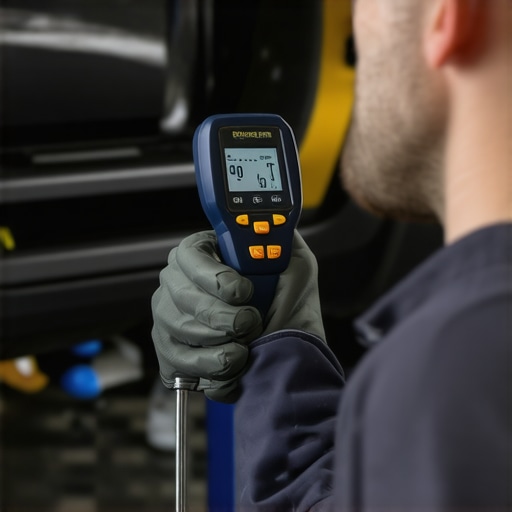
In the realm of advanced vehicle diagnostics, one of the most overlooked tests involves measuring the actual electrical potential within the coolant itself. Electrolysis occurs when the cooling system’s chemistry breaks down to the point where it becomes an electrolyte, or when an engine component has a poor ground, causing the coolant to act as a return path for current. Using a digital multimeter set to DC volts, an expert technician can detect if the fluid is carrying more than 0.1 to 0.3 volts. If you exceed this threshold, the resulting electrochemical reaction will literally strip the aluminum from your radiator and heater core from the inside out. This isn’t just theoretical; it’s a physical reality that often explains why new components fail prematurely after a standard auto repair.
#IMAGE_PLACE_HOLDER_C#
Can a Clogged Heater Core Trigger Total Engine Meltdown?
While most drivers associate the heater core solely with cabin comfort, it plays a vital role as a secondary thermal buffer. In many vehicle architectures, the heater core is part of a bypass circuit that ensures constant fluid movement even when the thermostat is closed. A blockage here doesn’t just mean you’ll be cold in the winter; it can disrupt the pressure balance within the entire circuit, leading to localized boiling. According to technical documentation from the Automotive Service Association (ASA), restricted flow in the heater circuit is a frequent contributor to ‘ghost’ overheating symptoms that evade standard car service checks. This is particularly prevalent in modern, high-efficiency engines where the tolerances for thermal expansion are incredibly tight.
Pressure Caps are the Unsung Heroes of Boiling Point Management
It is a common misconception that the radiator cap is merely a lid. In reality, it is a precision-engineered pressure relief valve. For every pound of pressure applied to the system, the boiling point of the coolant rises by approximately 3 degrees Fahrenheit. A cap rated at 15 PSI raises the boiling point to roughly 257°F (125°C), providing a critical safety margin during heavy towing or stop-and-go traffic. If the internal spring weakens or the seal degrades, the system will boil at a lower temperature, creating steam pockets that lead to catastrophic transmission and engine damage. When performing an auto repair, testing the cap’s release pressure with a specialized hand pump is just as important as checking the fluid level itself.
Air Pockets: The Invisible Killers of Water Pumps
Modern cooling systems are notoriously difficult to bleed, often requiring a vacuum-filling tool to ensure no air remains trapped in the upper reaches of the cylinder head. These air pockets can cause a phenomenon known as air binding, where the water pump impeller spins in a void, moving no fluid at all. This lack of resistance can lead to rapid impeller wear and eventual pump failure. If you’ve noticed an erratic temperature gauge or gurgling sounds behind the dashboard, it’s a clear sign that your cooling system needs a professional vacuum purge to restore its integrity. Don’t wait for the warning light to flash; a proactive approach to vehicle diagnostics today can save you thousands in engine replacement costs tomorrow. For those looking to master their vehicle’s health, analyzing the specific flow rates of your water pump under load is the next logical step in high-level maintenance.
The Aerodynamic Secret Behind Your Radiator’s Efficiency
Often overlooked during a car service, the physical integrity of the fan shroud and air dam system is as critical as the fluid itself. These plastic components are not merely decorative; they are engineered to maintain laminar flow and ensure that high-velocity air is drawn through the entire surface area of the radiator core rather than taking the path of least resistance around it. Even a small crack or a missing fastener in the shroud can lead to a 15% reduction in heat dissipation at low speeds. When performing vehicle diagnostics on a car that runs hot during idling but cools down at highway speeds, an expert technician looks for these structural bypasses. Ensuring that every baffle and seal is intact guarantees that the cooling fans are moving air where it is most effective, preventing the localized heat soak that can prematurely age transmission seals and engine gaskets.
Does Mixing Different Antifreeze Colors Really Create Engine Sludge?
The short answer is a definitive yes, and the consequences are severe for modern auto repair. The days of ‘universal’ green antifreeze are long gone, replaced by a complex array of Inorganic Additive Technology (IAT), Organic Acid Technology (OAT), and Hybrid Organic Acid Technology (HOAT). According to technical specifications in ASTM D3306 (Standard Specification for Glycol-Base Engine Coolant), mixing chemically incompatible inhibitors can lead to the precipitation of silicates or phosphates. This chemical reaction creates a thick, gelatinous sludge that can instantly block the narrow passages of a heater core or the micro-channels in a high-efficiency radiator. This ‘jelling’ effect effectively turns your coolant into an insulator, trapping heat inside the engine block and leading to catastrophic failure. If your fluid appears muddy or brown, it is likely that a previous car service utilized the wrong specification, necessitating a complete chemical restoration of the system.

Watch Out for the Invisible Hairline Cracks in Your Expansion Tank
Modern ‘degas’ bottles or pressurized expansion tanks are much more than simple overflow reservoirs; they are structural components of the pressurized thermal loop. Constructed from glass-reinforced nylon or polypropylene, these tanks undergo thousands of heat cycles that eventually cause the material to become brittle. Frequently, vehicle diagnostics will fail to catch a leak because it only occurs at full operating temperature when the plastic expands. These hairline fractures act like a pressure relief valve, allowing the system to depressurize and lowering the boiling point of the coolant. This leads to micro-boiling at the cylinder head interface, a silent killer that causes warped heads without ever showing a puddle on your driveway. Inspecting these tanks with a UV dye and a specialized pressure tester is a hallmark of high-level maintenance.
That Tiny Drip from the Water Pump is a Ticking Time Bomb
The weep hole on a water pump is an intentional design feature meant to warn you of impending bearing failure. Inside the pump, a mechanical seal prevents coolant from reaching the shaft bearings; once this seal is compromised, fluid enters the weep hole chamber. If you notice even a faint crust of dried coolant around this area, the internal auto repair clock has already started ticking. Ignoring this ‘minor’ leak allows coolant to wash away the bearing grease, leading to a total pump seizure. In many interference engines, a seized water pump can snap the timing belt, resulting in an immediate and total engine loss. We strongly recommend scheduling a comprehensive thermal audit if you notice any sweet-smelling odors or unexplained fluid loss to protect your vehicle’s long-term viability. Our team is ready to provide the advanced vehicle diagnostics required to identify these subtle warning signs before they escalate into major mechanical disasters.
Expert Insights and Advanced Considerations
Stop Relying on Gravity Alone to Bleed Air
Traditional burping methods are no longer sufficient for modern, low-profile cooling systems. To prevent the air pockets that lead to localized boiling, a professional auto repair now requires a vacuum-refilling tool. This creates a deep atmospheric drop within the sealed loop, ensuring that every cubic centimeter of the engine block is saturated with fluid before the first ignition cycle. This process eliminates the risk of an air-bound water pump, which is a frequent cause of premature component failure.
Why PWM Signal Testing Beats Part Swapping
When dealing with overheating at idle, many shops immediately replace the fan motor. However, true advanced vehicle diagnostics involve using an oscilloscope to verify the pulse-width modulation (PWM) signal from the ECU. If the duty cycle is incorrect due to a software glitch or a high-resistance ground wire, the most expensive fan on the market will still fail to pull the necessary CFM, leading to unnecessary expenses and unresolved heat soak.
Check the Chemical pH Before the First Mile
Fresh coolant is only as effective as the environment it enters. If a system has been severely neglected, residual acids can instantly degrade the inhibitors in the new fluid. Utilizing high-resolution pH test strips ensures that the system is chemically neutral. If the reading is too acidic, a secondary alkaline flush may be required to protect the new aluminum components from immediate galvanic attack, a step often skipped in a standard car service.
[image_placeholder_1]
Resources Every Master Technician Trusts
SAE International Technical Papers (SAE J1512): This remains the gold standard for understanding the specific heat capacities of modern ethylene glycol blends and their performance under high-pressure conditions in downsized, turbocharged engines.
ASTM D3306 Standards: For those looking to dive into the chemistry of automotive fluids, these specifications outline the exact requirements for glycol-based coolants, providing the technical data needed to avoid incompatible chemical mixtures.
ASE Advanced Level (L1) Manuals: These resources offer deep-dives into the electrical logic governing modern thermal management, essential for troubleshooting the sensors and actuators that control fluid flow.
A Unified View of Modern Thermal Management
Successful engine longevity is no longer just about changing fluids; it is about managing the complex intersection of chemistry, electronics, and thermodynamics. From identifying the link between cooling efficiency and preventing transmission failure patterns to mastering the use of a multimeter for electrolysis detection, the level of precision required has never been higher. By applying these expert auto repair techniques for 2025, you move beyond basic maintenance into the realm of true vehicle preservation. If you are seeking a meticulous car service that treats your cooling system as a high-precision circuit, we invite you to explore our further guides or reach out via our contact page to discuss your specific vehicle diagnostics needs.