For decades, checking transmission fluid was as simple as pulling a yellow handle under the hood. However, the evolution of vehicle diagnostics has shifted toward “sealed-for-life” units, creating a significant barrier for the average car owner. This engineering shift isn’t merely about reducing owner maintenance; it is a calculated design choice to prevent fluid contamination and ensure that only high-precision car service tools interact with the gearbox. Professional auto repair experts recognize that “sealed” is often a misnomer, as these units still require periodic inspection to avoid catastrophic internal wear.
Stop Relying Solely on the Dashboard Warning Light
Modern transmissions are hyper-sensitive to both fluid volume and operating temperature. Even a marginal deficit can cause the unit to run hot, leading to the issues discussed in our guide on transmission failures decoded. Unlike engine oil, which mostly serves to lubricate and cool, transmission fluid also acts as a hydraulic medium. If the level drops, the pressure required to engage clutch packs diminishes, leading to slipping or delayed engagement. When you find that your transmission slips when cold but runs fine when warm, it is often a sign that the fluid volume is just on the edge of the acceptable threshold.
Is Your Transmission Fluid Really Meant to Last Forever?
Manufacturers frequently market “lifetime” fluid, but in the high-stakes world of professional vehicle diagnostics, “lifetime” typically refers to the duration of the factory warranty rather than the physical limits of the lubricant itself. Heat is the primary enemy of automatic transmissions, and once the additives in the fluid oxidize, the protection vanishes. You should investigate the truth about lifetime transmission fluid claims to understand why proactive replacement is the only way to reach 200,000 miles without a rebuild. Technical bulletins from organizations like SAE International consistently emphasize that fluid shear and thermal degradation are inevitable, regardless of how “sealed” the system appears.
How to Use the Level Check Plug Like a Pro
To check fluid in a dipstick-less system, you must access the inspection plug, usually located on the side or bottom of the transmission case. The vehicle must be perfectly level on a lift or jack stands. The critical factor is temperature; most manufacturers specify that the fluid must be between 100°F and 120°F. If you remove the plug at this temperature and a thin stream of fluid trickles out, the level is correct. If nothing emerges, the system is low. This precision is why many owners prefer choosing the right car service rather than attempting this in a driveway. If you suspect your vehicle is already exhibiting mechanical symptoms, explore proven transmission repairs to save time and money before a small leak turns into a full gear failure. Have you noticed any unusual shifting patterns recently? Share your experiences with our community of specialists to gain further insight into your specific vehicle model.
The transition from mechanical linkages to electronic solenoids means that your vehicle’s computer now dictates exactly when and how a gear change occurs. When your car begins to act erratically, it is rarely a simple mechanical ‘break.’ Instead, it is often a failure of communication between the Transmission Control Module (TCM) and the internal hydraulic valves. To truly understand what is happening inside the case, you need more than a wrench; you need access to live data. Using the $20 scan tool that actually finds hidden transmission codes can reveal pending issues that generic readers often miss, such as micro-slippage or solenoids that are operating outside of their designated voltage range.
Don’t Ignore the Logic Behind Electronic Shift Points
Modern gearboxes utilize adaptive learning, meaning the car adjusts its shifting behavior based on your driving style and the age of the fluid. However, this software can only compensate for so much wear. If you notice that your automatic transmission shifts hard when the engine is cold, the TCM might be attempting to increase line pressure to overcome thick, degraded fluid or a sticking valve. This is a critical diagnostic window; addressing the issue now prevents the friction plates from glazing over, which is a point of no return for most units.

Why Does Your Gearbox Act Up Only on Steep Inclines?
Gravity is a brutal diagnostic tool. When you are climbing a grade, the fluid in the pan shifts toward the rear, potentially uncovering the filter intake if the level is even slightly low. This aeration leads to a drop in hydraulic pressure, causing the common phenomenon of the hidden reason your automatic transmission hesitates on hills. Expert technicians at the Automatic Transmission Rebuilders Association (ATRA) point out that over 90% of premature transmission failures are attributed to overheating caused by poor fluid maintenance or low levels. On an incline, the extra load generates immense heat; if your fluid is already oxidized, its ability to carry that heat away to the radiator is severely compromised.
Address the Small Gaskets to Save the Heavy Metal
Many owners fear the worst when they see a red puddle on the driveway, but the solution is often surprisingly affordable if caught early. A hardened pan gasket or a leaking shift shaft seal can drain your system over several months, leading to the low-pressure symptoms mentioned above. Investing in the $10 gasket that stops your transmission from leaking overnight is perhaps the highest-ROI maintenance move a car owner can make. If you continue to drive with a minor leak, you aren’t just losing fluid; you are inviting air into the hydraulic circuits, which causes ‘foaming’ and prevents the clutches from locking up firmly. Have you checked under your car for the ‘red drop of death’ lately? Tell us in the comments what symptoms you are currently troubleshooting, or suggest a specific model you’d like us to cover in our next diagnostic deep dive.
Stop Judging Fluid Health by Color Alone
For years, the visual ‘dipstick test’—looking for a bright cherry-red hue—was the gold standard for quick vehicle diagnostics. In the era of high-performance synthetic fluids, however, color can be a deceptive narrator. Some proprietary fluids used by European manufacturers may darken significantly within a few thousand miles due to normal heat cycles without actually losing their lubricating properties. Instead of just looking at the color, professional technicians perform a blotter test on a clean white paper towel to check for ‘suspended solids.’ If you see dark flakes or a gritty texture, those are actually microscopic pieces of your clutch plates. Once these friction materials are floating in the fluid, a simple flush can sometimes do more harm than good by removing the very grit that was providing the necessary friction for worn clutches to grab. This delicate balance is why car service professionals often debate the merits of a ‘drain and fill’ versus a high-pressure flush.
Why Your Radiator Might Be Killing Your Transmission
Most car owners don’t realize their transmission’s life is tethered directly to the engine’s cooling system. The fluid travels through a dedicated heat exchanger, often integrated into the radiator assembly. If this internal barrier fails due to corrosion, the resulting mixture of engine coolant and ATF—commonly called the ‘strawberry milkshake’—is a death sentence for the gearbox. The ethylene glycol in the coolant dissolves the water-soluble adhesives that hold the friction material to the clutch plates, causing them to delaminate almost instantly. Experts at the National Institute for Automotive Service Excellence (ASE) emphasize that monitoring the integrity of your cooling system and checking for pH imbalance in your coolant is as critical to transmission longevity as the fluid itself. 
What does it mean if your transmission fluid smells like burnt toast?
If you pull a dipstick or open a fill plug and are hit with a pungent, acrid aroma resembling burnt toast, you are smelling the literal incineration of your transmission’s internal components. This occurs when the fluid’s thermal threshold is exceeded, causing the lubricant to oxidize and break down. The resulting metal-on-metal friction generates enough heat to char the organic material on the clutch discs. At this stage, a diagnostic scan will likely show ‘P0700’ series codes, indicating component slipping or incorrect gear ratios. Before you commit to a full rebuild, check your transmission cooler lines for kinks or blockages; a single restricted line can cause localized overheating even if the rest of the system seems fine. Have you ever noticed a strange smell after a long highway drive? Check your lines today—is one significantly hotter than the other? Join our community of gearheads below and let us know your findings to help others troubleshoot similar issues.
Go Beyond the Scan Tool with Manual Pressure Testing
While electronic PIDs (Parameter IDs) on a high-end scanner provide a digital window into what the computer thinks is happening, a physical pressure gauge never lies. By tapping into the specific pressure ports on the side of the transmission case, a technician can verify if the internal pump is actually producing the 150-300 PSI required for heavy-load shifts. Sometimes, the Transmission Control Module commands a specific line pressure, but a mechanical wear-point in the valve body—such as a worn accumulator or a scarred bore—prevents that pressure from reaching the clutch pack. This discrepancy is the ‘smoking gun’ in many complex auto repair cases, helping to distinguish between a failed electronic solenoid and a catastrophic internal hydraulic leak. If you are seeing a noticeable delay when shifting from Park to Drive, the main regulator valve might be sticking in its bore…
Beyond the physical readings of a pressure gauge, the modern technician must evaluate the molecular integrity of the fluid itself. As manufacturers push for higher fuel efficiency, we have transitioned into the era of ultra-low viscosity fluids designed specifically for high-gear-count units.
Modern Multi-Speeds Demand Thinner More Specialized Fluids
In a 10-speed gearbox, the tolerances are so tight that using a generic ‘all-purpose’ synthetic fluid is a recipe for internal disaster. These high-tech units rely on specific friction modifiers to ensure that the multiple clutch packs engage with millisecond precision. If the fluid lacks these exact chemical additives, you will likely experience ‘harsh garage shifts’—that sudden, unsettling jolt when moving the selector from Park to Reverse. Unlike older four-speed units that were relatively forgiving, modern planetary gearsets will suffer surface pitting on the sun and ring gears if the lubricant’s film strength fails even momentarily. This is why professional car service centers insist on matching the exact specification code found on the transmission pan or fill plug.
Can a Software Update Actually Fix a Mechanical Jerk?
In many instances, the hardware is perfectly intact, but the ‘brain’ of the car has forgotten how to manage the shifts. As clutches wear naturally, the Transmission Control Module (TCM) adjusts ‘adaptive values’ to maintain shift quality. However, if you replace the fluid or a sensor without performing a ‘service fast relearn’ or a ‘software re-flash,’ the computer continues to apply hydraulic pressure based on the old, degraded fluid’s characteristics. This leads to erratic behavior that feels identical to a mechanical failure. Highly specialized technical resources such as Transmission Digest frequently highlight that many expensive ‘rebuilds’ could have been avoided with a simple TCM software calibration to accommodate the updated fluid viscosity and friction properties.
Stop the Shudder Before Your Torque Converter Disintegrates
One of the most elusive and misinterpreted symptoms in modern vehicle diagnostics is ‘TCC Shudder.’ It often feels as if you are driving over rumble strips for a brief second while cruising at 40-60 mph. This is rarely an issue with the gears themselves; rather, it is the torque converter clutch failing to lock up cleanly. 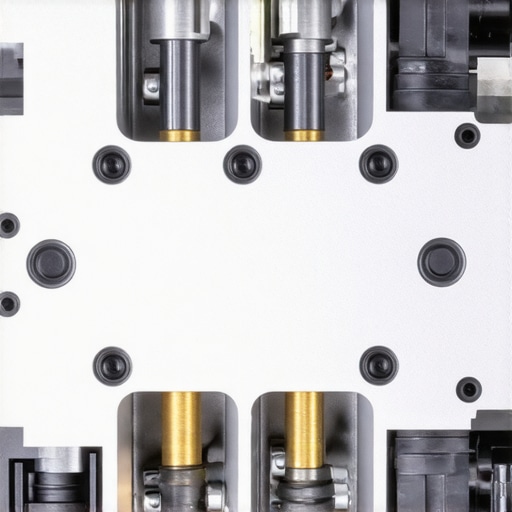 Micro-slippage in the converter creates a harmonic vibration that resonates through the entire drivetrain. If caught early, a specialized friction-modifying treatment or a full fluid exchange can often save the converter. However, if this shudder is ignored, the friction material on the TCC piston will eventually flake off and enter the main fluid stream, clogging the intricate channels of the valve body and requiring a total overhaul of the unit.
Why Heavy Towing Shreds Your Fluid Additives Fast
Towing a trailer or hauling heavy payloads doesn’t just work the engine harder; it places a massive thermal load on the transmission fluid. Under these conditions, internal fluid temperatures can easily spike above 220°F. For every 20-degree increase above this threshold, the functional life of your fluid—and by extension, your gearbox—is effectively cut in half. The intense heat causes ‘shear,’ a process where the long-chain molecules in the fluid are physically torn apart by the gears. This is why vehicles used for work or mountain driving require a much more aggressive service interval than what is listed in the standard owner’s manual. Have you been hauling heavy loads lately and noticed a change in shift timing or a slight delay? Share your towing specs in the comments below, and let’s discuss whether you need a dedicated external transmission cooler to protect your vehicle from premature wear.
Expert Insights & Advanced Considerations
Why Fluid Shear Happens Faster in 10-Speeds
In high-gear-count units, the constant shifting and extreme pressure on thin, low-viscosity fluids lead to a rapid breakdown of molecular chains. This fluid shear reduces the lubricant’s ability to protect the sun and ring gears from surface pitting. If you ignore the specific ATF requirements, you risk catastrophic mechanical failure that no software update can reverse. To truly unlock your cars potential expert auto repair tips for 2025 suggest monitoring shift times via live data to spot this degradation before it becomes audible.
The Relationship Between ATF pH and Clutch Health
Expert technicians don’t just look at fluid levels; they monitor the acidity. As transmission fluid oxidizes, its pH drops, becoming corrosive to the delicate copper components within the solenoids and the adhesive bonds on friction plates. This chemical shift is often the real reason your transmission slips during sharp left turns as the fluid loses the surface tension required to keep the pump primed during lateral G-loads.
Software Calibration Often Trumps Hardware Swaps
In the hidden world of vehicle diagnostics what you need to know is that the Transmission Control Module (TCM) is the ultimate arbiter of shift quality. A mechanical thud or jerk is frequently the result of the computer using outdated adaptive values for fresh fluid. Performing a service fast relearn is a non-negotiable step in modern car service to ensure the hardware and software are in perfect synchronization.
#IMAGE_PLACEHOLDER_E#
Curated Expert Resources
To deepen your technical knowledge, we recommend exploring these professional-grade resources used by the industry’s top diagnostic technicians.
ATSG (Automatic Transmission Service Group) Technical Manuals: These are the gold standard for the industry, providing exploded views and hydraulic circuit diagrams that you won’t find in a standard owner’s manual.
Sonnax Technical Library: A premier source for understanding valve body wear and the specific vacuum testing procedures required to identify internal hydraulic leaks.
SAE International Research Papers: For those who want to understand the tribology of synthetic lubricants and the engineering limits of modern planetary gearsets.
Final Expert Perspective
Mastering modern transmission health requires a shift in mindset from simple mechanical repair to integrated vehicle diagnostics. By recognizing the signs of fluid oxidation, software misalignment, and thermal stress early, you can avoid the high costs of a complete overhaul. Whether you are performing a manual pressure test or learning how to find reliable car service near you in 2025 to handle the heavy lifting, proactive maintenance remains the only way to ensure longevity. What has been your most challenging diagnostic puzzle? We invite you to reach out through our contact-us page or share your technical insights with our specialist community to help keep the world’s gearboxes running smoothly.