Modern vehicle performance relies on a delicate equilibrium of air, fuel, and spark. When a vehicle feels “heavy” or unresponsive during acceleration, many owners immediately fear catastrophic transmission failure or internal engine wear. However, from a diagnostic engineering perspective, the most frequent culprit is a disruption in volumetric efficiency—the engine’s ability to move air in and out. This sluggishness is often the first warning sign of a system struggling to maintain stoichiometric ratios. Identifying the root cause requires a transition from guesswork to professional-grade vehicle diagnostics to avoid unnecessary and expensive part-swapping.
Stop Chasing Ghosts and Check the Intake Path First
Before assuming your auto repair bill will reach four figures, consider the physics of the internal combustion engine. An engine is essentially a giant air pump. If the intake is restricted, the engine must work harder to create the vacuum necessary to pull in the air-fuel mixture. This increased pumping loss manifests as a noticeable lag when you step on the gas. Expert technicians often find that owners ignore the most basic hidden filter that is quietly killing fuel economy. When this component reaches its loading limit, the mass airflow sensor (MAF) sends skewed data to the Engine Control Module (ECM), resulting in retarded ignition timing and a sluggish driving experience.
The $15 Barrier Between You and Optimal Horsepower
In many cases, the sensation of a slipping transmission is actually a simple engine misfire or air starvation caused by a $15 air or fuel filter. A clogged fuel filter, specifically in older return-style systems, forces the fuel pump to operate at maximum duty cycle just to maintain idle pressure. Under load, the pressure drops, the mixture goes lean, and the car stumbles. According to research published by the Society of Automotive Engineers (SAE), even a 10% reduction in air or fuel flow can lead to a significant increase in emissions and a measurable loss in torque. Regular car service should always include a physical inspection of these high-velocity flow points. If you are experiencing a delay when moving from a stop, you might also want to look into transmission failures decoded to rule out hydraulic issues.
Is Your ECM Compensating for a Clogged Intake Without Throwing a Code?
Many drivers assume that if the Check Engine Light isn’t on, the car is fine. This is a common misconception in the world of vehicle diagnostics. Modern ECMs are incredibly adept at “learning” and can adjust fuel trims by up to 25% to compensate for a dirty filter or a small vacuum leak. You won’t get a warning light until the system exceeds those compensation limits, but you will certainly feel the loss of power and the drop in throttle response. This is why proactive car service is vital for maintaining the factory-rated performance of your vehicle. If your vehicle is exhibiting these symptoms, book a professional diagnostics session today to pinpoint the exact pressure drop before it damages your expensive oxygen sensors.
Actionable Steps to Eliminate Engine Hesitation
The path to restoring your car’s vigor begins with a systematic approach. Start by inspecting the engine air filter for debris and oil saturation. Next, utilize a scan tool to monitor long-term fuel trims; if they are consistently positive, your engine is struggling with a lean condition. For those dealing with more complex issues, such as a transmission that hesitates on hills, the solution may involve both mechanical and software updates. Don’t let a minor restriction turn into a major overhaul. Addressing a sluggish engine early ensures that your auto repair needs remain affordable and your vehicle stays on the road longer.
Why Your Throttle Body is Lying to the Computer
Modern drive-by-wire systems rely on the throttle position sensor (TPS) and the mass airflow sensor (MAF) to coordinate the dance of combustion. Over time, oil vapors from the positive crankcase ventilation (PCV) system can leave a carbon film on these sensitive components. This residue causes the throttle plate to lag or provides the Engine Control Module (ECM) with ‘lazy’ data. If you have noticed a stutter during light acceleration, learning how to clean a mass air flow sensor without damaging the hot wire is a critical skill for maintaining peak efficiency. Even a microscopic layer of dust can insulate the sensor wire, leading to inaccurate temperature readings and a resulting loss in low-end grunt. 
The Exhaust Bottleneck No One Talks About
Beyond the intake, the exhaust path is a frequently overlooked factor in sluggish performance. A collapsing internal ceramic brick in the catalytic converter creates excessive backpressure, effectively choking the engine during high-load scenarios. When the exhaust cannot escape, the intake stroke cannot pull in a fresh air-fuel charge effectively. You can often use the easy way to tell if your catalytic converter is clogged by monitoring manifold vacuum readings at various RPMs. If the vacuum drops steadily as you hold a higher RPM, the engine is likely drowning in its own waste gases. This mechanical restriction is frequently why drivers complain that their car loses power uphill but runs fine on flat roads, as the increased load demands a flow rate the exhaust can no longer support.
Why Does Your Car Respond Better Before the Engine Fully Warms Up?
This phenomenon is usually tied to ‘Open Loop’ versus ‘Closed Loop’ operation. When an engine is cold, the ECM ignores the oxygen sensors and runs on pre-programmed rich fuel maps. If your car feels snappy while cold but turns into a slug once the temperature needle reaches the middle, you likely have a failing sensor that is ‘lying’ to the computer once it takes over control. According to the National Institute for Automotive Service Excellence (ASE), diagnosing these intermittent performance issues requires observing live data streams to see if the one sensor that ruins your gas mileage is providing irrational signals. A professional car service using high-speed graphing multimeters can catch these glitches that standard code readers often miss.
When Transmission Software Masks Engine Weakness
In many 2025-era vehicles, what feels like a transmission slip is actually the ‘torque management’ software intervening to protect the drivetrain. If the ECM detects an engine misfire or an lean air-fuel condition, it may command the transmission to shift early or reduce hydraulic pressure to prevent mechanical shock. This creates a ‘rubbery’ or unresponsive sensation that many owners mistake for a failing gearbox. Before committing to an expensive auto repair, verify that your engine’s ignition system is up to par. If you’re tired of guessing which component is failing, share this guide with a fellow driver or leave a comment below describing your car’s specific ‘hiccup’—our community of experts often has the insight to help you avoid the ‘parts cannon’ approach to diagnostics.
Why Weak Spark Coils Steal Your Torque Without Throwing a Code
While many owners focus on air and fuel, the timing of the spark is what translates chemistry into kinetic energy. As ignition coils age, the internal windings can develop high resistance, leading to a ‘weak’ secondary spark. This doesn’t always trigger a ‘P0300’ random misfire code, but it does cause a significantly slower flame front propagation within the combustion chamber. This delay means the peak cylinder pressure occurs too late in the power stroke, resulting in a soggy pedal feel during high-load auto repair scenarios. Advanced vehicle diagnostics involve using an oscilloscope to monitor the ‘burn time’ of each cylinder; if one coil is firing for 1.2 milliseconds while the others are at 1.8, you’ve found your missing horsepower. Restoring this spark energy often makes the car feel like it has gained significant torque overnight.
Stop Blaming the Transmission When the Alternator is at Fault
An often-overlooked aspect of modern car service is the quality of DC voltage supplied to the engine’s sensitive electronic array. If an alternator diode is failing, it can introduce ‘AC ripple’ into the electrical system—a form of electronic noise that wreaks havoc on data processing. This ripple interferes with the clean square-wave signals from crankshaft and camshaft position sensors. When these signals are distorted, the ECM struggles to calculate precise injection timing, leading to a subtle shudder that many drivers mistake for transmission hunting or a slipping clutch. According to technical standards from the Automotive Service Association (ASA), verifying the integrity of the vehicle’s charging circuit and battery health is a foundational step in any complex driveability diagnostic to avoid misdiagnosing electrical interference as mechanical failure.
Can carbon buildup on GDI valves cause hesitation without a misfire code?
Gasoline Direct Injection (GDI) has revolutionized efficiency, but it has a significant Achilles’ heel: carbon accumulation on the intake valves. Because fuel is no longer sprayed onto the back of the intake valve to ‘wash’ it, oil vapors from the positive crankcase ventilation (PCV) system bake into a hard, restrictive crust. This turbulence-inducing buildup restricts the volumetric efficiency and disrupts the carefully engineered ‘tumble’ of air into the cylinder. The result is a sluggish engine that feels like it’s pulling a heavy load even when empty. 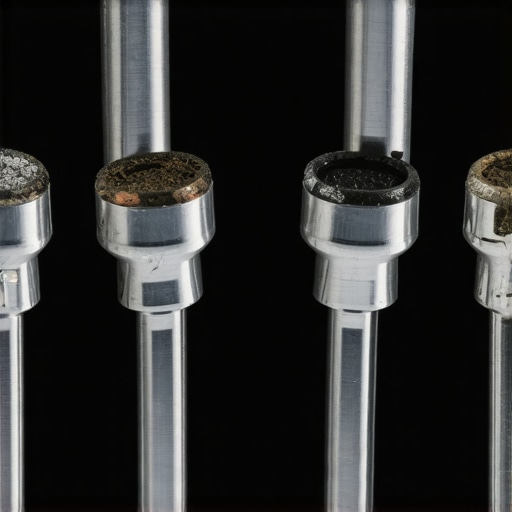 Dealing with this requires specialized walnut blasting or chemical induction services, which have become a standard part of high-level car service for modern fleets. If you’re noticing these symptoms, don’t wait for a breakdown—consult an expert specializing in vehicle diagnostics to perform an induction cleaning before the carbon becomes a permanent fixture.
Why Your Torque Converter Might Be Staying Locked Too Long
Finally, we must consider the hydraulic-to-mechanical transition that occurs within the drivetrain. The torque converter clutch (TCC) is designed to lock the engine to the transmission for highway efficiency, effectively creating a 1:1 drive ratio. However, if the TCC solenoid is sticky or the transmission fluid is degraded, the clutch may fail to release promptly as you slow down or attempt to accelerate from a roll. This creates a sensation of the engine ‘chugging’ or struggling to regain RPMs, much like trying to accelerate in a manual car while in a gear that is far too high for the current speed. Pinpointing whether this sluggishness is a software command error or a physical hydraulic blockage is the next critical step in resolving a persistent lack of power.
While torque converter mechanics are vital, the precision of variable valve timing (VVT) represents another layer of complexity in modern vehicle diagnostics. If your engine feels breathless at high RPMs or rough during the transition from idle, the culprit may be a sluggish VVT solenoid. These electronic-hydraulic components manage the camshaft’s position relative to the crankshaft, optimizing the engine’s power band. When oil flow is restricted due to sludge or debris, the phasers cannot move quickly enough to meet the demand of the throttle. This delay creates a distinct ‘flat spot’ in acceleration that is frequently misidentified as a fuel delivery problem or even transmission slipping. High-level car service now requires checking the resistance and flow rate of these solenoids to ensure the mechanical timing matches the ECM’s commanded state.
Clean Your VVT Solenoid to Reclaim Lost High-End Power
The mesh screens within VVT solenoids are microscopic, designed to prevent even the smallest particles from entering the precision-machined phasers. However, these screens can become a bottleneck. Even if you perform regular oil changes, the thermal breakdown of lubricants can create a varnish that slows the solenoid’s response time. If you notice your car hesitates specifically when transitioning from a cruising speed to a passing maneuver, the timing is likely failing to advance. Advanced technicians use bi-directional scan tools to manually toggle these solenoids while monitoring the engine’s RPM to confirm a physical blockage versus an electronic failure. 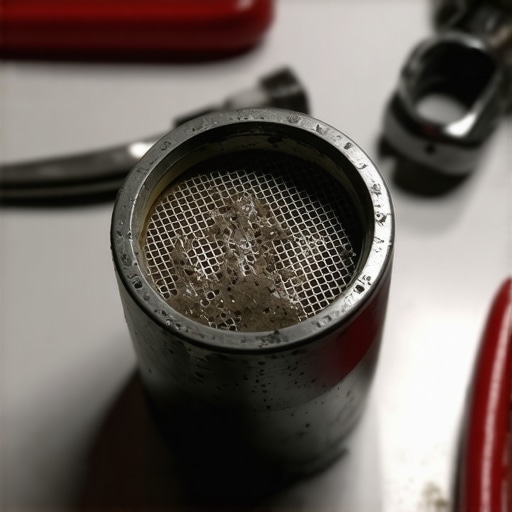
Precision Lubrication Matters More Than You Think
Modern engine tolerances have tightened to the point where using the incorrect oil viscosity can actually trigger a vehicle diagnostics nightmare. Many 2024 and 2025 model year vehicles utilize 0W-8 or 0W-16 oils not just for fuel economy, but because the VVT and cylinder deactivation systems depend on specific oil pressures to function at high speeds. Substituting a thicker oil out of habit can cause the hydraulic actuators to react slowly, leading to a ‘heavy’ pedal feel. According to technical data from the National Highway Traffic Safety Administration (NHTSA), following the manufacturer’s exact lubrication specifications is critical to preventing premature wear in timing components. If your auto repair professional mentions ‘oil-controlled timing errors,’ verify that the last service utilized the correct synthetic grade and API certification.
How does an EVAP system leak create a ghost hesitation?
The Evaporative Emission Control (EVAP) system is designed to trap and reuse fuel vapors, but a failing purge valve can introduce a ‘ghost’ vacuum leak that is difficult to trace. If the purge valve sticks slightly open, it allows an unmetered amount of fuel vapor into the intake manifold at the wrong time—usually during idle or light acceleration. This disrupts the air-fuel ratio, causing a momentary stumble that feels like a misfire. Because the leak is often intermittent, standard car service inspections might miss it unless a smoke test is performed. If your vehicle struggles to start after refueling or exhibits a rhythmic surge while stopped, the EVAP system should be your primary diagnostic target.
Stop the Boost Leak Before It Kills Your Turbocharger
For those driving turbocharged vehicles, the sensation of sluggishness is often tied to a loss of ‘charge air’ pressure. A boost leak—often a hairline crack in a plastic intercooler pipe or a loose worm-gear clamp—allows the pressurized air to escape before it reaches the combustion chamber. The turbo spins faster to compensate, leading to overspeeding and eventual failure, while the engine remains starved for oxygen. Monitoring the ‘boost vs. desired’ PIDs during a test drive is an essential part of vehicle diagnostics for modern forced-induction engines. Addressing these small leaks early prevents an expensive auto repair involving a full turbocharger replacement. If your car feels like it has lost its ‘punch’ or you hear a faint whistling sound under load, don’t ignore it; contact a specialist for a pressure test today to restore your factory torque and prevent catastrophic component damage.
Expert Insights & Advanced Considerations
Data Logging Trumps Component Swapping
True expertise in vehicle diagnostics isn’t about just reading a code; it’s about interpreting the data story over time. A ‘lazy’ oxygen sensor might never trigger a MIL, but its slow oscillation rate can rob you of 15% of your fuel economy. Professionals use graphing oscilloscopes to see what the ECM sees in real-time, often finding that the one sensor that ruins your gas mileage is actually functioning, just poorly.
Why Ground Straps Are the Unsung Heroes of Horsepower
Engineers understand that every sensor signal is a voltage differential. If your engine ground strap is corroded, every sensor ‘floats,’ sending erratic data to the computer. Before you assume you need a new transmission because of a shifting hiccup, you should learn how to spot a bad ground wire before it ruins your driveability and leads to unnecessary auto repair costs.
The Vital Gap Between Adaptation and Correction
Your car’s computer is constantly hiding mechanical flaws by adjusting long-term fuel trims. A vehicle that feels ‘sluggish’ is often just a car that has reached its limit of software adaptation. A thorough car service should involve checking these trims to catch vacuum leaks before they manifest as a permanent loss of power. #IMAGE_PLACEHOLDER_E#
Reliable Technical Guides for the Proactive Owner
SAE International: The gold standard for automotive engineering white papers. Use this resource to understand the physics of volumetric efficiency and forced induction mechanics at a granular level.
ASE Certification Prep Materials: Even if you aren’t a tech, these materials explain the logical flow of vehicle diagnostics, helping you communicate more effectively with your shop.
National Highway Traffic Safety Administration (NHTSA): Essential for tracking TSBs (Technical Service Bulletins) that might explain ‘ghost’ symptoms in your specific transmission or engine model year.
Stop Guessing and Start Measuring
Restoring a vehicle’s performance is rarely about the ‘one big fix’ and more about the precision of many small systems working in harmony. Whether it’s a clogged intake, a failing sensor, or a software-governed transmission lag, the answer lies in high-fidelity data. Prioritize a professional car service that utilizes live data streaming to ensure your auto repair budget is spent on solutions, not guesses. If you are struggling with a persistent hesitation, contact our specialist team today for a diagnostic consultation or share your symptoms in the comments below to join our community of technical experts.