Modern automotive engineering has transformed the vehicle from a purely mechanical assembly into a complex, networked ecosystem of electronic control units (ECUs). While these advancements enhance performance and safety, they introduce sophisticated failure modes, most notably the parasitic battery drain. A vehicle that refuses to start after sitting overnight is rarely suffering from a simple mechanical oversight; it is often a symptom of a ‘zombie module’—a component that fails to enter its designated sleep state, continuously pulling current from the lead-acid or AGM reservoir. Precise vehicle diagnostics in this realm require more than just a multimeter; they demand an analytical understanding of how CAN-bus networks stabilize after the ignition is killed.
When Your Car Stays Awake Long After You Park
In a healthy electrical system, the total current draw should drop below 50 milliamps once the onboard computers have completed their shutdown protocols. However, intermittent faults in the transmission control module or aftermarket security systems can keep the network ‘awake,’ leading to rapid depletion. To identify the culprit without resetting volatile memory, seasoned technicians utilize the voltage drop method across fuses. By measuring millivolts across a closed circuit, we can pinpoint the exact branch causing the issue without the risk of ‘waking up’ the modules by pulling fuses—a common mistake in amateur auto repair. If you suspect your vehicle is losing power while stationary, it is essential to understand the hidden electrical drain killing your battery while the car is parked to prevent permanent sulfation of the battery plates.
Why does your brand new battery die after 48 hours in the driveway?
The paradox of a new battery failing is almost always rooted in a communication error. When a door latch sensor or a glovebox light switch fails, it prevents the Body Control Module (BCM) from entering a low-power mode. This constant state of readiness can pull upwards of 2 to 5 amps, which will flatten even a heavy-duty battery in less than two days. According to technical standards established by the Society of Automotive Engineers (SAE), modern parasitic draw testing should always account for the ‘settling time’ of these modules, which can range from ten minutes to over an hour depending on the manufacturer. Professional car service entails monitoring this transition period with a graphing multimeter to catch intermittent spikes that a standard digital readout might miss. It is also vital to ensure that your electrical foundation is solid; often, you need to identify a bad ground wire before it kills your new battery, as poor grounding can cause modules to loop through reboot cycles indefinitely.
Advanced Thermal Imaging as a Diagnostic Shortcut
For those looking to move beyond the traditional multimeter, thermal imaging has become a gold standard in vehicle diagnostics. Every active electrical circuit generates a minute amount of heat; a fuse or a relay that is significantly warmer than its neighbors is a visual ‘smoking gun’ for a parasitic load. This technique allows for a non-invasive inspection of the entire junction box in seconds, revealing faults that traditional auto repair methods might overlook for hours. Navigating these complexities is part of maintaining a high-performance machine. If your diagnostic efforts reach a stalemate, we invite you to contact our expert team for a deep-dive system analysis to protect your vehicle’s longevity. Understanding the hidden world of vehicle diagnostics is the first step in moving from reactive maintenance to proactive preservation.
How Erratic Voltage Ruins Your Gear Changes
The relationship between your electrical system and the transmission is more intimate than most drivers realize. Because modern automatic gearboxes rely on pulse-width modulated (PWM) solenoids to control fluid pressure, any instability in the vehicle’s voltage can lead to harsh shifts or delayed engagement. When an alternator begins to fail or a ground strap corrodes, it can introduce electrical noise into the circuit. This interference often mimics mechanical failure, leading many to assume they need a costly rebuild when they actually just need to find the hidden ground wire that causes intermittent starting issues and shifting anomalies. Professional auto repair in 2025 demands a holistic view of these interconnected systems to avoid misdiagnosis and unnecessary component replacement.
Can a faulty $20 sensor really trigger a total transmission limp mode?
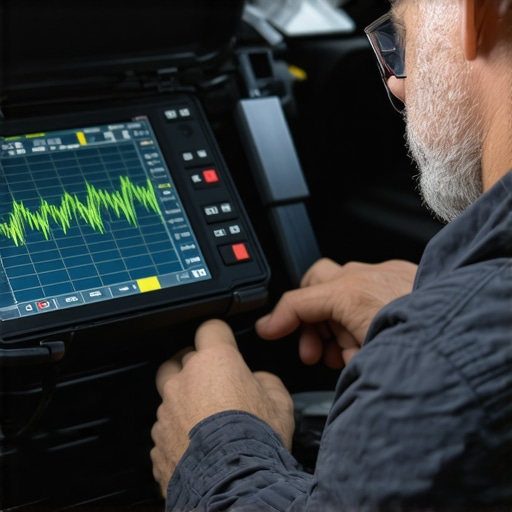
In short, yes. The Transmission Control Module (TCM) depends entirely on data from the Input Speed Sensor (ISS) and Output Speed Sensor (OSS) to calculate the correct gear ratio. If these sensors provide erratic data due to magnetic debris or internal failure, the computer enters ‘limp mode’—locking the vehicle in third gear to protect the internal clutches. Often, this happens without a Check Engine Light appearing immediately. It is similar to how the one sensor that ruins your gas mileage without triggering a warning light operates; the system stays within its wide ‘acceptable’ parameters while performing poorly. Using high-level vehicle diagnostics to monitor live data streams is the only way to catch these glitches in real-time.
The Harsh Truth About Lifetime Transmission Fluid
The phrase ‘filled for life’ is perhaps the most dangerous marketing term in the automotive industry. According to the Automatic Transmission Rebuilders Association (ATRA), transmission fluid undergoes significant thermal breakdown and shear stress, losing its viscosity and additive package long before the vehicle reaches the end of its useful life. Heat is the primary enemy; for every 20-degree increase above the optimal operating temperature (roughly 175°F), the lifespan of the fluid is effectively halved. If you ignore this, you will eventually face transmission failures decoded through burnt clutches and clogged valve bodies. At our facility, we recommend a fluid analysis and exchange every 30,000 to 50,000 miles to ensure longevity, especially if you have noticed the surprising reason your transmission overheats while driving uphill during summer months.
Stop Guessing with Generic OBD-II Scanners
A standard code reader might pull a P0700 code, but that is merely a generic request from the TCM to the ECM to turn on the light. True car service requires tools capable of accessing manufacturer-specific P-codes, B-codes (Body), and C-codes (Chassis). Without this depth, you are merely parts-changing based on symptoms. For DIY enthusiasts, finding the 20 dollar scan tool that actually finds hidden transmission codes can bridge the gap between confusion and a successful fix. Before committing to a major overhaul, we suggest you read more about top auto repair techniques every car owner should know to better understand your vehicle’s complex needs and avoid unnecessary expenses.
Your Transmission Remembers Your Worst Habits
Modern transmission control modules (TCM) are more than just processing units; they act as the historical record of a vehicle’s mechanical health. Through a process known as ‘adaptive learning,’ the TCM monitors the time it takes for a gear change to complete, adjusting solenoid engagement pressure to compensate for the microscopic wear on clutch plates. While this keeps the car feeling smooth for years, it can mask underlying issues until the system reaches its ‘compensation limit.’ At this stage, you might notice a sudden onset of harsh shifts. This isn’t just a random glitch; it’s the computer reaching the end of its ability to hide mechanical aging. To stay ahead of these failures, it’s worth learning how to diagnose common transmission problems at home before they require a full teardown.
Can a manufacturer software flash actually solve a physical gear shudder?
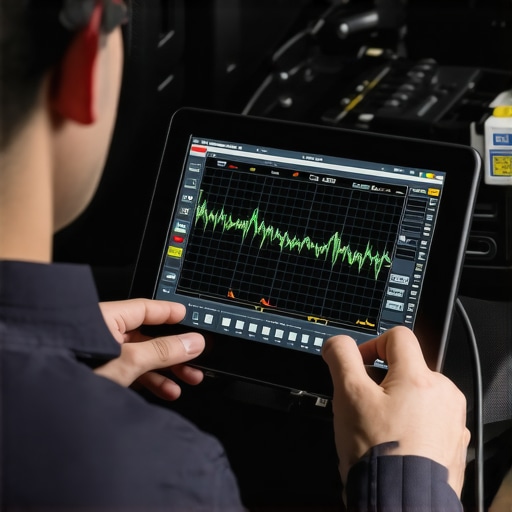
The answer lies in the nuances of Technical Service Bulletins (TSBs). Manufacturers often discover that their original shifting logic is too aggressive or fails to account for specific environmental variables. A software update can recalibrate the pulse-width modulation (PWM) sent to the solenoids, effectively smoothing out a shudder that feels like a mechanical failure. For example, technical documentation from ZF Friedrichshafen highlights how shifting strategies in the 8HP transmission family are frequently refined to improve the transition of the torque converter clutch (TCC). This isn’t just a ‘patch’; it’s a fundamental recalibration of how the hardware interacts with the fluid. If you’ve been chasing a vibration, checking for hidden transmission codes specifically related to software versioning is a critical step in modern vehicle diagnostics.
The High Cost of Ignoring Solenoid Drift
Solenoids are the gatekeepers of your gearbox, and they are susceptible to a phenomenon known as ‘solenoid drift.’ Over millions of cycles, the internal springs and needles within these electromagnetic valves lose their precision. This drift causes the actual hydraulic pressure to deviate from what the TCM expects. When this happens, the friction material on your clutches begins to glaze. If you notice a ‘flare’—where the RPMs spike between gears—the solenoids are likely failing to maintain line pressure. Precision car service involves not just changing fluid, but performing a solenoid bench test to ensure each valve meets its specified flow rate. This level of auto repair is what separates a temporary fix from a permanent solution. You might find that overheating while driving uphill is actually caused by a solenoid that refuses to fully seat, allowing fluid to bypass the cooling circuit.
Why Pulse Width Modulation Controls Your Driving Comfort
In older vehicles, gear changes were binary—either fully engaged or fully released. Today, the TCM uses high-frequency PWM signals to feather the clutches, much like a human would slip a manual clutch pedal for a smooth start. This precision requires exceptionally clean fluid and stable voltage. If the TCM receives ‘dirty’ power from a failing alternator or a bad ground, the PWM signal becomes jittery, leading to ‘hunting’ where the transmission can’t decide on the right gear ratio. Mastering these electrical-hydraulic overlaps is the pinnacle of vehicle diagnostics. For a deeper understanding of these electrical intricacies, we recommend exploring our comprehensive breakdown of the hidden world of vehicle diagnostics.
Predicting Failure Through Fluid Debris Analysis
When you drop the transmission pan, the magnets tell a story that no scanner can read. A fine, grey ‘clutch mud’ is normal, but silver flakes or brass particles are the heralds of catastrophic bearing or bushing failure. This manual inspection remains a cornerstone of auto repair expertise. By the time a sensor triggers a fault code, the damage is often widespread, but regular fluid analysis can catch the earliest signs of component disintegration. We are seeing a shift toward sensors that can detect fluid conductivity changes in real-time, providing an even earlier warning system for the vigilant owner.
Professional vehicle diagnostics in the current era have transitioned from simple component testing to a rigorous analysis of network integrity. The modern vehicle functions as a distributed computing system where a failure in one subsystem often manifests as a symptomatic ghost in another. For instance, a technician might spend hours chasing a perceived transmission slip, only to discover the root cause is a misreporting wheel speed sensor within the Anti-lock Braking System (ABS). Because the Transmission Control Module (TCM) utilizes ABS data to calculate shift timing and torque management, any latency or ‘noise’ in that signal stream can trigger erratic hydraulic behavior that feels like a mechanical catastrophe.
When the ABS Module Hijacks Your Gearbox
The interdependence of electronic modules means that a ‘clean’ transmission depends on the health of the entire chassis network. If a tone ring is chipped or a wheel speed sensor is contaminated with metallic debris, the TCM may interpret the resulting signal fluctuation as wheel slip, forcing an unnecessary downshift or preventing torque converter lockup. In high-level auto repair, we look for these cross-system anomalies using multi-channel oscilloscopes. By overlaying the ABS signal on top of the TCM command signal, we can see if the computer is reacting to false data. This forensic approach prevents the costly error of replacing a healthy gearbox when the fix is actually a $50 sensor. If your car is exhibiting strange behavior under specific load conditions, you should explore the hidden world of vehicle diagnostics to see how these systems overlap.

The CAN-FD Bottleneck
As vehicles incorporate more ADAS (Advanced Driver Assistance Systems) and autonomous features, the standard Controller Area Network (CAN) has reached its bandwidth limit. Enter CAN-FD (Flexible Data-rate), which allows for larger data payloads and faster transmission speeds. However, this increased speed makes the network significantly more sensitive to electromagnetic interference and terminal resistance issues. A slightly corroded connector that wouldn’t have bothered a 2010 model can completely ‘mute’ a 2024 vehicle’s network. According to technical research published by the Institute of Electrical and Electronics Engineers (IEEE), signal integrity in automotive high-speed networks is increasingly compromised by ‘ringing’—voltage reflections that occur when the physical layer of the wiring is damaged or poorly repaired. Precise car service now involves checking the ‘eye diagram’ of the data stream to ensure the pulses remain within the manufacturer’s tight voltage windows.
Does an aging capacitor in your ECU explain that ‘ghost’ electrical spike?
Electronic Control Units (ECUs) are not immortal. Inside these modules, electrolytic capacitors are used to smooth out voltage ripples from the alternator. Over a decade of heat cycles, these capacitors can leak or dry out, losing their ability to filter the power supply. This leads to ‘dirty’ power reaching the microprocessor, which can cause random reboots, lost communication codes, or the ‘zombie’ parasitic drains discussed earlier. This internal hardware degradation is often misdiagnosed as a software glitch. When performing vehicle diagnostics on older luxury vehicles, we often find that a ‘failing’ module just needs a board-level repair rather than a $2,000 replacement. Understanding these nuances is key to longevity; often, you need to identify a bad ground wire before it kills your new battery, as poor grounding accelerates this capacitor fatigue by forcing the module to work harder to maintain internal reference voltages.
Latency Matters
In the world of high-performance driving, the speed of communication is just as vital as the horsepower of the engine. ‘Shift latency’—the delay between the TCM command and the physical movement of the gear—is often caused by a combination of fluid viscosity issues and electrical resistance. If you’ve noticed a hesitation when using paddle shifters, it’s rarely a mechanical delay; it’s a processing delay. Modern auto repair specialists use data logging to measure this latency in milliseconds. If the delay exceeds factory specifications, the solution might be as simple as a software ‘re-flash’ or as complex as a full harness inspection to find the hidden ground wire that causes intermittent starting issues and communication lag. Don’t let a slow network dictate your driving experience; contact our expert team today to perform a comprehensive network health check and restore your vehicle’s peak responsiveness.
Expert Insights & Advanced Considerations
Why software logic often masks mechanical fatigue
Modern Transmission Control Modules are programmed to be ‘polite.’ Through adaptive learning, the computer progressively increases line pressure to compensate for clutch plate thinning, effectively hiding the physical wear from the driver. This means that by the time you feel a harsh shift, the hardware is already near its limit. To prevent a total overhaul, we recommend a proactive approach to transmission troubles and how to save time and money by performing diagnostic scans even when the vehicle feels ‘normal’ to catch these adaptation limits early.
The critical role of signal integrity in CAN-FD systems
In the transition to higher data rates, the physical condition of the wiring harness has become as important as the modules themselves. We are seeing an increase in ‘signal ringing’ where minor oxidation in a connector causes data reflections that crash a sub-network. This is why high-level auto repair now requires examining the physical layer with an oscilloscope rather than just reading codes. If your car experiences ‘ghost’ faults, you must unlock your car’s potential by ensuring the network infrastructure is free of electromagnetic interference.
Don’t trust ‘sealed-for-life’ labels on high-torque gearboxes
The engineering reality is that no lubricant is immortal. The ‘sealed for life’ designation is often based on the lease-cycle of the first owner, not the twenty-year lifespan of the machine. For those planning to keep their vehicle long-term, it is essential to realize the truth about lifetime transmission fluid and implement a standard service interval. This single act of maintenance is the most effective way to prevent the hydraulic ‘drift’ that leads to solenoid failure.
#IMAGE_PLACEHOLDER_E#
Curated Expert Resources
SAE International Technical Papers: This is the gold standard for understanding the physics behind automotive networking and material science. It is where engineers define the protocols that govern your vehicle’s ECU communication. ATRA (Automatic Transmission Rebuilders Association) Manuals: These provide specific hydraulic circuit diagrams that are often more detailed than factory service manuals, making them indispensable for complex vehicle diagnostics. IEEE Xplore Digital Library: For those looking to understand the future of CAN-FD and automotive Ethernet, this resource offers deep dives into the electrical signal integrity required for autonomous systems.
Final Expert Perspective
The modern vehicle is no longer a collection of isolated parts; it is a unified digital environment where a battery drain and a transmission shudder are often two sides of the same electrical coin. Mastery of vehicle diagnostics requires moving past the symptom and analyzing the network integrity that ties these systems together. Whether you are dealing with a ‘zombie’ module or a slipping clutch, the solution always begins with data. By choosing the right car service that understands these interconnected complexities, you ensure that your vehicle remains a precision instrument rather than a source of frustration. We invite you to join the conversation on advanced maintenance strategies or visit our facility for a comprehensive system health check.