The hydraulic architecture of modern braking systems is built for endurance, yet it remains vulnerable to the slow, silent intrusion of oxidation. When a brake caliper seizes, most technicians default to a full component swap, citing the efficiency of modern auto repair workflows. However, for those with a deep understanding of mechanical tolerances, the decision to replace versus refurbish is not merely about parts—it is about restoring the integrity of the hydraulic seal and the sliding geometry. A stuck caliper often stems from either seized guide pins or a piston that has bound to the bore due to corrosion, a common byproduct of neglected car service intervals where fluid moisture content was never tested properly.
Don’t Replace Until You Test These Two Components
The mechanical anatomy of a caliper involves a piston that must extend and retract with micrometric precision. If the caliper won’t budge, the problem is frequently localized to the sliding pins rather than the piston itself. These pins are the pivot points of the entire assembly; when their lubrication dries out or becomes contaminated with road salt, the caliper ‘cocks’ at an angle, causing uneven pressure. This is often the one maintenance move that doubles the life of your rotors because free-moving pins prevent the constant friction that warps metal. By removing these pins, cleaning the bores with a wire brush, and applying high-temperature silicone-based grease, you can often restore full functionality without spending a cent on new hydraulic parts.
Can You Actually Save a Frozen Piston?
This is the question that separates the part-changers from the true technicians. A frozen piston is usually the result of a torn dust boot allowing moisture to reach the precision-ground surface of the piston. According to technical documentation from SAE International, once the surface of a steel piston suffers from galvanic corrosion or pitting, the seal can no longer maintain a leak-free environment. However, if the corrosion is superficial and located outside the seal’s travel area, the piston can often be retracted using a high-pressure C-clamp or a specialized wind-back tool. In many cases, you can follow a guide on how to free a seized brake caliper without replacing the whole unit to avoid the significant expense of a master cylinder or ABS module bleed that follows a full system opening.
Hydraulic Leverage Beats Brute Force Every Time
When mechanical force fails, the car’s own hydraulic system can be used as a high-powered press. By removing the caliper from its bracket but keeping the brake line attached, you can gently pump the brake pedal to use hydraulic pressure—which can exceed 1,000 PSI—to force a stubborn piston out of its bore. This level of vehicle diagnostics and repair requires precision; if the piston pops out entirely, you will have a mess of fluid to manage. Professionals use a block of wood to limit the piston’s travel, ensuring it moves just enough to break the crust of rust. If you are also dealing with drivetrain issues, understanding transmission failures decoded can help you see how similar hydraulic principles apply across your entire vehicle. If you find yourself battling a firm pedal that lacks modulation, you may want to learn more about the secret to getting a perfect brake pedal every time. For those seeking professional guidance on complex hydraulic or transmission systems, we invite you to consult our experts on top auto repair techniques every car owner should know to expand your mechanical proficiency.Brake fluid is essentially a non-compressible hydraulic column, but its performance is dictated by its chemistry. Over time, glycol-based fluids (DOT 3, 4, and 5.1) attract moisture from the atmosphere through microscopic pores in rubber hoses. This water contamination lowers the boiling point significantly. Under heavy braking, this moisture can turn into steam, which is compressible, leading to a terrifying loss of stopping power. This is the technical reality behind the real reason your brake pedal feels like spongy cake after bleeding, where residual air or moisture remains trapped in the internal valves of the ABS manifold. According to technical bulletins from Brembo, even a 3% water content can reduce the boiling point by over 100 degrees Celsius, compromising the safety margins engineered into the system. High-performance driving or mountain descents can quickly push contaminated fluid past its threshold, causing the pedal to drop to the floor without warning.
Stop Chasing Ghosts in the ABS Module
Modern vehicle diagnostics have become increasingly complex as mechanical systems merge with digital controls. An intermittent ABS light or a pulsing pedal during dry-weather stops isn’t always a sign of a failed tone ring or a bad sensor. Often, the culprit is a high-resistance electrical path. If the control module cannot find a clean return path to the chassis, it interprets the resulting voltage drop as a sensor malfunction. Learning how to spot a bad ground wire before it kills your new battery is a vital skill for troubleshooting these phantom brake errors. When electrical noise interferes with the high-speed data transmission from the wheel speed sensors, the system might prematurely engage the pump, leading to a pedal that feels ‘active’ when it should be static. This interference is particularly common in older vehicles where the wiring harness has begun to degrade or corrode from road grime. Testing the continuity of these grounds with a high-quality multimeter often reveals micro-voltage spikes that disrupt the logic gate of the ABS computer. 
Why Does New Fluid Often Feel Worse Initially?
Technicians often face a paradox: after a complete flush, the pedal feels softer than before. This phenomenon occurs because the new, low-viscosity fluid moves more easily through the system, highlighting tiny air bubbles that were previously ‘stuck’ in the thicker, contaminated fluid. Understanding the difference between a soft brake pedal and a spongy one is crucial here. A soft pedal might just be the characteristic of a specific brand’s compressibility, whereas a spongy pedal indicates a failure in the bleeding process itself. If you’ve ever wondered why your brake rotors keep warping every six months regardless of brand, the answer often lies in the uneven transfer of friction material during the break-in period. Many car owners mistake ‘pad deposit’ for warped metal. To prevent this, you must follow the correct way to bed new brake pads so they do not squeak and ensure a uniform layer of resin is deposited on the rotor surface. This chemical bonding—known as the transfer layer—is what actually generates the friction necessary for high-performance stopping. Skipping this step leads to high spots on the rotor that vibrate during high-speed braking, mimicking the feel of a bent disc. For those who want to ensure their vehicle remains in peak condition through professional oversight, we recommend choosing the right car service for seamless vehicle maintenance to avoid these common technical pitfalls and ensure your auto repair is done right the first time.The master cylinder serves as the heart of the hydraulic circuit, but when internal seals begin to perish, the symptoms can be hauntingly subtle. Unlike a burst line or a leaking wheel cylinder, an internal bypass allows fluid to move past the primary cup within the bore, meaning you lose pressure without losing a single drop of fluid on your driveway. This manifests as a pedal that slowly sinks toward the floorboards while you are holding it at a red light—a classic sign that the auto repair of your hydraulic core is long overdue. 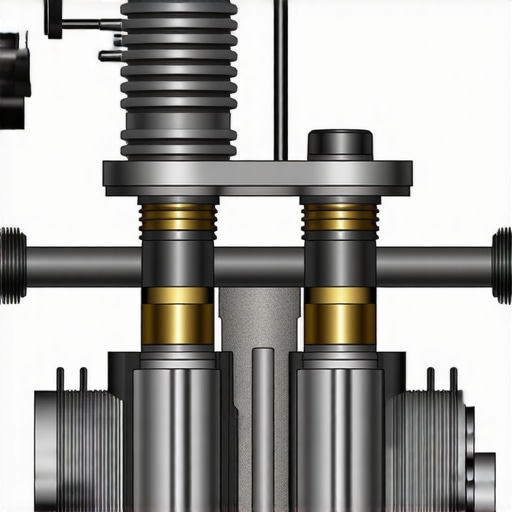 When the bore of the master cylinder becomes scored from years of moisture-laden fluid, even new seals won’t provide a perfect seat, necessitating a full unit replacement to restore safety margins. If you’ve recently felt this ‘creep,’ it’s often a precursor to a total hydraulic collapse under panic-braking conditions.
Can a Faulty Master Cylinder Leak Internally Without Losing Fluid?
This specific failure mode is a common point of confusion for DIYers and even some entry-level technicians. Because the fluid is merely shifting from the high-pressure side of the seal to the low-pressure reservoir side, the fluid level remains constant. According to the National Institute for Automotive Service Excellence (ASE), the most reliable way to confirm this ‘phantom leak’ is to perform a pressure trap test using specialized gauges. This level of vehicle diagnostics isolates the master cylinder from the rest of the lines, proving whether the unit can hold sustained pressure over time. Neglecting this leads to a dangerous reduction in braking force that electronic systems like ABS cannot compensate for. If you find your vehicle behaves differently in stop-and-go traffic, it may be time to learn how heat affects your brake fluid performance and potentially masks these mechanical bypasses.
Pressure Regulation Secrets for High-Performance Stops
Beyond the master cylinder, the proportioning valve acts as the unsung traffic controller of your braking force. Its primary role is to restrict the rise in pressure to the rear brakes during heavy deceleration, preventing the rear wheels from locking up as weight shifts to the front of the car. In many older car service scenarios, these valves become gummed up with sludge, leading to a vehicle that ‘dives’ excessively or feels unstable during hard stops. High-end systems utilize load-sensing proportioning valves that adjust based on how much weight is in the trunk or bed. If this linkage becomes seized or disconnected, your braking balance is effectively ruined, putting unnecessary strain on the front rotors. This imbalance often mirrors the sensations of transmission hesitation, where the car’s weight transfer feels disjointed and unpredictable. For drivers who frequently tow or carry heavy loads, ensuring this valve is operational is as critical as any engine-related maintenance. When these valves fail, they often cause the rear brakes to do too much or too little work, leading to premature wear and inconsistent stopping distances that even the best pads cannot fix.
Master the Art of Vacuum Leak Detection
If your pedal feels like stepping on a brick, the problem likely lies in the power booster rather than the hydraulics. Most vehicles rely on engine vacuum to assist the master cylinder, but a pinhole leak in the diaphragm or a cracked check valve can eliminate this assistance instantly. To test this without expensive tools, pump the brakes several times with the engine off to deplete the vacuum, then hold the pedal down while starting the motor; if the pedal drops slightly, the booster is functioning. However, an intermittent hiss or an engine stumble when you apply the brakes points to an internal rupture that requires immediate auto repair. These vacuum issues can also trigger lean-condition codes in your engine’s computer, illustrating how deeply integrated vehicle diagnostics have become. If your brake pedal feels even slightly inconsistent, it’s a signal to dive deeper into your vehicle’s health; don’t hesitate to check our guide on how to diagnose brake fading before it leads to failure. The complexity increases further when we consider the role of the electronic brake control module (EBCM) in modulating these pressures during a stability control event, where the computer mustoverride human input to prevent wheel lockup or lateral skidding. This is where Electronic Brakeforce Distribution (EBD) takes over from the physical proportioning valve, dynamically shifting the hydraulic load based on real-time sensor data rather than a fixed mechanical spring. In modern auto repair scenarios, a technician cannot simply look for a leak; they must interrogate the data stream to see if the yaw rate sensor and the steering angle sensor are speaking the same language. If these digital signals diverge, the system might trigger an ‘ice mode’ logic, where the pedal feels rock hard because the computer is terrified of a lockup that hasn’t even happened yet.
Forget the Old Rules of Hydraulic Balancing
The transition from purely mechanical systems to electronically controlled deceleration has redefined the standard car service. We no longer rely on a simple valve to prevent rear-wheel lockup; instead, the ABS pump acts as a secondary pressure source that can increase or decrease force at each corner independently. This allows for ‘corner braking control,’ which stabilizes the vehicle if you are forced to brake while turning. However, this complexity means that a single failing wheel speed sensor can disable the entire stability suite, leaving you with 1970s-era braking technology in a 4,000-pound modern SUV.
How Do Micro-Pulses in the ABS Pump Affect Drivetrain Stability?
The relationship between your stop-and-go hardware and the rest of the car is more intimate than most realize. Because the transmission relies on wheel speed data to determine gear selection and torque converter lockup, a jittery ABS signal can induce phantom shifts or even force the car into a ‘limp home’ state. According to technical white papers from Robert Bosch GmbH, the pioneers of electronic stability control, the integration of braking and powertrain management is now so tight that a minor hydraulic glitch can manifest as a perceived engine misfire. This is a nightmare for standard vehicle diagnostics if the shop doesn’t have the high-level scanning tools required to view the CAN-bus traffic in real-time. 
Bridging the Gap Between Electric Regrowth and Physical Grip
When you’re dealing with hybrid or electric platforms, the complexity doubles. The ‘blending’ of regenerative braking—where the motor acts as a generator to slow the car—and traditional friction braking requires a specialized master cylinder that can simulate pedal feel while the pads aren’t even touching the rotors. If this simulator fails, the transition between ‘electric’ slowing and ‘hydraulic’ stopping becomes jerky and dangerous. This isn’t just about a standard car service anymore; it’s about calibrating the software offsets that govern human-machine interaction. If you notice a ‘clunk’ or a surge just as you come to a complete stop, your car is likely struggling with this handoff. To ensure your vehicle’s safety systems are operating at their peak, we recommend scheduling an advanced braking system health check with our specialists today to diagnose these sophisticated electronic overlaps.
Expert Insights & Advanced Considerations
Stop Measuring Success by Pad Thickness
The most common mistake in modern car service is assuming that a pad with meat on it is a healthy pad. In reality, the thermal history of the friction material dictates performance more than the physical depth. If a caliper has been dragging—even slightly—the resulting heat soak can glaze the pad surface and off-gas the resins, leading to a permanent reduction in the friction coefficient. When performing an auto repair, always inspect for the rainbow-like discoloration on the rotor face, which signals that the metallurgy has been compromised by excessive heat, regardless of how much pad life remains.
Pressure Bleeding Trumps the Pump-and-Hold Method
While the old-school two-person bleeding method works for basic fluid swaps, it poses a risk to older master cylinders. Pushing the brake pedal to the floor during a manual bleed forces the internal seals into sections of the bore they haven’t touched in years, often encountering a ridge of corrosion that can tear the rubber. Utilizing a regulated pressure bleeder at the reservoir ensures a constant 10-15 PSI flow that moves air bubbles and contaminants out without stressing the primary and secondary cups of the hydraulic core.
Digital Ghosts in the Hydraulic Circuit
Modern vehicle diagnostics must account for the fact that the ABS module is constantly performing ‘pre-fills.’ If the system detects a rapid lift-off from the accelerator, it may move the pads closer to the rotors in anticipation of an emergency stop. If your slide pins are even slightly seized, this digital intervention causes the pads to stay in contact with the rotor, leading to mysterious fuel economy drops and warped discs. Checking the electrical resistance of the ABS pump motor is now as vital as checking the thickness of the rotors themselves.
#IMAGE_PLACEHOLDER_E#
Curated Expert Resources
- Bendix TechTalk Bulletins: These provide high-level analysis of noise, vibration, and harshness (NVH) issues, offering solutions for brake squeal that go beyond simply applying more ‘anti-seize’ compound.
- SAE International Technical Papers: For those who want to understand the fluid dynamics of glycol-based vs. silicone-based fluids and the specific shear rates required for high-performance ABS modules.
- Mitchell 1 ProDemand: The industry standard for accessing OEM-specific wiring diagrams and hydraulic flow charts, essential for troubleshooting complex transmission and braking overlaps.
- Reliable Auto Cares Technical Library: Our own repository of specialized guides, including the hidden world of vehicle diagnostics, designed to bridge the gap between hobbyist and master technician.
Final Expert Perspective
True mastery of the automotive braking system requires a shift from ‘part replacement’ to ‘systemic analysis.’ Whether you are battling a spongey pedal or a complex electronic fault, the solution is always found in the details—the clean ground wire, the lubricated guide pin, and the fresh, moisture-free fluid. By integrating advanced vehicle diagnostics with traditional mechanical precision, you ensure that every auto repair exceeds factory safety standards. We encourage you to keep your skills sharp by reviewing our guide on top auto repair techniques every car owner should know. If you have encountered a particularly stubborn hydraulic ghost, join the conversation or reach out to our team at contact us to share your professional insights.