The neutral safety switch (NSS) is a critical logical gatekeeper in any modern automotive starting circuit, acting as a redundant safety interlock to prevent the engine from cranking while the transmission is in gear. From an advanced auto repair perspective, this switch is part of the transmission range sensor system, and its failure can lead to a baffling ‘no-crank’ scenario. When you turn the key or press the start button and hear absolutely nothing, you are likely dealing with a break in the electrical continuity between the ignition switch and the starter solenoid. Professional vehicle diagnostics often reveal that these switches suffer from internal contact oxidation or mechanical misalignment over time. Understanding the electrical path from the ignition to the starter relay is crucial before attempting any high-risk bypass. This guide explores the sophisticated logic behind these safety systems and how to navigate a failure when you are stranded.
Shift Your Way Out of a No-Start Crisis
Before reaching for tools, the most effective emergency bypass is often the ‘neutral wiggle.’ Because the switch must verify a Park or Neutral position, physical wear on the shift linkage can prevent the contacts from seating correctly. If your vehicle won’t start in Park, firmly depress the brake, move the selector to Neutral, and attempt to start the engine. This maneuver often bypasses the worn-out section of the switch’s internal tracks. If this fails, you may need to look into how to bypass a faulty starter motor to get home, as the logic flow is remarkably similar. In professional environments, we use high-end diagnostic tools to see if the ECU is actually receiving the P/N signal. You can learn more about this in our guide on the $20 scan tool that actually finds hidden transmission codes.
Jump the Relay to Restore Vital Continuity
In a true emergency where the neutral trick fails, a technician might perform a manual bypass at the starter relay. This involves identifying the load side of the relay within the fuse box and momentarily bridging the pins to send battery voltage directly to the starter solenoid. Warning: This method bypasses all safety protocols; the car will lunge forward if it is in gear and the engine starts. According to technical standards established by SAE International, these interlocks are designed to prevent catastrophic mechanical failure and injury, so a manual bypass should only be a last-resort diagnostic step. For those dealing with broader issues, checking transmission troubles and proven repairs can provide a more permanent solution beyond the emergency fix.
Does Your Transmission Think It Is Still in Drive?
One of the most frequent questions from enthusiasts is why the dashboard shows the correct gear while the car remains dead. This occurs when the electronic range sensor and the mechanical safety switch are out of sync. High-quality car service routines involve checking the shift cable bushings for play. If the bushing has perished, the lever might feel ‘mushy,’ indicating that the transmission internal lever hasn’t reached the Park detent even though your shifter has. Mastering these advanced auto repair techniques ensures you aren’t left stranded by a simple electrical gatekeeper. Explore our expert insights on transmission failures decoded to ensure your vehicle remains reliable under all conditions.
Why Your Chassis Grounds Are Sabotaging Your Safety Switch
The electrical integrity of the starting circuit often hinges on more than just the switch itself. If the transmission range sensor isn’t receiving a clean voltage reference, the computer remains blind to the gear position. This is frequently exacerbated by poor grounding. You should learn how to identify a bad ground wire without a multimeter to rule out these phantom electrical blocks. A weak ground can create enough resistance that the signal never reaches the powertrain control module, leaving you with a silent dashboard and a cold engine. This lack of continuity effectively ‘tricks’ the system into thinking a safety protocol is being violated, preventing the starter relay from closing. 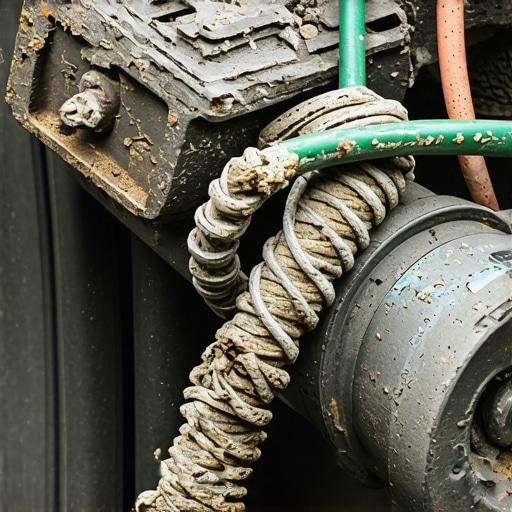
Heat Soak and the Invisible Failure of Range Sensors
Heat soak is a silent killer of electrical components positioned near the transmission casing. As the engine bay reaches high operating temperatures, the internal resistance of the copper windings in the sensor or the starter relay increases significantly. This explains why a car might start perfectly in the morning but refuse to crank after a quick stop at a gas station. From an expert auto repair perspective, diagnosing this requires measuring the ohms across the switch terminals while the unit is hot. If the resistance spikes beyond factory limits, the safety logic will inhibit the starter to prevent potential circuit damage. For those maintaining older vehicles, this is a critical check; refer to the checklist for buying a used car with 150,000 miles to see how heat-damaged sensors affect long-term reliability. In many cases, it isn’t the switch itself but the hidden ground wire that causes intermittent starting issues during high-temperature cycles.
Digital Transitions in Modern Safety Interlocks
The industry-wide shift toward digital signaling means that many modern car service procedures now require an oscilloscope to see the ‘square wave’ signal from the transmission range sensor. Unlike the old-school 12v switches, these digital sensors operate on a precise 5v reference. If the wiring harness has even a pinhole leak in the insulation, moisture can pull that 5v signal to ground, confusing the ECU into thinking the car is in a ‘false’ gear. This is why a simple visual inspection is no longer enough; professional technicians must verify the integrity of the entire wiring harness back to the firewall to ensure the safety interlock is receiving a ‘clean’ message.
Can a Loose Shifter Cable Mimic a Total Electrical Failure?
One of the most elusive issues occurs when the mechanical linkage between the shifter and the transmission stretches or the bushings perish. Even a few millimeters of play can prevent the internal safety contacts from closing, even if your gear lever is firmly in the Park position. This is where vehicle diagnostics become an art form. If you suspect a linkage issue, try slightly pushing the shifter further into the ‘Park’ gate while turning the key. If it fires up, your problem is mechanical alignment rather than an electrical burnout. This symptom often mirrors the frustration of why your engine runs perfectly until you put it in gear, as both involve the precise synchronization of mechanical and electrical inputs. According to technical documentation from the National Institute for Automotive Service Excellence (ASE), verifying the mechanical indexing of the shifter is the first step before replacing any sensors. If you hear a click but no crank, you can often stop the clicking sound when you turn your key with this relay trick to determine if the relay or the switch is at fault. Have you ever faced a starting issue that vanished once the engine cooled down? Leave a comment below or share this guide with someone struggling with a mysterious ‘no-start’ problem.
Stop Corrosion from Eating Your Electrical Contacts
In the high-stakes world of auto repair, we often find that the most stubborn ‘no-crank’ issues aren’t caused by a dead switch, but by the slow, silent creep of galvanic corrosion within the wiring harness. When road salt and moisture penetrate the weather-pack seals of a transmission range sensor, they initiate a chemical reaction that increases resistance. This resistance can drop the voltage just enough that the solenoid never triggers, even though the switch is technically ‘closed.’ Professionals don’t just look for a connection; they look for a clean one. Using a dedicated electrical contact cleaner followed by a light application of dielectric grease is the gold standard for preventing recurring failures. 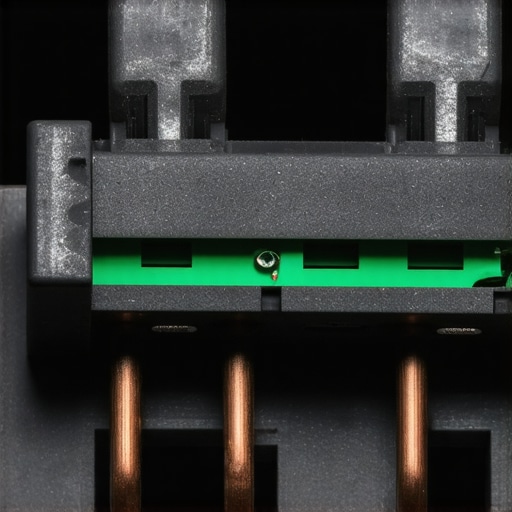
Why Modern CAN Bus Communication Changes the Diagnostic Game
On vehicles manufactured within the last decade, the neutral safety signal is rarely a simple 12v loop. Instead, the Transmission Control Module (TCM) broadcasts the gear position as a data packet across the Controller Area Network (CAN bus). This means that a failure in the communication line—perhaps a frayed wire near the steering column or interference from a cheap aftermarket remote starter—can prevent the engine from firing. When vehicle diagnostics show ‘U’ codes (network communication codes), the hardware of the switch might be perfect, but the ‘message’ that it is in Park is getting lost in the digital noise. Understanding this shift from analog to digital is what separates a parts-changer from a true diagnostic technician. According to technical deep-dives provided by Motor Magazine, interpreting these data streams requires a firm grasp of signal priority and network architecture.
Does a Broken Brake Switch Always Cause a No-Start Condition?
In many modern push-to-start systems, the logic for the neutral safety switch is secondary to the brake pedal position sensor. If the car’s computer doesn’t see a ‘brake depressed’ signal AND a ‘Park/Neutral’ signal simultaneously, the starter is inhibited. This creates a confusing scenario where the shifter is clearly in Park, yet the car won’t start because of a five-dollar plastic switch under the dashboard. To test this, check if your brake lights illuminate when you press the pedal; if they stay dark, your starting issue might not be the transmission switch at all. Mastering these overlapping safety systems is a hallmark of advanced car service expertise.
Master the Voltage Drop Test to Find Ghost Resistance
While a continuity test tells you if a circuit is connected, only a voltage drop test tells you if that circuit can actually carry a load. By measuring the voltage across the neutral safety switch while an assistant attempts to crank the engine, you can identify ‘ghost resistance.’ If you see a drop of more than 0.5 volts across the switch, the internal contacts are likely pitted or burnt. This level of precision ensures you aren’t replacing expensive sensors when the real culprit is a loose ground or a crimped wire hidden deep within the loom. Have you ever spent hours chasing a starting problem only to find a loose bolt was the real villain? Share your most frustrating diagnostic wins in the comments below. As we look closer at the pin-out diagrams for the most common domestic transmissions, the complexity only increases when we account for…
…account for the parasitic capacitance within the wiring harness itself. When dealing with high-impedance circuits, even a small amount of moisture or insulation degradation creates a capacitive bridge that can ‘ghost’ a signal to the PCM, making the vehicle diagnostics process significantly more complex. This phenomenon often leads to intermittent ‘no-crank’ conditions that leave no trace once the vehicle dries out or cools down.
Verify Terminal Tension with a Proper Pin Drag Test
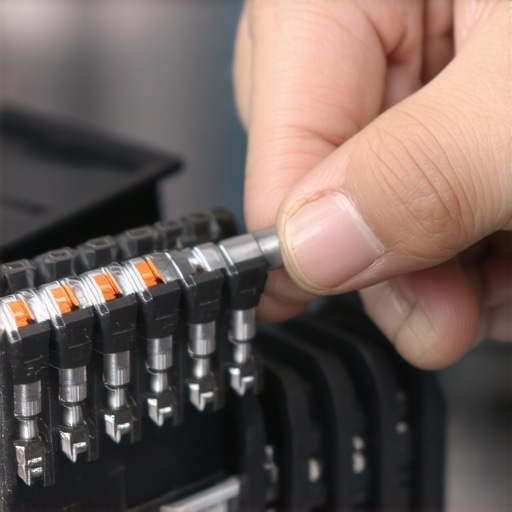
In many advanced auto repair scenarios, the range sensor or the neutral safety switch is actually functioning perfectly, but the electrical interface is failing. We often see technicians overlook ‘pin fitment.’ Over years of vibration and heat cycles, the female terminals within the transmission harness connector can lose their spring tension. This creates a high-resistance connection that might pass a static continuity test with a multimeter but fails under the load of a starting signal. A professional technician uses a specialized pin gauge to perform a ‘drag test,’ ensuring the terminal provides enough mechanical grip to maintain a consistent electrical path. If the pin slides out with zero resistance, you have found your culprit—a loose terminal that is mimicking a dead safety switch.
Why Your Mechatronics Unit Is Keeping the Starter Hostage
In the latest generation of 8-speed and 10-speed transmissions, the traditional neutral safety switch has been integrated directly into the mechatronics unit—the internal brain of the transmission. This shift in car service requirements means that the safety logic is now processed by an internal microprocessor submerged in transmission fluid. When these units fail, you are no longer just replacing a simple external switch; you are often dealing with software-defined interlocks. According to the engineering specifications provided by Bosch Mobility, these integrated sensors use Hall Effect technology to track the position of the internal shift valves with sub-millimeter precision. If the internal magnets accumulate even a tiny amount of metallic debris (swarf) from normal transmission wear, the sensor may report an ‘implausible’ position, triggering a hard start-inhibit that cannot be bypassed with a simple jumper wire.
Could a Faulty Body Control Module Overrule Your Shifter?
It is a common misconception that the starting signal only involves the transmission and the ignition. On modern CAN-networked vehicles, the Body Control Module (BCM) often acts as the ‘security guard’ for the entire process. If the BCM detects that a door is ajar, a seatbelt is unbuckled, or an anti-theft handshake has failed, it can override the neutral safety signal coming from the transmission. This creates a diagnostic ‘rabbit hole’ where the transmission reports it is in Park, but the BCM refuses to pass the ‘start’ command to the starter relay. Identifying this requires a high-end scan tool that can view the ‘live data’ stream from multiple modules simultaneously to see exactly where the start-command chain is being broken.
Master the Software Adaptation after Component Replacement
Replacing a modern range sensor or neutral safety switch is no longer a ‘bolt-on-and-go’ affair. Because of the tight tolerances required for modern safety logic, the powertrain control module (PCM) must ‘learn’ the exact electrical signature of the new sensor in each gear position. This process, known as a ‘transmission adaptation’ or ‘range sensor relearn,’ involves using a diagnostic tablet to sweep the gear selector through its gates while the computer maps the voltage return for each detent. Skipping this step often results in a vehicle that starts fine in Park but refuses to engage certain gears or throws a ‘service transmission’ light immediately upon the first drive. Ready to take your diagnostic game to the next level? Share your most complex wiring nightmare in the comments below or check out our other deep-dives to ensure you never get outsmarted by an electrical ghost.
Expert Insights & Advanced Considerations
Why Your Multimeter Might Be Tricking You
One of the most common pitfalls in professional auto repair is relying solely on a simple continuity test. A circuit may show continuity under the negligible current of a multimeter, but the moment you demand the high amperage required for a starter solenoid, a degraded neutral safety switch contact will fail. You must perform a dynamic voltage drop test while the ignition is in the ‘start’ position to truly verify the integrity of the path. Before assuming the switch is dead, it is wise to how to tell if your battery is truly dying or just has dirty terminals, as surface discharge can mimic a failed interlock.
Thermal Stress Creates Invisible Resistance
Electrical components located on the transmission housing are subject to extreme heat cycles that cause microscopic expansion in the internal copper tracks. This is why a vehicle may start perfectly when cold but experience a ‘no-crank’ after a long drive. In high-end vehicle diagnostics, we call this thermal runaway. If you encounter this, checking for transmission failures decoded can help you distinguish between a simple switch issue and a more serious internal mechatronics failure. Professionals often use thermal imaging to identify these hotspots before they lead to a total strand-at-the-pump scenario.
The Digital Handshake Most DIYers Miss
In the era of modern car service, the physical switch is often just a data input for a larger logic chain. If the Body Control Module (BCM) or Security Module does not receive a ‘valid’ signal from the transmission, the starter relay will never click. This is frequently caused by ‘dirty data’ or electromagnetic interference from aftermarket accessories like LED headlights or remote starters. Using the $20 scan tool that actually finds hidden transmission codes allows you to see the ‘Live Data’ bit-rate and determine if the signal is being lost in the digital network rather than a mechanical failure.
#IMAGE_PLACEHOLDER_E#
Curated Expert Resources
SAE International (Society of Automotive Engineers): This is the gold standard for understanding the specific electrical standards and safety protocols that govern how interlock systems are engineered in modern vehicles.
ATSG (Automatic Transmission Service Group): For those performing a deep-dive into a specific transmission model, ATSG manuals provide the pin-out diagrams and internal logic flowcharts essential for advanced troubleshooting.
ASE Technical Guides: The National Institute for Automotive Service Excellence offers exhaustive documentation on starting and charging system logic, helping technicians master the overlap between mechanical and electrical systems.
Final Expert Perspective
Mastering the complexities of the neutral safety switch requires moving beyond the ‘replace and pray’ mentality and adopting a systematic approach to vehicle diagnostics. Whether you are dealing with a mechanical linkage that has physically moved out of alignment or a digital signal being suppressed by a CAN bus conflict, the solution always lies in verifying the circuit under load. By applying these top auto repair techniques every car owner should know, you can transform a stressful breakdown into a manageable repair. If you are struggling with a persistent ‘no-start’ that defies logic, don’t forget to check the mechanical basics, such as transmission troubles and proven repairs, to ensure your shift cable hasn’t simply stretched over time. We invite you to share your most challenging electrical diagnostic stories in the comments or reach out to our team for more advanced technical insights.