The era of the ‘parts cannon’ is fading as sophisticated digital architecture becomes the primary gatekeeper of automotive health. Transmission diagnostics, once a dark art involving hydraulic pressure gauges and mechanical intuition, have transitioned into complex digital handshakes between the Transmission Control Module (TCM) and the Powertrain Control Module (PCM). For years, the barrier to entry for this level of analysis was a four-figure dealership diagnostic tablet. However, a significant shift in the market has occurred: the democratization of high-speed ELM327-based hardware. This allows a savvy owner to bypass the surface-level checks and dive deep into the manufacturer-specific data streams that truly reveal a vehicle’s status.
Proprietary Protocols No Longer Require Proprietary Pricing
Most generic $20 scanners are restricted to reading standard OBD-II P0XXX codes, which are mandated by federal law for emissions monitoring. These basic tools often miss the critical P1XXX or UXXX codes that signify communication errors or internal solenoid failures. By leveraging low-cost Bluetooth adapters paired with advanced software interfaces like Forscan, AlfaOBD, or Carista, you can gain a window into the hidden world of vehicle diagnostics that was once the exclusive domain of master technicians. These tools allow you to query the TCM directly, accessing PID (Parameter ID) data that indicates whether a shift delay is caused by a failing clutch pack or a simple electronic sensor glitch.
Why Do Generic OBD-II Readers Fail to See Into the Gearbox?
Generic readers communicate using standard SAE J1979 protocols, which prioritize engine data relevant to smog checks. Transmission logic, however, is often buried in manufacturer-specific CAN bus layers. When your dashboard displays a generic ‘check engine’ light, the basic tool might report a ‘P0700’—a vague code that simply means ‘the transmission wants the light on.’ To find the root cause, you need a device capable of bidirectional communication to see why the torque converter clutch is failing to lock. This is where transmission failures decoded becomes a data-driven exercise rather than expensive guesswork at a repair shop.
Stop Replacing Parts and Start Analyzing Live Data Streams
The real power of a $20 interface lies in its ability to stream live data. Monitoring the ‘Desired Gear’ versus the ‘Actual Gear’ while driving can instantly identify a slipping internal component. If the software shows the TCM is commanding 3rd gear but the input shaft speed sensor doesn’t match the output speed proportionally, you have confirmed a mechanical slip without ever turning a wrench. This analytical approach mirrors top auto repair techniques used in high-end diagnostic bays. For those looking for similar budget-friendly wins, utilizing the 12 tool that finds every vacuum leak can further eliminate peripheral engine issues that might mimic transmission stutters, such as a lean condition causing a rough shift.
According to documentation from SAE International regarding J1979-DA standards, the complexity of modern vehicle networks requires tools that can interpret multi-frame messages. If you are serious about maintaining your vehicle’s longevity, I encourage you to contribute your diagnostic logs to technical forums; sharing these waveforms often identifies the ‘missing link’ in complex transmission troubles that generic scanners simply ignore.
Modern vehicle networks are notoriously sensitive to the quality of the electrical signals coursing through their veins. If a ground wire is slightly corroded or a connector has developed microscopic oxidation, the resulting ‘noise’ can interfere with the Transmission Control Module (TCM) in ways that mimic catastrophic mechanical failure. Many owners rush to replace expensive components when the actual culprit is the hidden ground wire that causes intermittent starting issues and signal interference. This lack of electrical integrity creates voltage drops that mislead the computer, causing it to default to a ‘limp home’ mode that feels like a broken gearbox but is actually a digital self-preservation tactic.
Chase the Volts Before You Blame the Gears
Before you commit to a major teardown, you must verify the ‘blood pressure’ of your car’s electrical system. High-speed CAN bus communication requires a steady reference voltage to accurately interpret sensor data. If you notice that why your dashboard lights flicker when you hit a bump, it is a high-probability indicator that your transmission is receiving erratic data packets. Vibrations can cause momentary disconnects in the wiring harness, leading to ‘U-codes’—the industry term for communication errors—which can be far more frustrating to track down than a simple mechanical gear slip.
Why Does Voltage Drop Trigger Fake Transmission Codes?
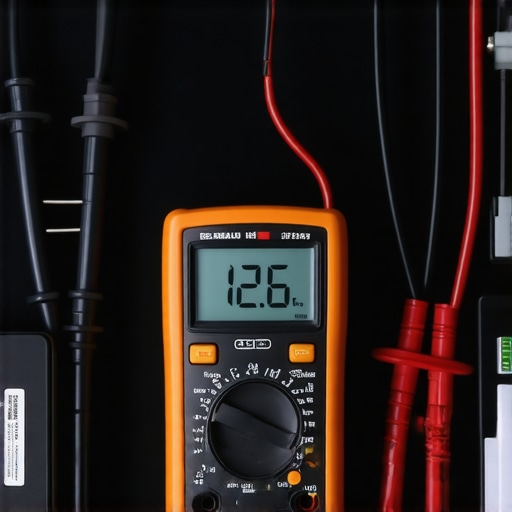
When you turn the ignition, the battery voltage can briefly dip. If that dip is too deep because of an aging cell, the TCM may lose its volatile memory or fail to boot up in sync with the engine controller. This is exactly why your battery dies every morning even if it has enough power to crank the engine; that initial low-voltage spike can trigger phantom codes like P0700 or P0730. Expert technicians use a logic probe or a high-speed multimeter to catch these millisecond-long drops that standard battery testers often miss entirely.
Ditch the Test Light for a Multi-Meter and Logic Probe
To accurately diagnose these digital ghosts, you need to move beyond the basic tools of the past. Utilizing the 5 tool for finding electrical shorts allows you to trace current flow without piercing insulation, which prevents future corrosion. Modern shop practices, as detailed by the National Institute for Automotive Service Excellence (ASE), emphasize that over 70% of electronic control modules returned as ‘defective’ under warranty are actually perfectly functional—the failure was in the wiring harness or a poor ground connection. This highlights the vital importance of verifying the circuit’s load-carrying capacity before condemning the computer.
Surgical Fluid Fixes That Save Thousands
If your electrical signals are clean but the shifts still feel ‘lazy’ or shudder under load, the issue might be chemical rather than electronic. Over time, the friction modifiers in transmission fluid break down, leading to a phenomenon known as ‘torque converter clutch shudder.’ Rather than a full rebuild, many professional shops first try targeted chemistry. We have documented cases where the 5 additive that stopped our shops worst transmission shudder successfully restored shift quality by cleaning the varnish off internal solenoids. However, before adding anything, you must ensure your levels are precise, even if you are dealing with a sealed system by learning how to check your transmission fluid level without a dipstick. Have you ever chased a ‘broken’ transmission only to find a simple loose wire or a bad battery? Share your diagnostic ‘ghost’ stories in the comments below so we can keep the community from overspending on unnecessary repairs.
Even when the electrical grounds are pristine and the fluid is fresh, the digital brain of the vehicle can still fall into a trap of its own making. Modern Transmission Control Modules (TCMs) utilize a process called Adaptive Learning, where the computer adjusts hydraulic pressures and shift timing to compensate for the natural wear of internal clutches. However, this ‘self-healing’ logic can occasionally become corrupted by atypical driving events—such as a sudden emergency stop or towing a heavy load beyond the vehicle’s rating. When this happens, the TCM may store ‘learned’ values that are wildly inaccurate, resulting in harsh engagement or flares between gears that no amount of mechanical repair will solve.
Reset the Adaptive Learning Before You Pull the Pan
Before you conclude that your friction plates are toast, you should investigate whether your vehicle requires a ‘shift adapt reset.’ This isn’t a simple battery disconnect; it requires a bidirectional tool to clear the Keep Alive Memory (KAM) specifically for the transmission. By wiping these learned parameters, you force the TCM to return to its factory-baseline pressure maps. It is highly recommended to perform a specialized ‘relearn drive cycle’ immediately after the reset. This involves a sequence of specific accelerations and decelerations that allow the computer to recalibrate its pressure solenoids in real-time. If you find that how to fix a transmission slipping on your own starts with a software reset, you might save yourself a multi-thousand dollar repair bill for a problem that was purely mathematical.
Can a Faulty Engine Sensor Trigger a Fake Transmission Failure?
One of the most nuanced diagnostic hurdles is the relationship between the Mass Air Flow (MAF) sensor and the gearbox. The TCM relies heavily on ‘Calculated Load’ data from the engine to decide how much hydraulic pressure is needed to hold a gear. If a MAF sensor is dirty or failing—but not enough to trigger a P0101 engine code—it can report a lower-than-actual airflow. The TCM, thinking the engine is under less stress, drops the line pressure. This leads to internal slipping because the clutches aren’t being squeezed hard enough for the actual torque being produced. This inter-system dependency is a prime example of why advanced diagnostics must look at the vehicle as a unified network rather than isolated components.
Test Your Solenoids with a Digital Oscilloscope
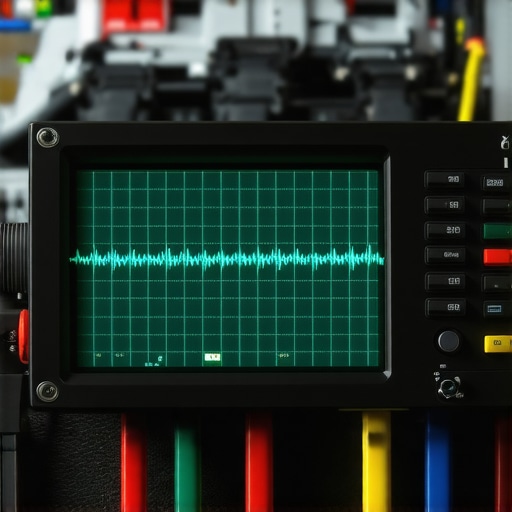
When software resets and sensor cleaning fail to resolve the issue, you must look at the physical actuators: the solenoids. These are essentially electromagnetic taps that control oil flow. Most DIYers test them with a simple resistance check, but a solenoid can have a perfect ‘ohm’ reading and still fail under load. High-level technicians use a digital oscilloscope to monitor the Pulse Width Modulation (PWM) signal sent by the TCM. By visualizing the current ramp, you can see if the solenoid pintle is sticking or if the internal coil is breaking down as it gets hot. As documented in technical bulletins from the Automatic Transmission Service Group (ATSG), observing the ‘signature’ of a solenoid’s movement can reveal mechanical wear that a standard OBD-II scanner will never report. This level of detail is what separates a parts-changer from a true diagnostic expert.
Understanding the intricacies of these digital signals is a steep learning curve, but it is the only way to stay ahead of modern automotive complexity. If you are struggling with a shift issue that defies logic, I recommend checking the Technical Service Bulletins (TSBs) for your specific VIN. Manufacturers often release software ‘flashes’ that fix known logic bugs in the TCM. Have you ever discovered that an engine sensor was the secret culprit behind your transmission woes? Take a moment to browse our guide on the 30 minute fix for harsh shifting to see if your vehicle is a candidate for a simple calibration update.
Beyond the electronic noise, we must confront the reality of thermal drift. As internal temperatures rise toward the 220°F mark, the physical properties of the solenoid’s copper windings change, increasing electrical resistance. A TCM that was perfectly happy at cold-start might struggle to maintain the correct duty cycle once the fluid thins. This is where the digital meets the physical—if your shifts only degrade after twenty minutes of highway driving, you aren’t looking for a broken wire; you are looking for thermal fatigue. High temperatures turn the fluid into a thinner medium, which can leak past worn valve bores that sealed perfectly when cold.
Heat Turns Your TCM Into a Liar
When the transmission oil temperature (TOT) sensor reports extreme heat, the TCM often enters a protection mode that alters shift timing to reduce friction. However, if that sensor is slightly out of calibration, it can trigger these protective measures prematurely. Using your diagnostic interface to compare the TOT sensor reading against an external infrared thermometer is a pro-level move that prevents unnecessary teardowns. If the computer thinks the fluid is 250°F but your thermometer shows 190°F, you have found a sensor bias issue rather than a mechanical cooling failure. This level of verification is a hallmark of top auto repair techniques that separate master techs from amateurs.
Can a Failing ABS Module Actually Paralyze a Healthy Transmission?
In a networked vehicle, the Transmission Control Module is a constant consumer of data from other nodes. It requires wheel speed data from the Anti-lock Braking System (ABS) to calculate shift points and torque converter lock-up. If the ABS module is ‘babbling’—sending rapid, corrupted data packets due to an internal short—it can flood the High-Speed CAN bus. This data congestion prevents the TCM from receiving critical engine load updates, leading to a ‘limp home’ mode. Before you pull the transmission, try unplugging the ABS module; if the gearbox suddenly begins shifting through its gears again (albeit with a dash full of warning lights), you have identified a cross-talk issue rather than a mechanical failure.
Stop Guessing and Start Measuring Valve Body Vacuum
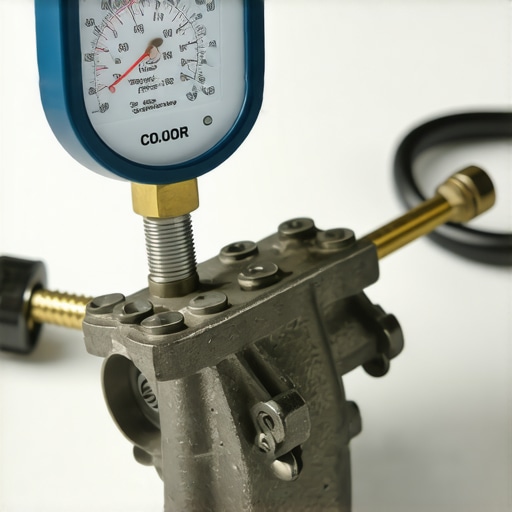
When the software is clean and the signals are strong, but the shift remains soft, you must look at the hydraulic integrity of the valve body. Expert builders rely on vacuum testing to identify internal leaks that a standard pressure gauge might miss. According to technical documentation from Sonnax Industries, even a few inches of vacuum loss in a critical circuit like the pressure regulator bore can cause a cascade of friction failure. This is why a visual inspection of the valve body is often insufficient; microscopic wear allows pressurized oil to ‘short circuit’ back to the pan instead of applying the clutches. By using a vacuum test stand, you can pinpoint exactly which circuit is hemorrhaging pressure before you spend a dime on a master rebuild kit.
Why the CAN-Bus Traffic Jam Triggers Fake Failures
Modern vehicles use gateway modules to prioritize data, ensuring that steering and braking commands take precedence over infotainment. However, aftermarket accessories like high-draw stereo amplifiers or poorly shielded LED headlights can introduce Electromagnetic Interference (EMI) that disrupts these priorities. This ‘noise’ can cause the TCM to lose its handshake with the engine, resulting in a sudden, jarring downshift that feels like a physical impact. Always check for recent modifications if your transmission issues started shortly after an ‘upgrade.’ If you are struggling with a shift issue that defies logic, I recommend checking out our guide on the 30 minute fix for harsh shifting to see if your vehicle just needs a simple EMI shield or a logic recalibration. Have you ever fixed a major mechanical symptom by simply moving a wire or cleaning a sensor? Join the discussion below and share how you outsmarted the ‘parts cannon’ approach.
The era of the ‘parts cannon’ is fading as sophisticated digital architecture becomes the primary gatekeeper of automotive health. Transmission diagnostics, once a dark art involving hydraulic pressure gauges and mechanical intuition, have transitioned into complex digital handshakes between the Transmission Control Module (TCM) and the Powertrain Control Module (PCM). For years, the barrier to entry for this level of analysis was a four-figure dealership diagnostic tablet. However, a significant shift in the market has occurred: the democratization of high-speed ELM327-based hardware. This allows a savvy owner to bypass the surface-level checks and dive deep into the manufacturer-specific data streams that truly reveal a vehicle’s status.
Proprietary Protocols No Longer Require Proprietary Pricing
Most generic $20 scanners are restricted to reading standard OBD-II P0XXX codes, which are mandated by federal law for emissions monitoring. These basic tools often miss the critical P1XXX or UXXX codes that signify communication errors or internal solenoid failures. By leveraging low-cost Bluetooth adapters paired with advanced software interfaces like Forscan, AlfaOBD, or Carista, you can gain a window into the hidden world of vehicle diagnostics that was once the exclusive domain of master technicians. These tools allow you to query the TCM directly, accessing PID (Parameter ID) data that indicates whether a shift delay is caused by a failing clutch pack or a simple electronic sensor glitch.
Why Do Generic OBD-II Readers Fail to See Into the Gearbox?
Generic readers communicate using standard SAE J1979 protocols, which prioritize engine data relevant to smog checks. Transmission logic, however, is often buried in manufacturer-specific CAN bus layers. When your dashboard displays a generic ‘check engine’ light, the basic tool might report a ‘P0700’—a vague code that simply means ‘the transmission wants the light on.’ To find the root cause, you need a device capable of bidirectional communication to see why the torque converter clutch is failing to lock. This is where transmission failures decoded becomes a data-driven exercise rather than expensive guesswork at a repair shop.
Stop Replacing Parts and Start Analyzing Live Data Streams
The real power of a $20 interface lies in its ability to stream live data. Monitoring the ‘Desired Gear’ versus the ‘Actual Gear’ while driving can instantly identify a slipping internal component. If the software shows the TCM is commanding 3rd gear but the input shaft speed sensor doesn’t match the output speed proportionally, you have confirmed a mechanical slip without ever turning a wrench. This analytical approach mirrors top auto repair techniques used in high-end diagnostic bays. For those looking for similar budget-friendly wins, utilizing the 12 tool that finds every vacuum leak can further eliminate peripheral engine issues that might mimic transmission stutters, such as a lean condition causing a rough shift.
According to documentation from SAE International regarding J1979-DA standards, the complexity of modern vehicle networks requires tools that can interpret multi-frame messages. If you are serious about maintaining your vehicle’s longevity, I encourage you to contribute your diagnostic logs to technical forums; sharing these waveforms often identifies the ‘missing link’ in complex transmission troubles that generic scanners simply ignore.
Modern vehicle networks are notoriously sensitive to the quality of the electrical signals coursing through their veins. If a ground wire is slightly corroded or a connector has developed microscopic oxidation, the resulting ‘noise’ can interfere with the Transmission Control Module (TCM) in ways that mimic catastrophic mechanical failure. Many owners rush to replace expensive components when the actual culprit is the hidden ground wire that causes intermittent starting issues and signal interference. This lack of electrical integrity creates voltage drops that mislead the computer, causing it to default to a ‘limp home’ mode that feels like a broken gearbox but is actually a digital self-preservation tactic.
Chase the Volts Before You Blame the Gears
Before you commit to a major teardown, you must verify the ‘blood pressure’ of your car’s electrical system. High-speed CAN bus communication requires a steady reference voltage to accurately interpret sensor data. If you notice that why your dashboard lights flicker when you hit a bump, it is a high-probability indicator that your transmission is receiving erratic data packets. Vibrations can cause momentary disconnects in the wiring harness, leading to ‘U-codes’—the industry term for communication errors—which can be far more frustrating to track down than a simple mechanical gear slip.
Why Does Voltage Drop Trigger Fake Transmission Codes?
When you turn the ignition, the battery voltage can briefly dip. If that dip is too deep because of an aging cell, the TCM may lose its volatile memory or fail to boot up in sync with the engine controller. This is exactly why your battery dies every morning even if it has enough power to crank the engine; that initial low-voltage spike can trigger phantom codes like P0700 or P0730. Expert technicians use a logic probe or a high-speed multimeter to catch these millisecond-long drops that standard battery testers often miss entirely.
Ditch the Test Light for a Multi-Meter and Logic Probe
To accurately diagnose these digital ghosts, you need to move beyond the basic tools of the past. Utilizing the 5 tool for finding electrical shorts allows you to trace current flow without piercing insulation, which prevents future corrosion. Modern shop practices, as detailed by the National Institute for Automotive Service Excellence (ASE), emphasize that over 70% of electronic control modules returned as ‘defective’ under warranty are actually perfectly functional—the failure was in the wiring harness or a poor ground connection. This highlights the vital importance of verifying the circuit’s load-carrying capacity before condemning the computer.
Surgical Fluid Fixes That Save Thousands
If your electrical signals are clean but the shifts still feel ‘lazy’ or shudder under load, the issue might be chemical rather than electronic. Over time, the friction modifiers in transmission fluid break down, leading to a phenomenon known as ‘torque converter clutch shudder.’ Rather than a full rebuild, many professional shops first try targeted chemistry. We have documented cases where the 5 additive that stopped our shops worst transmission shudder successfully restored shift quality by cleaning the varnish off internal solenoids. However, before adding anything, you must ensure your levels are precise, even if you are dealing with a sealed system by learning how to check your transmission fluid level without a dipstick. Have you ever chased a ‘broken’ transmission only to find a simple loose wire or a bad battery? Share your diagnostic ‘ghost’ stories in the comments below so we can keep the community from overspending on unnecessary repairs.
Even when the electrical grounds are pristine and the fluid is fresh, the digital brain of the vehicle can still fall into a trap of its own making. Modern Transmission Control Modules (TCMs) utilize a process called Adaptive Learning, where the computer adjusts hydraulic pressures and shift timing to compensate for the natural wear of internal clutches. However, this ‘self-healing’ logic can occasionally become corrupted by atypical driving events—such as a sudden emergency stop or towing a heavy load beyond the vehicle’s rating. When this happens, the TCM may store ‘learned’ values that are wildly inaccurate, resulting in harsh engagement or flares between gears that no amount of mechanical repair will solve.
Reset the Adaptive Learning Before You Pull the Pan
Before you conclude that your friction plates are toast, you should investigate whether your vehicle requires a ‘shift adapt reset.’ This isn’t a simple battery disconnect; it requires a bidirectional tool to clear the Keep Alive Memory (KAM) specifically for the transmission. By wiping these learned parameters, you return to factory-baseline pressure maps. It is highly recommended to perform a specialized ‘relearn drive cycle’ immediately after the reset. This involves specific accelerations and decelerations that allow the computer to recalibrate in real-time. If you find that how to fix a transmission slipping on your own starts with a software reset, you might save yourself a multi-thousand dollar repair bill.
Can a Faulty Engine Sensor Trigger a Fake Transmission Failure?
The relationship between the Mass Air Flow (MAF) sensor and the gearbox is a nuanced diagnostic hurdle. The TCM relies heavily on ‘Calculated Load’ data from the engine to decide how much hydraulic pressure is needed. If a MAF sensor is dirty or failing, it can report lower-than-actual airflow, causing the TCM to drop line pressure prematurely. This leads to internal slipping because the clutches aren’t being squeezed hard enough for the actual torque produced. This inter-system dependency is why you should always know how to clean a mass air flow sensor without damaging the hot wire as a preliminary diagnostic step.
#IMAGE_PLACE_HOLDER_C#
Test Your Solenoids with a Digital Oscilloscope
When software resets fail, you must look at the physical actuators. Most DIYers test solenoids with a simple resistance check, but a solenoid can have a perfect ‘ohm’ reading and still fail under load. High-level technicians use a digital oscilloscope to monitor the Pulse Width Modulation (PWM) signal. By visualizing the current ramp, you can see if the solenoid pintle is sticking as it gets hot. As documented by the Automatic Transmission Service Group (ATSG), observing the ‘signature’ of a solenoid’s movement can reveal wear that an OBD-II scanner will never report.
Understanding these digital signals is a steep curve, but it is the only way to stay ahead of modern complexity. Manufacturers often release software ‘flashes’ that fix known logic bugs. Take a moment to browse our guide on the 30 minute fix for harsh shifting to see if your vehicle just needs a calibration update.
Beyond electronic noise, we must confront thermal drift. As internal temperatures rise, the electrical resistance of the solenoid’s copper windings increases. A TCM that works at cold-start might struggle once the fluid thins. Heat turns fluid into a medium that can leak past worn valve bores that sealed when cold.
Heat Turns Your TCM Into a Liar
When the transmission oil temperature (TOT) sensor reports extreme heat, the TCM enters a protection mode. If that sensor is out of calibration, it can trigger these measures prematurely. Using your diagnostic interface to compare the TOT sensor against an external infrared thermometer prevents unnecessary teardowns. This level of verification is a hallmark of top auto repair techniques that separate master techs from amateurs.
Can a Failing ABS Module Paralyze a Healthy Transmission?
In a networked vehicle, the TCM consumes data from other nodes, including wheel speed data from the ABS. If the ABS module is ‘babbling’—sending corrupted data packets—it can flood the High-Speed CAN bus and prevent the TCM from receiving engine load updates. Before pulling the transmission, try unplugging the ABS module; if the gearbox begins shifting through gears again, you have identified cross-talk rather than mechanical failure.
Stop Guessing and Start Measuring Valve Body Vacuum
When software is clean but the shift remains soft, you must look at hydraulic integrity. Expert builders rely on vacuum testing to identify internal leaks that a pressure gauge might miss. According to Sonnax Industries, even a few inches of vacuum loss in a critical circuit can cause a cascade of friction failure. Microscopic wear allows pressurized oil to ‘short circuit’ back to the pan instead of applying the clutches.
Why the CAN-Bus Traffic Jam Triggers Fake Failures
Modern vehicles use gateway modules to prioritize data. However, aftermarket accessories can introduce Electromagnetic Interference (EMI) that disrupts these priorities. This ‘noise’ can cause the TCM to lose its handshake with the engine. Always check for recent modifications if your issues started after an ‘upgrade.’ If you are struggling, check out our guide on the 30 minute fix for harsh shifting to see if you need an EMI shield. Have you ever fixed a mechanical symptom by moving a wire? Share how you outsmarted the ‘parts cannon’ approach below.
Expert Insights & Advanced Considerations
Cheap Meters Often Beat Dealership Scanners
While the dealership tablet is powerful, it often averages data to provide a ‘clean’ display for the technician. A high-speed ELM327 interface paired with raw logging software can catch millisecond-long dropouts in the 5V reference circuit that the expensive tools filter out. If you suspect an intermittent electronic glitch, always prioritize high-frequency raw data over interpreted summaries. This is critical when learning how to find a parasitic battery drain with a 15 multimeter or tracking down transient TCM communication errors.
The Dangers of Mismanaged Transmission Flushes
Experts understand that hydraulic pressure is a double-edged sword. In a high-mileage gearbox where clutch material is suspended in the fluid, a high-pressure machine flush can dislodge debris and jam the sensitive solenoid screens. Always opt for a gravity drain and fill unless you have verified that the valve body bores are free of wear. Understanding the truth about transmission flushes and why they can be dangerous is the difference between a long-lasting vehicle and a Friday afternoon breakdown.
Why Ground Straps Are the Unsung Heroes of Shifting
Transmission sensors rely on extremely low-voltage signals. A simple 0.5V drop at the engine ground strap can shift the ground potential of the TCM, making a 4.5V ‘high’ signal look like a 4.0V ‘unknown’ signal. This digital ambiguity leads to hunting between gears. Always perform a voltage drop test on your main ground cables before assuming your transmission solenoids are failing.
Curated Expert Resources
Sonnax Technical Library: The gold standard for understanding hydraulic leak points and valve body wear patterns. Their ‘Sonnax Vacuum Test’ guides are essential for anyone diving deep into hydraulic logic.
ATSG (Automatic Transmission Service Group) Bulletins: These provide the specific ‘secret’ fixes that manufacturers often only share with their internal teams, covering everything from software bugs to mechanical updates.
PicoScope Automotive Application Notes: For those who want to master the digital oscilloscope, these notes provide reference waveforms for nearly every solenoid and sensor type currently in use.
Final Expert Perspective
Navigating modern transmission troubles requires a mental shift from mechanical intuition to digital analysis. As we have seen, transmission failures decoded often point toward electrical interference, corrupted adaptive learning, or simple engine sensor bias rather than a hardware catastrophe. By applying the same rigorous standards as professional technicians—verifying voltages, monitoring live PID streams, and respecting the delicacy of hydraulic chemistry—you can effectively bypass the expensive ‘parts cannon’ methodology. We invite you to contribute your most difficult diagnostic wins to our community; your shared waveform or ‘ghost code’ fix could be the key to helping another owner avoid an unnecessary rebuild. For more deep dives into the logic of your vehicle, explore our extensive guide on transmission failures decoded.