A vehicle’s cooling system is a marvel of thermodynamic engineering, designed to maintain a consistent operating temperature regardless of external variables. However, the most grueling test of this system doesn’t happen on the open highway; it occurs when the vehicle is stationary. When your engine temperature spikes only while waiting at red lights, it signals a critical failure in the system’s ability to manage heat without the assistance of ‘ram air’—the natural airflow generated by the car’s forward motion. From an expert perspective, this phenomenon typically points to a breakdown in the secondary cooling mechanisms, such as the electric fan assembly or the fluid dynamics of the water pump at low revolutions. Maintaining thermal equilibrium requires precise vehicle diagnostics to identify whether the issue is mechanical, electrical, or a simple matter of fluid chemistry.
The Idle Trap Where Static Air Suffocates Your Radiator
When a vehicle is cruising at 40 mph, the volume of air forced through the radiator fins is usually sufficient to dissipate the heat generated by the combustion process, even if the cooling fans are non-functional. However, at a standstill, the system relies entirely on the cooling fan to create a pressure differential that pulls air through the core. If the fan motor has developed a high-resistance spot or the fan clutch has lost its viscous coupling properties, the radiator becomes a heat soak. According to technical data from SAE International, radiator efficiency is exponentially dependent on the velocity of air passing through the cooling fins. Without this forced induction of ambient air, the coolant temperature will rise rapidly until the vehicle begins moving again, which is why the needle only drops once you accelerate away from the light. This is a classic indicator that your primary auto repair priority should be the fan circuit.
When Your Water Pump Loses the Battle Against Low RPMs
Another complex dimension of idle overheating involves the centrifugal water pump. These components are driven by the engine’s serpentine belt, meaning their rotational speed—and thus their flow rate—is directly tied to engine RPM. In an aging pump, the impeller blades may suffer from cavitation or erosion, significantly reducing their ability to move fluid at 600-800 RPM. While the pump might flow enough to keep the engine cool at higher speeds, it fails to provide the necessary turnover at a red light. This creates a localized ‘hot spot’ within the engine block that the sensors pick up immediately. If you’ve already checked your fans, the next step in professional car service is a flow test to ensure the pump isn’t underperforming during those critical moments of inactivity.
Is Your Transmission Fluid Actually Heating Up Your Radiator?
In many modern vehicles, the transmission oil cooler is integrated into the radiator’s side tank or bottom tank. If your gearbox is struggling with internal friction or slipping, the transmission fluid can reach temperatures well over 250 degrees Fahrenheit. This excess heat is transferred directly into the engine’s coolant, overwhelming the radiator’s capacity while the car is idling. These subtle symptoms can mimic transmission failures decoded in their early stages, where the engine cooling system is forced to compensate for a failing drivetrain component. High-level diagnostic tools can compare the temperature delta between the engine and transmission to see if the gearbox is ‘poisoning’ the cooling system during stop-and-go traffic.
Identify Air Pockets Before They Kill Your Head Gasket
Air trapped in the cooling system is a frequent culprit for erratic temperature spikes. Air pockets naturally gravitate toward the highest point in the system, which is often the thermostat housing or the heater core. When the car is moving, the water pump pressure is high enough to force these bubbles through, but at idle, the air pocket can settle and prevent coolant from reaching the thermostat. This prevents the thermostat from opening, leading to a rapid spike in temperature. While many enthusiasts look for how to fix a stuck thermostat for under 15, the real solution often involves a vacuum-fill tool to purge the system of all atmospheric air. If you are experiencing these spikes, we encourage you to contribute your findings or seek a professional analysis to prevent catastrophic engine warping.
Stop Chasing Ghosts and Check Your AC Condenser First
In many modern configurations, the air conditioning condenser is mounted directly in front of the engine radiator. This placement creates a thermal sandwich where the radiator is forced to pull air that has already been pre-heated by the AC system. If you notice your temperature needle climbing specifically while the climate control is active at a stop, the issue may not be your cooling system’s health, but rather an airflow restriction between these two components. Road debris, leaves, and bent cooling fins can act as a literal wall, preventing ambient air from reaching the radiator core. This often causes the engine to struggle, similar to why your car bogs down when you turn on the air conditioner, as the increased thermal load exceeds the dissipation capacity of the fan at low speeds.
Why Does Your Temperature Drop When You Blast the Interior Heat?
One of the most effective roadside diagnostic tricks is turning your heater to the maximum setting. The heater core is essentially a miniature radiator located inside your dashboard. By activating the heater, you are diverting hot coolant away from the engine block and using the interior blower motor to dissipate that heat into the cabin. If this action causes a rapid drop in engine temperature, it confirms that your radiator or cooling fan is the primary bottleneck. It effectively proves that the water pump is still functional enough to move fluid to the cabin, but the main cooling assembly is failing to keep up with the demand. This is a vital clue when determining if you need a simple flush or a more invasive repair like checking for a blown head gasket at home after a severe overheat event.
The Hidden Electrical Resistance That Lies to Your Dashboard
Sometimes, the engine isn’t actually overheating, but the gauge says it is. This is known as ‘gauge creep’ and is often caused by poor electrical grounds or a failing temperature sending unit. As the engine bay heat increases at a standstill, electrical resistance in aging wires also increases. If the ground strap between the engine and the chassis is corroded, the sensor may send an inaccurate voltage signal to the ECU, reflecting a higher temperature than reality. This electrical interference is often linked to other symptoms, such as why your dashboard lights flicker when you hit a bump. According to the National Institute for Automotive Service Excellence (ASE), a voltage drop test on the cooling sensor circuit is a mandatory step before condemning mechanical parts like the radiator or thermostat.
Use Thermal Imaging to Find Clogged Radiator Tubes
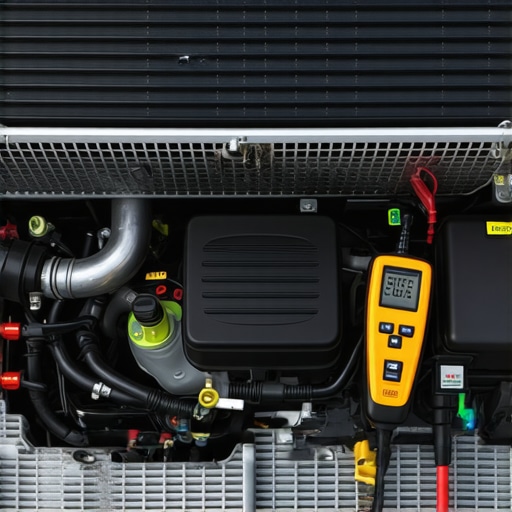
If you suspect an internal blockage, stop guessing and start visualizing the heat. Internal scale buildup from using tap water instead of distilled water can clog individual tubes within the radiator core. At highway speeds, the sheer volume of water overcomes these ‘dead zones,’ but at idle, they become cold spots that reduce the radiator’s effective surface area. By using an infrared thermometer or the $30 tool that lets you see inside your engine, you can scan the surface of the radiator. A healthy radiator will show a consistent heat gradient from the inlet to the outlet. If you see large ‘cool’ patches while the engine is hot, you’ve found a permanent internal obstruction that no amount of chemical flushing will fix. If you’ve encountered a stubborn temperature spike that defies logic, drop a comment below with your vehicle’s make and model so we can dive into the specific service bulletins for your drivetrain.
Stop the Turbulence with a Properly Seated Fan Shroud
Many DIY mechanics overlook the simple plastic housing surrounding the fan blades, yet the shroud is the single most important component for low-speed heat exchange. Without a shroud, a fan only pulls air from the immediate area around the blades, creating a vortex that misses the corners of the radiator core. At a red light, this inefficiency is magnified. A missing or cracked shroud allows the fan to draw air from the hot engine bay rather than pulling fresh, ambient air through the radiator fins. If you’ve recently performed a repair and left the shroud off, you have effectively reduced your cooling capacity by up to 30% at a standstill. Ensuring a tight seal between the shroud and the radiator ensures that every cubic foot of air moved by the fan is actually contributing to the thermal transfer process.
How PWM Fan Controllers Fail Silently at Low Speeds
Unlike older vehicles that used simple relays to trigger a fan at a set temperature, modern European and domestic cars utilize Pulse Width Modulation (PWM). This allows the ECU to vary fan speed from 1% to 100% based on real-time data. A common failure point occurs when the fan motor’s internal brushes wear down, creating enough resistance that the fan cannot start at the low-voltage PWM signals used at idle. It might kick on at high speeds when the ECU demands 100% power, but it stays stationary when you’re just sitting in traffic. Diagnosing this requires a high-end scanner to command specific fan percentages.  If your fan refuses to spin at a 15% command but roars to life at 90%, the motor’s internal resistance is likely the culprit, forcing the engine to heat up while waiting for that high-power threshold to be reached.
Does an Overheating Engine Always Mean Your Head Gasket is Blown?
One of the most frequent fears for drivers is that a rising needle at a stoplight indicates a catastrophic head gasket failure. While a blown gasket can cause overheating by introducing combustion gases into the coolant, it is rarely the cause of temperature spikes that only happen at idle. Head gasket issues typically manifest as overheating under load or consistent coolant loss. If your temperature returns to normal the moment you start moving, the issue is almost certainly airflow or fluid velocity, not an internal engine breach. However, constant overheating at red lights can eventually warp the cylinder head, leading to the very failure you fear. Professional vehicle diagnostics should include a block test to rule out combustion gases if the cooling system is pressurized but still running hot.
Acidic Coolant Eats Your Radiator from the Inside Out
The chemical composition of your coolant is just as vital as the mechanical state of the pump. Over time, the corrosion inhibitors in ethylene glycol break down, leading to a shift in pH. According to technical research by Gates Corporation, degraded coolant can become electrolytic, essentially turning your engine into a giant battery. This process, known as electrolysis, causes microscopic pitting in the radiator tubes and the water pump impeller. At idle, when the fluid is moving slowly, these pitted surfaces create turbulence and reduce the laminar flow necessary for efficient heat dissipation. If you haven’t performed a coolant flush in over three years, the fluid itself might be hindering the system’s ability to shed heat at a standstill.
Weak Batteries Can Actually Trigger Idle Overheating
It sounds counterintuitive, but your car’s electrical health is intrinsically linked to its thermal health. At idle, the alternator is spinning at its lowest possible speed, producing its minimum rated amperage. If your battery is aging or has a high internal resistance, it places a massive load on the charging system. This draws significant power away from the electric cooling fans, often causing them to spin slower than intended. You might notice the temperature climb only when the headlights and rear defroster are active at a light. This electrical strain can be the tipping point for a cooling system that is already on the edge. If you are struggling with a mystery overheat, drop your OBD-II freeze frame data or your battery voltage readings in the comments below so we can help you pinpoint if an electrical bottleneck is the real culprit behind your rising temp needle.
A vehicle’s cooling system is a marvel of thermodynamic engineering, designed to maintain a consistent operating temperature regardless of external variables. However, the most grueling test of this system doesn’t happen on the open highway; it occurs when the vehicle is stationary. When your engine temperature spikes only while waiting at red lights, it signals a critical failure in the system’s ability to manage heat without the assistance of ‘ram air’—the natural airflow generated by the car’s forward motion. From an expert perspective, this phenomenon typically points to a breakdown in the secondary cooling mechanisms, such as the electric fan assembly or the fluid dynamics of the water pump at low revolutions. Maintaining thermal equilibrium requires precise vehicle diagnostics to identify whether the issue is mechanical, electrical, or a simple matter of fluid chemistry.
The Idle Trap Where Static Air Suffocates Your Radiator
When a vehicle is cruising at 40 mph, the volume of air forced through the radiator fins is usually sufficient to dissipate the heat generated by the combustion process, even if the cooling fans are non-functional. However, at a standstill, the system relies entirely on the cooling fan to create a pressure differential that pulls air through the core. If the fan motor has developed a high-resistance spot or the fan clutch has lost its viscous coupling properties, the radiator becomes a heat soak. According to technical data from SAE International, radiator efficiency is exponentially dependent on the velocity of air passing through the cooling fins. Without this forced induction of ambient air, the coolant temperature will rise rapidly until the vehicle begins moving again, which is why the needle only drops once you accelerate away from the light. This is a classic indicator that your primary auto repair priority should be the fan circuit.
When Your Water Pump Loses the Battle Against Low RPMs
Another complex dimension of idle overheating involves the centrifugal water pump. These components are driven by the engine’s serpentine belt, meaning their rotational speed—and thus their flow rate—is directly tied to engine RPM. In an aging pump, the impeller blades may suffer from cavitation or erosion, significantly reducing their ability to move fluid at 600-800 RPM. While the pump might flow enough to keep the engine cool at higher speeds, it fails to provide the necessary turnover at a red light. This creates a localized ‘hot spot’ within the engine block that the sensors pick up immediately. If you’ve already checked your fans, the next step in professional car service is a flow test to ensure the pump isn’t underperforming during those critical moments of inactivity.
Is Your Transmission Fluid Actually Heating Up Your Radiator?
In many modern vehicles, the transmission oil cooler is integrated into the radiator’s side tank or bottom tank. If your gearbox is struggling with internal friction or slipping, the transmission fluid can reach temperatures well over 250 degrees Fahrenheit. This excess heat is transferred directly into the engine’s coolant, overwhelming the radiator’s capacity while the car is idling. These subtle symptoms can mimic transmission failures decoded in their early stages, where the engine cooling system is forced to compensate for a failing drivetrain component. High-level diagnostic tools can compare the temperature delta between the engine and transmission to see if the gearbox is ‘poisoning’ the cooling system during stop-and-go traffic.
Identify Air Pockets Before They Kill Your Head Gasket
Air trapped in the cooling system is a frequent culprit for erratic temperature spikes. Air pockets naturally gravitate toward the highest point in the system, which is often the thermostat housing or the heater core. When the car is moving, the water pump pressure is high enough to force these bubbles through, but at idle, the air pocket can settle and prevent coolant from reaching the thermostat. This prevents the thermostat from opening, leading to a rapid spike in temperature. While many enthusiasts look for how to fix a stuck thermostat for under 15, the real solution often involves a vacuum-fill tool to purge the system of all atmospheric air. If you are experiencing these spikes, we encourage you to contribute your findings or seek a professional analysis to prevent catastrophic engine warping.
Stop Chasing Ghosts and Check Your AC Condenser First
In many modern configurations, the air conditioning condenser is mounted directly in front of the engine radiator. This placement creates a thermal sandwich where the radiator is forced to pull air that has already been pre-heated by the AC system. If you notice your temperature needle climbing specifically while the climate control is active at a stop, the issue may not be your cooling system’s health, but rather an airflow restriction between these two components. Road debris, leaves, and bent cooling fins can act as a literal wall, preventing ambient air from reaching the radiator core. This often causes the engine to struggle, similar to why your car bogs down when you turn on the air conditioner, as the increased thermal load exceeds the dissipation capacity of the fan at low speeds.
Why Does Your Temperature Drop When You Blast the Interior Heat?
One of the most effective roadside diagnostic tricks is turning your heater to the maximum setting. The heater core is essentially a miniature radiator located inside your dashboard. By activating the heater, you are diverting hot coolant away from the engine block and using the interior blower motor to dissipate that heat into the cabin. If this action causes a rapid drop in engine temperature, it confirms that your radiator or cooling fan is the primary bottleneck. It effectively proves that the water pump is still functional enough to move fluid to the cabin, but the main cooling assembly is failing to keep up with the demand. This is a vital clue when determining if you need a simple flush or a more invasive repair like checking for a blown head gasket at home after a severe overheat event.
The Hidden Electrical Resistance That Lies to Your Dashboard
Sometimes, the engine isn’t actually overheating, but the gauge says it is. This is known as ‘gauge creep’ and is often caused by poor electrical grounds or a failing temperature sending unit. As the engine bay heat increases at a standstill, electrical resistance in aging wires also increases. If the ground strap between the engine and the chassis is corroded, the sensor may send an inaccurate voltage signal to the ECU, reflecting a higher temperature than reality. This electrical interference is often linked to other symptoms, such as why your dashboard lights flicker when you hit a bump. According to the National Institute for Automotive Service Excellence (ASE), a voltage drop test on the cooling sensor circuit is a mandatory step before condemning mechanical parts like the radiator or thermostat.
Use Thermal Imaging to Find Clogged Radiator Tubes
If you suspect an internal blockage, stop guessing and start visualizing the heat. Internal scale buildup from using tap water instead of distilled water can clog individual tubes within the radiator core. At highway speeds, the sheer volume of water overcomes these ‘dead zones,’ but at idle, they become cold spots that reduce the radiator’s effective surface area. By using an infrared thermometer or the $30 tool that lets you see inside your engine, you can scan the surface of the radiator. A healthy radiator will show a consistent heat gradient from the inlet to the outlet. If you see large ‘cool’ patches while the engine is hot, you’ve found a permanent internal obstruction that no amount of chemical flushing will fix. If you’ve encountered a stubborn temperature spike that defies logic, drop a comment below with your vehicle’s make and model so we can dive into the specific service bulletins for your drivetrain.
Stop the Turbulence with a Properly Seated Fan Shroud
Many DIY mechanics overlook the simple plastic housing surrounding the fan blades, yet the shroud is the single most important component for low-speed heat exchange. Without a shroud, a fan only pulls air from the immediate area around the blades, creating a vortex that misses the corners of the radiator core. At a red light, this inefficiency is magnified. A missing or cracked shroud allows the fan to draw air from the hot engine bay rather than pulling fresh, ambient air through the radiator fins. If you’ve recently performed a repair and left the shroud off, you have effectively reduced your cooling capacity by up to 30% at a standstill. Ensuring a tight seal between the shroud and the radiator ensures that every cubic foot of air moved by the fan is actually contributing to the thermal transfer process.
How PWM Fan Controllers Fail Silently at Low Speeds
Unlike older vehicles that used simple relays to trigger a fan at a set temperature, modern European and domestic cars utilize Pulse Width Modulation (PWM). This allows the ECU to vary fan speed from 1% to 100% based on real-time data. A common failure point occurs when the fan motor’s internal brushes wear down, creating enough resistance that the fan cannot start at the low-voltage PWM signals used at idle. It might kick on at high speeds when the ECU demands 100% power, but it stays stationary when you’re just sitting in traffic. Diagnosing this requires a high-end scanner to command specific fan percentages. If your fan refuses to spin at a 15% command but roars to life at 90%, the motor’s internal resistance is likely the culprit, forcing the engine to heat up while waiting for that high-power threshold to be reached.
Does an Overheating Engine Always Mean Your Head Gasket is Blown?
One of the most frequent fears for drivers is that a rising needle at a stoplight indicates a catastrophic head gasket failure. While a blown gasket can cause overheating by introducing combustion gases into the coolant, it is rarely the cause of temperature spikes that only happen at idle. Head gasket issues typically manifest as overheating under load or consistent coolant loss. If your temperature returns to normal the moment you start moving, the issue is almost certainly airflow or fluid velocity, not an internal engine breach. However, constant overheating at red lights can eventually warp the cylinder head, leading to the very failure you fear. Professional vehicle diagnostics should include a block test to rule out combustion gases if the cooling system is pressurized but still running hot.
Acidic Coolant Eats Your Radiator from the Inside Out
The chemical composition of your coolant is just as vital as the mechanical state of the pump. Over time, the corrosion inhibitors in ethylene glycol break down, leading to a shift in pH. According to technical research by Gates Corporation, degraded coolant can become electrolytic, essentially turning your engine into a giant battery. This process, known as electrolysis, causes microscopic pitting in the radiator tubes and the water pump impeller. At idle, when the fluid is moving slowly, these pitted surfaces create turbulence and reduce the laminar flow necessary for efficient heat dissipation. If you haven’t performed a coolant flush in over three years, the fluid itself might be hindering the system’s ability to shed heat at a standstill.
Weak Batteries Can Actually Trigger Idle Overheating
It sounds counterintuitive, but your car’s electrical health is intrinsically linked to its thermal health. At idle, the alternator is spinning at its lowest possible speed, producing its minimum rated amperage. If your battery is aging or has a high internal resistance, it places a massive load on the charging system. This draws significant power away from the electric cooling fans, often causing them to spin slower than intended. You might notice the temperature climb only when the headlights and rear defroster are active at a light. This electrical strain can be the tipping point for a cooling system that is already on the edge. If you are struggling with a mystery overheat, drop your OBD-II freeze frame data or your battery voltage readings in the comments below so we can help you pinpoint if an electrical bottleneck is the real culprit behind your rising temp needle.
Exhaust Gases Might Be Boiling Your Coolant from the Inside
In the pursuit of tighter emission controls, many modern turbocharged engines utilize an Exhaust Gas Recirculation (EGR) cooler. This component is essentially a heat exchanger that cools hot exhaust gases before they are reintroduced into the combustion chamber. However, if the internal core of the EGR cooler develops a micro-leak or significant soot accumulation, it can dump extreme heat into the cooling system. At idle, when the overall volume of circulating coolant is at its lowest, this additional thermal energy can easily overwhelm the system. This leads to a scenario where the radiator is fighting not just engine block heat, but also the raw temperature of the exhaust stream. If you’ve replaced your fan and radiator but the needle still climbs at a light, a pressure test of the EGR cooler is a mandatory diagnostic step to rule out this hidden heat source.
The Precise Science of Thermostat Opening Speeds
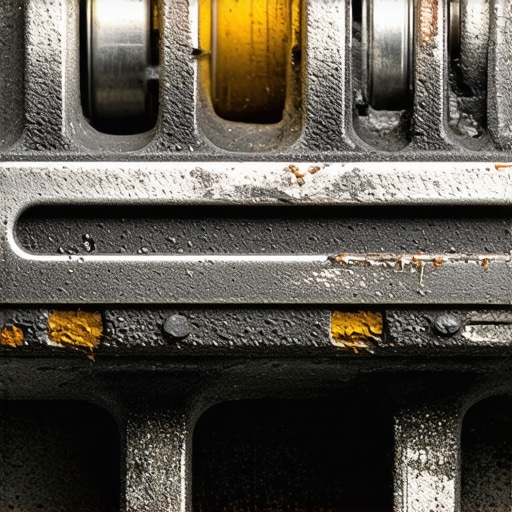
We often think of the thermostat as a simple switch, but in reality, it is a nuanced mechanical valve governed by thermal hysteresis. High-performance or heavy-duty thermostats are designed with specific wax pellet compositions that determine how quickly they react to temperature changes. A thermostat that has begun to ‘lazy open’—meaning it opens more slowly than its factory specification—may not provide a large enough aperture for coolant flow during the sudden transition from cruising to idling. While it may stay open enough at high RPMs where the water pump pressure forces fluid through, it becomes a bottleneck at 700 RPM. This lag in response time creates a spike in the cylinder head temperature before the valve finally catches up, a nuance often missed in basic diagnostics.
Can a Faulty Engine Control Module Cause Your Car to Overheat Only at Idle?
While mechanical failures are more common, the Engine Control Module (ECM) is the brain that manages cooling fan duty cycles. If the ECM receives skewed data from a secondary sensor, such as the intake air temperature or the AC pressure sensor, it may fail to command the cooling fans to the necessary speed while stationary. Some vehicles use complex algorithms to predict heat soak, and a software glitch or an outdated flash file can cause the fan to stay at a low-speed setting even as the coolant temperature approaches the danger zone. Professional technicians often check for manufacturer TSBs that recommend a software update to recalibrate fan engagement parameters during prolonged idling sessions.
Why Silicon-Free Coolant Matters for Modern Water Pumps
The chemistry of your antifreeze is a critical factor in maintaining the integrity of the water pump’s internal seal. According to the stringent standards set by ASTM International in the D3306 specification, the chemical stability of glycols is non-negotiable for preventing cavitation at low pump speeds. In many modern European engines, the use of silicated vs. non-silicated coolants can drastically affect the lifespan of the pump impeller. Silicates can precipitate out of the solution over time, creating an abrasive paste that wears down the impeller blades. This erosion reduces the pump’s ability to move fluid at low RPMs, leading directly to that frustrating idle overheat. Using the wrong fluid type can negate even the most expensive auto repair efforts. If you have any questions about the specific thermal behavior of your car, share your diagnostic trouble codes or live data streams in the comments so we can analyze the root cause together.
Expert Insights & Advanced Considerations
Stop Sacrificing Cooling for Marginal Power Gains
Many performance enthusiasts install under-drive pulleys to reduce parasitic drag, but this modification frequently leads to idle overheating. By slowing down the water pump’s rotational speed, you reduce the flow rate below the critical threshold needed to prevent heat soak at a red light. If you’ve modified your belt drive, returning to a factory pulley size is often the most effective auto repair for thermal stability.
Why High-Density Fins Can Kill Your Airflow
Upgrading to a thicker radiator seems logical, but an increased fin-per-inch (FPI) count creates significantly more static pressure resistance. Without an industrial-grade fan to pull air through that dense core, your cooling capacity actually drops at a standstill. It is vital to match your fan’s CFM rating to the radiator’s density to ensure the system doesn’t suffocate when the car isn’t moving.
Chemical Sealants Act Like Clogged Arteries
Using stop-leak additives might fix a minor drip, but these particulates frequently settle in the lowest velocity areas of the system during idle. This creates a sludge that coats the temperature sending unit and restricts the radiator’s bottom tubes. To see the true state of your internal flow, using the $30 tool that lets you see inside your engine can reveal these hidden blockages before they cause a total system breakdown.
Curated Expert Resources
ASE Study Guides (A1-A8): These provide the foundational electrical and mechanical theory required to master complex vehicle diagnostics and system integration.
SAE International Technical Papers: These documents represent the gold standard for understanding the thermodynamics of radiator heat dissipation and fluid dynamics under extreme conditions.
Manufacturer-Specific TSB Databases: Essential for identifying software-related fan control issues and factory defects that generic scanners might miss during a standard inspection.
Gates Corporation Technical Library: An invaluable resource for understanding the chemical breakdown of modern coolants and the physics of serpentine belt systems.
Final Expert Perspective
Solving an overheat that only occurs at a stop requires moving beyond basic part swapping and embracing a holistic view of the cooling circuit. Whether it is a subtle electrical ground issue or a chemical imbalance in the fluid, the key to a lasting fix is precise data over guesswork. By prioritizing thorough car service and utilizing professional-grade diagnostic techniques, you can ensure your engine remains at thermal equilibrium regardless of traffic conditions. If you are facing a persistent temperature spike, we invite you to share your specific symptoms and vehicle data in our community forum to help us refine these expert troubleshooting protocols. #IMAGE_PLACEHOLDER_E#