Modern vehicle electrical systems are designed with significant redundancy, particularly for safety-critical components like braking assemblies. Unlike peripheral systems such as the infotainment unit, the brake light circuit is typically unswitched, receiving a constant 12V feed from the battery regardless of the ignition status. When brake lights persist after the vehicle is powered down, it signifies a failure in the circuit-interrupt mechanism. This phenomenon is a classic entry point into the hidden world of vehicle diagnostics, where mechanical failure and electrical logic often intersect. Addressing this issue promptly is essential, as the continuous draw will quickly deplete the battery’s reserve capacity, leading to a vehicle that fails to crank when most needed.
The Constant Power Circuitry That Keeps Your Brake Lights Glowing at Midnight
In most automotive architectures, the brake light switch—located near the pivot point of the brake pedal—acts as the gatekeeper for the entire lighting array. Because manufacturers prioritize safety, these lights must function even if the engine stalls. However, when the lights refuse to extinguish, it usually indicates that the switch is stuck in the closed position. This effectively creates a completed circuit that bridges the gap between the battery and the rear bulbs. According to the National Highway Traffic Safety Administration (NHTSA), maintaining the integrity of these safety signals is paramount for preventing rear-end collisions, making immediate repair a necessity rather than a suggestion.
Why the Brake Pedal Stopper is Often the Silent Culprit
While many drivers assume a complex computer failure is at play, the reality is frequently more tangible. A small plastic or rubber disc, known as the brake light switch stopper, sits on the pedal arm and depresses the switch plunger when the pedal is at rest. Over years of thermal cycling, these plastic components become brittle and eventually disintegrate. Once the stopper falls away, the switch plunger extends into the empty hole in the pedal arm, mimicking a pressed pedal. This mechanical oversight is a common focus in professional auto repair techniques used to solve electrical gremlins without expensive part replacements.
The Risk of a Rapid Parasitic Battery Drain
Leaving the brake lights active overnight is more than a visual oddity; it is a thermal and electrical hazard. Standard incandescent bulbs generate significant heat, which can damage the plastic housings over long periods. More urgently, the amperage draw from three or four active bulbs is substantial. If you find your battery dies every morning, the brake light circuit should be your first point of inspection. Diagnostic professionals often use a digital multimeter to confirm the current draw, similar to the process used when motorists learn how to find a parasitic battery drain with a 15-multimeter to isolate faulty circuits.
Could a Faulty ABS Module Mimic a Mechanical Switch Failure?
In advanced car service scenarios, the issue may stem from the electronic control side rather than the mechanical switch. High-end modern vehicles route brake signals through a Body Control Module (BCM) or the Anti-lock Braking System (ABS) module. A software glitch or a shorted internal relay within these modules can command the brake lights to stay on despite the physical switch being open. This requires specialized scan tools to monitor live data streams and determine if the BCM is receiving a ‘pedal depressed’ command incorrectly. If you are experiencing other dashboard warnings, you might want to look into transmission failures decoded to see if your vehicle’s communication network is suffering from broader systemic issues. [IMAGE_PLACEHOLDER]
Professional Calibration for the Brake Switch Assembly
Replacing the switch is only half the battle; proper adjustment is the key to longevity. A switch installed too close to the pedal will cause the lights to flicker over bumps, while one set too far away will require excessive pedal travel to activate. Experts recommend a precise gap measurement during the installation phase to ensure the plunger is fully compressed when the pedal is released. This level of precision is what differentiates a quick fix from a professional car service. For those looking to deepen their mechanical knowledge, contributing to expert forums or seeking advanced training can refine these essential skills.
Mechanical obstructions often masquerade as electrical failures, leading many DIYers down expensive rabbit holes. A common yet frequently overlooked culprit is a misaligned floor mat or a heavy aftermarket pedal cover. These physical items can prevent the pedal from returning to its absolute rest position, keeping the switch just barely engaged. Even a few millimeters of clearance can be the difference between a dark bulb and a drained battery. If you notice your lights staying on intermittently, first ensure the pedal’s path is entirely clear before diving into the wiring. This simple check is a core part of the secret to getting a perfect brake pedal every time, ensuring that the mechanical and electrical components operate in harmony.
Does your brake pedal actually return to its zero point?
The return spring inside the brake pedal assembly is tasked with pulling the heavy steel arm back against the stop once you lift your foot. Over hundreds of thousands of cycles, these springs can fatigue or snap, leaving the pedal sagging slightly. This ‘pedal sag’ keeps the brake light switch triggered even when you aren’t braking. According to technical standards from SAE International, automotive switches are rated for millions of cycles, but they rely entirely on the mechanical return of the pedal to break the circuit. If the spring is weak, you may find that you can manually pull the pedal up with your toe to turn the lights off. This mechanical fatigue is often linked to other pedal feel issues, similar to why your brake pedal feels spongy after bleeding the lines, where physical components fail to maintain the necessary tension for proper operation.
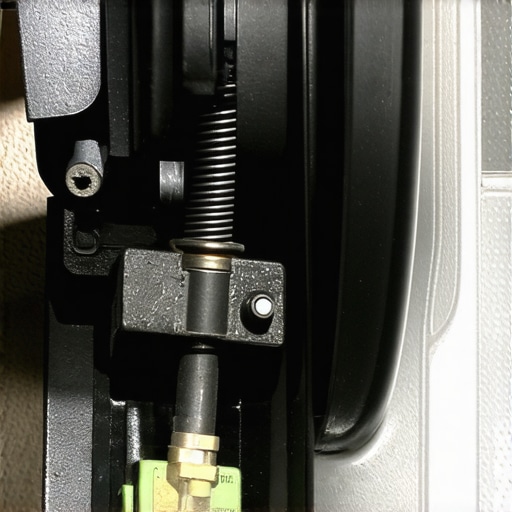
Beyond the spring, the internal contacts of the brake light switch itself can fail in a ‘welded’ state. Every time the switch opens or closes, a tiny electrical arc occurs between the copper contacts. Over years of use, this arcing can cause the metal to pit or, in extreme cases, fuse together. When this happens, the circuit remains closed regardless of the plunger’s position. Using the 5-tool for finding electrical shorts in minutes can help you verify if the power is bypassing the switch internally. If disconnecting the wire harness from the switch causes the lights to go out immediately, you have confirmed that the switch is the point of failure and must be replaced.
Stop the arc before it fuses your switch shut
In some vehicle models, particularly older trucks or heavily used work vans, the brake light circuit may be carrying more amperage than the switch was originally designed for, especially if aftermarket LED conversions or trailer wiring has been added incorrectly. This increased load accelerates contact wear. If you find yourself replacing the switch frequently, it may be time to inspect the entire lighting harness for high resistance or improper grounding. Many shops have found success by how we fixed a spongy brake pedal when bleeding the lines failed, focusing on systemic integrity rather than just individual parts. Checking the voltage drop across the switch while the lights are on can reveal if the circuit is overheating. If you have recently added a trailer hitch, verify the wiring isn’t back-feeding the brake circuit and keeping the lights illuminated.
Why high-resistance shorts are the most dangerous gremlins
A ‘hard’ short to ground usually blows a fuse, but a high-resistance short to power can keep lights dimly lit or fully active without ever tripping a circuit breaker. Water ingress in a trailer plug or a corroded taillight housing can bridge the gap between a constant power wire and the brake signal wire. This is why a simple visual inspection is rarely enough. If the lights are glowing but the pedal and switch are fine, you likely have a wiring harness issue. You can use a variation of the how to test your car battery with a simple headlight trick to see if the circuit is pulling more current than it should. Check your floorboard for small pieces of broken plastic; if you find them, you’ve likely found the source of your dead battery. Have you ever encountered a phantom electrical issue that turned out to be a simple piece of plastic? Share your diagnostic stories in the comments below to help other drivers troubleshoot faster.
When Your Car’s Internal Network Hallucinates a Braking Signal
The Controller Area Network (CAN bus) functions as the high-speed nervous system of your vehicle, but even the most advanced systems can suffer from digital ‘hallucinations.’ In modern automotive engineering, the brake pedal position is rarely a simple binary state; instead, it is often monitored by a hall-effect sensor that transmits a specific voltage range to the Body Control Module (BCM). If a secondary module on the network, such as the electronic stability control or the steering angle sensor, begins broadcasting corrupted data packets due to a failing capacitor or electromagnetic interference, it can effectively ‘blind’ the BCM. This digital noise can trick the module into maintaining the brake light command even after the physical pedal has returned to its rest position. Mastering this level of vehicle diagnostics requires more than a test light; it necessitates a logic analyzer to see the actual data frames being sent across the wires.
Corrosion Is the Silent Bridge Between Constant Power and Your Bulbs
If the mechanical switch and the pedal return spring both pass inspection, your focus must shift toward the vehicle’s junction blocks and fuse panels. Environmental factors often play a devastating role in electrical integrity. A clogged sunroof drain or a minor seal leak at the base of the windshield can allow moisture to migrate directly into the Smart Junction Box (SJB) or the kick-panel fuse array. This moisture facilitates the growth of copper oxide—that tell-tale green crust—which acts as a semiconductor. Because the brake circuit is an unswitched, ‘always-on’ feed, this corrosion can create a high-resistance bridge to the brake light output pin. According to the National Institute for Automotive Service Excellence (ASE), identifying these ‘parasitic paths’ is a cornerstone of advanced electrical troubleshooting. 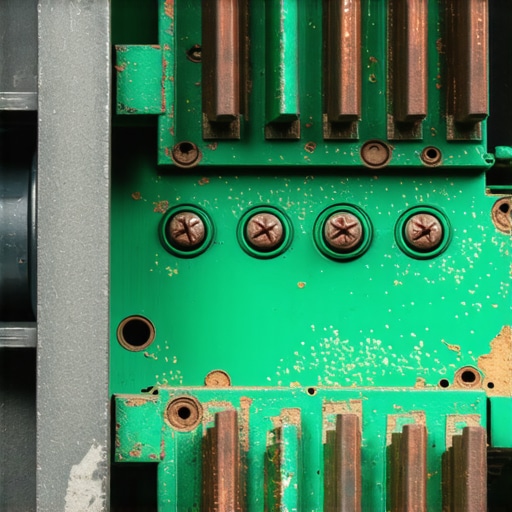
Can a faulty cruise control deactivation switch keep your brake lights on?
On many older or heavy-duty vehicle platforms, the brake pedal assembly utilizes two separate switches: one dedicated to the lighting circuit and a secondary, ‘normally closed’ switch for the cruise control system. However, in many contemporary ‘integrated’ sensor designs, these two functions are handled by a single multi-pin component. If the internal logic of the cruise control deactivation circuit fails, it can occasionally back-feed voltage into the lighting side of the sensor. If you have noticed your cruise control failing to engage or unexpectedly dropping out while driving, it is a significant clue that the sensor’s internal state is unstable. This intersection of systems is a prime example of why professional auto repair techniques emphasize testing the entire component’s logic rather than just checking for a simple ‘on’ signal.
Stop Guessing and Start Seeing the Voltage with an Oscilloscope
While a standard digital multimeter is an essential tool, it only provides an averaged snapshot of voltage over time. To catch a truly elusive electrical gremlin, you need the granularity of an oscilloscope. By ‘scoping’ the brake signal wire at the BCM, you can observe the actual waveform of the electricity. A clean signal should look like a sharp square wave; if you see ‘noise,’ ‘ringing,’ or a slow, rounded voltage decay when the pedal is released, you are likely looking at a failing relay with pitted contacts or a ground strap that has developed high resistance. This type of signal analysis is what separates a technician from a ‘parts changer.’ Before you commit to replacing an expensive control module, try monitoring the live data stream with a high-quality scan tool to see if the computer actually ‘thinks’ the pedal is depressed, or if the power is leaking in elsewhere. Examining the ground points behind the dashboard can often reveal the true culprit of these ghostly illuminations, much like how specialized knowledge helps when transmission failures decoded through deep-data analysis.
Beyond the typical mechanical failures and wiring shorts, the shift toward software-defined vehicles has introduced a layer of complexity that can baffle even seasoned technicians. In contemporary automotive architectures, the brake light signal is no longer a simple point-to-point electrical path. Instead, it is a data packet processed by a central intelligence unit. When these signals go haywire, the solution often resides within the digital logic of the vehicle’s operating system or the solid-state components that have replaced traditional mechanical relays.
The Phantom Voltage of Leaky Solid-State Relays
Modern vehicles have largely moved away from clunky mechanical relays in favor of MOSFETs (Metal-Oxide-Semiconductor Field-Effect Transistors) housed within the Body Control Module. While these solid-state switches are more durable and faster, they are susceptible to a phenomenon known as ‘leakage current.’ If a MOSFET is damaged by a previous transient voltage spike or internal thermal stress, it may fail to shut off completely. This allows a minute amount of current to pass through the circuit even when the ‘off’ command is active. For vehicles equipped with highly sensitive LED arrays, this trickle of power is often sufficient to keep the lights dimly illuminated long after the key is removed. Identifying this requires a sensitive high-impedance voltmeter to detect ‘ghost’ voltages that a standard test light might miss entirely.

The Chaos Caused by Multiplexed Ground Circuits
In an effort to reduce weight and wiring complexity, manufacturers increasingly utilize multiplexing, where multiple components share a single return path to the chassis ground. If a primary ground point becomes compromised by road salt or vibrations, the electricity seeking a path back to the battery may ‘back-feed’ through the brake light circuit. This creates a parasitic loop where turning on another accessory, like the rear defroster or the license plate lights, inadvertently triggers the brake lamps. Professional diagnostic strategies, such as those detailed in Motor Age Magazine, emphasize that ‘ground-side switching’ issues often require a holistic view of the entire rear harness rather than focusing on a single bulb or switch.
Could your car’s emergency braking software be the culprit?
With the rise of Advanced Driver Assistance Systems (ADAS), the car itself can now ‘apply’ the brakes via software. Features like Autonomous Emergency Braking (AEB) and Adaptive Cruise Control command the brake lights to illuminate without any physical input from the driver. If the forward-facing radar or camera module becomes misaligned or suffers from a software glitch, it may continuously broadcast a ‘braking active’ status over the CAN bus. This keeps the lights on because the BCM believes the vehicle is in a safety-critical deceleration state. Verifying this requires checking the ‘ADAS status’ parameters within a factory-level scan tool to ensure the software isn’t stuck in a ‘hold’ or ‘active’ loop despite the car being parked.
Protect Your Battery from Modern Digital Parasites
Understanding these high-level failures is the first step toward a permanent fix. If you have already replaced the mechanical switch and verified the pedal stopper, you are likely dealing with a logic-level issue or a module-side failure. Ignoring these signals can lead to more than just a dead battery; it can indicate an impending failure of your vehicle’s safety network. Have you noticed your brake lights behaving strangely after a heavy rain or a recent software update? Reach out to a specialist who understands the intersection of software and hardware to ensure your vehicle remains safe and reliable on the road.
Expert Insights and Advanced Considerations
Why your BCM might be ‘latched’ in a braking state
In modern multiplexed systems, the Body Control Module (BCM) can sometimes experience a logic latch. This occurs when a transient voltage spike—perhaps from a failing alternator or a jump-start—corrupts the volatile memory of the module, causing it to hold the last commanded state. If the brake lights were active during the spike, the BCM might continue to output power to the lamps even after the ignition is killed. Professional vehicle diagnostics often involve a hard reset—disconnecting the battery and discharging the capacitive load—to clear these digital ghosts. Understanding the nuances of expert auto repair tips for 2025 is vital as these software-driven errors become more prevalent.
Shielding against electromagnetic interference to save your signals
High-voltage components, such as HID headlight ballasts or poorly grounded ignition coils, can emit electromagnetic interference (EMI) that bleeds into low-voltage sensor wires. If your brake pedal position sensor wire is routed too close to an EMI source, the BCM may interpret the noise as a signal to engage the lights. This is a common reason why your abs light comes on every time it rains, as moisture increases conductivity and worsens electrical noise. Always verify that sensor harnesses are properly shielded and routed according to factory specifications.
Ghost voltages and the failure of solid-state relays
When dealing with LED conversions, even a few millivolts of leakage from a failing MOSFET inside a module can keep the lights glowing. This ghost voltage is often invisible to the naked eye with incandescent bulbs but becomes a glaring issue with low-draw LEDs. Using the 5-tool for finding electrical shorts in minutes can help you differentiate between a hard short to power and a leaky semiconductor. [IMAGE_PLACEHOLDER_E]
Curated Expert Resources
SAE International Technical Standards provide the definitive source for automotive communication protocols like J1939 and CAN bus logic. It is essential for understanding how data packets influence lighting signals at the network level.
Motor Age Magazine Diagnostic Guides offer deep-dive case studies into elusive electrical issues, providing a roadmap for tracking how to find a parasitic battery drain with a 15-multimeter in complex vehicle networks.
NHTSA Safety Recall Databases allow technicians to monitor TSBs (Technical Service Bulletins) and identify known mechanical flaws in brake pedal stoppers and switches for specific year and model combinations.
Final Expert Perspective
Solving the mystery of persistent brake lights requires a shift from simple component replacement to a more holistic understanding of the vehicle’s electrical architecture. Whether the issue is a simple plastic stopper or a complex logic-latch within the BCM, the goal is always to restore the circuit’s integrity and protect your battery from an unnecessary drain. By combining traditional mechanical checks with advanced data analysis, you can ensure your safety signals operate exactly when intended. If you have mastered these troubleshooting steps, we invite you to share your experiences with top auto repair techniques or reach out to a certified specialist to help refine your diagnostic process.