The rapid-fire clicking sound emanating from your engine bay when you turn the ignition key is more than a mere annoyance; it is a diagnostic signal indicating a failure in the high-current delivery system. From an engineering standpoint, this phenomenon usually occurs when the starter solenoid receives enough voltage to pull in the plunger but lacks the current density to maintain the connection against the return spring’s tension. As an expert in auto repair and vehicle diagnostics, I have seen countless drivers misinterpret this as a total battery failure, when the reality often lies in localized high resistance within the relay or its associated circuitry.
Voltage Drop and the Rapid-Fire Solenoid
When the battery’s state of charge is marginal or terminals are corroded, the electrical system experiences a massive voltage sag the moment the starter motor attempts to draw its peak amperage. This causes the solenoid to oscillate—the rapid clicking sound—as it engages and disengages in a millisecond loop. To accurately diagnose this, one must perform a voltage drop test using a high-quality multimeter while the circuit is under load. If you find a discrepancy of more than 0.5 volts between the battery post and the starter B+ terminal, you are dealing with a wiring or connection issue rather than a mechanical failure. In many cases, testing your car battery first can rule out a chemical failure within the cells.
The Simple Relay Swap Strategy
One of the most effective techniques in professional car service is the relay isolation method. Most modern vehicles use standardized ISO relays for various high-current applications, such as the fuel pump, cooling fans, or the starter motor. If you suspect a pitted internal contact or a weak electromagnetic coil within the relay is causing the clicking, identify another non-essential relay in the power distribution center with the same part number. Swapping the starter relay with the AC compressor relay, for example, can immediately verify if the component is at fault. This method bypasses the need for complex internal testing and provides an instant result. If the car starts after the swap, you have isolated the failure without spending a dime on unnecessary transmission or engine repairs.
Does a Faulty Ignition Switch Influence Relay Performance?
While the relay itself is often the culprit, the signal that triggers it is equally vital. A worn ignition switch can introduce enough resistance into the trigger wire circuit that the relay coil never receives full saturation. This results in “lazy” relay engagement. Before you commit to a full starter replacement, it is wise to learn how to bypass a faulty starter motor to determine if the problem is upstream in the ignition logic. According to research published by the Society of Automotive Engineers (SAE), terminal fretting and oxidation in engine bay fuse boxes are leading causes of intermittent starting failures in vehicles over five years old.
Clean Your Connections to Restore Current Flow
If the relay swap does not yield results, the focus must shift to the physical contact points. Professional-grade contact cleaner and a brass wire brush can resolve many “dead” relay symptoms by removing the thin layer of oxidation that prevents electrons from flowing efficiently. This is a critical step in comprehensive vehicle diagnostics. If you find yourself frequently dealing with electrical gremlins, it might be a sign of broader maintenance needs; consider choosing the right car service to ensure your electrical ground points are inspected annually. Share your own diagnostic success stories or ask about specific relay schematics in the comments below to help the community refine their troubleshooting skills.
The Ground Side Resistance Trap
Many technicians spend hours chasing positive-side voltage issues while completely ignoring the return path to the battery. In the world of high-current vehicle diagnostics, the ground circuit is just as critical as the power feed. A frayed or oxidized engine block ground strap creates a bottleneck for electrons, which manifest as a clicking starter relay even if the battery and relay are brand new. To diagnose this, perform a voltage drop test on the negative side: place one probe of your multimeter on the starter housing and the other on the negative battery post during a cranking attempt. Any reading above 0.2 volts indicates a significant grounding bottleneck that must be addressed. High resistance here can trick the system into thinking there is a mechanical transmission bind or a dead cell in the battery. If you are seeing strange electrical behavior across multiple systems, it is often worth using a simple tool for finding electrical shorts or ground faults before replacing expensive modules. 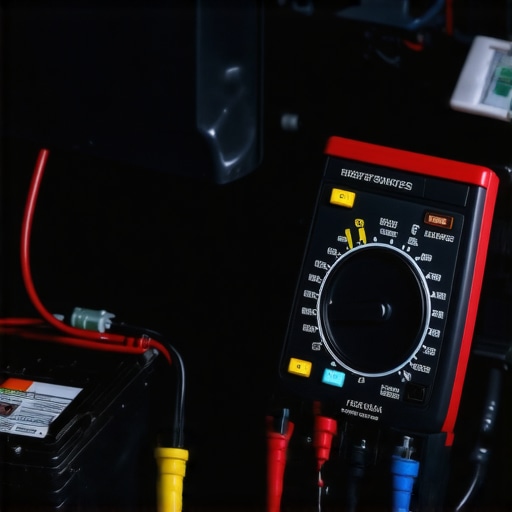
Why Does Heat Cause Intermittent Relay Hesitation?
From a physics perspective, the resistance of copper wire increases as temperature rises. This is why a car might start perfectly in the morning but refuse to click over after a twenty-minute drive—a phenomenon known as heat soak. When the relay coil or the starter solenoid becomes hot, the internal resistance can climb high enough that the available voltage can no longer generate the magnetic field strength required to pull in the heavy-duty contacts. This is a nuanced failure point that standard bench tests often miss because the component has cooled down by the time it reaches the parts store. Expert car service requires testing the system under its actual operating environment. If your vehicle struggles only after it has reached operating temperature, you should also test the alternator output to ensure the battery is being replenished enough to overcome this thermal resistance.
Identifying Parasitic Loads That Mimic Component Failure
Sometimes the relay is a victim of circumstance rather than the cause of the problem. A parasitic draw—a component that stays on after the key is removed—can deplete the battery’s reserve capacity just enough to prevent the solenoid from holding its connection, leading to that signature clicking sound. According to the National Institute for Automotive Service Excellence (ASE), modern vehicles should not exceed a 50-milliamp draw when in sleep mode. If your car clicks in the morning but starts fine after being jumped, you are likely dealing with a drain rather than a failed relay. You can effectively find a parasitic battery drain with a multimeter by monitoring the millivolt drop across individual fuses. This methodical approach ensures you aren’t just treating the symptom of a clicking relay while the actual culprit, like a stuck seat motor or a faulty infotainment module, continues to kill your power. Understanding why your battery dies every morning is the first step in a professional-grade repair strategy. Have you encountered a clicking relay that only acted up in specific weather conditions? Share your experience in the comments or let us know which electrical mystery you are currently trying to solve; your input helps us build a better diagnostic database for everyone.
Modern Logic Modules and the Digital Permission to Start
The evolution of automotive architecture has transitioned the humble starter circuit from a simple physical loop into a complex network of digital handshakes. In contemporary vehicles, the ignition switch often serves as a mere data input rather than a high-current bridge. When you turn the key, you are actually sending a low-voltage request to the Body Control Module (BCM) or Powertrain Control Module (PCM). The computer then evaluates a list of safety parameters—such as brake pedal position, transmission gear status, and anti-theft authentication—before it decides to ground the starter relay coil. If the computer detects a marginal voltage drop or a corrupted signal from the immobilizer, it may cycle the relay rapidly as a safety precaution, mimicking the sound of a dead battery. Identifying this requires a high-end scan tool to observe ‘live data’ and confirm that the ‘Start Request’ is actually being granted by the module. If the request is toggling ‘Yes’ and ‘No’ in sync with the clicking, the problem is likely a software logic error or a failing sensor rather than a mechanical transmission issue. 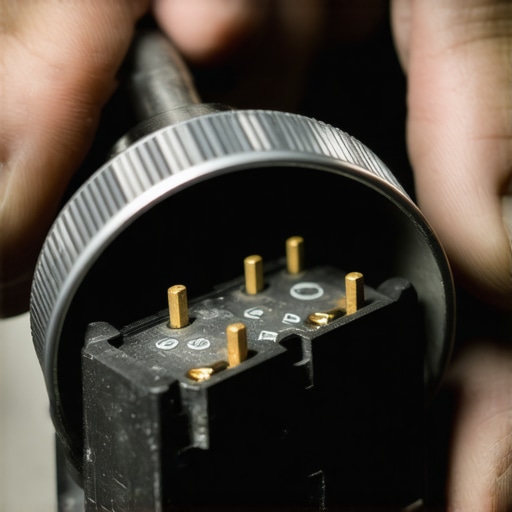
Can a Faulty Security Chip Cause the Relay to Pulse?
Security systems and engine immobilizers are frequent, yet overlooked, culprits in the ‘clicking relay’ mystery. When an RFID chip in your key fob begins to fail or the transceiver ring around the ignition cylinder loses its sensitivity, the vehicle’s security module may allow the relay to engage for a fraction of a second before cutting power once the handshake fails. This creates a repetitive clicking that many DIYers mistake for a bad solenoid. To differentiate between a security lockout and a mechanical failure, watch the dashboard ‘security’ or ‘key’ icon. If it flashes rapidly while the relay is clicking, the vehicle has effectively locked you out of the starting sequence. According to data maintained by the National Highway Traffic Safety Administration (NHTSA), a significant percentage of electrical-related ‘no-start’ complaints in modern sedans are eventually traced back to faulty key-to-module communication protocols or software bugs in the anti-theft system.
Rescue Your Electrical System from Terminal Fretting
Beyond the battery posts, a hidden enemy known as terminal fretting often plagues the underside of the fuse box (Power Distribution Center). This occurs when microscopic vibrations cause the metal pins of the relay to rub against the socket terminals, eventually wearing away the protective plating and exposing the base metal to oxidation. This creates high resistance right at the heart of the vehicle diagnostics path. Even a brand-new relay will click and fail if the socket it sits in is compromised by fretting. To combat this, technicians use a dielectric grease specifically formulated for electronic connectors to seal out oxygen and moisture. If you’ve already checked your battery and swapped your relays, pull the relay out and inspect the pins for any dark, smudge-like marks; this is the ‘fret’ material. Cleaning these sockets and ensuring proper pin tension is a cornerstone of professional car service. If you suspect your wiring harness is the root cause, you might want to check the battery’s health again to ensure it hasn’t been damaged by the heat generated from this high-resistance connection. Have you ever pulled a relay only to find the plastic housing melted despite the fuse being intact? This is the classic signature of terminal fretting at work.Digital signal integrity represents the modern frontier of auto repair. While previous diagnostic steps focused on physical high-current paths, we must now address the low-current logic that commands the entire system.
Stop Digital Cross-Talk from Killing Your Crank Signal
In a multiplexed electrical environment, various control modules share the same twisted-pair wiring to communicate vital data. If a peripheral module, such as the blind-spot monitoring system or a secondary body controller, develops an internal short, it can inject ‘noise’ into the CAN bus. This data corruption can momentarily confuse the Powertrain Control Module (PCM), causing it to oscillate the starter relay command in a rapid-fire sequence. This isn’t a battery issue; it is a communication failure. Advanced vehicle diagnostics now require using an oscilloscope to verify that the ‘Start’ message remains clean and uninterrupted by digital cross-talk rather than just checking for 12 volts with a test light.
Does an unshielded aftermarket wire cause relay chatter?
High-output accessories like HID headlights or massive audio amplifiers are notorious for generating significant Electromagnetic Interference (EMI). If these components are wired too close to the ignition trigger loom, the magnetic field they produce can induce a false voltage in the relay coil circuit. This induction often results in a rapid clicking sound as the relay solenoid fights against the phantom current. Professional installers mitigate this by using shielded cables and ensuring that high-current accessory wires never run parallel to sensitive car service logic circuits for more than a few inches. 
Bypass the Neutral Safety Switch Resistance Trap
For a starter relay to energize, it requires a complete path to ground, usually mediated by the Neutral Safety Switch (NSS) or the Clutch Pedal Position (CPP) sensor. Over years of operation, the internal contacts of these switches can develop high-impedance films. While they might still show continuity on a basic resistance test, they cannot handle the 150-300 milliamps required to fully saturate the relay coil. This results in a weak magnetic pull that fails to hold the high-current bridge closed, manifesting as a frantic click. Before blaming the starter motor itself, experienced technicians will jump the NSS pins to see if the engine cranks immediately, identifying a failing safety switch rather than a transmission-related mechanical bind.
The Hidden Danger of Inductive Kickback in Relay Circuits
Every time a relay is de-energized, the collapsing magnetic field in the coil generates a massive voltage spike—often exceeding 200 volts—known as inductive kickback. To protect the sensitive transistors inside your car’s computer, a flyback diode is used to safely dissipate this energy. If this diode fails open, the transient spikes can slowly degrade the PCM’s output drivers, leading to erratic relay behavior and eventual module failure. According to technical research published through IEEE Xplore, managing these transients is vital for the longevity of automotive semiconductor components. If your relay clicks once and then the car loses all power, you may be witnessing a module entering a self-protection mode due to an unsuppressed spike. Have you ever noticed your headlights flicker specifically when the starter clicks? This could be the key to identifying a failing driver circuit. Let us know your specific vehicle year and model in the comments so we can help you find the exact relay pinout for your next diagnostic step.
Expert Insights & Advanced Considerations
Why Voltage Alone Can Deceive You
It is a common pitfall in vehicle diagnostics to assume a battery is healthy simply because a multimeter reads 12.6 volts. This measurement only reflects electrical potential, not the amperage capacity required to turn over an engine. When the starter relay clicks rapidly, it often indicates that the voltage is ‘collapsing’ under load. Before assuming the relay is faulty, you should test your car battery with a simple headlight trick to see if the cells can actually hold up under a basic current draw.
Dielectric Grease Isn’t a Conductivity Booster
A frequent mistake during a DIY car service is packing relay sockets with dielectric grease to ‘improve the connection.’ In reality, dielectric grease is an insulator designed to seal out moisture and prevent corrosion. If applied too heavily on the contact pins themselves, it can actually increase resistance and cause the very clicking or intermittent starting you are trying to fix. Use it sparingly on the outer plastic housings or the base of the pins, never on the mating surfaces where metal must touch metal.
Identify Armature Flat Spots Before Replacing Parts
If your relay clicks once and stays engaged but the engine doesn’t turn, the issue might be a ‘flat spot’ on the starter motor armature. This mechanical failure mimics an electrical relay issue but is actually a sign of internal wear. While auto repair experts sometimes use a small mallet to jar the starter and move it off the flat spot, this is only a temporary fix. If you find yourself needing to physically strike the starter, it is time to unlock your car’s potential by replacing the unit before it fails completely.
Curated Expert Resources
1. SAE International (Society of Automotive Engineers): The gold standard for technical papers on wiring harness integrity and high-current circuit design. Their research is vital for those wanting to understand the physics of voltage drop.
2. Mitchell 1 and ALLDATA: These are the professional-grade databases we use in vehicle diagnostics to access exact wiring schematics and manufacturer-specific relay pinouts. They are indispensable for mapping out complex logic-controlled starting systems.
3. ASE Certification Guides: These resources provide the standardized troubleshooting workflows that prevent technicians from making ‘parts-cannon’ mistakes—replacing expensive components like a transmission or starter when a simple ground wire was the culprit.
#IMAGE_PLACEHOLDER_E#
The Professional Takeaway on Electrical Gremlins
Solving a clicking starter relay requires a transition from ‘part swapping’ to methodical vehicle diagnostics. Whether the cause is a high-resistance ground, a heat-soaked solenoid, or a digital handshake failure in the security module, the solution always begins with data. By verifying the integrity of the high-current path and the logic signals that command it, you ensure a long-term fix rather than a temporary patch. If your starting issues are accompanied by strange gear shifts or dashboard warnings, you may need to investigate transmission failures decoded to ensure a sensor fault isn’t inhibiting your start signal. We invite you to share your most difficult electrical troubleshooting stories in the comments below or reach out to our team for specific technical guidance on your vehicle’s wiring architecture.