Why Magnetic Induction is Your Best Field Diagnostic Tool
Diagnostic precision in modern automotive engineering often relies on fundamental electromagnetic principles that precede digital telemetry. When sophisticated vehicle diagnostics equipment is inaccessible—whether on a remote job site or during an emergency breakdown—an expert must leverage the physical properties of the alternator’s rotor and stator to determine operational status. The magnetism test is not merely a hobbyist trick; it is a tactical application of Maxwell’s equations in a practical setting. By understanding that a functioning rotor must become a temporary electromagnet to induce current, you can bypass complex circuitry to verify the mechanical heartbeat of the charging system. This level of insight differentiates a component-swapper from a true diagnostic specialist and is essential for high-level auto repair proficiency.
The Physics Behind the Screwdriver Magnetism Test
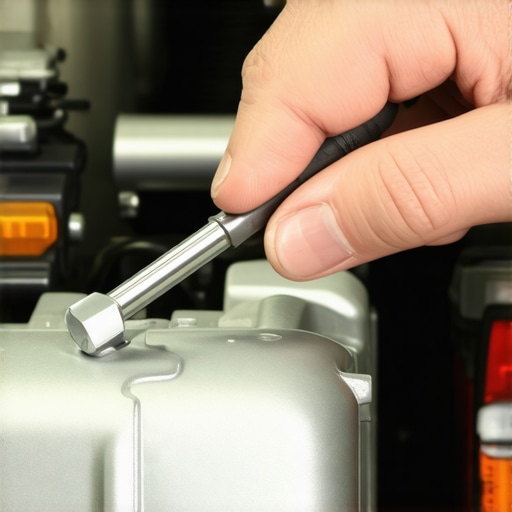
In a standard three-phase alternator, the voltage regulator energizes the rotor’s field coils via the brushes. This excitation creates a concentrated magnetic field that, when rotated, induces an AC current in the stator. By placing the tip of a steel screwdriver near the alternator’s pulley nut or the rear bearing housing while the ignition is in the run position, you can detect the presence of this magnetic pull. [image1] A strong, tactile attraction suggests the field circuit and brushes are likely intact. If the screwdriver remains indifferent to the housing, you have effectively narrowed the failure to the excitation path, potentially saving hours of labor. This method is a core component of top auto repair techniques every car owner should know, especially when digital multimeters are unavailable. Implementing such field diagnostics is a hallmark of professional car service in resource-constrained environments.
Can a Simple Screwdriver Truly Pinpoint Regulator Failure?
While the presence of magnetism confirms that current is reaching the rotor, it does not always indicate the quality or regulation of that current. An expert technician knows that a weak magnetic pull might signal high resistance in the brushes or a failing voltage regulator that is under-exciting the field. This nuances the diagnostic process, moving beyond a simple binary pass/fail. It is essential to integrate this finding with other symptoms, such as dimming dashboard lights or erratic transmission shifting, which often occurs when modern electronic transmissions receive inconsistent voltage. For a deeper dive into these complex interdependencies, explore the hidden world of vehicle diagnostics and how voltage fluctuations impact sensors. Recognizing these signs early can prevent issues like transmission failures from becoming a reality for your vehicle.
Execution Protocols and Advanced Field Safety
Executing this test requires professional precision to avoid injury or mechanical damage. One must avoid contact with the spinning serpentine belt or the cooling fan. The goal is to hover the metal shaft near the center of the alternator—the point of highest flux. If you experience no magnetism, the next diagnostic step involves checking the excitation fuse or the wiring harness for continuity. According to the Society of Automotive Engineers (SAE), charging system integrity is the foundation of all vehicle electronics, affecting everything from fuel injection to safety modules. If you have mastered this field test, you may want to compare your results against how to identify a dying alternator before your battery deserts you to ensure no secondary failures, like a blown diode, are lurking. Have you utilized this electromagnetic method to solve an intermittent charging issue on the fly? Contribute your professional observations to our community to help others refine their diagnostic skills.
Why a Magnetic Alternator Can Still Leave You Stranded
Passing the screwdriver magnetism test is an excellent first sign, but it is not a definitive bill of health for the entire charging system. An expert technician understands that the magnetic field only confirms the integrity of the rotor, brushes, and the initial excitation circuit. It does nothing to verify the health of the stator windings or the rectifier bridge’s diodes. If an internal diode has failed open or shorted, the alternator may still produce a magnetic pull while outputting significantly reduced amperage or, worse, leaking Alternating Current (AC) into your vehicle’s Direct Current (DC) system. This ‘AC ripple’ can wreak havoc on sensitive electronics, often masquerading as a failing sensor or a complex transmission glitch. To accurately diagnose these deeper electrical ghosts, using the $30 tool that lets you see inside your engine—specifically a basic OBDII reader with live data capabilities—can reveal voltage fluctuations that a physical test might miss.
Does Your Modern PCM Override This Manual Diagnostic Shortcut?
Technological shifts in late-model vehicles have introduced ‘Smart Charging’ systems, where the Powertrain Control Module (PCM) or Engine Control Unit (ECU) dictates exactly when and how much the alternator should charge. In these systems, the traditional magnetism test can deliver a ‘false negative.’ If the vehicle’s battery is already at a high state of charge, the PCM may de-energize the field circuit to reduce engine load and improve fuel economy. Testing an alternator in this state would result in zero magnetic pull, leading an amateur to incorrectly condemn a perfectly functional unit. Before assuming the hardware is at fault, experts must verify if the PCM is actually requesting a charge. This nuance is why modern auto repair requires a hybrid approach: combining old-school physical tests with digital verification. Professionals often refer to standards set by the National Institute for Automotive Service Excellence (ASE), which emphasizes the necessity of checking control signals before mechanical teardown.
Stop Blaming the Gearbox for Dirty Electrical Signals
One of the most overlooked consequences of a struggling alternator—even one that passes a magnetism test—is the impact on the Transmission Control Module (TCM). When the rectifier diodes fail and allow AC voltage into the system, the resulting electrical noise can interfere with the pulse-width modulation signals used to control shift solenoids. You might experience harsh shifts or a refusal to enter top gear, leading you to search for transmission troubles: how to save time and money with proven repairs. In reality, the transmission itself is often healthy; it is simply being ‘confused’ by the dirty power coming from the charging system. Always ensure your vehicle diagnostics include a thorough check of the alternator’s ground and output quality before committing to expensive gearbox work. If you suspect your charging system is causing phantom codes, try performing a ground drop test or check for how to find a parasitic battery drain with a $15 multimeter to rule out secondary wiring failures. Have you ever replaced a part only to find the real culprit was a simple loose ground? Share your most frustrating diagnostic story in the comments so we can all learn from those elusive ‘phantom’ failures.
Why Summer Heat Kills Your Alternator’s Magnetic Pull
Experienced technicians recognize that thermal saturation is the silent enemy of electromagnetic efficiency. When an engine bay reaches peak operating temperatures, the copper windings within the rotor experience increased electrical resistance. This physical reality follows the temperature coefficient of copper, where resistance rises approximately 0.4% per degree Celsius. Consequently, a field coil that produces a crisp, snapping magnetic pull on a cold morning might offer only a sluggish attraction after a long haul. This phenomenon is why vehicle diagnostics performed on a hot engine can sometimes lead to ‘no-fault-found’ conclusions if the technician doesn’t account for thermal drift. In high-performance auto repair, we often wait for the component to reach a stabilized temperature before declaring the field circuit healthy, ensuring the magnetic flux is sufficient to maintain amperage output under the heaviest electrical loads.
Can High Electrical Resistance Mimic a Total Field Circuit Failure?
Yes, particularly when dealing with localized oxidation on the alternator’s slip rings or carbon buildup on the brushes. If the resistance at the brush-to-slip-ring interface exceeds a few ohms, the current flow through the rotor drops significantly. You may still feel a faint magnetic pull with your screwdriver, but it won’t be enough to induce the necessary current in the stator to keep up with the vehicle’s demands. This is where a car service professional must distinguish between a ‘weak’ field and a ‘dead’ field. A weak field often points toward mechanical wear of the contact surfaces, whereas a dead field suggests an open circuit in the rotor or a hard failure in the regulator. If you are seeing erratic battery warnings but still feel some magnetism, it is time to inspect the physical wear indicators on the brush assembly before the system fails entirely.
Move Beyond the Screwdriver with Low-Amp Probes
While the screwdriver test is an elite field tactic, the true master of vehicle diagnostics eventually transitions to the low-amp current probe. By clamping a probe around the field supply wire, you can visualize the actual current—usually between 2 to 5 amps—flowing into the rotor. This allows you to see the pulse-width modulation (PWM) from the PCM in real-time.  This level of precision reveals ‘glitches’ in the magnetic field that a simple metal tool cannot detect. For instance, a partially shorted rotor winding might still create a magnetic field, but it will draw excessive current, eventually burning out the driver in the PCM. According to technical documentation from the Institute of Electrical and Electronics Engineers (IEEE), maintaining precise control over excitation current is vital for preventing electromagnetic interference in modern CAN-bus networks. If the magnetic field is ‘noisy,’ your transmission and engine sensors will pay the price in the form of phantom data packets and corrupted signals.
Protect Your TCM from High-Frequency Voltage Spikes
The relationship between the alternator’s magnetic health and the Transmission Control Module (TCM) is more intimate than most drivers realize. When an alternator’s magnetic field collapses rapidly—due to a failing regulator or a loose ground—it can generate a high-voltage back-EMF spike. These spikes are often short-lived but carry enough energy to pierce the protective diodes within the TCM. This is a common root cause for ‘limp mode’ conditions where the transmission locks into a single gear to protect itself. Ensuring your charging system has a clean, stable magnetic transition is as important as any mechanical fluid change. To prevent these catastrophic spikes, experts often recommend verifying the integrity of the alternator’s ‘snubber’ circuit if equipped. Have you invested in an entry-level oscilloscope yet to see these hidden spikes for yourself, or are you still relying solely on physical tactile tests? Integrating these advanced tools can save you from misdiagnosing a simple electrical surge as a multi-thousand dollar gearbox failure.
Why Modern High-Output Units Demand Faster Field Excitation
As vehicles integrate more power-hungry features like electric power steering (EPS) and heated windshields, the demand on the alternator has skyrocketed. A modern 220-amp unit must be able to ramp up its magnetic field strength in milliseconds to prevent a voltage dip when the EPS motor kicks in. This rapid response is controlled by high-frequency switching in the regulator. If the rotor’s magnetic permeability has degraded over time—a rare but possible scenario with inferior aftermarket parts—the alternator simply cannot react fast enough. You might notice your headlights flicker or your idle stumble momentarily. These tiny ‘voltage sags’ can be the precursor to a total system shutdown…
Cheap Rotors Cost More When Magnetic Hysteresis Fails
While the screwdriver test confirms basic excitation, it cannot measure the rate of magnetic decay—a critical factor in vehicle diagnostics for high-output systems. Cheap aftermarket alternators often use inferior soft iron cores that suffer from high magnetic hysteresis. This means the rotor retains residual magnetism longer than intended after the voltage regulator cuts power. In a high-demand scenario, this lag prevents the alternator from adjusting its output rapidly enough to protect sensitive transmission solenoids from over-voltage spikes. This is why professional auto repair specialists insist on OEM-grade components; a rotor that stays ‘too magnetic’ for even a few extra milliseconds can trigger a cascade of communication errors across the vehicle’s high-speed CAN-bus network.
Does Your Alternator Speak LIN-Bus?
Modern charging systems have evolved into a complex dialogue between the alternator and the Engine Control Module (ECM) via the Local Interconnect Network (LIN). When you perform a magnetic test on a vehicle built within the last decade, you aren’t just checking a coil; you are observing the physical result of a data packet.  If the LIN-bus signal is corrupted by electrical noise or a frayed wire, the regulator may never receive the command to ‘wake up’ the magnetic field. In these instances, car service becomes a matter of digital forensics rather than mechanical intuition. A technician must verify the square-wave signal with a scope to ensure the ECM is actually requesting field excitation, as a lack of magnetism is often a symptom of a ‘silent’ computer rather than a hardware failure.
Is a Phantom Parasitic Drain Just Residual Magnetism in Disguise?
Technicians often struggle with battery drains that seem to vanish and reappear. In rare expert-level cases, a regulator that ‘leaks’ a tiny amount of current into the field coil can maintain a faint magnetic pull even with the ignition off. This creates a parasitic draw that can flatten a battery overnight. If you suspect this, leave your screwdriver near the alternator housing after the vehicle has entered ‘sleep mode.’ Any tactile pull indicates the regulator is stuck in a partially ‘on’ state, a nuance often missed during standard vehicle diagnostics. According to technical documentation from Delphi Technologies, even a 0.5-amp leak in the field circuit is enough to compromise battery longevity and lead to early transmission control module malfunctions due to low-voltage start-up cycles.
Master the Case Ground Drop Test to Save Your TCM
A strong magnetic field is useless if the return path for that electricity is compromised. Many auto repair scenarios involve ‘ghost’ charging issues where the magnetism is present, but the output current is nowhere to be found. The culprit is frequently a high-resistance ground between the alternator case and the engine block. To diagnose this, measure the voltage drop between the alternator housing and the negative battery terminal while the engine is under load. Anything over 0.2 volts indicates a bottleneck. This resistance creates electrical ‘noise’ that back-feeds through the charging system, potentially scrambling the sensitive signals required for smooth transmission shifting. If you have ever felt a hard shift that disappeared after cleaning a battery cable, you have witnessed the intimate link between clean magnetism and gearbox health. Have you encountered a charging issue that traditional tools missed? Join our forum and share your most complex diagnostic triumphs to help the community stay ahead of evolving vehicle tech.
Expert Insights & Advanced Considerations
Why a Dead Diode Can Trick Your Magnetic Field Test
A rotor might pull a screwdriver with authority, yet the system can still fail to maintain battery voltage. If a diode in the rectifier bridge has failed open, you lose an entire phase of output. This creates an ‘electrical ripple’ that disrupts sensors. When performing vehicle diagnostics, always cross-reference your magnetism test with an AC voltage leak check at the battery terminals to ensure the conversion from AC to DC is clean. #IMAGE_PLACEHOLDER_E#
Thermal Saturation Changes the Diagnostic Game
Resistance in copper windings is not static; as the engine bay heats up, the field circuit’s efficiency naturally drops. If your charging issues only appear after thirty minutes of driving, the magnetism test should be performed while the component is at operating temperature. This is a critical step in professional auto repair that distinguishes intermittent heat-soak failures from hard electrical opens. Before assuming the worst, check your transmission fluid level without a dipstick to ensure fluid-related drag is not compounding the engine’s load.
Don’t Let Dirty Power Confuse Your Gearbox
Electronic transmissions are incredibly sensitive to voltage fluctuations. Before you assume you need a complex rebuild or start looking into why your car slips out of gear and the $18 spring that fixes it, verify the alternator’s ripple current. High-frequency noise from a failing regulator can mimic a harsh downshift clunk by interfering with solenoid pulse-width modulation signals.
Curated Expert Resources
SAE International Technical Papers provide the rigorous physics behind electromagnetic induction and are the absolute standard for understanding charging system architecture at the engineering level.
ASE Test Prep L1 Advanced Engine Performance materials offer practical diagnostic logic for troubleshooting the interaction between the PCM and the alternator in smart-charging systems.
Delphi Technologies Service Bulletins offer real-world case studies of component failures that often present as phantom electrical issues during a routine car service.
Final Expert Perspective
Mastering the physical properties of electromagnetism allows you to cut through the digital noise and identify the mechanical reality of a vehicle’s charging system. While the screwdriver magnetism test is an indispensable field tool, it must be integrated into a broader strategy of vehicle diagnostics that accounts for modern PCM logic and thermal variables. By verifying ground integrity and monitoring for AC ripple, you protect sensitive transmission controllers and extend the life of every electronic component in the car. Have you encountered an alternator that passed every physical test but still killed a battery? Share your diagnostic breakthroughs with our community to help others refine these advanced techniques.