The Invisible Barrier to Engine Harmony
Modern internal combustion engines rely on a razor-thin margin of error regarding the air-fuel ratio. At the heart of this calculation sits the Mass Air Flow (MAF) sensor, a component that operates on sophisticated thermal principles to inform the Engine Control Unit (ECU) of exactly how much air is entering the intake manifold. When this sensor becomes contaminated with oil vapor, dust, or particulate matter, the signal drifts, resulting in a rough idle that mimics much more expensive mechanical failures. For anyone serious about auto repair, understanding the nuance of sensor maintenance is far more effective than simply swapping parts. A failure to address this minute component can lead to cascading issues throughout the drivetrain, often being misdiagnosed as transmission hesitation or spark delivery failure.
Why does a dirty sensor cause your engine to stumble at red lights?
At idle, the engine requires the highest degree of precision because the total volume of air is minimal. A tiny layer of grime on the sensor’s platinum hot-wire acts as an insulator, slowing the cooling effect of the passing air. This causes the ECU to miscalculate the load, often leading to a lean condition where the engine starves for fuel. This phenomenon is a frequent culprit behind why you might need to stop your engine from dying at stoplights once the air-fuel balance is restored. According to technical standards established by SAE International, even a 5% deviation in MAF signal accuracy can significantly impact emissions and driveability, making it a priority in any comprehensive car service protocol.
Master the Decontamination Process Without Damaging Sensitive Electronics
Executing a proper MAF cleaning requires more than just a spray can; it requires a surgical approach to vehicle diagnostics. You must use a specialized solvent that leaves no residue. Traditional carburetor cleaners are far too aggressive and can dissolve the delicate plastic coatings on the sensor housing or damage the thermistor. Before you dive in, consider how this maintenance fits into your broader auto repair routine. Often, a fouled MAF sensor is the main reason your car hesitates when you step on the gas, as the sensor fails to react quickly enough to rapid throttle openings, leading to an immediate ‘bogging’ sensation that frustrates many drivers.
Identify the Hidden Signals of Sensor Degradation
Experienced technicians look for “fuel trim” data during vehicle diagnostics to confirm MAF issues before a fault code even triggers. If your long-term fuel trims are creeping into the positive double digits, the computer is constantly adding fuel to compensate for air it thinks isn’t there. This level of insight is part of the hidden world of vehicle diagnostics that separates amateur enthusiasts from professional-grade maintenance. While you are under the hood, it is also a prime time to verify that your air filter housing is sealed correctly, as unmetered air entering after the sensor will render even a perfectly clean MAF useless. Don’t let a simple sensor issue turn into a costly dealership visit; you can unlock your car’s potential with these expert auto repair tips to keep your vehicle running at peak efficiency throughout the year.
The Exhaust Feedback Loop and Your Fuel Budget
While the MAF sensor manages the intake side of the equation, the oxygen (O2) sensors govern the exhaust feedback loop, creating a closed-circuit system that constantly adjusts fuel delivery. This downstream data is crucial; when an O2 sensor becomes ‘lazy’—meaning its response time to exhaust gas changes slows down—the engine operates in an inefficient state for longer periods. This degradation often explains the real reason your gas mileage suddenly dropped, as the system defaults to a rich safety map to prevent lean-misfire damage. In a high-performance environment, these micro-adjustments happen dozens of times per second, and any lag in this communication chain creates a noticeable flat spot during acceleration that even novice drivers can feel through the pedal.
Can a faulty exhaust signal trick your transmission into shifting poorly?
Many drivers are surprised to learn that transmission shift points are not just based on vehicle speed and throttle position. The Transmission Control Module (TCM) relies heavily on the Calculated Load value generated by the ECU, which is derived from MAF and O2 sensor data. If these sensors provide skewed information, the TCM may perceive a higher load than actually exists, causing the gearbox to hold gears too long or hunt for the right ratio. This often results in the type of transmission failures decoded in technical manuals, where the actual mechanical components are healthy, but the electronic commands are fundamentally flawed. Before assuming a major mechanical failure, it is wise to address why your transmission shudders when cold and the 12 dollar solution that often remedies the electronic side of the equation without a teardown.

Cross-Count Metrics and the Death of the Oxygen Sensor
Technicians certified by the National Institute for Automotive Service Excellence (ASE) don’t just look for a Check Engine light; they monitor the cross-counts, which is the frequency at which the O2 sensor voltage swings between 0.1 and 0.9 volts. A healthy sensor should oscillate rapidly as it adjusts to changing conditions. If the waveform appears rounded or sluggish on a graph, the sensor is effectively poisoned by silica, lead, or carbon buildup. This is a critical step in professional car service because a lazy sensor can eventually lead to a clogged catalytic converter—a repair that costs thousands compared to a simple sensor replacement. If you are experiencing a rough idle after the vehicle has reached operating temperature, check the O2 sensor data, as it is often why your engine stumbles at red lights and the 14 dollar sensor fix might be all that is required.
Why You Should Trust Oscilloscopes Over Simple Code Readers
Generic OBD-II scanners often provide freeze frame data, which is merely a snapshot in time. However, to truly understand the hidden world of vehicle diagnostics, one needs to see the data in motion. An oscilloscope allows a mechanic to see the actual electrical signal as it happens, revealing micro-glitches that a standard scanner would smooth over. This level of scrutiny is how experts distinguish between a failing ignition coil and a lean-misfire caused by unmetered air. If you’ve found that your engine stumbles when you accelerate the 20 dollar spark fix might work, but only if the root cause isn’t a vacuum leak elsewhere. If you’re unsure whether your sensor readings are within spec, choosing the right car service ensures you don’t replace parts that are still functional. Feel free to share your own diagnostic challenges in the comments below or suggest a topic for our next deep dive into drivetrain health.
Why Your Fuel Injectors Might Be Lying to the ECU
While we often scrutinize sensors for intake errors, the physical delivery mechanism of fuel—the injector—is a frequent source of silent failure. Over thousands of cycles, microscopic deposits form on the injector pintle, disrupting the atomization pattern. Even if the computer commands a specific pulse width, a partially clogged injector cannot deliver the metered volume in the required micro-window. This leads to a cylinder-specific lean condition that fluctuates too rapidly for a standard car service scan tool to catch as a hard fault. According to engineering white papers from Bosch Mobility, modern gasoline direct injection (GDI) systems rely on pressures exceeding 200 bar to maintain engine stability; any deviation in injector seat integrity results in ‘drip’ issues that create a rich-spike at idle followed by a stumble. If you find yourself wondering why your fuel economy is tanking, it is worth investigating these high-pressure components before replacing more obvious sensors.
Find Invisible Leaks With a Professional Smoke Test
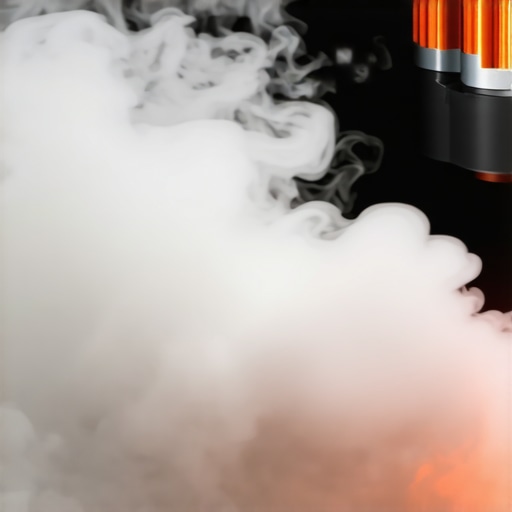
The most frustrating auto repair challenges often involve ‘unmetered air’—oxygen that enters the combustion chamber without passing the MAF sensor. A hairline crack in a plastic intake plenum or a degraded throttle body gasket can behave like a variable valve, opening only under specific thermal conditions. To solve this, professional vehicle diagnostics rely on EVAP smoke machines. By pressurizing the intake tract with specialized vapor, a technician can see exactly where the seal has failed. This is far more effective than the old-school method of spraying brake cleaner around the intake, which can be dangerous and inaccurate on complex modern manifolds. Identifying these leaks is a cornerstone of any high-level maintenance strategy and is often the final piece of the puzzle when solving a persistent lean code that refuses to clear.
Can a faulty knock sensor retard timing enough to cause a stalling condition?
Technically, a knock sensor’s primary job is to protect the engine from pre-ignition by signaling the ECU to retard spark timing. However, if the sensor fails or ‘ghosts’—detecting mechanical noise from a loose bracket as an actual knock—it can pull so much timing that the engine loses the torque required to maintain a smooth idle. In extreme cases of ‘false knock,’ the ignition timing becomes so retarded that the combustion event happens too late in the power stroke, causing the engine to bog down or stall when you come to a halt. This sophisticated diagnostic hurdle illustrates why auto repair requires a holistic view of the drivetrain; you aren’t just looking at fuel and air, but the precise timing of the explosion itself. If you’ve been chasing a mystery stumble, unlock your car’s potential with these expert auto repair tips to see how timing maps influence your daily drive.
Stop Blaming the Spark Plugs for VVT Phasing Issues
Variable Valve Timing (VVT) has revolutionized efficiency, but it has introduced a new failure point: the oil-controlled solenoid. These phasers use engine oil pressure to advance or retard the camshaft position. If the oil is dirty or of the wrong viscosity, the phasers may stick in the ‘advanced’ position intended for highway speeds when the vehicle returns to an idle. This mismatch creates an aggressive valve overlap that effectively chokes the engine at a stoplight. Many drivers mistake this mechanical timing lag for a ignition misfire and waste money on new plugs or coils. Understanding the relationship between oil quality and transmission shift quality is vital, as the TCM often alters its strategy based on how well the VVT system is performing under load. If your engine feels sluggish when warm, a simple oil system flush might be the remedy you’ve been looking for. What diagnostic hurdles have you encountered lately? Join our discussion in the comments below to share your experiences with complex sensor failures.
Intake Valve Carbon Crust is Stealing Your Airflow
While we have discussed the fragility of the sensors themselves, the physical path that air travels is just as critical. In modern Gasoline Direct Injection (GDI) engines, fuel is sprayed directly into the combustion chamber, bypassing the intake valves entirely. This lack of a ‘fuel wash’ means that oil vapors recirculated from the crankcase via the PCV system bake onto the hot intake valves, forming a thick, restrictive carbon crust. This buildup creates significant turbulence, disrupting the laminar airflow that the MAF sensor expects. Even if your sensor is perfectly clean, this physical obstruction causes the ECU to receive a ‘choppy’ signal, leading to the same rough idle and hesitation often blamed on transmission issues. Addressing this requires a specialized intake cleaning service or manual walnut blasting to restore the internal geometry of the intake tract.
The Silent Conflict Between MAF and MAP Sensors
Many high-performance vehicles utilize a dual-sensor strategy, employing both a Mass Air Flow (MAF) sensor and a Manifold Absolute Pressure (MAP) sensor to cross-reference data. The ECU uses a ‘Speed-Density’ calculation as a sanity check against the MAF signal. If a vacuum leak occurs specifically at the intake manifold gasket, the MAP sensor detects a drop in vacuum that the MAF sensor never sees. This discrepancy creates a logical conflict within the software, often resulting in a surging idle as the ECU desperately toggles between two different fuel maps. Mastering vehicle diagnostics means looking for these ‘rationality’ errors where sensors are functioning electrically but reporting contradictory physical realities. If you find your auto repair efforts hitting a wall, comparing these two data streams on a live graph is often the ‘eureka’ moment technicians need.
How much electrical ‘noise’ can your ECU actually handle?
Electronic sensors are only as accurate as the voltage reference they receive. A common, yet overlooked, failure point in complex car service cases is the engine ground strap. Because sensors like the Oxygen (O2) sensor operate on a scale of 0.1 to 0.9 volts, even a minor increase in electrical resistance due to a corroded ground can shift the entire signal range. This ‘floating ground’ makes the ECU believe the engine is running lean or rich when it is actually perfectly balanced. According to the technical archives at Delphi Technologies, grounding issues and electromagnetic interference (EMI) account for a significant percentage of misdiagnosed sensor failures. Always verify that your engine-to-chassis grounds are clean and tight before condemning a high-dollar electronic component.
Why You Must Reset Fuel Trims After Any Major Part Replacement
One of the most frequent mistakes in DIY auto repair is replacing a faulty sensor without resetting the ECU’s adaptive learning memory. Over time, the computer ‘learns’ the deficiencies of a failing MAF or O2 sensor and adjusts the Long-Term Fuel Trims (LTFT) to compensate. If you install a brand-new sensor but leave the old LTFT data in place, the engine will run poorly—or even stall—because the computer is applying old corrections to a new, accurate signal. Performing a Keep Alive Memory (KAM) reset forces the ECU to start its learning process from scratch, ensuring that the new part provides the immediate performance gain you expect. Don’t let a lingering software adaptation mask a successful mechanical fix. Have you ever replaced a part only to have the problem persist? Drop a comment below with your diagnostic ‘ghost’ stories and let’s figure out the solution together.
Expert Insights & Advanced Considerations
Clean Grounds Matter More Than New Sensors
Many technicians overlook the electrical foundation of the drivetrain. A sensor is only as accurate as its reference voltage, and a corroded engine ground strap can introduce enough resistance to shift a 0.5V signal into a range the ECU misinterprets as a lean condition. Before investing in expensive components, verifying the integrity of the electrical return path is a hallmark of elite auto repair. This is one of the top auto repair techniques every car owner should know to prevent unnecessary parts replacement.
Why Your Car Rejects New Parts
Installing a brand-new MAF or O2 sensor without clearing the Keep Alive Memory (KAM) often results in immediate driveability issues. The ECU has likely spent months adjusting Long-Term Fuel Trims to compensate for a failing sensor; applying those old ‘learned’ corrections to a new, accurate signal creates a temporary imbalance. A professional car service always includes a reset of these adaptive tables to ensure the engine starts its learning process from a clean slate. Ignoring this software step is why many DIY projects fail to resolve a rough idle immediately.
#IMAGE_PLACEHOLDER_E#
Direct Injection Kills Valves From the Inside
In the era of Gasoline Direct Injection (GDI), the traditional benefit of fuel cleaning the intake valves is gone. This leads to carbon crusting that physically blocks the airflow the sensors are trying to measure. If you’ve been chasing a mystery stumble, unlock your car’s potential with these expert auto repair tips regarding manual valve cleaning. Physical obstructions create turbulence that no electronic sensor can fully compensate for, making walnut blasting a necessary part of modern maintenance.
Curated Expert Resources
ASE Learning Hub
The National Institute for Automotive Service Excellence provides the gold standard for technical training. Their resources offer deep dives into the logic behind modern vehicle diagnostics and are essential for anyone looking to move beyond basic code reading.
Bosch Mobility Solutions
As the primary manufacturer of many OEM sensors and injection systems, Bosch offers white papers that explain the physics of atomization and sensor response times. Their data is invaluable for understanding why high-pressure systems are so sensitive to microscopic contaminants.
SAE International Technical Papers
For those who want to see the mathematics behind engine load calculations and fuel mapping, SAE is the ultimate source. Their archives contain the engineering standards that define how modern drivetrain modules communicate.
Final Expert Perspective
Mastering the intricacies of the modern engine requires shifting your focus from individual parts to the entire electronic ecosystem. Whether it is a lazy oxygen sensor, a carbon-clogged intake, or a software logic conflict, the goal of high-level auto repair is to restore the harmony of the air-fuel ratio. By looking past the surface-level fault codes and analyzing live data streams, you can uncover the true cause of performance degradation. If you are feeling overwhelmed by the complexity, choosing the right car service with advanced telemetry tools is the fastest way to get back on the road. We invite you to share your most difficult diagnostic success stories in the comments—what was the one hidden factor that finally solved your engine’s mystery?