The Volatile Reality of Modern Fuel Systems
Identifying the scent of raw gasoline immediately after a trip to the pump is more than a sensory nuisance; it is a critical diagnostic signal that your vehicle’s Evaporative Emission Control (EVAP) system has been compromised. In an era where vehicle engineering prioritizes closed-loop environmental integrity, any persistent fuel odor indicates a breach in the containment of hydrocarbons. From an expert perspective, this phenomenon often stems from the delicate balance between liquid fuel and vapor recovery, where a minor mechanical failure can lead to significant safety risks. Understanding the nuances of fuel expansion and vapor routing is essential for any high-level vehicle diagnostics session.
When the Charcoal Canister Overwhelms Your Cabin Air
The most frequent culprit behind post-fill gas smells is the saturation of the charcoal canister. This component is designed to trap fuel vapors, but it has a finite capacity. If you habitually “top off” your tank after the nozzle clicks, you risk forcing liquid gasoline into the vapor lines. This liquid contamination ruins the activated charcoal, preventing it from filtering fumes effectively. When performing a comprehensive car service, technicians often find that a flooded canister is the root cause of both the odor and erratic engine idling. Unlike a standard transmission failure, which manifests through mechanical slipping or gear hunting, EVAP issues are often silent until the “Check Engine” light illuminates. [image_placeholder_1] In many cases, a faulty purge valve—which acts as the gateway between the EVAP system and the engine intake—will stick open, allowing an unregulated flow of fuel vapors into the combustion chamber when the tank is full.
Why does the smell only appear after a full tank?
This timing is significant because a full tank leaves the least amount of “headspace” for vapors to expand. As the fuel warms up—even slightly—from the ground temperature, it expands. If the fuel tank pressure sensor or the vent valve is malfunctioning, the pressure has nowhere to go but out through micro-cracks in the filler neck or a perished gas cap seal. According to the Environmental Protection Agency (EPA), hydrocarbon emissions from fuel leaks contribute significantly to ground-level ozone, making this a repair that shouldn’t wait. Modern sensors are incredibly sensitive, and while you can pull engine fault codes using basic tools, professional smoke testing is often required to find the leak.
Mechanical Breaches in the Fuel Delivery Loop
Beyond the canister, professional auto repair experts look for leaks at the fuel pump’s lock ring. Over time, the rubber O-ring that seals the fuel pump assembly to the tank can dry rot or shift. When the tank is full, fuel sloshes against this seal, allowing liquid and vapor to escape directly into the chassis area, which then wafts into the cabin. If you’ve noticed that your gas mileage suddenly dropped along with the smell, a physical leak is highly probable. Addressing these failures early prevents the degradation of nearby rubber components and ensures the safety of all occupants. If you suspect a breach in your fuel system, do not delay a professional inspection. Contribute your own diagnostic experiences or ask our master technicians a question below.
Thermal Expansion and the Physics of Vapor Escape
Thermal expansion and the physics of vapor escape are the primary drivers behind intermittent fuel odors. When gasoline is stored in underground tanks, it remains at a relatively constant temperature of about 55 degrees Fahrenheit. However, during a summer fill-up, that fuel is introduced into a vehicle system that may be significantly warmer due to road heat and engine operation. This temperature differential causes the fuel to expand instantly, increasing the vapor pressure within the tank. If your vehicle’s vent solenoids are sluggish or the charcoal canister is partially restricted, they cannot compensate for this sudden spike in pressure. This is where you might find the hidden reason your engine is consuming oil or running lean—as the pressure imbalance forces the computer to over-correct the air-fuel mixture during the purge cycle. To unlock your car’s potential, every component in this pressurized loop must be airtight, from the fuel rail down to the tank seals, ensuring that the vapor management valve (VMV) can accurately meter fumes into the intake manifold without creating a vacuum leak.
Is that cheap gas cap the real reason your dash is lit up?
It is a common automotive myth that a gas cap only exists to keep debris out of the fuel. In reality, the cap is a sophisticated two-way relief valve. According to standards established by the National Highway Traffic Safety Administration (NHTSA), fuel system integrity is a primary safety requirement to prevent post-collision fires and environmental contamination. A cap that fails to maintain a specific pressure threshold will trigger a “Small EVAP Leak” code (often P0442 or P0456). While you can occasionally identify why your ABS light is on without a scan tool, EVAP leaks are notoriously difficult to pinpoint because the pressure loss is often intermittent. Replacing a worn-out seal for a few dollars can often save hundreds in diagnostic fees, but only if the seal is the actual point of failure. Expert technicians look for ‘necking’ on the filler pipe or corrosion on the sealing surface that prevents even a new cap from seating correctly.
Smoke Machines for Micro-Leak Detection
When visual inspections fail to reveal the source of a gas smell, master technicians turn to nitrogen-enriched smoke testing. This process involves pumping a thick, non-combustible smoke into the EVAP system at low pressure, typically between 0.5 and 1.5 PSI to avoid damaging sensitive sensors. Because the molecules in the smoke are larger than air molecules but small enough to penetrate pinhole leaks, they leave a visible residue—often highlighted by UV dye—at the site of the breach. 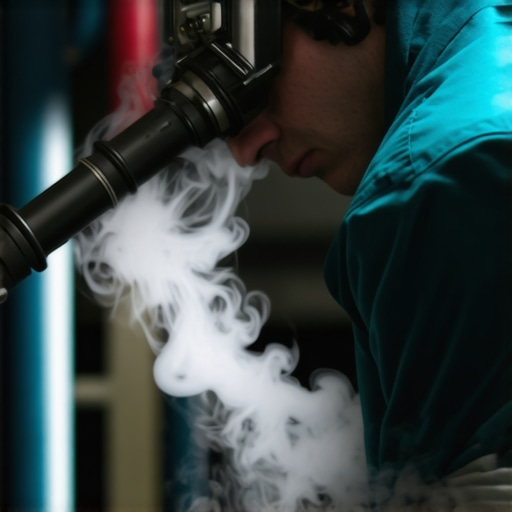 This level of precision is necessary because even a leak the size of a hair can cause a persistent smell after refueling. Just as you would learn how to test a coil pack with a simple spark plug tool to find a misfire, the smoke machine provides definitive proof of where the integrity of the fuel loop has failed. The complexity of these systems has increased with the introduction of 2025-2026 diagnostic standards, which now monitor “engine-off natural vacuum” (EONV). These systems run tests while the car is parked, meaning a small leak could lead to hard-start conditions the next morning. Have you experienced a check engine light immediately after a gas station visit? Share your story in the comments so our community can learn from your specific vehicle make and model.
When Corrosion Turns Your Filler Neck Into a Sieve
While many focus on the rubber seals, professional technicians in the “Rust Belt” know that the metal filler neck itself is a prime suspect for post-refueling odors. Over years of exposure to road salt and moisture trapped behind the fuel door, the thin-walled steel tubing can develop microscopic pinholes. These leaks are often too small to leak liquid fuel significantly, but as the fuel sloshes during a fill-up, the escaping vapors are immediately picked up by the cabin air intake located near the cowl. Upgrading to stainless steel or modern composite necks is often the only permanent fix, as patch repairs rarely hold up against the constant vibration and chemical stress of fuel exposure. This type of degradation is a common focus during high-level vehicle diagnostics for older daily drivers.
Why Your Hybrid Demands a Button to Open the Gas Flap
If you drive a Plug-in Hybrid (PHEV), you’ve likely noticed a distinct delay or a dedicated button required to unlock the fuel door. This isn’t a design quirk; it’s a necessity for high-pressure containment. Unlike traditional internal combustion engines that purge vapors frequently, PHEVs may go weeks without running the engine, leading to significant pressure buildup. The Tank Isolation Valve (TIV) keeps the system sealed under pressures that would burst a standard charcoal canister. #IMAGE_PLACE_HOLDER_C# If this valve fails, you might experience a “burp” of high-pressure vapor the moment the cap is loosened, creating an instant, overwhelming gasoline smell. According to the California Air Resources Board (CARB), these Partial Zero Emission Vehicle (PZEV) standards require the fuel system to remain hermetically sealed for extended periods, making the TIV a critical point of failure in modern eco-friendly fleets.
Can a faulty Fuel Tank Pressure Sensor (FTPS) mimic a vacuum leak?
The FTPS is the “eyes” of the EVAP system, reporting minute changes in inches of water column to the engine control unit (ECU). When this sensor develops an internal offset—meaning it reports atmospheric pressure as a vacuum or vice-versa—the engine computer may attempt to compensate by adjusting the fuel trim. This can lead to a rough idle that only occurs right after you’ve filled the tank, as the ECU struggles to interpret the influx of fresh vapors versus the incorrect sensor data. Diagnosing this requires a high-end scan tool to compare the FTPS reading against the Barometric Pressure sensor while the gas cap is off, a step often included in a comprehensive car service to prevent unnecessary parts replacement.
Cracked Sealant on the Fuel Pump Lock Ring
Another frequently overlooked expert fix involves the plastic lock rings found on many European and domestic SUVs. Over time, the plastic can warp or the sealant used during assembly can become brittle. When the tank is filled to the brim, the weight of the fuel can slightly deform the tank, opening a gap that is normally sealed when the fuel level is lower. This is why some owners only smell gas when the gauge reads over 3/4 full. If you’re seeing “fuel trim lean” codes alongside the smell, it’s time to pull the rear seat and inspect the top of the tank for “fuel staining”—a telltale yellow or brown residue left by evaporating gasoline. This issue is just as critical as addressing a transmission failure when it comes to long-term vehicle reliability.
Stop Liquid Fuel from Flooding Your Vent Lines
Tucked away in the upper reaches of the fuel tank assembly is the liquid-vapor separator. Its job is to ensure that only gaseous hydrocarbons reach the charcoal canister. However, if the float valve inside this separator becomes gummed up with varnish from low-quality fuel, it can allow raw liquid to enter the vent lines. This not only causes the familiar gas smell but can also lead to “slugging” where the engine stumbles as it tries to burn liquid fuel through the vacuum-operated purge line. Testing this requires a bypass test or a borescope inspection of the vent lines to look for liquid accumulation where there should only be air. Have you ever found a mysterious leak that only appeared on a full tank? Tell us about your diagnostic journey in the comments below.
Seasonal Volatility Blends Can Stress Aging Seals
The intricate dance between mechanical seals and chemical volatility reaches its peak during seasonal fuel transitions. As refineries switch between high-volatility winter blends and low-volatility summer mixtures, your EVAP system faces varying pressure loads that can expose latent weaknesses. Winter-blend gasoline, designed to vaporize more easily in cold temperatures, exerts higher Reid Vapor Pressure (RVP). If your vehicle is operating with a borderline charcoal canister or a slightly degraded fuel tank pressure sensor, the transition to a high-volatility fuel can cause a surge in vapor production that the system simply cannot vent fast enough. This pressure spike often forces fumes through the smallest path of least resistance, such as the charcoal canister’s fresh air vent, resulting in that pungent gasoline aroma immediately after filling up. This chemical nuance is a critical consideration during high-level vehicle diagnostics.
How do seasonal fuel blends impact your EVAP integrity?
When the RVP of your fuel is mismatched with the ambient temperature, the rate of evaporation within the tank accelerates. According to the Society of Automotive Engineers (SAE), the management of these vapors requires a perfectly calibrated purge flow to prevent the charcoal from becoming saturated. If the fuel is too volatile for the current weather conditions, the canister reaches its breakthrough point prematurely, allowing raw hydrocarbons to escape. This is not just an environmental concern; it can lead to rich-running conditions and fouled spark plugs if the engine draws in these concentrated fumes during a purge cycle. Professional car service should always include a check of the purge volume to ensure the computer is managing these seasonal shifts correctly.
Inspect the Canister Vent Solenoid for Environmental Clogging
While most owners focus on the gas cap, master technicians look toward the Canister Vent Solenoid (CVS). Positioned near the fuel tank and often exposed to the elements, this component is the only part of the EVAP system that regularly breathes in outside air. In regions with heavy dust or road salt, the internal filter or the plunger itself can become restricted. 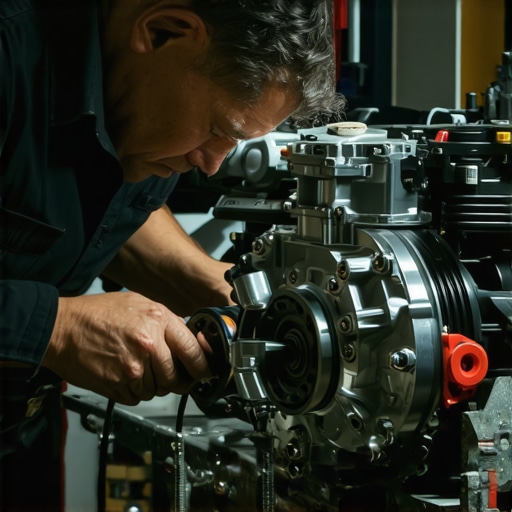 When the CVS sticks in a partially open position, it creates a constant leak path. Conversely, if it sticks closed, the fuel tank cannot “inhale” as fuel is consumed, leading to a vacuum that can actually collapse the fuel tank or cause the fuel pump to fail prematurely. If you have recently dealt with transmission failures or other major repairs, the vibration and movement of the subframe during those jobs can sometimes disturb the fragile plastic vent lines connected to the CVS, leading to new leaks.
The Critical Role of the Fuel Rail Pulse Dampener
In high-pressure fuel delivery systems, the fuel rail pulse dampener serves to smooth out the pressure waves created by the opening and closing of the fuel injectors. Over time, the internal diaphragm of this dampener can rupture. While it may not leak enough to cause a fire, it can allow fuel vapors to escape directly into the engine bay. Because this component is located so close to the cabin’s fresh air intake, the smell is often mistaken for a leak at the tank. If your gas mileage suddenly dropped and you smell fuel under the hood, this dampener is a primary suspect. Modern auto repair involves using a vacuum pump to test the integrity of these diaphragms. Ensuring every O-ring and dampener is seated perfectly is how you unlock your car’s potential for long-term reliability. Are you seeing a specific P-code like P0440 or P0455? Post your code below and our master technicians will help you decode the most likely culprit.
The Volatile Reality of Modern Fuel Systems
Identifying the scent of raw gasoline immediately after a trip to the pump is more than a sensory nuisance; it is a critical diagnostic signal that your vehicle’s Evaporative Emission Control (EVAP) system has been compromised. In an era where vehicle engineering prioritizes closed-loop environmental integrity, any persistent fuel odor indicates a breach in the containment of hydrocarbons. From an expert perspective, this phenomenon often stems from the delicate balance between liquid fuel and vapor recovery, where a minor mechanical failure can lead to significant safety risks. Understanding the nuances of fuel expansion and vapor routing is essential for any high-level vehicle diagnostics session.
When the Charcoal Canister Overwhelms Your Cabin Air
The most frequent culprit behind post-fill gas smells is the saturation of the charcoal canister. This component is designed to trap fuel vapors, but it has a finite capacity. If you habitually “top off” your tank after the nozzle clicks, you risk forcing liquid gasoline into the vapor lines. This liquid contamination ruins the activated charcoal, preventing it from filtering fumes effectively. When performing a comprehensive car service, technicians often find that a flooded canister is the root cause of both the odor and erratic engine idling. Unlike a standard transmission failure, which manifests through mechanical slipping or gear hunting, EVAP issues are often silent until the “Check Engine” light illuminates. In many cases, a faulty purge valve—which acts as the gateway between the EVAP system and the engine intake—will stick open, allowing an unregulated flow of fuel vapors into the combustion chamber when the tank is full.
Why does the smell only appear after a full tank?
This timing is significant because a full tank leaves the least amount of “headspace” for vapors to expand. As the fuel warms up—even slightly—from the ground temperature, it expands. If the fuel tank pressure sensor or the vent valve is malfunctioning, the pressure has nowhere to go but out through micro-cracks in the filler neck or a perished gas cap seal. According to the Environmental Protection Agency (EPA), hydrocarbon emissions from fuel leaks contribute significantly to ground-level ozone, making this a repair that shouldn’t wait. Modern sensors are incredibly sensitive, and while you can pull engine fault codes using basic tools, professional smoke testing is often required to find the leak.
Mechanical Breaches in the Fuel Delivery Loop
Beyond the canister, professional auto repair experts look for leaks at the fuel pump’s lock ring. Over time, the rubber O-ring that seals the fuel pump assembly to the tank can dry rot or shift. When the tank is full, fuel sloshes against this seal, allowing liquid and vapor to escape directly into the chassis area, which then wafts into the cabin. If you’ve noticed that your gas mileage suddenly dropped along with the smell, a physical leak is highly probable. Addressing these failures early prevents the degradation of nearby rubber components and ensures the safety of all occupants. If you suspect a breach in your fuel system, do not delay a professional inspection. Contribute your own diagnostic experiences or ask our master technicians a question below.
Thermal Expansion and the Physics of Vapor Escape
Thermal expansion and the physics of vapor escape are the primary drivers behind intermittent fuel odors. When gasoline is stored in underground tanks, it remains at a relatively constant temperature of about 55 degrees Fahrenheit. However, during a summer fill-up, that fuel is introduced into a vehicle system that may be significantly warmer due to road heat and engine operation. This temperature differential causes the fuel to expand instantly, increasing the vapor pressure within the tank. If your vehicle’s vent solenoids are sluggish or the charcoal canister is partially restricted, they cannot compensate for this sudden spike in pressure. This is where you might find the hidden reason your engine is consuming oil or running lean—as the pressure imbalance forces the computer to over-correct the air-fuel mixture during the purge cycle. To unlock your car’s potential, every component in this pressurized loop must be airtight, from the fuel rail down to the tank seals, ensuring that the vapor management valve (VMV) can accurately meter fumes into the intake manifold without creating a vacuum leak.
Is that cheap gas cap the real reason your dash is lit up?
It is a common automotive myth that a gas cap only exists to keep debris out of the fuel. In reality, the cap is a sophisticated two-way relief valve. According to standards established by the National Highway Traffic Safety Administration (NHTSA), fuel system integrity is a primary safety requirement to prevent post-collision fires and environmental contamination. A cap that fails to maintain a specific pressure threshold will trigger a “Small EVAP Leak” code (often P0442 or P0456). While you can occasionally identify why your ABS light is on without a scan tool, EVAP leaks are notoriously difficult to pinpoint because the pressure loss is often intermittent. Replacing a worn-out seal for a few dollars can often save hundreds in diagnostic fees, but only if the seal is the actual point of failure. Expert technicians look for ‘necking’ on the filler pipe or corrosion on the sealing surface that prevents even a new cap from seating correctly.
Smoke Machines for Micro-Leak Detection
When visual inspections fail to reveal the source of a gas smell, master technicians turn to nitrogen-enriched smoke testing. This process involves pumping a thick, non-combustible smoke into the EVAP system at low pressure, typically between 0.5 and 1.5 PSI to avoid damaging sensitive sensors. Because the molecules in the smoke are larger than air molecules but small enough to penetrate pinhole leaks, they leave a visible residue—often highlighted by UV dye—at the site of the breach. This level of precision is necessary because even a leak the size of a hair can cause a persistent smell after refueling. Just as you would learn how to test a coil pack with a simple spark plug tool to find a misfire, the smoke machine provides definitive proof of where the integrity of the fuel loop has failed. The complexity of these systems has increased with the introduction of 2025-2026 diagnostic standards, which now monitor “engine-off natural vacuum” (EONV). These systems run tests while the car is parked, meaning a small leak could lead to hard-start conditions the next morning. Have you experienced a check engine light immediately after a gas station visit? Share your story in the comments so our community can learn from your specific vehicle make and model.
When Corrosion Turns Your Filler Neck Into a Sieve
While many focus on the rubber seals, professional technicians in the “Rust Belt” know that the metal filler neck itself is a prime suspect for post-refueling odors. Over years of exposure to road salt and moisture trapped behind the fuel door, the thin-walled steel tubing can develop microscopic pinholes. These leaks are often too small to leak liquid fuel significantly, but as the fuel sloshes during a fill-up, the escaping vapors are immediately picked up by the cabin air intake located near the cowl. Upgrading to stainless steel or modern composite necks is often the only permanent fix, as patch repairs rarely hold up against the constant vibration and chemical stress of fuel exposure. This type of degradation is a common focus during high-level vehicle diagnostics for older daily drivers.
Why Your Hybrid Demands a Button to Open the Gas Flap
If you drive a Plug-in Hybrid (PHEV), you’ve likely noticed a distinct delay or a dedicated button required to unlock the fuel door. This isn’t a design quirk; it’s a necessity for high-pressure containment. Unlike traditional internal combustion engines that purge vapors frequently, PHEVs may go weeks without running the engine, leading to significant pressure buildup. The Tank Isolation Valve (TIV) keeps the system sealed under pressures that would burst a standard charcoal canister. If this valve fails, you might experience a “burp” of high-pressure vapor the moment the cap is loosened, creating an instant, overwhelming gasoline smell. According to the California Air Resources Board (CARB), these Partial Zero Emission Vehicle (PZEV) standards require the fuel system to remain hermetically sealed for extended periods, making the TIV a critical point of failure in modern eco-friendly fleets.
Can a faulty Fuel Tank Pressure Sensor (FTPS) mimic a vacuum leak?
The FTPS is the “eyes” of the EVAP system, reporting minute changes in inches of water column to the engine control unit (ECU). When this sensor develops an internal offset—meaning it reports atmospheric pressure as a vacuum or vice-versa—the engine computer may attempt to compensate by adjusting the fuel trim. This can lead to a rough idle that only occurs right after you’ve filled the tank, as the ECU struggles to interpret the influx of fresh vapors versus the incorrect sensor data. Diagnosing this requires a high-end scan tool to compare the FTPS reading against the Barometric Pressure sensor while the gas cap is off, a step often included in a comprehensive car service to prevent unnecessary parts replacement.
Cracked Sealant on the Fuel Pump Lock Ring
Another frequently overlooked expert fix involves the plastic lock rings found on many European and domestic SUVs. Over time, the plastic can warp or the sealant used during assembly can become brittle. When the tank is filled to the brim, the weight of the fuel can slightly deform the tank, opening a gap that is normally sealed when the fuel level is lower. This is why some owners only smell gas when the gauge reads over 3/4 full. If you’re seeing “fuel trim lean” codes alongside the smell, it’s time to pull the rear seat and inspect the top of the tank for “fuel staining”—a telltale yellow or brown residue left by evaporating gasoline. This issue is just as critical as addressing a transmission failure when it comes to long-term vehicle reliability.
Stop Liquid Fuel from Flooding Your Vent Lines
Tucked away in the upper reaches of the fuel tank assembly is the liquid-vapor separator. Its job is to ensure that only gaseous hydrocarbons reach the charcoal canister. However, if the float valve inside this separator becomes gummed up with varnish from low-quality fuel, it can allow raw liquid to enter the vent lines. This not only causes the familiar gas smell but can also lead to “slugging” where the engine stumbles as it tries to burn liquid fuel through the vacuum-operated purge line. Testing this requires a bypass test or a borescope inspection of the vent lines to look for liquid accumulation where there should only be air. Have you ever found a mysterious leak that only appeared on a full tank? Tell us about your diagnostic journey in the comments below.
Seasonal Volatility Blends Can Stress Aging Seals
The intricate dance between mechanical seals and chemical volatility reaches its peak during seasonal fuel transitions. As refineries switch between high-volatility winter blends and low-volatility summer mixtures, your EVAP system faces varying pressure loads that can expose latent weaknesses. Winter-blend gasoline, designed to vaporize more easily in cold temperatures, exerts higher Reid Vapor Pressure (RVP). If your vehicle is operating with a borderline charcoal canister or a slightly degraded fuel tank pressure sensor, the transition to a high-volatility fuel can cause a surge in vapor production that the system simply cannot vent fast enough. This pressure spike often forces fumes through the smallest path of least resistance, such as the charcoal canister’s fresh air vent, resulting in that pungent gasoline aroma immediately after filling up. This chemical nuance is a critical consideration during high-level vehicle diagnostics.
How do seasonal fuel blends impact your EVAP integrity?
When the RVP of your fuel is mismatched with the ambient temperature, the rate of evaporation within the tank accelerates. According to the Society of Automotive Engineers (SAE), the management of these vapors requires a perfectly calibrated purge flow to prevent the charcoal from becoming saturated. If the fuel is too volatile for the current weather conditions, the canister reaches its breakthrough point prematurely, allowing raw hydrocarbons to escape. This is not just an environmental concern; it can lead to rich-running conditions and fouled spark plugs if the engine draws in these concentrated fumes during a purge cycle. Professional car service should always include a check of the purge volume to ensure the computer is managing these seasonal shifts correctly.
Inspect the Canister Vent Solenoid for Environmental Clogging
While most owners focus on the gas cap, master technicians look toward the Canister Vent Solenoid (CVS). Positioned near the fuel tank and often exposed to the elements, this component is the only part of the EVAP system that regularly breathes in outside air. In regions with heavy dust or road salt, the internal filter or the plunger itself can become restricted. When the CVS sticks in a partially open position, it creates a constant leak path. Conversely, if it sticks closed, the fuel tank cannot “inhale” as fuel is consumed, leading to a vacuum that can actually collapse the fuel tank or cause the fuel pump to fail prematurely. If you have recently dealt with transmission failures or other major repairs, the vibration and movement of the subframe during those jobs can sometimes disturb the fragile plastic vent lines connected to the CVS, leading to new leaks.
The Critical Role of the Fuel Rail Pulse Dampener
In high-pressure fuel delivery systems, the fuel rail pulse dampener serves to smooth out the pressure waves created by the opening and closing of the fuel injectors. Over time, the internal diaphragm of this dampener can rupture. While it may not leak enough to cause a fire, it can allow fuel vapors to escape directly into the engine bay. Because this component is located so close to the cabin’s fresh air intake, the smell is often mistaken for a leak at the tank. If your gas mileage suddenly dropped and you smell fuel under the hood, this dampener is a primary suspect. Modern auto repair involves using a vacuum pump to test the integrity of these diaphragms. Ensuring every O-ring and dampener is seated perfectly is how you unlock your car’s potential for long-term reliability. Are you seeing a specific P-code like P0440 or P0455? Post your code below and our master technicians will help you decode the most likely culprit.
Expert Insights for Precision Maintenance
Fuel Temperature Swings Disrupt Vapor Equilibrium
When you encounter a gas smell after refueling, it is often a symptom of the system being unable to manage the rapid expansion of cool underground fuel hitting a warm tank. Technicians specializing in vehicle diagnostics focus on the fuel tank pressure sensor’s ability to report these changes instantly to the ECU.
Pressurized Hybrid Systems Demand Unique Protocols
For PHEV owners, a gas smell indicates a potential failure in the isolation valves designed to hold pressure for extended periods. Addressing these specific components is the only way to unlock your car’s potential and maintain its emissions status.
Nitrogen Smoke Testing Locates Invisible Faults
Standard visual checks miss 90% of EVAP micro-leaks. Implementing nitrogen smoke testing is one of the most effective auto repair techniques for finding pinholes in the filler neck or brittle pump seals before they trigger a major fault code. #IMAGE_PLACEHOLDER_CONCLUSION#
Reliable Technical Reference Materials
NHTSA Fuel System Safety Standards: The definitive guide for understanding the engineering requirements for fuel containment and fire prevention.
EPA Emissions Compliance Portal: Detailed documentation on how hydrocarbon leaks impact air quality and the legal requirements for vehicle manufacturers.
SAE International Technical Resource: High-level engineering papers focusing on the management of Reid Vapor Pressure and fuel volatility.
CARB LEV III Regulations: A deep dive into the Partial Zero Emission Vehicle standards that dictate modern hybrid fuel system design.
Concluding Professional Assessment
Understanding the root causes of a gas smell after refueling—from charcoal canister saturation to seasonal fuel volatility—is critical for long-term vehicle health. Neglecting these signals can lead to larger mechanical burdens, including engine stumbling or even transmission failures caused by improper engine load management. If you are struggling to pinpoint a persistent odor, we invite you to contact us or consult with a master technician to ensure your fuel system remains secure and your driving experience stays safe.