The Digital Insomnia Draining Your Cars Energy
As diagnostic complexity scales, the antiquated ‘parts cannon’ approach—replacing a battery simply because it is depleted—fails to address the systemic root causes of morning voltage drops. When a vehicle requires a jump-start despite having a fresh power cell, the issue rarely lies within the lead-acid plates themselves but rather within the intricate web of the Controller Area Network (CAN bus). Modern vehicle diagnostics reveal that today’s cars are never truly ‘off’; they exist in a state of digital hibernation that, if interrupted, can drain even the highest-capacity AGM battery in hours. This phenomenon, often referred to as parasitic draw, occurs when a specific control module fails to enter its low-power sleep state after the ignition is killed, keeping the electrical system in a state of heightened readiness that consumes significant amperage.
Why Modern Modules Refuse to Enter Sleep Mode
The primary culprit in chronic battery depletion is the failure of the vehicle’s internal network to shut down properly. While a standard vehicle should pull fewer than 50 milliamperes when parked, a ‘stuck’ module can keep the entire electrical bus active. This often happens when a sensor or relay fails to send a final ‘handshake’ signal to the Body Control Module. Before you assume the worst about your charging system, you should identify a dying alternator to rule out mechanical charging failures. However, more often than not, the hardware is functionally sound—the software is simply locked in an active state. According to research from the Society of Automotive Engineers (SAE), power management failures are increasingly linked to the proliferation of aftermarket electronics and complex networking protocols that conflict with factory power-down sequences.
Hunt Down Invisible Amperage with Professional Precision
To solve this mystery, a systematic diagnostic approach is required. You cannot rely on guesswork or visual inspections of the terminal connections. Utilizing a high-quality multimeter to perform voltage drop tests across fuses is the gold standard for auto repair professionals. By measuring the minute millivolt drop across a fuse without removing it, technicians can pinpoint exactly which circuit is consuming current. If you have the technical inclination and basic tools, you can learn how to find a parasitic battery drain yourself, which can prevent the cycle of repetitive battery replacements and expensive shop labor. [image placeholder]
Can a Faulty Transmission Controller Kill Your Battery?
It is a frequent point of confusion in expert forums why a gearbox issue would affect a battery overnight. The reality is that the Transmission Control Module (TCM) is a major node on the vehicle’s communication network. If the TCM fails to communicate its final park position or gear state to the primary processor, the vehicle remains in a ‘ready’ mode, anticipating a drive cycle. This intersection of transmission failures and electrical depletion highlights the need for holistic car service. If your vehicle is exhibiting odd shift patterns alongside a dead battery, the two symptoms are likely linked by a unified electronic communication fault. Ensuring that every module—from the engine to the transmission—is healthy is the only way to guarantee morning reliability.
If you are struggling with complex electrical gremlins that defy traditional fixes, you should unlock your car’s potential by exploring our advanced maintenance insights for the coming year. Understanding the logic behind your car’s electrical architecture is the first step in moving from frustration to true mechanical mastery.
Thermal Stress and the Hot Start Mystery
Thermal variables often mask underlying electrical degradation, creating a scenario where a car starts perfectly at dawn but fails outside a grocery store twenty minutes later. This frustrating inconsistency is rarely a sign of a dead battery. Instead, it often points toward the phenomenon known as heat soak, where the radiant heat from the engine increases the internal resistance of the starter motor’s copper windings and the solenoid. When this occurs, a battery that seemed healthy in the morning can no longer push enough amperage through the ‘hot’ and highly resistant starter circuit. To address this, many drivers look for the simple reason your car won’t start only when the engine is hot, realizing that the solution is often found in the physics of conductivity rather than the chemical health of the battery plates.
Is Your Starter Solenoid Secretly Suffering from Thermal Heat Soak?
From an expert diagnostic perspective, a starter that ‘drags’ when the engine is at operating temperature is a textbook indicator of an aging solenoid or a degraded relay. As components age, the mechanical tolerances inside the starter assembly tighten under heat expansion, requiring significantly more torque to turn the flywheel. If you find yourself stranded in a parking lot waiting for the engine to cool down before it will crank, you might be able to fix the intermittent start struggle with this $12 starter relay hack. This approach bypasses high-resistance factory wiring that has become brittle over time, ensuring the solenoid receives a full 12-volt signal regardless of engine temperature. Technical bulletins from the Automotive Service Association (ASA) emphasize that over 25% of intermittent starting issues in high-mileage vehicles are actually failures of high-resistance junctions rather than the primary starter motor itself.
Stop Chasing Shadows and Check Your Grounding Straps
Professional diagnostics require looking beyond the positive terminal. The chassis ground is the unsung hero of the modern electrical system, yet it is frequently the first point of failure in environments prone to corrosion. A loose or oxidized grounding strap creates a ‘floating ground’ scenario where control modules behave erratically because they lack a stable reference voltage. This can lead to ghost codes in the ECU, flickering lights, or even sensor errors that disappear and reappear without warning. For those tired of guessing which component to replace next, using the $5 tool for finding electrical shorts in minutes can save hundreds in unnecessary shop fees. By performing a simple voltage drop test between the engine block and the negative battery terminal, you can instantly verify the integrity of your vehicle’s return path. 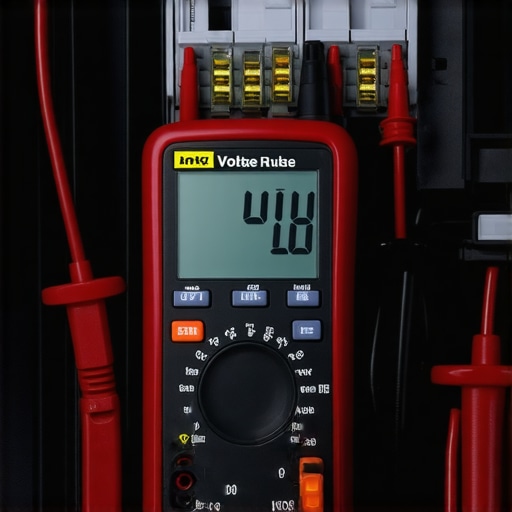
Beyond the primary power circuits, small environmental factors can drastically affect the vehicle’s idle and power consumption. A common oversight is a dirty sensor that forces the ECU to compensate by over-working the fuel pump or ignition system. For instance, learning how to clean your mass air flow sensor to fix a rough idle is a proactive way to ensure your engine management system isn’t straining to maintain stability. If these advanced DIY steps feel overwhelming or the gremlin persists despite your best efforts, do not hesitate to contact us for a professional diagnostic consultation. Expert intervention is often the most cost-effective path when dealing with the high-speed multiplexed networks found in modern vehicles.
Why Your Battery Management System Needs a Digital Reset
In the era of high-efficiency vehicles, replacing a battery is no longer a simple mechanical swap but a software-intensive procedure. Modern vehicles equipped with a Battery Management System (BMS) track the age, state of charge, and internal resistance of the power cell to adjust the alternator’s output. When you install a fresh battery without performing a ‘battery registration’ via a diagnostic scan tool, the vehicle continues to use the aggressive charging profile intended for a degraded unit. This oversight often results in the premature death of the new battery, as the alternator overcharges it, leading to excessive heat and plate warping. According to technical documentation from Hella Tech World, failing to reset the BMS can reduce the lifespan of an AGM battery by up to 50% within the first year of service. This illustrates that the intersection of software and hardware is where most modern reliability issues originate.

Will a Weak Battery Actually Trigger False Transmission Limp Mode?
It is a common diagnostic nightmare: a vehicle enters ‘limp mode’ with a plethora of transmission solenoid codes, yet the gearbox itself is mechanically perfect. This happens because the Transmission Control Module (TCM) is incredibly sensitive to voltage fluctuations. During a cold start, if a weak battery allows the system voltage to dip below a critical threshold—typically around 9.6 volts—the TCM may fail to initialize correctly or may lose its adaptation values. The resulting ‘U’ prefix communication codes or ‘P’ prefix solenoid performance codes are often ‘ghost codes’ triggered by the lack of stable power rather than a mechanical failure. Before you authorize an expensive gearbox teardown, ensuring your resting voltage and cranking capacity are within peak specifications is a mandatory first step in professional vehicle diagnostics.
Smart Alternators and the Illusion of a Charging Failure
Traditional charging systems maintained a steady 14.2 to 14.7 volts whenever the engine was running, but those days are long gone. Modern ‘smart’ alternators are controlled by the engine ECU via a Local Interconnect Network (LIN) bus to reduce parasitic drag and improve fuel economy. You might notice your voltmeter dropping to 12.6 volts while cruising—a reading that would traditionally indicate a failure. However, the system is likely just ‘shedding load’ to save fuel, only ramping up to 15 volts during deceleration to capture kinetic energy. This sophisticated behavior requires a higher level of expertise to diagnose; if you suspect your system is erratic, you can identify a dying alternator by observing if the voltage fails to respond to increased electrical loads like the rear defroster or high beams. If the voltage remains stagnant despite these loads, the LIN-bus communication or the voltage regulator itself is likely compromised.
Shielding Sensitive Circuits from Electromagnetic Interference
As we pack more computing power into the engine bay, electromagnetic interference (EMI) has become a silent disruptor of vehicle stability. High-voltage ignition components or poorly routed aftermarket wiring can leak ‘noise’ into the low-voltage sensor lines that the ECU relies on for timing and fuel trim adjustments. This noise can manifest as a subtle misfire or a ‘hunting’ idle that traditional mechanical checks cannot explain. Professional technicians use an oscilloscope to ‘see’ this noise on the signal wire. If your vehicle is experiencing erratic sensor behavior, it may be time to contact us for a deep-dive electrical analysis. Often, the solution isn’t a new sensor, but rather restoring the integrity of the factory shielding or cleaning a corroded ground that has turned into a primitive antenna for electrical interference.
Stop Voltage Spikes from Shattering Your Module Logic
While parasitic draw is the slow killer of batteries, transient voltage spikes are the executioners of expensive control modules. In a perfectly functioning system, the battery acts as a massive capacitor, dampening sudden surges from the alternator. However, if a terminal is loose or a grounding strap is frayed, the system loses this buffering capacity. This results in load dump scenarios where the voltage can momentarily jump to 40 or 60 volts, far exceeding the 18-volt tolerance of most automotive semiconductors. These spikes don’t always cause immediate failure; instead, they cause latent damage to the logic gates within the ECU, leading to intermittent ‘no-communication’ errors that leave most technicians scratching their heads. Modern vehicle diagnostics must therefore include peak-hold voltage testing to capture these micro-second events before they turn a functional module into a paperweight.
Can a Failing 12V Battery Cripple Your Hybrid Propulsion System?
A common misconception among hybrid and electric vehicle (EV) owners is that the massive high-voltage traction pack handles all vehicle operations. In reality, the humble 12V lead-acid or AGM battery remains the ‘gatekeeper’ of the entire system. This auxiliary battery powers the relays, or contactors, that physically connect the high-voltage pack to the inverter. If the 12V battery’s resting voltage drops below a specific threshold, these contactors will not engage, effectively ‘bricking’ the car despite a fully charged main battery. Research published by the Institute of Electrical and Electronics Engineers (IEEE) highlights that as vehicle architectures transition to more complex zonal controllers, the stability of the low-voltage rail becomes even more critical for safety-critical systems like regenerative braking and power steering. Ensuring your auxiliary battery is in peak condition is the only way to guarantee your high-tech hybrid actually wakes up when you press the start button.

Combat Capillary Corrosion Hiding in Your Fuse Box
Experienced diagnostic specialists know that the most difficult electrical faults aren’t found in the wires themselves, but at the junctions. A phenomenon known as capillary action can draw moisture into the protective shielding of a wiring harness, eventually depositing it directly into the underside of a sealed fuse box. This creates high-impedance bridging between pins that should be isolated. This moisture-induced bridge allows a tiny amount of current—too little to blow a fuse, but enough to wake up a CAN-bus module—to flow continuously. If you’ve checked every obvious drain and your battery still dies, you should learn how to find a parasitic battery drain by focusing on the junction blocks and looking for the tell-tale green crust of copper oxide. Ignoring these hidden paths of least resistance often leads to the ‘parts cannon’ failure where a technician replaces a module that was simply being fed ‘dirty’ power from a compromised fuse block.
The Critical Role of Electrolytic Longevity in Aging ECUs
As vehicles age past the ten-year mark, we begin to see a rise in ‘ghost’ electrical issues caused by the degradation of electrolytic capacitors inside the vehicle’s computers. These components are designed to smooth out power delivery to the microprocessor, but they have a finite lifespan. When they leak or lose their capacitance, the resulting ‘ripple’ in the internal power supply causes the processor to reboot or hang, often appearing like a dead battery or a failed starter. This is why a holistic approach to transmission failures or engine management issues must consider the age of the electronics themselves. If your vehicle exhibits erratic behavior only after it has warmed up, it may be time to contact us for a specialized electrical health check. By capturing the frequency and amplitude of the power rail ripple, we can determine if a module is failing internally before it leaves you stranded. Transitioning from reactive repair to predictive maintenance is the hallmark of a truly sophisticated automotive care strategy.
Expert Insights and Advanced Considerations
Voltage Drop Testing Wins Every Time
Many technicians rely on Ohm’s law by measuring resistance with the circuit powered off, but this often leads to false negatives. In high-amperage systems, a wire with three remaining strands will show low resistance on a multimeter but will fail instantly under load. True vehicle diagnostics require testing for voltage drop while the circuit is active to identify high-resistance junctions that only reveal themselves during operation. This ensures the component is actually receiving the current it needs to function.
The Ground Strap Is Your System True Hero
A corroded ground doesn’t just stop a car from starting; it introduces electrical noise that can lead to phantom transmission troubles and erratic idle speeds. Modern ECUs rely on stable reference voltages; if the ground plane is floating, the sensor data becomes garbage, leading to unnecessary component replacements. Cleaning a ground point to bare metal is often more effective than replacing the sensor itself, especially in aging chassis designs.
Register Your Battery or Risk Premature Failure
If your vehicle utilizes an intelligent charging system, skipping the software handshake after a battery swap is a guaranteed way to shorten the lifespan of your new unit. When you are choosing the right car service for seamless vehicle maintenance, ensure they have the diagnostic tools to reset the charging algorithm. Without this, the alternator will continue to pump high-voltage profiles into your fresh plates, causing rapid degradation and heat-induced warping. [image placeholder]
Curated Expert Resources
SAE International offers the technical white papers that define the networking and power management standards used in every modern vehicle powertrain.
Bosch Mobility serves as the definitive source for understanding the sensors and actuators that feed critical data into your engine and transmission control modules.
Hella Tech World provides granular wiring diagrams and technical bulletins that go far beyond generic repair manuals to explain complex lighting and power distribution systems.
Final Expert Perspective
The transition from mechanical troubleshooting to digital network analysis marks the current frontier of professional auto repair. Success in modern maintenance no longer depends on how many parts you can swap, but on how accurately you can interpret the silent dialogue between control modules. By focusing on voltage stability, grounding integrity, and proper software calibration, you move from frustration to mechanical precision. If you are looking for more technical guidance, you can learn how to find reliable car service near you in 2025 that prioritizes these advanced protocols. We encourage you to contact us to share your specific electrical challenges or to schedule a comprehensive diagnostic audit for your vehicle.