In the high-stakes environment of internal combustion engine management, the timing belt serves as the absolute synchronizer between the crankshaft and camshaft. For owners of interference engines, this reinforced rubber component is the only barrier between a functional commute and a catastrophic engine rebuild. Expert vehicle diagnostics reveal that unlike a failing alternator or a screeching fan belt, a timing belt rarely provides a long-winded warning performance before it snaps. Instead, the signals are often subtle, buried within the harmonics of the engine or the nuances of the ignition cycle. Professional auto repair technicians prioritize preventative replacement because once the belt’s tensile strength is compromised, the kinetic energy of the pistons will inevitably collide with the valves, leading to total mechanical destruction.
The Physics of Failure in Interference Engines
Modern timing belts are constructed from highly durable elastomers like EPDM (Ethylene Propylene Diene Monomer), designed to withstand extreme thermal fluctuations. However, thermal cycling and oil contamination are the primary catalysts for structural degradation. When oil leaks from a cam or crank seal, it saturates the rubber, causing it to soften and lose its grip on the sprockets. This often manifests as a slight skip in timing. In our professional experience, even a single tooth jump can disrupt the stoichiometric balance, leading to a noticeable loss of power. If you notice your engine feels unexpectedly lethargic, it may be time to evaluate the hidden world of vehicle diagnostics to confirm whether the timing has deviated from the manufacturer’s specification.
Can a Visual Inspection Actually Save Your Engine?
While many enthusiasts believe a visual check is sufficient, the most dangerous cracks often occur at the base of the timing teeth, hidden from a cursory glance. Experts look for glazing on the back of the belt, which indicates the rubber has hardened and lost its flexibility. Hardened rubber cannot absorb the rapid torque changes of the engine, making it prone to snapping under sudden acceleration. According to technical bulletins from the Society of Automotive Engineers (SAE), synchronous belt drives must be replaced based on rigorous age and mileage intervals because the fatigue is often internal and invisible to the naked eye.
Acoustic Anomalies That Demand Immediate Attention
A frequent indicator of a dying timing belt is a distinct rhythmic ticking or clicking sound emanating from the front of the engine. This is frequently caused by a failing tensioner or the belt itself fraying and slapping against the plastic timing cover. If you hear these localized sounds, continuing to drive is a gamble with your engine’s life. This is not a situation where you should wait for a car service next month; it requires an immediate teardown. Furthermore, if your engine misfires or refuses to start despite having a healthy spark and fuel delivery, the belt may have already slipped, throwing the valve timing out of sync with the ignition stroke.
For those looking to maintain their vehicle’s peak performance and avoid these high-cost disasters, we recommend reviewing these expert auto repair tips for 2025 to stay ahead of common mechanical pitfalls.
Don’t Ignore the Supporting Cast of Tensioners and Idlers
Focusing solely on the belt’s rubber is a common oversight even among experienced DIYers. The timing system is an ecosystem where the belt relies on the hydraulic or mechanical tensioner to maintain precise pressure. If a tensioner pulley bearing begins to seize, it creates friction that generates localized heat, rapidly melting the belt fibers. Most manufacturers recommend a “complete kit” approach because replacing the belt while leaving a 100,000-mile water pump in place is a recipe for a secondary, more expensive failure. In many designs, the timing belt actually drives the water pump. If that pump leaks, the coolant acts as a solvent, degrading the belt material almost instantly.
Why Does Your Engine Struggle Specifically During Cold Starts?
A timing belt that has stretched just a few millimeters often reveals itself when the engine is cold. During a cold start, the oil hasn’t reached its optimal viscosity to assist hydraulic tensioners, and the rubber itself is at its least flexible state. This can result in a momentary “rattle” or a rough idle that disappears as the engine warms up. If you find yourself trying to diagnose a misfire without a code reader, the slight timing deviation caused by a slack belt is often the ghost in the machine. A belt that is off by even half a degree of rotation can cause the ECU to struggle with fuel mapping, leading to poor efficiency and erratic performance.
The Labor Paradox and Why Cheap Repairs Cost More
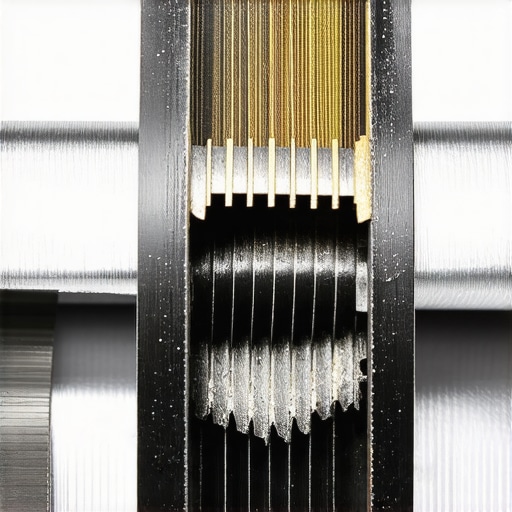
The true cost of timing belt maintenance lies in the labor intensity, often requiring 4 to 8 hours of technician time to access the front of the engine. This is why we advise against “part-only” replacements. Opting for a budget-tier belt from an unverified source can be a fatal mistake for your engine’s longevity. As noted by technical specialists at Gates Corporation, synchronous belt drives are engineered to specific tensile strengths that cannot be replicated by generic aftermarket alternatives. Using substandard components increases the risk of tooth shear, where the teeth of the belt literally rip off the backing under high RPM loads, leaving the engine’s internals to collide. To avoid falling for a mechanic recommended service scam, always insist on seeing the quality of the replacement kit being installed.
Critical Integration with Other Fluid Systems
It is worth noting that a timing belt’s health is intrinsically linked to the cleanliness of your engine bay. Just as the most overlooked fluid in your car can lead to steering catastrophes, oil leaks from the valve cover can seep into the timing cover and compromise the belt’s structure. If you’ve ever questioned the truth about lifetime transmission fluid claims, apply that same skepticism to “lifetime” timing belts; they simply do not exist in the real world of heat, friction, and chemical exposure. Have you ever experienced a sudden engine stall that turned out to be a timing issue? Share your story in the comments below or ask our experts about your specific vehicle make to ensure your engine remains in sync.
How Waveform Analysis Predicts Belt Failure Before the Snap
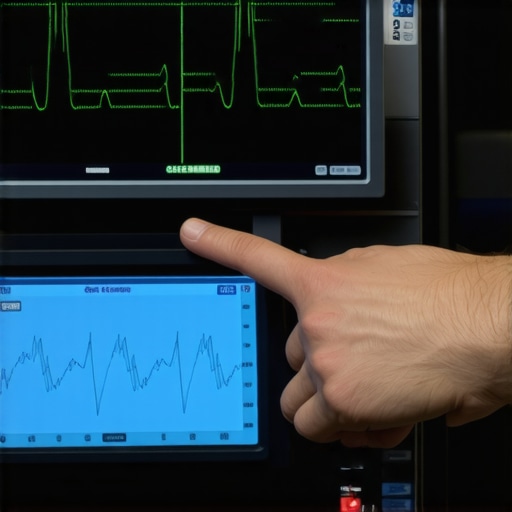
While the physical symptoms are often auditory, modern vehicle diagnostics allow for a digital autopsy of the timing system’s health before a catastrophic event. Technicians utilize an oscilloscope to compare the waveforms of the crankshaft and camshaft sensors. When these two signals drift out of their programmed phase, the Engine Control Unit (ECU) triggers correlation codes like P0016 or P0017. These aren’t just ‘sensor errors’; they are often the digital canary in the coal mine indicating that the belt has stretched beyond the tensioner’s ability to compensate. This level of precision is why an amateur scan tool often fails to capture the gravity of a ‘pending’ code.
Does a High-Performance Water Pump Actually Extend Timing Belt Life?
The answer isn’t about the pump’s performance in cooling, but rather its mechanical stability as a pulley. In many interference designs, the timing belt routes around the water pump pulley. A high-performance pump with a heavy-duty bearing reduces the lateral run-out that causes the belt to ‘walk’ across the sprockets. If the pump’s shaft develops even microscopic play, it creates an uneven wear pattern on the belt’s edge, leading to premature fraying. When choosing a replacement kit, look for pumps that utilize ceramic seals or improved impeller designs, as these mitigate the risk of coolant weeping onto the belt—a primary cause of chemical degradation.
Neutralize Harmonic Vibrations Before They Shred Your New Belt
Beyond the belt itself, the harmonic balancer—the crankshaft pulley—plays a silent but vital role in preserving the system’s longevity. Over time, the rubber dampening ring inside the balancer can perish, causing the pulley to wobble. This wobble translates into oscillating stress on the timing belt, effectively ‘tugging’ at it thousands of times per minute. Expert auto repair involves checking the run-out of the balancer during every belt service to ensure that the new belt isn’t subjected to these destructive vibrations immediately after installation. If you notice a slight vibration at idle that disappears with increased RPM, your balancer might be the culprit taxing your belt’s tensile strength.
Why Long Belts in V-Engines Require Precision Tensioning
If you are dealing with a V-style engine, such as a V6 or V8, the mechanical complexity doubles. These engines often feature significantly longer belts that must traverse multiple banks of cylinders and complex idler configurations. The longer the belt, the more sensitive it is to thermal expansion and contraction. According to the technical specifications provided by Continental Power Transmission Group, these longer belts require specific pre-tensioning sequences that account for ambient temperature during installation. Failure to follow these specific torque-to-yield sequences can result in a belt that is too tight when the engine reaches operating temperature, leading to premature bearing failure in the idler pulleys. Don’t let a simple maintenance interval turn into a five-figure engine replacement. Reach out to our diagnostic team to schedule a comprehensive health check of your timing system today. The interaction between the belt and the Variable Valve Timing (VVT) system is particularly nuanced, as the ECU attempts to adjust cam phase to compensate for physical belt slack…
The delicate interplay between the timing belt and Variable Valve Timing (VVT) represents the apex of modern engine management, yet it also introduces a layer of complexity that can mask impending failure. In many contemporary dual-overhead-cam (DOHC) configurations, the VVT solenoids rely on precise oil pressure to adjust camshaft phasing. However, if the timing belt has experienced even marginal elongation, the ECU attempts to compensate for this physical slack by electronically re-indexing the cam phasers. This digital masking can hide mechanical fatigue, allowing the vehicle to maintain seemingly normal operation while the belt’s structural integrity is rapidly approaching its shear point. This sophisticated electronic adjustment is why relying solely on ‘how the car feels’ is a dangerous strategy for modern auto repair.
How Does the VVT System Mask Early Signs of Belt Stretching?
When a belt stretches, the physical relationship between the crankshaft and the camshaft sensors shifts. The ECU detects this phase shift and commands the VVT phasers to advance or retard the timing to bring the engine back into its mapped efficiency window. This process can continue until the phaser reaches the end of its mechanical travel, at which point a P0016 or P0011 code is finally triggered. By the time these codes appear, the belt is often so loose that it is at imminent risk of jumping a tooth on the sprocket. Utilizing professional vehicle diagnostics to monitor ‘cam retard’ or ‘phase angle’ data streams can identify this stretching long before the dashboard illuminates, providing a critical window for preventative action.
Geometric Precision and the Evolution of Curvilinear Tooth Profiles
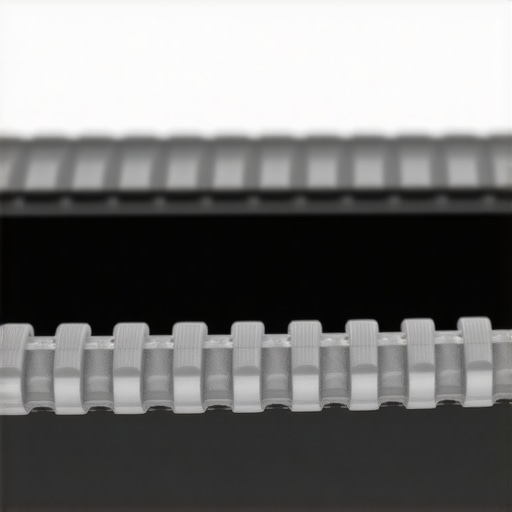
The transition from traditional trapezoidal belt teeth to modern curvilinear profiles has significantly increased the torque-carrying capacity of synchronous drives. These rounded tooth shapes distribute stress more evenly across the belt’s tensile cords, reducing the risk of ‘tooth jump’ during high-load scenarios. However, this geometric precision demands that replacement components perfectly match the original equipment (OE) specifications. Installing a belt with a slightly different pitch or tooth profile—common in low-grade aftermarket kits—results in rapid frictional heat buildup as the teeth fail to seat perfectly in the pulley grooves. Technical documentation from Aisin World Corp of America emphasizes that even a sub-millimeter variance in tooth radius can lead to harmonic vibrations that fatigue the engine’s internal bearings.
The Invisible Threat of Photochemical and Ozone Degradation
While mechanical wear and heat are the primary suspects in timing failure, atmospheric factors like ozone concentration play a silent role in rubber degradation. Ozone causes a process known as ‘ozonolysis,’ where the chemical bonds in the elastomer are broken down, leading to the characteristic ‘spider-web’ cracking seen on the non-tooth side of the belt. This is particularly prevalent in coastal regions or highly urbanized areas with significant air pollution. If your vehicle has spent years in a high-ozone environment, the belt may be chemically compromised despite having low mileage. A comprehensive car service should always include a chemical health check of all rubber components, as a belt that looks structurally sound under a shop light may actually be brittle at a molecular level.
Don’t wait for a catastrophic engine stall to find out your timing system is failing; contact our specialized technicians today to perform a high-level digital phase analysis of your engine’s synchronization. High-precision maintenance is the only way to ensure the longevity of your high-performance interference engine.
Hydraulic Hysteresis in Automatic Tensioning Systems
Modern engines frequently employ hydraulic tensioners that utilize a small piston and oil-filled chamber to maintain constant pressure on the belt. Over time, these units can suffer from internal seal failure, leading to a phenomenon known as hysteresis—where the tensioner fails to react quickly enough to rapid changes in engine RPM. This momentary loss of tension, often occurring during a downshift or sudden deceleration, allows the belt to whip. This whip can cause the belt to skip time or, in extreme cases, slap the timing cover with enough force to shatter the plastic. Expert technicians check for ‘weeping’ at the tensioner seal during every inspection, as any sign of hydraulic fluid is an immediate red flag for replacement.
Expert Insights & Advanced Considerations
Stop Oil Leaks Before They Melt Your Belt
While thermal degradation is a known enemy, chemical contamination from oil is the most frequent silent killer of timing components. Elastomers used in modern belts are resilient, but constant saturation from a weeping cam seal or valve cover gasket can turn high-tensile rubber into a soft, structural liability. Professional technicians always recommend that you how to spot an internal oil leak before your engine seizes, as addressing the leak is just as critical as replacing the belt itself to ensure the longevity of the new installation.
Look Beyond the Surface with Digital Waveforms
Visual inspections are notoriously unreliable for detecting internal fatigue in timing systems. True experts utilize an oscilloscope to monitor crankshaft and camshaft correlation in real-time. By analyzing these digital patterns, we can identify minute timing deviations that suggest a stretched belt or a failing hydraulic tensioner before any physical symptoms manifest. This specialized approach is a cornerstone of the hidden world of vehicle diagnostics, offering a level of preventative security that a simple flashlight check cannot provide.
Why Integrated Replacement Saves Your Wallet
Treating a timing belt replacement as an isolated task is a strategic error. The water pump, idler pulleys, and tensioners all share the same service life and labor path. If any of these ancillary components fail, they will destroy the new belt and likely the engine. When reviewing expert auto repair tips for 2025, the consensus is clear: always install a complete component kit. This proactive philosophy prevents the double-labor costs associated with returning to the same repair three months later for a failed $40 pulley.
#IMAGE_PLACEHOLDER_E#
Curated Expert Resources
ASE Technical Certification Standards: The gold standard for verifying that a technician possesses the advanced knowledge required to handle complex interference engine timing systems.
Gates Corporation Technical Support: An invaluable resource for understanding the specific pitch and tensile profiles of synchronous belts, providing the data needed to differentiate between OE-grade components and inferior aftermarket parts.
SAE International Research: Access to peer-reviewed data regarding the material science of EPDM and the effects of environmental ozonolysis on automotive elastomers.
Continental Power Transmission Group Guides: Detailed installation protocols that specify thermal expansion coefficients and torque-to-yield sequences for V-style engine configurations.
Final Expert Perspective
Maintaining engine synchronization is not merely a routine task; it is the fundamental preservation of your vehicle’s mechanical heart. The sophisticated interplay between chemical integrity, thermal management, and vehicle diagnostics dictates whether your engine will reach the 200,000-mile mark or suffer a premature, catastrophic failure. By prioritizing high-precision components and a systemic approach to maintenance, you are investing in the reliability that modern engineering demands. When the time comes for this critical service, choosing the right car service for seamless vehicle maintenance is the most important decision you can make. We invite you to consult with our master technicians to analyze your engine’s current phase health and ensure your timing remains flawless.