In the high-stakes world of modern auto repair, the behavior of an automatic transmission under thermal load serves as the ultimate diagnostic litmus test. While a vehicle might shift seamlessly during the first few miles, the onset of operating temperature often acts as a catalyst for latent mechanical flaws. This specific failure mode—slipping exclusively when hot—is rarely a coincidence; it is a manifestation of shifting hydraulic pressures and the physical expansion of internal components. Professionals in vehicle diagnostics recognize that heat does not just cause wear, it exposes existing structural vulnerabilities that high-viscosity cold fluid managed to mask. To truly understand this phenomenon, we must look beyond the surface and analyze the interplay between fluid thinning and seal integrity.
Heat Exposes the Cracks in Your Transmission Armor
As transmission fluid reaches its optimal operating range (typically 175°F to 200°F), its viscosity significantly decreases. This thinning is intentional, designed to allow the fluid to flow through the intricate mazes of the valve body with minimal resistance. However, if your transmission is suffering from internal wear, this lower viscosity becomes a liability. When the fluid is cold and thick, it can still provide enough pressure to engage clutch packs even if the seals are slightly hardened. Once the fluid thins out, it escapes through those same compromised seals, leading to a catastrophic drop in line pressure. This is often the precursor to major transmission failures decoded by expert technicians during routine inspections.
Why Does Your Car Drive Perfectly Until the Gauge Hits the Middle?
This is one of the most common inquiries in professional car service forums. The answer lies in the physics of thermal expansion. Internal components like the piston seals and o-rings are made of specialized elastomers. Over years of heat cycles, these materials lose their elasticity, a process known as vulcanization. When cold, the seal might still be rigid enough to hold. But as the metal drums and pistons expand at different rates under heat, the hardened seal can no longer bridge the gap. This leads to internal cross-leaks where the hydraulic fluid meant to hold a gear in place is diverted back into the pan. If you find yourself in this situation, it is critical to perform advanced vehicle diagnostics before the friction material on your clutch plates is completely incinerated.
The Critical Role of Fluid Degradation and Oxidation
Fluid quality is the backbone of hydraulic health. Over time, transmission fluid undergoes a chemical change called oxidation, which is accelerated by high temperatures. According to research published by SAE International, the life of transmission fluid is halved for every 20 degrees above 175°F. Oxidized fluid loses its frictional modifiers, which are essential for the smooth engagement of the clutch plates. When these additives break down, the plates can no longer ‘grab’ effectively when the fluid is thin, leading to the slipping sensation. This highlights the danger of following lifetime transmission fluid claims that many manufacturers suggest today. Regular maintenance is not just a suggestion; it is a requirement for hydraulic longevity.
Varnish Buildup Can Paralyze the Valve Body
Another silent killer that emerges with heat is the formation of varnish. As fluid breaks down, it leaves a sticky residue on the precision-machined valves within the valve body. When the transmission is cold, these valves might move by sheer force, but as temperatures rise and clearances tighten, a ‘sticky’ valve can cause a delay in pressure delivery. This can result in a scenario where your automatic transmission stays in gear too long or fails to engage the next gear entirely. If you are experiencing these symptoms, we encourage you to consult with a specialist to evaluate your hydraulic pressures before a minor seal leak turns into a full rebuild. Are you seeing signs of gear hunting or late shifts? Contact us today for a professional evaluation.
Heat is not just a physical stressor; it acts as a silent disruptor of electrical precision within your gearbox. Most modern transmissions rely on a series of pulse-width modulated (PWM) solenoids to regulate hydraulic pressure with millisecond accuracy. As the ambient temperature inside the transmission casing rises, the electrical resistance within the solenoid’s copper windings increases proportionally. If a solenoid is already marginally worn or has a micro-crack in its casing, the increased resistance at operating temperature can prevent the valve from fully seating or opening. This results in a ‘lazy’ shift or a complete slip into neutral during a gear change. Experienced technicians often use an oscilloscope to track these voltage drops, a process integral to advanced vehicle diagnostics. When the TCM (Transmission Control Module) cannot achieve the commanded pressure due to solenoid fatigue, the friction plates bear the brunt of the heat, leading to accelerated wear.
Diagnose Electrical Resistance to Save Your Hard Parts
When you are chasing a heat-related slip, you must look at the circuit integrity from the TCM to the internal harness. A common failure point often overlooked is the internal wiring ribbon, which can become brittle and develop high resistance specifically when saturated in 200-degree fluid. This electrical bottleneck mimics mechanical failure because it reduces the amperage available to hold the solenoid open. Before you commit to a multi-thousand-dollar rebuild, it is worth testing the solenoids for ‘heat soak’ failures. 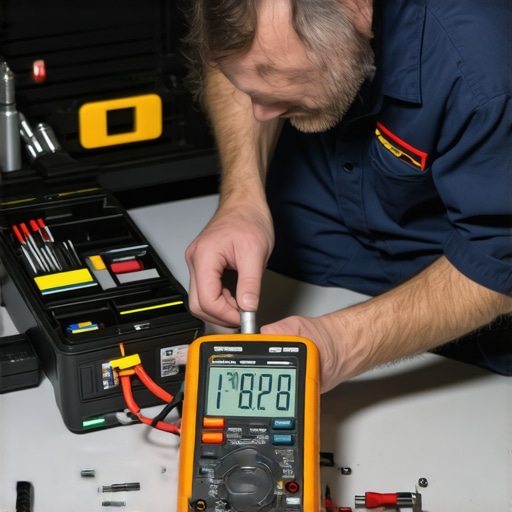 If the resistance values drift significantly outside of factory specifications as the vehicle warms up, you have found your culprit. Identifying these electrical anomalies early can be the difference between a simple solenoid swap and a total transmission overhaul.
Why Does Temperature Spikes Kill Your Shift Solenoids?
The answer lies in the expansion of the internal wire coils. Under extreme thermal load, the thin insulation on the solenoid windings can break down. When cold, the gaps are maintained, but heat causes the wires to expand and potentially short-circuit against one another. This reduces the magnetic field strength, making it impossible for the solenoid to move the hydraulic plunger against the return spring. This is why a car might shift perfectly for the first twenty minutes of a commute but begin to ‘flare’ or slip once the transmission reaches its thermal peak. If you are noticing these symptoms, it is vital to consult a specialist who understands the nuances of proven transmission repairs before the heat permanently glazes your clutch discs.
Stop Cavitation From Destroying Your Clutch Packs
The radiator is often the unsung hero—or the silent villain—of transmission health. Many vehicles use an internal cooling loop located inside the radiator’s cold-side tank to regulate fluid temperature. If this heat exchanger becomes partially restricted by debris or internal corrosion, the transmission fluid cannot dump its thermal load effectively. This creates a dangerous feedback loop: hot fluid causes slipping, which generates more friction, which in turn creates even more heat. According to technical bulletins from the Automatic Transmission Rebuilders Association (ATRA), a mere 10% reduction in cooler flow can raise internal temperatures by as much as 40 degrees during stop-and-go driving. Before assuming your clutches are toasted, you should determine how to tell if your radiator is clogged to rule out a simple cooling failure that could be cooking your fluid.
Does Your Cooling System Have a Secret Grip on Your Gearbox?
Beyond simple heat, a compromised cooling system can lead to fluid aeration or cavitation. When transmission fluid is hot and thin, it becomes much easier for the pump to pull air if there is a tiny leak in the intake O-ring or a hairline crack in the filter neck. Since air is compressible and hydraulic fluid is not, the ‘spongy’ fluid fails to provide the clamping force needed to hold the gears in place. This is a classic case where the mechanical components are actually healthy, but the hydraulic medium has failed. Have you noticed tiny bubbles on your dipstick after a long drive? This is a primary indicator of air intrusion. Share your findings in the comments below, or let us know if you’ve encountered a ‘mystery’ slip that vanished after a cooling system flush.
The Transmission Control Module (TCM) acts as the central nervous system for your drivetrain, and its response to rising temperatures is a masterclass in software compensation. In many modern 6-speed and 8-speed units, the TCM employs a strategy known as adaptive learning or clutch volume indexes. When the transmission fluid thins out at 200°F and begins to bypass worn seals, the TCM detects a millisecond delay in gear engagement. To maintain drivability, it automatically adjusts the solenoid duty cycle to increase the volume of fluid sent to that specific clutch pack. This silent adjustment can mask a failing transmission for thousands of miles, making the car feel normal until the adaptation reaches its maximum threshold.
According to technical data from the Automatic Transmission Service Group (ATSG), monitoring these adaptation values is often more revealing than a standard fluid check. If the shift adapt numbers for the 2-3 shift are skewed heavily toward the maximum pressure limit, it indicates that the internal seals are likely hardened and leaking under thermal load. Ignoring these electronic warnings leads to a hard slip that no software update can fix.

Why Adaptive Learning Can’t Save a Cooked Gearbox
While the computer is smart, it cannot physically restore the elasticity of a vulcanized piston seal. As the TCM pushes higher pressures to overcome internal leaks, it creates a more violent engagement of the clutch plates once they finally grab. This results in a harsh shift followed by a slip—a telltale sign that the mechanical integrity of the transmission has been compromised. In high-performance auto repair scenarios, technicians use bi-directional scan tools to reset these values after a repair, but doing so on a worn unit without fixing the underlying leak can actually lead to immediate and total failure.
Can a Transmission Fluid Flush Actually Make Hot Slipping Worse?
This is a contentious topic among enthusiasts and professionals alike. The reality is that if a transmission is already slipping when hot, the fluid is likely saturated with suspended friction material from the wearing clutch plates. This grit actually provides a small amount of traction for the remaining plates. When you perform a high-pressure flush, you remove this material and replace it with slippery, detergent-rich new fluid. This new fluid can wash away the very varnish that was helping to hold a seal in place or provide friction for a glazed clutch. Instead of a blind flush, experts in vehicle diagnostics recommend a pan drop and filter change to inspect for metal debris without shocking the hydraulic system.
Stop the Torque Converter Shudder Before It Destroys Your Gears
Oftentimes, what feels like a transmission slip is actually a failure of the Torque Converter Clutch (TCC). Most modern vehicles utilize a PWM-controlled TCC that allows for partial engagement or slip to dampen engine vibrations. As the fluid reaches peak temperature, the TCC regulator valve may stick in its bore due to thermal expansion. This results in a shudder—a sensation similar to driving over rumble strips—usually occurring between 30 and 50 MPH. This is a critical car service moment; if caught early, a specialized TCC limit valve or a modified plunger can restore operation. However, if the shudder is ignored, the heat generated by the slipping converter clutch will eventually migrate into the main gear set, cooking the entire unit from the inside out. Are you feeling a vibration during light acceleration? It might not be your tires; it could be your converter crying for help. Reach out to our diagnostic team to see if a simple solenoid or valve body correction could save your vehicle. The hydraulic circuit within the valve body is often the next frontier in these diagnostics, as the minute clearances of the shift valves respond violently to even the slightest thermal variance.
Beyond the electrical fatigue of solenoids lies a more fundamental mechanical adversary: the coefficient of thermal expansion. In the sophisticated architecture of a modern gearbox, aluminum valve bodies are often mated to steel or iron components. Because these materials expand at different rates, a transmission that is perfectly ‘flat’ and sealed at 70°F may develop microscopic gaps at 220°F. This phenomenon, known as thermal warpage, allows for hydraulic cross-talk where high-pressure fluid bleeds into circuits it was never intended to enter. When this occurs, the pressure intended to lock a clutch pack is diverted, leading to the dreaded ‘flare’ or slip during a shift. Professionals in auto repair use precision straight-edges to check for these deviations, as even a thousandth of an inch can compromise the hydraulic integrity of a high-performance vehicle diagnostics profile.
Watch Out for the Invisible Warp of Heat-Soaked Castings
When the internal casting of a valve body warps, it creates a path of least resistance for the thinning transmission fluid. This is not merely a seal failure; it is a structural failure of the hydraulic containment system. As the fluid escapes through these warped interfaces, the Transmission Control Module (TCM) may attempt to compensate by increasing pump output, but there is a physical limit to what software can overcome. Eventually, the pump cannot keep up with the internal leaks, and the pressure at the clutch piston drops below the threshold required to maintain a static grip. This is why a simple fluid change rarely fixes a heat-related slip; the issue is often etched into the very metal of the transmission itself.
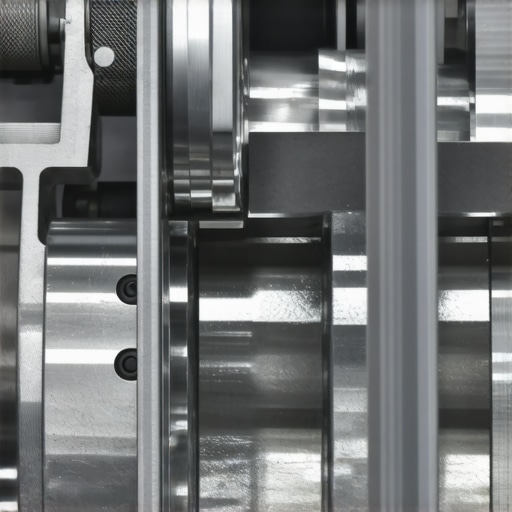
How does a warped valve body actually cause gear slippage?
The core of the issue resides in the ‘separator plate’ that sits between the valve body halves. When heat causes the casting to bow, the clamping force on the gasket is lost in specific zones. High-pressure oil then ‘worms’ its way across the gasket surface into an adjacent return port. This bypasses the clutch apply piston entirely, leaving the friction plates with only a fraction of the necessary clamping force. If you suspect this is happening, a technician specializing in car service must perform a ‘wet vacuum test’ on the valve body to identify which specific circuits are losing vacuum through the warped casting. Addressing these structural anomalies is a hallmark of elite transmission restoration.
Fluid Chemistry and the Failure of Shear-Stable Polymers
The role of fluid chemistry in thermal slippage cannot be overstated. High-quality synthetic fluids are packed with Viscosity Index Improvers (VIIs)—long-chain polymers that expand as they get hot to prevent the oil from thinning too much. However, these polymers are subject to ‘mechanical shear.’ As the fluid is forced through the tight tolerances of the pump and planetary gears, these long chains are physically chopped into smaller pieces. According to detailed research on fluid degradation from Machinery Lubrication, once these polymers are sheared, the fluid loses its ability to maintain viscosity at high temperatures. This ‘permanent shear loss’ means your fluid may look clean on the dipstick but acts like water once it reaches operating temperature, providing zero protection against clutch slippage.
Stop Thermal Runaway Before It Kills Your Commute
Another overlooked culprit in heat-induced failure is the internal thermal bypass valve. Many modern 6-speed and 8-speed transmissions utilize a thermostat similar to the one in your engine’s cooling system. This valve is designed to keep fluid out of the cooler until it reaches a certain temperature to speed up the warm-up process. If this thermostat sticks in the closed position, the fluid temperature will skyrocket during highway driving, leading to immediate slippage. This is a classic case where the transmission itself is healthy, but a $40 plastic valve is causing it to cook from the inside out. Diagnostic pros use thermal imaging cameras to verify that fluid is actually flowing to the external cooler during a road test.
Is your vehicle starting to hesitate or ‘hunt’ for gears only after a long drive? This is the critical window where a specialized intervention can save your drivetrain from a total overhaul. Do not wait for the check engine light to signal a permanent failure. Reach out to our diagnostic team today for a comprehensive thermal stress test and ensure your hydraulic systems are operating within factory-defined tolerances. Your gearbox deserves more than just a fluid swap—it needs expert-level precision.
Expert Insights and Advanced Considerations
How Software Masking Hides Hardware Damage
The TCM’s ability to adjust for internal wear through clutch volume indexes is a double-edged sword. While it maintains drivability, it often conceals the gradual hardening of piston seals. By the time a “hot slip” becomes noticeable to the driver, the adaptive limits have usually been maxed out, meaning the internal friction material is already compromised. This is why professionals prioritize advanced vehicle diagnostics over simply reacting to surface-level symptoms.
Don’t Replace the Whole Box for a Tired Solenoid
Electrical resistance in PWM solenoids rises proportionally with temperature. If your vehicle experiences a gear flare only after 20 minutes of driving, it is frequently a sign of solenoid coil fatigue rather than total mechanical failure. Identifying these electrical anomalies through a “heat soak” test can save thousands in unnecessary auto repair costs by targeting the specific component instead of a full overhaul.
Your Radiator Might Be Cooking Your Gears
A minor reduction in cooler flow can spike internal temperatures by dozens of degrees, creating a destructive thermal feedback loop. Before you assume the clutch packs are gone, you must learn how to tell if your radiator is clogged to ensure the heat exchanger isn’t the primary culprit. #IMAGE_PLACE_HOLDER_E#
Curated Expert Resources
ATSG Technical Bulletins
The Automatic Transmission Service Group provides the industry standard for teardown manuals and circuit-specific diagnostic procedures. This is the primary resource for technicians dealing with complex hydraulic cross-talk and specific valve body wear patterns.
ATRA Case Study Database
The Automatic Transmission Rebuilders Association offers real-world data on “mystery slips” and specific vehicle patterns, making it invaluable for transmission failures decoded for modern 6 and 8-speed units.
Machinery Lubrication Research
This resource is essential for understanding the chemical breakdown of shear-stable polymers and why adhering to lifetime transmission fluid claims can be a terminal mistake for your gearbox longevity.
Final Expert Perspective
Managing a transmission that slips under thermal load requires a shift from reactive fixes to predictive vehicle diagnostics. Heat does not create these mechanical flaws; it simply strips away the fluid viscosity that was masking them. Whether the issue is a warped valve body casting or a “tired” shift solenoid, addressing the root hydraulic cause is the only way to ensure long-term reliability. If your transmission is showing signs of thermal distress, the window for a cost-effective auto repair is closing. We invite you to contact our specialist team today to perform a comprehensive pressure test and protect your drivetrain from permanent damage.